

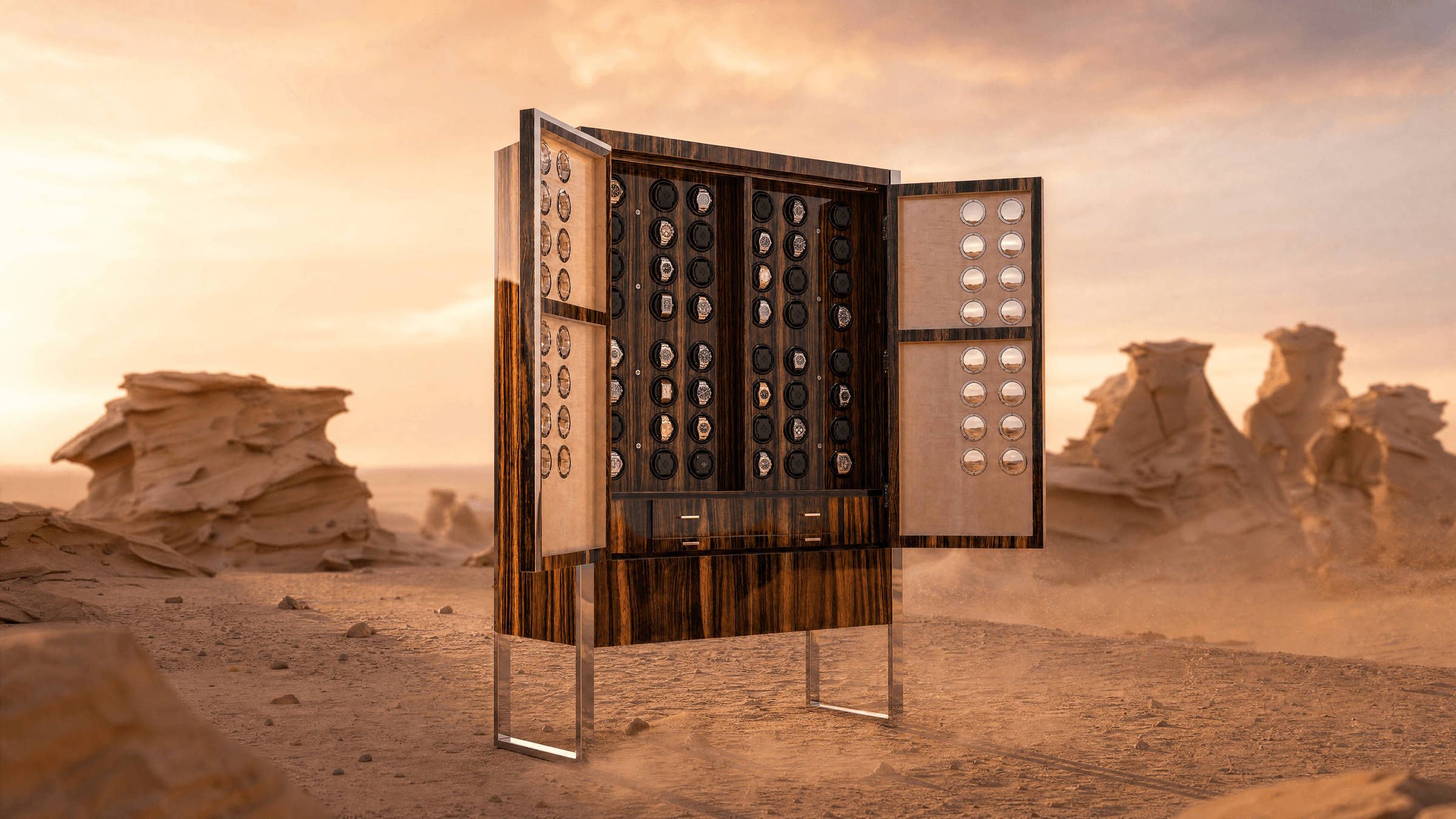
Watch Safe Buying Guide
What Watch Storage Actually Means
A watch safe is a secure, environmentally controlled storage solution designed to protect watches from physical damage, moisture, dust, and unauthorized access when they are not being worn. Unlike basic watch boxes or open storage, a safe focuses on long-term preservation rather than convenience alone.
Storing a watch involves more than placing it somewhere out of the way. Factors like humidity, impact, pressure, and light exposure can affect a watch over time, particularly during extended storage. Proper storage solutions are designed to reduce these risks by providing structure, separation, and stable conditions.
It is worth noting that storage addresses protection, not the mechanical operation of a watch. A watch can be stored securely without running, and allowing it to stop during storage is normal and safe. Understanding this distinction helps clarify how storage fits into broader watch care practices.
Why Watches Need Proper Storage
Watches are precision instruments made up of mechanical components, finished surfaces, and materials that can be affected by their surrounding environment when not in use. Proper storage helps protect watches from gradual damage that may occur when they are left exposed or stored without consideration for long-term conditions.
Environmental factors
Dust can enter small openings around crowns or case backs over time, while moisture and humidity may contribute to corrosion or degradation of internal components and exterior finishes. Even in indoor environments, changes in temperature and air quality can affect watches during extended storage periods.
Physical damage
Watches placed loosely in drawers or on open surfaces are more vulnerable to accidental impact, scratches, or pressure on bracelets and straps. Over time, improper positioning can place unnecessary stress on components such as clasps, leather straps, or integrated bracelets.
Security
As watches increase in value, both financially and personally, reducing the risk of loss or unauthorized access becomes part of responsible ownership. Storage solutions are designed to balance accessibility with protection, depending on individual needs and living environments.
Proper storage does not prevent normal aging or wear associated with use, but it helps minimize avoidable risks when watches are not being worn.
Common Storage Risks Explained
When watches are stored without consideration for their environment, several common risks can gradually affect their condition. These risks are often subtle and accumulate over time, which is why they are sometimes overlooked.
Humidity
Excess moisture in the air can contribute to corrosion of metal components and may affect gaskets or seals designed to protect the movement. While modern watches are built to withstand everyday conditions, prolonged exposure to high humidity during storage can still introduce unnecessary stress.
Physical Impact
Watches stored loosely in drawers, stacked together, or placed on hard surfaces are more likely to experience scratches, dents, or pressure on cases and bracelets. Even minor impacts can affect finishes or, in some cases, alignment of external components.
Long-term Pressure on Straps and Bracelets
Leather straps stored in bent positions may crease or degrade prematurely, while metal bracelets compressed under weight can experience uneven wear over time. Proper positioning during storage helps reduce this type of gradual damage.
Environmental Exposure
Heat and prolonged light can also play a role. Elevated temperatures may affect lubricants and materials, while extended exposure to direct light can contribute to fading or aging of certain components. These factors are typically less dramatic than physical damage but can still influence long-term conditions.
Proper storage does not prevent normal aging or wear associated with use, but it helps minimize avoidable risks when watches are not being worn. By addressing these factors, storage becomes a foundational part of long-term watch care rather than an afterthought.
Storage Options Compared
Before considering a watch safe, it helps to understand what basic storage solutions do well and where their limitations become relevant.
Open Storage
Open storage surfaces work well for quick access, especially for a watch you reach for daily. The tradeoff is exposure. Watches left in the open are more likely to collect dust, get bumped accidentally, or face small environmental factors that can affect presentation and condition over time. Does well: maximum convenience, visibility. Limitations: dust, accidental bumps, environment exposure. Best for: one daily watch in low-risk spaces.
Drawers
Drawers are a common choice for watches that are worn often because they keep storage simple and close at hand. The downside is protection. Without a padded insert or dedicated watch tray, watches can shift, take pressure from other items, or make contact that leads to scuffs over time. Does well: hidden convenience, quick drop-in storage. Limitations: pressure and contact risk without padding. Best for: frequently worn pieces, with a tray or liner.
Watch Boxes
One of the most common storage solutions used by watch owners. They are designed primarily for organization and basic protection, keeping watches separated and reducing exposure to dust and minor contact. For many owners, a watch box provides a practical way to store multiple watches in a single location while maintaining easy access. Does well: organization, separation, dust reduction. Limitations: no access control, no environment control. Best for: multi-watch owners, daily access.
What actually matters
What a Watch Safe Is Designed to Do
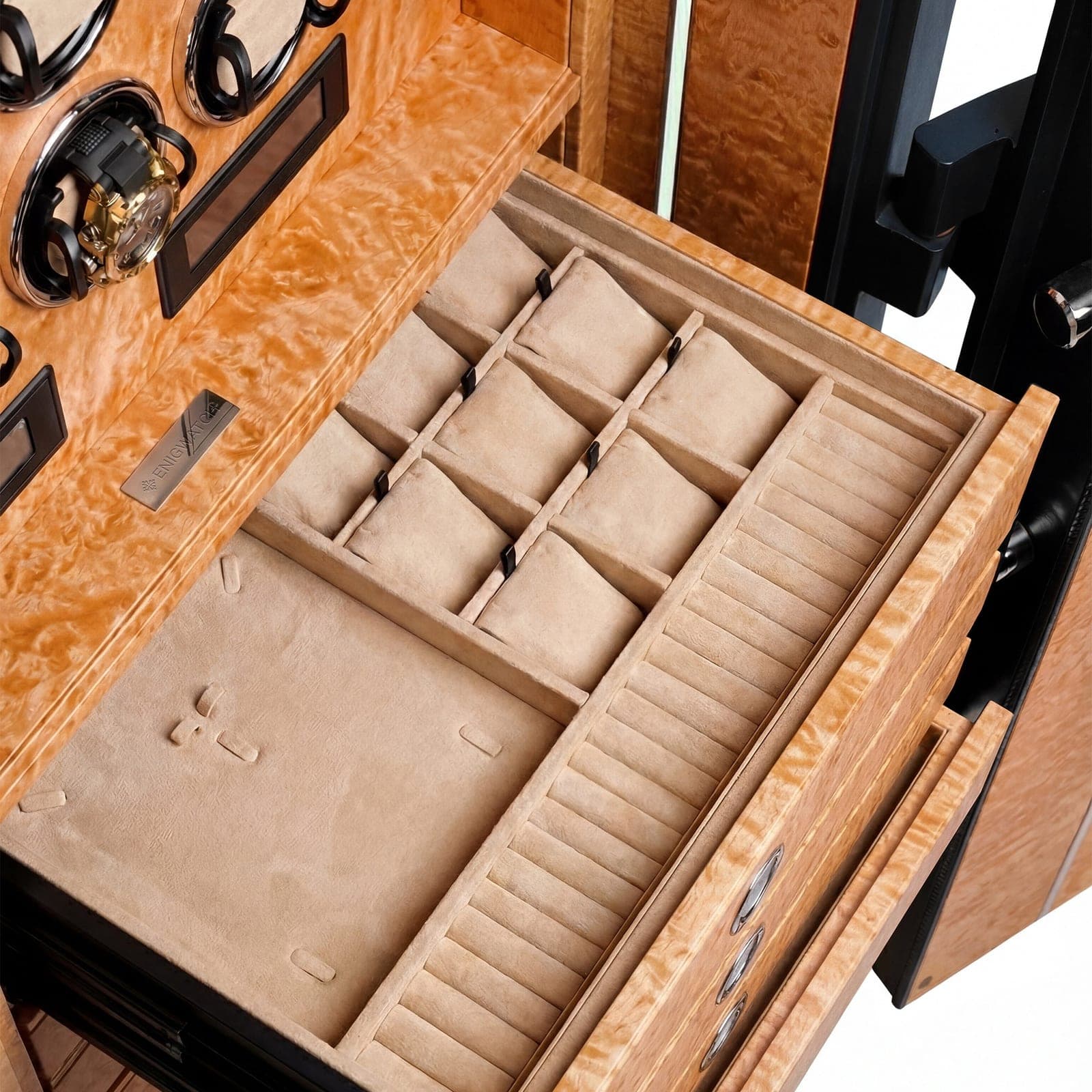
A watch safe provides a higher level of protection than basic storage solutions by addressing security and environmental stability together. Choosing the right one is not only about how many watches it holds. The better question is whether the capacity, internal organization, and access style fit how your collection is stored and used.
Purpose — a watch safe safeguards watches from unauthorized access while maintaining conditions that support long-term preservation. Unlike standard watch boxes or drawers, a safe is built with structural security in mind, including controlled access mechanisms and reinforced construction.
Environment — watch safes focus on creating a more stable storage environment. By enclosing watches within a protected space, a safe helps limit exposure to dust, light, and sudden environmental changes. Some safes are designed to support more consistent internal conditions, which can be beneficial for watches stored over extended periods.
Right-Sized Capacity
For smaller collections, choose a safe that fits your current watches with enough room to avoid crowding and accidental contact. A little breathing space makes daily storage simpler and reduces unnecessary handling.
Organization That Prevents Contact
As collections grow, organization becomes the real differentiator. Look for layouts that separate watches, keep consistent spacing, and accommodate different case sizes and bracelet types. Clear placement helps reduce scuffs caused by contact and repeated repositioning over time.
Access That Matches Your Routine
As collections grow, organization becomes the real differentiator. Look for layouts that separate watches, keep consistent spacing, and accommodate different case sizes and bracelet types. Clear placement helps reduce scuffs caused by contact and repeated repositioning over time.
When capacity, organization, and access align, a watch safe stays practical as your collection and habits evolve.
Start With What You’re Protecting
- Small collections and sentimental piecesIf the goal is protecting a few meaningful watches, prioritize controlled access and stable storage over maximum capacity.
- Growing or higher-value collectionsWhen multiple watches are stored together, risk increases. Look for secure storage that supports separation, organization, and predictable access.
- How often your watches are handledDaily access favors convenience. Long-term storage favors undisturbed protection and a consistent environment inside the safe.
Start with what you are protecting, then match security to the size of the collection and how often the watches are accessed.
Where and How the Safe Will Be Used
Where a watch safe is placed and how it is accessed play a significant role in determining which type of solution is appropriate. A safe intended for regular interaction serves a different purpose than one used primarily for long-term storage.
Regular Access Safes
Safes used daily in bedrooms, offices, or shared spaces need a balance of security and convenience. When access feels simple, owners are more likely to use the safe consistently.
Low-Interaction Storage
For long-term or occasional access, priorities shift to stability and minimal disturbance. The safe’s job is steady protection over time, not quick daily interaction.
The Room Context Matters
Space, visibility, and who’s around all influence the right setup. In shared environments, a more discreet placement or reduced interaction often makes more sense.
Define the safe’s location and access frequency first, then decide on size, interior layout, and locking features.
When Secure Storage Adds Real Value
Secure storage adds the most value when protection and controlled access meaningfully improve peace of mind or reduce risk. This is often the case when watches are stored in environments where multiple people have access or where collections are kept visible rather than tucked away.
Shared Spaces and Visible Storage
Secure storage is most useful when watches are kept in areas where other people may have access, or where the collection is visible rather than stored away. In these settings, controlled access supports confidence without changing your routine. Best for: shared homes, offices, visible placement.
Higher-Value, Multi-Watch Collections
When multiple watches are stored together, the impact of loss or mishandling increases. A dedicated watch safe helps manage cumulative risk, simplifies storage decisions, and reduces concern around accidental handling. Best for: high-value collections, multiple pieces stored together.
Long-Term or Occasional-Wear Pieces
Watches that are worn infrequently benefit from stable, undisturbed protection. Secure storage reduces unnecessary handling while keeping the collection consistently protected over time. Keeping it ready at all times. Best for: occasional wear, long-term ownership.
Secure storage adds the most value when it addresses practical concerns in your environment, not hypothetical risks. That’s why customers choose Enigwatch.
When a Watch Safe May Be Unnecessary
A watch safe is not required for every collection or living situation. For owners with a small number of watches stored in private, low-risk environments, basic storage solutions may already provide adequate protection. In these cases, adding secure storage may not meaningfully change how watches are cared for day to day.
Low-risk, private storage
If you own a small number of watches and store them in a private, low-risk space, a basic case or drawer setup can already be enough.
Daily wear, quick access
If watches are worn frequently and only stored between uses, accessibility often matters more than added security.
Discreet, simple routines
If you prefer storage that blends into your space without extra steps, simpler solutions can be easier to maintain long-term.
The goal is proportional protection. Secure storage is most valuable when it solves a real risk, not a theoretical one. If your environment already limits access and reduces unnecessary handling, a simpler solution can be the smarter fit.
Focusing on Security vs Movement
Watch storage and movement maintenance address different aspects of watch care, even though they are often discussed together. Storage focuses on protection, while movement maintenance relates to whether an automatic watch remains operational during periods of non-use.
| Aspect | Watch Storage | Movement Maintenance |
|---|---|---|
| Primary purpose | Protects the watch when not worn | Keeps an automatic watch running |
| Core function | Physical protection and organization | Maintains power reserve |
| Operational state | Watch may be stopped | Watch remains operational |
| Typical solutions | Watch boxes, cabinets, safes | Watch winders |
| Necessity | Always recommended | Optional, based on convenience |
Understanding this distinction helps clarify why storage and movement maintenance should be considered separately. The appropriate solution depends on whether the priority is protection, operational readiness, or a balance between the two.
Common Buying Mistakes to Avoid
Make smarter decisions when choosing your watch safe setup
| Mistake | Better choice |
|---|---|
| Overestimating the security you need | Start with real exposure. Consider where the safe will live, who has access, and how visible your collection is, then choose protection that matches that context. |
| Choosing capacity before organization | Prioritize spacing, separation, and an interior layout you will actually use. A smaller, better-organized safe often protects watches better than a crowded one. |
| Assuming secure storage must be permanent | Plan for change. Choose a setup that can adapt if your collection grows, your routines shift, or your storage location changes. |
| Treating “more security” as better care | Balance protection with daily usability. The best safe supports consistent habits, not a system that is so cumbersome it rarely gets used. |
What Watch Owners Often Ask
What is a watch safe and how is it different from a watch box?
A watch safe is a secure, often environmentally controlled storage solution designed to protect watches from theft, physical damage, moisture, and dust. A watch box provides basic organization and separation but does not offer access control or environmental stability. The key difference is that a safe addresses security and long-term preservation, while a box focuses on convenience and everyday organization.
Do I need a watch safe for a small collection?
Not necessarily. For a small collection stored in a private, low-risk space, a quality watch box or padded drawer may provide sufficient protection. A safe becomes more relevant when the value of the collection increases, when watches are stored in shared or visible environments, or when pieces sit unworn for extended periods.
What should I look for in a watch safe's interior layout?
Look for individual cushion slots that separate watches and prevent contact between cases and bracelets. Consistent spacing, accommodation for different case sizes, and a layout that avoids crowding all help reduce scuffs and unnecessary handling. The interior should make it easy to place and retrieve watches without disturbing others.
Can a watch safe protect against humidity and temperature changes?
Many watch safes are designed to create a more stable internal environment by limiting exposure to external air, dust, and light. Some include materials or sealing designed to buffer against humidity and temperature fluctuations. While no safe creates a perfectly sealed climate, a well-built safe provides significantly more environmental stability than open storage or basic watch boxes.
Should I choose a watch safe with a built-in winder?
It depends on how your collection is used. If you rotate automatic watches regularly and want them ready to wear, a safe with an integrated winder combines protection and convenience. If your priority is purely long-term storage and you don’t need watches running while stored, a safe without a winder may be simpler and more focused on its core protective role. For more on rotation support, see our Watch Winder Buying Guide.
How do I decide between a watch safe and a watch winder?
They solve different problems. A winder keeps automatic watches running between wears. A safe protects watches from damage, environmental exposure, and unauthorized access. Some owners use both. The decision depends on whether your primary concern is operational readiness, protection, or a combination of the two. If a winder fits your situation, our Watch Winder Buying Guide covers TPD, rotation patterns, and sizing.
Where is the best place to put a watch safe?
Placement depends on how the safe will be used. For daily access, a bedroom, dressing area, or home office keeps the safe convenient. For long-term storage, a more discreet or climate-stable location may be appropriate. Avoid areas with high humidity, direct sunlight, or significant temperature swings. In shared environments, a less visible placement can reduce attention to the collection.
Choosing the Right Watch Safe
Choosing a watch safe is about matching protection and access control to the realities of how watches are stored and used. No single solution fits every collection. Start with what you are protecting, consider where and how the safe will be used, and choose a setup that feels proportional to your actual needs.
A well-chosen safe should feel supportive, not restrictive. It should align with your daily habits and provide protection where it truly matters without imposing unnecessary constraints.