
Watch Winder for Omega Seamaster

Watch Winder for Omega Seamaster: The Right Settings and What to Look For

Diver 300M, Planet Ocean, Aqua Terra — all run 650–800 TPD bidirectional, but each bracelet behaves differently. Full caliber lineage and METAS notes by Enigwatch.

The Seamaster is Omega's longest-running watch family, in continuous production since 1948. Introduced as a civilian watch built to military waterproofing standards — descended from the Royal Air Force-issued waterproof watches Omega supplied during the Second World War — it has evolved into three distinct collector identities under one name. They share movement DNA and a winder specification. They differ in almost every other way that affects winder choice.

A Seamaster collector who treats a Diver 300M, a Planet Ocean, and an Aqua Terra as the same watch will pick the wrong winder. Each has a different bracelet behavior, a different case profile, and in the older references a different caliber. The brand-level rules aren't enough — the family-level rules are what matter.


A short history of how three watches ended up sharing one name

The original Seamaster of 1948 was a single line, water-resistant to 30 meters, dressed in a 36mm case and an automatic Caliber 28.10. It was an everyday watch with naval credentials, not a dive instrument.

The dive identity came later. In 1957 Omega introduced the Seamaster 300 — a true dive watch rated to 200m (the "300" being a target spec, not the achieved depth at launch). Through the 1960s and 1970s, the Seamaster Professional line solidified Omega's position alongside Rolex in the professional dive watch market.

The Seamaster Diver 300M arrived in 1993, designed by Jean-Claude Biver and the Omega team specifically as a 300m-rated tool watch. The wave-pattern dial, the helium escape valve at 10, the skeleton hands. It became Omega's most recognizable single reference. James Bond adopted it in 1995 with GoldenEye, and the cultural cement set.

The Seamaster Planet Ocean appeared in 2005 as Omega's "tool watch" reaffirmation — 600m water resistance, larger case, ceramic bezels in later iterations, and the Master Co-Axial movement architecture beginning in 2011.

The Seamaster Aqua Terra debuted in 2002, repositioning the Seamaster name into dress-sport territory. Thinner cases, no helium valve, sapphire casebacks displaying the movement, and a "teak concept" dial that's now the family's visual signature.

That's three watches under one name — Diver 300M, Planet Ocean, Aqua Terra — and effectively three different collector relationships with what counts as a Seamaster.


Three Seamaster families, three different winder interactions

Seamaster Diver 300M

The current 300M generation runs 42mm in stainless steel, with the wave-pattern laser-engraved dial that became the family's signature in 2018. Available on rubber strap, NATO strap, mesh bracelet, or the five-link steel bracelet that Omega calls the "Iconic Bracelet."

The strap variant determines almost everything about winder interaction. Rubber and NATO are forgiving against any interior material — they don't mark, they don't transfer, they sit cleanly. The mesh and five-link metal bracelets are the issue. Both have polished surfaces that warrant Alcantara or Italian Nappa leather interiors. A foam cushion in synthetic material applies imperceptible abrasive contact to those polished surfaces over months of continuous winding, eventually showing as micro-scratches against good light.

Caliber: the current 300M uses the Caliber 8800 (standard steel) or Caliber 8806 (precious metal variants). Both carry 55-hour power reserves, both are METAS Master Chronometer-certified to 15,000 gauss. Bidirectional, 650 to 800 TPD.

The 55-hour reserve is the practical justification for a winder. A Diver 300M worn weekends and rested weekdays — common for a Bond-flavored collector who treats it as an occasional piece — stops by Tuesday morning if last worn Sunday night. Reset the time, rotate the bezel, set the date. A winder eliminates that ritual.

Seamaster Planet Ocean

The Planet Ocean's identity is "tool watch enlarged." Cases run 39.5mm, 43.5mm, and 45.5mm. The 600m-rated central reference is a thick watch — roughly 16mm case height on the 43.5mm reference. Ceramic bezel, ceramic dial on certain variants, helium escape valve at 10. The Ultra Deep variant of 2022 pushes water resistance to 6000m.

Strap and bracelet behavior parallels the Diver 300M but exaggerated by case weight. The 43.5mm Planet Ocean on a metal bracelet is a substantial assembly — at the upper end of what consumer-grade winders can rotate cleanly. Cushion fit and motor torque both matter more for the Planet Ocean than for the Diver 300M.

Caliber: Caliber 8900 / 8901 / 8902 / 8912, depending on metal and configuration. 60-hour power reserve, METAS Master Chronometer, bidirectional, 650 to 800 TPD. The Ultra Deep uses the same caliber base.

The 60-hour reserve is slightly more forgiving than the Diver 300M's 55, but not dramatically. The Planet Ocean's typical owner — someone who picked it for its toolwatch presence — wears it more often than the Bond-flavored Diver 300M, which pushes the practical winder benefit toward "convenience" rather than "necessity." But a multi-piece rotation that includes a Planet Ocean still benefits.

Seamaster Aqua Terra

The Aqua Terra is the Seamaster wearing dress-sport clothes. Cases run 38mm and 41mm in the standard line, with thinner profiles than the Diver 300M or Planet Ocean. The "teak concept" dial — vertical lines evoking the wood deck of a yacht — is visible through both the front sapphire crystal and the sapphire caseback. The metal bracelet is the primary configuration; leather and rubber straps appear on select references.

The Aqua Terra's metal bracelet, with polished centre links flanked by brushed outer links, is the most sensitive of the three Seamaster bracelets to interior material quality. The polished centre links are exactly the surfaces that show micro-scratches against synthetic interior materials. Alcantara or Italian Nappa leather is the correct choice — not optional.

The display caseback adds another consideration. The caseback contacts the cushion base during winding rotation. A cushion that scratches the caseback is more visible on an Aqua Terra than on a closed caseback watch — every micro-scratch shows against the polished sapphire and the visible "teak" pattern that extends to the caseback design.

Caliber: Caliber 8900 / 8912 in current 41mm references, Caliber 8800 in some 38mm references, Caliber 8500 in older references. 55 to 60-hour reserves, METAS-certified across the current line, bidirectional, 650 to 800 TPD.

The Aqua Terra's owner is typically the most rotation-active of the three Seamaster collectors — wearing it as the dressier daily watch alongside other pieces. That rotation pattern is exactly where a winder earns its place.


Movement lineage — Caliber 1120 to 8912

The Seamaster's caliber history splits cleanly into three eras.

Era 1 — ETA-based (1990s through mid-2000s). The Caliber 1120 was Omega's modified ETA 2892-A2, used across Seamaster references from the 1990s into the 2000s. 28,800 vph, bidirectional, 42-hour reserve. Reliable, well-finished, but not Omega-distinct.

The Caliber 2500 followed in 1999 — the first Co-Axial Omega caliber in production. Initially a modification of the 2892-A2 with George Daniels' Co-Axial escapement integrated into the existing architecture, it underwent four revisions (2500A, 2500B, 2500C, 2500D) addressing reliability issues with the escapement geometry. The 2500D, introduced 2008, is the stable version. Power reserve 48 hours, bidirectional, METAS predecessor.

Era 2 — Master Co-Axial (2011–2018). The Caliber 8500 / 8501 was Omega's first ground-up in-house automatic Co-Axial design, debuting in 2007 in select Seamaster references. Twin-barrel architecture, free-sprung balance, anti-magnetic silicon balance spring on later variants. 60-hour reserve.

The Caliber 8508 / 8509 followed in 2013 with explicit anti-magnetic credentials — the "non-magnetic" Aqua Terra demonstrating resistance to 15,000 gauss. This caliber became the foundation for METAS certification when METAS was introduced in 2015.

Era 3 — METAS Master Chronometer (2015 onwards). The current Caliber 8800 / 8900 / 8912 family represents Omega's standardized post-METAS architecture. All variants:

  • 35.5mm caliber diameter (8800) or 39mm (8900-series)
  • Co-Axial escapement with Liquidmetal-tipped balance
  • Silicon balance spring (Si14)
  • Twin-barrel mainspring system
  • 55 to 60-hour power reserve
  • Bidirectional rotor with reverser wheels
  • METAS-certified for accuracy, magnetic resistance, water resistance, and power reserve under load

For winder buyers, the practical takeaway is that all current Seamaster automatics — across all three families — wind at the same setting. A multi-Seamaster rotation programs cleanly across multiple winder slots with one consistent setting.

For older references using ETA-based 1120 / 2500 calibers, the same direction applies but reserves are shorter. The shorter reserve makes a winder's case stronger, not weaker.


The Co-Axial escapement — what it actually does

The Co-Axial escapement is the technical foundation of every modern Omega caliber. Designed by George Daniels in the 1970s, refined through industry partnership with Omega in the 1990s, and put into commercial production in 1999, it's the most significant alternative to the Swiss lever escapement to reach mainstream watchmaking in two centuries.

The Swiss lever escapement — used in essentially every mechanical watch from the 1850s onwards — transmits energy from the gear train to the balance through sliding friction at the pallet jewels and the escape wheel teeth. That sliding friction is the primary wear mechanism in the movement and the primary reason watches need lubrication and periodic service.

The Co-Axial escapement uses three pallet jewels arranged on two parallel planes (hence "co-axial") and a modified escape wheel with separated impulse and locking surfaces. The result: energy transfer happens through radial pressure, not sliding friction. The contact surfaces don't slide against each other — they push and release.

Practical consequences:

  • Lubricant longevity. Without sliding friction at the escapement, the lubricants protecting those contact points last longer. Service intervals for Co-Axial Omega calibers are 8 to 10 years in normal conditions, versus 3 to 5 years for traditional Swiss lever calibers.
  • Long-term accuracy. The escapement maintains consistent rate over time as lubricants don't degrade as quickly. METAS Master Chronometer testing requires daily rate accuracy of 0/+5 seconds.
  • Service complexity. Co-Axial calibers require Omega-trained service technicians; not every general watchmaker can service them correctly.

For winder buyers, the Co-Axial mechanism doesn't change the winder specification. But it does change the value proposition. A movement with a 10-year service interval is a movement worth keeping in good lubricant condition through continuous winding rather than letting it sit through 6-month idle periods that pool lubricants and shorten the practical interval.


METAS Master Chronometer — what it tests, what it means for winder selection

METAS — the Swiss Federal Institute of Metrology — introduced the Master Chronometer certification in 2015 as a successor to the chronometer (COSC) standard. Where COSC tests the bare movement for daily rate accuracy in five positions over 15 days, METAS tests the cased watch under eight conditions:

  1. Movement function under 15,000 gauss magnetic exposure
  2. Watch function under 15,000 gauss exposure
  3. Daily rate accuracy after magnetic exposure (must remain within 0/+5 seconds)
  4. Daily rate accuracy in two positions
  5. Daily rate accuracy at two simulated wearing conditions
  6. Power reserve duration (matches manufacturer specification)
  7. Water resistance (matches manufacturer specification)
  8. Daily rate accuracy at full and 33% power reserve

The 15,000 gauss specification is the headline. Most modern automatic movements lose function at 4,000 to 5,000 gauss; METAS-certified Omega calibers continue running at 15,000 gauss without parts magnetization.

For winder buyers, the implication is direct: a winder that generates meaningful electromagnetic interference near the watch partially offsets METAS certification. A motor with poor isolation generating 100 to 200 gauss continuously at case distance doesn't meet 15,000 gauss specifications, but it does add cumulative magnetic exposure that can magnetize hairsprings, balance staffs, and date wheels over years.

The right winder for a Master Chronometer Omega has motor isolation that holds EMF below 5 gauss at case distance. Enigwatch's Mabuchi and Maxon motor lines are selected specifically against this requirement. See the technology and engineering page for the technical detail and the Mabuchi vs Maxon comparison for the motor-by-motor breakdown.


Seamaster caliber settings — full table

Reference Caliber TPD Direction Power Reserve
Diver 300M (current, 2018+) 8800 / 8806 650–800 Bidirectional 55 hours
Diver 300M (2011–2018) 2500 / 8500 650–800 Bidirectional 48–60 hours
Diver 300M (pre-2011) 1120 / 1120-D 650 Bidirectional 42 hours
Planet Ocean 600M (current) 8900 / 8912 650–800 Bidirectional 60 hours
Planet Ocean Ultra Deep 8912 650–800 Bidirectional 60 hours
Planet Ocean (older) 2500 / 8500 650–800 Bidirectional 48–60 hours
Aqua Terra 41mm (current) 8900 / 8912 650–800 Bidirectional 60 hours
Aqua Terra 38mm (current) 8800 / 8806 650–800 Bidirectional 55 hours
Aqua Terra (older 8500-era) 8500 / 8508 650–800 Bidirectional 60 hours
Aqua Terra Worldtimer 8939 650–800 Bidirectional 60 hours
Seamaster 300 (current) 8912 650–800 Bidirectional 60 hours
Seamaster 300 (1957 reissue, 2014) 8400 / 8401 650–800 Bidirectional 60 hours
Seamaster Bullhead (rare) 3113 650–800 Bidirectional 52 hours

700 TPD bidirectional is a reliable default for the entire Seamaster lineup. For older 1120-based references, the 650 end of the range is more appropriate.

For the complete Omega database alongside every other major brand, see enigwatch.com/pages/tpd-data.


The helium escape valve — why it exists, when it matters

The Diver 300M and Planet Ocean both carry a helium escape valve at 10 o'clock. The Aqua Terra does not.

The valve's function is specific: during saturation diving — extended-stay diving in pressurized chambers, where divers breathe heliox gas mixtures — helium atoms migrate through the watch's seals and pressurize the case interior. On rapid decompression, the trapped helium can blow the crystal off the watch. The escape valve allows controlled venting during decompression.

For 99.5% of owners — recreational divers, desk divers, collectors — the helium valve is decorative. It's a marker of professional dive heritage rather than a feature in active use. But it's a moving part, and continuous winding doesn't change anything about its longevity. The valve's spring and o-ring are independent of the movement; winder use doesn't load them.

If the valve has been opened and serviced incorrectly, water resistance can be compromised. This isn't a winder issue per se, but it's worth confirming during regular service that the valve seal remains intact. Omega service centers test valve function as part of standard waterproofing checks.


Bezel materials and case construction

Modern Seamaster references use ceramic bezel inserts almost universally. The Diver 300M's wave dial is laser-engraved in either ceramic (current) or zirconium oxide (earlier). The Planet Ocean uses ceramic bezels with Liquidmetal numerals — Liquidmetal being a zirconium-based alloy that flows into ceramic recesses without thermal damage and bonds permanently.

These materials are dramatically harder than standard interior cushion materials. Scratching from cushion contact is essentially impossible. But bezel inserts can develop contact polish marks where the case repeatedly rubs against the same cushion point — a rare problem that only appears on poorly-fitted cushions over multi-year winding. A correctly sized cushion that supports the case at the bracelet end and lets the bezel rotate freely above the cushion plane prevents this entirely.

Aqua Terra and Seamaster 300 references use steel or precious metal bezels without ceramic inserts. These behave like standard polished or brushed steel surfaces — Alcantara and leather interiors are correct.


The 007 Diver 300M — collector dynamics worth understanding

The Diver 300M's Bond connection is unique in luxury watchmaking: it's both the official watch of the franchise (since 1995) and a watch many Bond viewers actively recognize. The cultural overlap creates a specific collector type — buyers who acquire a Diver 300M because of Bond, often as a single luxury piece rather than as the foundation of a broader collection.

Omega has released numerous Bond editions, including the No Time to Die ref. 210.92.42.20.01.001 (titanium, mesh bracelet, brown dial) and several anniversary editions. These are commonly worn rotationally rather than daily — owners treat them as cinematic objects, wearing them for evenings or specific occasions.

That rotation pattern is exactly the use case where a winder makes the most sense. A Bond-edition Diver 300M worn twice a month sits stopped 95% of the time without a winder. Each wearing requires resetting time, date, and bezel. With a winder running at 700 TPD bidirectional, the watch picks up cleanly every time.

For multi-watch Bond collectors — the buyer who owns three or four Bond-era Diver 300Ms — independent per-rotor programming on a six-rotor or twelve-rotor system handles the rotation with no compromises.


Vintage Seamasters — what changes for pre-2000 references

Vintage Seamasters from the 1960s and 1970s — Cal. 552, 565, 1010, 1020 — are mechanically simpler watches than their modern descendants. Most are bidirectional automatic, 18,000 to 21,600 vph, 36 to 42-hour reserves.

For winder use, vintage Seamasters require lower TPD settings — typically 500 to 650 TPD rather than 650 to 800 — because their mainsprings are smaller and the older lubricants don't tolerate continuous high-rotation use as well as modern lubricants. Running a 1969 Seamaster at 800 TPD bidirectional in continuous mode applies more daily rotation than the movement was designed for.

Vintage Seamasters also benefit more from intermittent winding than continuous winding. A program that runs 4 to 6 hours per day at 500 TPD keeps the mainspring topped up without applying continuous rotation through a 24-hour cycle. Most Enigwatch winders support both modes; the size guide and FAQ cover programming for vintage pieces specifically.


Multi-Seamaster collector strategies

A common Seamaster collection looks like one of three patterns:

The brand-loyal collection — three or four Seamasters across the Diver 300M, Planet Ocean, and Aqua Terra families. All current generation, all METAS-certified, all running 8800/8900/8912 calibers. The rotation is daily-driver Aqua Terra plus weekend Diver 300M plus occasional Planet Ocean. A four-rotor or six-rotor winder handles this cleanly with one consistent 700 TPD bidirectional program.

The historical collection — a mix of current and vintage Seamasters spanning 1960s-era automatics, 1990s ETA-based Diver 300M, and current Master Chronometer pieces. This is harder to program cleanly. Vintage pieces want 500-650 TPD intermittent; current pieces want 700 TPD continuous. Independent per-rotor programming becomes a hard requirement.

The Bond-anchored collection — multiple Bond-edition Diver 300Ms (current and discontinued) plus a daily-wear Aqua Terra. The Bond pieces sit unworn for weeks; the Aqua Terra runs daily. Winder slot allocation is most useful for the Bond pieces. The Aqua Terra is on the wrist enough that a winder is convenience rather than necessity.

For all three patterns, the Virtuoso™ Series 6 is the most common right answer. For collections that extend beyond Seamasters, the Impresario™ Series 12 covers a larger Omega collection alongside Rolex, AP, or Patek Philippe pieces.


Which Enigwatch winder for a Seamaster collection?

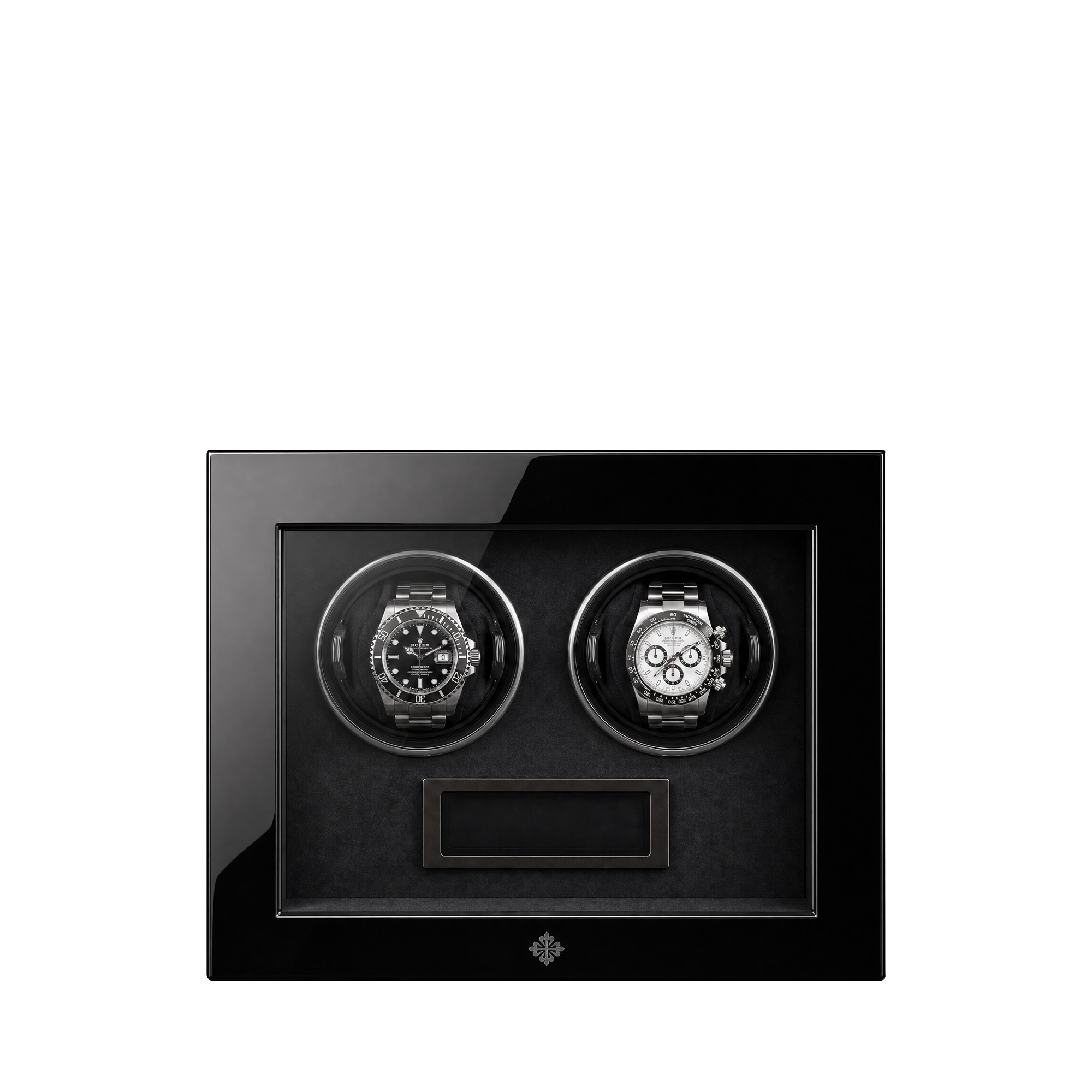
Single Seamaster or paired with one other watch: The Virtuoso™ Series 2. 700 TPD bidirectional, Alcantara interior, METAS-friendly motor isolation. Browse the double winder collection.

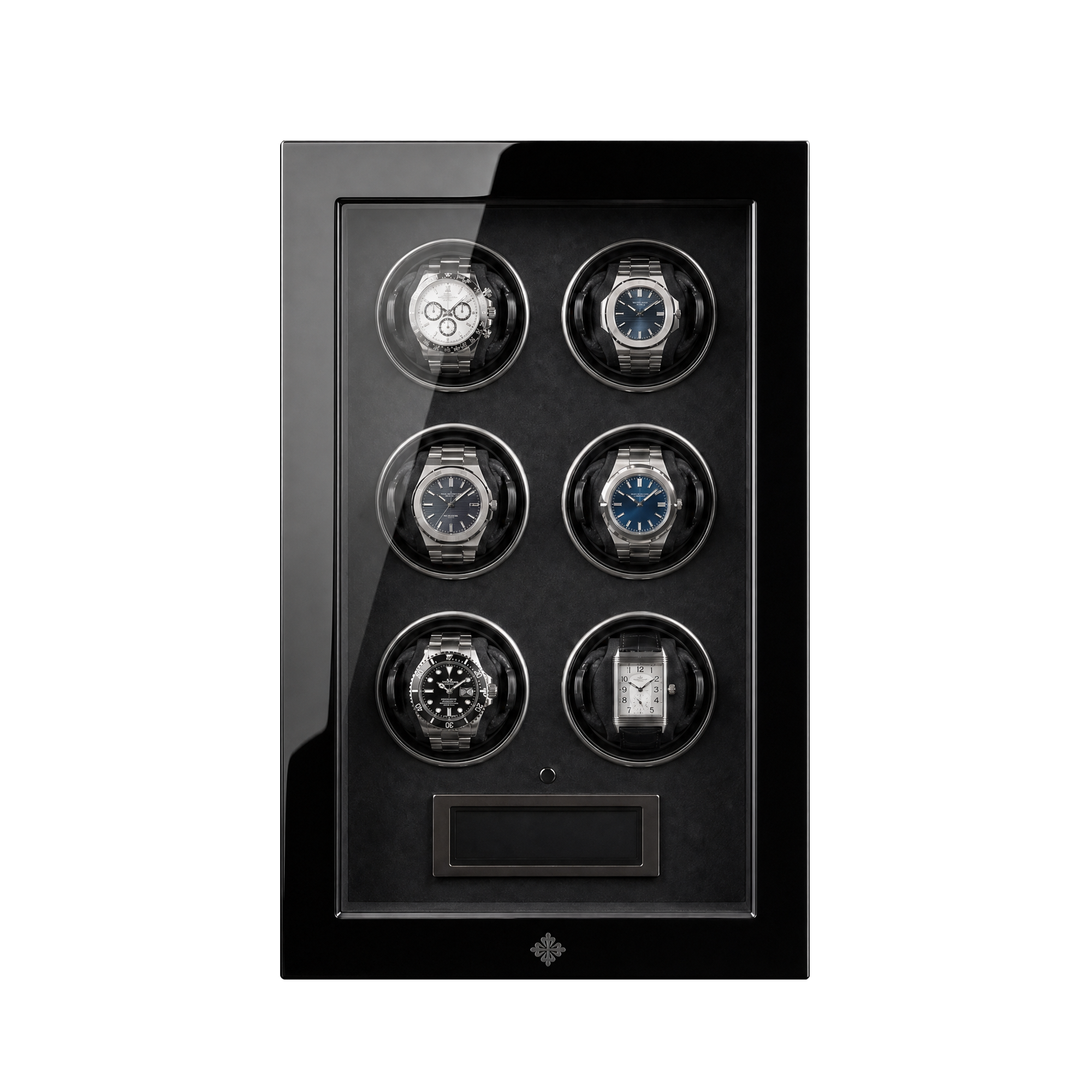
Multiple Seamaster variants or mixed Omega collection: The Virtuoso™ Series 6. A Diver 300M, Planet Ocean, and Aqua Terra all run at 700 TPD bidirectional in the same system — consistent programming across all three. See the size guide to match slot count to your collection.

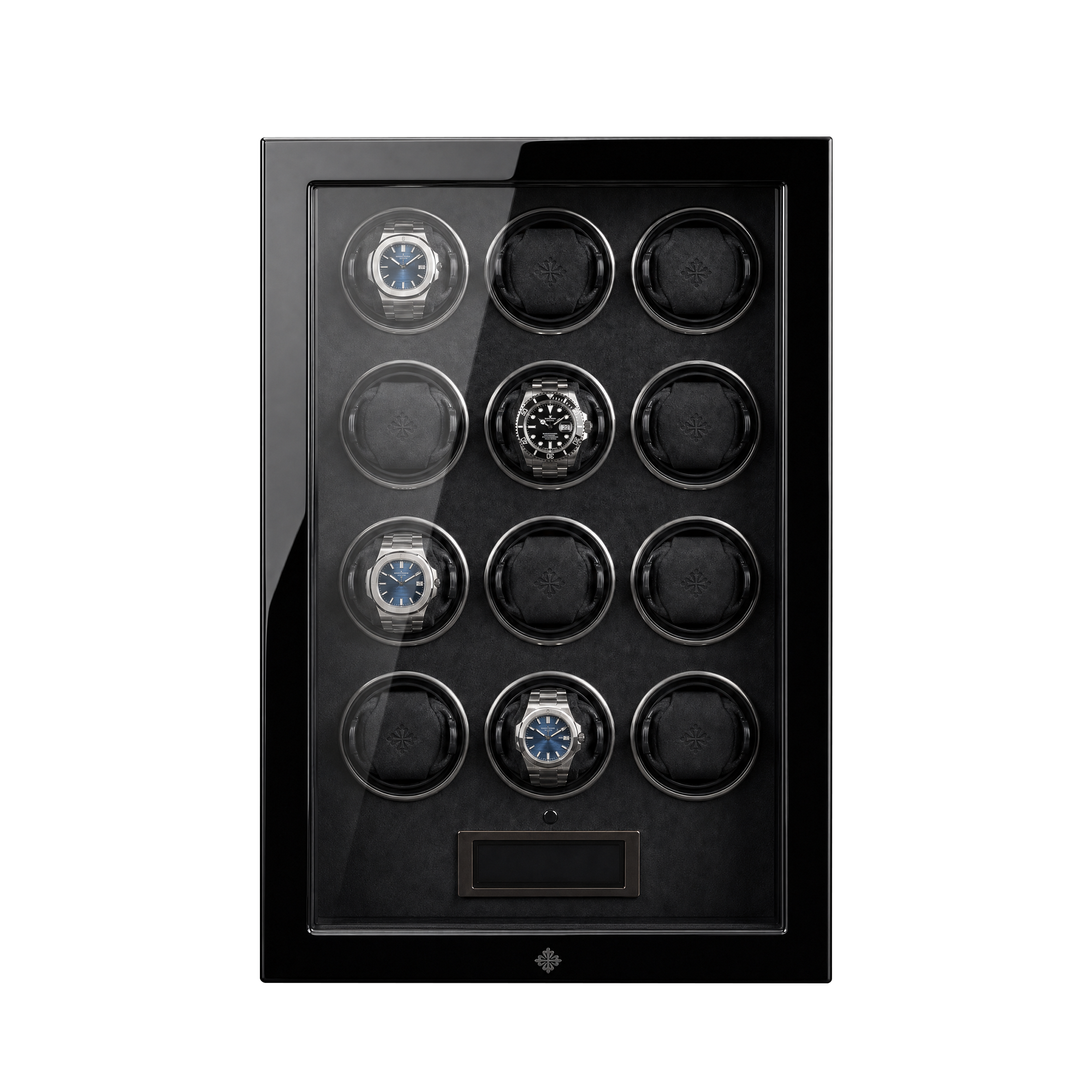
Larger Omega or multi-brand collection: The Impresario™ Series 12. Twelve independently programmed rotors. Browse the full winder range.

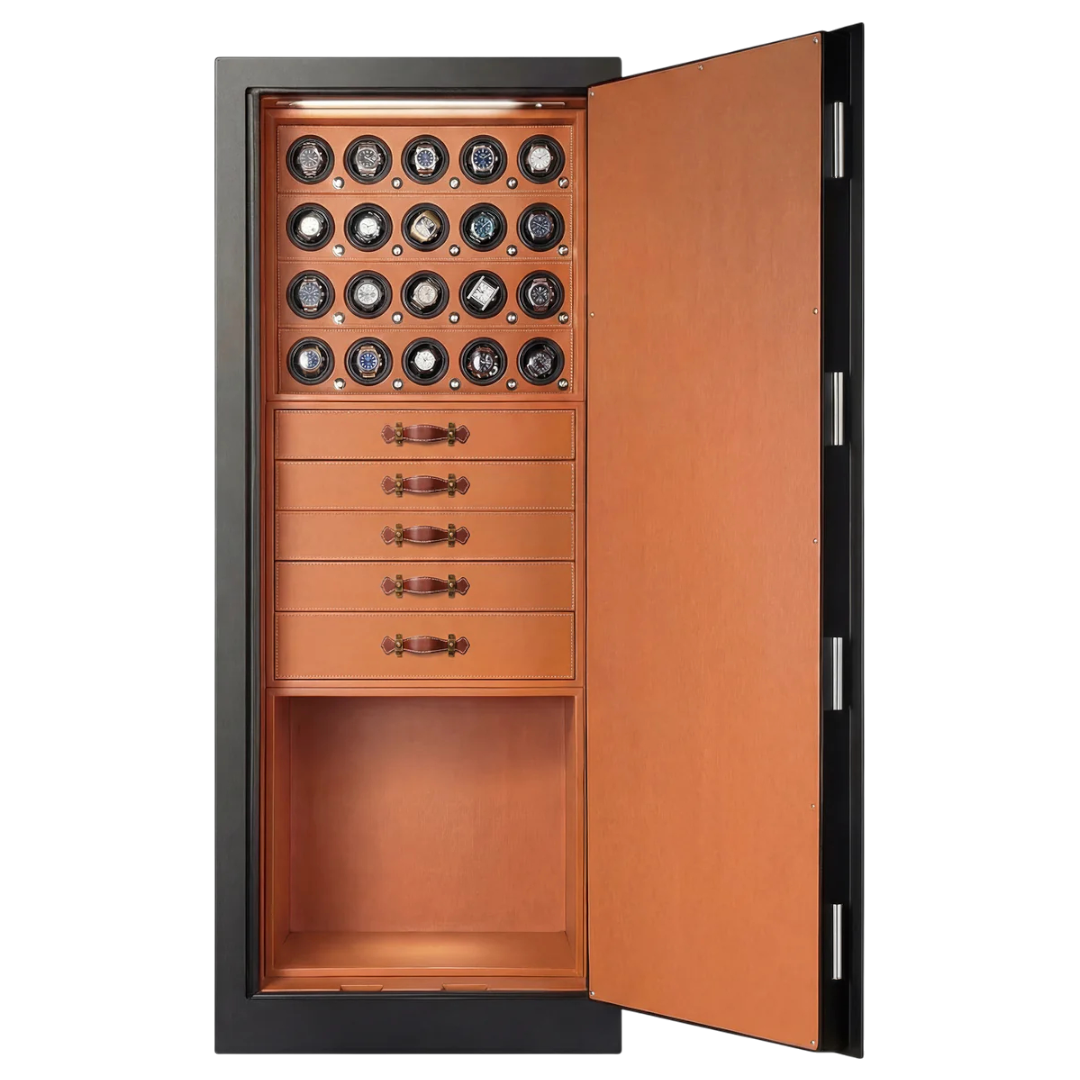
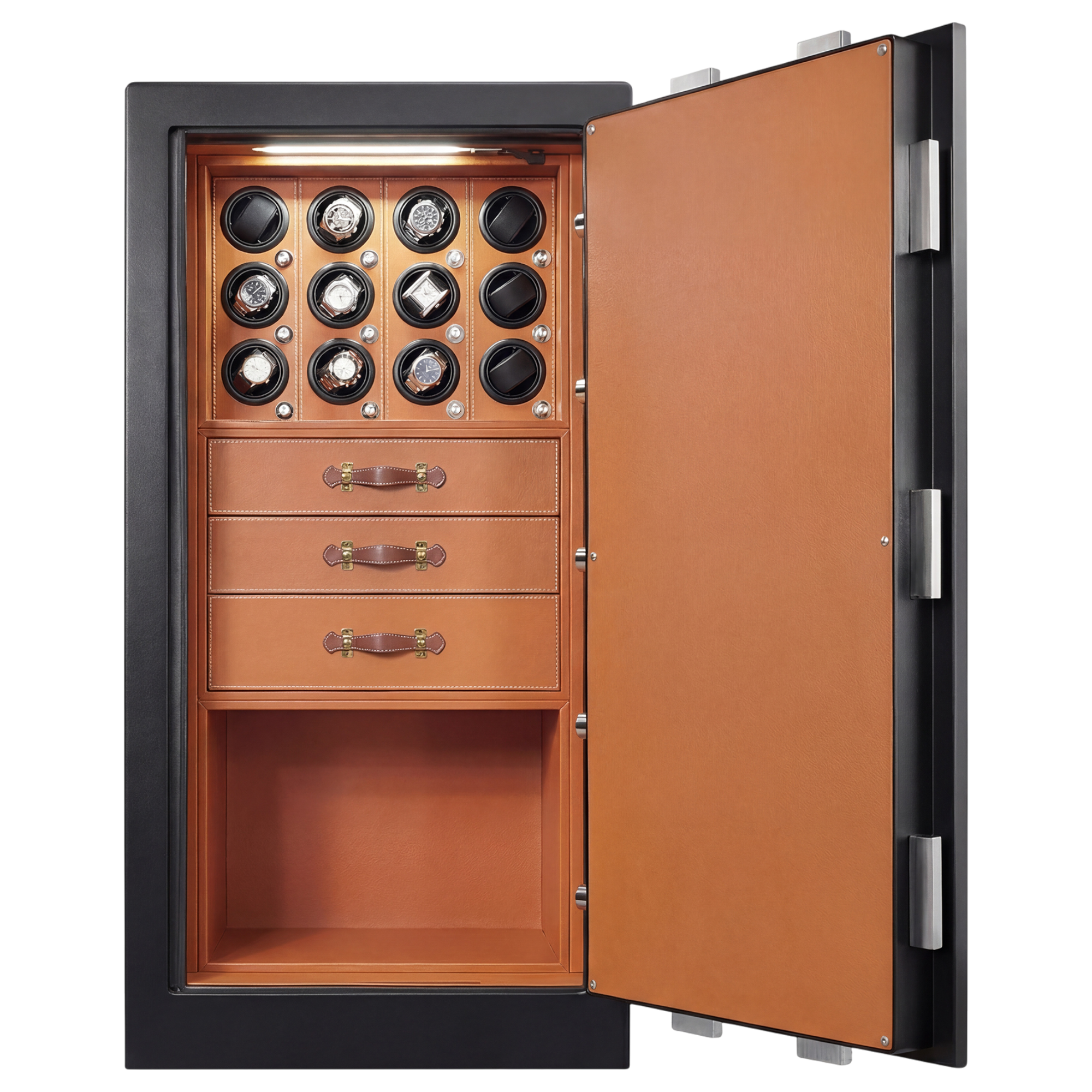
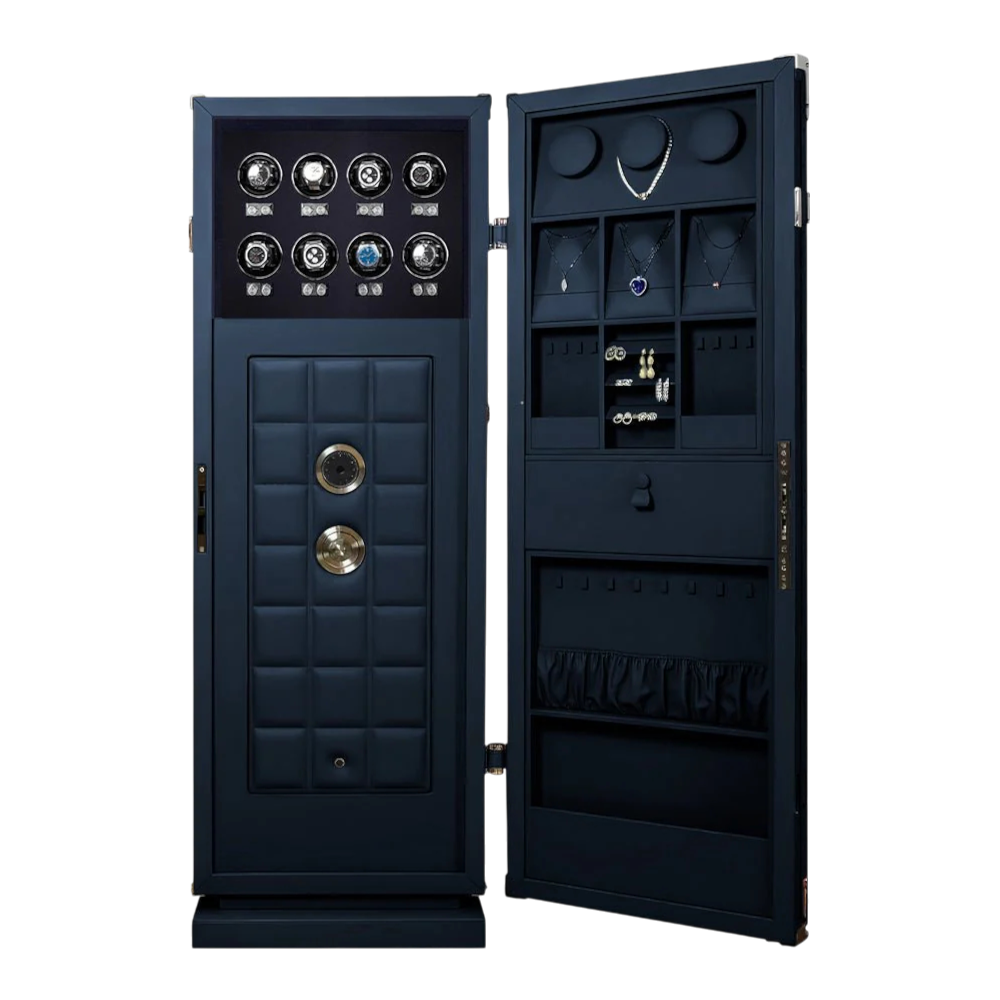
Security: For Seamaster collections alongside higher-value pieces — particularly 600M Planet Ocean Ultra Deeps and precious-metal Aqua Terra references — the Centennial™ Bulletproof Safe integrates winding and UL-rated security. Browse the vault collection.


Frequently asked questions

What TPD for an Omega Seamaster Diver 300M? 650 to 800 TPD, bidirectional. The Caliber 8800 runs well at 700 TPD bidirectional. The 55-hour power reserve makes a winder genuinely useful for collectors who don't wear the piece daily.

Do all three Seamaster families use the same winder setting? Yes — all current Seamaster calibers (8800, 8900, 8912) wind bidirectionally at 650 to 800 TPD. The setting doesn't change across the three families. Interior material consideration does — the Aqua Terra's polished centre links are most sensitive, the Diver 300M on rubber strap is least.

My older Seamaster with an ETA movement stops after two days. Is that right? Yes. Caliber 1120 carries a 42-hour reserve. The 2500-series carries 48 hours. Current 8800 / 8900 calibers extend to 55 to 60 hours. Older references benefit more urgently from continuous winding precisely because the reserve is shorter.

Can I mix a Seamaster and a Speedmaster automatic in the same winder? Yes. Both use bidirectional winding at 650 to 800 TPD — same setting, same program. The hand-wound Speedmaster Professional Moonwatch is the exception — it has no rotor and cannot be wound by any winder.

Does METAS certification require a specific kind of winder? Not formally. But practically, METAS certifies the watch's resistance to 15,000 gauss external magnetic exposure. A winder with a poorly isolated motor adds continuous low-level magnetic exposure at close range. The right winder uses motor isolation that holds EMF below 5 gauss at case distance — Enigwatch winders are specified to this standard.

What about the helium escape valve — does it matter for winding? No. The helium valve is independent of the movement. Winder operation doesn't load it, doesn't open it, doesn't interact with it. It's a sealed mechanical assembly that responds to internal pressure differentials, not winding rotation.

Is the Aqua Terra's display caseback at risk from a winder cushion? Only if the cushion is poorly chosen. The sapphire caseback is hard — Mohs 9 — and not at risk from soft cushion materials. But polished cushion edges or stitching ridges in synthetic foam covers can leave contact marks against the bezel surrounding the sapphire, which is steel and softer. Alcantara and leather cushion covers without exposed seams are the right choice for any Seamaster with a display caseback.

Can a winder damage a Master Co-Axial movement? No. The Co-Axial escapement is more durable than a Swiss lever escapement under continuous operation, not less. Properly programmed winder use — 650 to 800 TPD bidirectional — runs the movement well within design parameters. The slip clutch in the automatic winding system prevents overwinding even at maximum mainspring tension.

Should I run my Seamaster on a winder all the time, or just before I plan to wear it? Either pattern works. Continuous winding keeps the watch within tolerance and ready immediately. Scheduled winding (4 to 8 hours before planned wear) saves trivial energy and runs the rotor less. For most collectors, the convenience of continuous mode outweighs the negligible difference in motor lifespan.


Browse the full winder range at enigwatch.com/collections/automatic-watch-winder.

Full Omega collection? The Best watch winder for Omega brand guide covers every Omega family in one place.

Mixed-brand setup? The Best watch winder for Rolex guide provides Rolex caliber-by-caliber settings if your collection extends across brands.

Protect Your Watch Collection

Designed for collectors who demand the best. Explore our premium watch winders and luxury safes.
ENDLESS DISCOVERY IN YOUR INBOX

Join our mailing list to receive insider updates on our latest collections, invites to private events, and other personalized offerings.