
Last updated June 2026.
Getting the settings wrong on a watch winder does not just waste money — it puts unnecessary stress on your Omega’s movement. Too few turns and the watch stops. Too many and the mainspring never fully relaxes.
This guide covers the correct turns per day (TPD), rotation direction, and winder configuration for every major Omega collection. If you own a Seamaster, Speedmaster, Constellation, or De Ville, the settings you need are below.
What “Watch Winder Settings” Actually Means

Three variables control how a watch winder interacts with your watch.
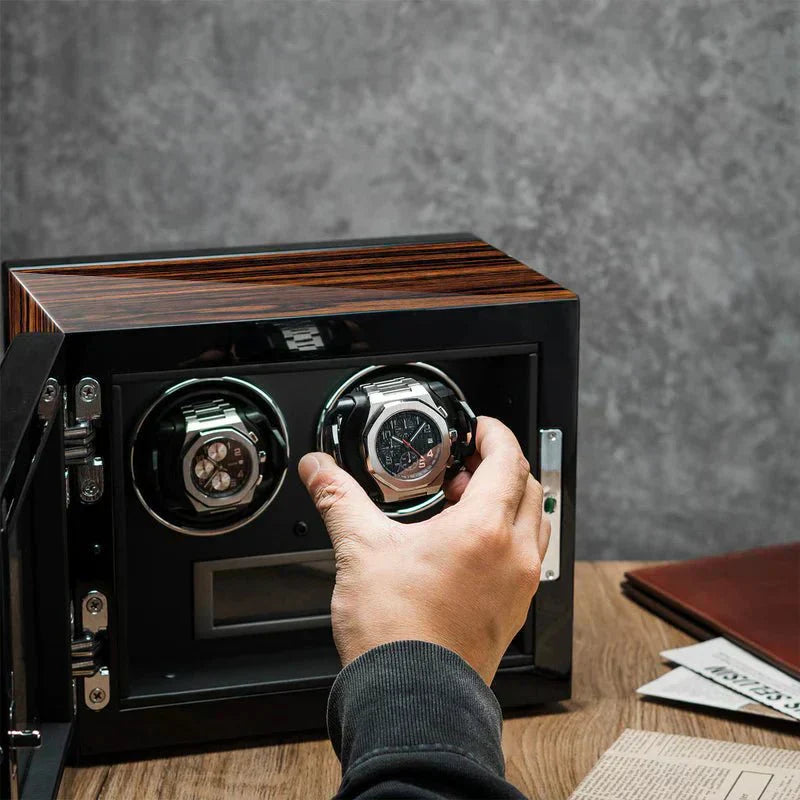
Turns Per Day (TPD) is the total number of rotations the winder completes in a 24-hour period. This is the most important setting. Too low and your watch loses power reserve. Too high and the rotor never rests, adding unnecessary wear over time. For a full breakdown of TPD requirements by brand and movement, see our TPD reference guide.
Rotation Direction determines which way the winder turns. Omega movements use bidirectional winding — the rotor winds the mainspring in both clockwise and counterclockwise directions. Your winder should always be set to bidirectional, sometimes labeled “both directions” or “CW+CCW.”
Rest Cycles are the intervals between winding periods. Quality winders alternate between motion and rest rather than spinning continuously. This more closely replicates natural wrist movement and is better for the movement long-term.
Omega Watch Winder Settings by Collection

The table below reflects Omega’s power reserve requirements and the TPD ranges that keep each movement fully wound without over-winding.
| Omega Model | Caliber | Recommended TPD | Direction |
|---|---|---|---|
| Seamaster Diver 300M | 8800 / 8806 | 650 | Bidirectional |
| Seamaster Aqua Terra | 8500 / 8900 | 650 | Bidirectional |
| Seamaster Aqua Terra GMT | 8605 / 8905 / 9605 | 650 | Bidirectional |
| Seamaster Planet Ocean | 8900 / 8906 | 650 | Bidirectional |
| Seamaster Planet Ocean Chronograph | 9300 / 9900 | 700 | Bidirectional |
| Seamaster Railmaster | 8806 | 650 | Bidirectional |
| Seamaster 300 / Ploprof | 8400 / 8912 | 650 | Bidirectional |
| Seamaster 300M (pre-2018) | 2500 | 650–800 | Bidirectional |
| Speedmaster Moonwatch (manual) | 3861 / 1861 | Not required* | N/A |
| Speedmaster Co-Axial / ’57 | 9300 / 9900 | 700 | Bidirectional |
| Speedmaster Racing / Automatic | 9900 | 700 | Bidirectional |
| Speedmaster Date / Day-Date (older) | 1151 / 1164 | 800 | Clockwise |
| Constellation | 8700 / 8800 / 8900 | 650 | Bidirectional |
| Globemaster | 8900 / 8901 | 650 | Bidirectional |
| De Ville Prestige | 2500 / 8500 | 650 | Bidirectional |
| De Ville Hour Vision | 8500 / 8611 | 650–800 | Bidirectional |
| De Ville Trésor (automatic) | 8910 | 650 | Bidirectional |
Omega Seamaster winder settings
The modern Seamaster line (Diver 300M, Aqua Terra, Planet Ocean, and Railmaster) runs on Omega’s Co-Axial Master Chronometer calibres: the 8800, 8900, and related movements. Every one of them wants 650 TPD, bidirectional, the lowest turns-per-day setting on a quality winder. The one exception is the Planet Ocean Chronograph (Cal. 9300 / 9900), which prefers 700 TPD, still bidirectional. Pre-2018 Seamaster 300M models on the Cal. 2500 are happy anywhere from 650 to 800 TPD.
Omega Speedmaster winder settings
This is the one that trips people up. The Speedmaster Moonwatch is manual-wind (Cal. 3861, or the older 1861), so it has no rotor and a winder does nothing for it. Wind it by hand and keep it off the winder. The automatic Speedmasters are a different story: the Racing, the ’57 Co-Axial, and the Moonwatch Co-Axial Chronograph (Cal. 9900 / 9300) want 700 TPD, bidirectional. Older automatic Date and Day-Date models on the Cal. 1151 / 1164 run clockwise at 800 TPD.
Finding your caliber and dialing it in
Not sure which movement you have? It is engraved on the rotor, visible through a display caseback, or listed on Omega’s site under your reference number. When in doubt, start at the lowest combined setting (650 TPD, bidirectional) and check the watch against a reference time after two or three days. If it is running behind, step the TPD up one level. Sit the watch at 90 degrees on the cradle rather than flat for the most consistent winding.
*The Speedmaster Moonwatch (Cal. 3861) is a manual-wind movement. It does not require a watch winder and should be wound by hand.
A note on TPD settings: Enigwatch winders offer five TPD options: 650, 900, 1350, 1800, and 2200. For most Omega movements, 650 is the correct starting point. Move to 900 if your watch has a power reserve above 60 hours or if you wear it infrequently. There is no benefit to running an Omega at 1350 or above — the movement does not require it.
How to Set Up Your Winder for an Omega Watch

- Set rotation direction to bidirectional
- Set TPD to 650 for most Omega models (see table above for exceptions)
- Place the watch on the winder with the crown at the 3 o’clock position
- Confirm the pillow fits the case diameter — Omega Seamaster and Speedmaster cases range from 38mm to 44mm
- Let the winder run for 24 hours before checking timekeeping accuracy
If your watch is already fully wound, the winder will simply maintain the power reserve. It will not overwind — modern Omega movements have a slipping mainspring that prevents this. For general care tips beyond winding, see our guide on how to take care of a watch winder.
Do All Omega Watches Need a Winder?
No. Only automatic (self-winding) movements benefit from a winder. Manual-wind movements — like the Speedmaster Moonwatch’s Cal. 3861 — are hand-wound and should not be placed on a winder.
If you are unsure whether your Omega is automatic or manual, check the caseback. Automatic movements typically show the rotor through a transparent caseback. Manual movements require you to wind the crown directly. Not sure about the difference? Our automatic vs manual watch guide covers this in detail.
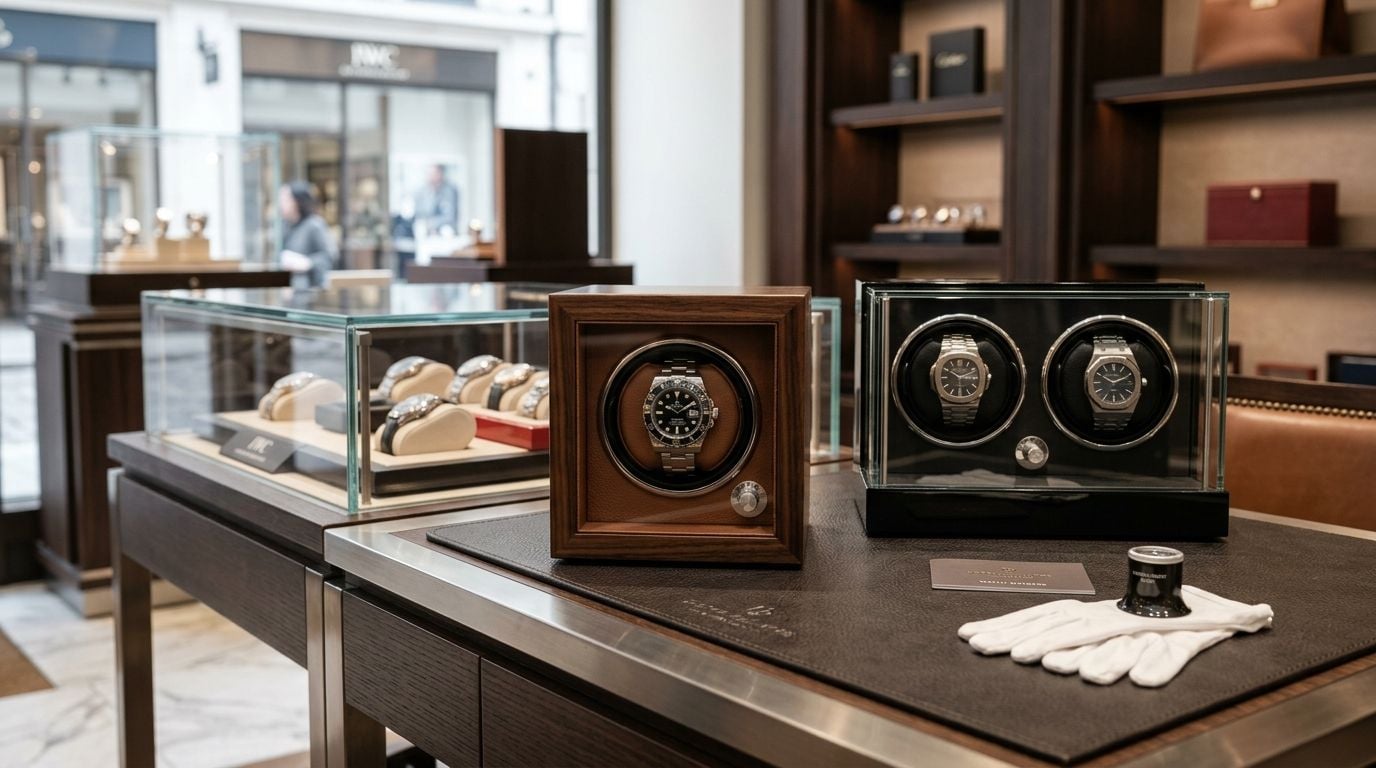
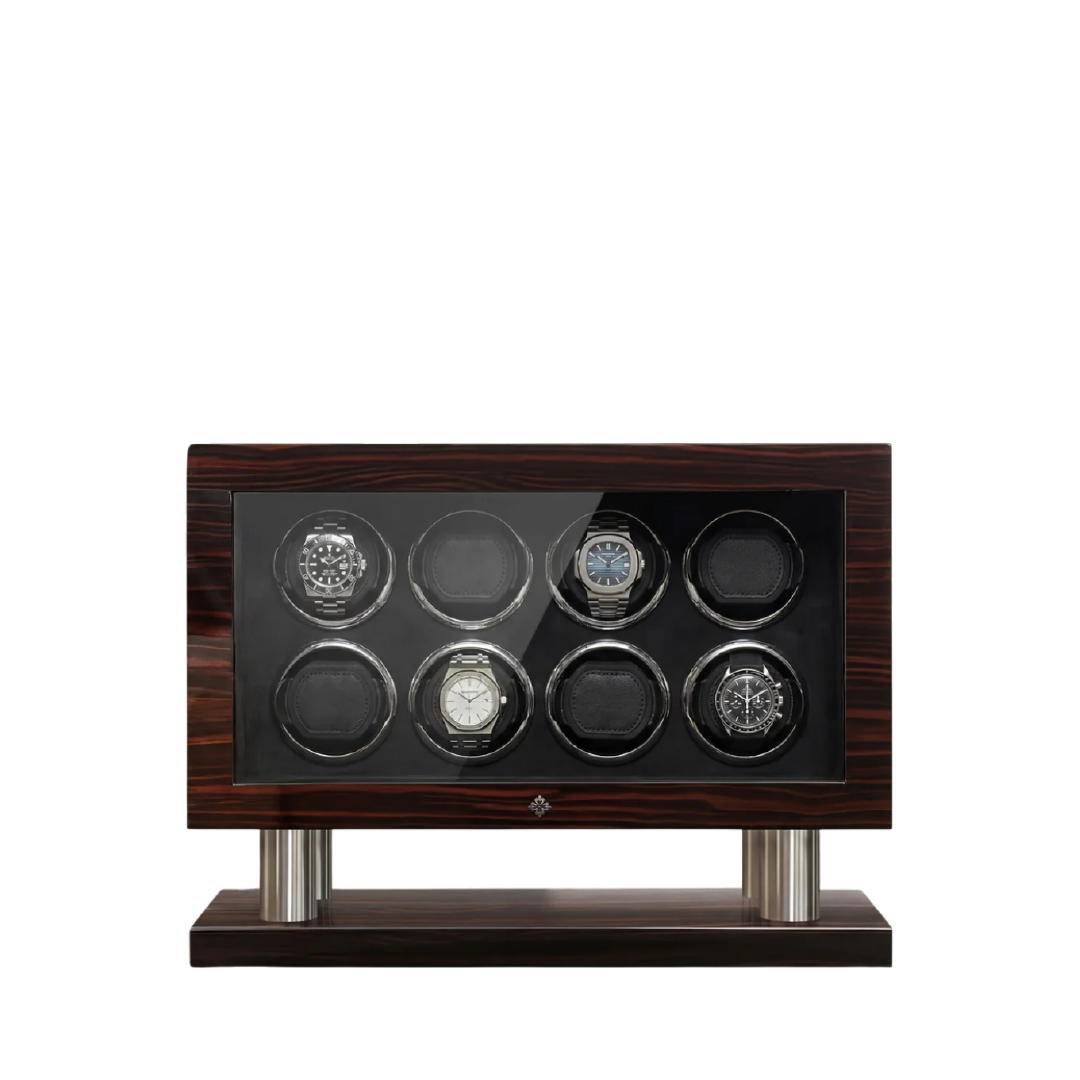
Recommended Winders for Omega Collections
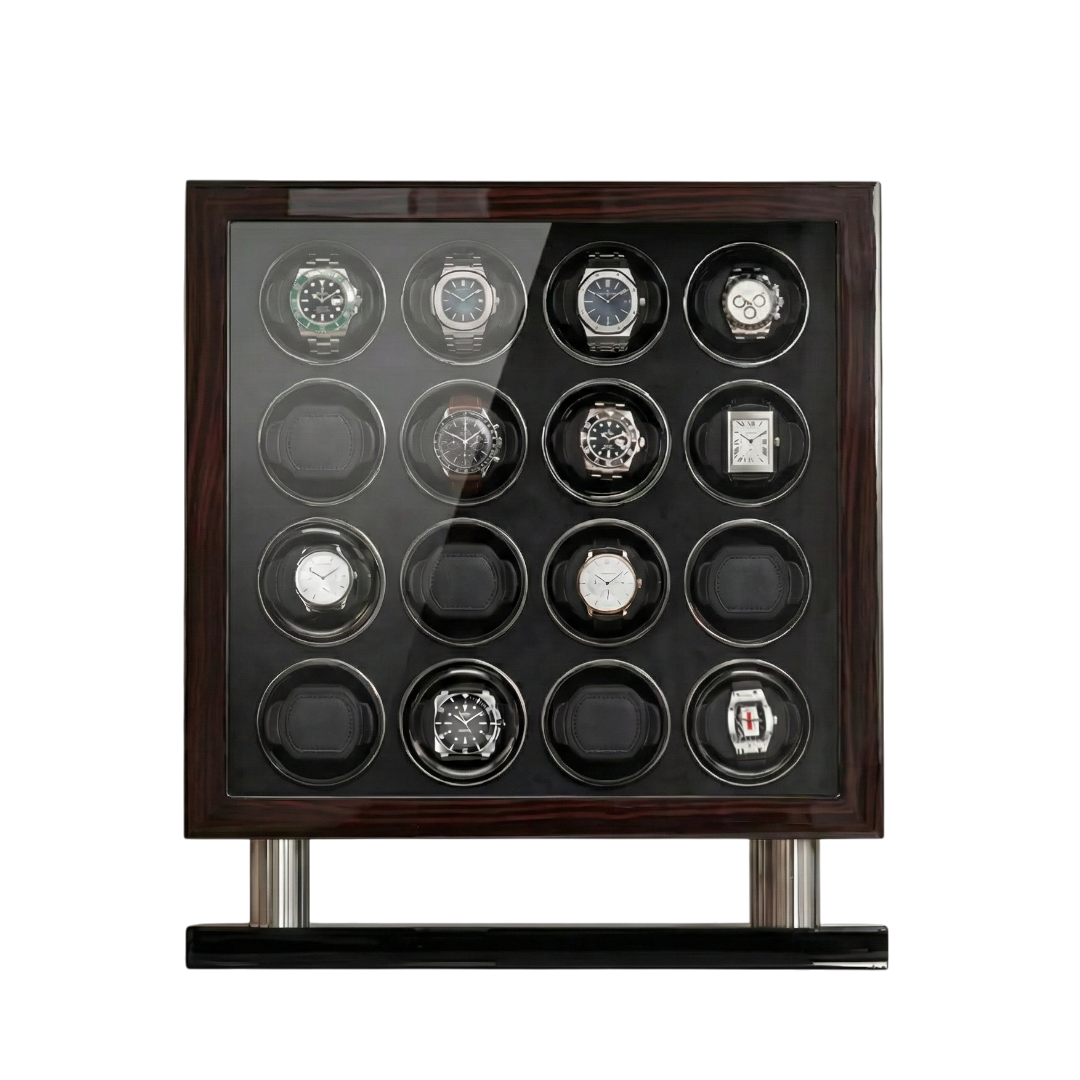
Yachtline Series 16 Watch Winder
Handles up to 16 watches with individually programmable rotors, so each Omega runs at its own TPD setting independent of the others. Silent Mabuchi motor, bidirectional rotation, full coverage across all five Enigwatch TPD settings. The most practical option for collectors who rotate between multiple pieces. Ships within 3 to 5 business days with a lifetime motor warranty.
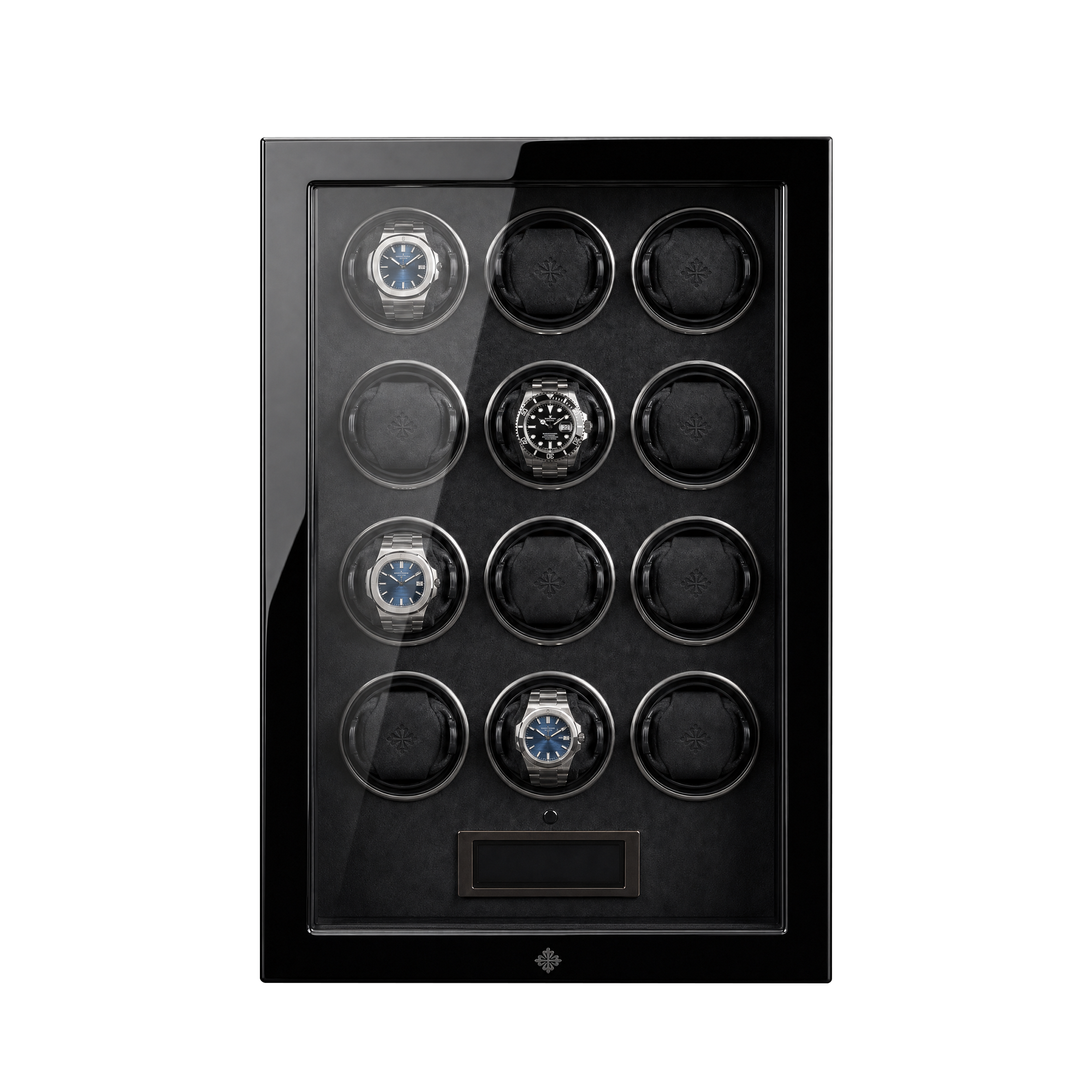
Impresario Series 12 Watch Winder
Twelve individually programmable rotors, fingerprint access, and an Alcantara-lined interior that protects case finishing and bracelets from micro-abrasion. For Omega owners who treat the winder as part of the room rather than just a maintenance tool, the Impresario 12 is the standard. Ships within 3 to 5 business days with a lifetime motor warranty.
Not sure which size fits your collection? Use our watch winder size guide to find the right configuration.
When a Watch Safe Makes More Sense

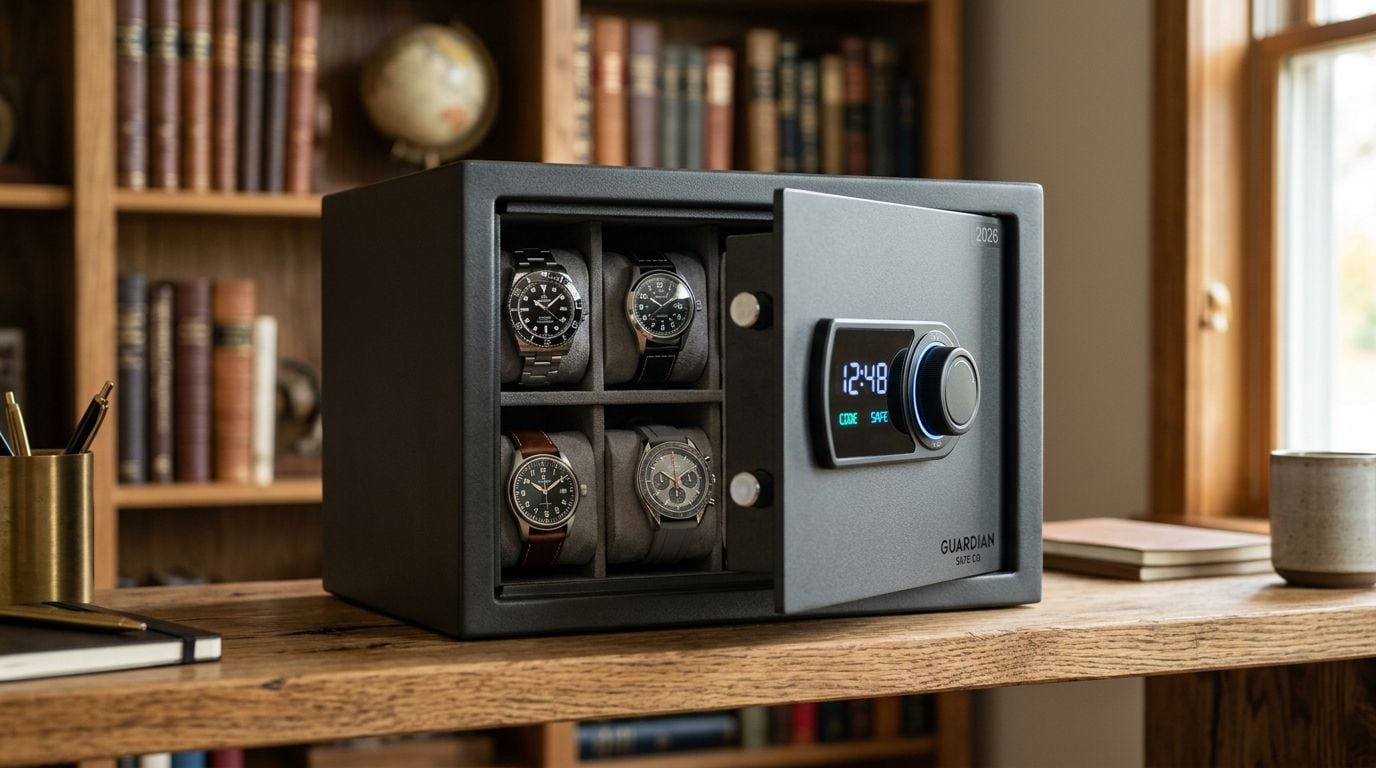
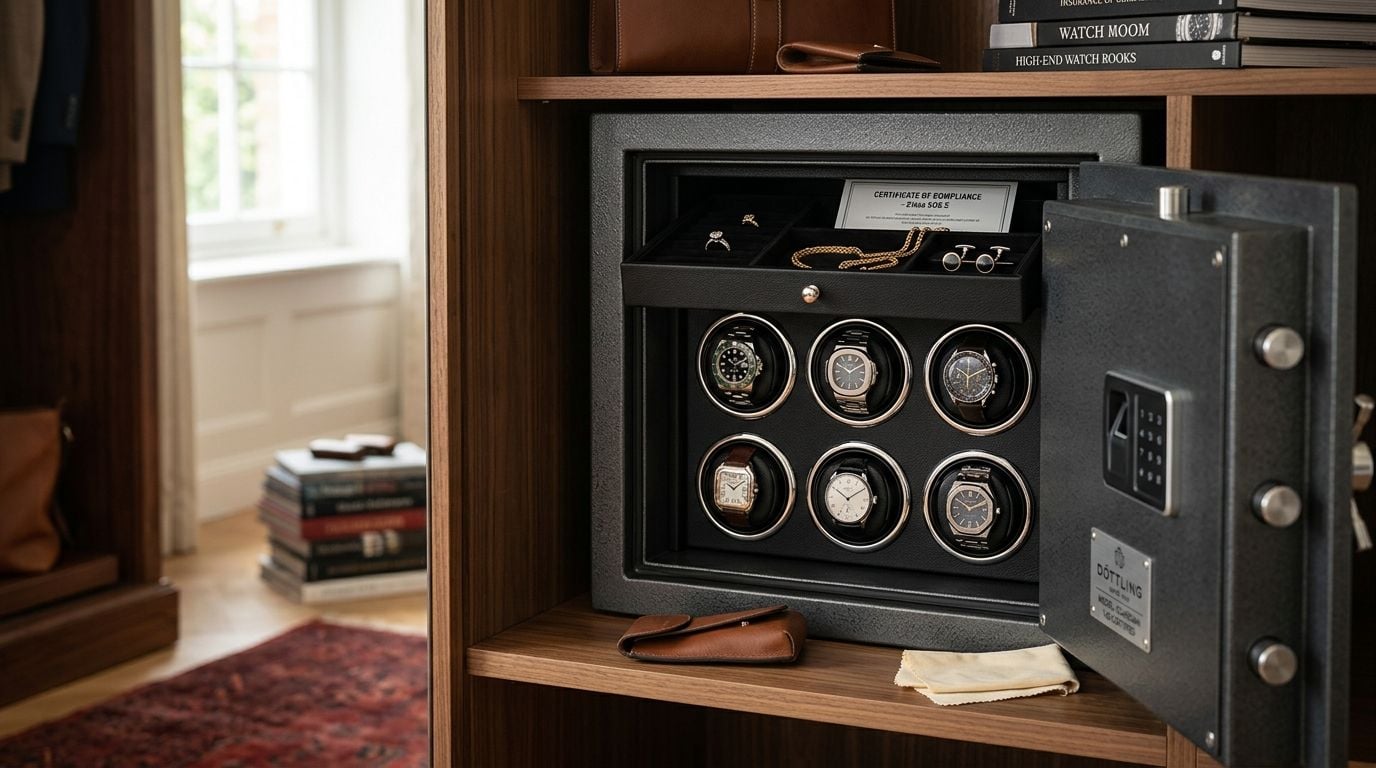
A winder keeps your watch running. A watch safe keeps it running and keeps it protected.
If you own two or more Omegas — or a collection that includes pieces above $10,000 — storing them in an open winder is the weaker option. The Seamaster 300M starts at around $5,500. The Speedmaster Moonwatch Professional retails above $6,000. A collection of three to five Omegas represents a significant asset.
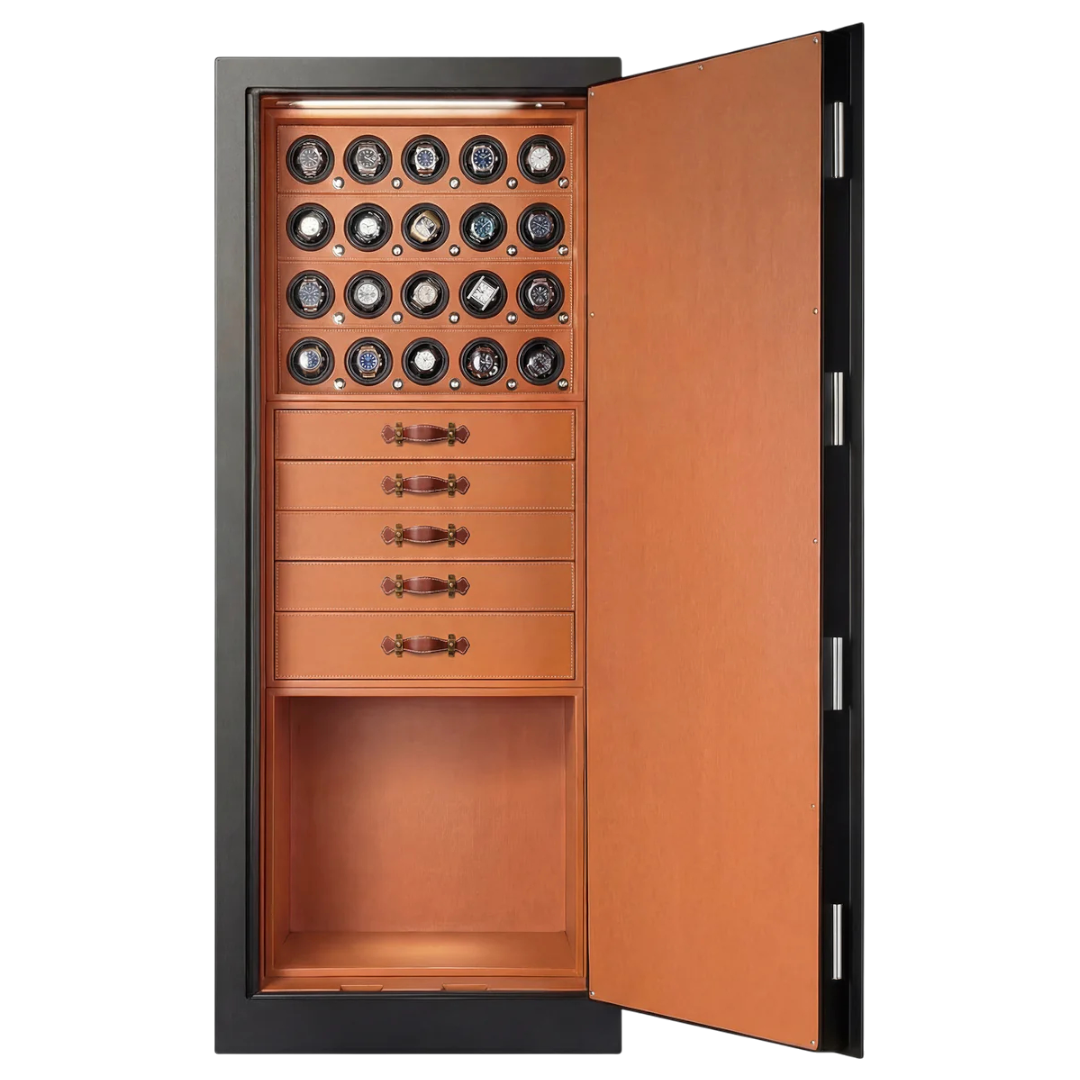
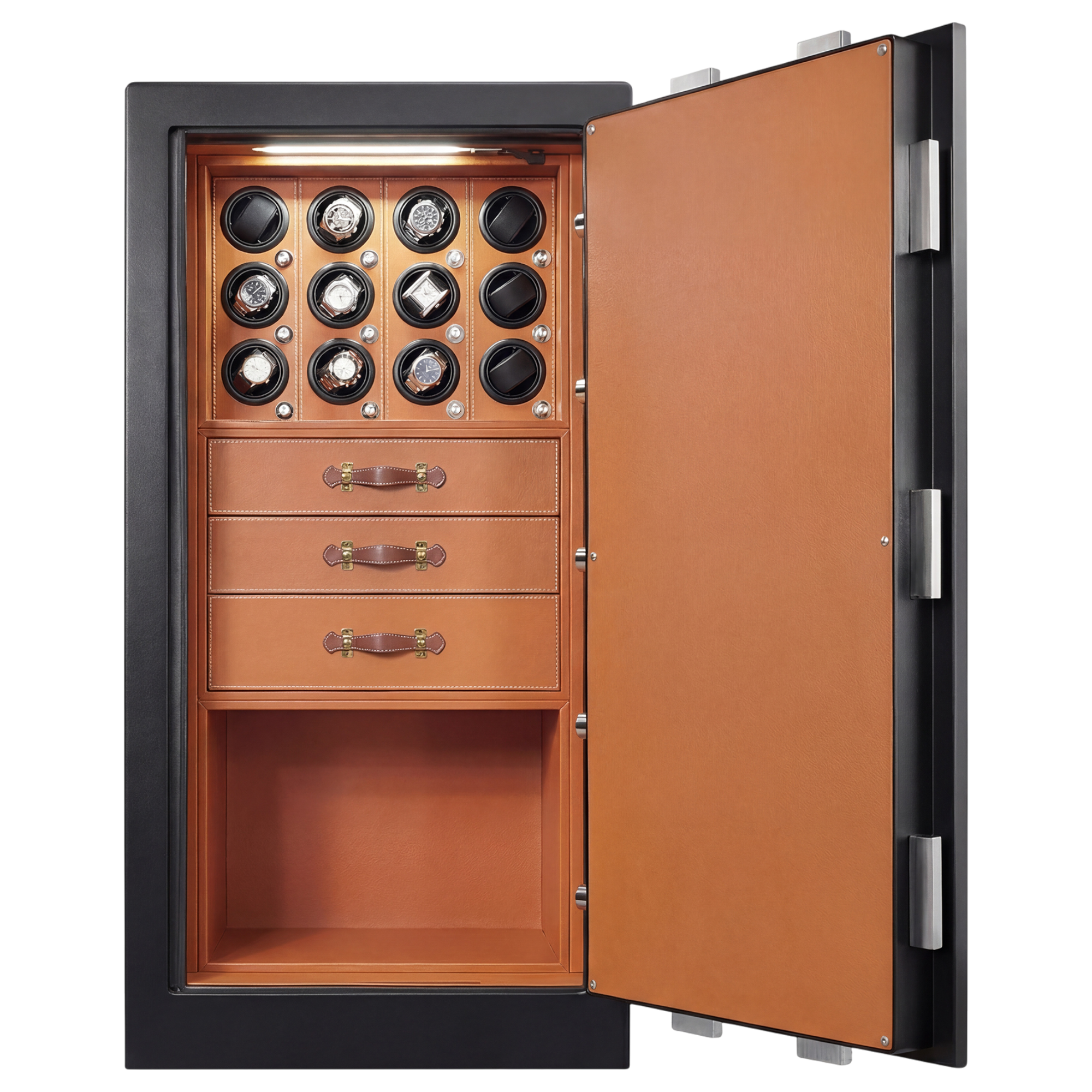
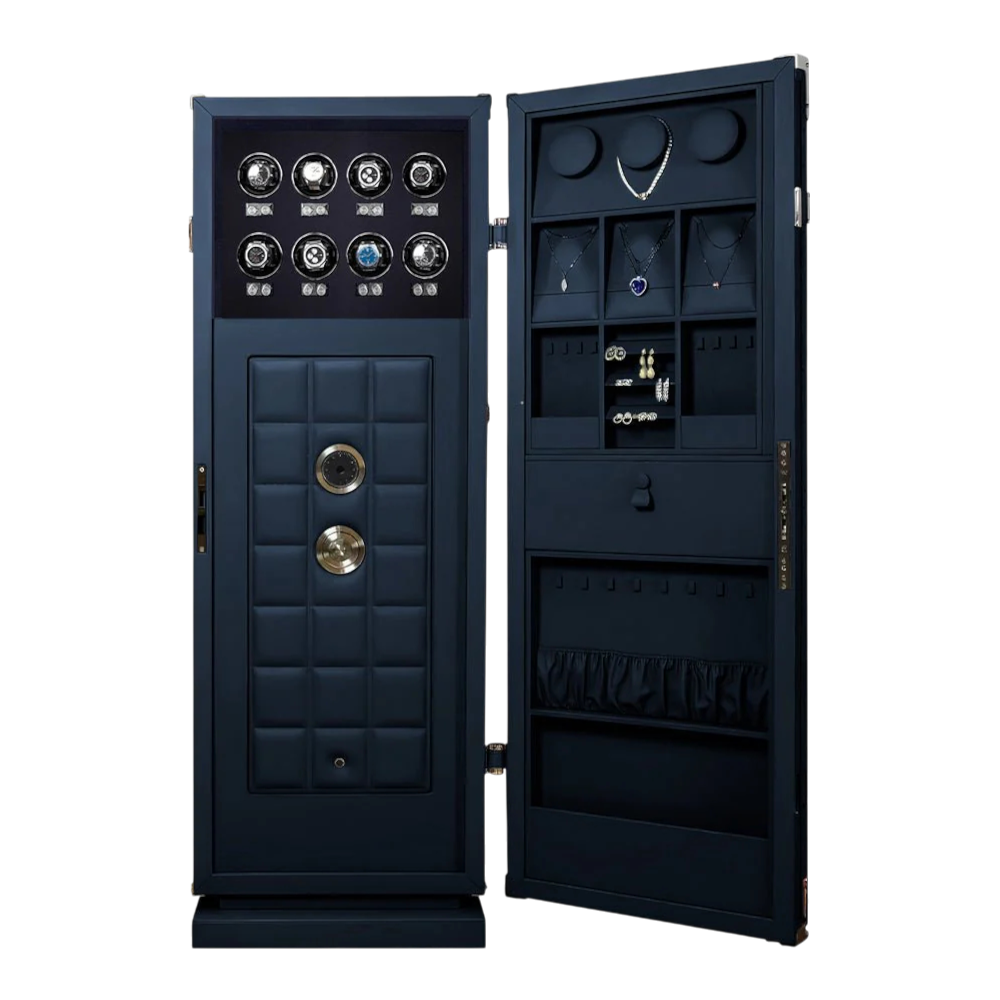
Enigwatch’s watch safes include integrated winding rotors, so your watches stay wound and secured behind certified fire-resistant, bulletproof glass with biometric access. For help choosing between a winder and a safe, see our watch safe buying guide. Three models to consider:
Veron Elite 20 Watch Safe 20-watch capacity, individually programmable winding rotors, biometric and key access, fire and impact certified. The most requested watch safe in the Enigwatch lineup.
Titan Sanctum 20 Watch Safe Same 20-watch capacity as the Veron Elite with heavier gauge steel construction and a Macassar Ebony finish. Built for collectors who want the safe to function as a statement piece as much as a security solution. Production lead time is 4 to 8 weeks with freight delivery.
Centennial Bulletproof Watch Safe Ballistic-rated glass, 12 winding rotors, built for high-value collections where security is the primary requirement. Production lead time is 4 to 8 weeks with freight delivery.
All three carry a lifetime warranty, with other components covered for 2 years against manufacturing defects.
Frequently Asked Questions

What TPD should I use for an Omega Seamaster? 650 TPD, bidirectional. This matches the winding requirements of the Cal. 8800 and 8900 movements used across the Seamaster range.
Can I use a watch winder for an Omega Speedmaster Moonwatch? No. The Speedmaster Moonwatch uses a manual-wind movement (Cal. 3861) and does not have a rotor. It must be wound by hand and should not be placed on an automatic winder.
What happens if the TPD is set too high for an Omega? Modern Omega movements have a slipping mainspring that prevents overwinding. That said, running unnecessary high-rotation cycles adds wear to the rotor and winding mechanism over time. Stick to the recommended TPD in the table above.
Does rotation direction matter for Omega watches? Yes. Always set to bidirectional. Omega’s Co-Axial movements wind in both directions — a clockwise-only or counterclockwise-only setting results in less efficient winding and may not maintain full power reserve.
How do I know if my Omega needs a winder? If your watch has an automatic movement — visible rotor through the caseback, or the watch winds itself while worn — it benefits from a winder. Manual-wind movements do not.
For collectors who own both Omega and Audemars Piguet, see our watch winder for Audemars Piguet guide — the settings are similar but the case compatibility considerations differ.
For collectors who own both Omega and Cartier, see our Cartier watch winder settings guide — note that many Cartier models are quartz and do not require winding.
Protect Your Watch Collection
Designed for collectors who demand the best. Explore our premium watch winders and luxury safes.
Protect Your Watch Collection
Designed for collectors who demand the best. Explore our premium watch winders and luxury safes.