
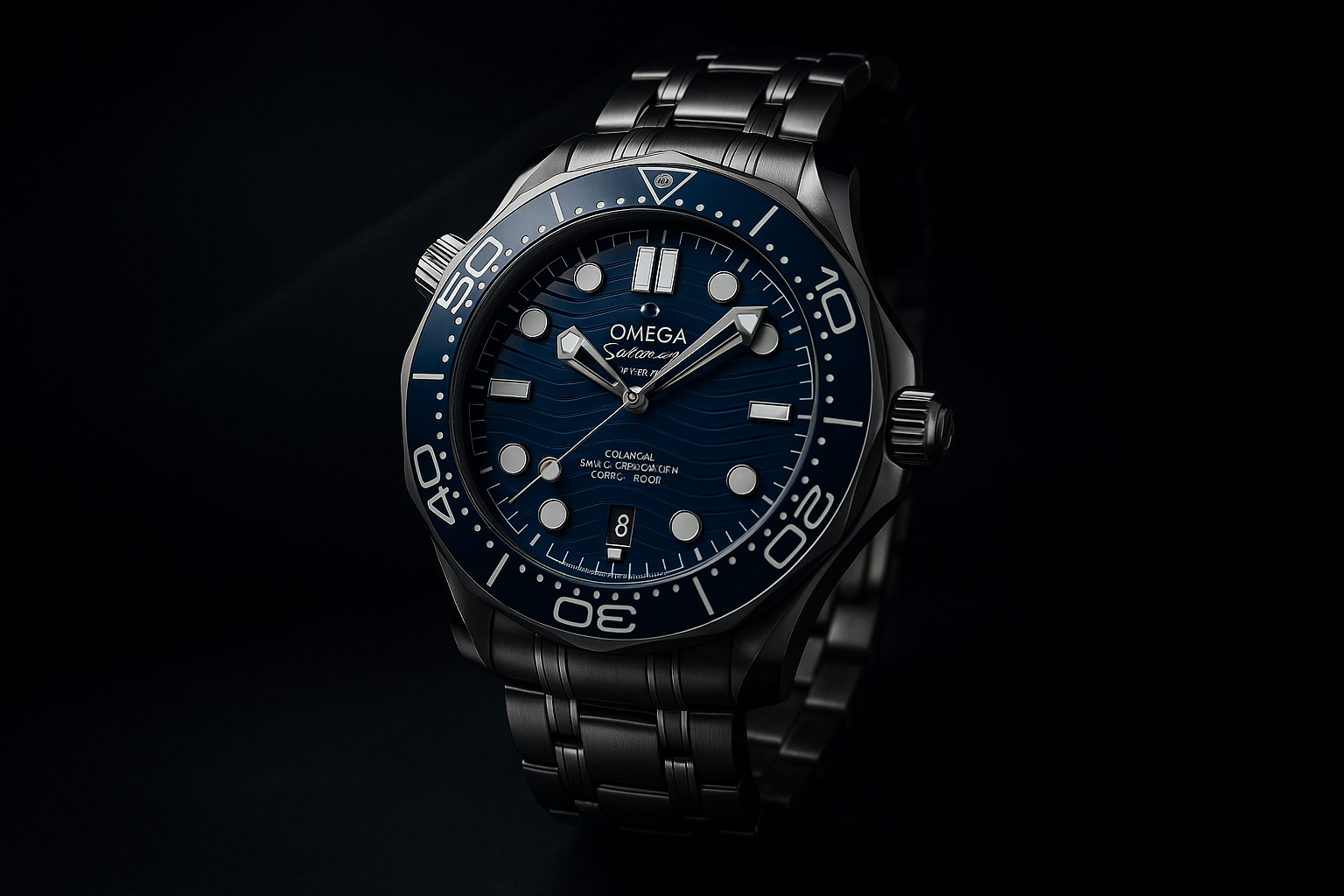
The Omega Speedmaster runs on the caliber 3861 (current Moonwatch), caliber 9300/9301 (Speedmaster ’57 and Co-Axial), or older calibers like the 1861 and 3220 — and each has a specific TPD range that determines whether your winder keeps it running or quietly kills its power reserve cycle. Get the settings wrong and you’ll either under-wind the movement or stress the mainspring with unnecessary rotation.
TL;DR: For watch winder settings on the Omega Speedmaster, set turns-per-day (TPD) between 650 and 950 for calibers 3861 and 9300/9301, use bidirectional winding, and run rest cycles of at least 8 hours per day. The Speedmaster’s Pellaton winding system on Co-Axial calibers is efficient enough that you don’t need to chase the maximum TPD. A programmable winder that lets you dial in 800 TPD bidirectional in 2026 covers every current Speedmaster variant.
Why This Matters
Omega’s caliber 3861 (introduced in 2021) has a power reserve of 50 hours. The caliber 9300/9301 runs to 60 hours. If your winder runs constant rotation without rest, you’re fighting the slipping-clutch mechanism instead of working with it. Omega’s own documentation puts the minimum winding threshold at around 650 TPD for the Pellaton automatic winding system. More isn’t always better — above 1,000 TPD with no rest periods, the rotor spins against a fully wound mainspring, generating heat and micro-vibration inside the barrel.
What You’ll Need
- A programmable watch winder with adjustable TPD (not fixed-speed motors)
- The ability to set direction: clockwise (CW), counter-clockwise (CCW), or bidirectional (both)
- A rest-cycle timer or interval programming (minimum 8-hour rest recommended)
- Your specific Speedmaster caliber number (printed on the caseback or in the papers)
- 10 minutes to set the program before you load the watch
Step-by-Step: Setting Your Watch Winder for the Omega Speedmaster
Step 1: Identify Your Caliber
Flip the Speedmaster over. The caliber number is engraved on the caseback or printed in the Omega warranty documents. The three most common calibers in 2026 are the 3861 (current Moonwatch Professional), the 9300/9301 (Speedmaster ’57 and older Co-Axial pieces), and the 1861 (pre-2021 Moonwatch). The caliber determines the correct TPD ceiling. If you’re working with a vintage Speedmaster running the hand-wound caliber 321 or 861, stop here — those are manual-wind only and must never go in a winder.
Common mistake: Putting a hand-wound Speedmaster in a winder. The caliber 321, 861, and 1861 are manual-wind movements. Only Speedmasters with an automatic rotor belong in a winder.
Step 2: Set the TPD
For the caliber 3861, set TPD to 800. For the caliber 9300 or 9301, 900 TPD gives the Pellaton system enough input to stay fully wound without over-stressing the barrel. For any legacy automatic caliber (3220, 3225), 700 TPD is a safe floor.
These are the target ranges for 2026:
| Caliber | Movement Type | Recommended TPD | Direction |
|---|---|---|---|
| 3861 | Automatic Co-Axial | 650–950 | Bidirectional |
| 9300 / 9301 | Automatic Co-Axial | 800–1,000 | Bidirectional |
| 3220 / 3225 | Automatic | 650–800 | Bidirectional |
| 1861 | Manual-wind | Do not wind | — |
| 321 / 861 | Manual-wind | Do not wind | — |
Common mistake: Setting the winder to CW or CCW only. Every current Speedmaster automatic winds bidirectionally via the Pellaton system. A single-direction setting cuts your effective winding efficiency by roughly half, meaning the watch may drop below full power reserve overnight even with the winder running.
Step 3: Set the Direction to Bidirectional
On your winder’s control panel, select bidirectional (often labeled “Both”, “Bi”, or “CW+CCW”). The Pellaton winding mechanism on calibers 3861 and 9300/9301 uses a pair of pawl levers that engage in both rotational directions. You get maximum rotor efficiency in bidirectional mode. Set this before you start the motor — changing direction while the watch is loaded can cause a brief jolt to the movement.
Common mistake: Confusing “alternating” (which switches direction on a timer) with “simultaneous bidirectional” engagement. The Speedmaster’s Pellaton system is mechanically bidirectional regardless — the winder direction setting controls which way the rotation arm moves, not the movement itself.
Step 4: Program the Rest Cycle
Set a rest interval of at least 8 hours in every 24. Many quality winders offer a 12-on / 12-off cycle, which works well for the 50-hour power reserve on the caliber 3861 — it stays wound without continuous motor engagement. If your winder only allows a single continuous run, program it to stop at 900 TPD total and restart the next day. Continuous rotation with no rest is the single most common user error with Speedmasters.
Expected outcome: After 24 hours on correct settings, the Speedmaster should show full power reserve and keep within ±5 seconds per day of its certified chronometric accuracy.
Step 5: Mount the Watch Correctly
Set the winder arm to fit the Speedmaster’s 42mm–44.25mm case (depending on variant). The cushion or holder should grip the strap or bracelet, not press against the caseback. The Moonwatch Professional weighs 68.8 grams on its bracelet — confirm the holder is snug enough that the watch doesn’t shift during rotation but not so tight that it stresses the clasp.
Common mistake: Using an undersized cushion. A loose watch shifts its center of gravity mid-rotation, causes uneven rotor engagement, and can scratch the caseback against the holder surface.
Step 6: Run a 48-Hour Test
Load the watch with a full manual wind first. Run the winder on your programmed settings for 48 hours. After 48 hours, check the power reserve indicator (if present) or the seconds hand sweep. If the watch has stopped or lost more than 10 minutes, increase TPD by 100 and retest. If it’s running perfectly, your settings are confirmed for 2026 and beyond.
Expected outcome: A caliber 3861 on 800 TPD bidirectional with a 12-on / 12-off cycle will hold full 50-hour power reserve indefinitely without manual intervention.
Troubleshooting
Watch stops overnight despite winder running
TPD is too low or direction is set to single-direction. Increase to 800 TPD minimum and switch to bidirectional.
Watch runs fast after winder use (+10 seconds/day or more)
Mainspring is being overwound due to excessive TPD with no rest. Drop to 700 TPD and add a 10-hour rest cycle. An over-wound mainspring creates additional tension on the regulator.
Winder is noisy during operation
Motor vibration transfers to the movement. Place the winder on a rubber mat or felt surface. If the noise persists, check that the watch is seated squarely — an off-center mount amplifies motor resonance.
Watch develops magnetism symptoms (seconds hand gaining time irregularly)
The winder motor is placing the watch in a magnetic field. Move the watch at least 6 inches from the motor housing, or choose a winder with a shielded motor compartment.
TPD display doesn’t match expected rotation count
Many entry-level winders count “turns” as partial arcs, not full 360° rotations. A winder claiming “1,000 TPD” may deliver 600–700 effective rotor turns. Verify your winder’s counting methodology before calibrating to the Omega spec.
Power reserve drops when watch isn’t worn for 2+ days
Your rest cycle is too long for the 50-hour power reserve of the 3861. Shorten the rest period to 6 hours or increase TPD slightly within the 650–950 range.
Tools and Resources
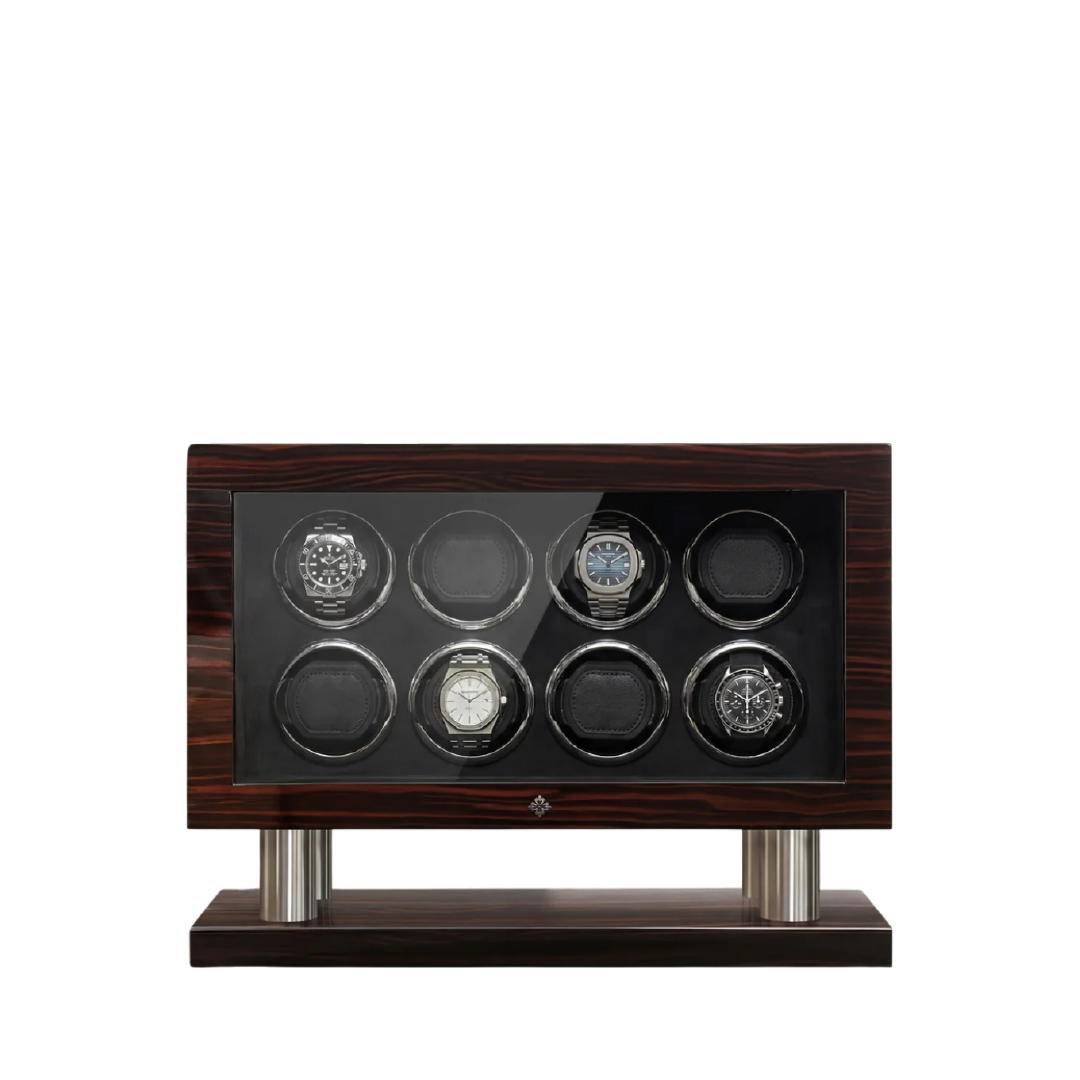
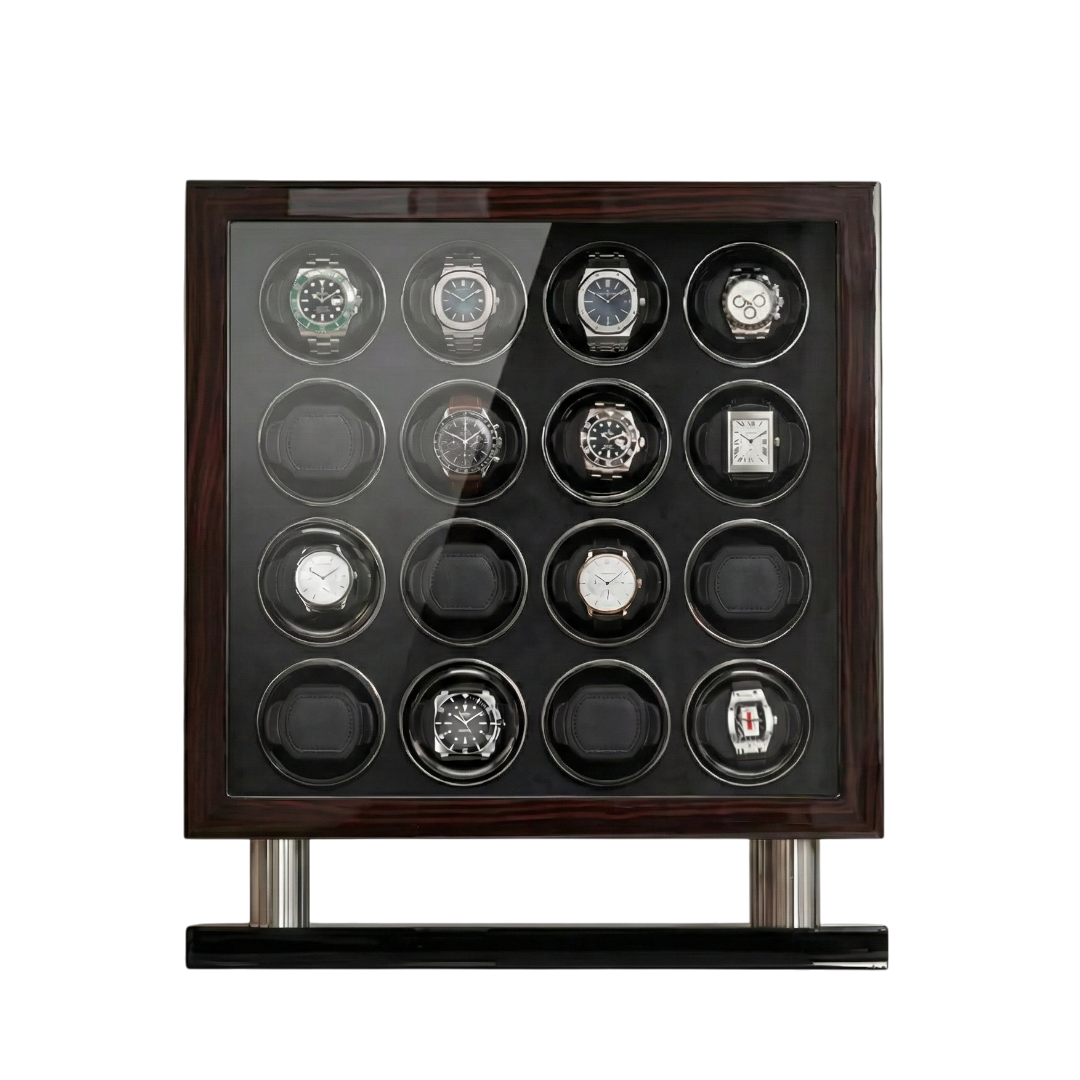
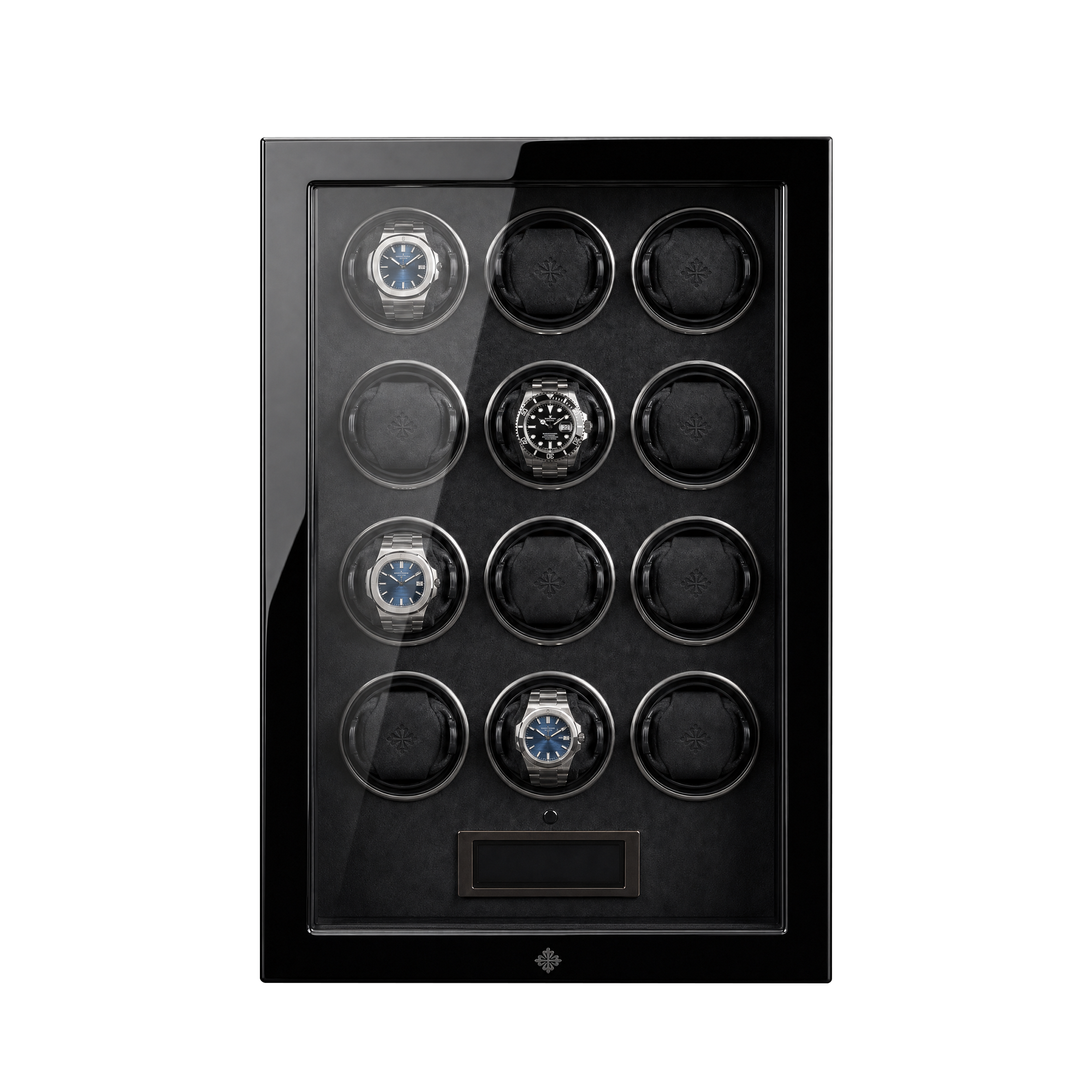
- Programmable winder with individual motor control — needed for multi-watch setups where each watch has different TPD requirements. The Impresario Series 6 watch winder accommodates up to 6 watches with per-slot direction and TPD programming, which makes it practical if your Speedmaster shares a unit with a Rolex or IWC on different settings.
- Omega caliber reference — the Omega website’s movement database lists the exact winding system and power reserve for every caliber by serial number range.
- Rest-cycle timer — built into most quality winders; if yours lacks one, a simple outlet timer set to 12-hour cycles achieves the same effect.
- For a deeper TPD reference covering all Omega calibers, the how many TPD does an Omega need in a winder guide covers the full caliber lineup beyond the Speedmaster.
FAQ
What TPD should I set for the Omega Speedmaster?
Set 800 TPD bidirectional for the caliber 3861 (current Moonwatch). For the caliber 9300/9301, use 900 TPD bidirectional. These figures keep the Pellaton winding system engaged without over-stressing the mainspring.
Can I use a watch winder for the Omega Speedmaster Moonwatch?
Yes — but only the automatic versions. The current Moonwatch Professional (caliber 3861) is automatic and winder-compatible. Pre-2021 Moonwatches with caliber 1861 or the vintage 321 and 861 are manual-wind and must never go in a winder.
Is bidirectional winding better for the Speedmaster?
Yes. Omega’s Pellaton system engages both CW and CCW rotation. Bidirectional gives you the full mechanical advantage of both pawl levers, delivering roughly twice the effective winding input per rotation cycle compared to a single-direction setting.
How many hours of rest does a Speedmaster need in a winder?
At least 8 hours of rest per 24-hour cycle. A 12-on / 12-off program works well with the 3861’s 50-hour power reserve and prevents continuous mainspring tension.
Will a watch winder damage my Omega Speedmaster?
Not if settings are correct. The risk comes from wrong direction, excessive TPD (above 1,000 with no rest), or a motor that generates a magnetic field near the movement. A quality winder on 800 TPD bidirectional with a rest cycle poses no mechanical risk to the Speedmaster.
What’s the difference between TPD settings for the caliber 3861 vs. 9300?
The 9300/9301 has a higher power reserve (60 hours vs. 50 hours) and benefits from slightly higher TPD — 900 vs. 800 — to stay fully charged. Both use bidirectional winding and both need rest cycles.
Does the Speedmaster X33 need a winder?
The Speedmaster X33 uses a quartz/solar movement and does not require a winder. Only mechanical automatic Speedmaster variants use winders.
How do I know if my winder is winding the Speedmaster correctly?
Manually wind the watch to full power reserve, load it on the programmed winder, and check it after 48 hours. If the seconds hand is still running and the watch is within its certified accuracy range, the settings are correct.
One Last Thing
The caliber 3861 in the 2026 Moonwatch Professional meets METAS Master Chronometer certification — that means it’s tested to withstand magnetic fields of 15,000 gauss. Even so, placing the movement directly against a winder motor housing (typically generating 20–60 gauss at contact) is unnecessary risk. Keep at least 5 cm of clearance between the Speedmaster’s caseback and any electrical component inside the winder cabinet.
Related Guides
Protect Your Watch Collection
Designed for collectors who demand the best. Explore our premium watch winders and luxury safes.