

Watch Winder Buying Guide
What Is A Watch Winder?
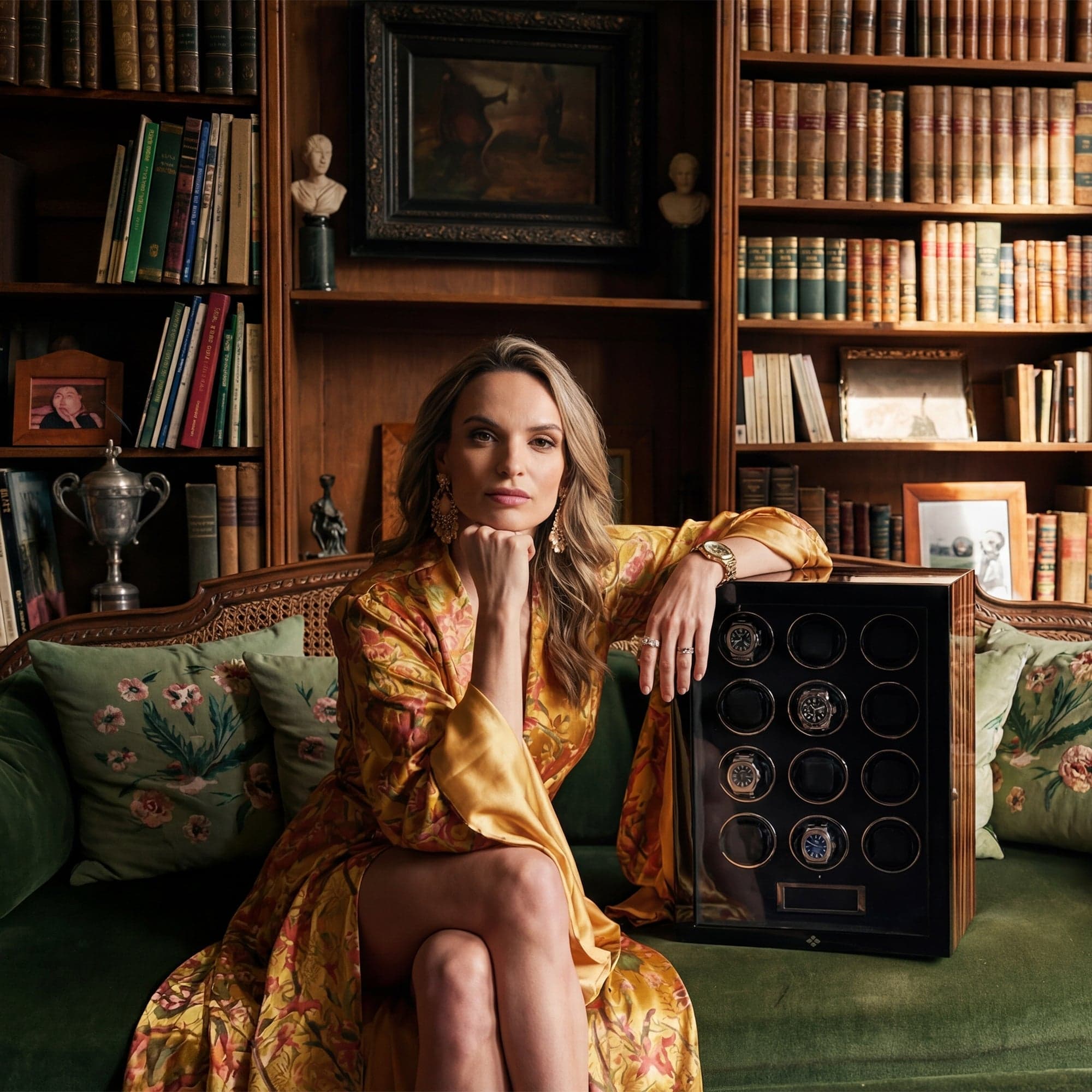
A watch winder is a device that keeps automatic watches running when they are not being worn. It uses controlled rotation to simulate the natural motion of the wrist, maintaining the watch’s power reserve during periods of inactivity.
Inside an automatic watch, a weighted rotor turns as the wearer moves their wrist, winding the mainspring that drives the timekeeping mechanism. When the watch is left unworn, this energy reserve gradually depletes and the watch stops. A watch winder replaces that wrist motion with periodic mechanical rotation, allowing the watch to remain operational while stored.
A properly designed winder does not spin continuously. It operates on timed rotation cycles, providing intermittent motion followed by rest periods. This distinction matters because automatic movements are built to respond to periodic motion, not uninterrupted rotation.
Buying a watch winder is not about finding a single “best” option. It is about choosing a setup that fits how your watches are actually used and stored. Watch winders vary in capacity, motion patterns, and intended use, and these differences matter more than surface features or appearance. Rather than starting with specifications or brand names, it helps to start with intent: why a winder is being considered and what problem it is meant to solve.
How Automatic Watches Work
Automatic watches are powered by mechanical movements that store energy through motion. A weighted rotor inside the movement winds the mainspring as the wearer moves their wrist. This stored energy, known as the power reserve, allows the watch to run continuously as long as it is worn regularly.
The Problem — automatic watches stop when you don't wear them
When an automatic watch is not worn, the rotor no longer moves and the power reserve gradually decreases. Once depleted, the watch stops. This is completely normal. For collectors who rotate between pieces, this means repeated manual winding, resetting the time, and re-adjusting complications like the date, calendar, or moonphase. The more complex the watch, the more tedious the restart.
The Solution — watch winders keep them running while stored
A watch winder provides periodic motion while a watch is stored, maintaining the power reserve during periods of non-wear. This allows the watch to remain running and ready to wear at any moment, without the need for manual winding or resetting complications each time you pick it up.
Does a Watch Winder Damage Watches?
A well-designed watch winder should not damage a properly functioning automatic watch. Most concerns come from outdated assumptions or poorly made devices that rely on constant motion.
Myth: A winder will “overwind” an automatic watch
Modern automatic watches use a slipping clutch mechanism that prevents overwinding. Once the mainspring is fully wound, additional rotor movement simply disengages. The watch is designed to handle continued motion safely.
Myth: Winders spin watches nonstop
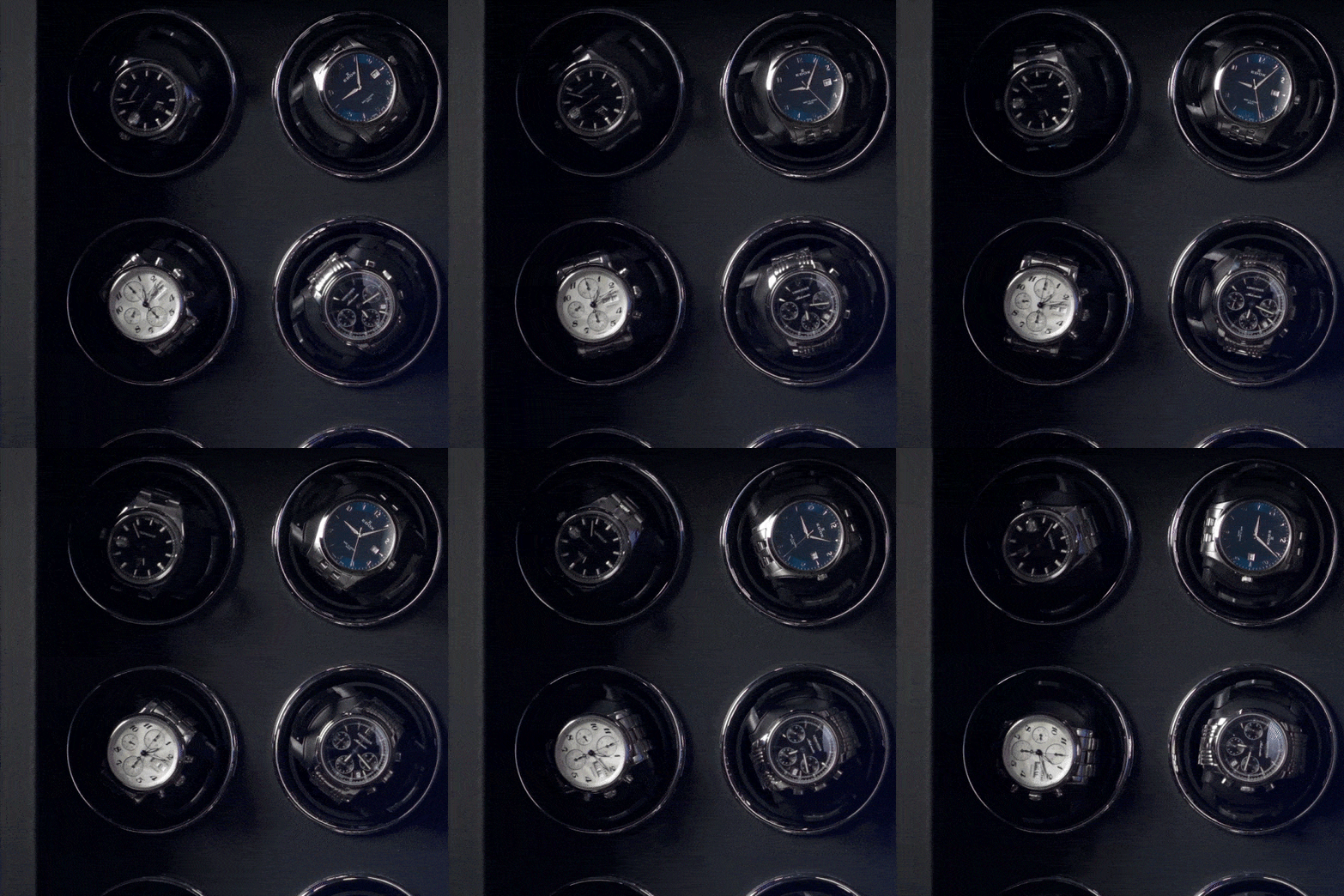
Quality winders use timed cycles with built-in rest periods. Continuous rotation is not the standard approach, and well-designed winders deliver intermittent motion that mirrors how a watch receives energy on the wrist.
Myth: Every automatic watch needs a winder
Many owners do not need one. A winder is a convenience and storage tool, not a requirement for watch ownership.
What actually matters
Controlled cycles, stable construction, and predictable operation. The greater risk to a watch's accuracy and longevity is not a quality winder but repeated full stops and restarts, which can allow lubricants to settle unevenly over time. A winder operating within the correct turns-per-day range keeps the movement active without introducing unnecessary stress.
When a Watch Winder Makes Sense
A watch winder is most useful when automatic watches spend regular periods unworn and the friction of resetting them becomes noticeable. Not every owner needs one, and understanding when it adds real value helps avoid buying something that goes unused.
A winder makes sense when
You own multiple automatic watches and rotate between them rather than wearing a single watch every day. Watches may spend extended periods unworn, causing them to stop regularly and require resetting before use.
Some watches have complications that require additional setup when the watch stops. Features such as date displays, annual calendars, perpetual calendars, or moonphase indicators can take time and care to reset accurately. Keeping these watches running while not in use simplifies switching between pieces.
Convenience is a priority. For owners who prefer to have a watch ready to wear without winding or resetting, a winder provides a practical solution. This is particularly relevant for collections stored in a central location, where watches are selected based on occasion rather than daily routine.
A winder is unnecessary when
You wear the same watch daily or nearly every day. The natural motion of regular wear is usually sufficient to keep the watch running, and a winder provides little practical benefit.
You own a single automatic watch. If the watch stops after a period of non-wear, restarting it through manual winding and resetting the time is a normal part of ownership and does not affect the movement.
Manual-wind and quartz watches are involved. Manual-wind watches are designed to be wound by hand, and quartz watches operate independently of motion. A winder serves no functional purpose for either type.
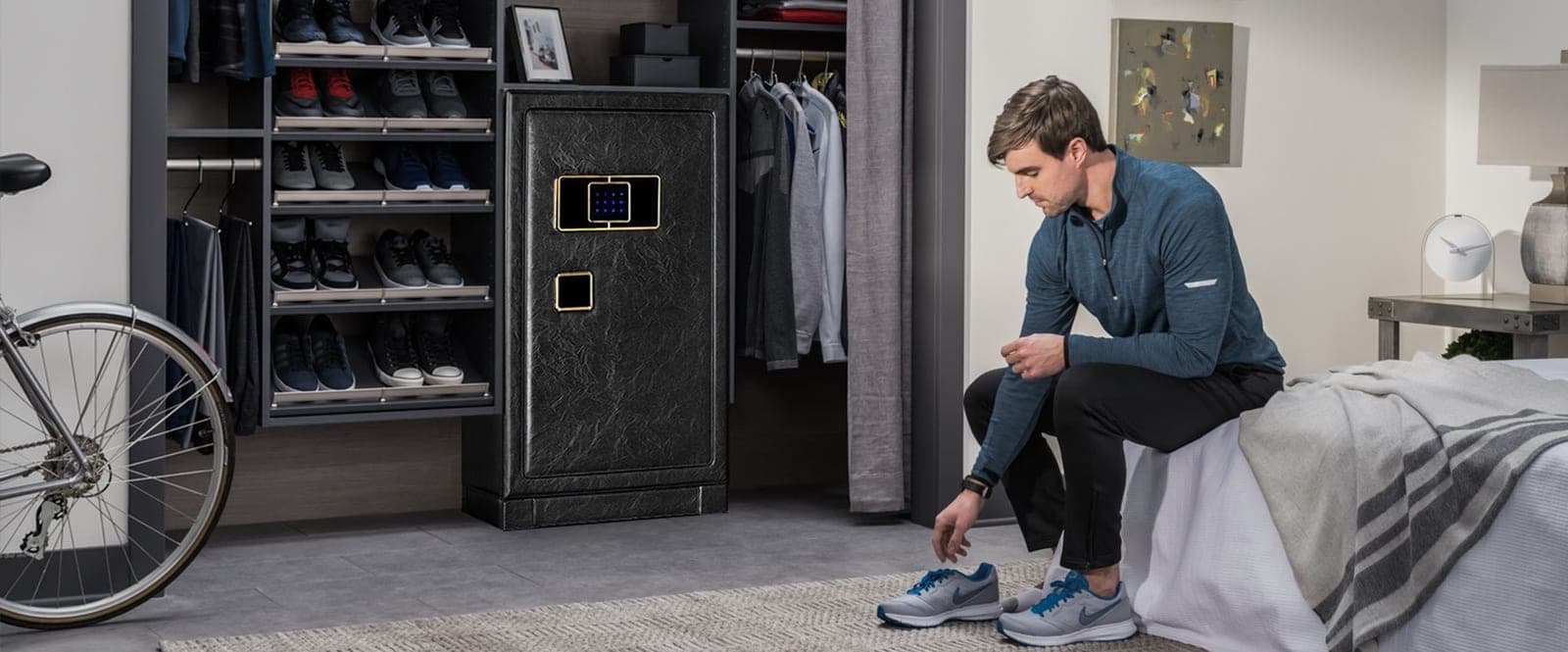
Storage priorities come first. If security, environmental protection, or space efficiency are the primary concerns, a dedicated storage solution such as a watch box or safe may be more appropriate than a winder. For more on secure storage, see the Watch Safe Buying Guide.
Start With How Many Watches You Need to Support
Capacity is the fastest way to narrow your options
The number of watches that require rotation support is one of the most practical factors when choosing a watch winder. A winder designed to support a single watch serves a very different role than one intended to accommodate a growing or varied collection.
If you rotate between 1-2 watches
For owners with one or two automatic watches in rotation, capacity is usually straightforward. The goal is keeping those watches ready to wear between uses, with simple settings and minimal upkeep.
If you rotate several watches
If you rotate several watches, capacity becomes more important. A multi-watch winder keeps more pieces running at once, so you do not have to choose which watches stay supported as wear patterns change.
When your collection grows
It is also worth considering how capacity may change over time. Some collections remain stable, while others expand gradually. Thinking about future needs helps avoid choosing a solution that feels limiting as habits evolve.
Starting with capacity clarifies the scope of what is needed before considering how a winder operates or where it will be placed. This step helps narrow options early and keeps decisions aligned with actual usage. To help you make an informed choice, explore our watch winder size guide.
Understanding Rotation Needs and Wear Patterns
Rotation needs are closely tied to how often individual watches are worn and how long they remain unworn between uses. Automatic watches that are worn sporadically are more likely to stop, while those worn on a predictable schedule may require little additional support. Understanding these patterns helps clarify whether rotation support adds meaningful value.
Occasional
If you rotate based on mood or occasion, wear patterns tend to be irregular. Keeping multiple watches running can reduce the friction of switching, especially when resetting time, date, or moonphase becomes repetitive.
Routine
If you rotate on a weekly or seasonal basis, watches often sit unworn for longer stretches. Without consistent motion, some movements may need more than a simple time reset when picked up again — particularly those with perpetual calendars or complex complications that are tedious to reconfigure manually.
Selective
Not every watch in a collection needs rotation support. Some are worn frequently enough to stay active through wear alone, while others may be reserved for specific occasions or kept in long-term storage.
Applying rotation selectively — focused on watches that benefit most — avoids unnecessary wear on movements that don’t need it. For watches in longer-term storage, a dedicated watch storage setup can help preserve condition between wears.
Direction and Type of Rotation
What actually matters
When choosing a watch winder, rotation is often discussed in terms of direction and movement type. While these details are important, they are frequently misunderstood or given more weight than necessary. What matters most is whether the rotation provided aligns broadly with how automatic watches are designed to receive motion.
Direction is context-dependent
Most winders rotate clockwise, counterclockwise, or alternate to mimic real wrist motion. In practice, direction only matters when a specific movement responds better to one pattern.
Consistency beats speed
Automatic movements are built for irregular wrist activity, not nonstop spinning. A good winder focuses on periodic motion over time, rather than high speed or constant rotation.
Avoid over-optimizing
Some collections benefit from adjustable programs, but most owners do not need a highly customized setup. For everyday readiness, standard rotation patterns are usually enough without added complexity.
How Much Control You Actually Need
Watch winders often vary in the level of control they offer, from simple on-and-off operation to more adjustable settings. While additional control can be useful in certain situations, it is not always necessary for effective rotation support.
Preset Cycles Are Enough
If your wear routine is consistent, preset rotation cycles usually provide all the rotation support an automatic watch needs. This keeps watches running between wears without requiring ongoing changes or manual tuning. Best for: Daily wear, predictable rotation
Adjustability When Habits Shift
If you rotate across several automatic watches or wear patterns change, adjustable settings can help match rotation support to real usage. This is most useful when different watches sit unworn for different lengths of time. Best for: Mixed rotation, occasion-based wear
Start Simple, Adjust Later
Most owners get the best experience by starting with a straightforward setup and only adapting when the time comes for it. A winder that allows adjustments without requiring them gives room to grow without added complexity. Best for: First-time buyers, evolving collections
Placement, Noise, and Daily Use Considerations
Evaluating these practical factors alongside rotation needs helps align a winder with real living conditions, not just technical requirements.
Placement
Where a winder is placed affects how often it gets used. A winder on a bedroom dresser or desk stays part of the routine, while one tucked inside a closet is easier to forget. Consider whether the winder will sit in the open, inside a cabinet, or within a dedicated watch storage.
Noise
Most modern winders run quietly, but even low hum can stand out in a bedroom or office at night. If the winder will share a living or sleeping space, look for models specifically designed for near-silent operation. A winder you can't hear is one you won't think about moving later.
Daily Use
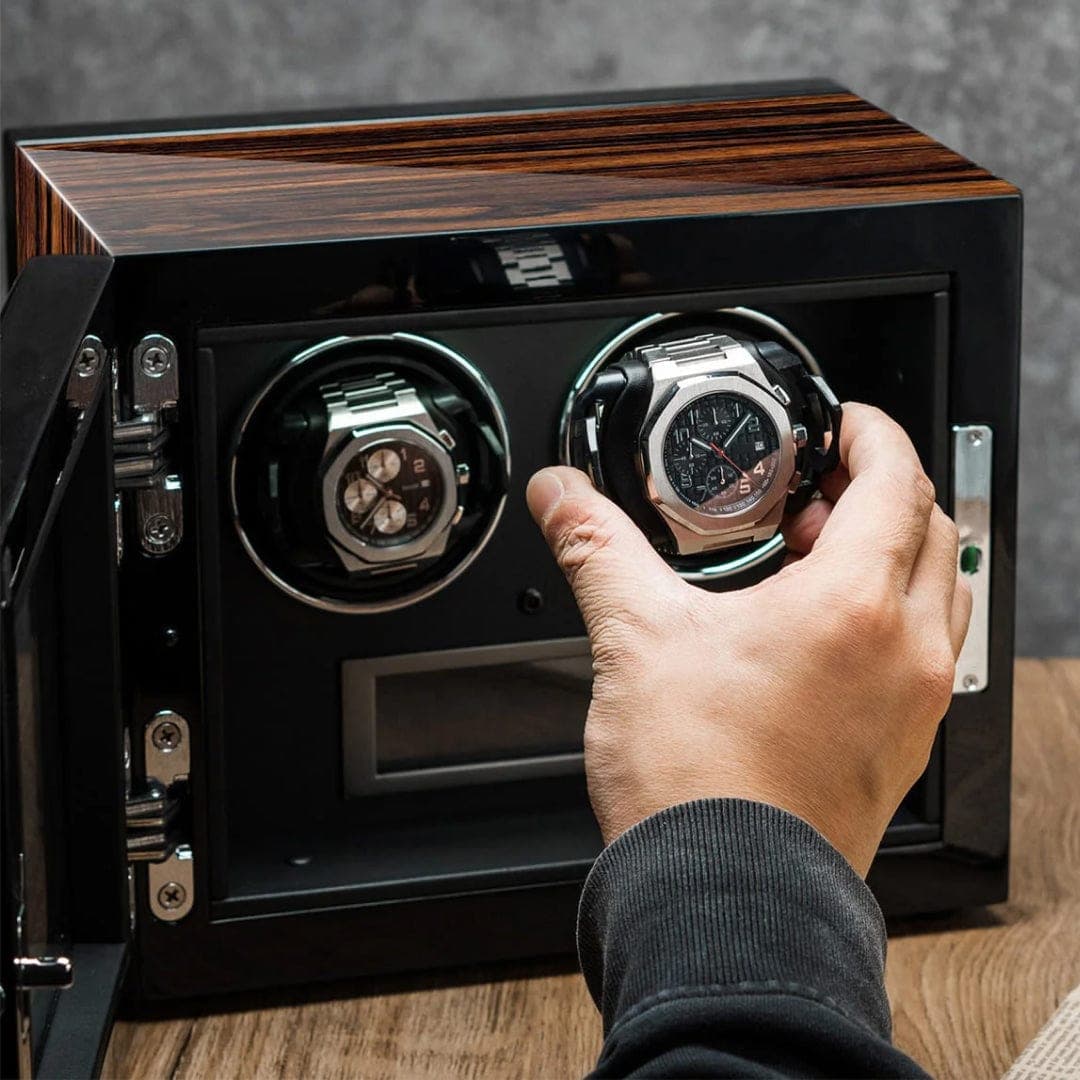
A winder should be easy to open, load, and close without fuss. If placing or removing a watch feels awkward, it creates friction that discourages regular use. Smooth cushion fit, accessible positioning, and simple lid or door mechanisms make the difference between a winder that gets used daily and one that doesn't.
Watch Winders vs Other Storage Options
Watch winders are only one of several ways to store automatic watches, and they serve a different purpose than other common storage solutions. Understanding these differences helps clarify when a winder is appropriate and when alternative options may be more suitable.
| Storage | Primary purpose | Keeps watches running? | Best for | Trade-offs |
|---|---|---|---|---|
| Watch Box | Organization and basic protection from dust and minor contact | No | Storing multiple watches neatly, everyday protection | Automatic watches will stop and need resetting |
| Watch Safe | Security and controlled access (often added environmental protection) | No (unless built-in winder) | Higher-value collections, shared spaces, long-term protected storage | Prioritizes protection over “ready to wear” convenience |
| Watch Winder | Movement continuity during non-wear | Yes | Frequently rotated automatic watches, convenience and readiness | Not focused on theft protection or long-term storage by itself |
These options are not mutually exclusive. Many owners use a winder for frequently rotated watches and a box or safe for pieces that are worn less often or stored long term. The right choice depends on whether your priority is readiness, protection, organization, or a combination. For more on secure storage, see the Watch Safe Buying Guide.
Common Buying Mistakes to Avoid
Make smarter decisions when choosing your watch winder setup
| Mistake | Better choice |
|---|---|
| Focusing on specs before thinking about usage | Start with how often watches are worn, how long they sit unworn, and where the winder will live, then match features to that routine. |
| Paying for controls you won't adjust | Pick the simplest control level that fits your habits. Settings that rarely change add complexity without adding real value. |
| Assuming every watch needs rotation support | Apply rotation selectively to watches that stop between wears or need frequent resetting. Regularly worn pieces don't need it. |
| Choosing only for your current collection | Choose a setup that still makes sense if your collection grows, wear patterns shift, or your storage situation changes. |
What Watch Owners Often Ask
What is a watch winder and do I need one?
A watch winder is a device that rotates automatic watches when they're not being worn, keeping the mainspring wound and the movement running. If you own one or more automatic watches and find yourself frequently resetting the time, date, or complications after a watch has stopped, a winder can eliminate that friction. It's most useful for watches that are worn irregularly or rotated with others in a collection.
How many turns per day does my watch need?
Most automatic watches require somewhere between 650 and 950 turns per day (TPD), though some movements may need up to 1,800. The exact number depends on the caliber of the movement. Manufacturers and watchmakers typically publish TPD recommendations for specific movements. If you're unsure, starting in the 650–800 range and adjusting based on whether the watch maintains a full power reserve is a reliable approach.
Can a watch winder damage my watch?
A well-made winder operating within the correct TPD range will not damage a modern automatic movement. Automatic movements are designed with a slipping clutch mechanism that prevents overwinding, once the mainspring is fully wound, additional rotation simply disengages. Concerns about excessive wear from continuous use are largely overstated with quality winders that use controlled, intermittent rotation cycles rather than constant spinning. The greater risk to a watch's accuracy and longevity is repeated full stops and restarts, which can allow lubricants to settle unevenly over time.
What's the difference between clockwise, counterclockwise, and bi-directional rotation?
These refer to the direction the winder turns. Some automatic movements wind only when rotated in one direction, while others wind in both. Bi-directional winders alternate between clockwise and counterclockwise, which makes them compatible with virtually all automatic movements. If your watch winds in only one direction, matching the winder to that direction improves efficiency, but a bi-directional setting will still keep the watch running without issue.
How do I know what size watch winder to get?
Start with how many watches currently need rotation support, then consider whether your collection is likely to grow. Winders are available in a range of capacities, from compact 2-slot units to larger configurations supporting 60 or more watches. Choosing a size that accommodates slight future growth avoids replacing the unit later. For a more detailed breakdown, see our watch winder size guide.
Should I leave my watch winder running all the time?
Most quality winders are designed to run in cycles, rotating for a period and then resting, rather than spinning continuously. This intermittent pattern is closer to how a watch receives motion on the wrist and is gentler on the movement. Leaving the winder plugged in and set to its normal cycle is perfectly fine for daily use. There's no need to turn it off between wears unless the watch will be stored for an extended period.
Considering a watch safe too? Our Watch Safe Buying Guide covers when protection makes sense alongside (or instead of) winding, and how to choose between the two.
How to Choose a Watch Winder That Fits Your Needs
A well-chosen watch winder matches how your watches are actually worn, stored, and rotated — not how they might be in theory. Start with your habits, choose the simplest setup that supports them, and leave room to adjust as your collection evolves.
Explore Our Winders
or if you’re already sure
- Impresario Watch WindersDesigned for everyday home use with fingerprint-secured access and straightforward rotation support. Built for watches that are part of a regular wearing routine.
- Virtuoso Watch WindersIntended for collectors with varied wear patterns, featuring mechanical key access and flexible settings to support multiple automatic watches within a single setup.
- Yachtline Watch WindersBuilt for portability and secure placement in environments where movement, travel, or limited space are part of daily use.