


Watch Care
How an Automatic Keeps Running
- Rotor and mainspringA weighted rotor turns with the wrist and winds the mainspring. The mainspring stores that energy and releases it at a controlled rate, which is what keeps the watch running once motion stops.
- Turns per dayMost automatic movements need between 650 and 950 turns per day to stay wound. Some need up to 1,800. Manufacturers publish a figure per movement — ours are collected in the TPD reference.
- Tolerance for irregular useMotion during wear is intermittent and unpredictable. The power reserve is what absorbs that: as long as enough energy accumulates over time, the watch runs without needing continuous movement.
- Running down is not a faultAn automatic left unworn long enough will stop. The movement is built for repeated cycles of motion, rest and restart, and none of them shorten its life.
Wear and Rest

Automatic movements are built with tolerance for inactivity designed in. Neither wearing nor resting is the better state for the watch, and it does not need a schedule to stay healthy — it needs to move between the two without strain, which is what the mainspring and power reserve exist to allow.
- During wearMotion winds the mainspring and holds the power reserve. Daily, intermittent or rotated with other watches makes no difference to the movement, which absorbs the variation without intervention.
- During restThe movement runs on stored energy until it is spent. Rest reduces cumulative mechanical activity, so a watch that spends time off the wrist is not accruing wear while it sits.
Lubrication and Friction
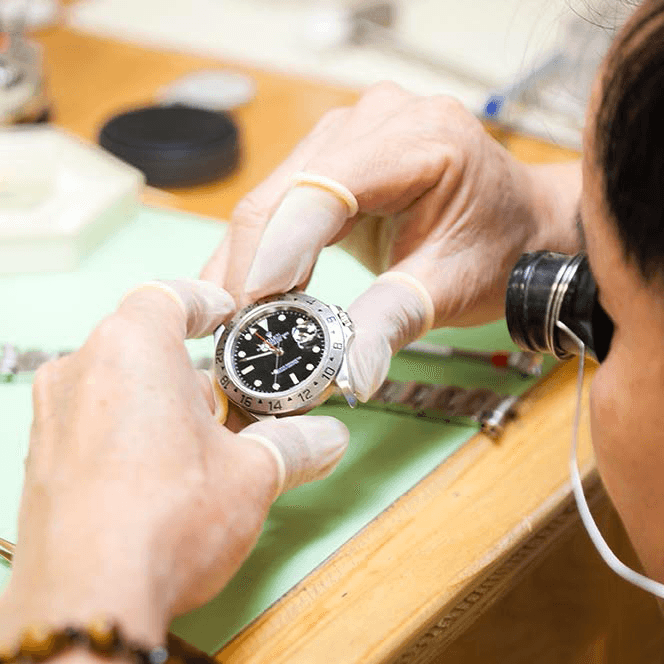
Gears, pivots and contact points run against each other for as long as the watch runs. Specialised oils and greases are applied at assembly and again at service to keep that contact from wearing the surfaces.
Oils migrate, thicken and lose effectiveness with temperature variation and operating time. As they do, friction rises — and friction shows up first as a shorter power reserve and less consistent rate, before anything looks wrong.
Aging, use, and what a service is for
Oils age on the calendar as well as on the clock. A watch worn rarely still needs servicing, because the lubricant degrades whether or not the movement is turning. Frequent wear adds operating hours; long rests emphasise calendar aging. Both count toward a service.
Lubrication is a maintenance interval, not a fault. Stable conditions, sensible handling and avoiding unnecessary shock keep wear inside what the movement was designed for.
Power Reserve and Energy Cycles
Power reserve is how long a watch runs after motion stops. The energy sits in the mainspring and is released as the movement operates. Watching it deplete is watching the movement work as designed.
- Worn regularly, the mainspring is replenished daily and the watch simply keeps running.Left unworn, the stored energy depletes and the watch stops. Automatic watches are designed to be restarted repeatedly across an ownership.
- Restarting is standard operation, not a repair.Once motion returns, energy accumulates again. A watch may start after brief motion, then settle as the mainspring reaches its normal operating range — mechanical systems keep time most consistently inside that window.
- Power reserve varies by design.Complications, mainspring design and overall efficiency all change runtime, so two healthy watches can stop hours apart under identical conditions.
Environmental Factors
Automatic watches are built for everyday wear. What shortens their life is sustained exposure rather than ordinary use — and all four of these are conditions of storage as much as conditions of wearing.
Temperature
Components expand and contract, and lubricants thin or thicken with them. Normal indoor conditions are fine; it is sustained extremes and rapid swings that alter how oils distribute.
Humidity
Moisture reaches the movement through aged or compromised seals, and corrosion starts where it is not visible. Our climate-controlled cabinets hold 51% relative humidity — dry enough to keep moisture off movements, damp enough that leather and veneer do not crack.
Shock and vibration
Movements are resilient through normal wear. What they are not built for is repeated impact or sustained vibration, which is mostly a storage and handling question rather than a wearing one.
Magnetism
Magnetic fields act on the hairspring and throw the rate off. It is not damage — a magnetised watch is demagnetised in minutes by a watchmaker — but it will not keep time until it is. Mu-metal reroutes stray fields away from the watch, and winder positions are individually shielded, so a movement is never exposed to the field of the motor turning it.
Storage During Periods of Non-Use
There are two approaches, and the choice is about readiness rather than about protecting the movement. Both are sound.
- Protective storageShields the watch from dust, moisture and incidental impact. The watch runs down and stops, which is the expected outcome and costs it nothing.
- Motion-based storageA winder holds the power reserve so the watch is ready to wear, and keeps perpetual calendars and annual calendars from needing to be reset.
- Bi-directional rotationWinders that alternate clockwise and counterclockwise suit virtually all automatic movements, which is why a single setting can serve a mixed collection. The winder buying guide covers how to match one to a collection.
- PlacementConsistent placement removes the most common cause of damage to a stored watch, which is being knocked off a surface rather than anything mechanical.
Common Misconceptions About Automatic Watch Care
Mechanical movements behave differently from quartz watches and modern electronics, which is where most of these come from.
- Allowing an automatic watch to stop is harmfulA watch that stops after extended non-use has done what it was designed to do. Automatic movements run down and restart repeatedly across an ownership, and stopping damages nothing. What matters is how it is handled on the way back — restart and set it without forcing anything.
- More motion is always betterOnce the mainspring is charged, more motion adds no energy. Automatic movements include a mechanism that lets the spring slip rather than overwind, so the extra turns are absorbed instead of stored. Winding past full is not harmful. It is simply not doing anything.
- Manual winding is harmfulMany automatics are built to be wound by hand, and it is the ordinary way to restart one that has stopped. The rule is the crown: wind until you meet resistance and stop there. Forcing it past that is what does damage, not the winding itself.
- Storage conditions do not matterA stopped watch is still exposed. Humidity, dust and temperature act on the case, strap and seals whether or not the movement is turning, and moisture that gets past an aged seal corrodes where nobody can see it. The watches most affected are the ones worn least.
- Power reserve variation indicates malfunctionThe same watch runs longer one week than the next, or two watches stop hours apart. Power reserve moves with how much the watch was worn, how efficiently the movement winds, and how full the mainspring was to begin with. A few hours either way is the system working, not failing.