
The Hublot Big Bang runs on a UNIBLOCK movement that demands specific winder settings to stay wound without overloading the rotor — get those settings wrong in 2026 and you’re looking at premature mainspring wear or a watch that stops overnight.
TL;DR: For watch winder settings Hublot Big Bang owners need to know: set turns per day (TPD) between 650 and 800, run bidirectional rotation, and program rest intervals of at least 6 hours per 24-hour cycle. The UNIBLOCK caliber winds efficiently in both directions, so bidirectional (CW+CCW) is the correct mode. Any winder running above 1,000 TPD on a Big Bang is doing more harm than good.
Why This Matters
The Hublot Big Bang uses the UNIBLOCK construction — a self-winding movement where the rotor, mainspring, and escapement are assembled as a single integrated block. This design winds faster than most Swiss movements, which means a winder set too high doesn’t “top off” the watch — it keeps cycling the rotor against a fully wound mainspring. Over months, that degrades the slipping bridle and adds wear to the rotor bearings. The Big Bang’s power reserve sits at 42 hours across most calibers (HUB1100, HUB1112, HUB4100), so the winder only needs to keep pace with daily power drain, not perform heroics.
What You’ll Need
- A winder with independently programmable TPD per slot (650–800 TPD range)
- Bidirectional rotation mode (CW+CCW combined)
- Rest period control — minimum 6-hour rest per 24-hour cycle
- A rotor or cushion wide enough for the Big Bang case: 44 mm, 45 mm, or 42 mm depending on generation
- Optional: a quiet motor (below 30 dB) if the winder sits in a bedroom
Step-by-Step: Setting a Watch Winder for the Hublot Big Bang
Step 1: Confirm Your Big Bang Caliber
Before touching the settings dial, identify which movement is inside your watch. The HUB1100 (Big Bang Unico) and HUB4100 (tourbillon variants) have different winding efficiencies. The HUB1100 and HUB1112 share the same rotor geometry and take identical winder settings. The tourbillon variants (HUB6010, HUB6300) are hand-wound and do not belong in a winder at all — set them aside.
Expected outcome: You confirm your watch has an automatic (self-winding) caliber before proceeding.
Common mistake: Assuming every Big Bang is automatic. At least 4 Big Bang tourbillon references are hand-wound and will not benefit from winding.
Step 2: Set the Rotation Direction to Bidirectional
On your winder’s control panel or app, select bidirectional (CW + CCW). The UNIBLOCK rotor winds in both clockwise and counterclockwise directions. A unidirectional setting wastes half of every rotation cycle and forces the motor to work longer to deliver the same effective winding.
Expected outcome: The winder alternates direction within each winding cycle, typically on a programmable interval (every 30–60 rotations depending on the unit).
Common mistake: Selecting CW-only because it “feels safer.” It isn’t — it just takes twice as long to wind the watch and extends motor run time unnecessarily.
Step 3: Set TPD Between 650 and 800
Dial in 700 TPD as your starting point. This sits at the midpoint of the safe range and accounts for normal daily wear (8–12 hours of wrist time). If you wear the Big Bang fewer than 6 hours per day, move up to 750–800 TPD. If you wear it 12+ hours daily, 650 TPD is sufficient — the wrist is doing most of the work.
Do not exceed 800 TPD for the UNIBLOCK calibers. Published guidance from movement specialists consistently places the maximum useful TPD for fast-winding Swiss automatics at 800; anything above that provides zero additional winding and simply runs the mainspring against its slip clutch.
Expected outcome: The Big Bang holds full charge (42-hour reserve) and does not exhibit overwinding symptoms — stiff crown, sluggish seconds, or premature stop.
Common mistake: Setting 1,200–1,800 TPD because “more is better.” Higher TPD is appropriate for slower-winding movements like certain Patek Philippe calibers. The UNIBLOCK does not need it.
Step 4: Program Rest Intervals
Set the winder to rest for at least 6 consecutive hours within every 24-hour period. Most quality winders offer a programmable rest cycle — typically expressed as winding minutes per hour or as a daily rest window. The goal is to allow the mainspring to settle and prevent the rotor bearings from logging continuous runtime.
If your winder only offers on/off schedules (not per-hour intervals), program it to wind for 18 hours and rest for 6 hours, aligned to overnight.
Expected outcome: Motor temperature stays low, rotor bearings accumulate 18 hours of runtime per day maximum rather than 24.
Common mistake: Leaving the winder in “always on” mode. Continuous winding is the single most common cause of accelerated winder motor wear in 2026, and it offers no benefit to a watch with a 42-hour reserve.
Step 5: Size the Watch Holder Correctly
The Big Bang 44 mm case is wide and has a thick lug structure. Fit the rotor or cushion to the watch before placing it in the winder — the watch should sit snug without the crown pressing against the holder wall. A loose fit causes the watch to shift during rotation, which puts lateral stress on the crown stem over time.
Enigwatch winders ship with adjustable inner cups that accommodate cases from 38 mm to 50 mm. Use the watch winder replacement part inner cup for watch holder if your current cup doesn’t seat the Big Bang correctly.
Expected outcome: The watch rotates without any rattling or shifting inside the holder across a full 360-degree cycle.
Common mistake: Using the smallest available cup because it “holds the watch tighter.” A cup that grips the case can press the crown stem inward during rotation — a real risk on the Big Bang’s screw-down crown.
Step 6: Verify the Watch Is Fully Wound Before First Use
Manually wind the Big Bang crown (approximately 30–40 turns, feeling for light resistance) before placing it in the winder for the first time. This gives the winder a full mainspring to maintain rather than a depleted one to recover. A winder maintaining a full charge runs fewer daily rotations than one trying to recover a stopped watch.
Expected outcome: Seconds hand sweeps immediately and consistently from day one in the winder.
Common mistake: Placing a stopped watch directly into the winder and expecting it to resume in under an hour. Recovery from fully stopped can take 4–6 hours at 700 TPD.
Step 7: Check the Watch After 48 Hours
48 hours into the new settings, remove the Big Bang and check the time against a reference. If it has gained more than +6 seconds per day or lost more than -4 seconds per day relative to its rated precision, the settings are not the cause — that’s a service issue. If the watch stopped overnight, increase TPD by 50 and re-check after another 48 hours.
Expected outcome: The watch runs within its rated precision (Hublot rates most UNIBLOCK calibers at -4/+6 seconds per day) and holds full charge through a 24-hour off-wrist period.
Troubleshooting
Watch stops overnight despite correct TPD settings
Increase TPD by 50 increments up to 800. If the watch still stops at 800 TPD bidirectional, the rotor or automatic winding mechanism inside the watch needs servicing — the winder is not at fault.
Watch is consistently running fast (+10 sec/day or more)
This is a movement issue, not a winder issue. TPD has no direct effect on rate accuracy. Book a service for the caliber.
Winder motor is audible from across the room
Motors rated above 35 dB at 1 meter are unsuitable for bedroom use. Reposition the winder or replace the motor. Enigwatch sells a watch winder motor replacement compatible with its winder series if the original unit has become noisy after heavy use.
Crown feels stiffer than usual after winding
The screw-down crown on most Big Bang references must be unscrewed before setting. Stiffness after winding is almost always a fully wound mainspring combined with a screwed-down crown — unscrew the crown, check that the watch runs normally, then re-secure it. If stiffness persists with the crown unscrewed, service the crown seal.
Watch shifts inside the holder during rotation
Swap to a larger inner cup or add a microfiber liner inside the existing cup. A 44 mm Big Bang needs a cup rated for 42–46 mm cases.
Winder direction setting resets after power cut
Some entry-level winders do not retain settings after power loss. Verify that your winder has non-volatile memory (NVRAM) or document the settings so you can reprogram quickly after any power interruption.
Tools and Resources
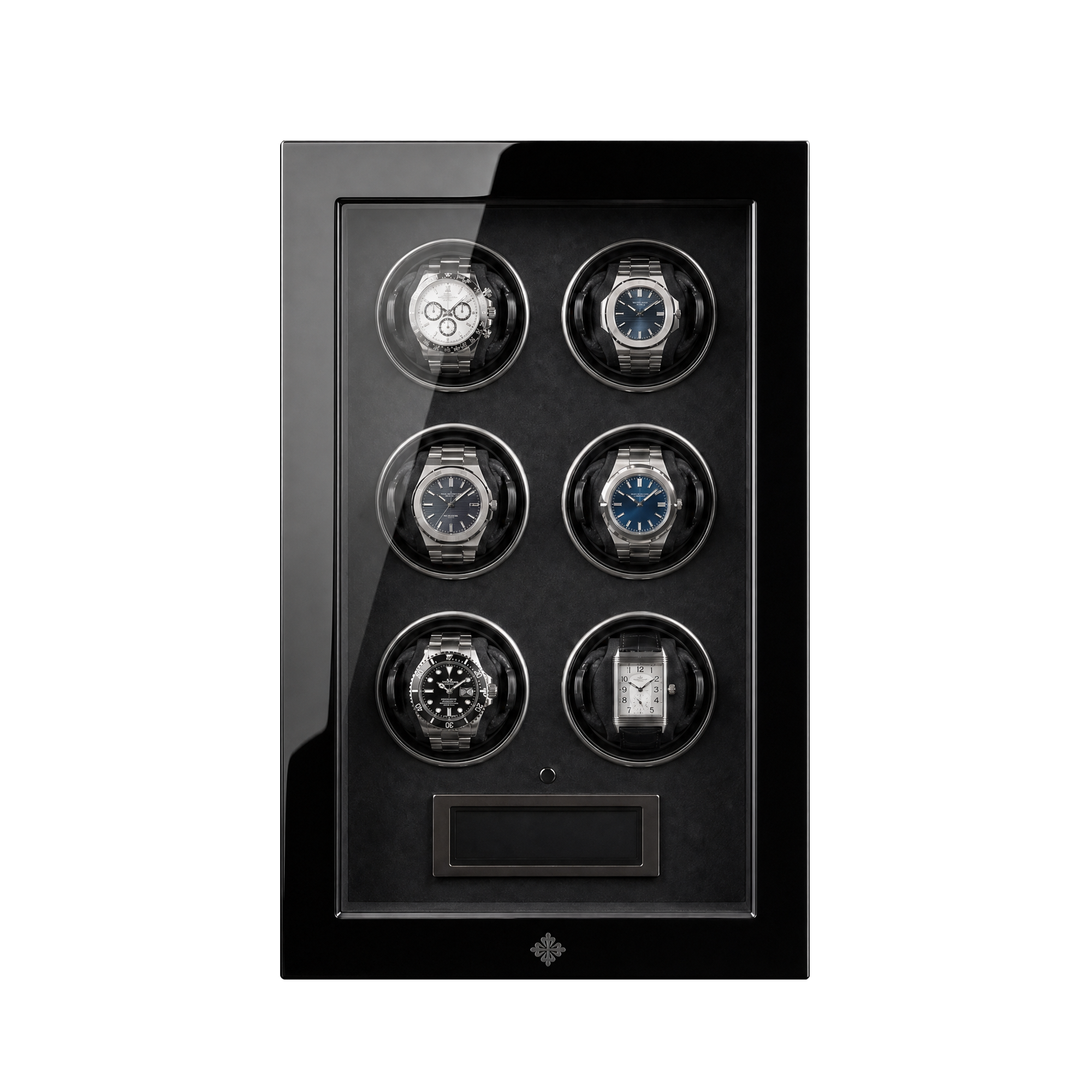
- Enigwatch Impresario Series 6 — 6-slot winder with per-slot TPD control and bidirectional programming: Impresario Series 6 watch winder
- Watch winder replacement inner cup for watch holder — for sizing the Big Bang correctly (already linked above; use this reference for ordering)
- Hublot movement documentation — available through authorized Hublot service centers; confirms caliber reference and official power reserve spec
- Best watch winder for Hublot Big Bang — hardware picks ranked for Big Bang compatibility
What to Do Next
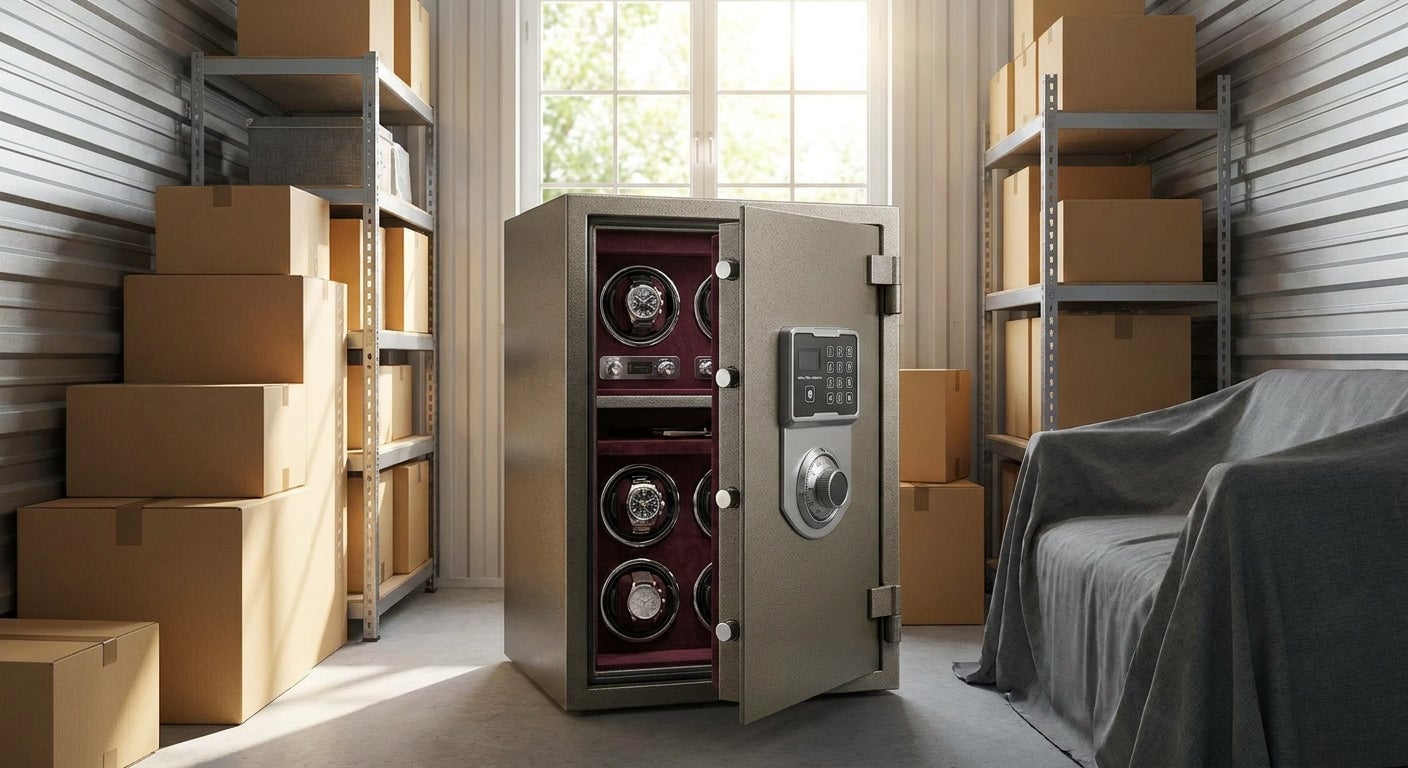
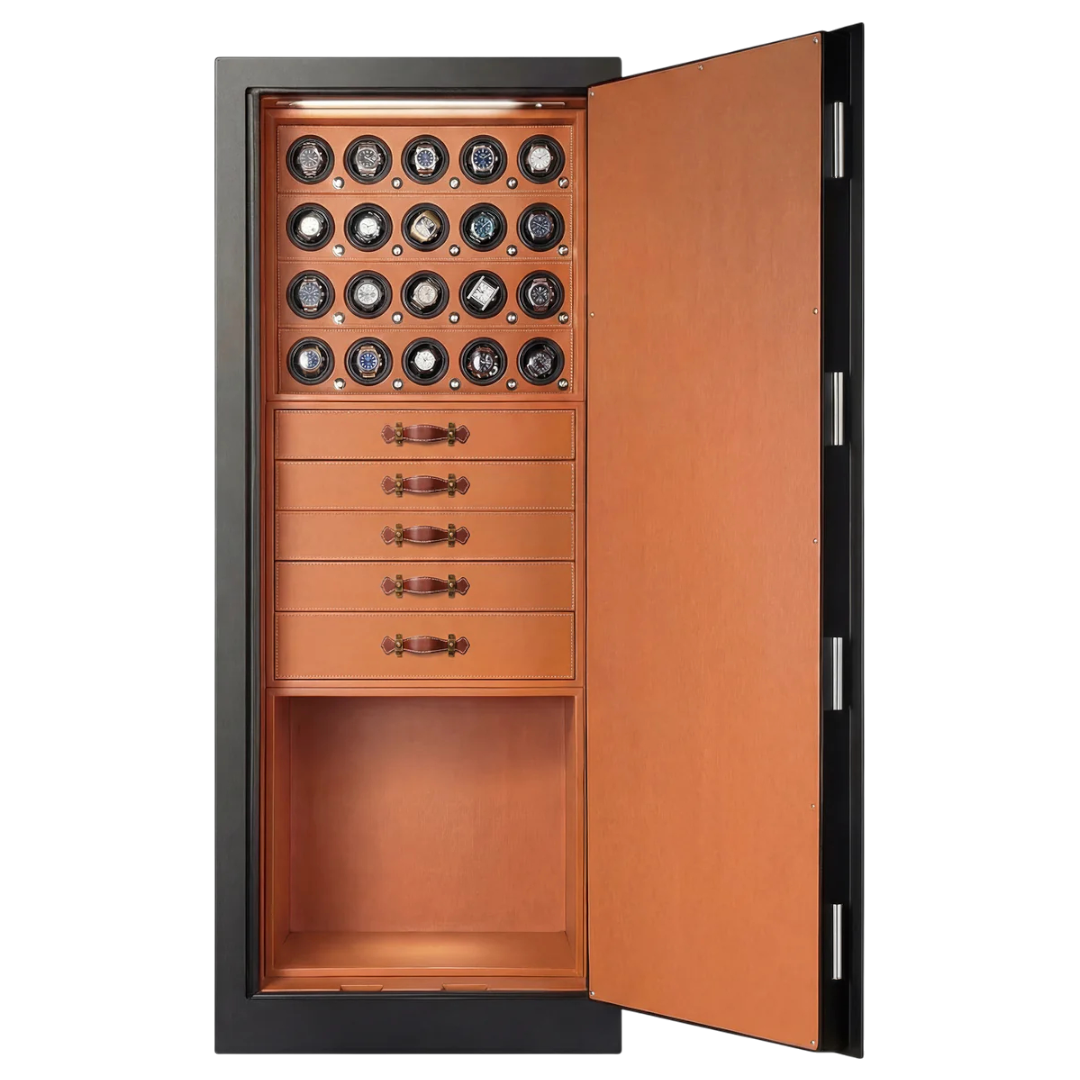
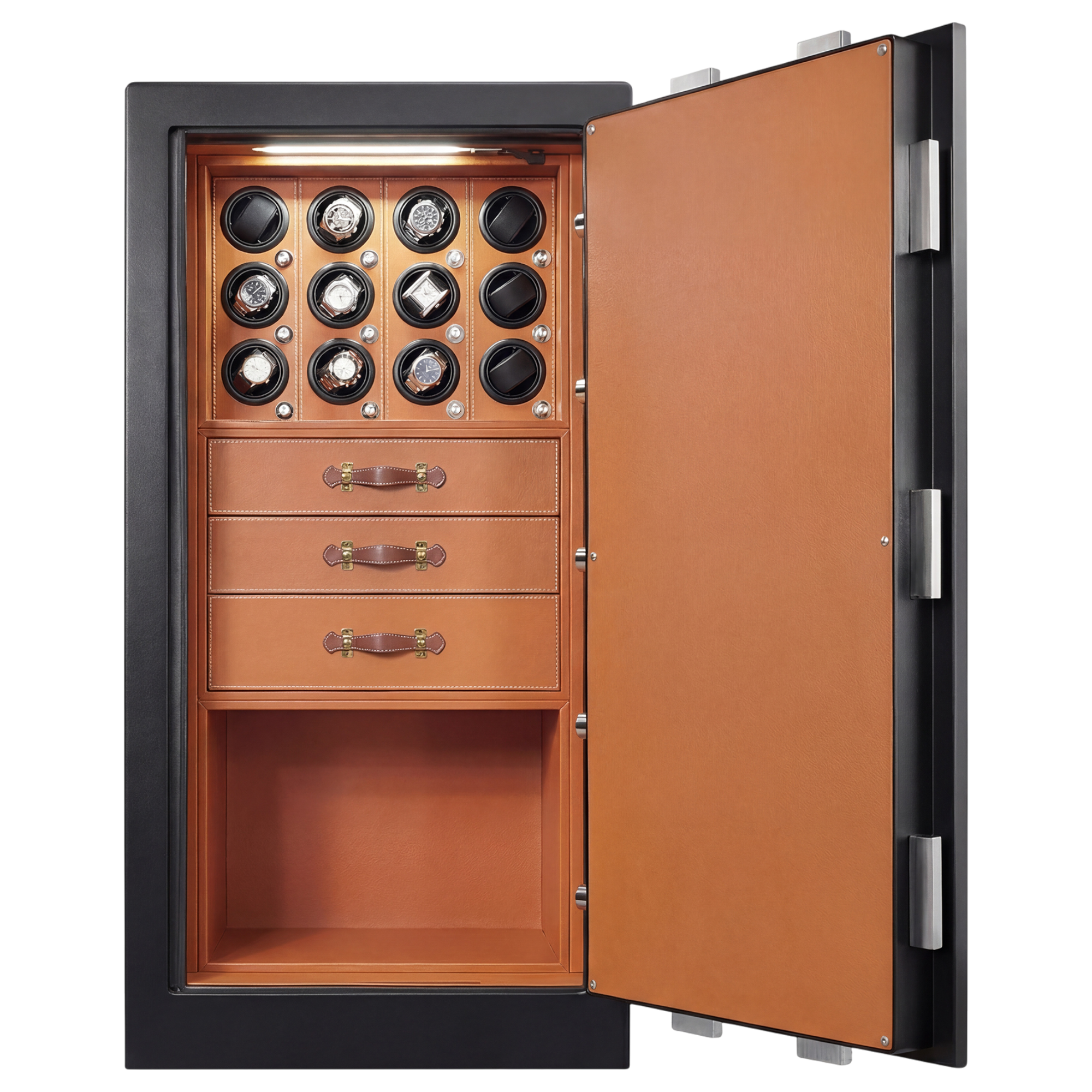
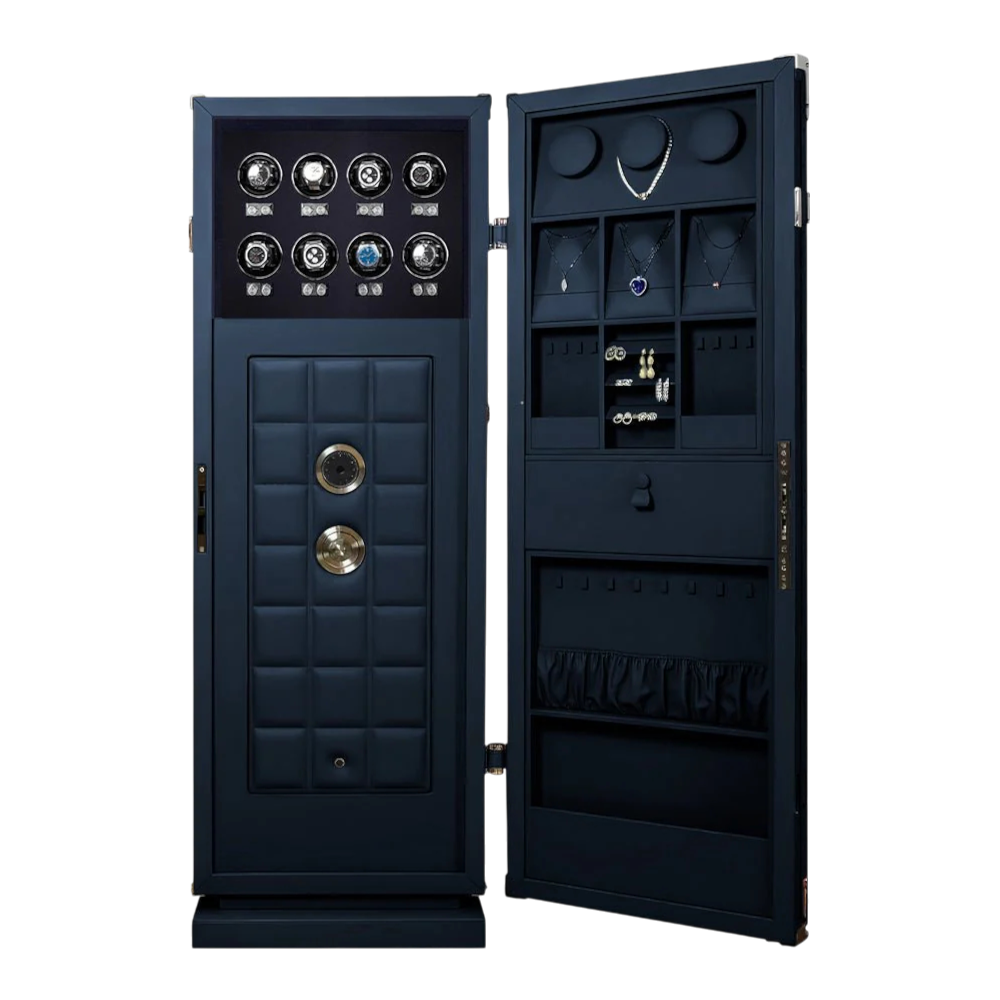
Once your Big Bang is running correctly on these settings, the next decision is storage when it comes off the winder. A watch sitting in an open tray accumulates dust inside the crown seal and risks magnetization from nearby electronics. The best fireproof watch safe for luxury timepieces guide covers which safe formats work alongside a winder setup for collectors with multiple pieces.
FAQ
What TPD should I use for a Hublot Big Bang?
Set 650–800 TPD. 700 TPD bidirectional is the correct starting point for the UNIBLOCK caliber under normal daily wear conditions in 2026.
Should I use clockwise or counterclockwise for a Hublot Big Bang winder?
Neither alone — use bidirectional (CW+CCW). The UNIBLOCK rotor winds in both directions, so unidirectional settings waste half of every rotation.
Can a watch winder damage a Hublot Big Bang?
Yes, if set above 1,000 TPD continuously. Excessive TPD keeps the mainspring pressed against its slip clutch and accelerates rotor bearing wear. Stay at or below 800 TPD with a minimum 6-hour daily rest.
What is the power reserve on a Hublot Big Bang?
Most Big Bang automatic references (HUB1100, HUB1112) carry a 42-hour power reserve. Tourbillon variants vary; check the caseback or Hublot documentation for your specific reference.
Do Hublot Big Bang tourbillons need a winder?
No. Big Bang tourbillon references with hand-wound movements (HUB6010, HUB6300) do not use an automatic rotor and gain nothing from a winder. Placing a hand-wound tourbillon in a winder is harmless but pointless.
How long does it take a winder to fully wind a stopped Big Bang?
At 700 TPD bidirectional, recovery from fully stopped takes approximately 4–6 hours. Manually pre-winding before placement shortens this to under 2 hours of winder runtime.
What winder brands work with the Hublot Big Bang 44 mm?
Any winder with a cushion or cup rated for 42–46 mm cases and independently programmable TPD per slot. Enigwatch’s Impresario and Virtuoso series both accommodate the Big Bang case size with the correct inner cup fitted.
Is 1,200 TPD safe for a Hublot Big Bang?
No. 1,200 TPD is appropriate for movements with higher winding resistance, not for the fast-winding UNIBLOCK. At 1,200 TPD, the Big Bang mainspring is fully wound within hours; every rotation after that is the rotor cycling against the slip clutch.
One Last Thing
Hublot rates the UNIBLOCK caliber’s winding efficiency at approximately 40% per rotor revolution — meaning the mainspring gains useful energy on roughly 4 out of every 10 full rotor sweeps, with the rest absorbed by the slip clutch. At 700 TPD bidirectional, the mainspring receives the equivalent of about 280 effective winds per day. That is exactly enough to cover a 42-hour reserve depleted by 14–16 hours of daily wear. The math fits the setting — which is why 700 TPD is the number, not 1,200.
Related Guides
Protect Your Watch Collection
Designed for collectors who demand the best. Explore our premium watch winders and luxury safes.