
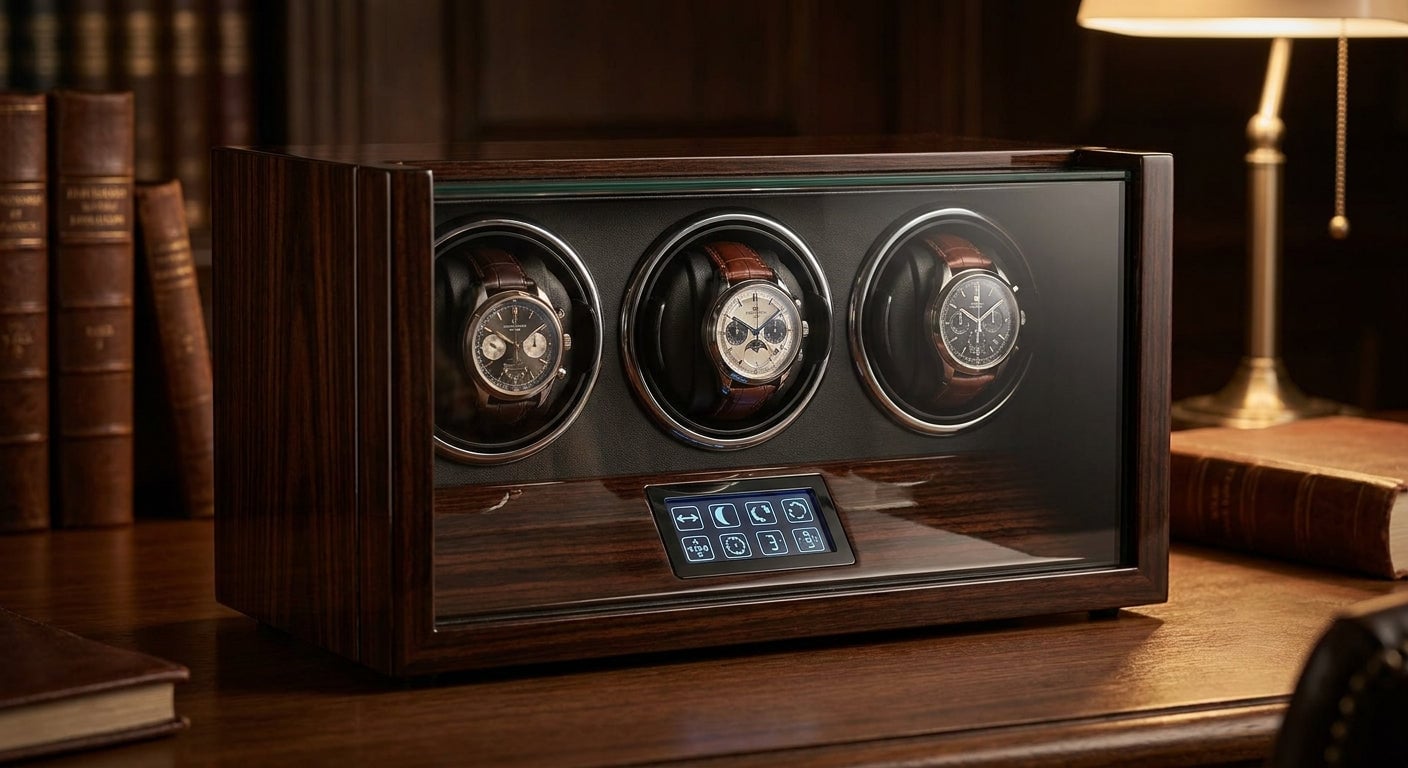
Watch winder rotation programs determine how your automatic movement stays charged — get the mode wrong and your watch either stops daily or accumulates unnecessary wear on the rotor bearings. This guide breaks down every rotation program you’ll encounter on a modern watch winder, what each mode actually does mechanically, and which settings match which movements in 2026.
TL;DR: Watch winder rotation programs explained: Clockwise (CW), Counter-Clockwise (CCW), and Alternating (Alt/Bi) are the three core directions; TPD (turns per day) sets the volume of winding energy delivered. Most automatic watches need 650–1,800 TPD. Rolex, Tudor, and AP Royal Oak run CW or Alt at 650–800 TPD. Panerai and IWC Portugieser prefer CCW or Alt at 650–950 TPD. Setting the wrong direction won’t break a watch instantly, but it will cause it to stop regularly and force the mainspring to work from dead zero each morning.
Why rotation programs matter
An automatic movement winds itself through a rotor — a semicircular weight that swings as your wrist moves. Depending on the caliber, that rotor winds the mainspring in one direction only, both directions, or engages different gearing depending on swing direction. A winder that spins the wrong way for a one-directional movement delivers zero energy. A winder set too high in TPD wastes rotor cycles and adds heat from motor friction. Neither scenario is catastrophic in the short term, but sustained mismatches accelerate service intervals.
In 2026, most quality winders — including those in the Enigwatch catalog — allow you to program direction and TPD independently per slot. That flexibility is only useful if you know what each setting does.
What you’ll need before programming
- The movement’s manufacturer specifications (check the manual or the brand’s technical sheet)
- The winder’s programming interface (button sequence, touchscreen, or app — varies by model)
- The caliber number of each watch (usually printed on the movement, visible through a caseback, or listed on the warranty card)
- 10 minutes per watch to confirm the setting is holding charge after 24 hours
The steps
Step 1: Identify the winding direction your movement requires
Every automatic caliber falls into one of three categories based on its rotor design:
- Clockwise only (CW): The rotor winds the mainspring exclusively on the CW swing. Counterclockwise rotation clicks through a ratchet without engaging the winding gear. Movements in this category include several older ETA calibers and some in-house movements from niche manufacturers.
- Counter-clockwise only (CCW): Less common but not rare. Several Panerai P.series calibers and some Seiko-derived movements fall here. Running a CW winder on a CCW-only movement is the single most common setup mistake — the watch looks “wound” but stops after 36–48 hours.
- Bidirectional (CW + CCW / Alternating): The rotor winds on both swings via a dual-clutch or ball-bearing reversing system. This covers the majority of modern Swiss movements: Rolex cal. 3235, Omega cal. 8800/8900, AP cal. 4302, Patek Philippe cal. 26-330, and most ETA 2824 and 2892 derivatives. For bidirectional movements, setting the winder to Alternating is optimal — it mimics natural wrist motion, keeps both clutch pathways exercised, and is the safest default when you are unsure of the exact direction.
Common mistake: Defaulting every watch to Alternating mode because it “covers all bases.” For strictly one-directional movements, alternating mode wastes half the rotation cycles and can cause the winding clutch to click under partial load repeatedly, which adds micro-wear over years.
Step 2: Set TPD (turns per day) to match the movement’s reserve
TPD is the total number of 360-degree rotations the winder completes in a 24-hour period. It is not the number of times the rotor spins — it is programmed output rotations of the winding cup. Here are the ranges that cover 95% of luxury movements in 2026:
| Movement / Brand | Direction | TPD Range |
|---|---|---|
| Rolex cal. 3135, 3235, 3285 | CW or Alt | 650–800 |
| Omega cal. 8800, 8900 | Alt | 650–800 |
| AP cal. 4302 (Royal Oak) | Alt | 800–1,000 |
| Panerai P.3000, P.4000 | CCW | 650–750 |
| IWC cal. 82000 series | Alt | 750–900 |
| Patek Philippe cal. 26-330 | Alt | 650–800 |
| Tudor cal. MT5602 | CW or Alt | 650–800 |
| Vacheron Constantin cal. 5100 | Alt | 750–900 |
| Seiko NH35 / NH36 | Alt | 800–1,000 |
| Lange & Söhne cal. L121.1 | CW | 650–750 |
Start at the lower end of the TPD range. A fully wound mainspring engages its slipping clutch and stops accepting energy — the winder just spins the rotor against no load. Starting low and verifying charge after 48 hours is safer than overshooting.
Common mistake: Setting TPD to maximum (often 1,800–3,000 on entry-level winders) because “more is more.” High TPD on a movement that needs 650 adds heat and unnecessary rotor bearing rotation.
Step 3: Program the rest and sleep cycle
Professional-grade winders include a rest interval — the winder runs for a set number of minutes, pauses, then resumes. This mimics the intermittent motion of a wrist far better than continuous spinning. A common default is 4 minutes on, 8 minutes off (a 1:2 duty cycle).
Some Enigwatch models allow the sleep interval to be extended to a full overnight window. This is useful for watches with a 38-hour or longer power reserve: the movement builds a full reserve during the day’s winding cycles, then coasts through the night on its own stored energy. You get the same maintained charge with fewer total motor hours per week.
Common mistake: Disabling the rest cycle and running the motor continuously. Continuous spinning adds motor noise, heat, and reduces bearing life in both the winder motor and the watch’s rotor pivot.
Step 4: Confirm the program after 24 hours
After programming, remove the watch, let it run at room temperature for 24 hours, then check whether it is still running and whether the time has drifted more than ±5 seconds beyond the movement’s stated accuracy. If the watch has stopped: the TPD is too low, or the direction is wrong. If it is running but losing more than its rated accuracy: the mainspring may be undercharged — raise TPD by 100–150 turns and retest.
Common mistake: Assuming the program is correct if the watch is still ticking after 2 hours. Two hours is not enough draw-down time to reveal a TPD that is marginally too low. Always test the full 24-hour window.
Step 5: Lock the settings and label each slot
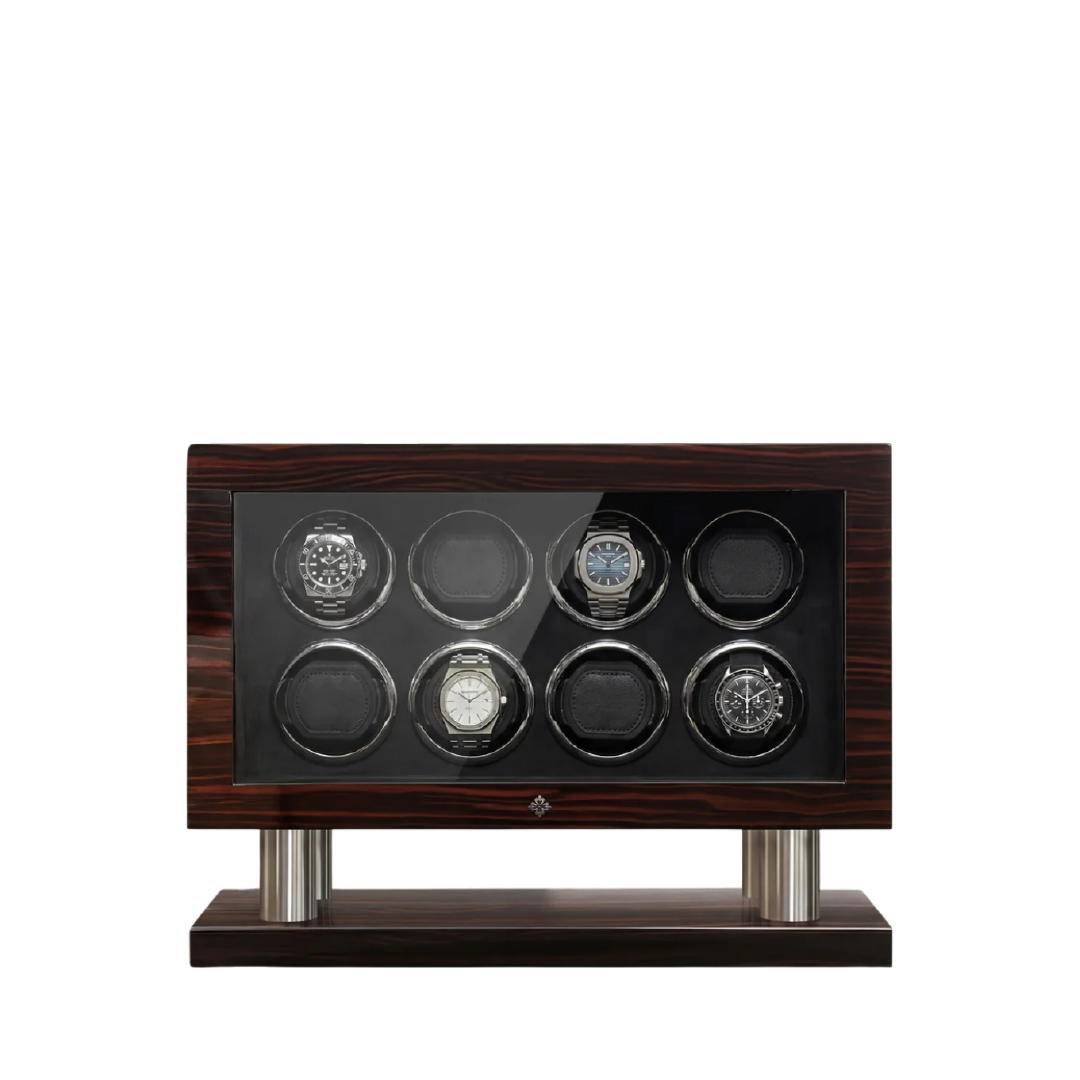
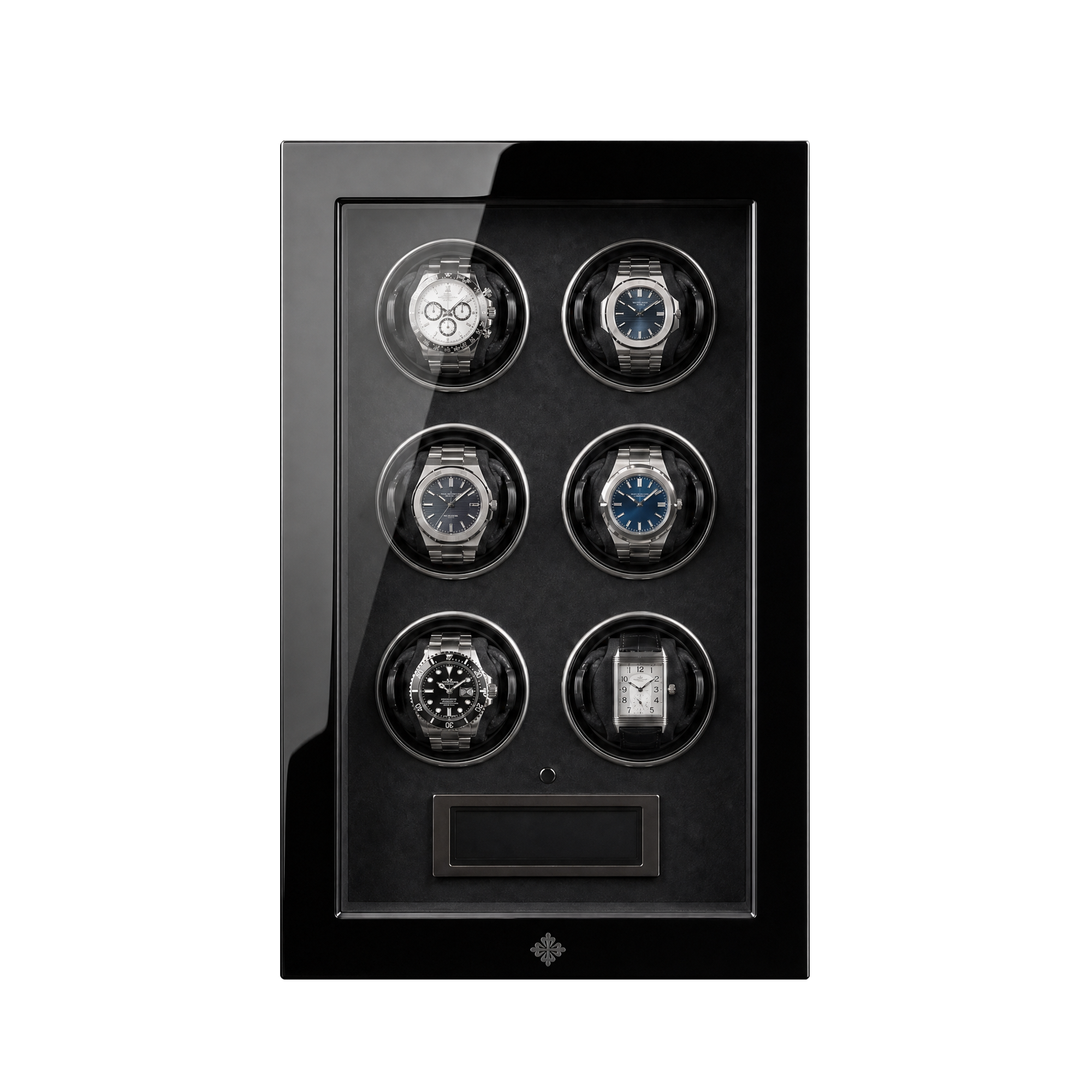
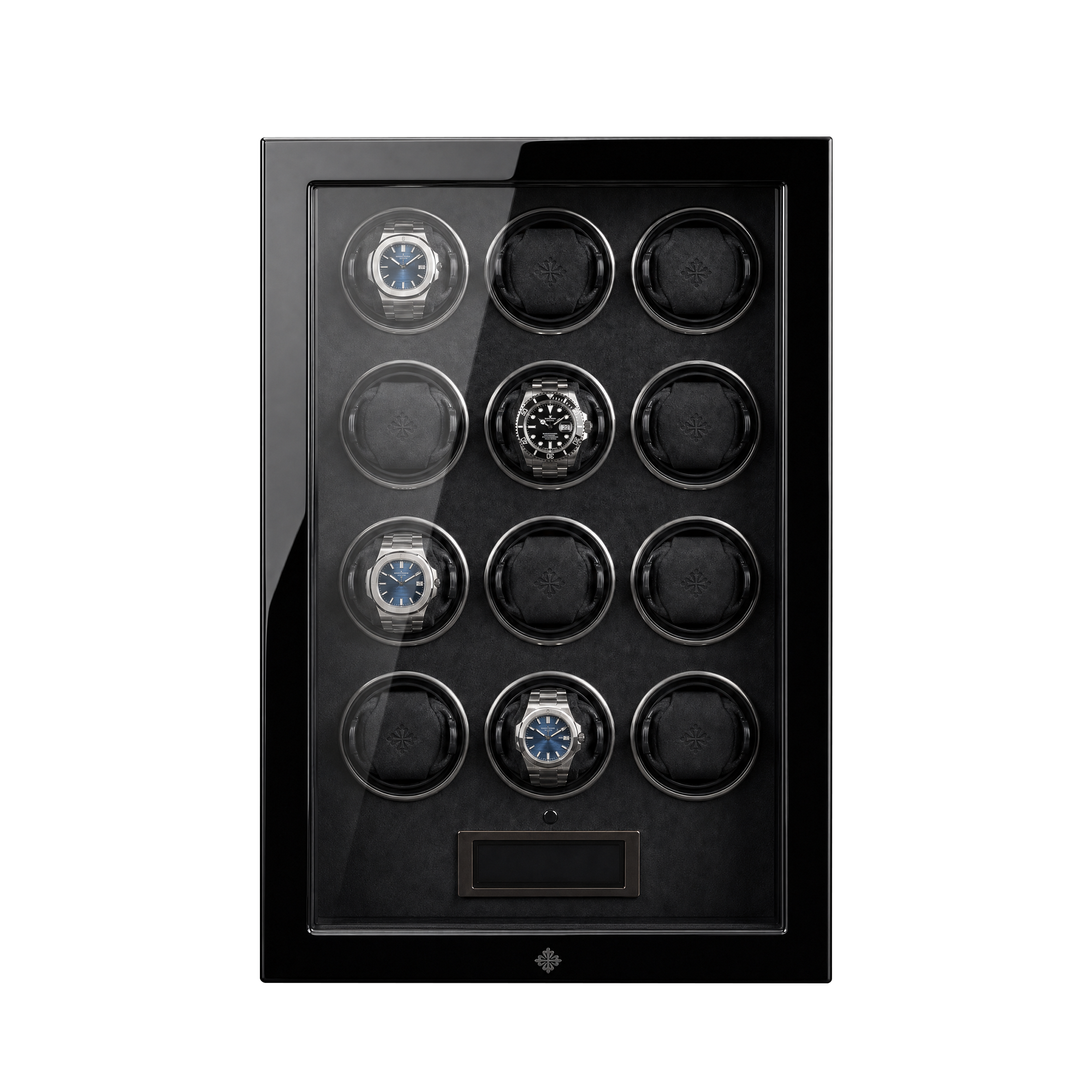
Once confirmed, lock the program if the winder supports it (prevents accidental button presses from resetting the slot). For multi-slot winders — like the Impresario Series 6 or the Impresario Series 12 — label each slot with the watch’s caliber and programmed TPD. Collections change; a label takes 30 seconds and saves re-diagnosing a stopped watch six months later.
Troubleshooting
Watch stops after 24–36 hours. Direction is almost certainly wrong. Confirm the movement’s required direction from the manufacturer — do not guess from the brand name alone. Panerai is the most common offender here because many collectors assume Swiss = bidirectional.
Watch loses time progressively. TPD is too low or the rest cycle is too long. Raise TPD by 100 and shorten the off-interval from 8 minutes to 6 minutes.
Watch gains time or runs fast. Rare from winding alone, but a heavily over-wound mainspring on certain vintage calibers can create extra tension on the gear train. Drop TPD to the lower bound and retest.
Motor runs but watch does not wind. The winding cup is spinning but not gripping the watch case or bracelet. Check that the watch is seated fully in the holder and that the cushion size matches the lug width. A pillow that is too small lets the watch spin freely instead of turning with the cup.
Programs reset after a power cut. The winder does not have battery backup or the backup battery is depleted. Check the power supply and replace the backup cell (typically a CR2032) if the winder supports one. Enigwatch’s watch winder power supply transformer is worth pairing with an inexpensive UPS on the same outlet to protect multi-watch setups from brownout resets.
Different watches in the same multi-slot winder need conflicting directions. This is the argument for per-slot independent motors. Daisy-chained single-motor winders run all slots in the same direction simultaneously. If your collection contains both CW-only and CCW-only movements, you need a winder with independently controlled motors per slot — not a shared-drive unit.
Tools and resources
- Your watch’s technical specification sheet or service manual (download from the brand’s website or request from the authorized dealer)
- A regulated power outlet or UPS to prevent program resets
- Impresario Series 6 watch winder — per-slot programmable direction and TPD for up to 6 watches
- Enigwatch’s guide to watch winder TPD explained — full brand reference guide for per-caliber TPD lookup
- A watch timing app (Timegrapher, Toolwatch) to verify accuracy before and after programming changes
What to do next
Once your rotation programs are dialed in, the next variable worth understanding is winding direction specifically for GMT and complication-heavy movements — those calibers have additional considerations beyond TPD. The Enigwatch guide on watch winder for a GMT watch — bidirectional or not covers that topic directly.
FAQ
What does the rotation program on a watch winder actually control?
It controls two things: the direction the motor spins (clockwise, counter-clockwise, or alternating between both) and the number of full rotations delivered in 24 hours (TPD). Both must match your movement’s specifications for the watch to stay charged.
Is clockwise or counter-clockwise better for most watches?
Alternating is the safest default for most modern Swiss movements because the majority are bidirectional. For one-directional movements, the correct single direction always beats alternating — you are delivering 100% of rotations as useful energy instead of 50%.
What happens if I set the wrong direction?
A one-directional movement in the wrong direction receives zero winding energy. The watch will appear to run normally for 24–48 hours on its existing power reserve, then stop. No permanent damage occurs from one week of wrong-direction winding, but chronic under-winding forces the mainspring to start from near-zero every few days, which increases positional rate variation.
How many TPD does a Rolex need in a winder?
Rolex recommends 650–800 TPD for the current cal. 3235 family. Setting higher does not charge the mainspring further — the slipping clutch prevents overwinding — but it adds unnecessary rotor bearing cycles.
Can I use alternating mode for every watch to keep it simple?
For bidirectional movements, yes. For strictly CW-only or CCW-only movements, alternating wastes half the motor’s output and your winder runs longer to deliver the same effective energy. Match the direction to the movement.
What is the rest cycle on a watch winder, and should I use it?
The rest cycle pauses the motor between winding intervals. A 4-on / 8-off duty cycle reduces motor heat, extends bearing life, and more closely mimics real wrist motion. Always use it unless your watch has a power reserve under 30 hours and needs near-continuous input.
Does running a winder on maximum TPD damage a watch?
Not typically, because the mainspring’s slipping clutch prevents mechanical overwinding. However, sustained maximum TPD generates more rotor bearing rotation than necessary, shortening service intervals on the winder motor and adding a small but real cumulative load to the watch’s rotor pivot over years.
How do I know if my rotation program is working correctly?
Run the watch in the winder for 24 hours, remove it, and let it sit unworn for another 24 hours. If it is still running and accurate at the 48-hour mark, the program is delivering adequate charge. If it stops before 48 hours, increase TPD by 100–150 or verify the direction setting.
One last thing
The alternating mode on most winders does not split time evenly — many motors run 60% CW and 40% CCW, or use a timed sequence like 4 minutes CW / pause / 4 minutes CCW. That asymmetry matters for bidirectional movements with unequal winding efficiency on each swing (a real characteristic of some calibers). Check your winder’s manual for the exact alternating sequence, not just the label. A unit that lists “Alternating” may spend more time in one direction than the other — relevant if your watch charges noticeably faster in one direction per your timing app data.
Related guides
Protect Your Watch Collection
Designed for collectors who demand the best. Explore our premium watch winders and luxury safes.