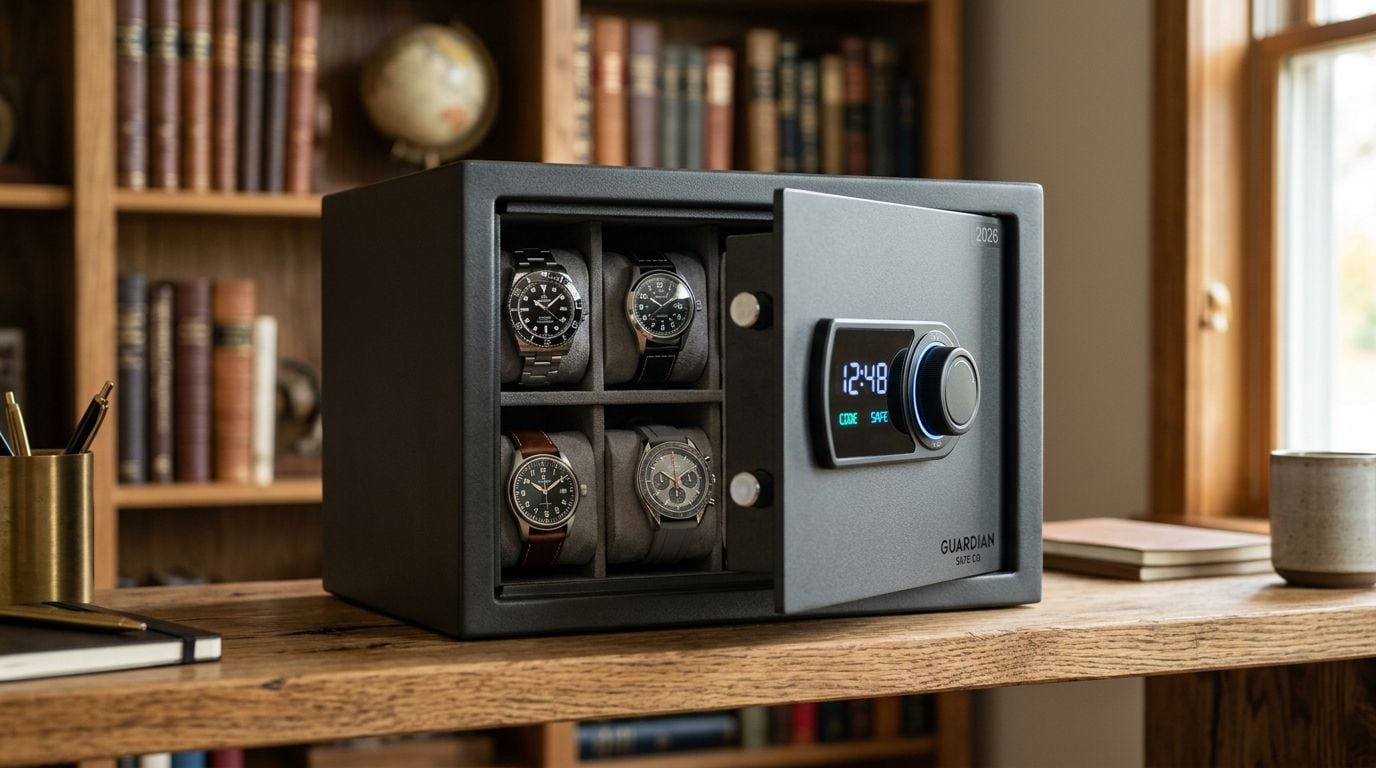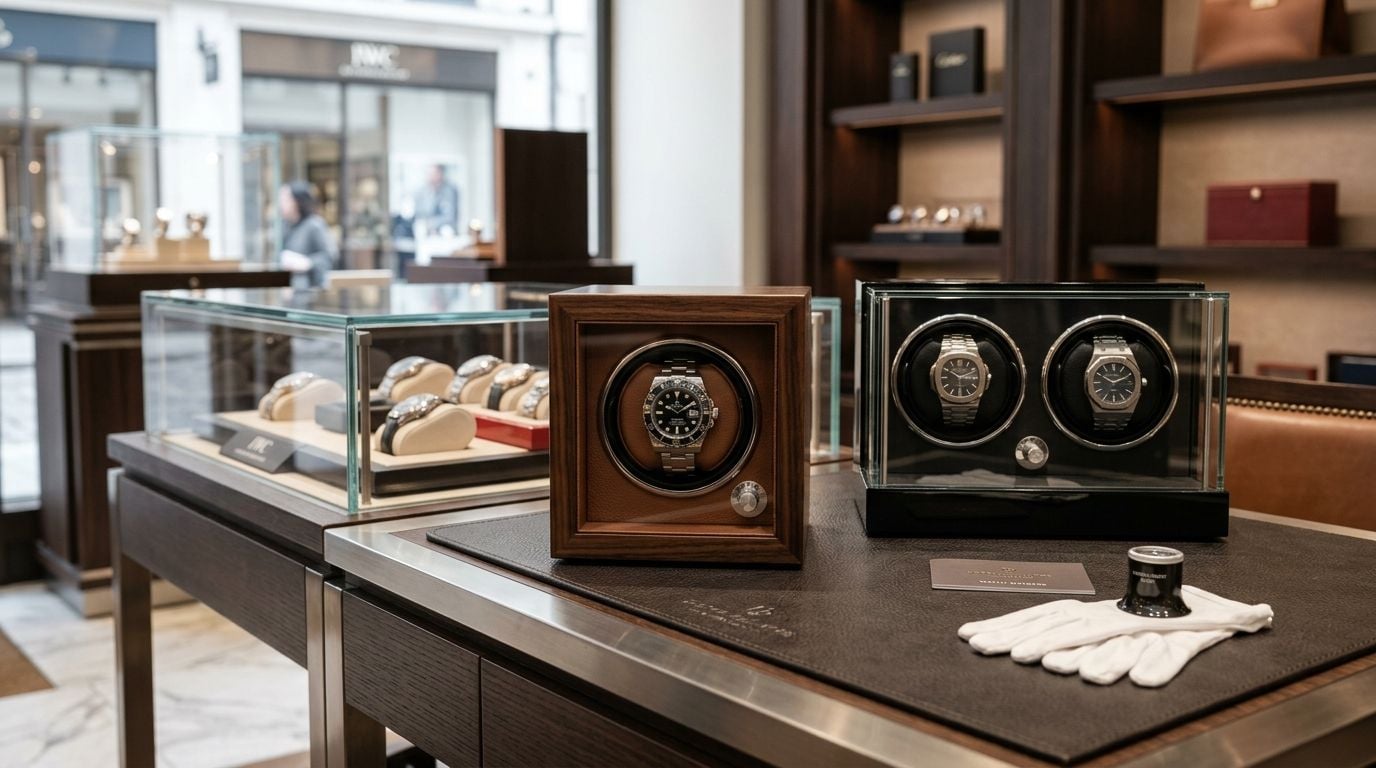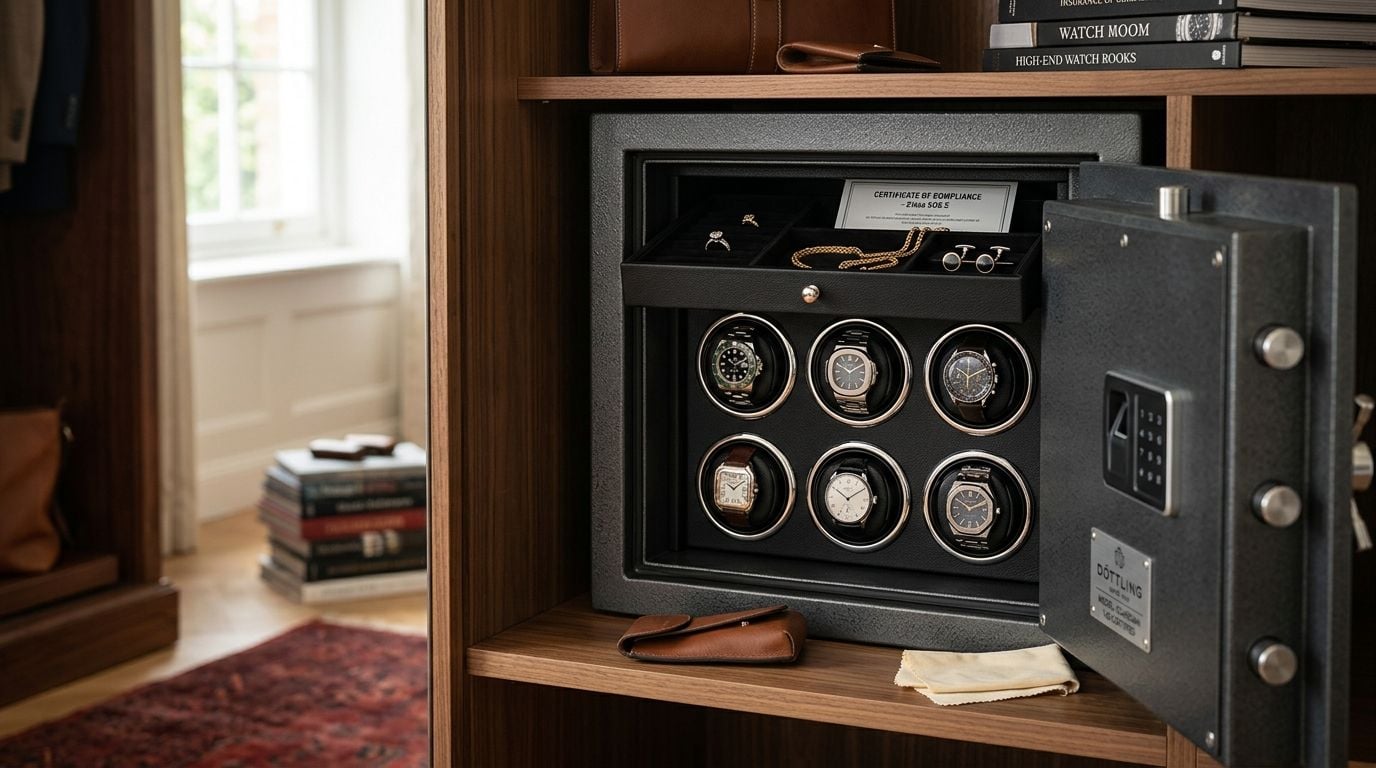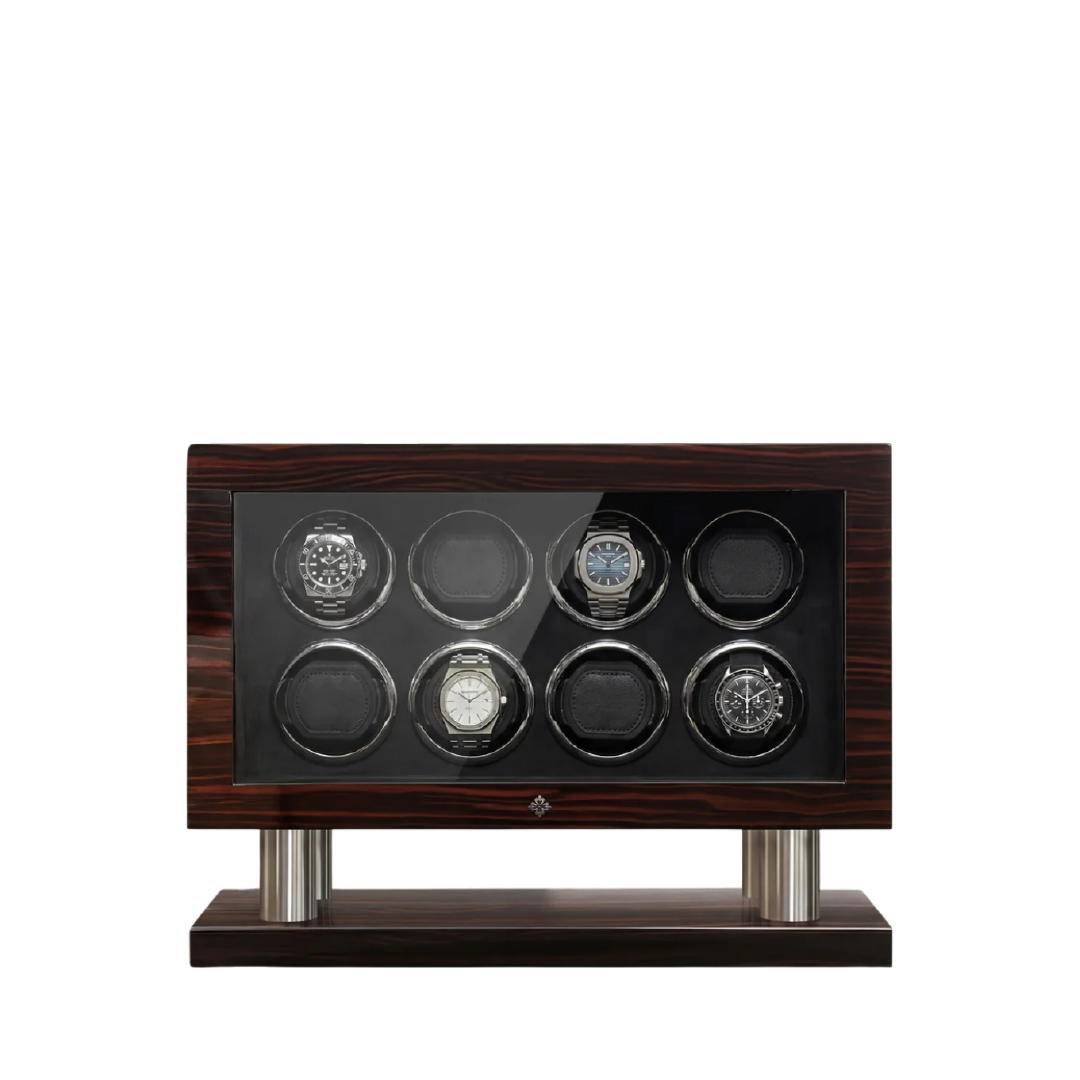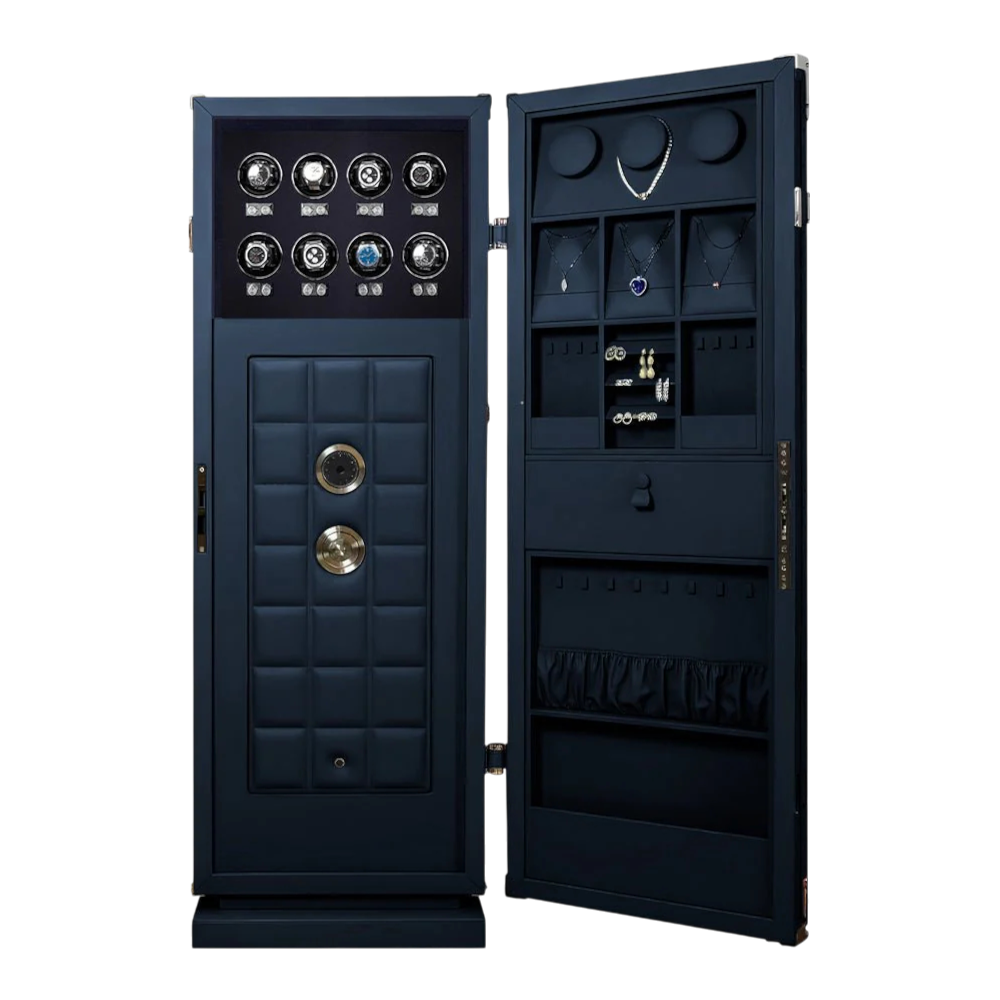

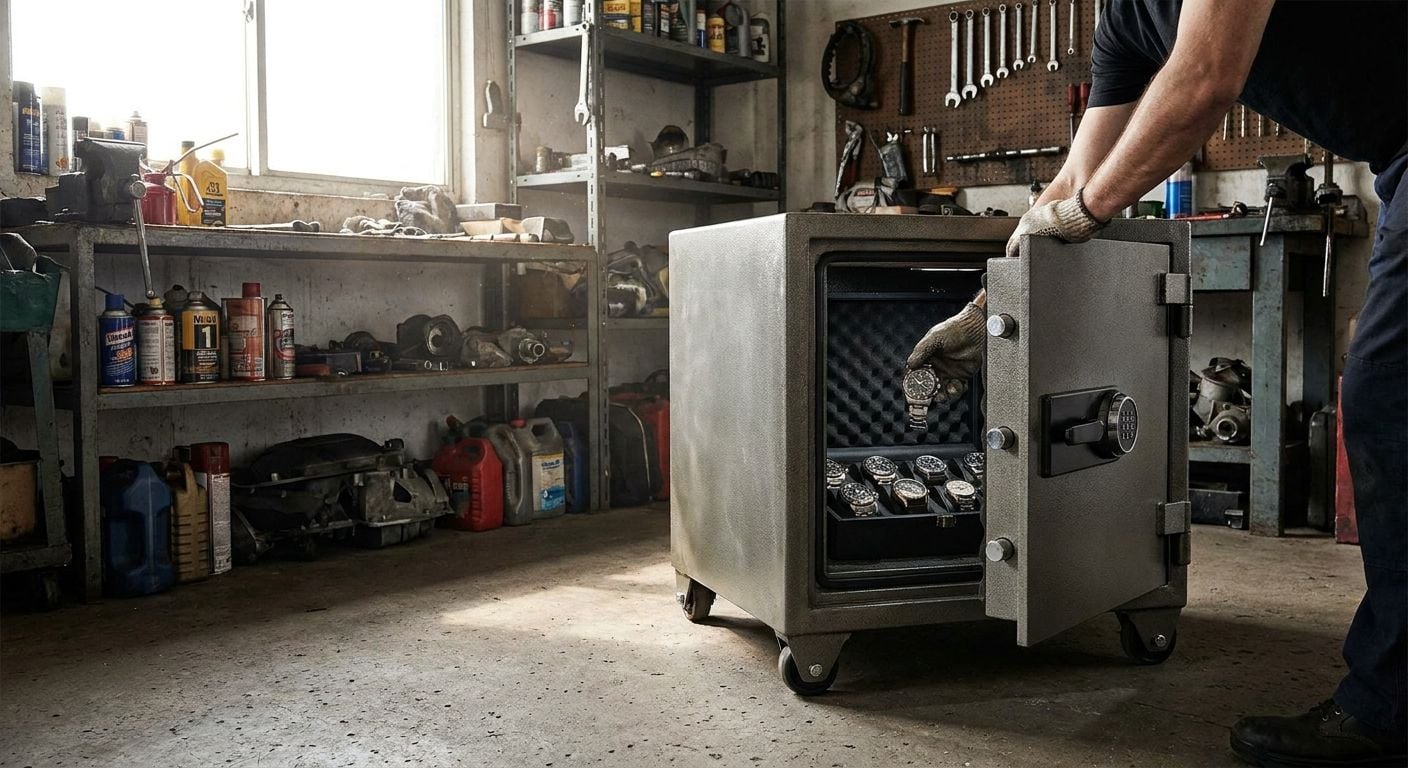
Garage workshop watch safes are bolt-down security cabinets built to protect automatic watches from forced entry, humidity swings, and vibration in a working shop space. A closet safe assumes climate control and low foot traffic; a garage safe has to survive neither.
- A watch safe for a garage workshop needs a UL burglary rating plus concrete anchoring, not just a lock.
- Uninsulated garages swing further in temperature and humidity than interior rooms, which stresses movement lubricant and leather linings.
- Enigwatch watch safes run $5,000 to over $21,000 and bolt directly into concrete or studs for garage-grade security.
- Bolting to drywall alone defeats the purpose: a pry bar separates a drywall-mounted safe from the wall in under a minute.
Why watch safes matter for a garage workshop
A garage is not a bedroom closet. It sits closer to the street, often shares a wall with an unmonitored side door, and in most homes gets none of the insulation the living space gets. That combination changes what a watch safe for a garage workshop actually needs to do in 2026, compared to a safe destined for a home office or a walk-in closet.
Attached garages remain a common secondary entry point once a primary door or code is defeated, and a workshop stacked with power tools already reads as a target before anyone knows a watch collection is inside. The burglary rating matters more here than the interior finish. Read the actual UL burglary rating breakdown before comparing safes on looks — the label tells you how many minutes of tool resistance a safe carries, not the marketing copy on the box.
Temperature and humidity swings are the second problem. A workshop running a table saw and a space heater in January covers a wider range than a climate-controlled den, and automatic movements plus leather-lined interiors don't hold up to that range repeated year after year. Enigwatch builds its safes with steel bodies designed for anchor mounting and Alcantara-lined interiors, but the garage setting adds requirements the interior finish alone doesn't solve.
Assess the garage's real exposure first
Before buying anything, walk the space the way an intruder would.
- Note the door type — overhead sectional doors pry apart faster than a solid single door with a deadbolt.
- Count every entry point: side door, garage window, attic hatch above the workshop.
- Check with your homeowner's or renters policy whether a garage-stored safe qualifies for scheduled jewelry coverage at all.
- Walk the driveway at night and see how visible the safe's location would be through a window.
- Log how many hours the garage sits empty during a normal week.
Match the burglary rating to garage-level risk
A commercial-grade rating matters more in a garage than almost anywhere else in the house.
- Compare TL-15 versus TL-30 ratings on a tool-resistant commercial safe — the number is minutes of resistance against common hand and power tools.
- Confirm bolt count and door thickness before assuming a published rating applies to the specific model on the shelf.
- Ask for the third-party lab report, not a printed certificate photo on the product page.
- Treat any safe without a published rating as a locked box, not a security device.
Bolt the safe to concrete, not just drywall
This is the step most garage installations skip, and it's the one that actually stops a smash-and-grab.
- Use concrete anchors rated for the safe's loaded weight, not drywall toggles meant for a shelf bracket.
- Anchor straight into the slab if the garage floor is exposed concrete rather than a raised wood floor.
- Confirm the manufacturer supplies or specifies anchor kits — bolt down a watch safe at home covers the hardware most collectors get wrong.
- Skip exterior-facing walls that share a stud cavity with the siding; those cut through easier from outside than from inside.
“If the safe isn’t bolted to concrete, it’s a briefcase with a keypad.”
Reinforce with stud anchoring where concrete isn't available
Some garages have finished, framed interior walls instead of exposed masonry.
- Locate at least two structural studs, not just the drywall layer over them.
- Use lag bolts long enough to bite the full depth of the stud, not just the drywall face.
- Add a mounting plate that spreads load across both studs instead of a single point.
- Avoid stud bays on an exterior-facing wall, for the same reason as the concrete step above.
Control temperature and humidity before it damages the movement
Uninsulated garages run a wider range than any interior room in the house, and that range works against automatic movements and leather-lined interiors over years, not days.
- Check whether the garage has any insulation or vapor barrier before treating it as long-term storage.
- Keep the safe off exterior walls that take direct sun or freeze overnight in winter.
- Look for a sealed door gasket rather than assuming any steel box keeps humidity out on its own.
- Track interior humidity independently for the first month — humidity levels watch safes collectors should target for a garage tend to run tighter than most people assume, given the swings garages already see.
Reduce visibility and add a second layer of deterrence
A safe nobody can see is a safe nobody targets first.
- Place it behind a cabinet, workbench, or false panel instead of against an open wall.
- Add a motion-activated light near the location instead of a spotlight that draws attention to it.
- Wire a contact sensor into the garage's existing alarm zone if one is already installed.
- Keep the safe out of any sightline from a window facing the driveway or street.
Decide between a standalone safe and one with a winder built in
A workshop is exactly the setting where automatics sit unworn for stretches at a time.
- A standalone safe protects the watches but leaves winding to a separate device somewhere else in the house.
- A combined safe-and-winder keeps automatics running without moving them out of the secured space each week.
- Match turns-per-day settings to each watch brand before storing multiple pieces on the same rotation program.
- Weigh the added electrical draw of a winder against running one in a garage without climate control.
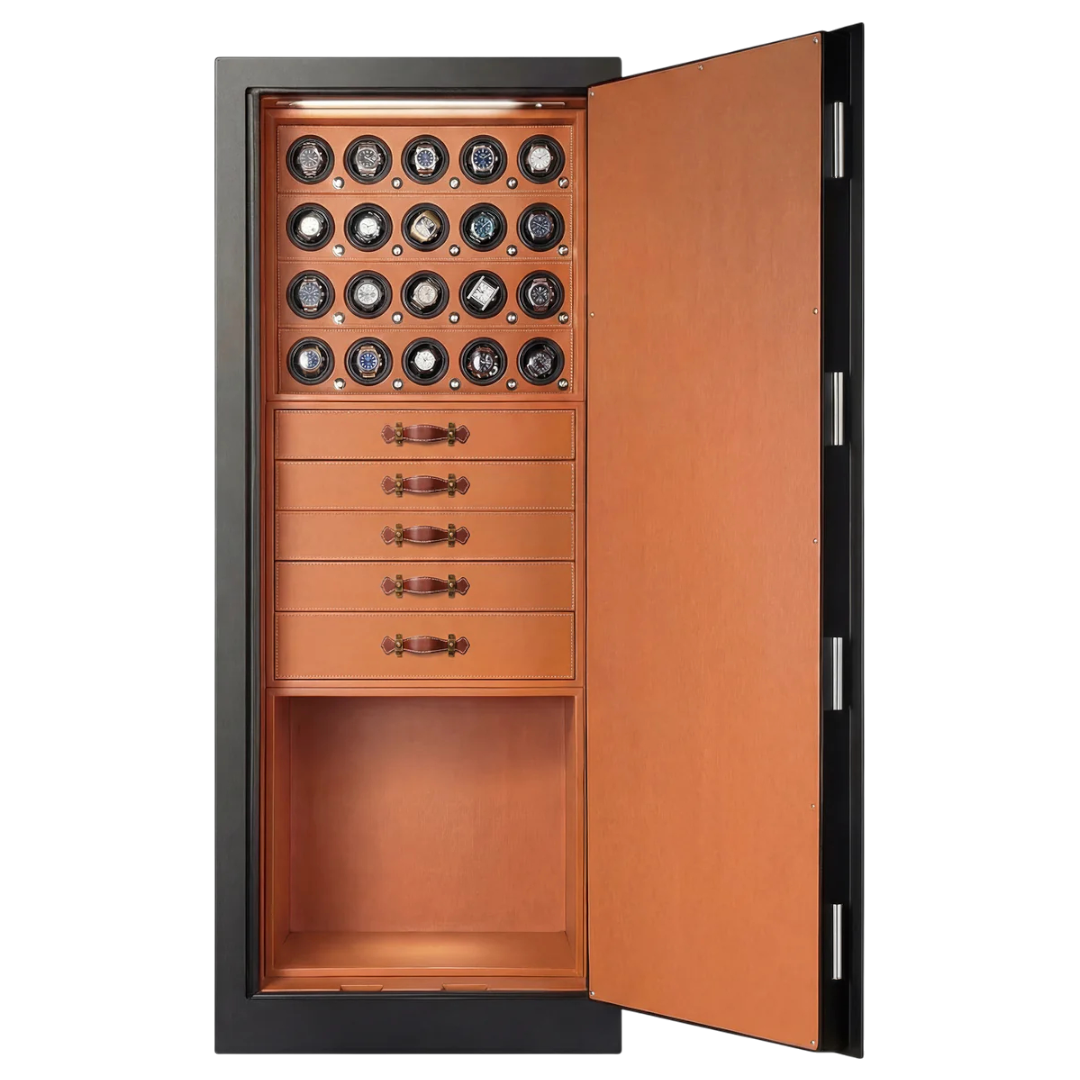
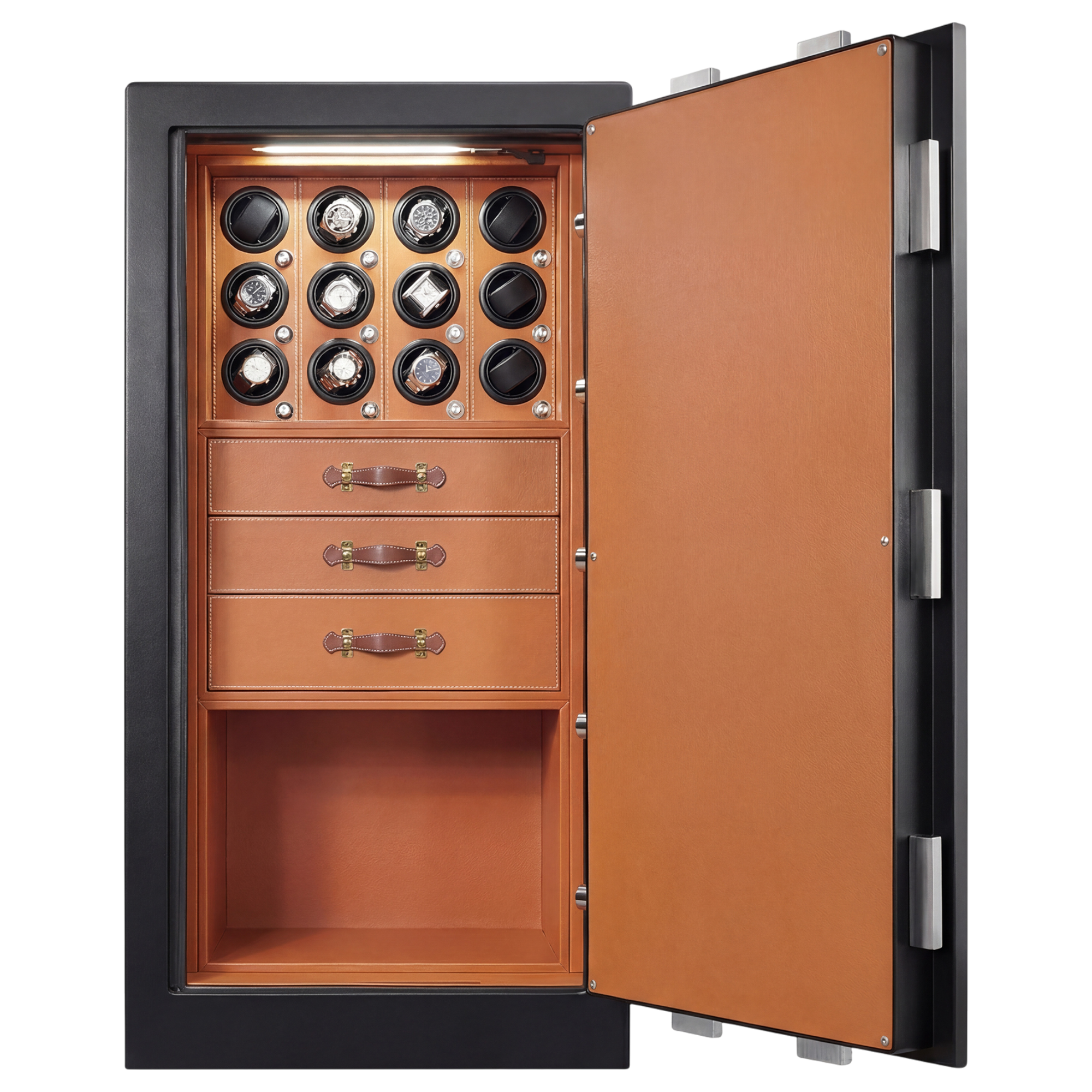
Enigwatch offers safes with a winder built in, which fits this scenario once the anchoring and rating are settled first — not before.
Comparing garage-ready storage options
| Option | Best for | Starting price | Key limitation |
|---|---|---|---|
| Hardware store steel security box | Renters on a tight budget | Varies by retailer | No published burglary rating; pries open in minutes |
| UL-rated commercial document/gun safe | Basic forced-entry resistance | Varies by retailer | No humidity or climate control for watch movements |
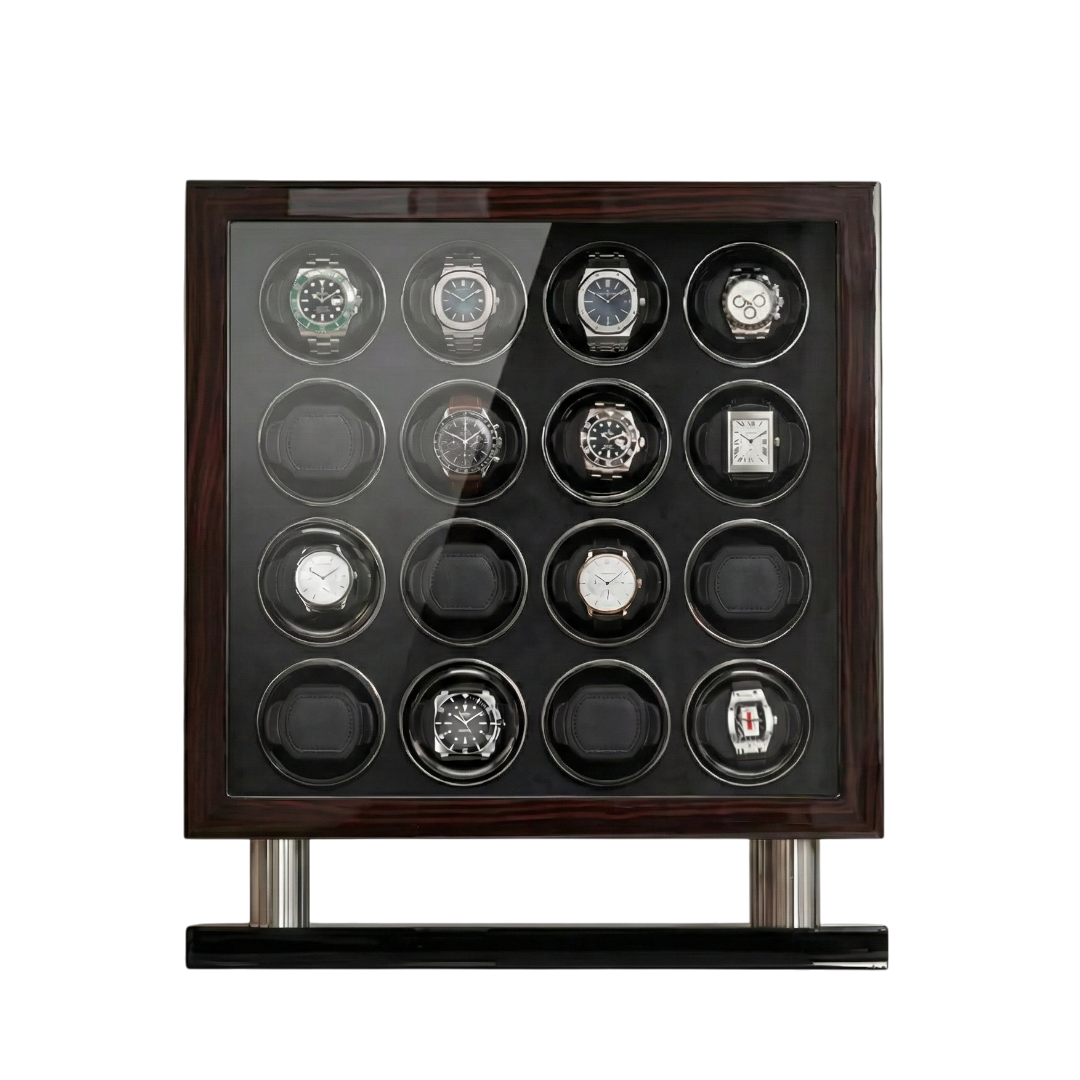
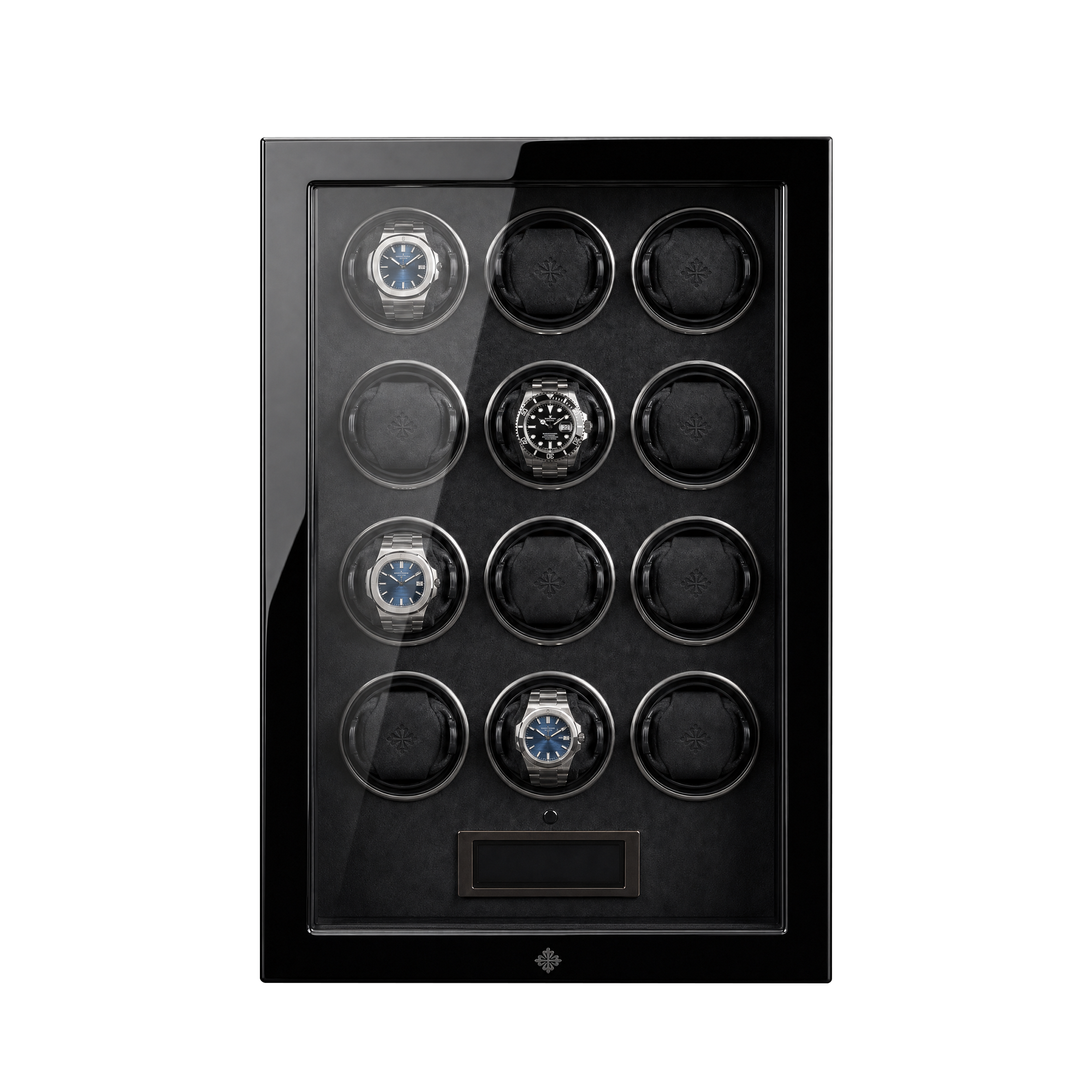
| Enigwatch watch safe, bolt-down with biometric access | Collectors storing multiple automatics in a workshop long-term | $5,000 to over $21,000 | Higher upfront cost; professional installation recommended |
Verdict: for a garage workshop, a UL-rated, bolt-down watch safe wins on security fundamentals; add a winder only after the anchoring and rating are settled.
Common mistakes garage workshop owners make
- Mounting to drywall because concrete looks hard. A pry bar separates a drywall-anchored safe from the wall in under a minute; concrete anchoring is the point of a garage installation.
- Storing solvents or lubricants next to the safe. Outgassing from workshop chemicals accelerates humidity buildup and residue on leather interiors and movement components.
- Skipping the alarm contact because the garage door is already locked. Attached garages remain a common secondary entry point once a code or lock is defeated.
- Buying on interior finish before checking the rating. Wood veneer and glass doors matter for a closet installation; for a workshop, the UL rating and anchor points come first.
- Placing the safe under a garage window. That gives anyone casing the space a direct sightline and cuts the time before they act.
Ready to secure a workshop collection?
See Enigwatch watch safes built for bolt-down installation and biometric access.
FAQ
What’s the best watch safe for a garage workshop?
A UL-rated, bolt-down safe anchored into concrete is the best watch safe for a garage workshop in 2026. Interior finish and winder features matter less than the rating and the anchor points.
Is a UL burglary rating necessary for a garage safe?
Yes, a published UL rating tells you how many minutes a safe resists common hand and power tools. Without it, a steel box is a locked container, not a security device.
How much does a watch safe cost in 2026?
Luxury watch safes with biometric access and bolt-down bodies run $5,000 to over $21,000 in 2026, depending on capacity and finish. Basic commercial safes vary by retailer and rating.
Should a garage watch safe bolt to the floor or the wall?
Bolt into whichever surface is solid concrete or a structural stud, not drywall alone. A slab floor anchor is usually stronger than a framed interior wall in a garage.
Does garage humidity damage automatic watches?
Yes, uninsulated garages swing wider in temperature and humidity than interior rooms, and that range affects movement lubricant and leather linings over time. A sealed safe with a gasket reduces the exposure.
Is a safe with a built-in winder worth it for a garage workshop?
It’s worth it once the anchoring and burglary rating are handled first, since a workshop is a setting where automatics often sit unworn for weeks. Match turns-per-day settings per watch brand before running several on one program.
Can a watch safe survive a garage fire?
Fire resistance is a separate rating from burglary resistance, and not every safe carries both. Check the fire rating specifically if the garage stores flammable workshop materials near the safe.
How do I hide a watch safe in a garage workshop?
Place it behind a cabinet, workbench, or false panel rather than against an open wall, and keep it out of any window sightline from the driveway. Visibility, not just weight, is what draws a second look.
One last thing
The anchor point most garage workshop owners skip isn't the wall — it's the ceiling joist above a storage loft. Running a security cable from the safe to a ceiling anchor adds a second failure point that a pry bar aimed at the wall mount never accounts for, and it costs almost nothing next to the safe itself.
Related guides
Protect Your Watch Collection
Designed for collectors who demand the best. Explore our premium watch winders and luxury safes.