
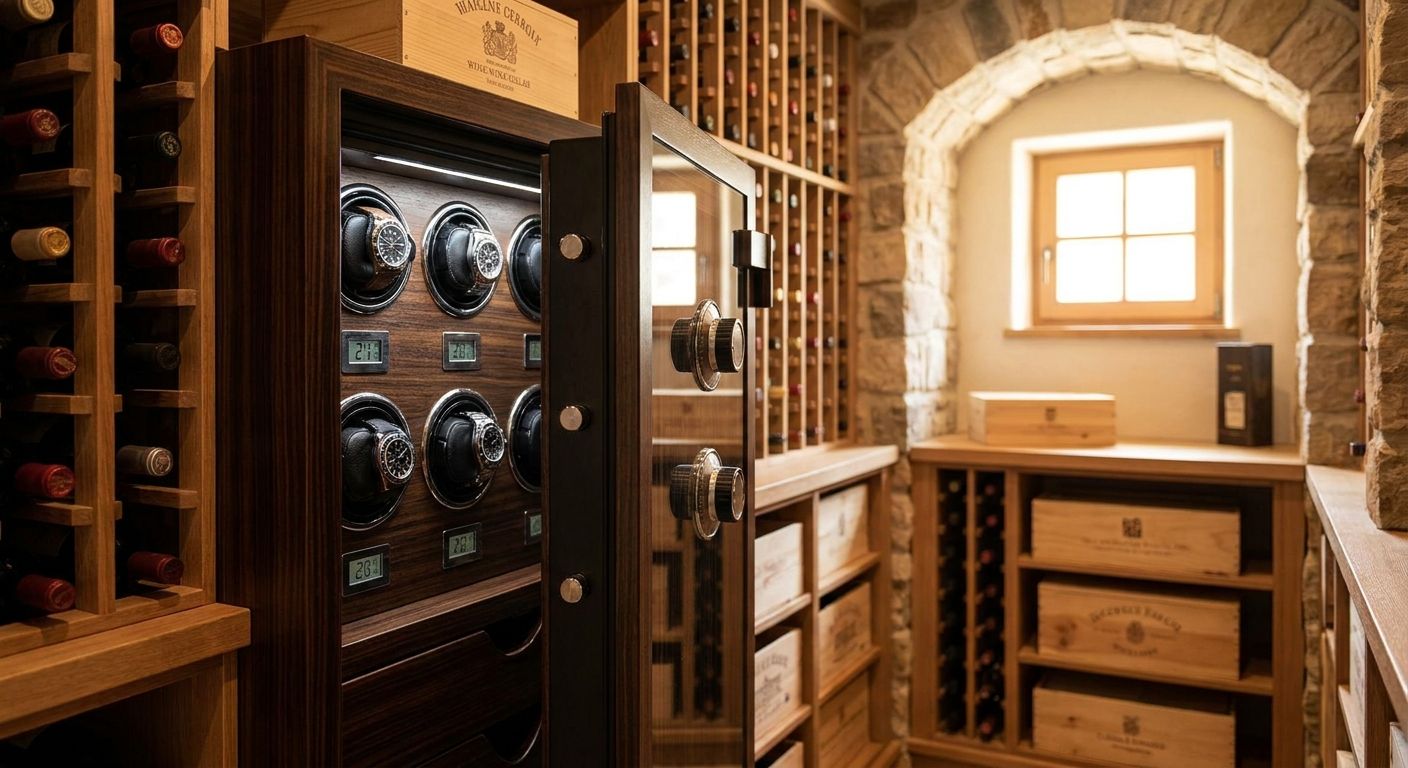
Wine cellar conversion collectors inherit a room built for wine, not watches, and a watch safe for a wine cellar has to reverse the exact conditions the cellar was engineered to hold: cool temperatures, high humidity, and a cooling compressor cycling nearby. Get the retrofit wrong and the room that once protected Bordeaux will corrode dials and gum up lubricants instead.
- A watch safe for a wine cellar needs 40-50% RH and 65-75°F, not the 50-70% RH and 55-58°F wine racks are set to.
- Enigwatch safes with active humidity control counter cellar dampness; a standalone dehumidifier rarely holds a stable range alone.
- Compressor-based cooling units vibrate the room — isolate the safe from that wall or automatic movements drift.
- Verdict: fix the cellar’s climate system before buying the safe, then size the unit to the room’s real humidity swing.
Why a watch safe for a wine cellar matters
A wine cellar and a watch room want opposite conditions. Wine ages best at 50-70% relative humidity and 55-58°F, held steady by a dedicated cooling unit. Automatic movements do better at 40-50% RH and 65-75°F — warmer and drier than the cellar was ever tuned for. Enigwatch's guide on temperature control and movements covers why that 10-15 degree gap matters for lubricant viscosity inside a caliber, and a cellar conversion sits right in the middle of that gap by default.
The room's existing insulation and vapor barrier are assets — most cellars are already sealed better than a closet or a garage. The problem is the setpoint, not the shell. Collectors converting these rooms in 2026 are mostly fighting a thermostat and a humidistat, not rebuilding walls.
How to convert a wine cellar into a watch safe room
1. Log the room's real climate for two weeks
Don't trust the wine cooling unit's display. Put an independent logger in the room before touching anything.
- Track temperature and RH every hour for at least 14 days
- Note swings tied to the compressor's on/off cycle
- Check readings near the safe's planned location, not just the room's center
- Flag seasonal risk if the cellar sits below grade or against an exterior wall
- Record ambient light exposure if there's a window or glass door
2. Separate watch climate control from the wine system
The wine cooling unit is calibrated for wine, and reprogramming it to watch-friendly settings usually ruins it for wine storage too.
- Decide whether the room stays dual-purpose or converts fully to watch storage
- If wine stays, plan a separate climate zone or standalone unit for the watch safe
- Confirm the existing unit can be reprogrammed to a higher temperature band without damaging its refrigerant cycle
- Budget for a dedicated 110V or 220V circuit if a second climate unit goes in
- Ask an HVAC tech whether dual-zone units in the cellar can split rather than replace
3. Choose a safe built for the room's actual conditions
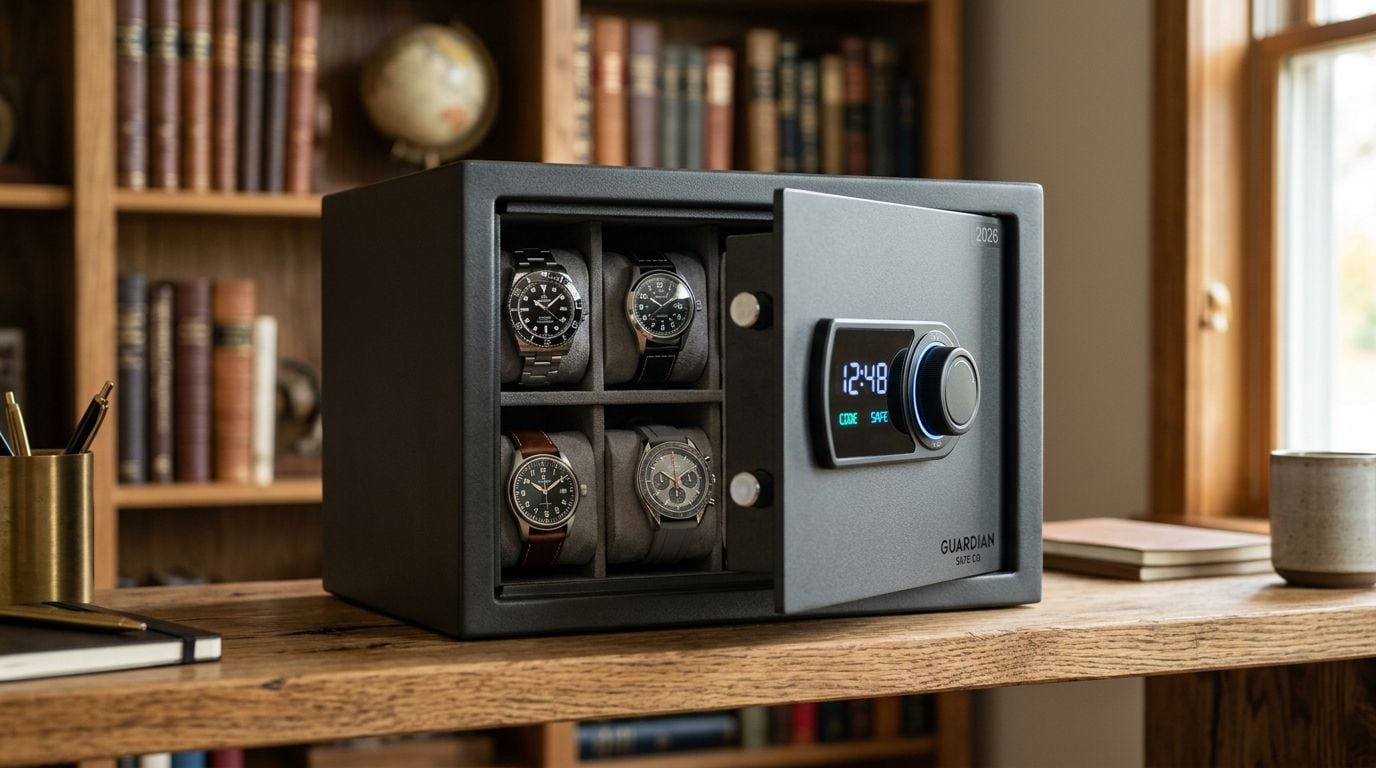
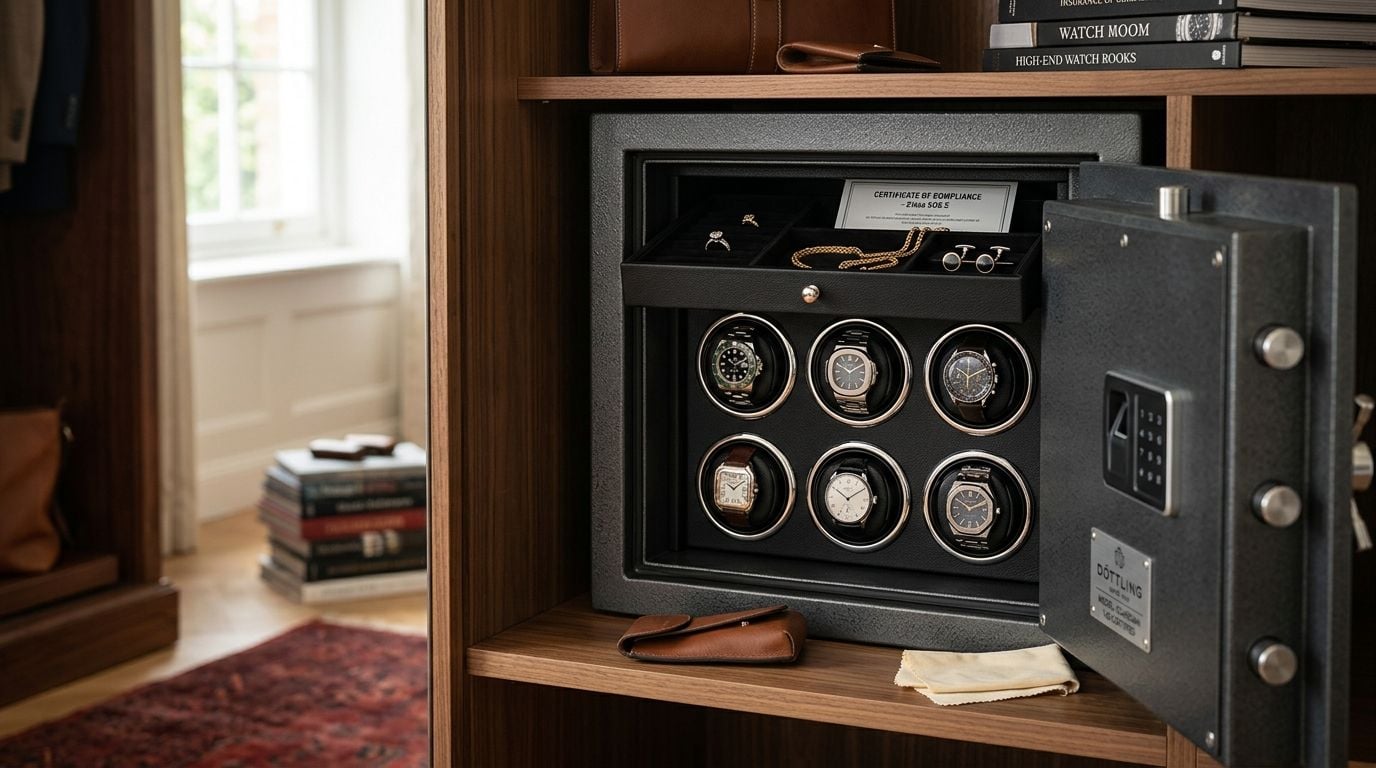
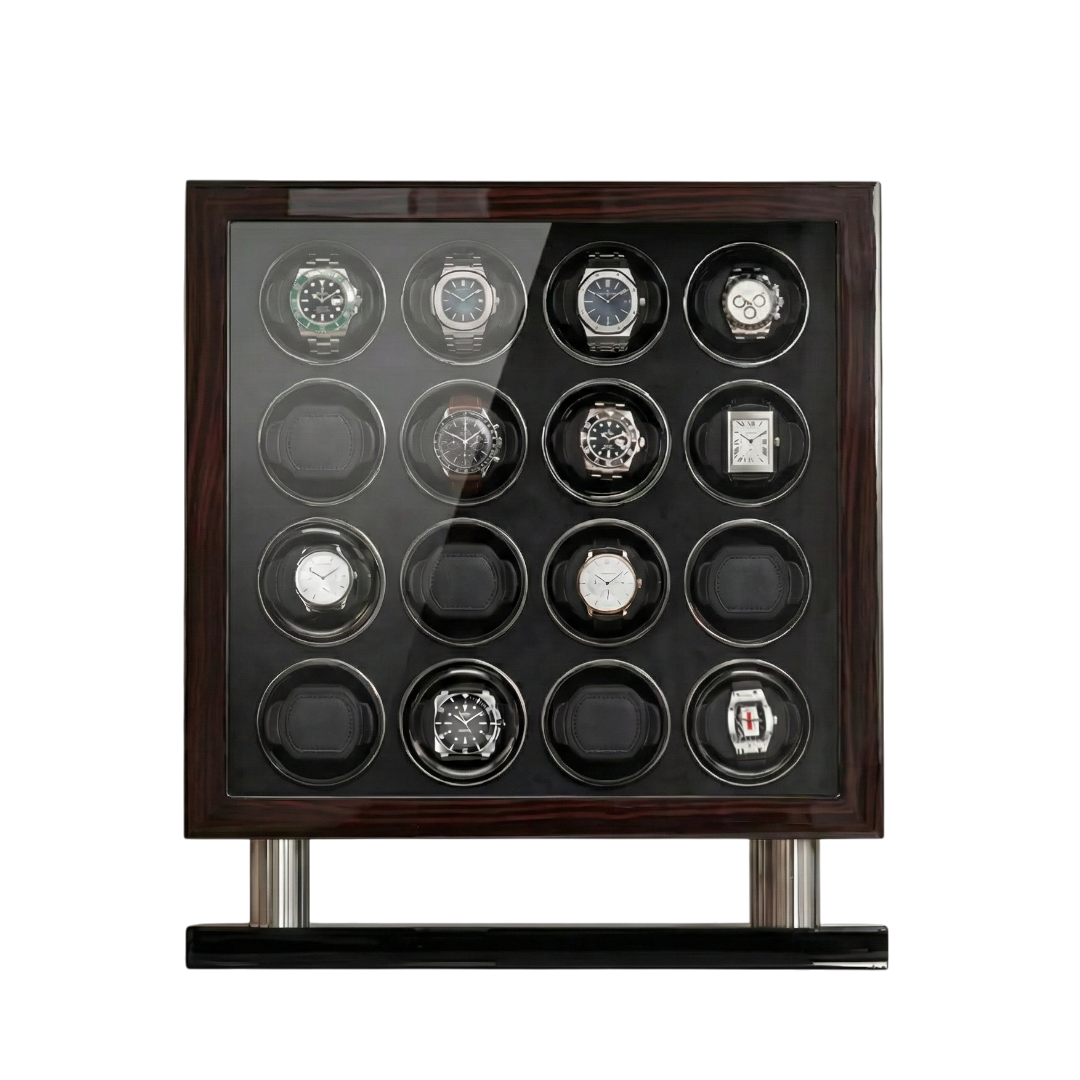
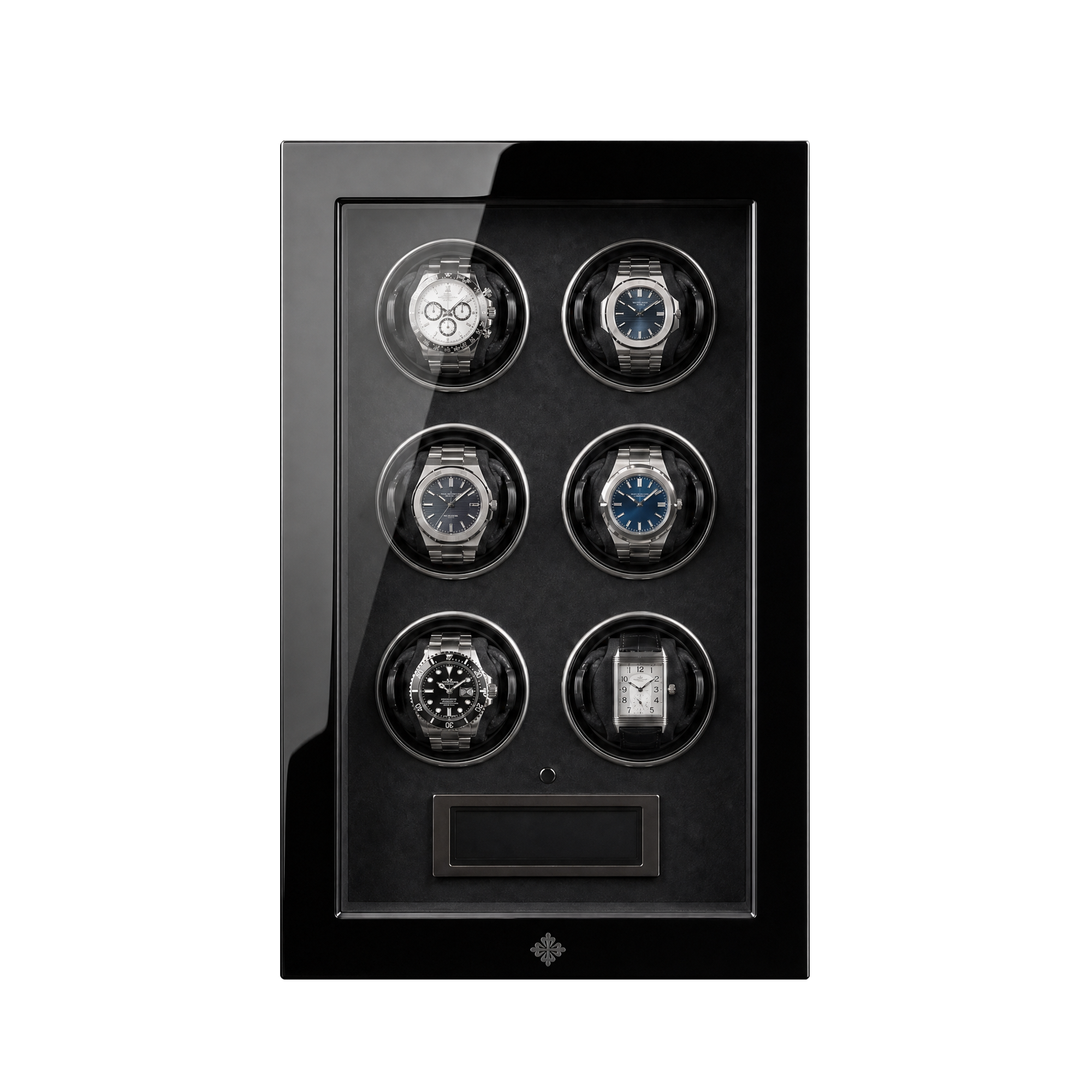
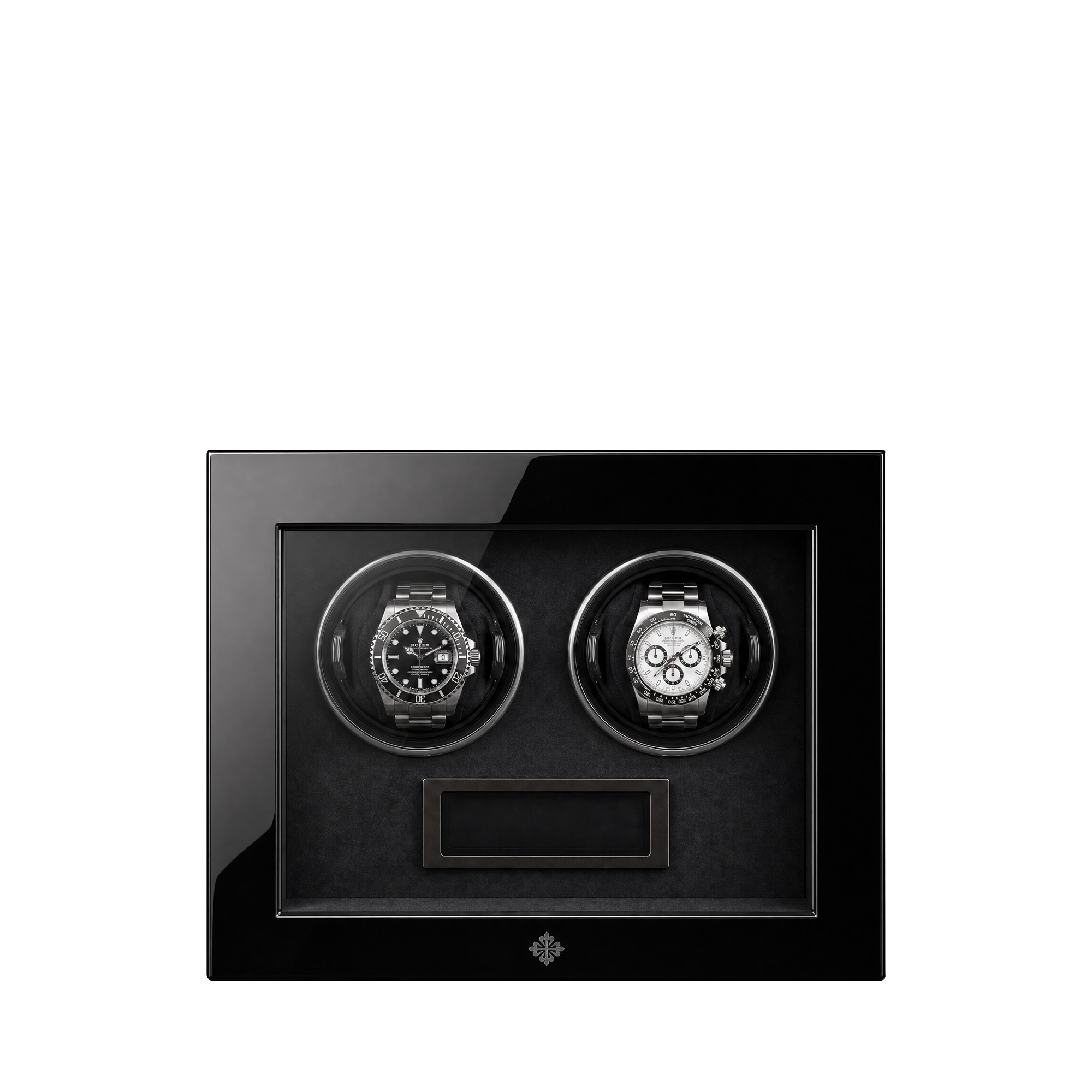
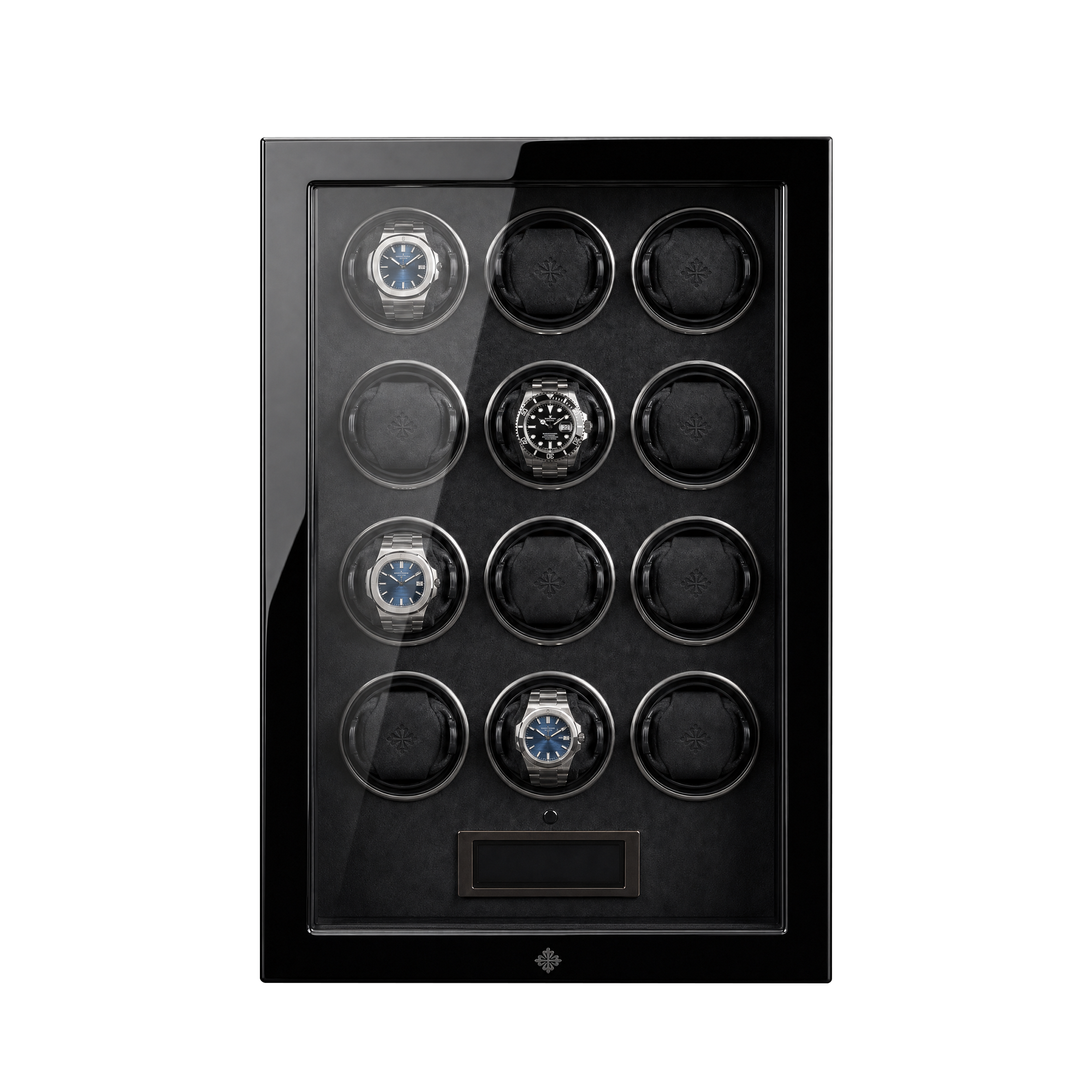
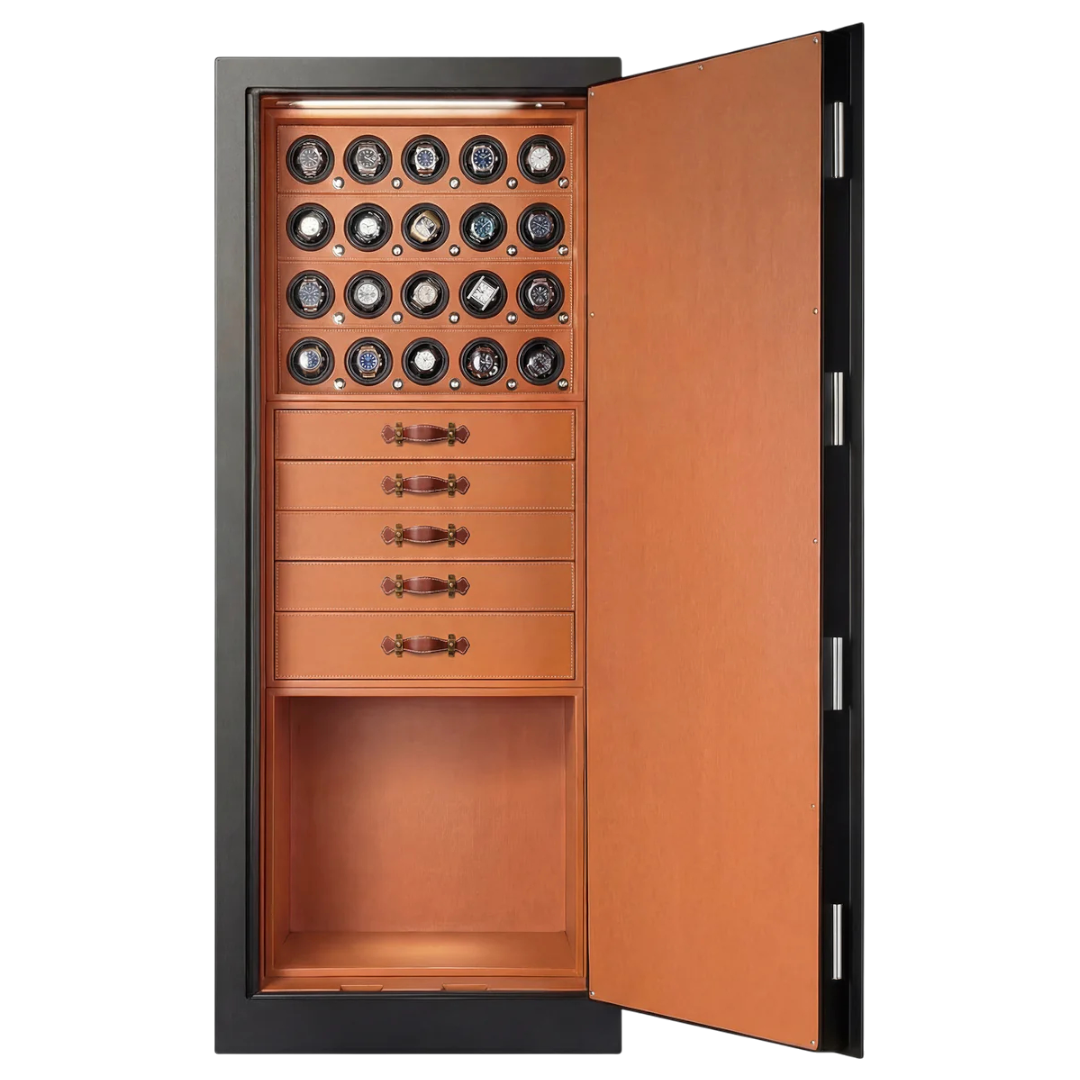
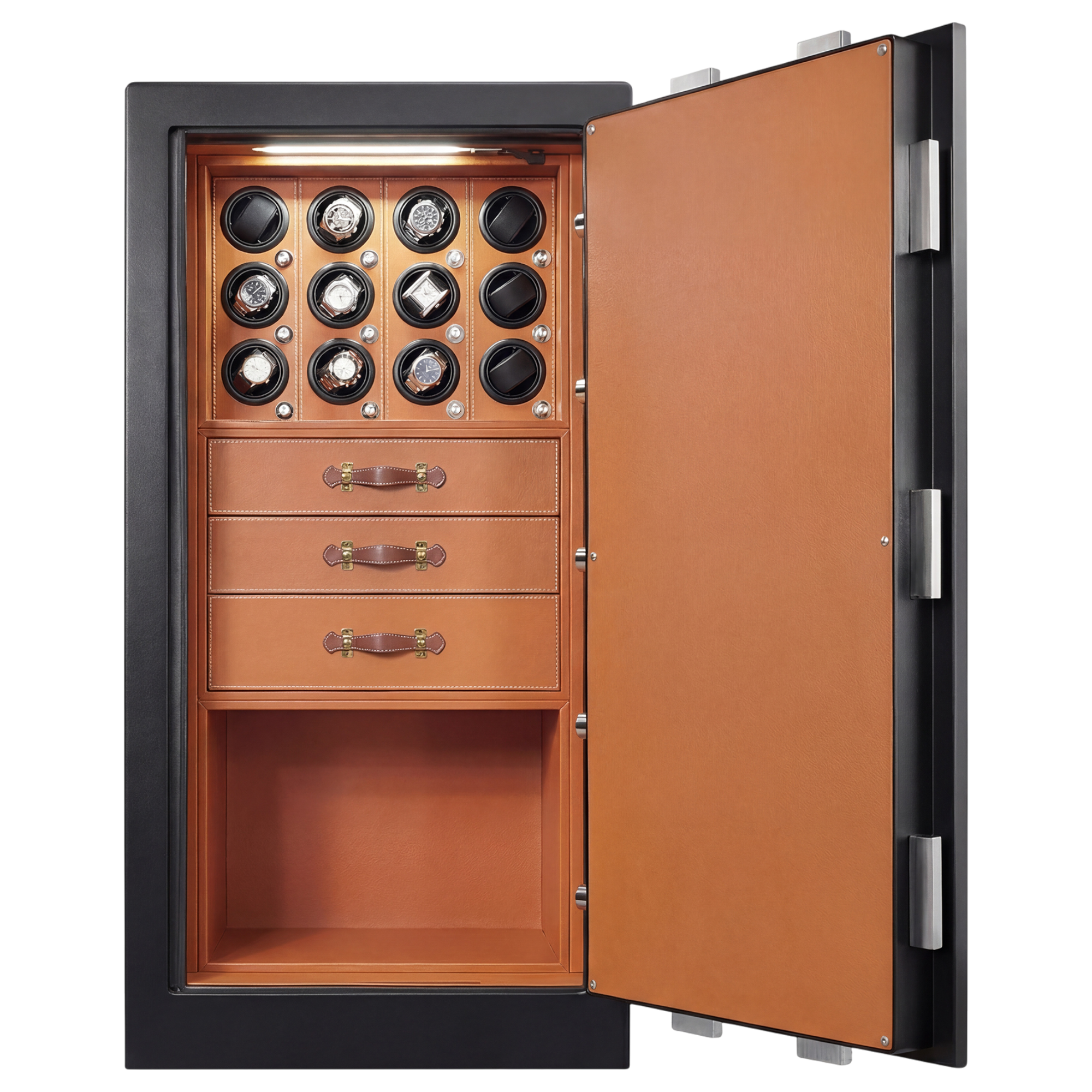
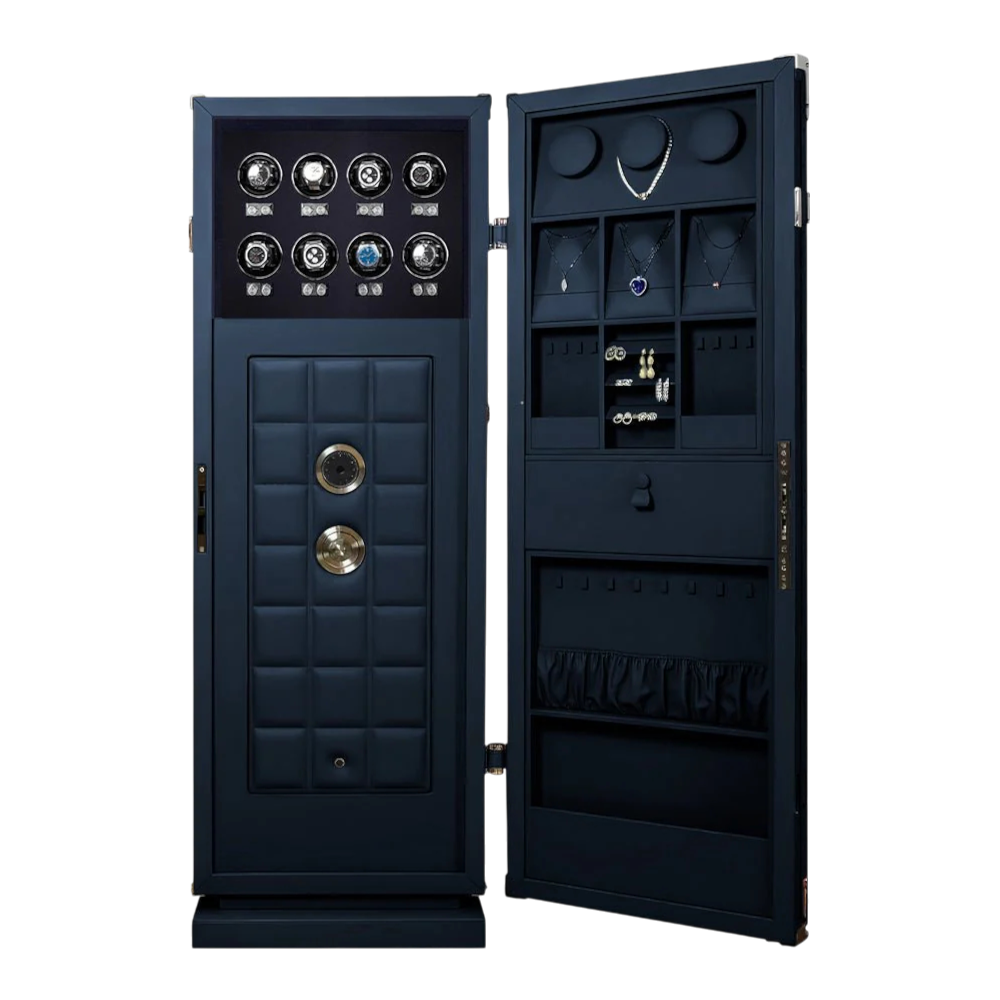
A watch safe for a wine cellar needs its own climate management rather than relying on the room to behave. Enigwatch safes built with active humidity control are designed to hold a target band independent of the surrounding room, which matters when the cellar itself still swings with the seasons.
- Confirm the safe's humidity control range covers 40-50% RH, not just "dry"
- Check whether the unit needs a water reservoir refill or runs passive desiccant
- Verify the safe's rated operating temperature covers the cellar's coldest recorded reading
- Ask whether the finish (wood veneer, leather, steel) tolerates the cellar's baseline dampness during setup
- Prioritize models with a sealed door gasket over ones that rely on room air exchange
4. Kill vibration from the cooling compressor
Wine cellar compressors run more or less constantly, and that hum travels through slab and stud.
- Keep the safe off the wall shared with the compressor unit
- Add anti-vibration pads under the safe's base if floor-mounted
- Test for hum transfer by placing a hand on candidate walls while the compressor cycles
- Route the safe's own climate unit fan away from the safe's interior chamber
- Avoid mounting directly above or below mechanical equipment on a shared floor joist
5. Hold humidity in the 40-50% band, not wine's range
Wine cellars are humidified on purpose to keep corks from drying out — that's the opposite of what a watch movement wants. Enigwatch's breakdown of humidity levels for watch collectors lays out why sustained dampness above 50% accelerates corrosion on steel components and lume degradation over time.
- Set any standalone dehumidifier to a 40-50% RH target, checked weekly at first
- Don't rely on silica packets alone in a room that runs consistently damp
- Re-check RH after any HVAC change in the main house, not just the cellar
- Watch for condensation on the safe's exterior in summer if the room cools faster than it dries
- Log humidity for a full year before assuming the fix is permanent
6. Anchor and position the safe correctly
Cellars often have concrete or stone floors, which changes anchoring versus a typical closet install. Collectors weighing a freestanding safe against a built-in option should compare watch safe versus wall safe trade-offs before drilling anything permanent.
- Confirm the floor or wall can bear the safe's loaded weight, especially on suspended framing
- Anchor to structural framing or a poured slab, not drywall alone
- Keep the safe at least a few inches off a concrete floor if the cellar has any flood history
- Position the door swing away from wine racks so access isn't blocked
- Route power for a built-in climate unit before final placement, not after
“If the room still swings more than 10 degrees between compressor cycles, the safe is still doing the wine’s job, not the watch’s.”
Which storage option fits a wine cellar conversion
| Option | Best for | Starting price | Key limitation |
|---|---|---|---|
| Enigwatch safe with humidity control | Full cellar conversion, racks removed or staying | Roughly $5,000 | Needs its own dedicated power circuit |
| Wall-mounted safe without climate control | Cellars already reprogrammed off wine settings | Not model-specific | No active defense against seasonal RH swings |
| Standalone dehumidifier plus standard safe | Budget retrofits, small collections | Varies by unit | Doesn't address vibration or temperature at all |
| Full HVAC reconstruction before racks removed | Ground-up conversions | Varies by contractor | Most disruptive and slowest option |
Verdict: for anyone keeping the room fully dedicated to watches in 2026, a safe with built-in humidity control is the only option on this list that solves temperature, humidity, and security in one install.
Common mistakes wine cellar conversions make
- Leaving the wine cooling unit at wine settings after the racks come out, so the room stays at 55-58°F and 50-70% RH indefinitely.
- Assuming the cellar's insulation replaces active climate control — good insulation holds a setpoint, it doesn't create the right one.
- Mounting the safe against the cooling unit's shared wall, which transmits vibration and cold spots straight into the chamber.
- Skipping a stabilization period before loading watches — a converted room needs weeks of stable readings before a winding routine matters.
- Ignoring below-grade flood risk on a cellar floor that was fine for wine bottles but not for a safe's base.
Plan your cellar conversion right
See Enigwatch safes built with active humidity and temperature control.
FAQ
What’s the best watch safe for a wine cellar conversion?
A watch safe with active humidity control built to hold 40-50% RH independent of the room is the best fit, since it doesn’t rely on the cellar’s existing wine-tuned climate system. Enigwatch models with dedicated humidity units are designed for exactly this gap.
Is a wine cellar’s humidity bad for automatic watches?
Yes — wine cellars typically run 50-70% RH, well above the 40-50% range recommended for automatic movements. Sustained dampness above 50% accelerates corrosion on steel components over years of storage.
Does a wine cellar’s temperature need to change for watch storage?
Most wine cellars hold 55-58°F, while watch movements do better at 65-75°F. That 10-15 degree gap affects lubricant viscosity, so the room’s setpoint needs adjusting even if the insulation stays the same.
Can I keep wine and watches in the same converted cellar?
Only with two separate climate zones, since wine and watches need opposite humidity targets. A dual-zone system or a standalone climate-controlled safe solves this without splitting the room.
How much does a watch safe with humidity control cost in 2026?
Enigwatch’s climate-controlled safes range from roughly $5,000 to over $21,000 depending on capacity and finish. Pricing scales with slot count and interior materials like Alcantara or exotic wood veneer.
Will compressor vibration from a wine cooling unit damage a watch safe?
Constant low-level vibration from a compressor can affect automatic movements over time, especially on a shared wall or floor joist. Isolating the safe from the compressor’s mounting surface is the standard fix.
Should I remove the wine racks before installing a watch safe?
Not necessarily — if the room stays dual-purpose, the racks can stay as long as the safe has its own independent climate control. Full removal only matters if the whole room converts to dedicated watch storage.
One last thing
Most wine cellars already run a dual-zone cooling unit that can be reprogrammed rather than replaced — check that before budgeting for new HVAC equipment in 2026, since a software or setpoint change is often cheaper than a swap.
Related guides
- Does humidity control matter for automatic watches?
- Why watch safe weight matters for home installation
Protect Your Watch Collection
Designed for collectors who demand the best. Explore our premium watch winders and luxury safes.