
A lawyer who winds a Submariner or a Datejust before a 7 a.m. deposition needs a watch winder for a lawyer that survives a desk, not a dresser: small footprint, quiet motor, finish that doesn't look like it wandered in from a teenager's bedroom. This guide breaks down what actually matters on an office desk in 2026 and which picks earn a Buy.
- A single-slot winder with a Japanese Mabuchi motor is the safe watch winder for a lawyer’s desk in 2026 — Buy.
- Skip anything over 8 slots for a shared or open-plan office; the footprint reads as clutter, not craft.
- Turns-per-day (TPD) programs matter more than slot count — most automatic calibers need 650 to 950 TPD.
- A wood or leather finish reads professional; glossy acrylic reads like a gadget store display.
Why this matters
A law office desk is a display case whether the owner intends it or not. Clients, partners, and opposing counsel see it during every meeting. A watch winder that hums audibly through a closed door or takes up half the desk undercuts the same quiet-competence signal the watch itself is supposed to send.
The other issue is practical: most attorneys don't wear the same automatic every day. A winder built for a 20-watch collector is wasted on a desk meant for two or three pieces in weekday rotation.
Who this is for
This guide is for a practicing attorney, partner, or in-house counsel who keeps one to four automatic watches in active rotation and wants at least one of them wound and ready without carrying it home every night. It assumes desk space is limited, privacy is not guaranteed, and the winder has to look like it belongs next to a fountain pen, not a gaming setup. If the goal is a display piece for a corner office rather than a working desk accessory, a watch safe built for corporate office display solves a different problem and is worth a separate look.
What to look for in a watch winder for a lawyer
Footprint that fits a desk, not a dresser
Desk real estate in most law offices runs 30 to 60 inches wide, and half of that is already claimed by monitors, a phone, and a legal pad. A winder footprint under roughly 8 by 6 inches keeps the desk usable. Anything bigger belongs on a credenza, not in the sightline during a client call.
Noise level for a shared or open-plan office
Motor noise is the single most common complaint attorneys raise about desk winders, and it's almost always a cheap gearbox, not the concept. A well-built motor runs quiet enough to sit through a closed office door without drawing attention during a phone deposition.
A finish that reads professional, not flashy
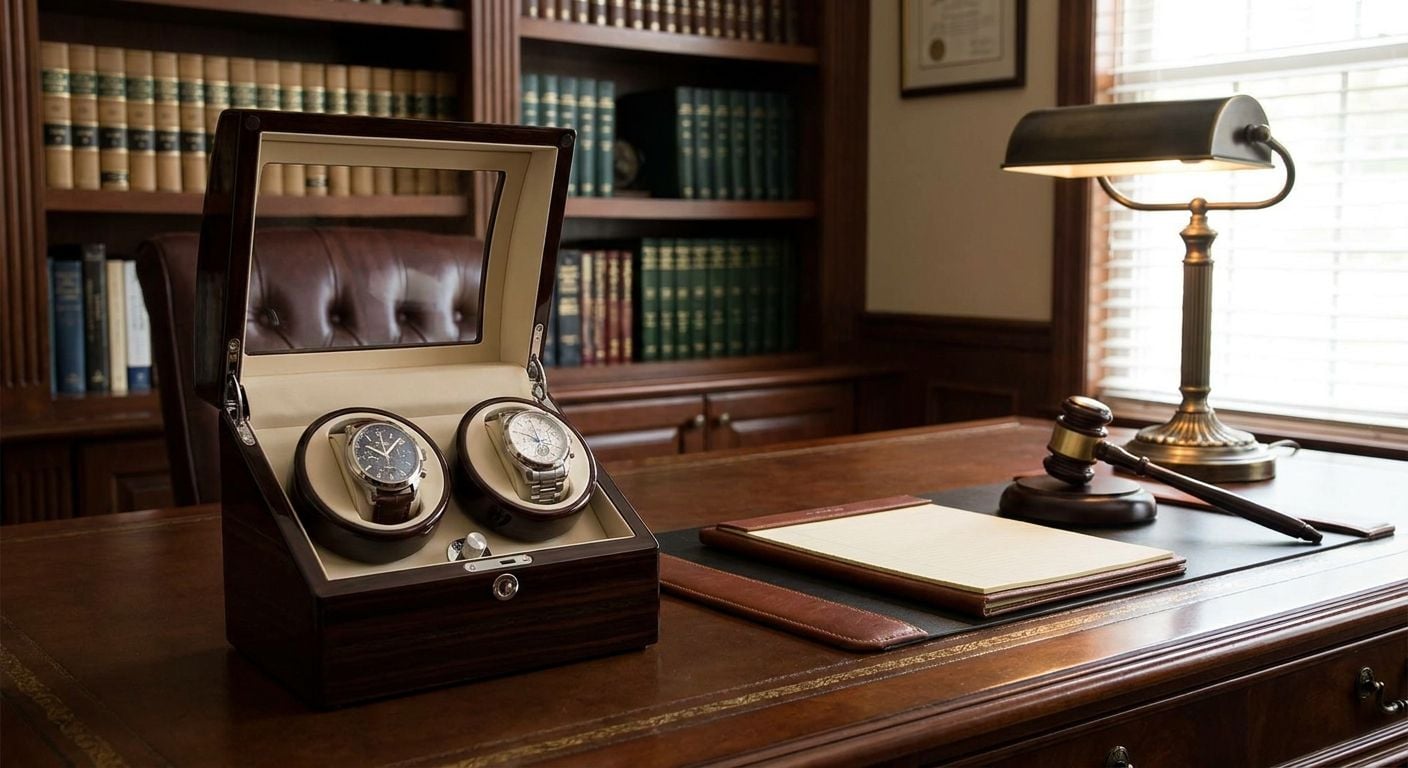
A winder finished in exotic wood veneer or leather sits next to a desk set without looking out of place. Glossy black acrylic or exposed plastic gearing reads more like a gadget than an accessory, which is the wrong signal in a partner's office. This is the detail that separates a winder that belongs on a desk from one that belongs in a closet — see the breakdown on wood, leather, or glass finish options before buying.
Motor reliability for daily use
A desk winder runs for hours at a time, often unattended, five days a week. Japanese Mabuchi motors are the standard reference point in this category because they're built for exactly that kind of continuous, low-maintenance cycling rather than occasional home use.
Slot count matched to what you actually wear
Most attorneys rotate two or three automatics at most during a work week. A 12- or 16-slot cabinet built for a serious collection is overkill on a desk and, more to the point, invites questions from anyone who walks past.
Top picks for a lawyer's desk
The quiet pick: single-slot winder
A single-slot winder is the correct default for a desk holding one daily-wear automatic. Most calibers need somewhere between 650 and 950 turns per day (TPD) to stay wound without overworking the movement, and a single-motor unit programs that range without complexity. Verdict: Buy — it's the smallest footprint on this list and the easiest to justify next to a keyboard.
The desk-for-two pick: 2-slot winder
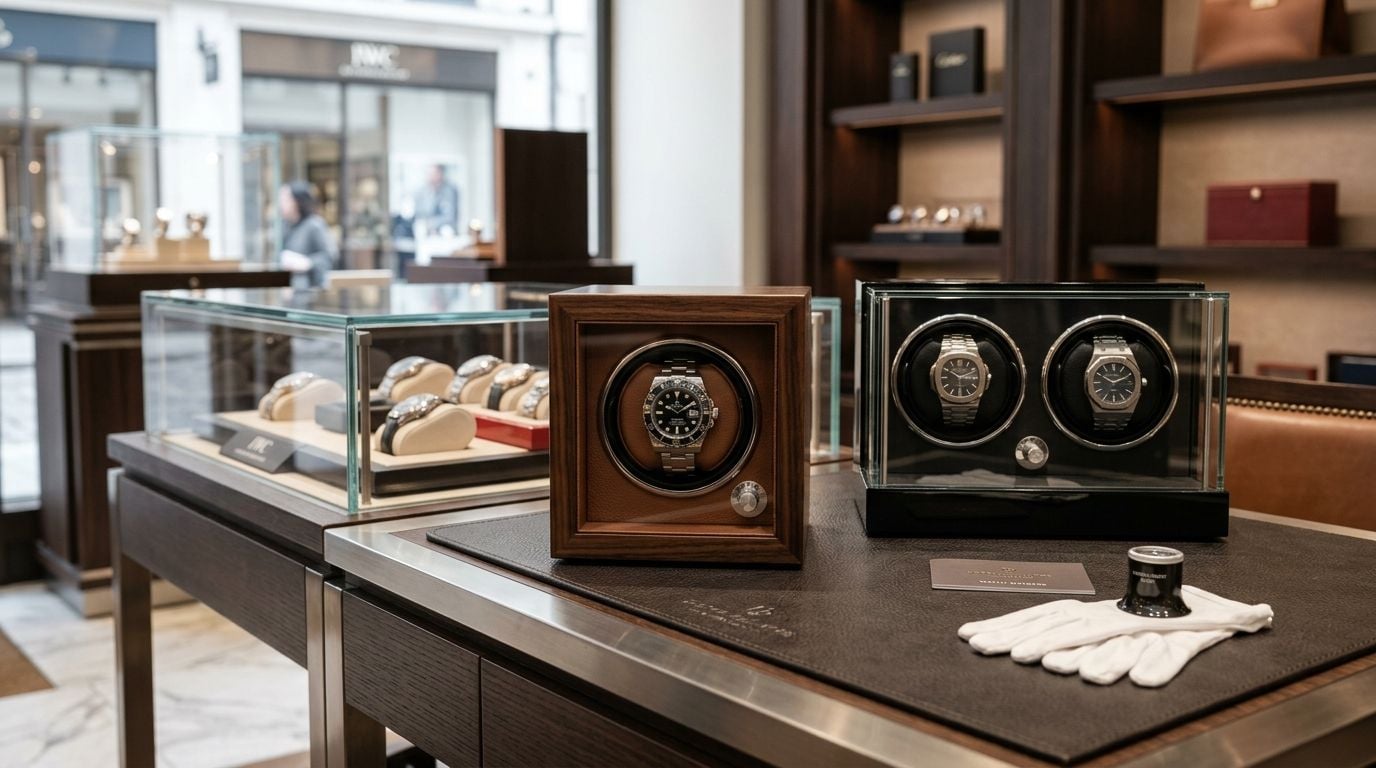
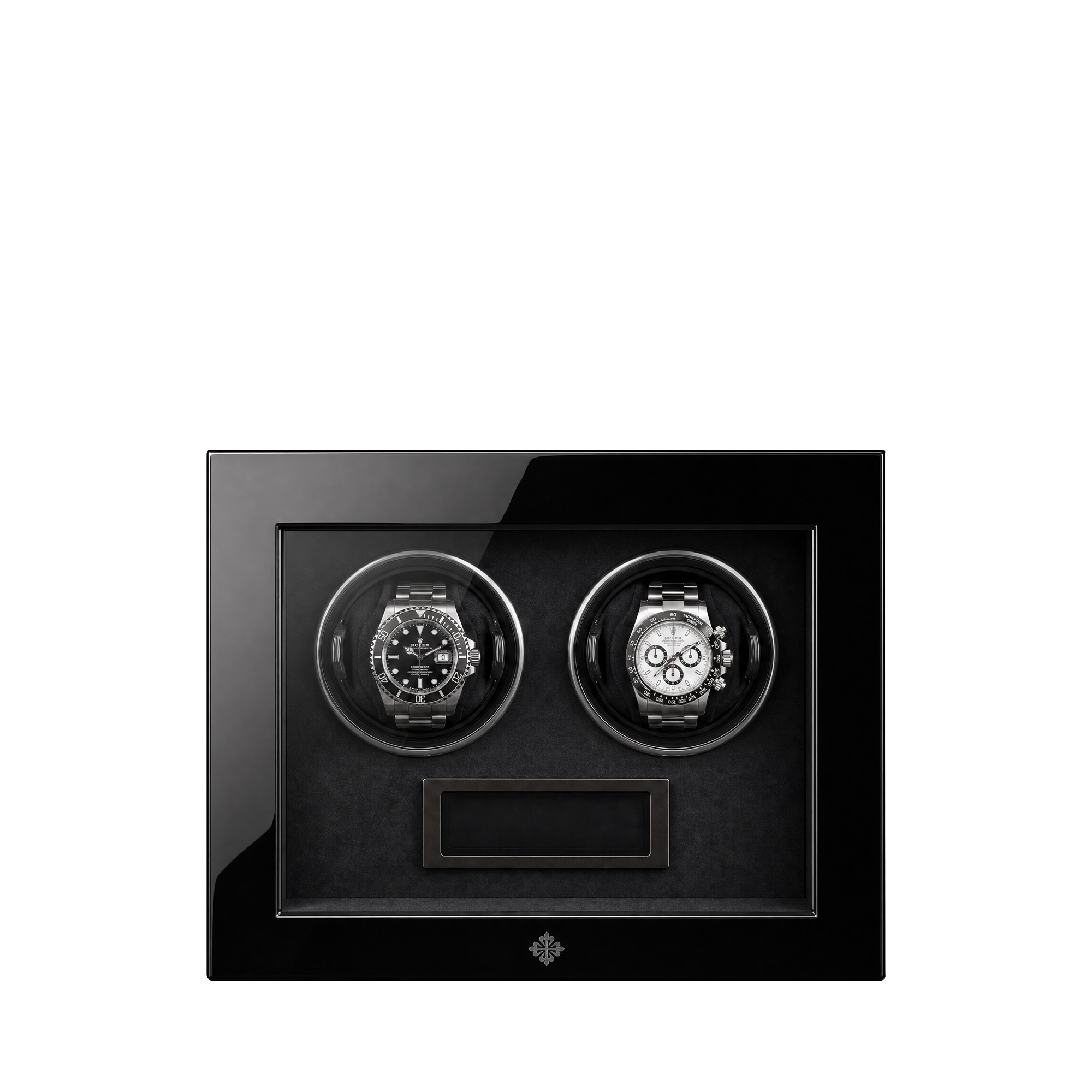
Attorneys who alternate between a dress watch for court and a sport model for everything else need two independent motors, not one shared program, since different calibers often call for different TPD settings. Verdict: Consider — it doubles the footprint of a single-slot unit, so it only makes sense if both watches are genuinely in weekly rotation.
The discretion pick: compact safe with a lock
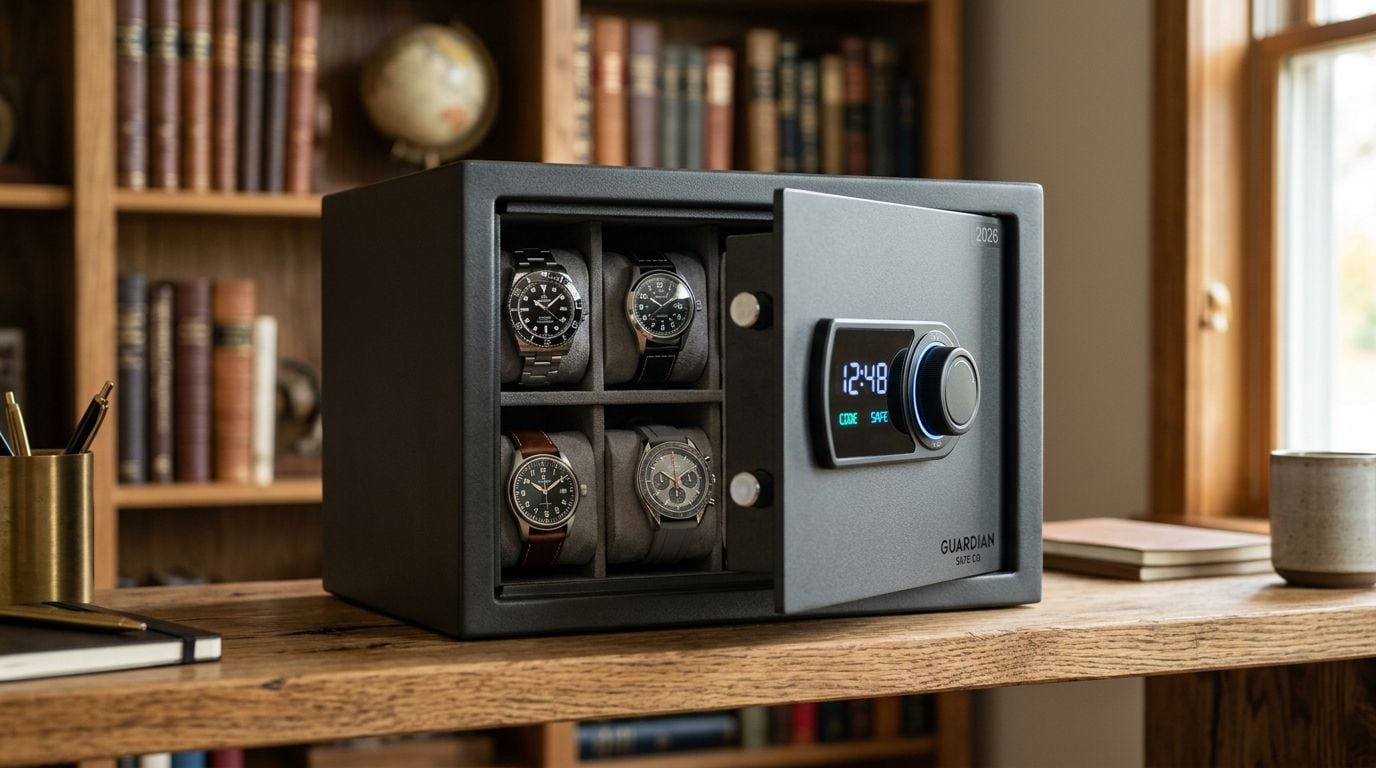
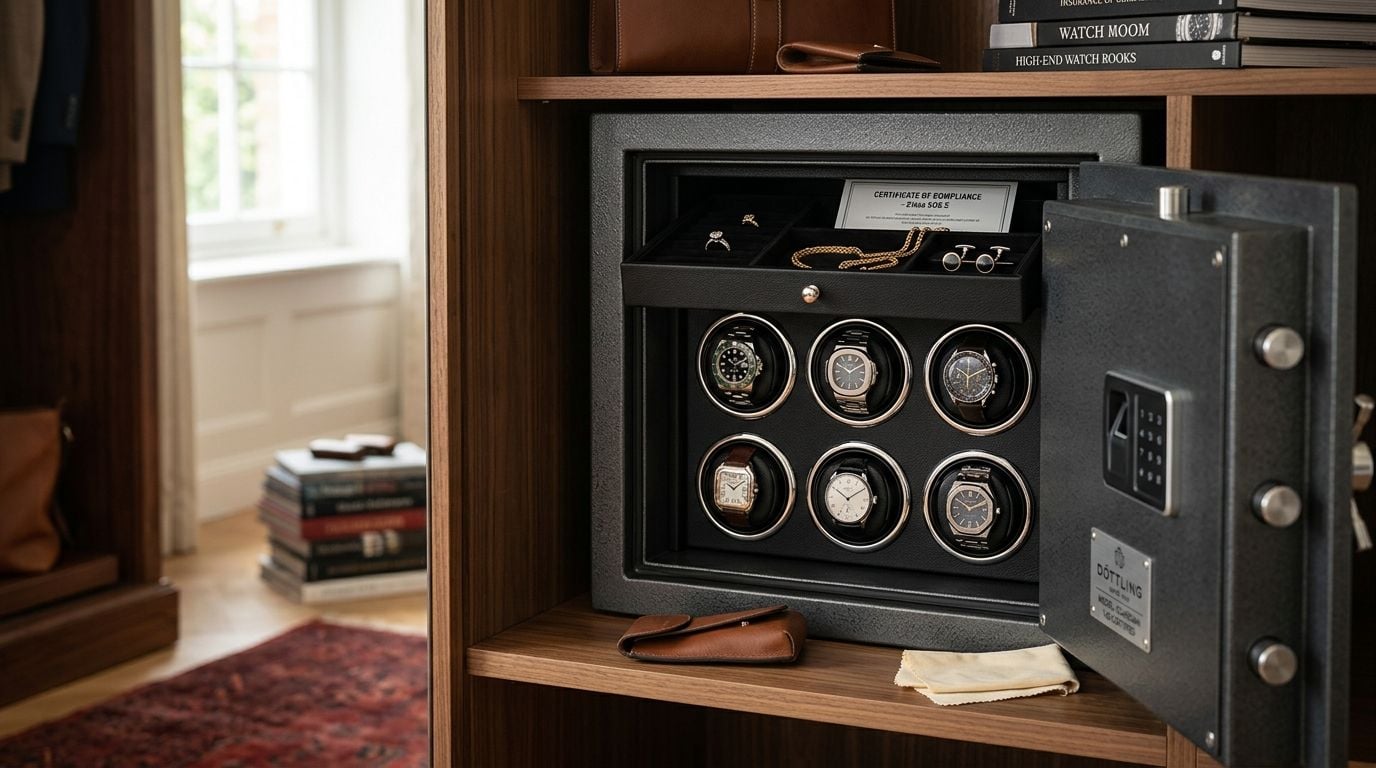
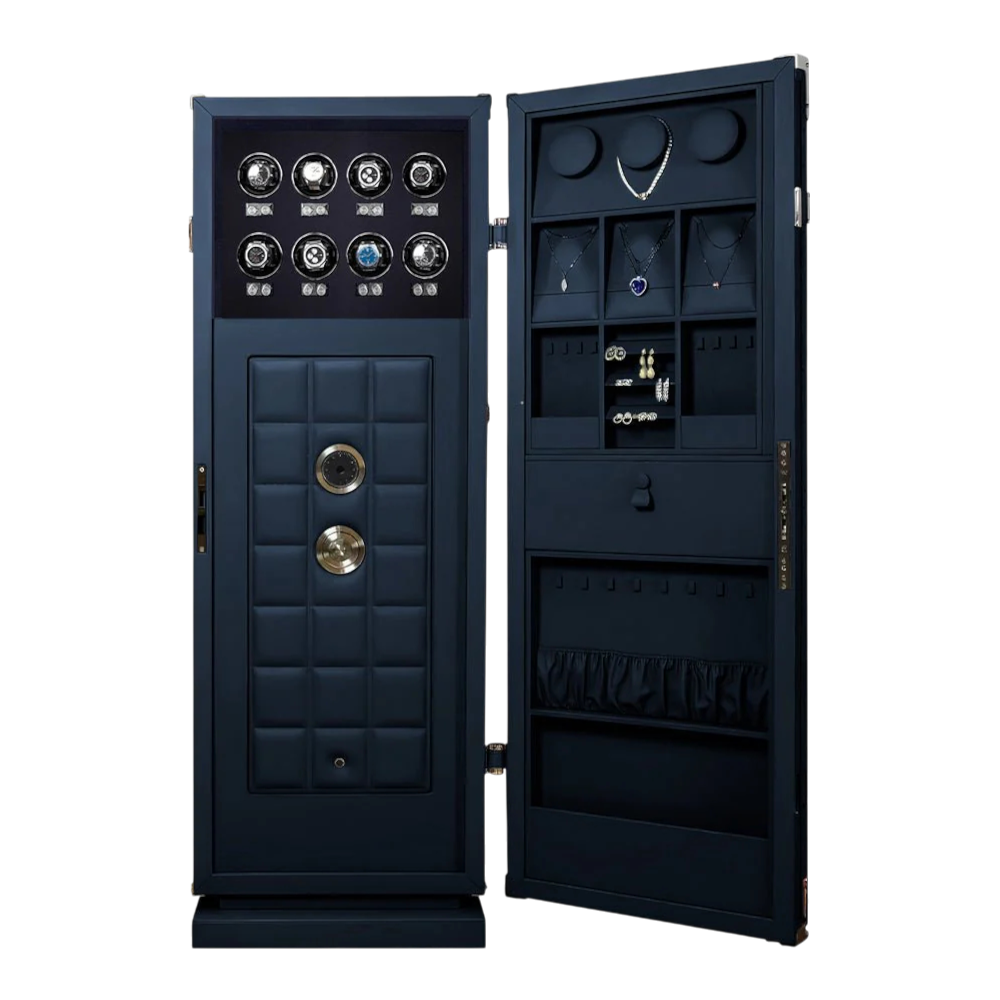
For attorneys who don't want a watch visible at all when the office is empty, a small safe with a biometric or combination lock holds two to four pieces and closes the question entirely. Verdict: Consider — it trades convenience for security, which is the right trade in a shared building with cleaning staff and after-hours access.
The corner-office statement: multi-slot cabinet
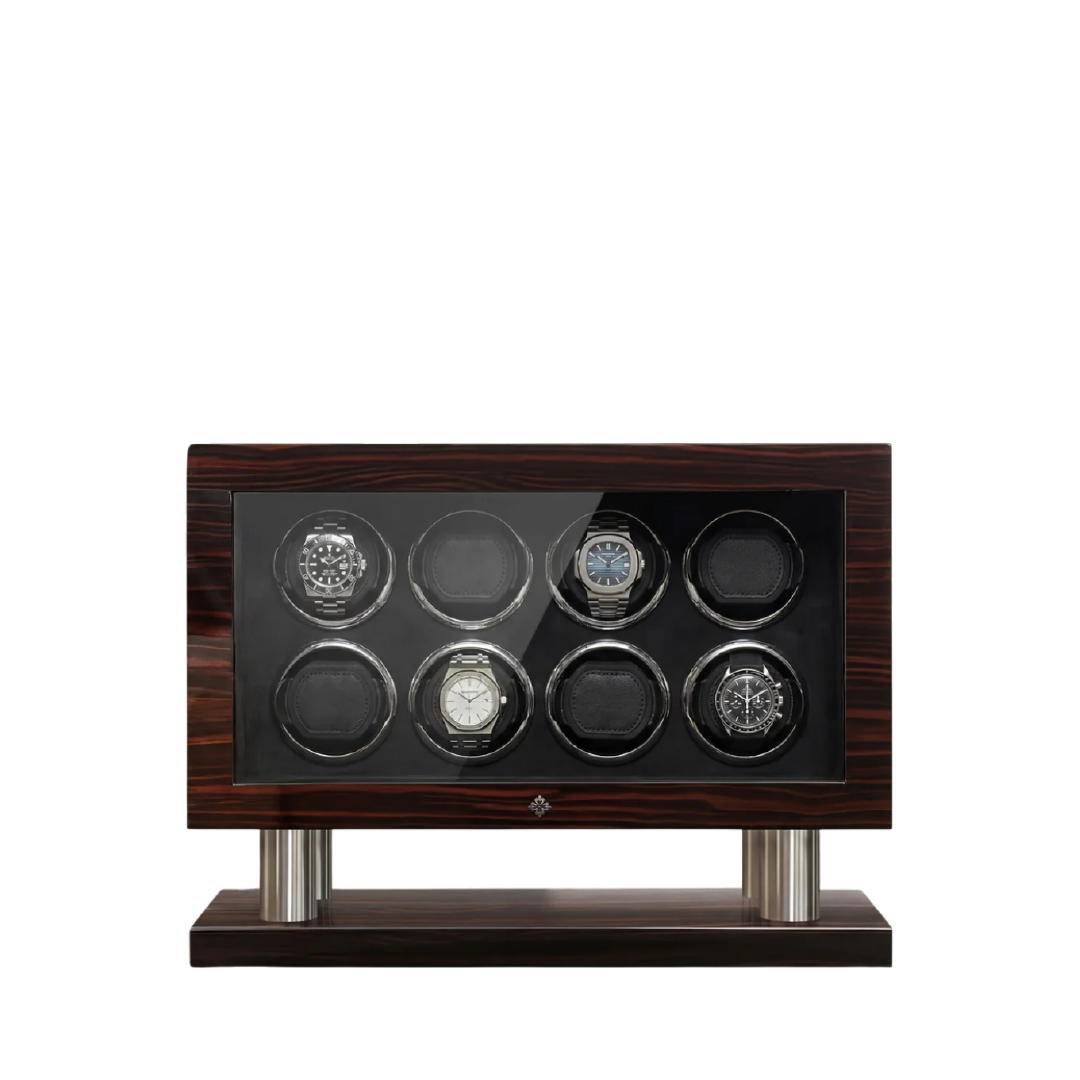
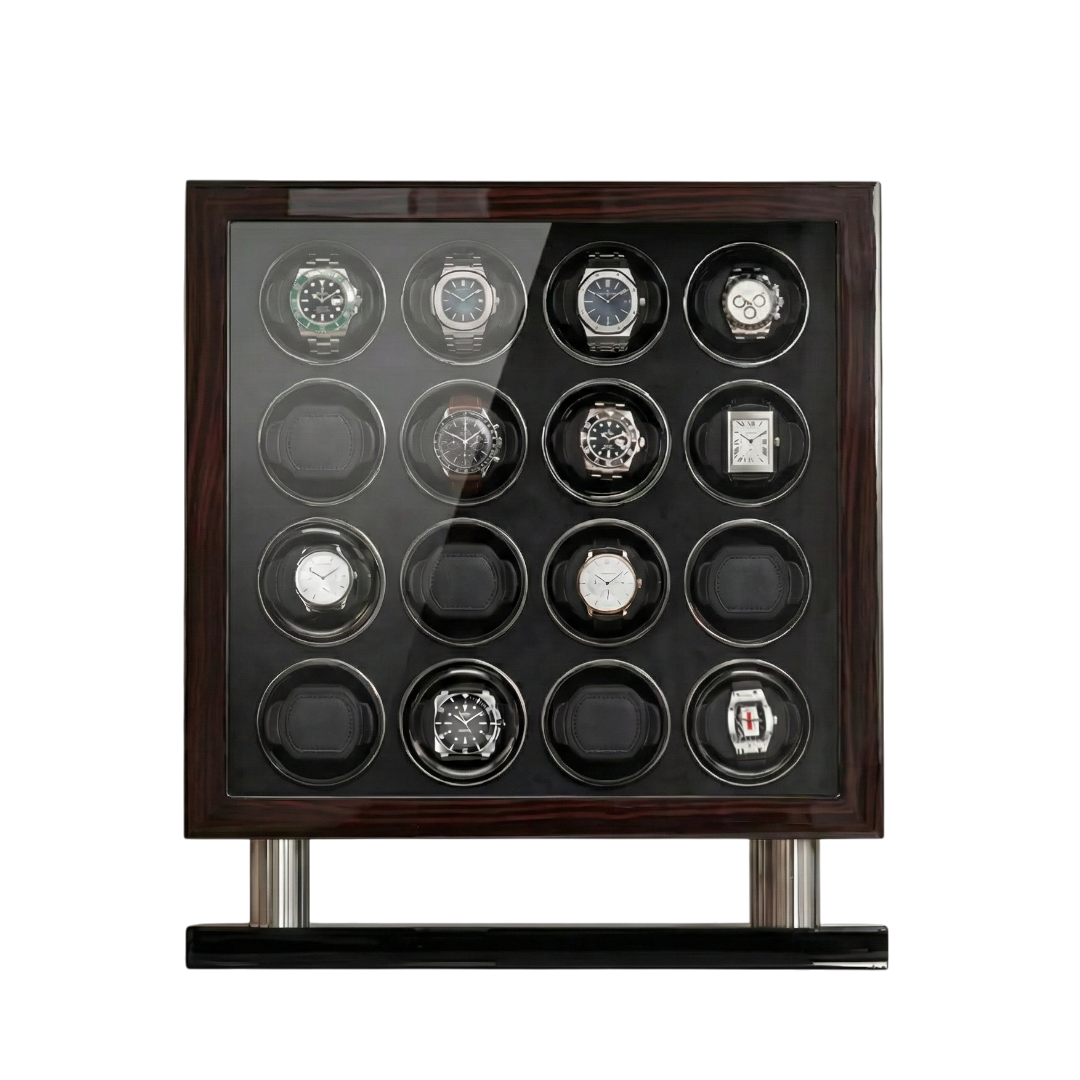
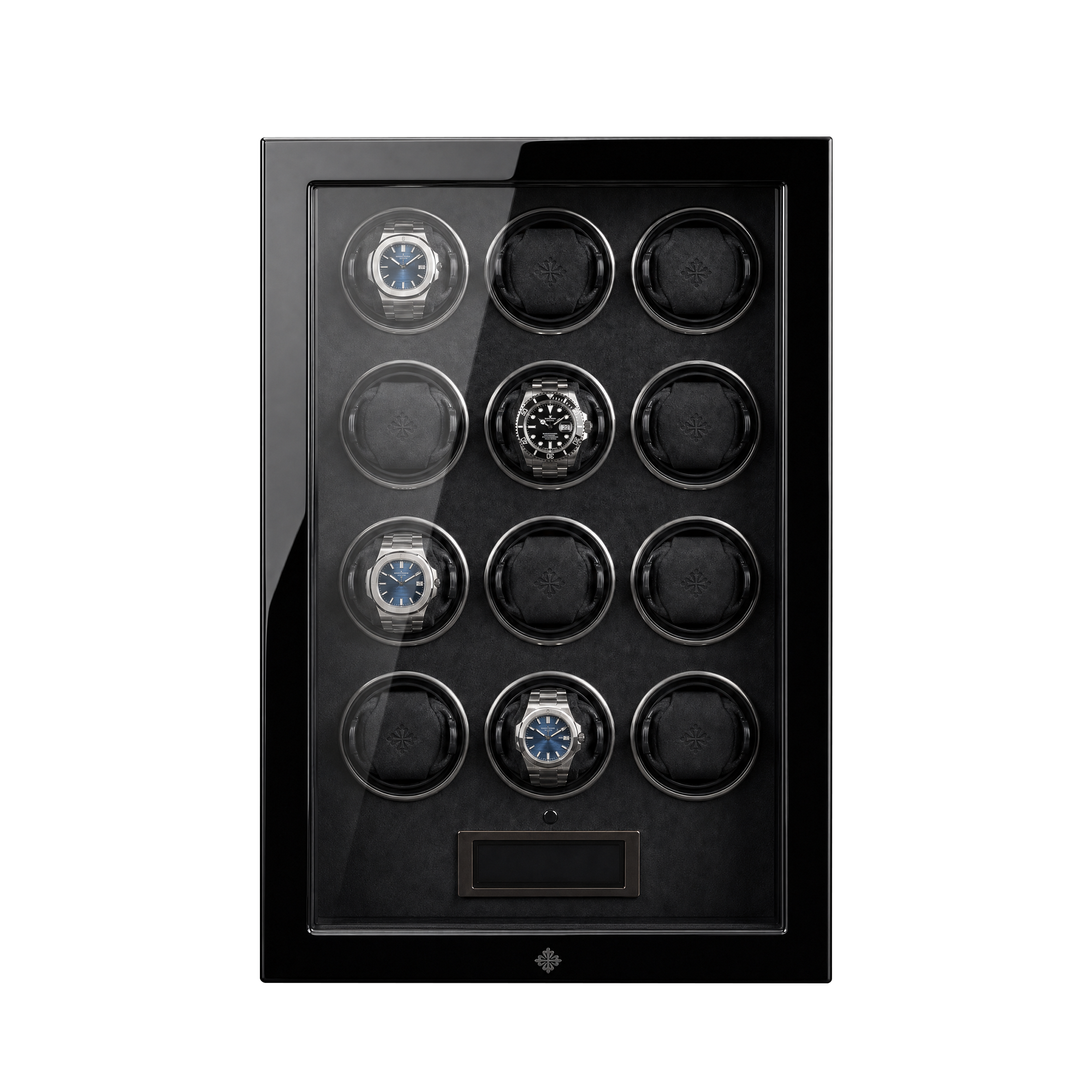
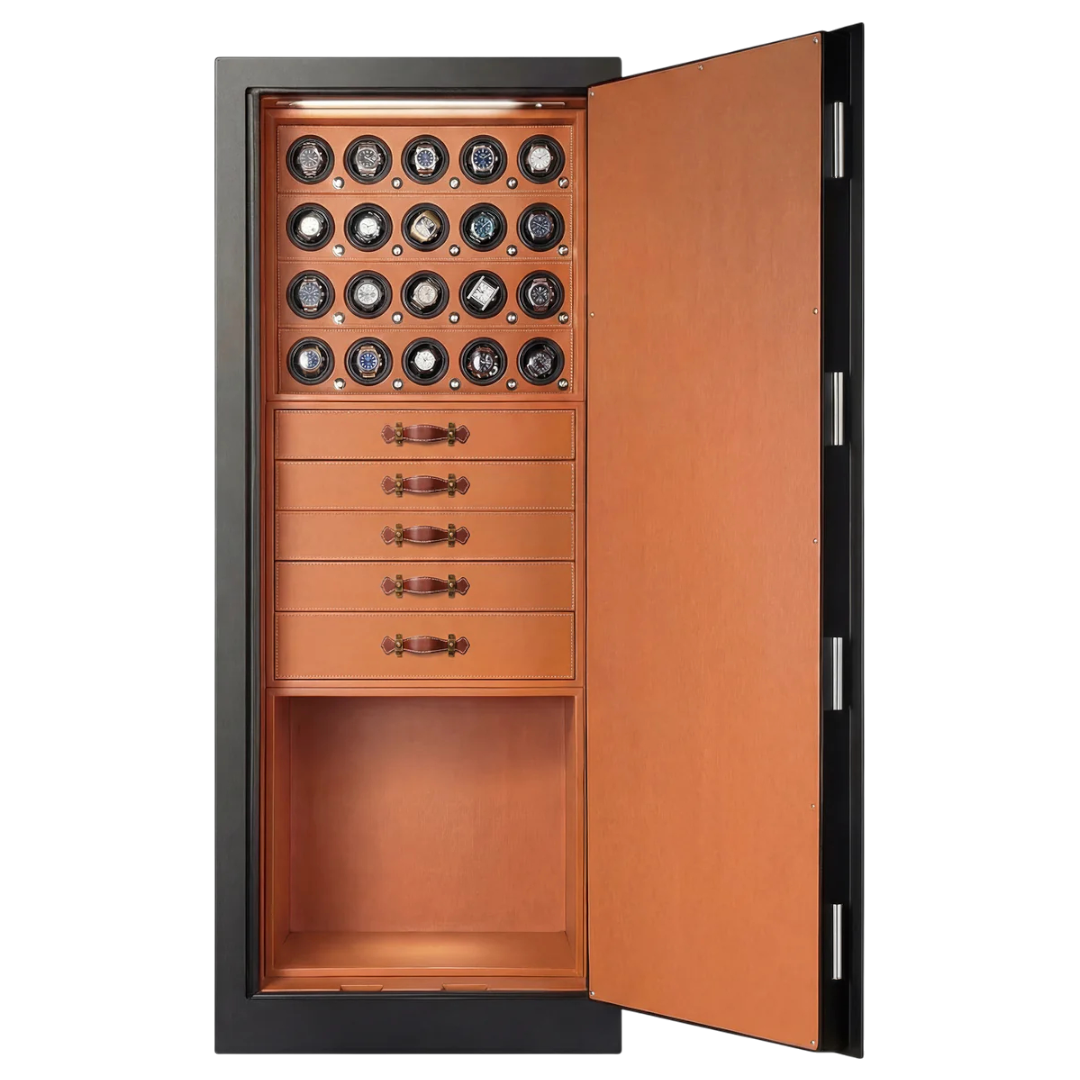
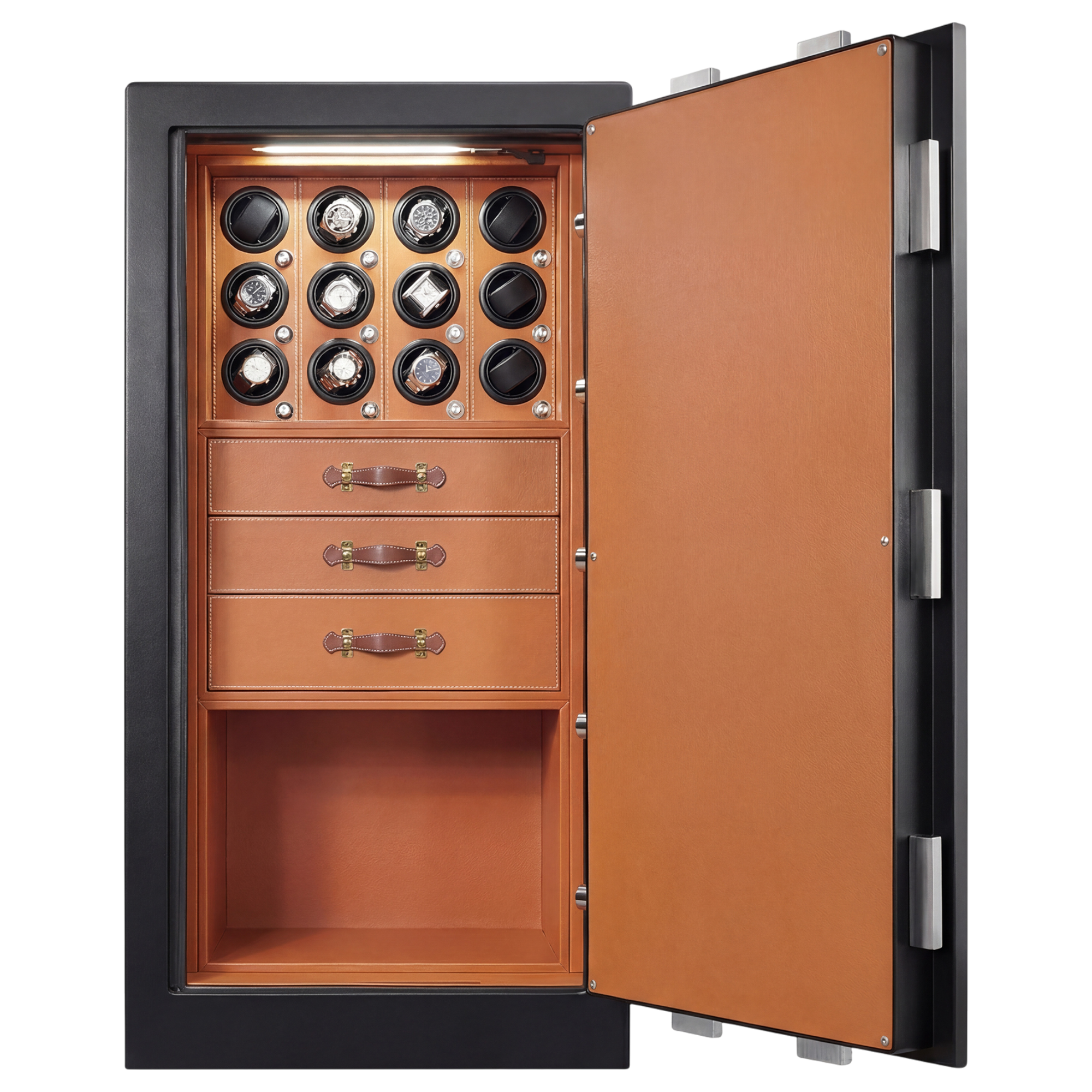
A 12-slot or larger cabinet piece, finished in exotic veneer with an Alcantara or Nappa leather interior, works in a private corner office where the desk itself is a statement. Verdict: Skip for a shared or open-plan desk, Buy for a private office where the piece functions as furniture, not just storage.
See current winder and safe options
Browse desk-sized winders and compact safes built for office use.
What to avoid
- Loud, plastic-gear winders. They look identical to good ones in photos and grind audibly within a few weeks of daily use.
- Oversized multi-slot cabinets on shared desks. A 20-slot cabinet on a desk meant for client meetings reads as excess, not care.
- Cord clutter with no management. A winder without a routed cord or a rear channel turns a clean desk into a tangle by week two.
Verdict comparison across the criteria
| Pick | Footprint | Noise | Best for | Verdict |
|---|---|---|---|---|
| Single-slot winder | Smallest | Quiet | One daily-wear automatic | Buy |
| 2-slot winder | Moderate | Quiet | Two watches in rotation | Consider |
| Compact locked safe | Small | Silent (no motor running) | Privacy over convenience | Consider |
| Multi-slot cabinet | Large | Varies by slot count | Private corner office | Buy (private) / Skip (shared) |
Enigwatch builds across all four categories with Japanese Mabuchi motors and a lifetime warranty, which matters more on a desk piece that runs daily than it does on a home unit that cycles occasionally.
FAQ
What is the best watch winder for a lawyer’s desk in 2026?
A single-slot winder with a quiet Japanese Mabuchi motor is the best watch winder for a lawyer’s desk in 2026 because it keeps one daily-wear automatic wound without taking up real desk space. A 2-slot unit only makes sense if two watches are genuinely in weekly rotation.
Is a watch winder too loud for an open-plan law office?
A well-built motor runs quiet enough to sit through a closed office door without drawing attention on a call. The noise complaints attorneys report almost always trace back to a cheap plastic gearbox, not the concept itself.
How many turns per day (TPD) does a lawyer’s watch need in a winder?
Most automatic calibers need between 650 and 950 turns per day to stay wound without overworking the movement. The exact number depends on the caliber, so a program with adjustable TPD is worth more than raw slot count.
Should a watch winder sit on the desk or stay in a drawer?
A single-slot winder with a professional finish is small enough to sit on the desk without looking out of place next to a desk set. If the office has walk-in traffic or cleaning staff after hours, a locked drawer or safe is the safer call.
Does a watch winder look unprofessional in a law office?
It depends entirely on finish. A winder in wood veneer or leather reads as a desk accessory; glossy black acrylic or exposed plastic reads like a gadget, which is the wrong impression in a partner’s office.
Is a watch safe better than a winder for an office desk?
A safe is better when privacy matters more than having the watch wound and ready. A safe with a biometric or combination lock closes the visibility question entirely, while a winder keeps the watch running but stays on display.
How much does a luxury watch winder for an office cost in 2026?
Enigwatch pieces built for this use run from roughly $5,000 to more than $21,000 depending on slot count, motor configuration, and interior materials. A single-slot desk unit sits at the lower end of that range.
Can a watch winder run all day in an office without issue?
Yes, a properly built motor is designed for continuous low-load cycling and runs for a full workday without overheating or excess electricity draw. Cheaper units are more likely to struggle with that kind of daily continuous use.
One last thing
The detail most attorneys miss: an Alcantara-lined cushion holds a metal bracelet steadier during the small daily bumps a desk absorbs than a velvet one does, which matters more on a desk that gets nudged by binders and coffee cups than it does on a bedroom dresser. It's a small material choice, but it's the one that shows up as a scratch six months later if skipped.
Related guides
- How quiet a watch winder should be
- Choosing the right single watch winder
- 2-slot watch winder options for couples or pairs
Protect Your Watch Collection
Designed for collectors who demand the best. Explore our premium watch winders and luxury safes.