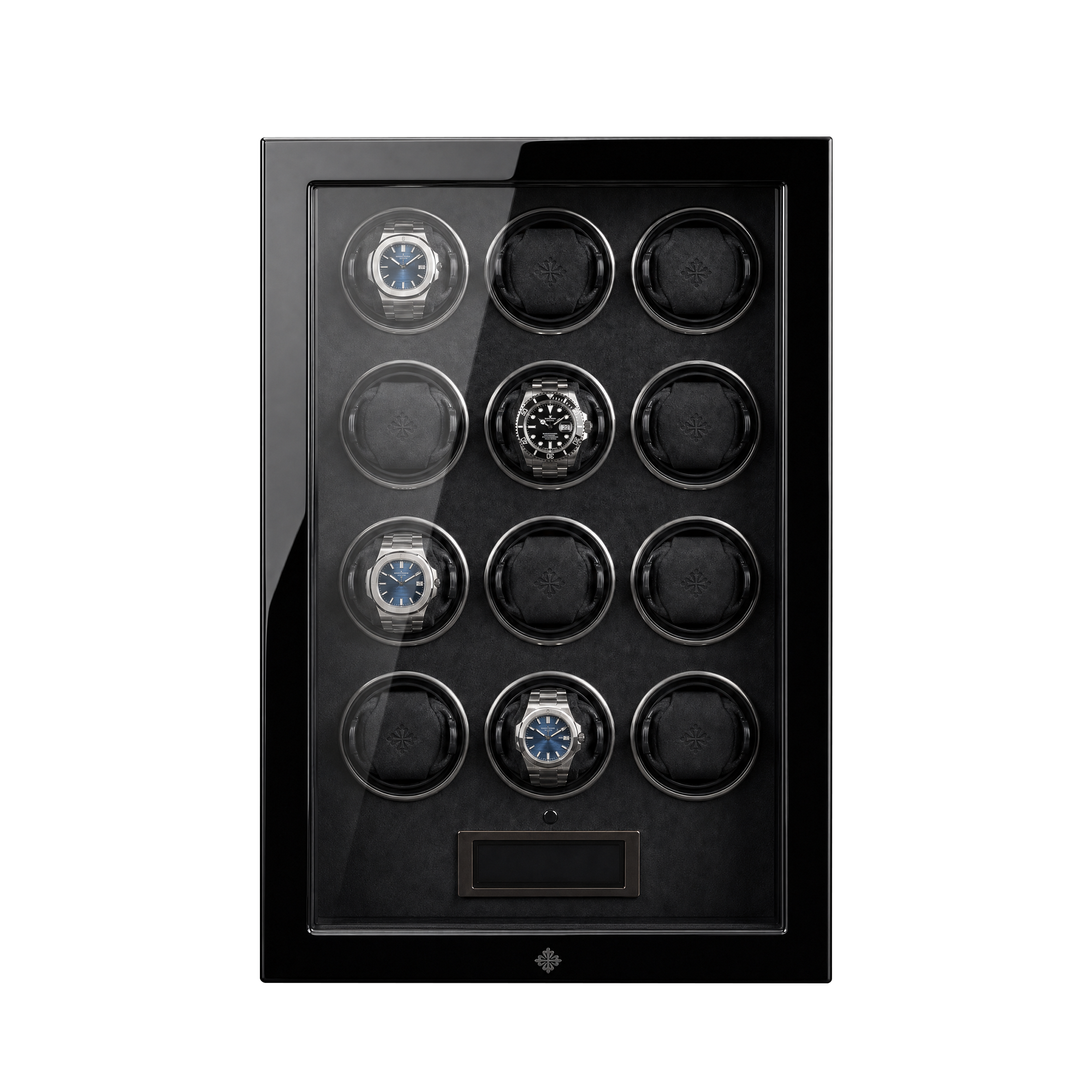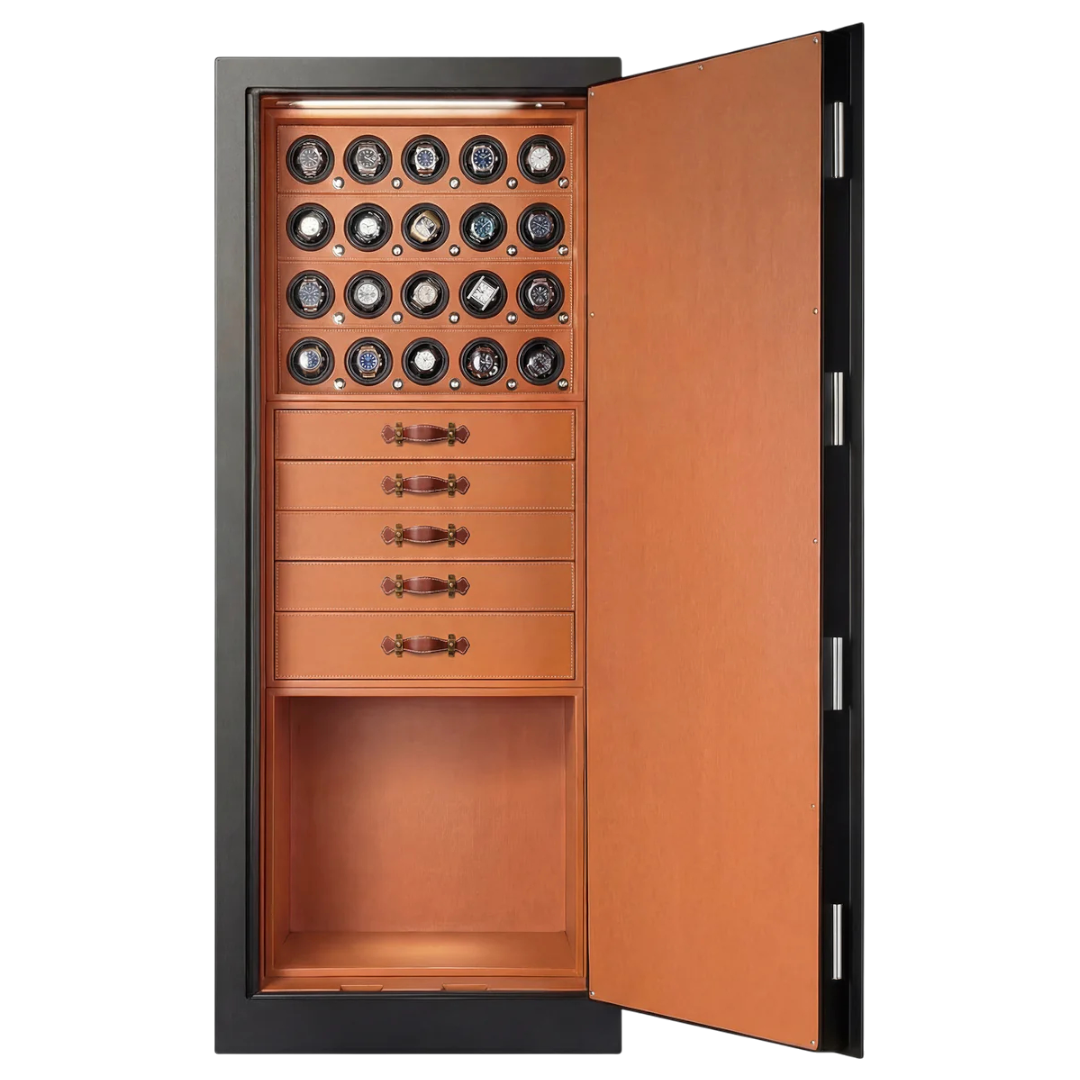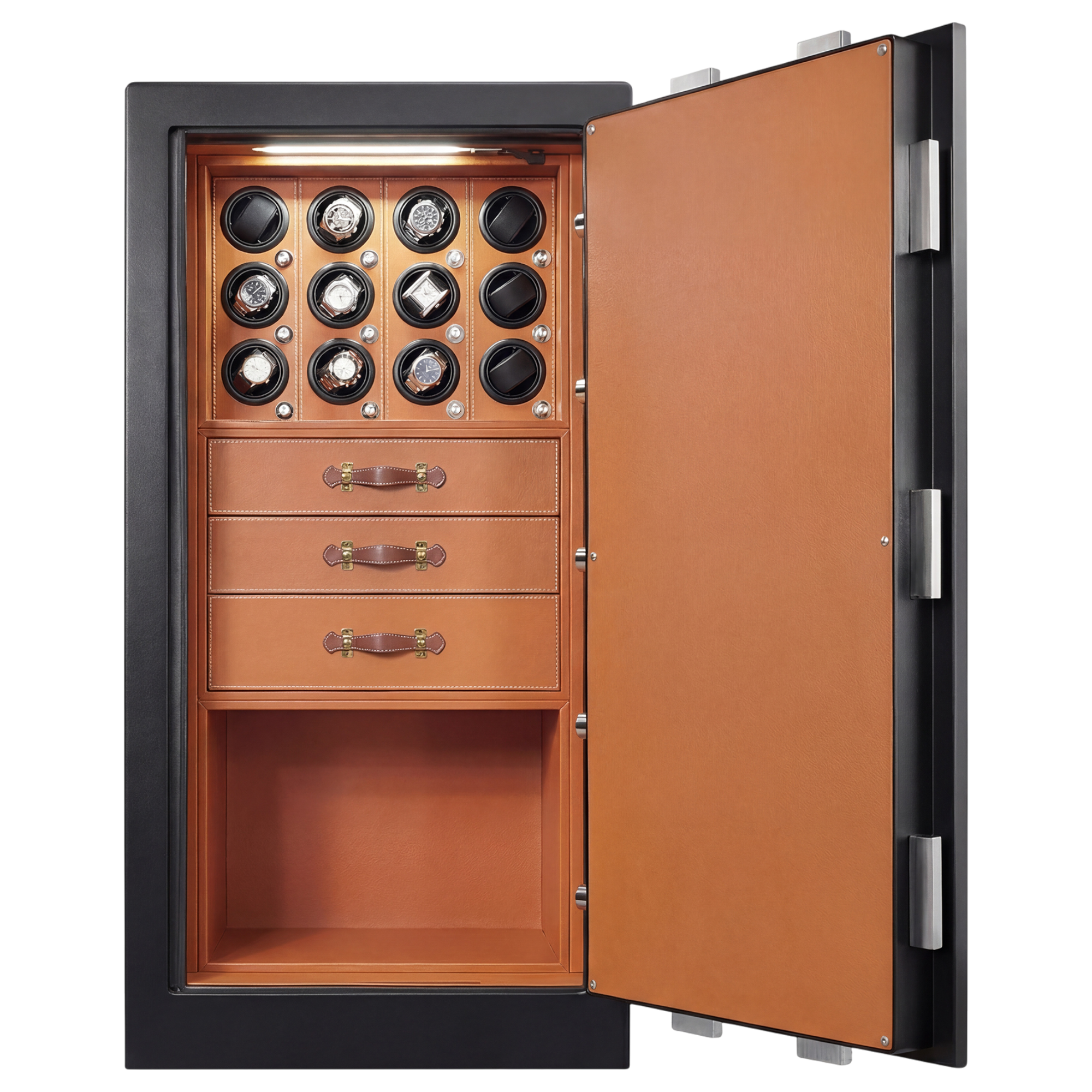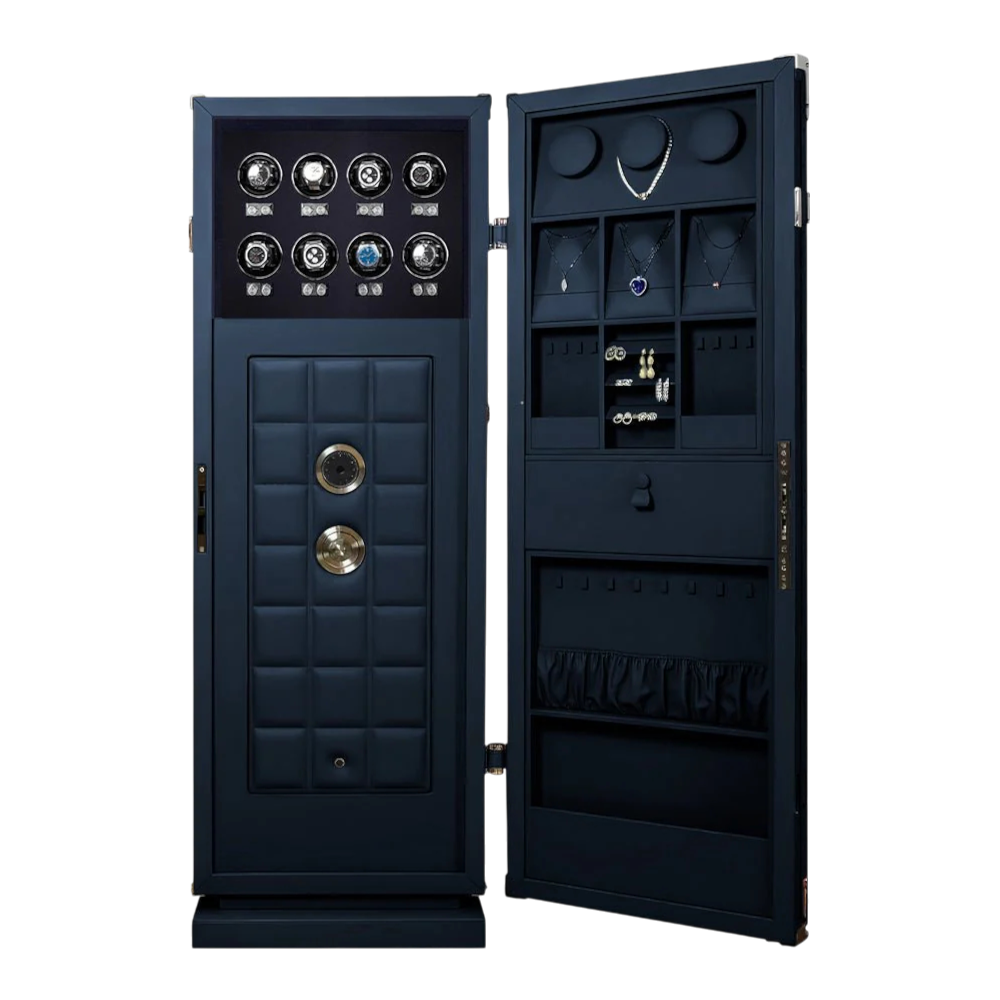


The most common question from collectors at the $20,000–$100,000 collection threshold: do I actually need a $7,000 watch safe, or am I paying for the name?
You are not paying for the name. You are paying for five specific engineering decisions that do not exist below the $3,000 price point.
What Changes Above $5,000
1. Steel Gauge and Door Construction
Entry-level watch safes (under $1,500) use 14–16 gauge steel—strong enough to slow a casual burglar, not strong enough to resist a pry bar. Luxury watch safes at the $5,000+ tier use 10–12 gauge steel throughout, with door bolts extending into the frame on multiple sides. The difference is measured in time: 2–4 minutes of resistance vs. 15–30 minutes. At 15+ minutes, most burglars abandon the attempt.
2. Relocker Mechanism
A standard UL RSC safe can be attacked by drilling the lock. A relocker activates additional locking bolts if the primary lock is tampered with—drilling triggers the relocking mechanism, making the door harder to open, not easier. Standard in premium units. Absent from mid-market safes.
3. Fire Rating
Most mid-market watch safes claim 30-minute fire rating at 1,200°F. Premium units are UL-tested for 60 minutes. The interior of a house fire peaks at 1,700–1,800°F. At 60 minutes, you are covered for the standard residential fire response window. At 30 minutes, you may not be.
4. Winding Precision
Mid-market rotors run at a fixed cycle—set 650 TPD and they approximate 650 TPD. Premium rotors use closed-loop motor control: the firmware measures actual rotation rate and adjusts continuously. Result: ±5–10 TPD accuracy vs. ±50–75 TPD on basic units. For watches with narrow TPD windows (certain vintage Rolex movements, early Omega automatics), this matters for long-term movement health.
5. Interior Environmental Control
Premium watch safes maintain interior temperature and humidity independently of ambient conditions. Active Peltier cooling prevents heat buildup from motors. Electronic humidifiers and dehumidifiers hold RH at exactly 50%. This is the single most important difference for long-term watch preservation—and absent from every unit under $3,000.
The ROI Calculation
If your collection is worth $80,000 and a house fire destroys it, insurance covers replacement value minus deductible. But insurance does not cover the 6–12 month wait for watches to become available at market price. And it does not help with uninsured pieces.
A $7,500 luxury watch safe with 60-minute fire rating is 9.4% of the collection value it protects. Home insurance riders for watches run $1.50–$3.00 per $100 of value annually. For an $80,000 collection, that is $1,200–$2,400 per year. The safe amortizes in reduced insurance burden within 3–6 years—before accounting for security and winding benefits.
Enigwatch Luxury Range
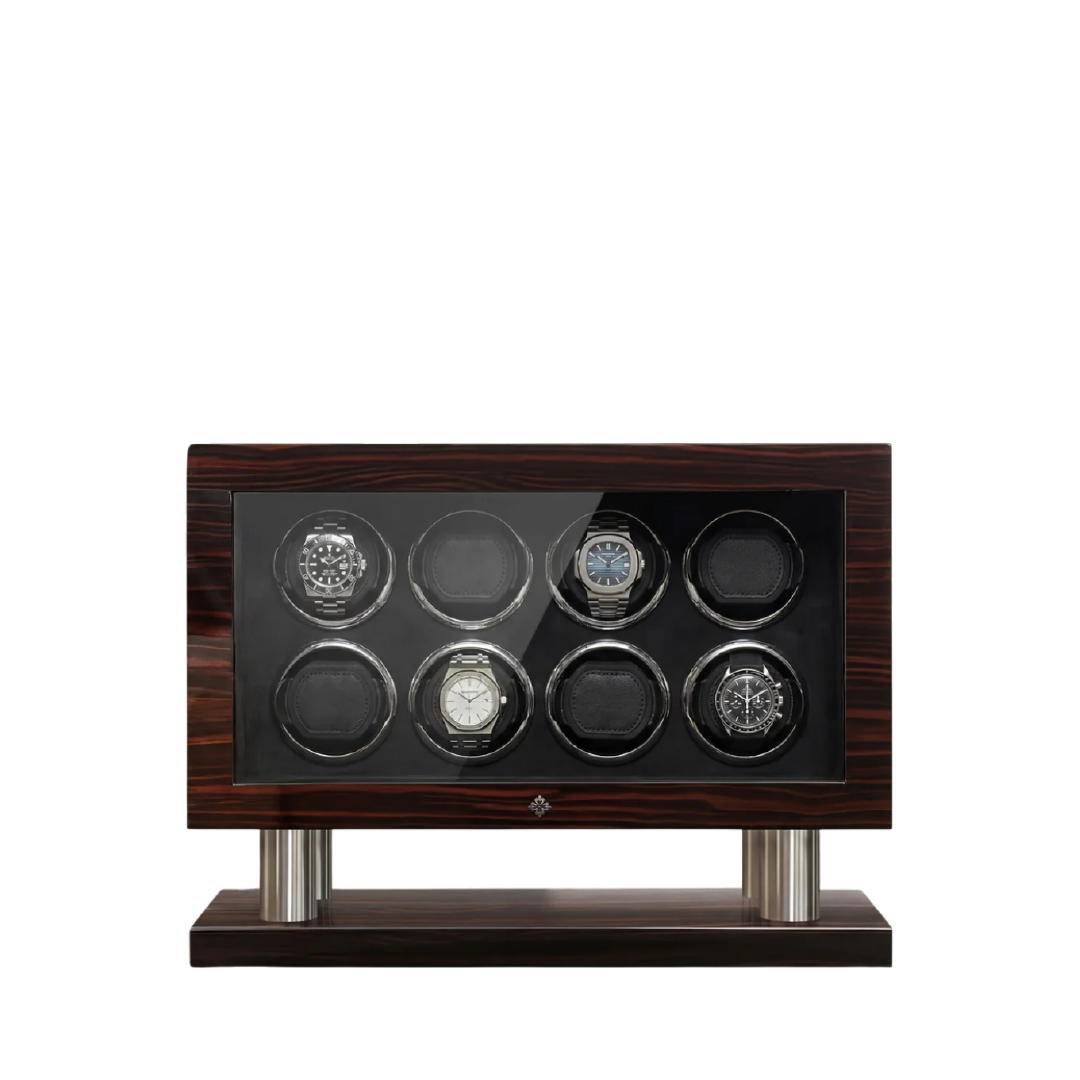
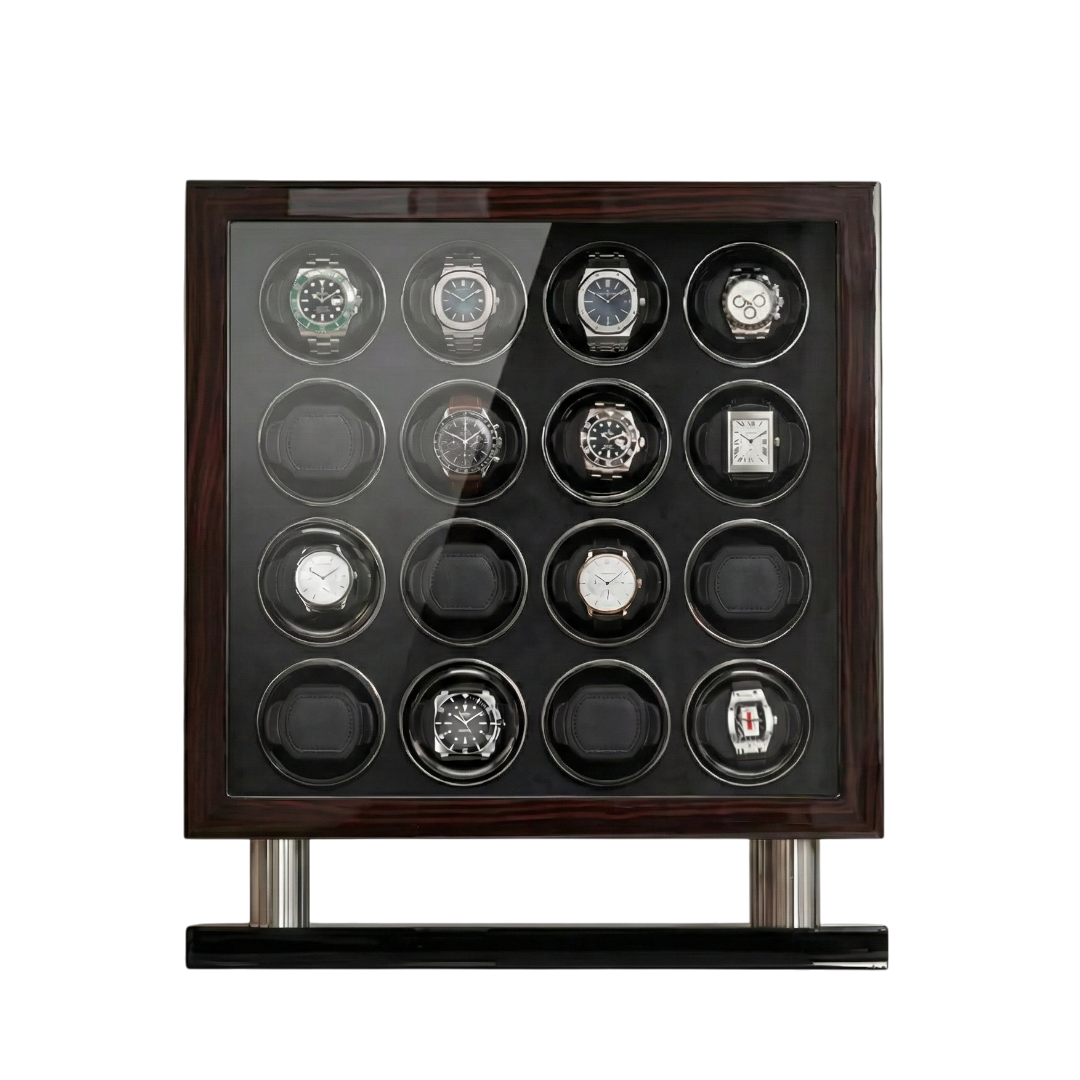
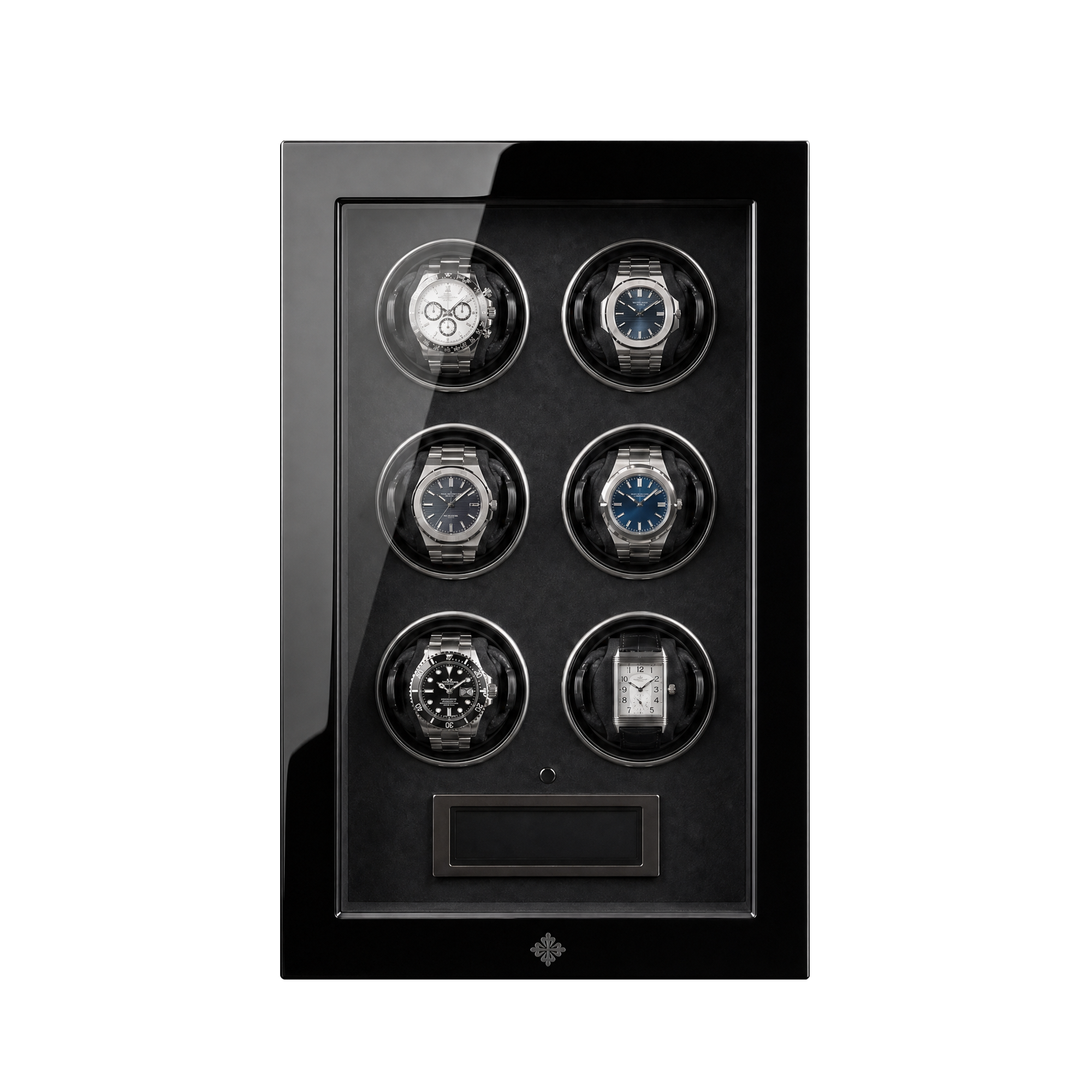
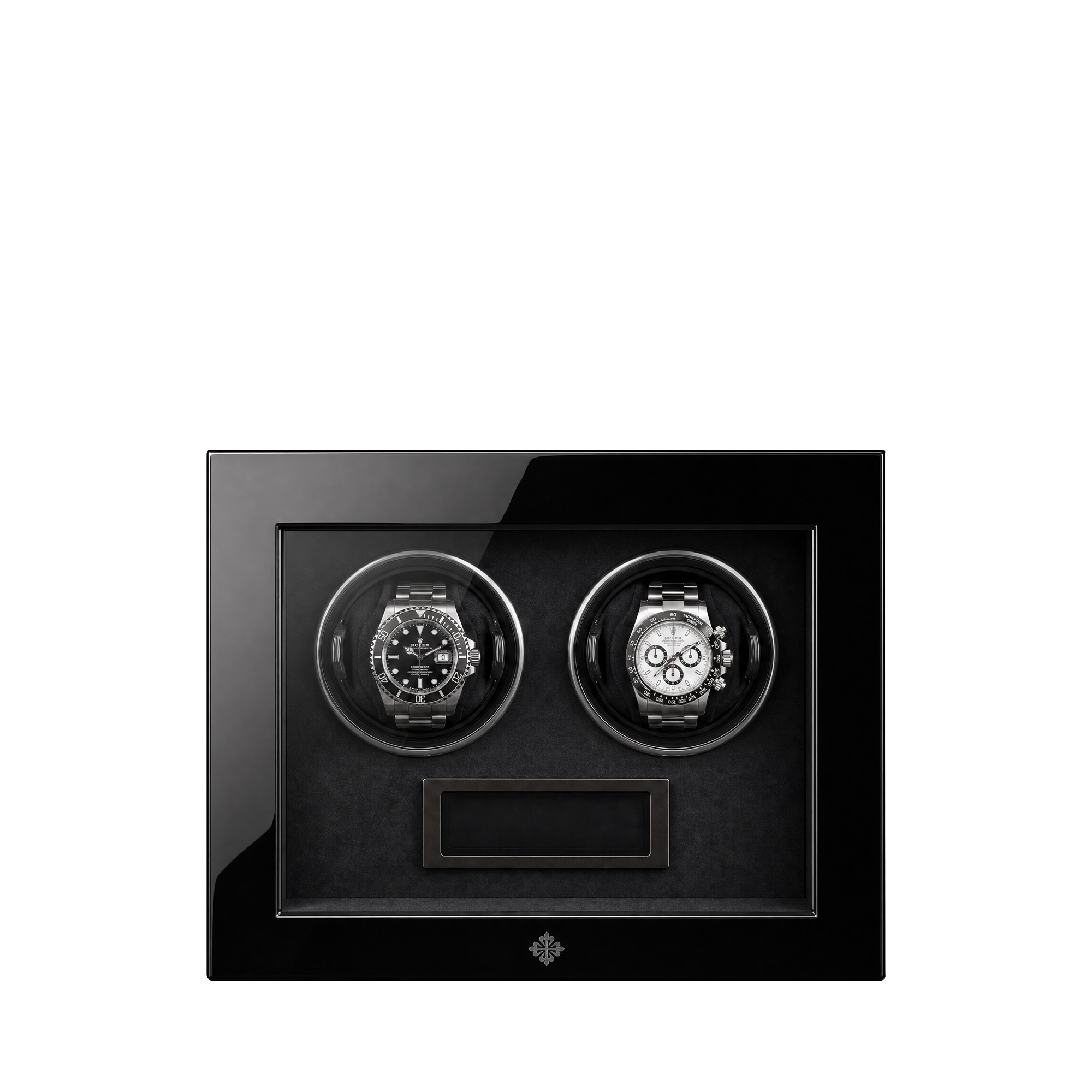
Our luxury watch safe collection starts at $7,499 and includes models up to $59,499. Every model includes 12-gauge welded steel, relocker bolts, UL-tested 60-minute fire rating at 1,700°F, active humidity and temperature control, biometric fingerprint plus backup PIN plus physical key, individually programmable TPD per slot, and white-glove installation.
For collections above 20 watches, the 28–64 watch vault series starts at $17,999.
When the Mid-Market Safe Is the Right Answer
If your total collection value is under $15,000, the engineering premium of a luxury watch safe does not pencil out. A UL RSC mid-market unit with 30-minute fire rating is adequate protection. The ROI math tips toward premium when you are protecting a collection where a single piece is worth more than the safe itself.
Protect Your Watch Collection
Designed for collectors who demand the best. Explore our premium watch winders and luxury safes.
Protect Your Watch Collection
Designed for collectors who demand the best. Explore our premium watch winders and luxury safes.