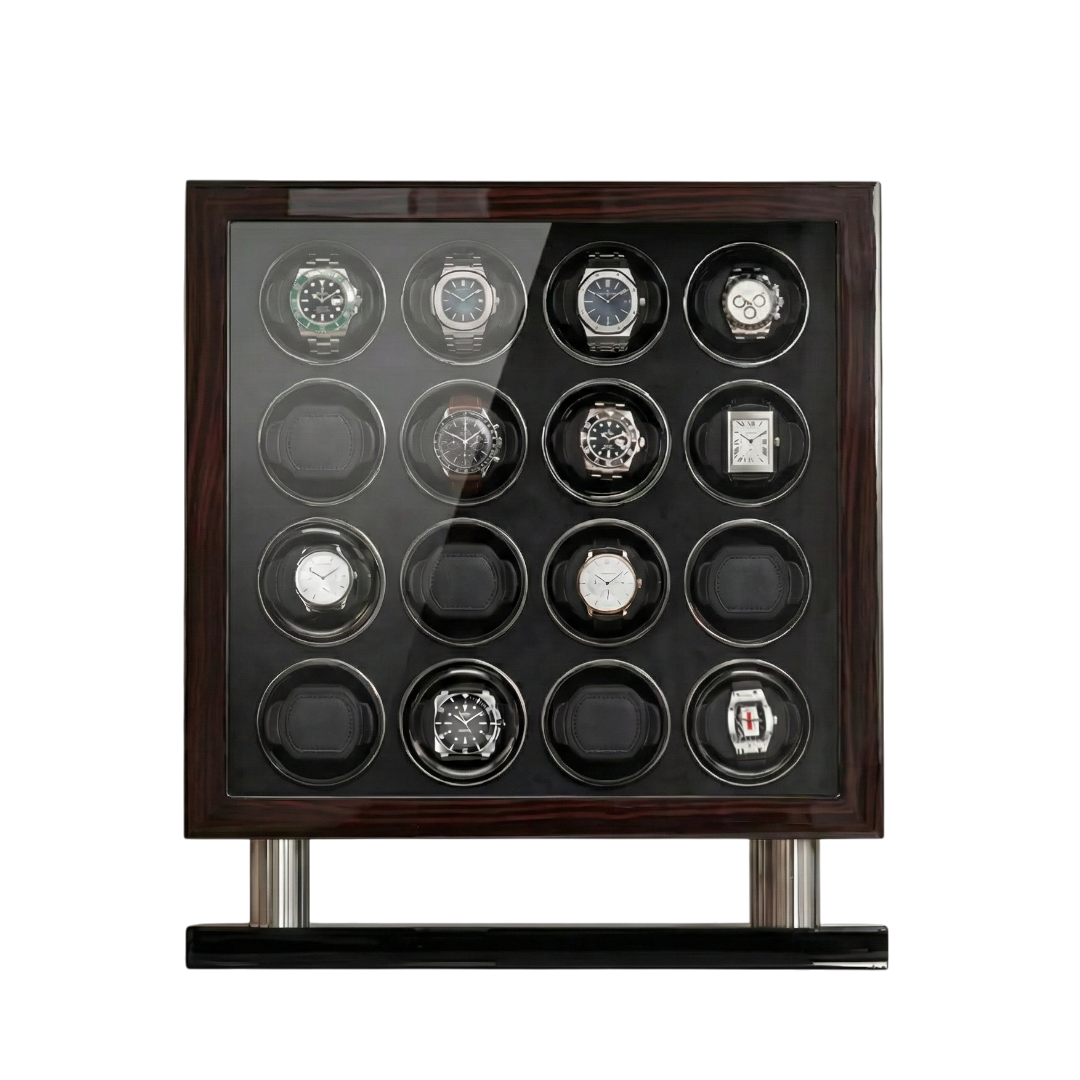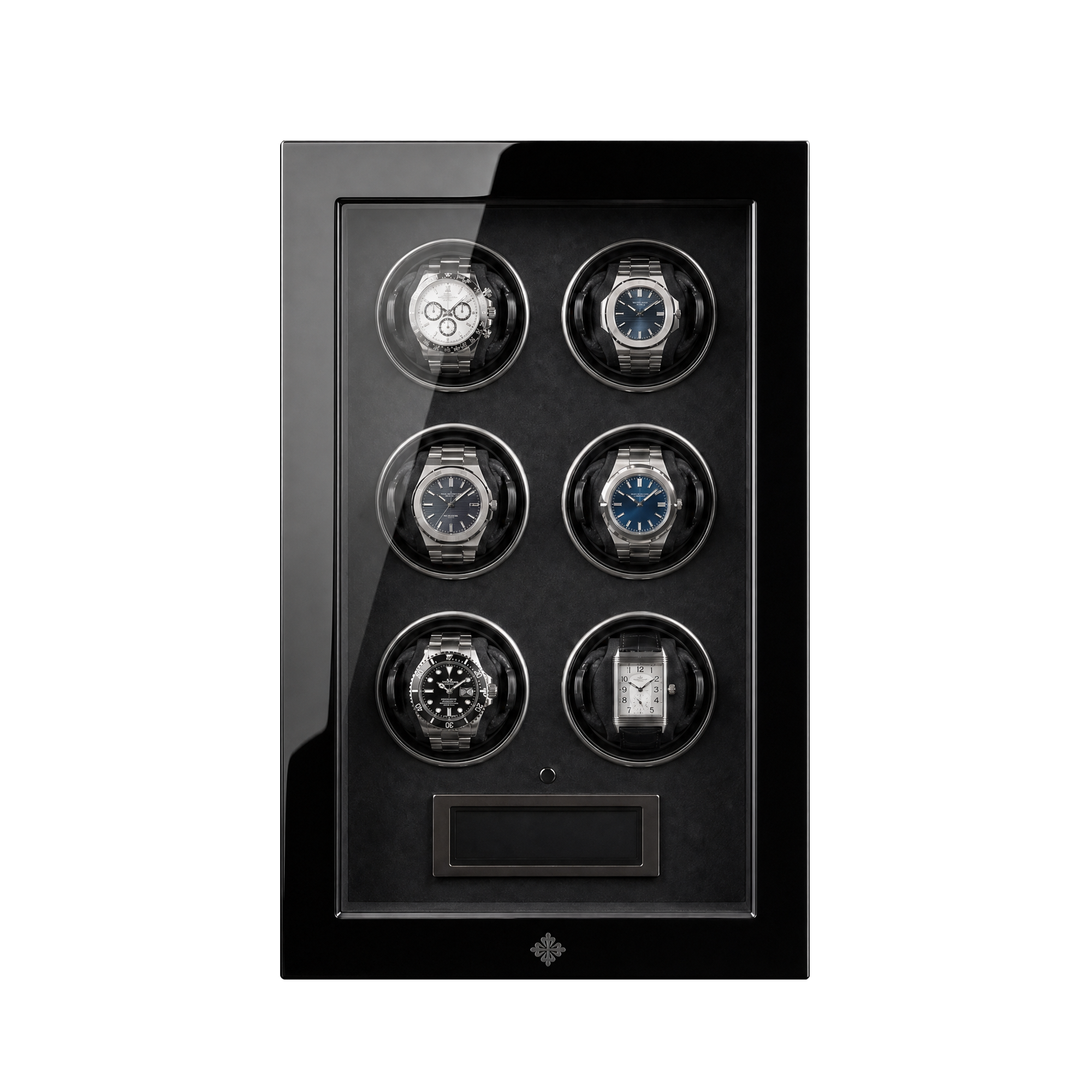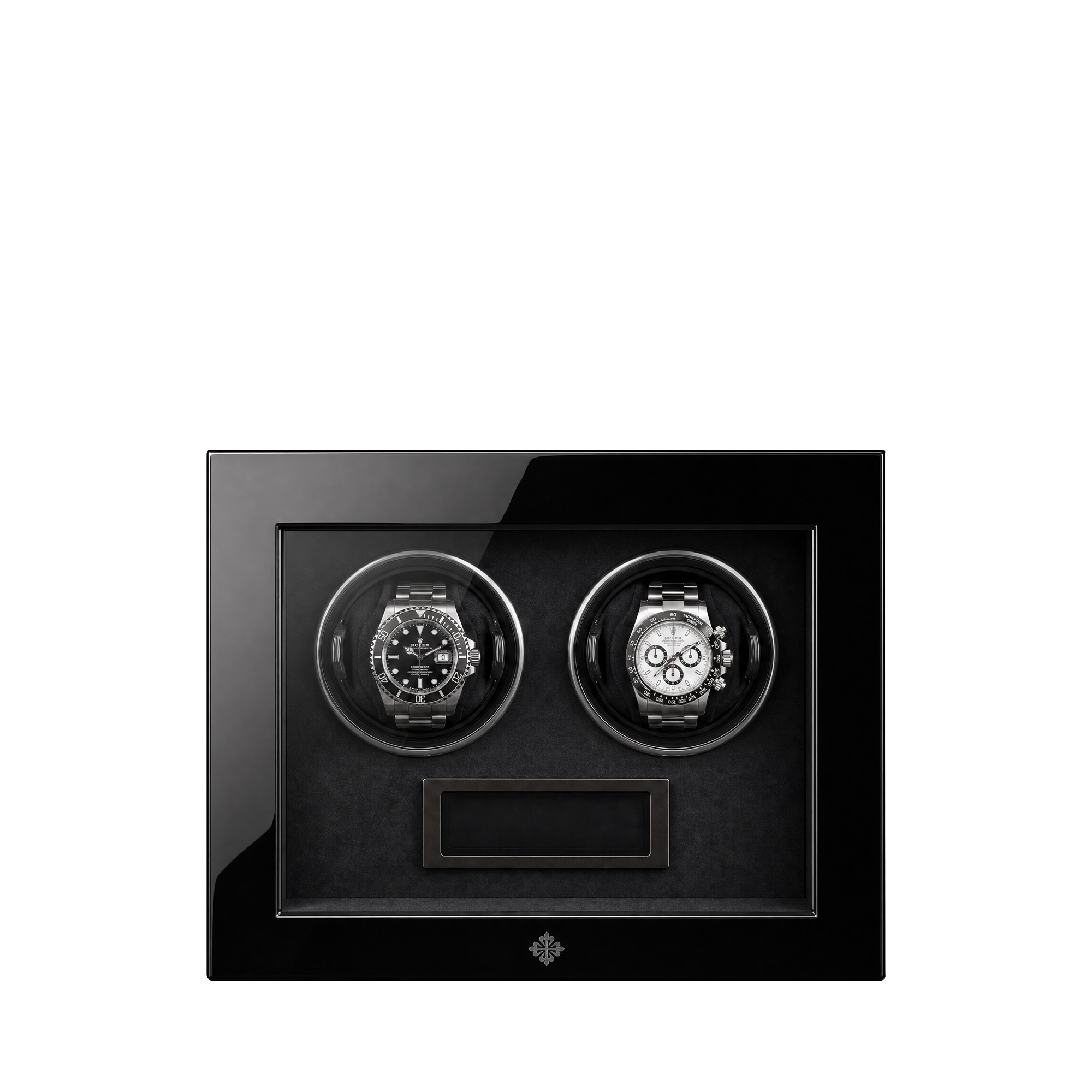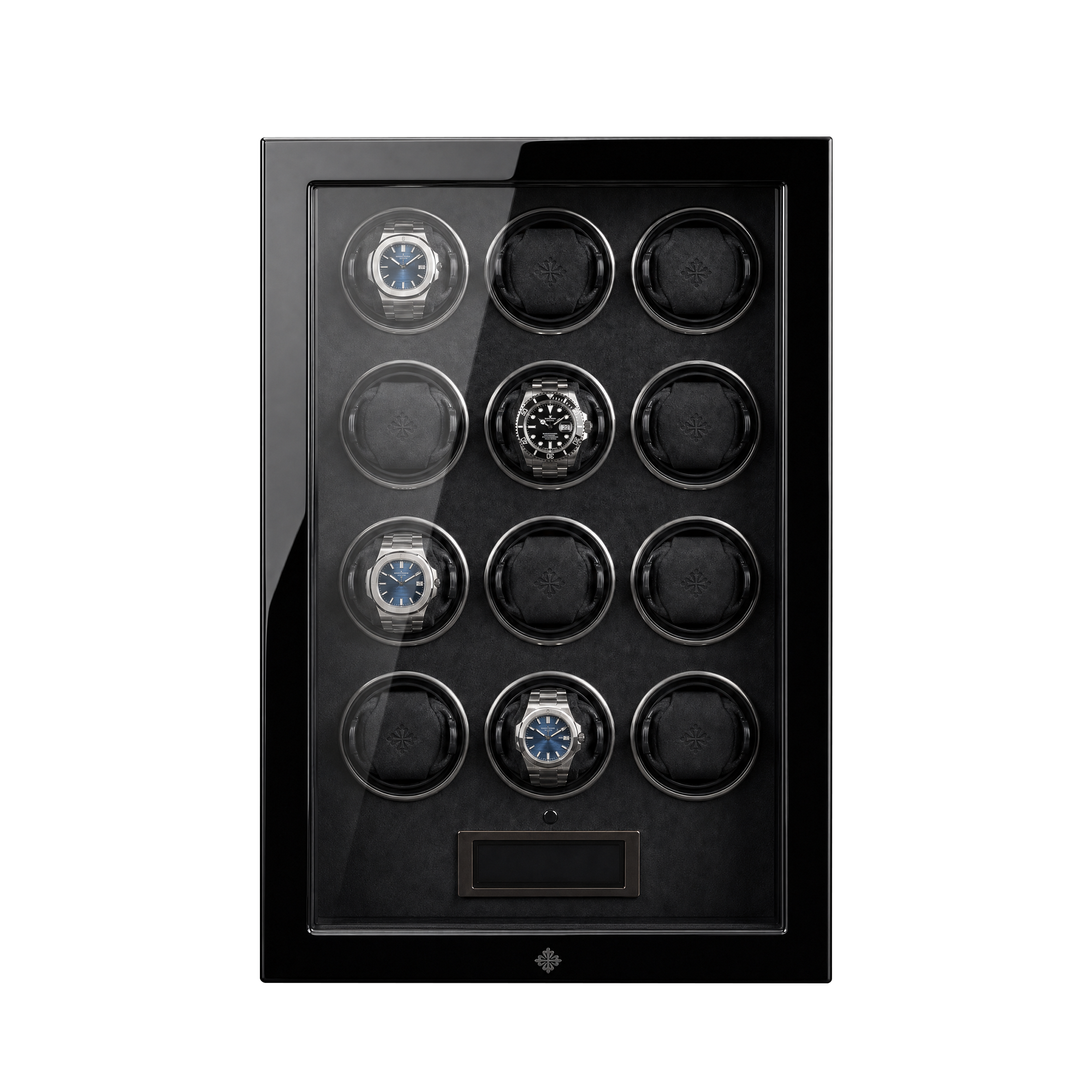

Eight automatic watches demand more than a drawer and a prayer. A watch winder for 8 watches keeps every rotor spinning, every complication current, and every piece ready to wear — without the ritual of resetting time, date, and GMT offsets every morning.
TL;DR
The best watch winder for 8 watches in 2026 balances programmable TPD (turns per day), directional control per module, near-silent motors, and a cabinet that doesn’t embarrass a Rolex Submariner or Patek Philippe Aquanaut sitting inside it. Enigwatch’s winder lineup covers the 8-slot tier through its broader automatic watch winder catalog. If you want winding and protection in one unit, a watch winder safe box is the single purchase that handles both. Full rankings and a comparison table below.
Why This Matters in 2026
Automatic watches with perpetual calendars, moon phases, or power-reserve complications lose days of programming when they stop. Re-setting a Jaeger-LeCoultre Reverso Grande Complication takes 20–30 minutes per occurrence. An 8-watch winder eliminates that cost entirely. It also distributes wear evenly across the mainspring — consistent motion keeps lubricants from pooling, which watchmakers credit with extending service intervals.
How We Ranked
Every pick below was evaluated against five criteria: TPD range (the spec that determines whether your specific movement stays wound), per-module directional programming (critical for mixed-brand collections), motor noise floor (measured against a 35 dB reference), cabinet material and lock quality, and value density at the price point. Units that claimed “8-watch” capacity but used shared motors across all slots were penalized — shared motors mean no per-watch customization, which is the whole point of a winder at this slot count.
Price tiers referenced are 2026 retail.
The Ranked List: Best Watch Winder for 8 Watches in 2026
1. Enigwatch Yachtline Series 16 — The Scalable Anchor
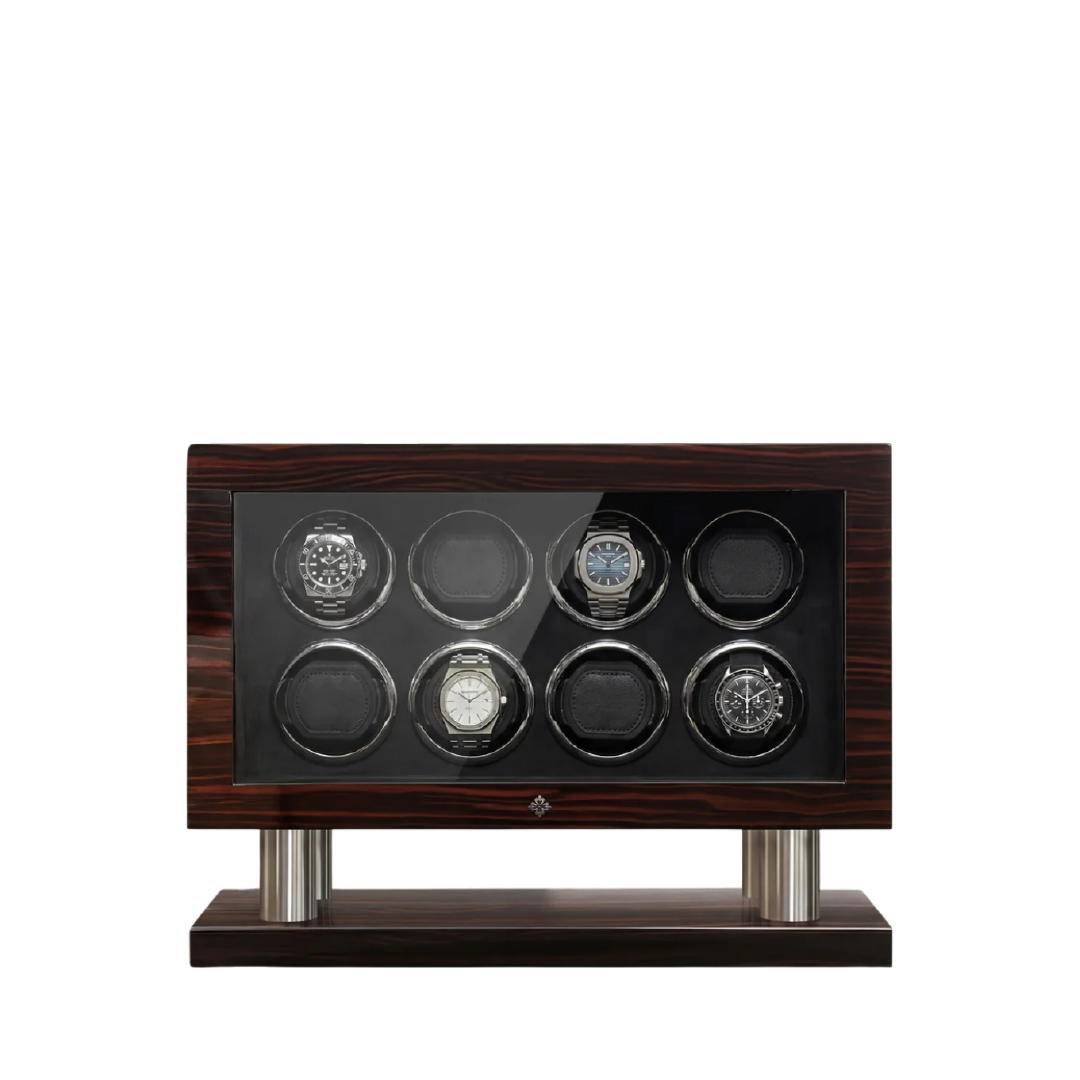
The Yachtline Series 16 watch winder ships as a 16-slot unit, but its per-module motor architecture means you can populate only 8 slots and run each one independently — making it the strongest 8-watch solution for collectors who expect to grow. Each module supports clockwise, counter-clockwise, and bi-directional rotation with a programmable TPD range of 650–1,950 turns per day. That range covers virtually every automatic movement in production, from a basic ETA 2824 (650 TPD) to a Rolex 3235 caliber (800 TPD recommended) to high-frequency movements that need 1,800+ TPD.
The motor noise sits below 35 dB — inaudible from across a bedroom. The exterior uses piano-lacquer wood with a fabric-lined interior, and the glass door locks. This is the unit you buy when your collection already includes two or three watches priced above $10,000 and you’re not willing to risk under-winding a complicated piece.
Verdict: Buy. The best overall watch winder for 8 watches in 2026 for serious collectors.
2. Enigwatch Titan Sanctum 20 Watch Safe Box — The Security-First Pick
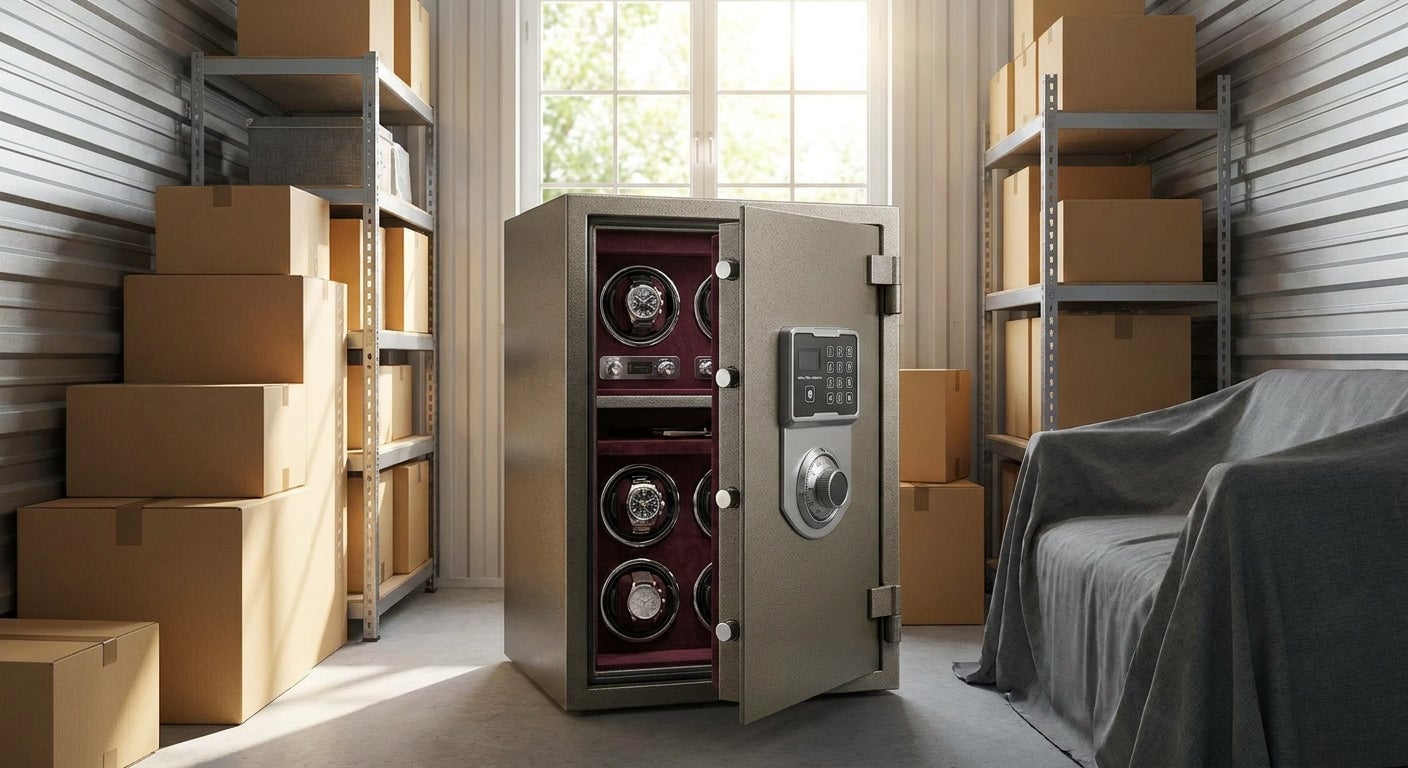
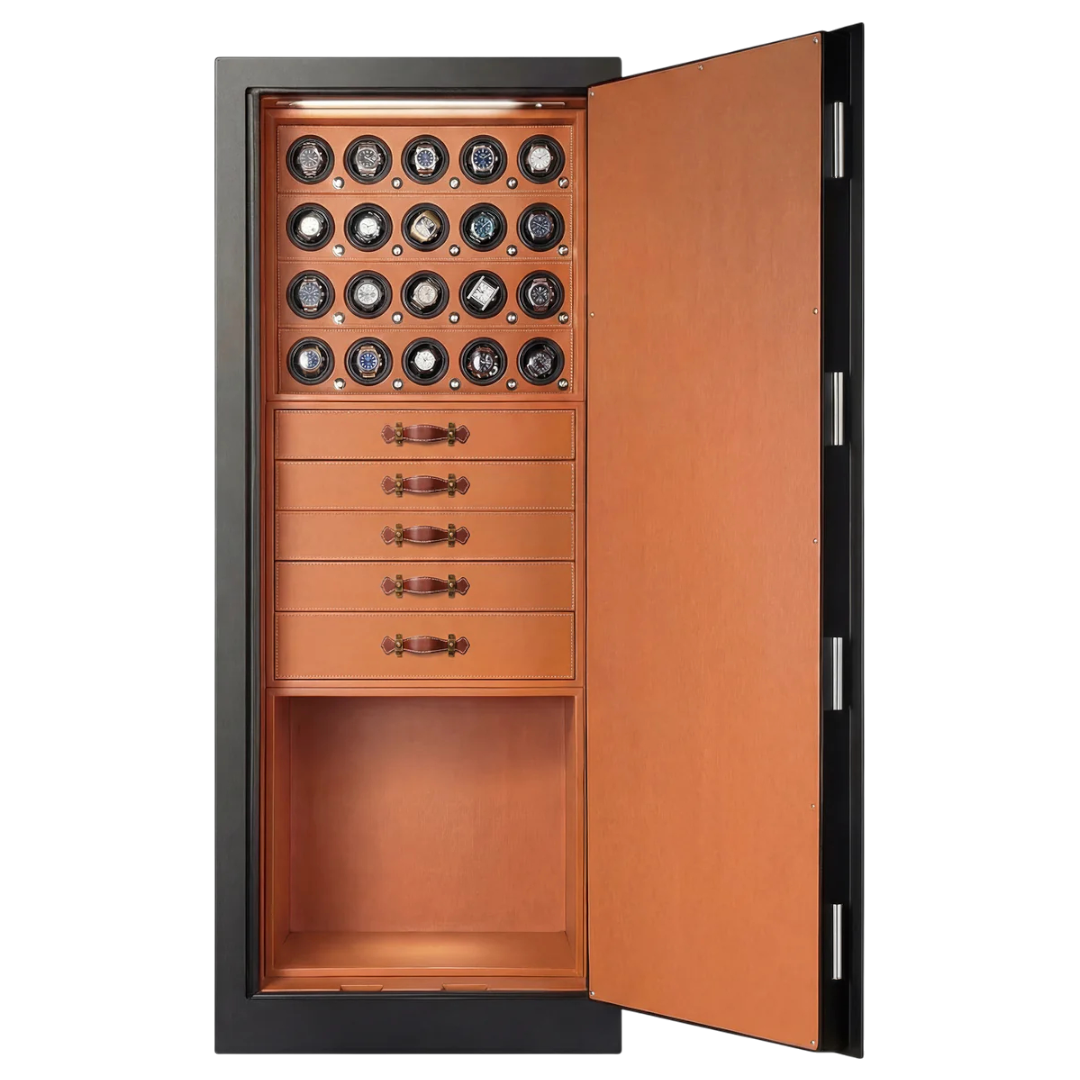
If your 8-watch collection carries significant combined value — say, three Rolexes, a Patek, and a pair of APs — winding alone isn’t enough. The Titan Sanctum 20 watch safe box integrates motorized winding modules with a certified steel safe body. It holds 20 pieces total but configures easily for 8 active winding slots plus watch cushion storage for the remainder.
The safe construction includes a multi-point locking mechanism and reinforced hinges that resist pry attacks. The winding modules are individually programmable: TPD and rotation direction set per slot. Interior lighting runs on LEDs rated for 50,000 hours — your collection stays visible and illuminated without UV exposure that degrades seals and dials.
For a combined watch + security purchase, this unit eliminates the need to buy a separate floor safe. That’s a meaningful cost and space consolidation.
Verdict: Buy for collectors whose 8 watches represent $30,000+ in combined value.
3. Enigwatch Veron 20 Watch Safe Box — The Mid-Tier Vault
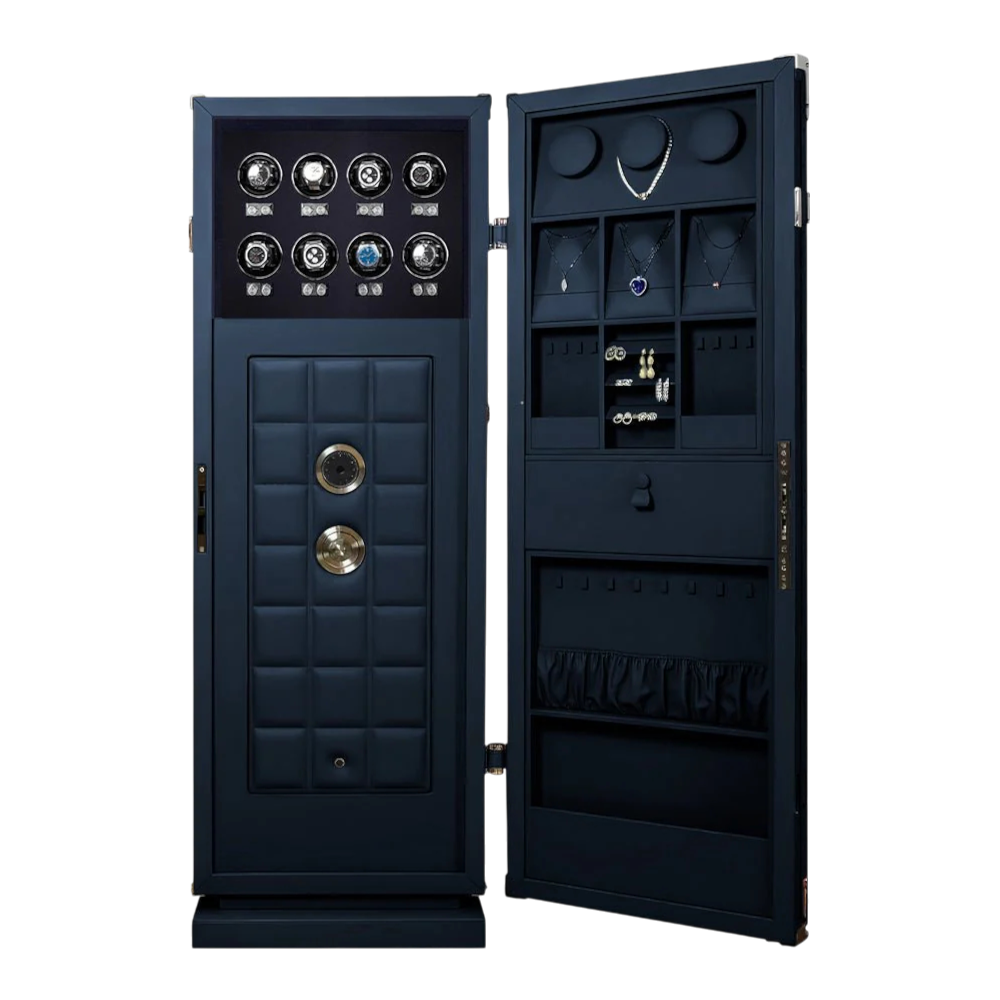
The Veron 20 watch safe box sits a tier below the Titan Sanctum on security specification but remains a purpose-built watch winder safe designed for collections of 8–20 pieces. The winding mechanism supports bi-directional rotation per module with an adjustable TPD range starting at 650 turns per day.
The cabinet design leans contemporary — brushed exterior, soft-close glass door, carbon-fiber interior detailing — which suits display-oriented setups where the winder sits in a study or bedroom where it will be seen. Lock quality is solid for a residential application, though the Veron is not marketed as a theft-deterrent safe in the same class as the Centennial or Titan Sanctum.
Buy this if the aesthetic of the unit matters as much as the winding spec, and your security needs are covered separately by a home system.
Verdict: Buy for display-focused setups. Hold if physical security is a primary concern.
4. Enigwatch Centennial Bulletproof Watch Safe Box — The Maximum-Security Option
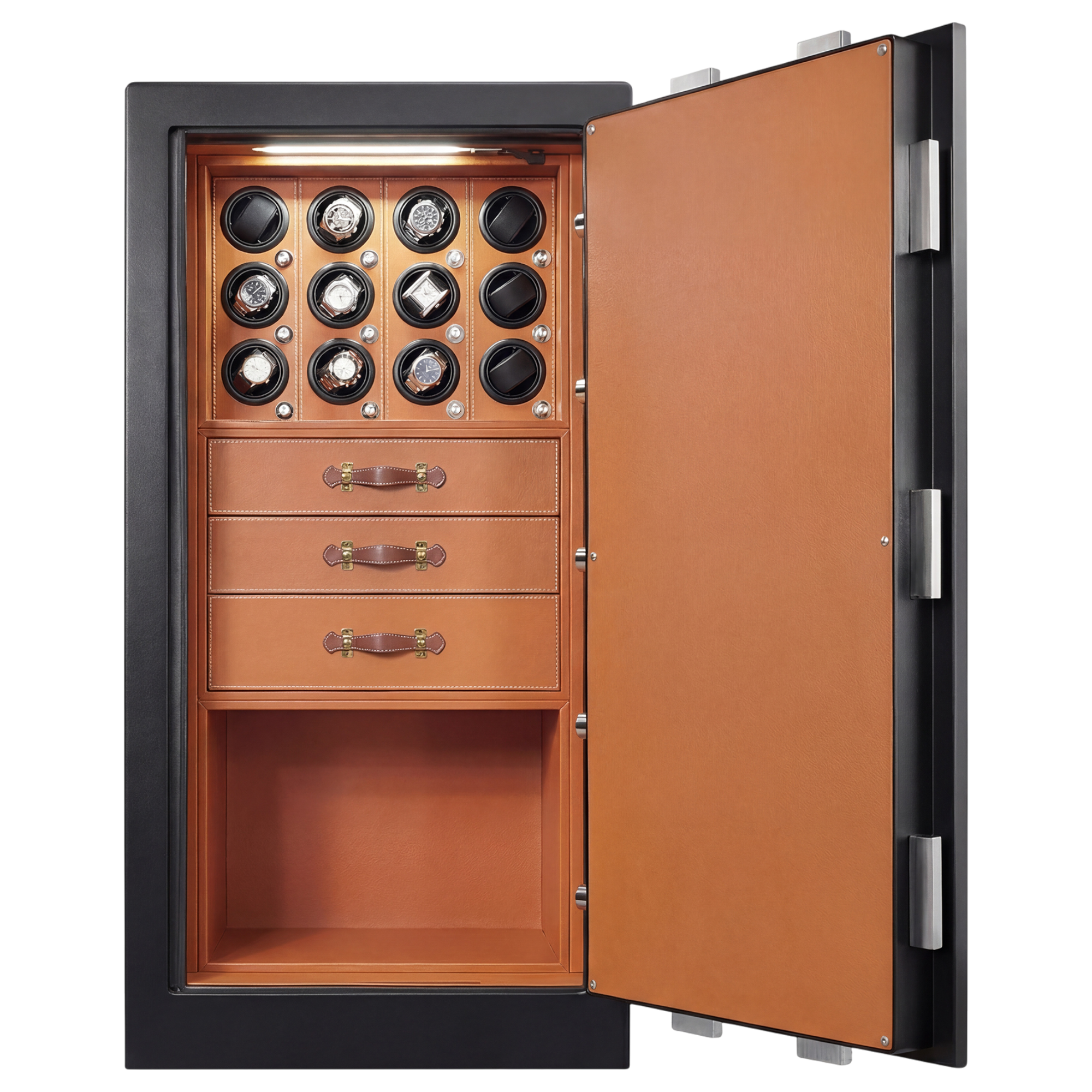
The Centennial bulletproof watch safe box is the highest-security unit in the Enigwatch lineup. The “bulletproof” designation refers to the ballistic-rated steel construction — this is a safe that happens to wind watches, not a watch winder that happens to lock. For 8-watch collections with watches worth $20,000–$50,000 each, the security spec justifies the price premium.
Winding modules are individually programmable with the same TPD and directional flexibility as the Titan Sanctum. The difference is the enclosure: thicker steel, heavier door, and a locking mechanism rated to resist sustained attack. Weight is substantial — floor anchoring is recommended and hardware is included.
This is overkill for most buyers at the 8-watch tier. It’s the right call if you live in a high-risk area, travel frequently, or own watches that would require police reports and insurance claims if lost.
Verdict: Buy for high-value, high-risk situations. Hold if standard residential security is sufficient.
5. Generic 8-Slot Budget Winders (Category Note)
Budget 8-slot units from white-label manufacturers — common on Amazon in the $80–$200 range in 2026 — typically use a single shared motor driving all 8 slots simultaneously. That means one TPD setting and one direction for all watches, no per-slot customization. For a collection where every watch uses the same movement, that’s acceptable. For a mixed collection (a Seiko NH35 next to an AP Calibre 3120), shared-motor winders will either under-wind or over-wind at least one watch at all times.
Verdict: Skip for any mixed collection. The cost saving isn’t worth the movement risk.
Comparison Table
| Model | Winding Slots | Per-Module TPD Control | Directional Control | Safe / Security | Best For |
|---|---|---|---|---|---|
| Yachtline Series 16 | 16 (8 usable) | Yes, 650–1,950 TPD | Per module | Display lock | Mixed collections, growth |
| Titan Sanctum 20 | 20 (8+ winding) | Yes | Per module | Steel safe, multi-point lock | High-value collections |
| Veron 20 | 20 (8+ winding) | Yes, from 650 TPD | Per module | Residential lock | Display-first setups |
| Centennial Bulletproof | Winding + storage | Yes | Per module | Ballistic-rated steel | Maximum security |
| Generic budget 8-slot | 8 | No (shared motor) | Shared | None | Single-movement collections only |
Where to Buy
- Direct from Enigwatch: The watch winder safe box collection and the automatic watch winder collection are the authoritative source for current pricing, stock status, and configuration options in 2026. Buying direct also ensures you get the manufacturer warranty and avoids grey-market units.
- Avoid third-party resellers for units at this price tier unless you can verify the seller is an authorized dealer. Counterfeit motor controllers are a documented problem in the luxury winder category.
- Check lead times before purchasing any safe-integrated unit — the Titan Sanctum and Centennial are heavy-freight items with delivery windows that vary by region.
What to Avoid
Shared-motor winders marketed as “8-watch” units. The slot count is meaningless if one motor drives all positions. Check spec sheets for “independent motors” or “per-slot TPD” — if those phrases aren’t present, assume it’s a shared-motor unit.
Winders without bi-directional per-module control. Watches like the Rolex 3235, IWC 52110, and Patek 240 require specific rotation directions. A winder that only spins clockwise will fail to maintain these movements correctly regardless of TPD setting.
Cheap acrylic or MDF cabinet construction. At the 8-watch tier, the watches inside are worth more than the furniture around them. A winder cabinet that looks good in a product photo but flexes under its own weight signals that the motor quality is equally compromised. Solid wood, steel, or reinforced ABS are the construction materials to accept.
FAQ
What is the best watch winder for 8 watches in 2026?
The Enigwatch Yachtline Series 16, run with 8 active slots, is the best watch winder for 8 watches in 2026 for collectors with mixed brands. It delivers per-module TPD control from 650–1,950 turns per day and bi-directional programming per slot — the two specs that matter most for a mixed collection.
How many turns per day does an 8-watch winder need?
The TPD requirement varies by movement. Most Swiss automatic movements need 650–1,000 TPD. Rolex calibers recommend around 800 TPD. High-frequency or complex complications can require up to 1,800 TPD. An 8-watch winder must support the full 650–1,950 range with per-slot configuration to handle any mix.
Is a watch winder safe better than a standalone winder for 8 watches?
If your 8 watches carry combined replacement value above $20,000, yes. A watch winder safe eliminates the need for a separate floor safe and ensures your pieces are wound and protected in a single unit. The Titan Sanctum 20 and Centennial are the Enigwatch options at this tier.
Can one motor run all 8 watches on a winder?
Technically yes, but it means every watch gets the same TPD and rotation direction. For identical-movement collections this is acceptable. For any mixed collection, a shared motor guarantees at least one watch is wound incorrectly at all times. Independent per-slot motors are the correct specification for 8-watch winders in 2026.
How loud should an 8-watch winder be?
Below 35 dB is the standard for bedroom-safe operation — roughly equivalent to a quiet library. The Yachtline Series 16 and Titan Sanctum both meet this threshold. Units above 40 dB are audible during sleep and tend to indicate lower-quality motor bearings that will degrade faster.
Do watch winders damage automatic movements?
Over-winding is the common concern. Modern automatic movements include a slipping clutch that prevents mainspring damage from over-tension — the risk is minimal if TPD settings are correct. The real risk is a poorly calibrated winder that sets incorrect TPD and runs a movement dry or over-stresses the rotor bearing. This is why per-slot programmability matters.
How much does a good 8-watch winder cost in 2026?
Quality 8-watch winders with independent motors and per-slot control start around $300–$500. Integrated watch winder safe units with certified steel construction run $1,000–$3,000+. Budget units under $200 almost universally use shared-motor designs that are inappropriate for mixed collections.
What brands need specific winder settings?
Rolex, Patek Philippe, Audemars Piguet, IWC, and Jaeger-LeCoultre all publish recommended TPD and rotation direction by caliber. Rolex 3235 needs bi-directional at ~800 TPD. Patek calibre 240 is clockwise-only. IWC’s 52010 is bi-directional. A winder that can’t set direction per slot will fail at least one of these.
One Last Thing
The case for an 8-watch winder isn’t just convenience — it’s actuarial. A watchmaker’s bench rate in 2026 runs $150–$400 per hour, and a full service on a complicated Swiss movement takes 6–15 hours. If consistent winding extends your service interval by even one year across eight pieces, the winder pays for itself in deferred maintenance costs before the second year is out.
Related Guides
Protect Your Watch Collection
Designed for collectors who demand the best. Explore our premium watch winders and luxury safes.