Vintage automatic movements were built decades before anyone standardized turns-per-day settings or bidirectional rotors, so the winder that suits a 2026 Submariner can quietly wreck a 1965 dress watch. This guide walks through what to avoid, step by step, so a heritage automatic keeps running instead of getting stressed by the wrong machine.
TL;DR
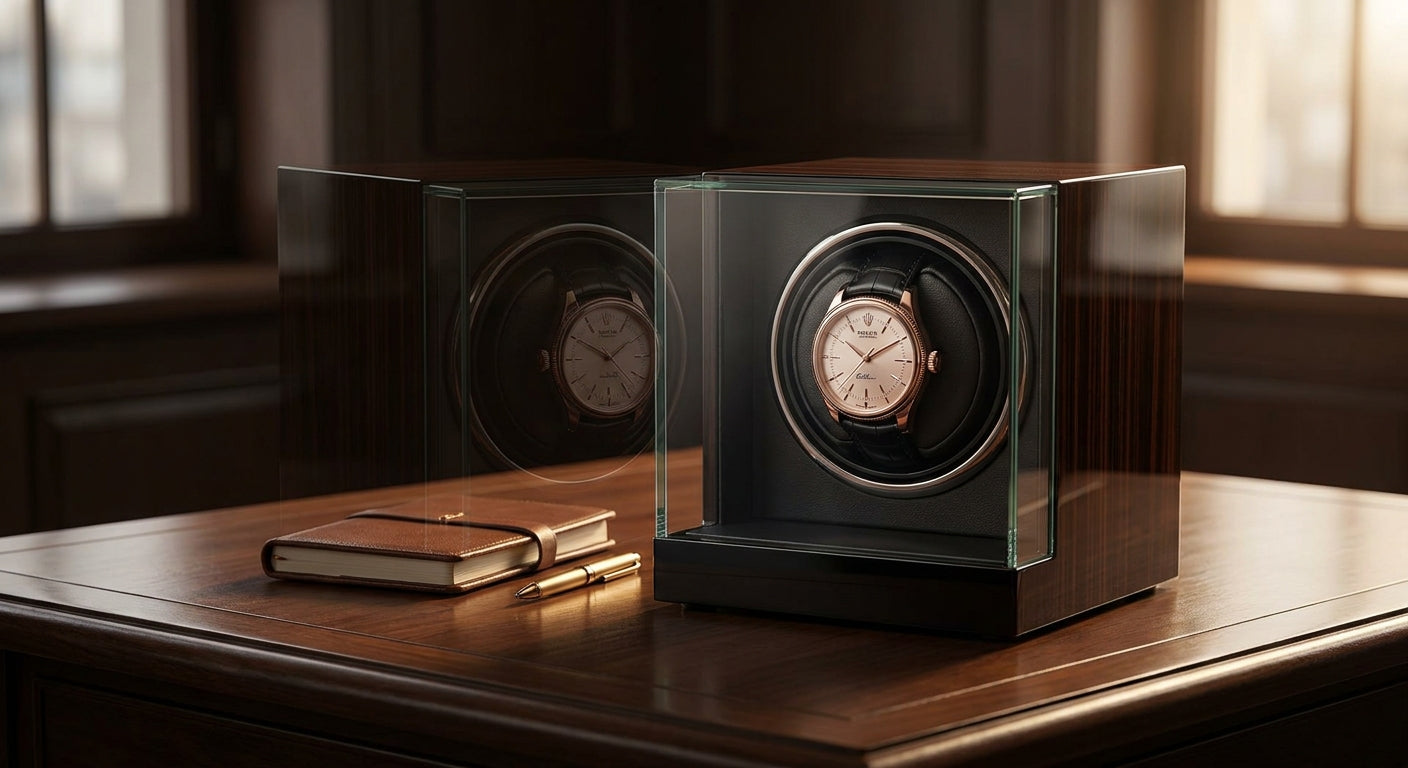
A watch winder for vintage automatic watch ownership needs three things a modern winder often skips: a low, adjustable TPD setting, a direction switch that matches the vintage caliber's original winding mechanism, and a snug but not compressive pillow. Skip bidirectional-only winders on unidirectional vintage movements, skip 24-hour continuous rotation, and skip foam pillows sized for modern 42mm cases. The Virtuoso Series 2 watch winder is a reasonable starting point for a single vintage piece because its settings are adjustable rather than fixed. Verdict: Consider an adjustable single or double winder; Skip any winder that only offers one preset mode.
Why this matters
Vintage automatic calibers were engineered for a specific range of motion and a specific number of rotor turns per day, often far lower than what a modern in-house movement tolerates. Run one of these older calibers at 1,200 TPD around the clock and you accelerate wear on bushings and mainspring components that have already logged 40 or 50 years of use. The mistake shows up slowly, in a watch that starts running fast or stops holding a full reserve, not immediately.
The fix is not complicated. It's picking a winder with the right settings and the discipline to use them correctly, which most buyers skip because the winder box looks identical whether it fits the watch or not.
What you'll need
- The vintage watch's caliber reference (stamped on the movement or in service papers) so you can confirm original TPD and winding direction
- A winder with adjustable TPD and direction settings, such as the Virtuoso Series 2 watch winder
- A soft microfiber cloth for the case before it goes on the pillow
- 10 minutes to set the program correctly the first time
- A stable, temperature-controlled spot away from direct sunlight or a radiator
The steps
1. Confirm the caliber's original TPD before you touch a dial
Most vintage automatics from the 1950s through 1980s were designed for somewhere between 650 and 950 turns per day, well under the 1,200-plus TPD that modern high-beat movements tolerate. Setting a vintage caliber to a modern preset overworks the mainspring barrel every single day. Look up the caliber number, cross-reference a service manual or an authorized watchmaker, and write the number down before you touch a single dial on the winder.
Common mistake: trusting the winder's factory default instead of the watch's actual spec. Factory defaults are usually built for contemporary movements, not vintage ones.
2. Match the direction setting to the rotor, not to habit
Many vintage automatics wind in one direction only, either clockwise or counterclockwise, because bidirectional winding systems weren't common until later decades. Running a unidirectional vintage rotor on a bidirectional-only winder means half the rotation cycle does nothing useful and adds needless mechanical stress. Check the movement's service documentation or ask a watchmaker to confirm which direction the rotor actually engages.
Common mistake: assuming every automatic is bidirectional because most modern releases are.
3. Choose a pillow that supports the case, not one that compresses it
Vintage cases run smaller than today's 40-44mm norm, often 34-38mm, with thinner lugs and older leather or metal bracelets that don't flex the way modern straps do. A pillow sized for a modern chunky diver will pinch a vintage strap or leave the case sitting at an odd angle that stresses the winding stem over time. Look for a winder with a pillow that sits snug against the case back without forcing the bracelet or strap into an unnatural bend.
Expected outcome: the watch sits level, the crown clears the pillow edge, and the strap isn't folded tighter than it would sit on a wrist.
4. Set a rest interval instead of running the winder continuously
Continuous 24-hour rotation, common on cheap winders with only an on switch, keeps a vintage rotor in motion far longer than any wrist ever would. A winder with a rest-cycle program, running for a set block of hours and then pausing, mimics real wearing patterns far better than nonstop spinning. This single setting change is the difference between a winder that maintains a watch and one that quietly fatigues it.
Common mistake: leaving a basic winder plugged in and running nonstop for weeks because there's no programmable option.
5. Test the motor for smoothness before committing the watch
Cheap motors can stutter or vibrate at low speeds, and a vintage movement with decades of wear on its pivots is far less tolerant of an uneven rotor push than a new watch fresh from a factory. Run the winder empty for 24 hours first and listen and watch for jerky, inconsistent motion. A Japanese Mabuchi motor, the standard used across Enigwatch's winder lineup including the Virtuoso Series 2 watch winder, runs at a consistent, quiet rotation that a worn vintage rotor engages with smoothly rather than being jolted.
Common mistake: putting the watch straight onto a new winder without a dry test run first.
6. Keep the winder out of humidity and direct light
Vintage dials, especially tritium or radium lume plots common on pieces from the 1960s and 1970s, degrade faster in direct sunlight, and vintage leather straps crack in high humidity. A winder placed on a windowsill or in a damp basement corner undoes any benefit the correct TPD setting gives you. Position the winder in a stable interior room, away from HVAC vents and windows.
Expected outcome: consistent humidity in the 40-50% range and no direct UV exposure on the dial.
Troubleshooting
- Watch runs fast after a week on the winder — TPD is set too high for the caliber; drop to the lower end of the movement's range and recheck timing after 48 hours.
- Rotor sounds like it's clicking or grinding — the pillow may be too tight, forcing the case against the motor housing; loosen the strap or switch to a larger pillow size.
- Watch stops overnight even while on the winder — confirm the winder is actually powered and the program hasn't reset after a power flicker; some vintage mainsprings need a slightly higher TPD floor than modern equivalents.
- Strap shows creasing after a few weeks — the pillow is compressing the leather at an angle that doesn't match how the watch sits on a wrist; a properly sized pillow eliminates this.
- Dial lume looks duller than before — the winder is positioned near a light source; relocate to a shaded interior spot immediately.
- Winder motor hums audibly at night — lower-grade motors do this under load; a Japanese Mabuchi-equipped unit runs near silent by comparison.
Tools and resources
- Caliber reference lookup through a watchmaker or service manual to confirm original TPD
- Virtuoso Series 2 watch winder for a single vintage piece with adjustable settings
- Guide on watch winder motor types, Japanese vs Swiss movement to understand why motor quality matters more on older calibers
- Guide on does a watch winder damage automatic watches for the broader mechanics behind overwork risk
What to do next
Once the settings are dialed in, read the deeper breakdown on watch winder overwind risk, separating fact from myth to understand why modern mainsprings tolerate more than vintage ones, and why the distinction matters for a piece that's already 40 or 50 years old.
FAQ
What TPD should I use for a vintage automatic watch? Most vintage calibers from the 1950s-1980s run best between 650 and 950 TPD, well below the 1,200-plus settings common on modern high-beat movements. Check the caliber's service documentation before setting the program.
Do vintage watches need a bidirectional or unidirectional winder? It depends entirely on the caliber; many vintage automatics wind in one direction only, and running them on a bidirectional-only winder wastes half the rotation cycle. Confirm the rotor's actual winding direction with a watchmaker before buying.
Is it bad to leave a vintage automatic on a winder 24/7? Continuous rotation without a rest cycle keeps the rotor moving far longer than normal wrist use ever would, adding unnecessary wear to already-aged components. A winder with a programmable rest interval is a better match for vintage pieces.
Can a cheap winder damage a vintage watch? A stuttering or vibrating motor puts uneven stress on worn pivots that a healthy modern movement would shrug off. Japanese Mabuchi motors, standard on Enigwatch winders, run smoother at low speeds than the budget alternatives common under $100.
What size pillow fits a vintage watch case? Vintage cases commonly run 34-38mm, smaller than today's 40-44mm norm, so a pillow sized for a modern diver will pinch the strap or sit the case at an odd angle. Look for a winder with an adjustable or smaller pillow option.
How do I know my vintage watch's original TPD? The caliber number, stamped on the movement itself or listed in service papers, cross-references to a manufacturer spec sheet or a watchmaker's reference. Never rely on a winder's factory default for this.
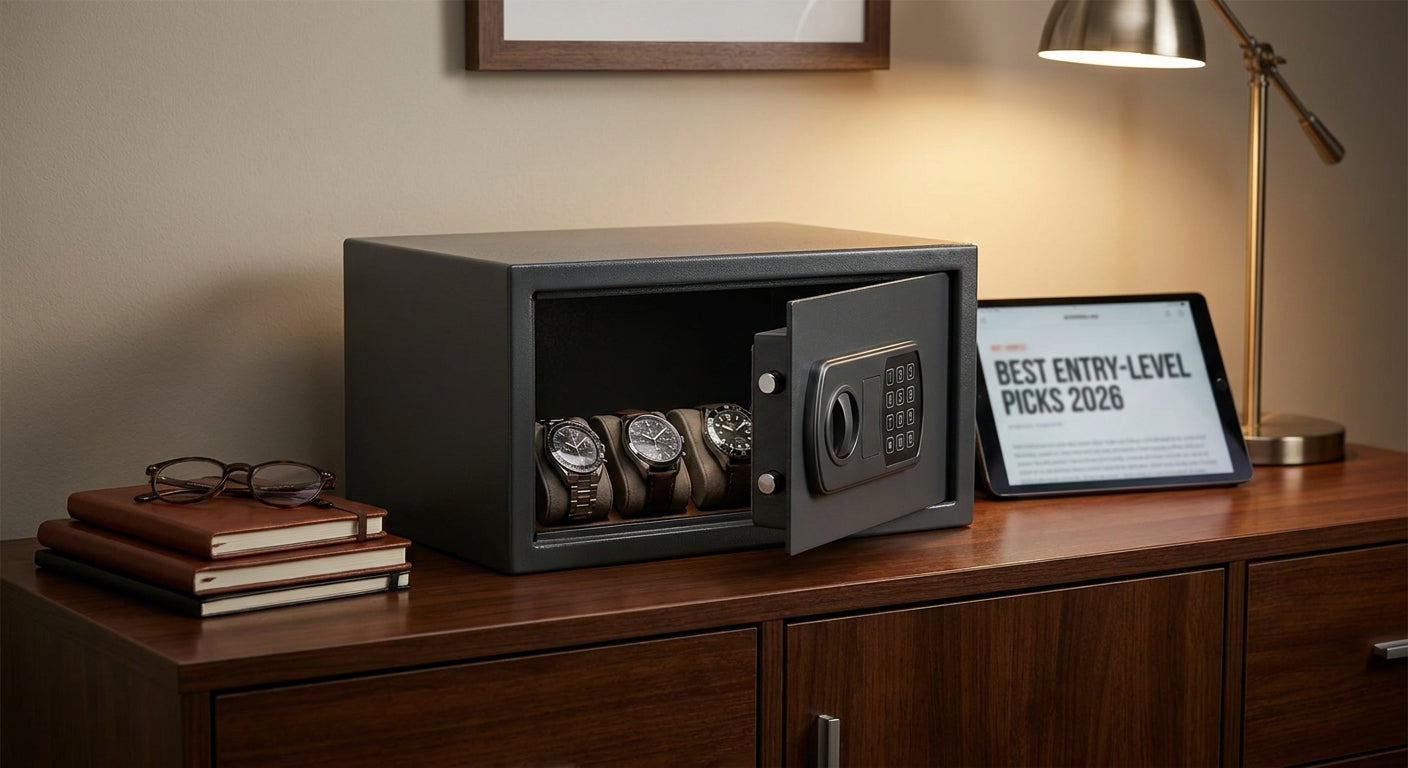
Should a vintage automatic be stored in a safe when not on the winder? Humidity and light exposure damage vintage dials and straps faster than modern materials, so pairing a winder with stable, controlled storage protects the piece between wearings. A dedicated safe or cabinet keeps both temperature and light in check.
Does winding direction affect how fast a vintage watch runs? Winding direction itself doesn't change timekeeping accuracy, but forcing a unidirectional rotor through a bidirectional cycle adds unnecessary mechanical load over the years. Match the direction setting to the caliber's actual design.
One last thing
The detail most collectors miss on a vintage piece isn't the TPD number, it's the rest cycle. A winder that runs 8 hours on and 16 hours off across 2026 mimics a normal wearing pattern far more closely than one that spins nonstop, and that single programmable setting does more for a 60-year-old mainspring than any spec on the box.
Related guides
Protect Your Watch Collection
Designed for collectors who demand the best. Explore our premium watch winders and luxury safes.