
A Rolex Oyster Perpetual runs on a self-winding caliber that needs a specific rotation count to stay fully charged when it’s off the wrist, and getting the turns-per-day setting wrong is the most common reason a winder disappoints a Rolex owner in the first place.
- A Rolex Oyster Perpetual needs roughly 650 TPD on bidirectional rotation to stay wound without overworking the rotor.
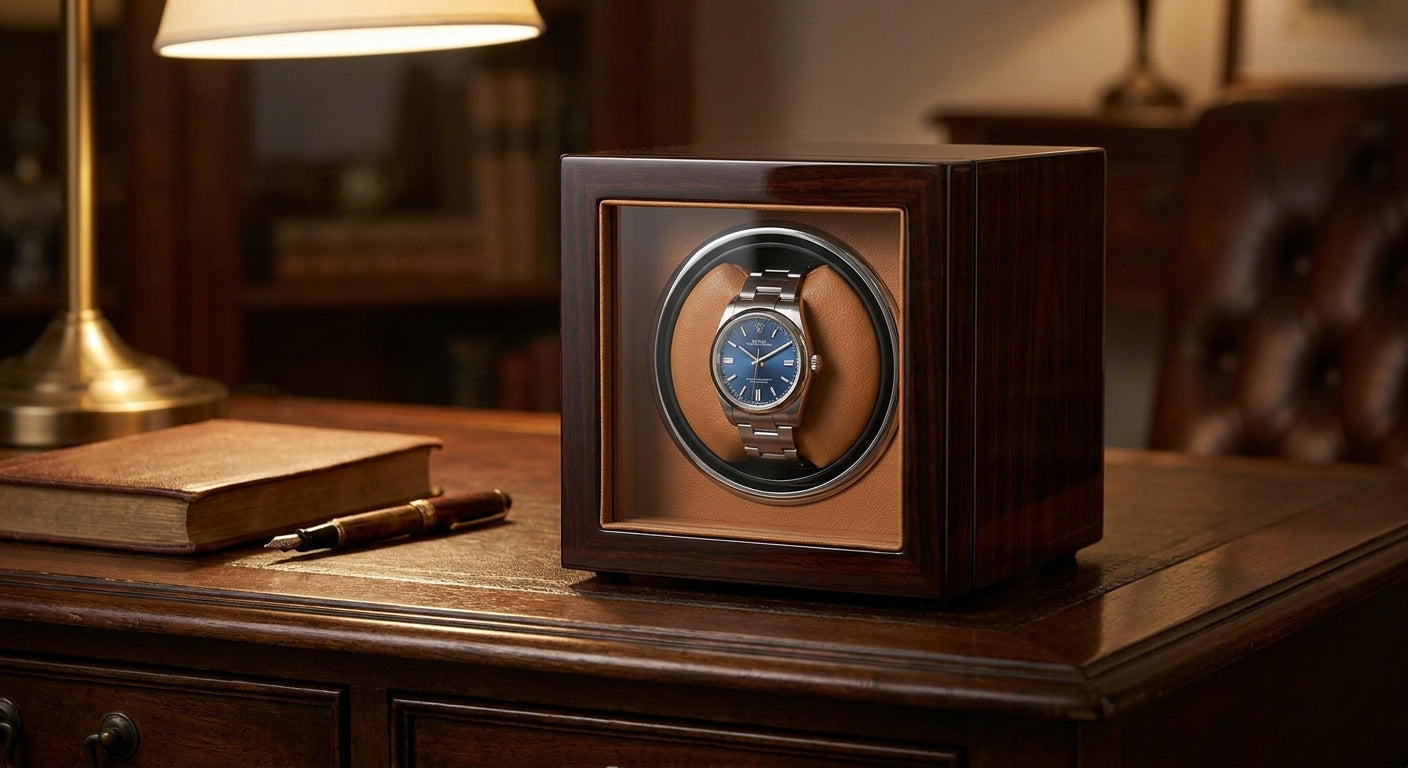
- Enigwatch’s Impresario Series 2 watch winder for Rolex Oyster Perpetual owners programs that exact range with independent dials. Buy.
- Fixed single-direction motors under 500 TPD leave the movement under-wound within 48 hours. Skip.
- The Virtuoso Series 2 covers the same TPD band at a lower price point for a single daily wearer. Consider.
- Mabuchi Japanese motors run quieter and hold calibration longer than generic DC motors common in sub-$300 winders.
Why this matters
Rolex doesn’t publish an official TPD figure for the Oyster Perpetual line, but the watchmaking and winder trade has converged on a number for a reason: too few turns and the mainspring never reaches full reserve, too many and you’re running a motor and a rotor bushing for no benefit. The consensus figure sits at 650 TPD, bidirectional, and how many TPD does a Rolex need in a winder breaks down why that number holds across most modern Rolex calibers, including the 3230 and 2231 found in current Oyster Perpetual references.
Get the direction wrong and the story changes. Some early Rolex automatic calibers wind in only one direction efficiently; the current Perpetual movements use a reversible pawl system that winds on both directions of rotor swing, which is why a bidirectional winder outperforms a clockwise-only unit for this specific watch.
Who this is for
This is for someone who owns one Rolex Oyster Perpetual, or an Oyster Perpetual alongside one or two other automatics, and wants it running at full wind without pulling it out to hand-wind every three days. It’s not written for someone storing a static collection they never wear — that’s a safe conversation, not a winder one.
What to look for in a watch winder for Rolex Oyster Perpetual
Programmable TPD in the 600-900 range
A winder locked to a single preset TPD, or one that only offers 650/900/1200 in fixed steps, forces a compromise. Look for a unit that lets you dial in 650 TPD specifically rather than rounding up to the nearest factory setting, since over-winding by 250 turns a day adds unnecessary wear to the rotor bearing over a few 2026 calendars.
True bidirectional rotation
The motor needs to alternate clockwise and counterclockwise cycles, not just spin one way with pauses. Confirm this in the spec sheet before buying — plenty of budget winders market “bidirectional” but only reverse once every few hours, which under-delivers on the Oyster Perpetual’s reversible winding mechanism.
Japanese motor construction
Mabuchi motors, the standard in higher-tier winders, run at consistent torque and low noise across years of daily cycles. Generic DC motors found in sub-$150 units drift in speed as brushes wear, which throws off your TPD accuracy within 12-18 months.
Independent programs if you’re winding more than one watch
An Oyster Perpetual paired with a Datejust or a GMT-Master II needs its own program, since those calibers don’t always share the same TPD requirement. A winder with independent per-slot dials avoids forcing every watch onto one compromise setting — see watch winder for Rolex and Patek mixed collection if your case holds more than one brand.
Cushion or clamp fit for the case size
Oyster Perpetual cases run 28mm to 41mm depending on the reference. A telescopic pillow that adjusts rather than a fixed cushion sized for a 40mm sports watch keeps a 34mm Oyster Perpetual from rattling loose during rotation.
Top picks
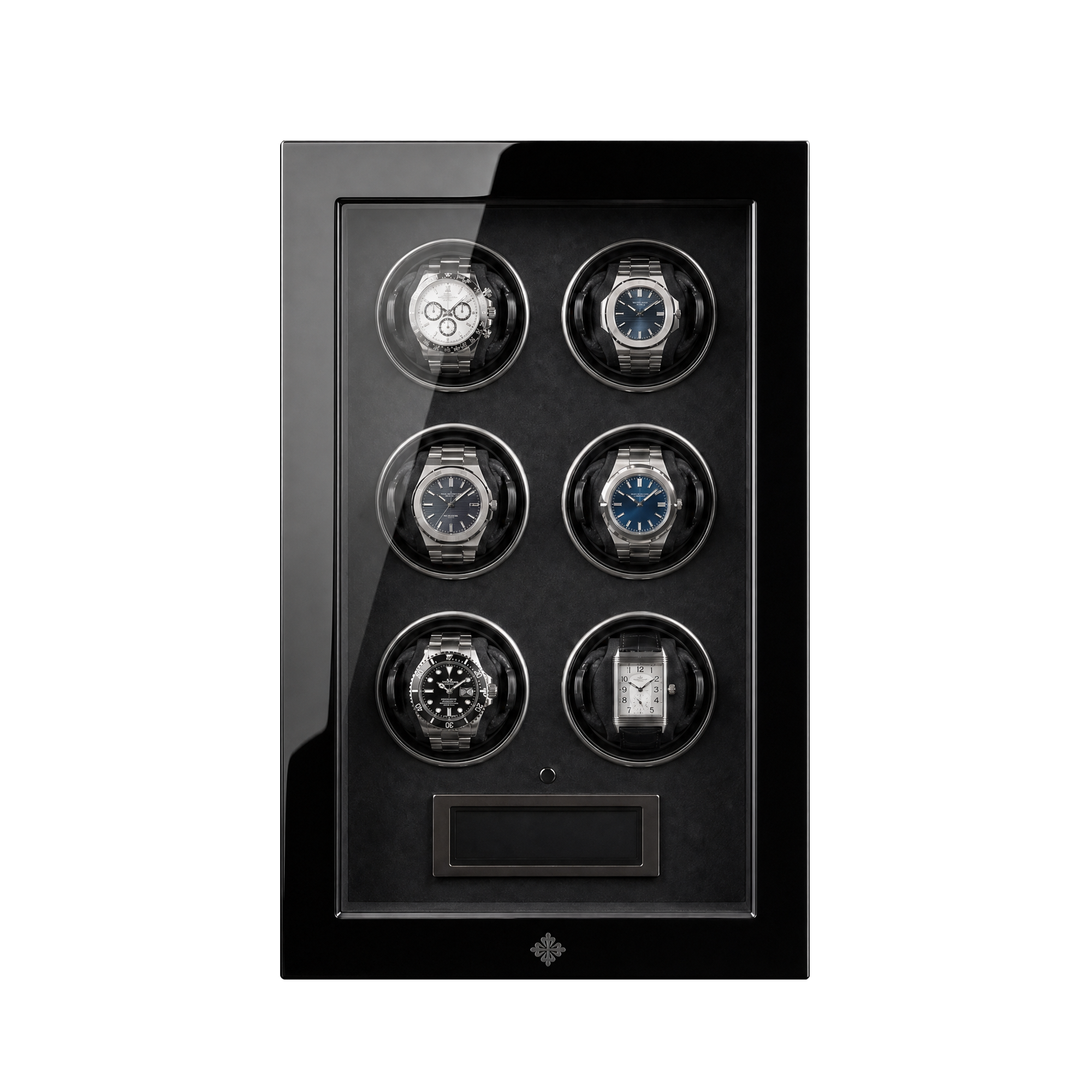
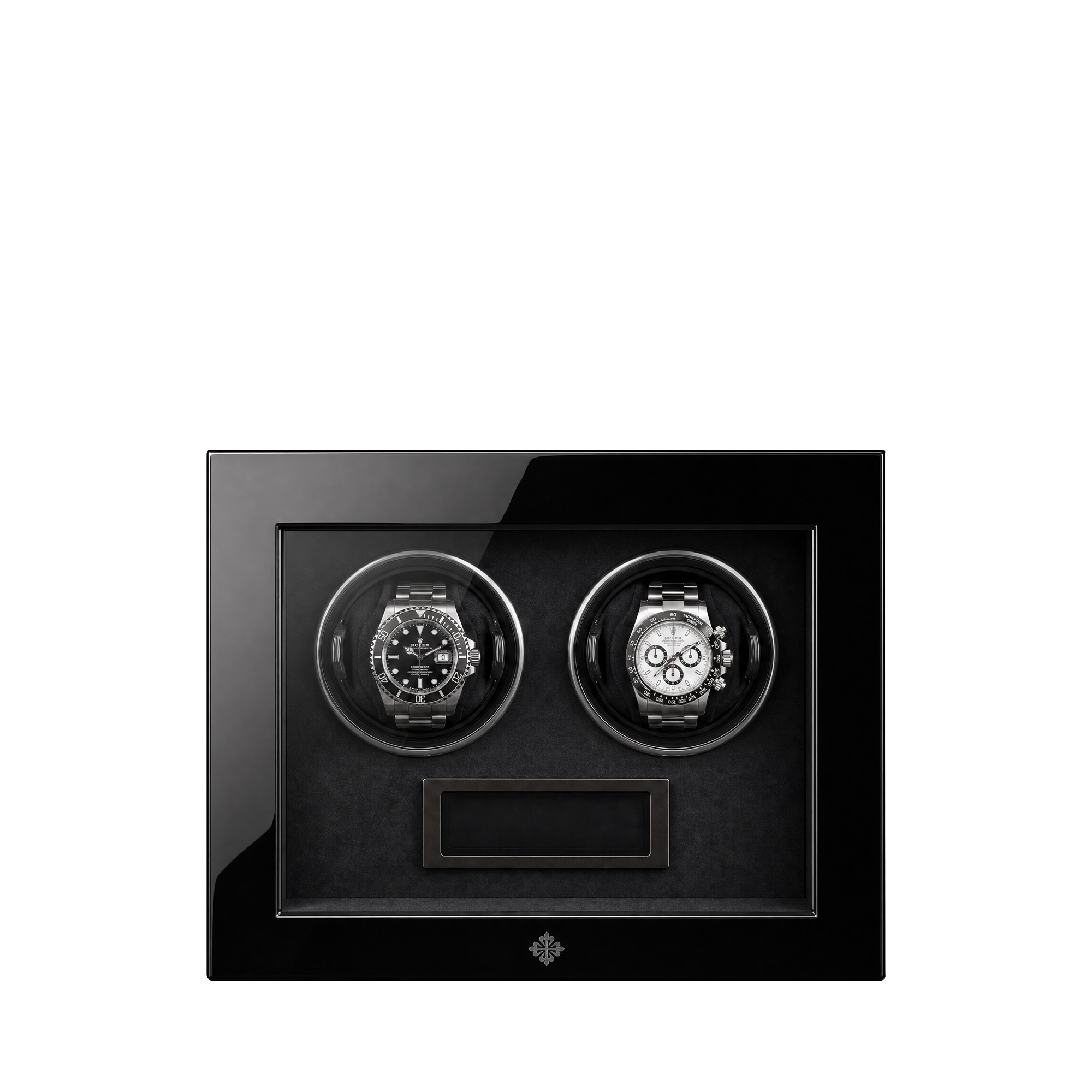
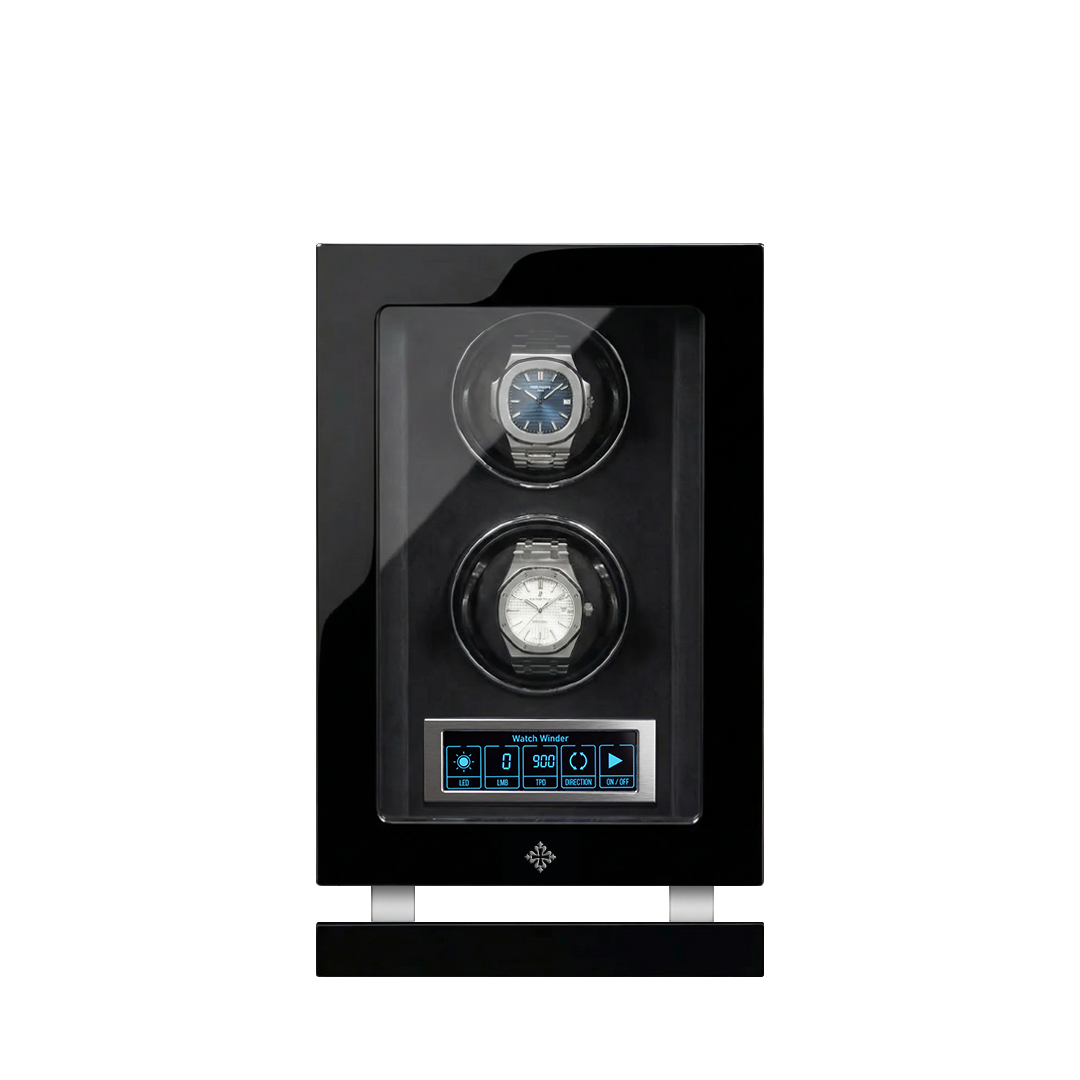
The precision pick — Impresario Series 2 Watch Winder ($649). Two independent rotors, each programmable on its own TPD dial, with fingerprint access and Alcantara-lined pillows that telescope to fit smaller Oyster Perpetual cases. This is the model built for someone who wants 650 TPD dialed in exactly, not rounded to a factory preset. Buy.
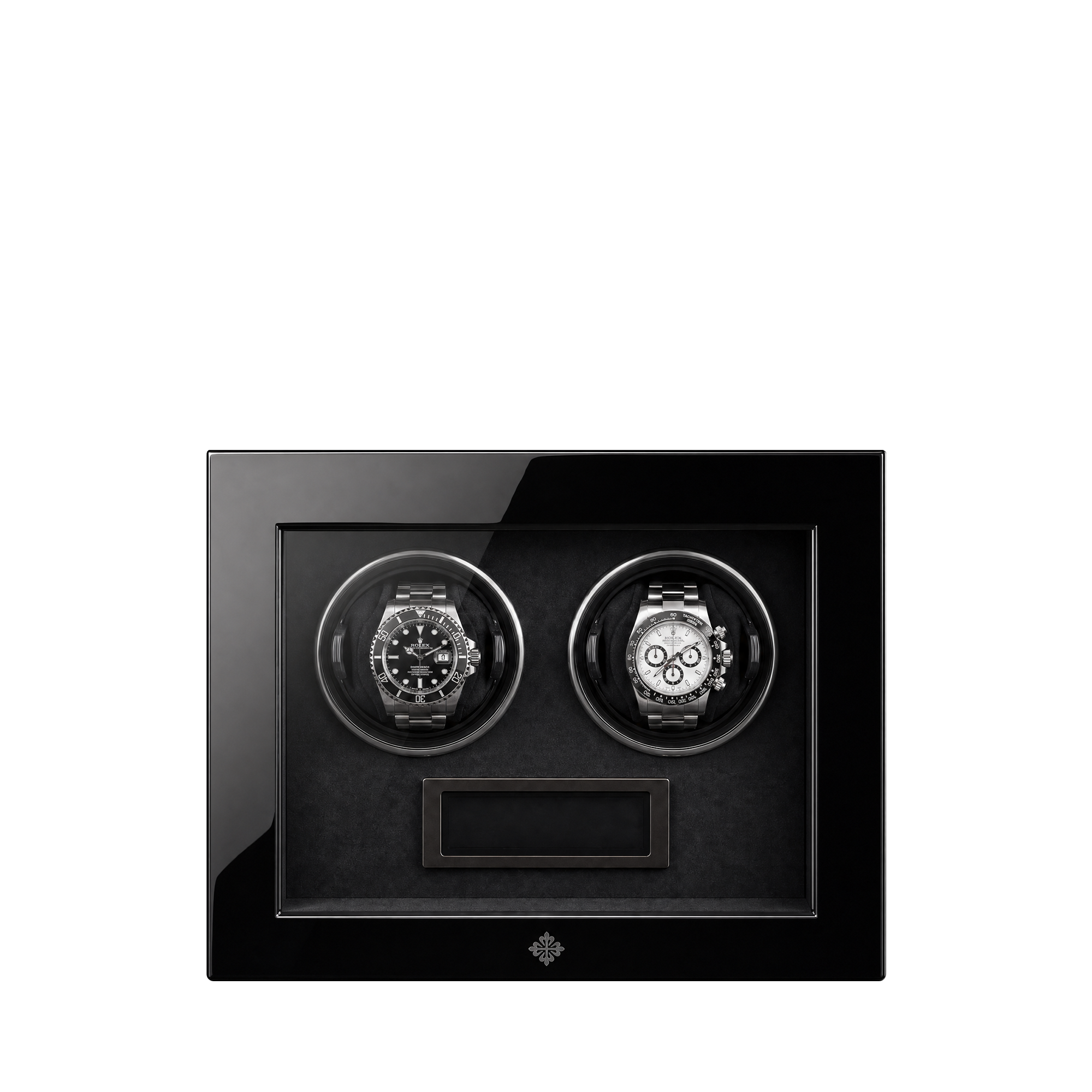
The value pick — Virtuoso Series 2 Watch Winder ($599). Same independent-program logic as the Impresario line at a lower price, without the biometric lock. If you’re winding a single Oyster Perpetual on a dresser rather than in a shared space, the security layer isn’t doing much work anyway. Consider.
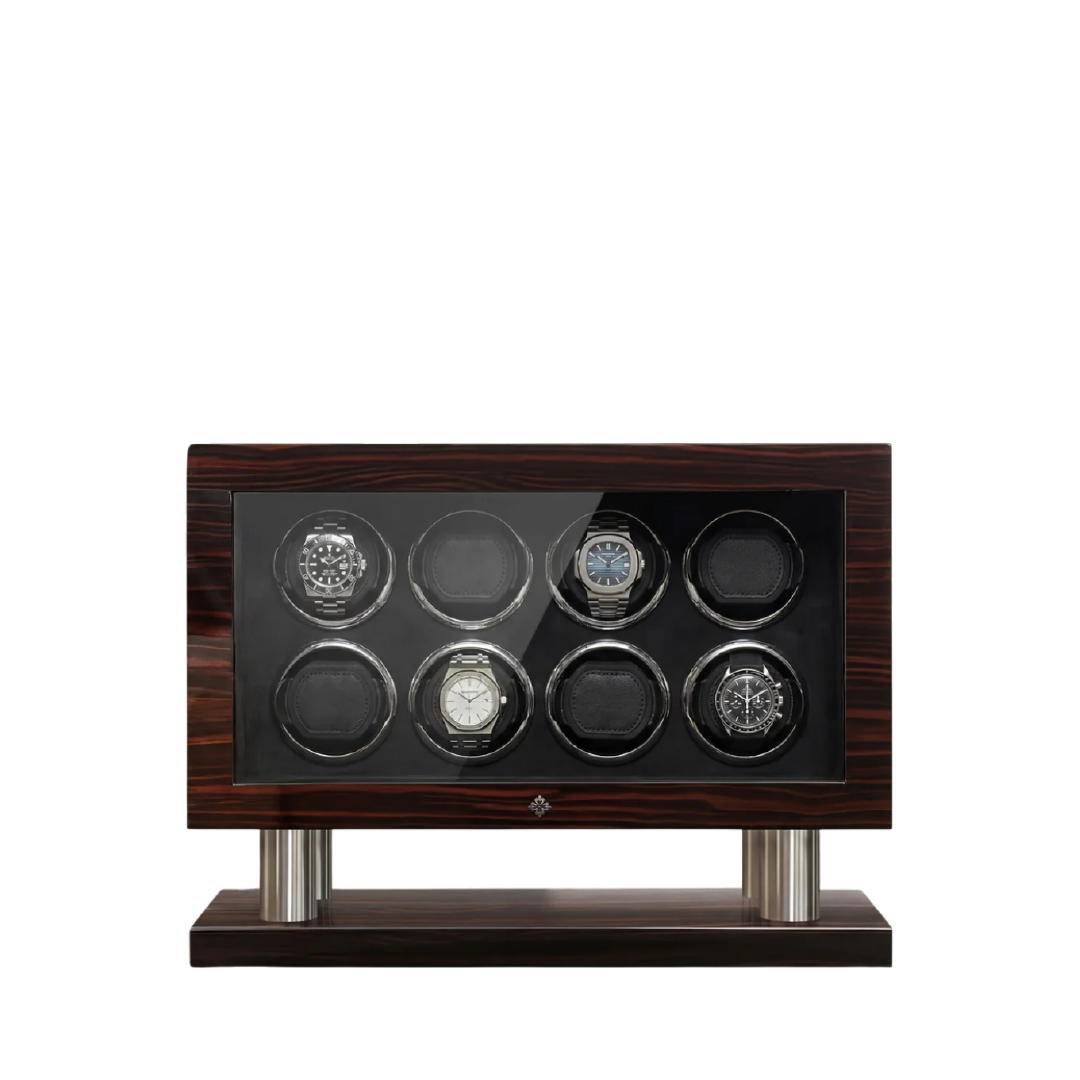
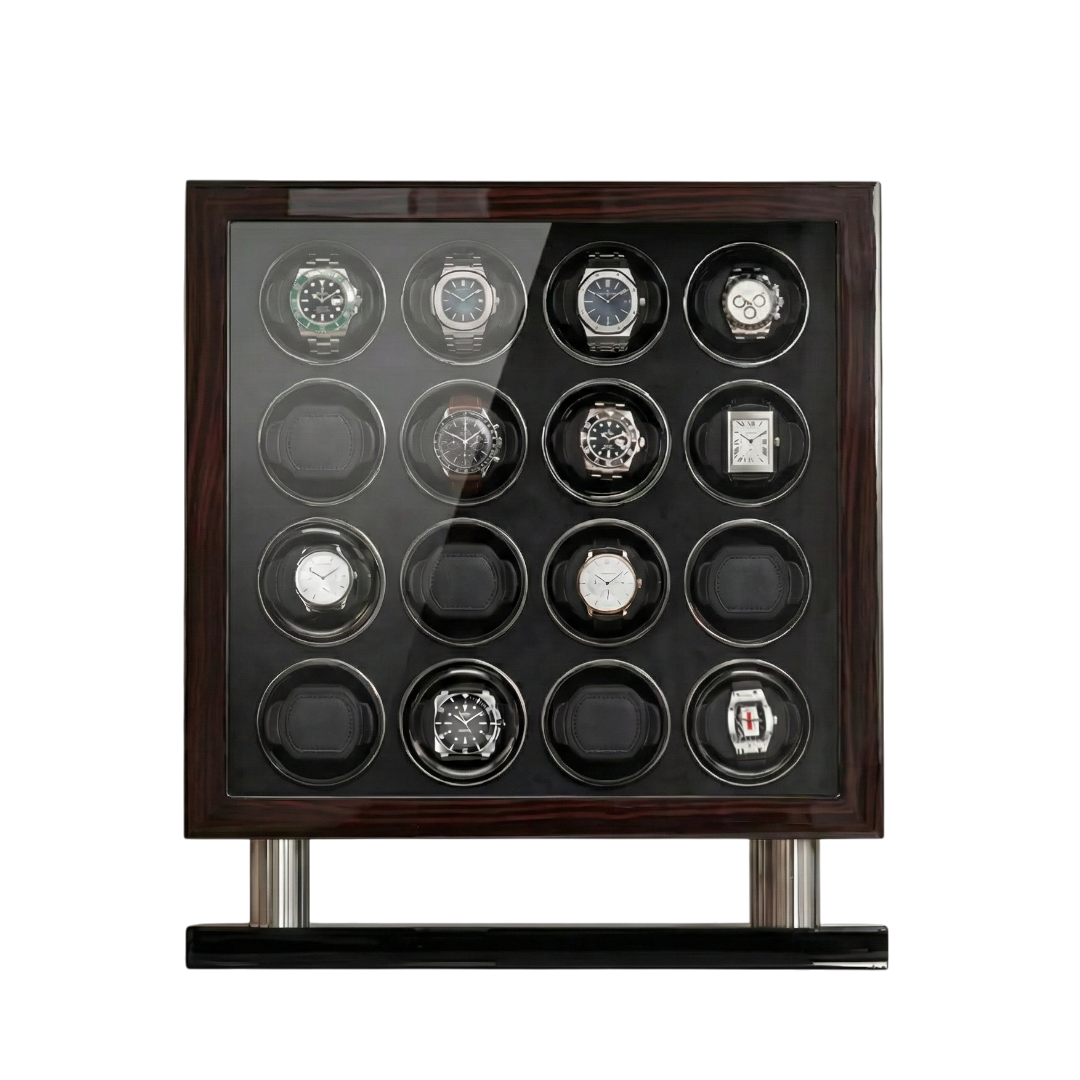
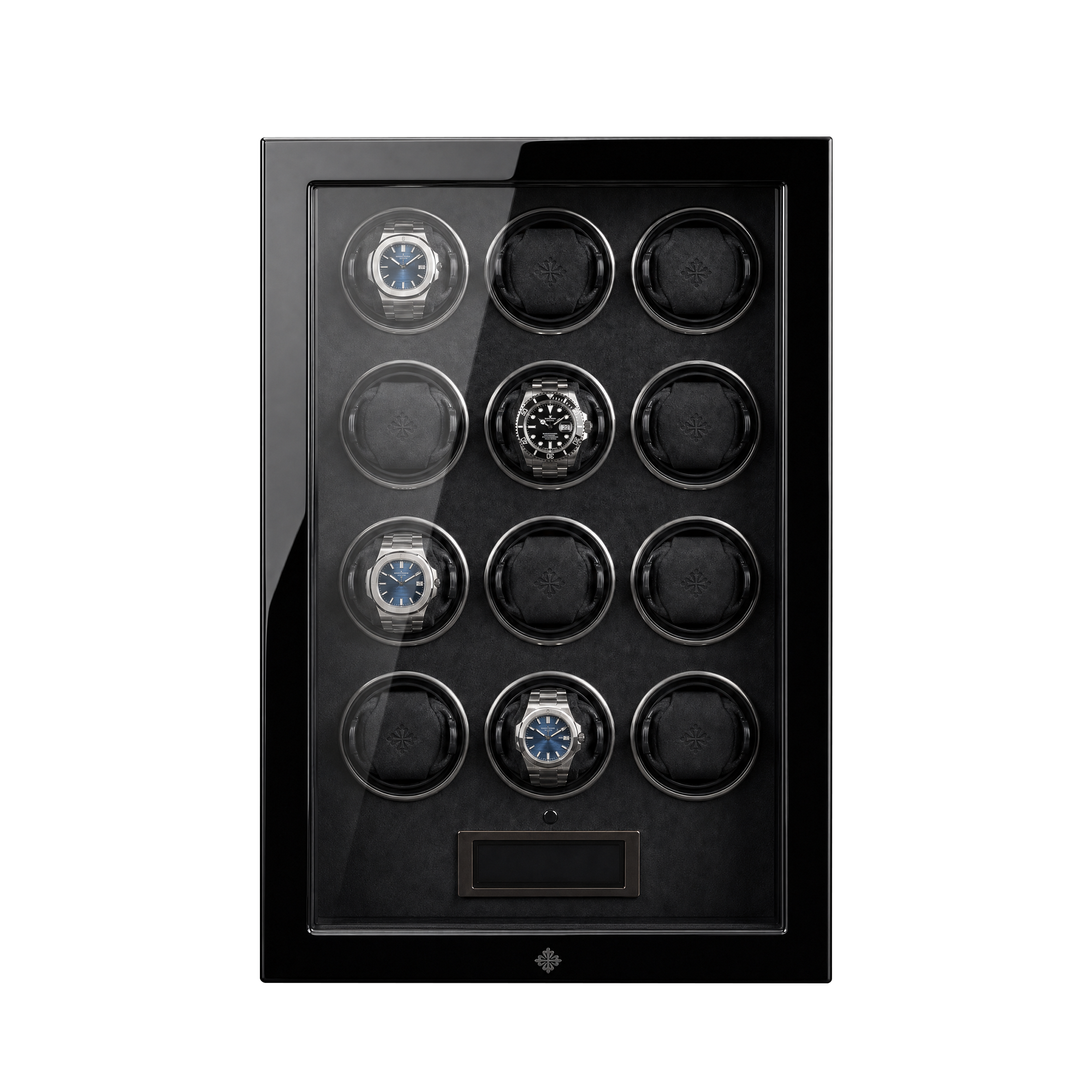
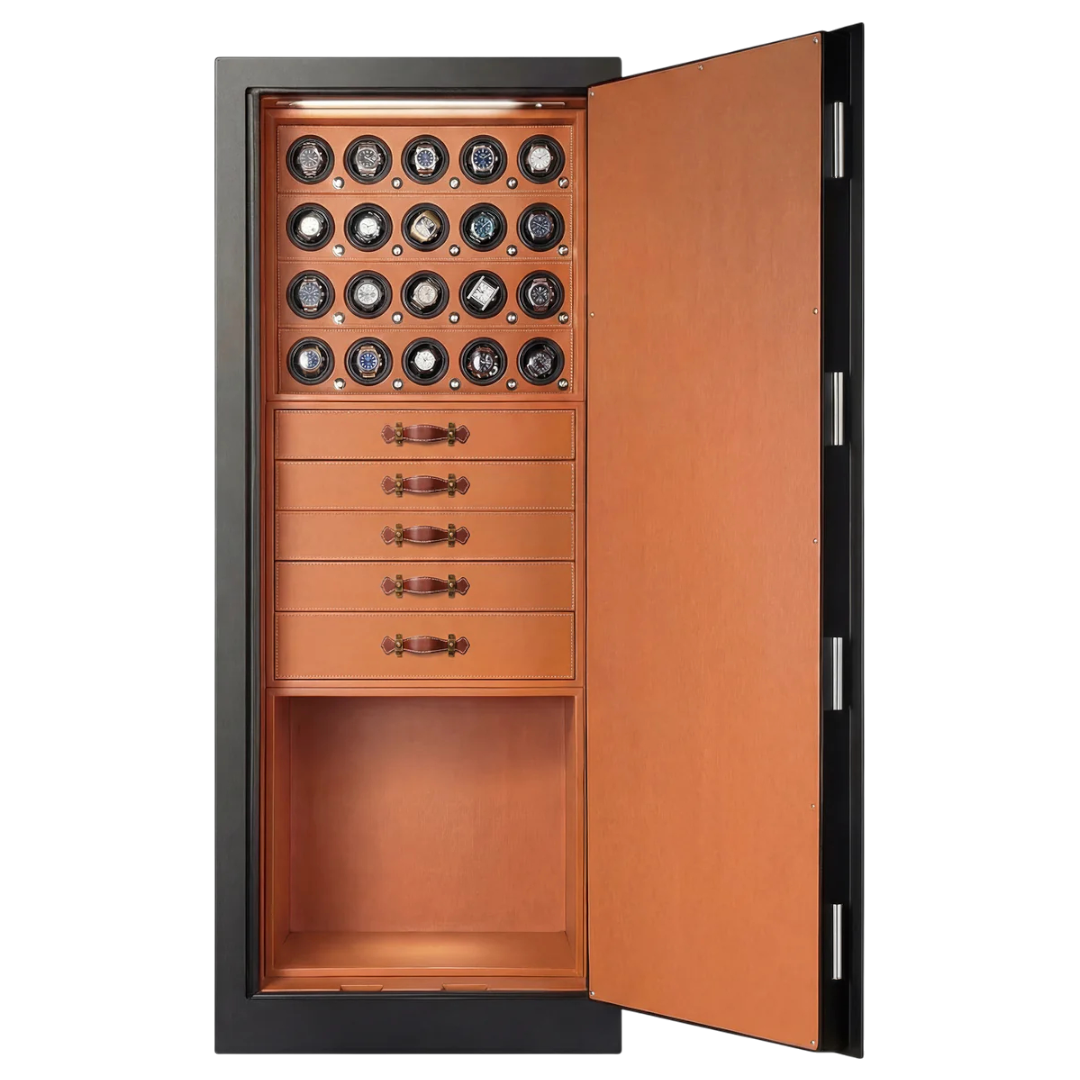
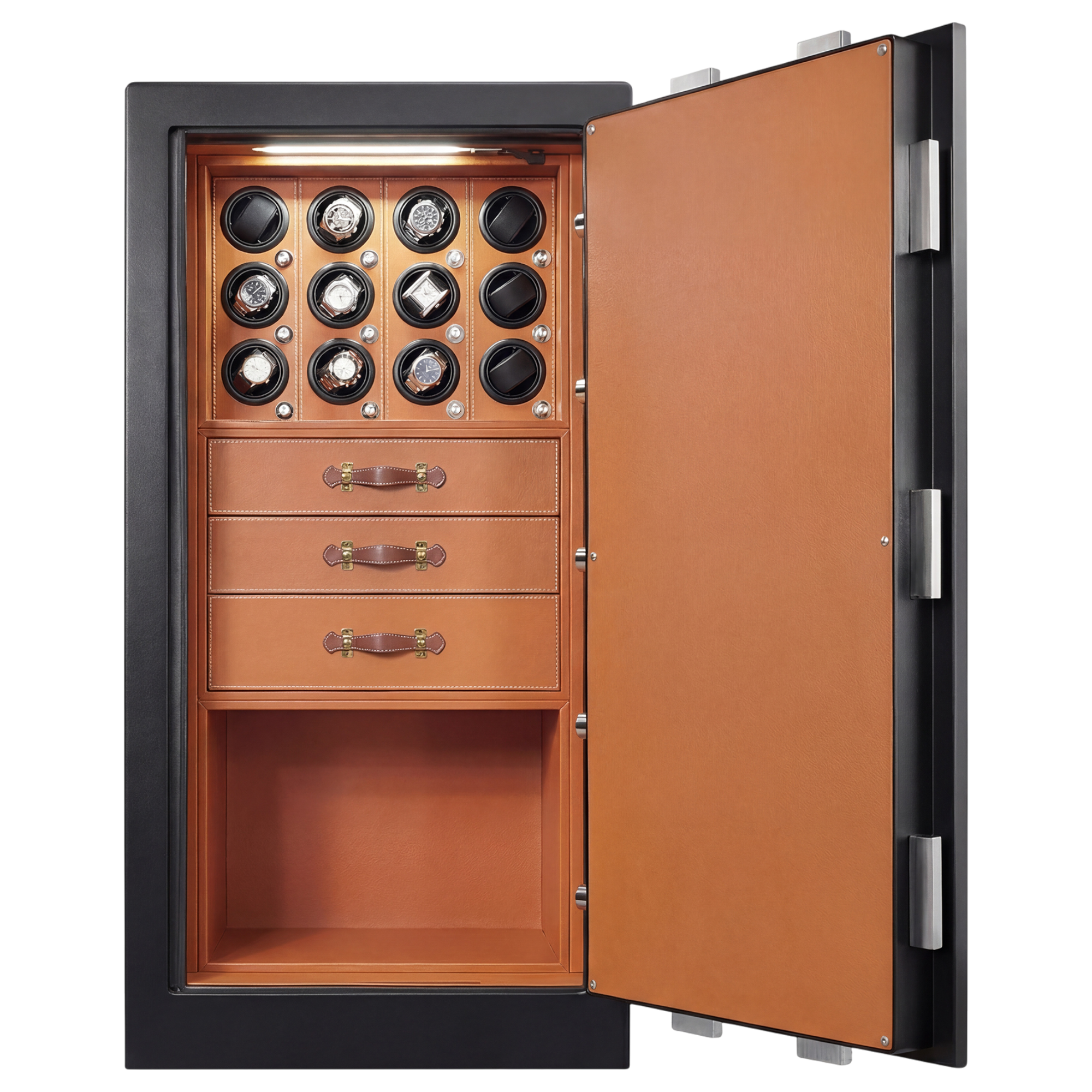
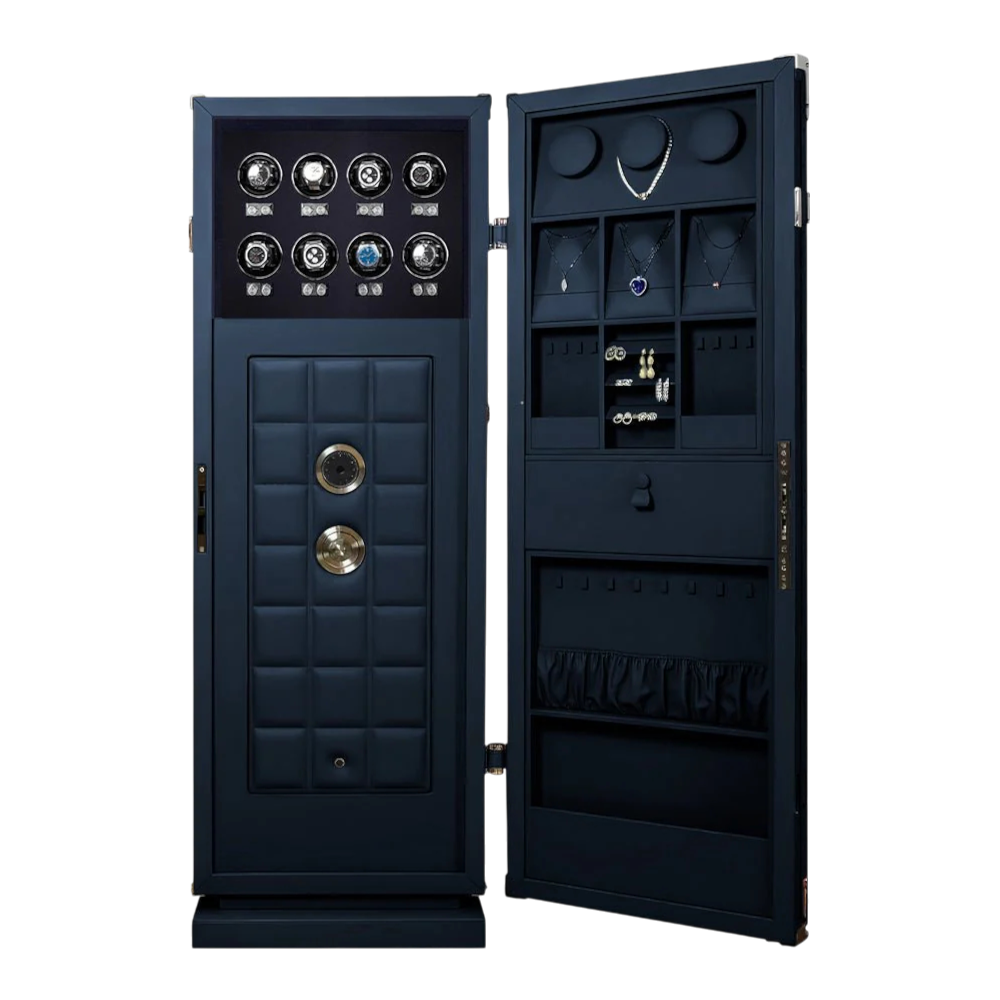
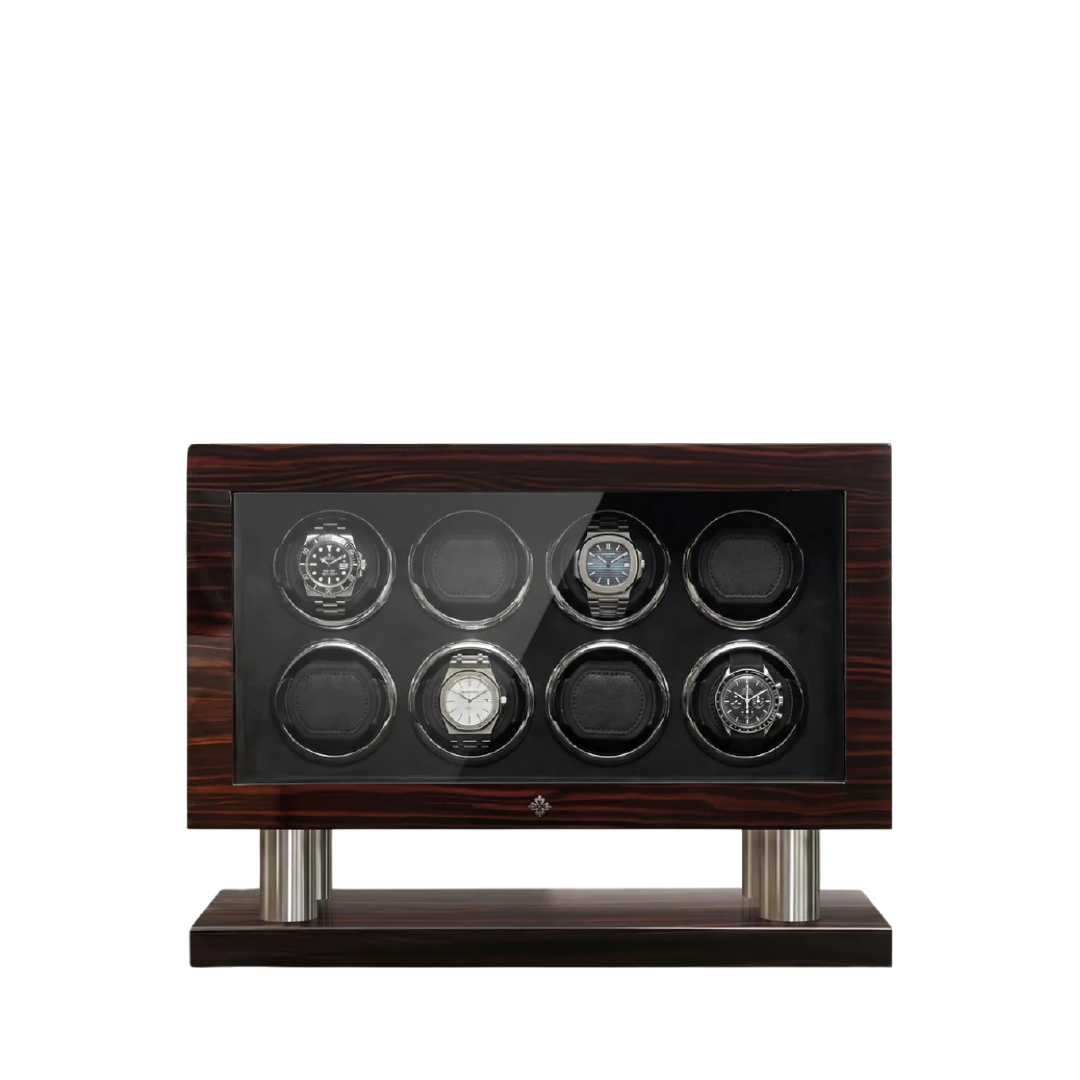
The multi-watch pick — Yachtline Series 8. Eight rotors laid horizontally for a Oyster Perpetual owner who’s building out a small collection. Overkill for one watch, but the right call once you’re past three pieces with different TPD needs. Consider if your collection is growing; Skip if it’s just the one Rolex.
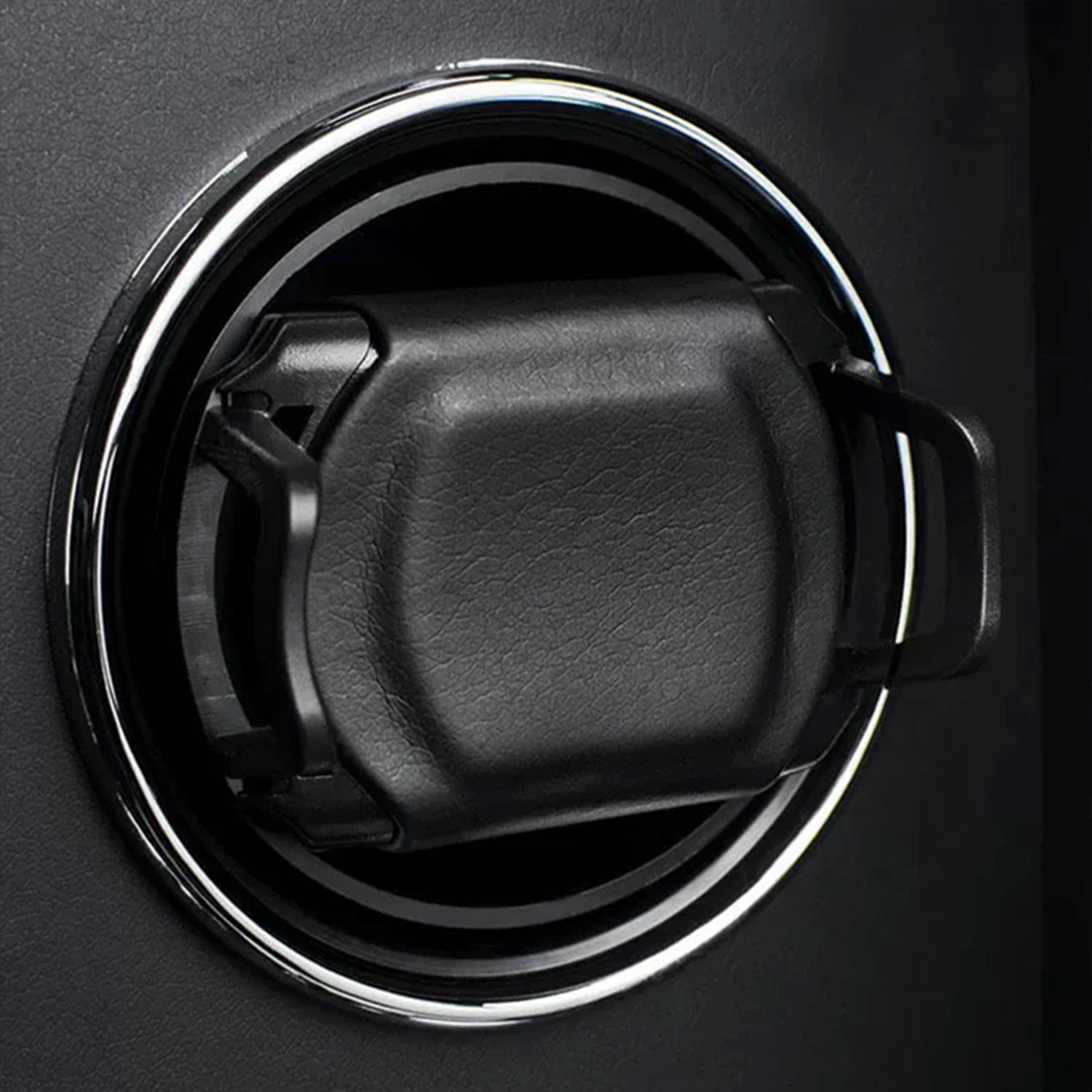
The accessory upgrade — Watch Winders Pillow ($59). A telescopic replacement pillow that fits 36mm to 55mm cases, useful if your current winder’s stock cushion doesn’t cinch down to an Oyster Perpetual’s smaller case sizes. Buy as an add-on, not a standalone fix.
What to avoid
- Fixed single-TPD winders marketed as “universal.” A unit that runs one preset number for every watch in the box, usually somewhere between 800 and 1000 TPD, isn’t calibrated for the Oyster Perpetual’s 650 TPD sweet spot — it’s calibrated for the average of everything, which means your specific watch is either under or over-wound.
- Clockwise-only rotation sold as “bidirectional.” Read the actual mechanism description, not just the marketing word. If the listing doesn’t specify alternating direction cycles with a stated interval, it’s probably one-way.
- Loud DC motors positioned as premium. A watch winder for a Rolex Oyster Perpetual usually sits on a dresser or nightstand — motor noise matters more here than in a closet cabinet, and generic motors get audibly rougher after a year of continuous cycling.
Verdict comparison
| Model | TPD range | Direction | Motor | Price | Verdict |
|---|---|---|---|---|---|
| Impresario Series 2 | Programmable, independent dials | Bidirectional | Mabuchi | $649 | Buy |
| Virtuoso Series 2 | Programmable, independent dials | Bidirectional | Mabuchi | $599 | Consider |
| Yachtline Series 8 | Programmable per rotor | Bidirectional | Mabuchi | $1,399 | Consider for collections |
| Generic sub-$150 winder | Fixed preset | Often one-way | Generic DC | Under $150 | Skip |
FAQ
What TPD should I use for a Rolex Oyster Perpetual?
Set the winder to roughly 650 TPD, bidirectional, which matches the reversible pawl-winding system in the current Oyster Perpetual calibers. Some owners run closer to 800 TPD with no issue, but 650 is the widely cited baseline for 2026 models.
Does a Rolex Oyster Perpetual need bidirectional rotation?
Yes. The current calibers, including the 3230 and 2231, wind efficiently in both rotation directions, so a clockwise-only winder leaves reserve on the table. Bidirectional programming is a requirement, not a nice-to-have, for this watch.
Is a watch winder necessary for a Rolex Oyster Perpetual?
It’s necessary if the watch sits unworn for more than two to three days at a time, since the power reserve on most Oyster Perpetual references runs around 55 to 70 hours. If you wear it daily, a winder is optional convenience rather than a requirement.
Can I use one winder for a Rolex and an Omega together?
Only if the winder offers independent TPD programs per slot, since Omega calibers often run a different TPD requirement than Rolex movements. A shared single-program winder forces a compromise on one of the two watches.
How much does a good Rolex watch winder cost in 2026?
Winders built with Japanese Mabuchi motors and programmable bidirectional TPD start around $599 to $649 in 2026, with multi-watch cabinet options running into the low thousands. Sub-$150 units exist but typically run fixed, one-directional programs.
Will the wrong TPD damage a Rolex movement?
Running too few turns just leaves the watch under-wound, which stops the second hand rather than damaging anything. Running significantly too many turns for years adds unnecessary wear to the rotor bushing, though the effect is gradual rather than immediate.
Do Rolex Oyster Perpetual watches wind clockwise or counterclockwise?
Both. The reversible winding mechanism in modern Rolex calibers engages the mainspring on rotor movement in either direction, which is why a true bidirectional winder outperforms a one-way unit for this watch specifically.
One last thing
Most Oyster Perpetual owners chasing a winder spend more time worrying about TPD than about pillow fit, but the smaller Oyster Perpetual references — the 31mm and 34mm cases — are the ones that actually rattle loose in a standard cushion sized for a 40mm sports watch. Check the pillow diameter before you check the TPD dial; a watch that shifts during rotation wears the crown tube against the cushion edge over enough 2026-length cycles to matter.
Related guides
Protect Your Watch Collection
Designed for collectors who demand the best. Explore our premium watch winders and luxury safes.
Protect Your Watch Collection
Designed for collectors who demand the best. Explore our premium watch winders and luxury safes.