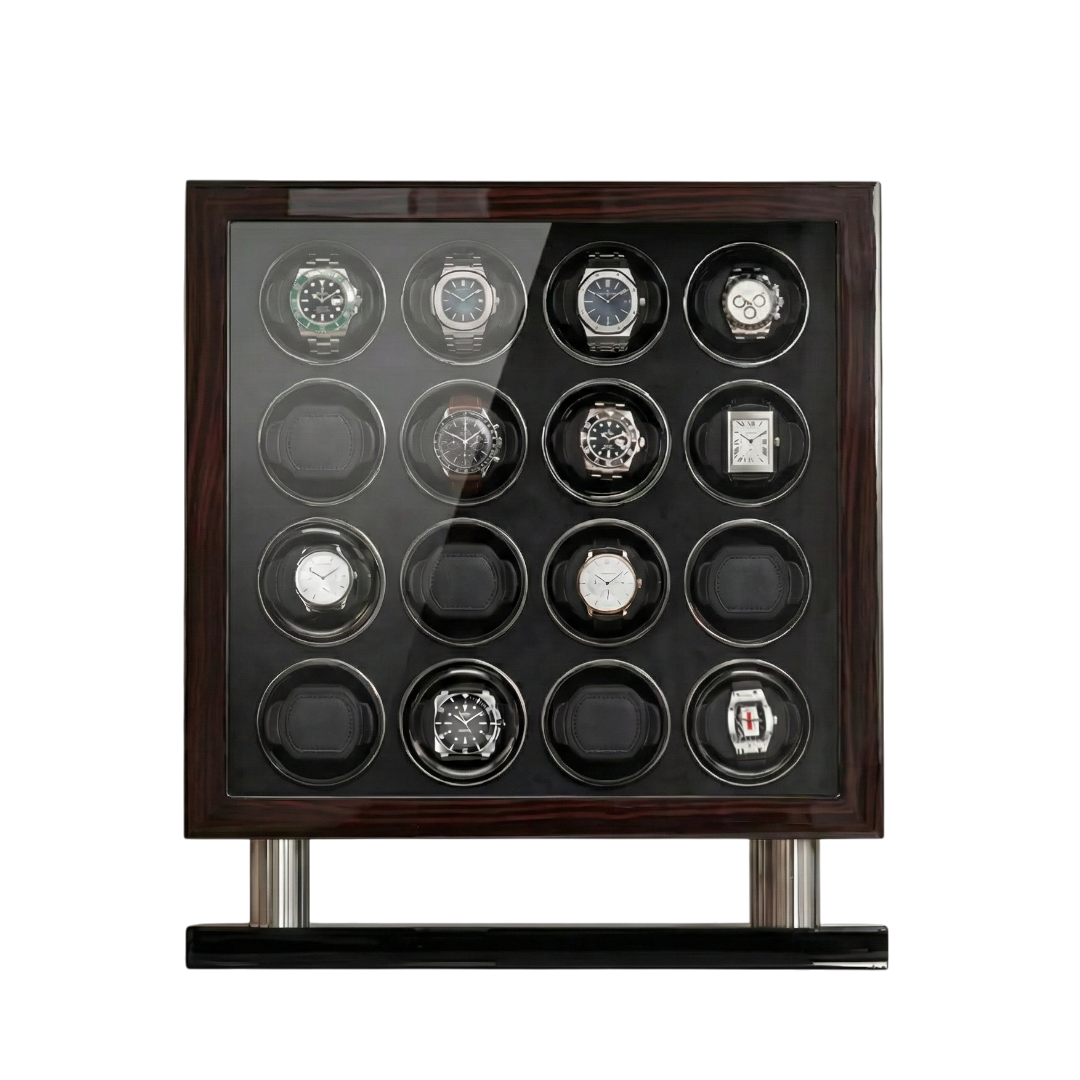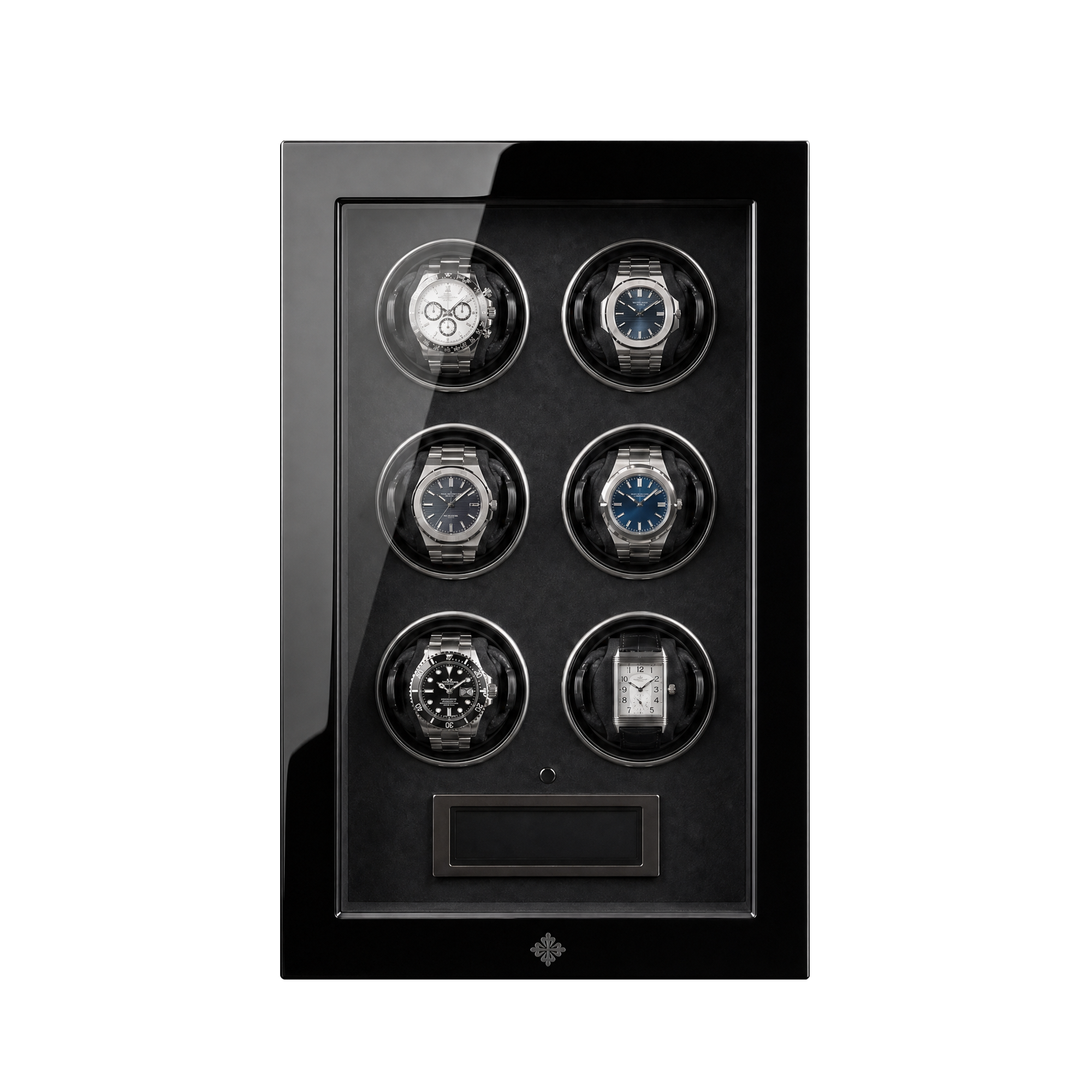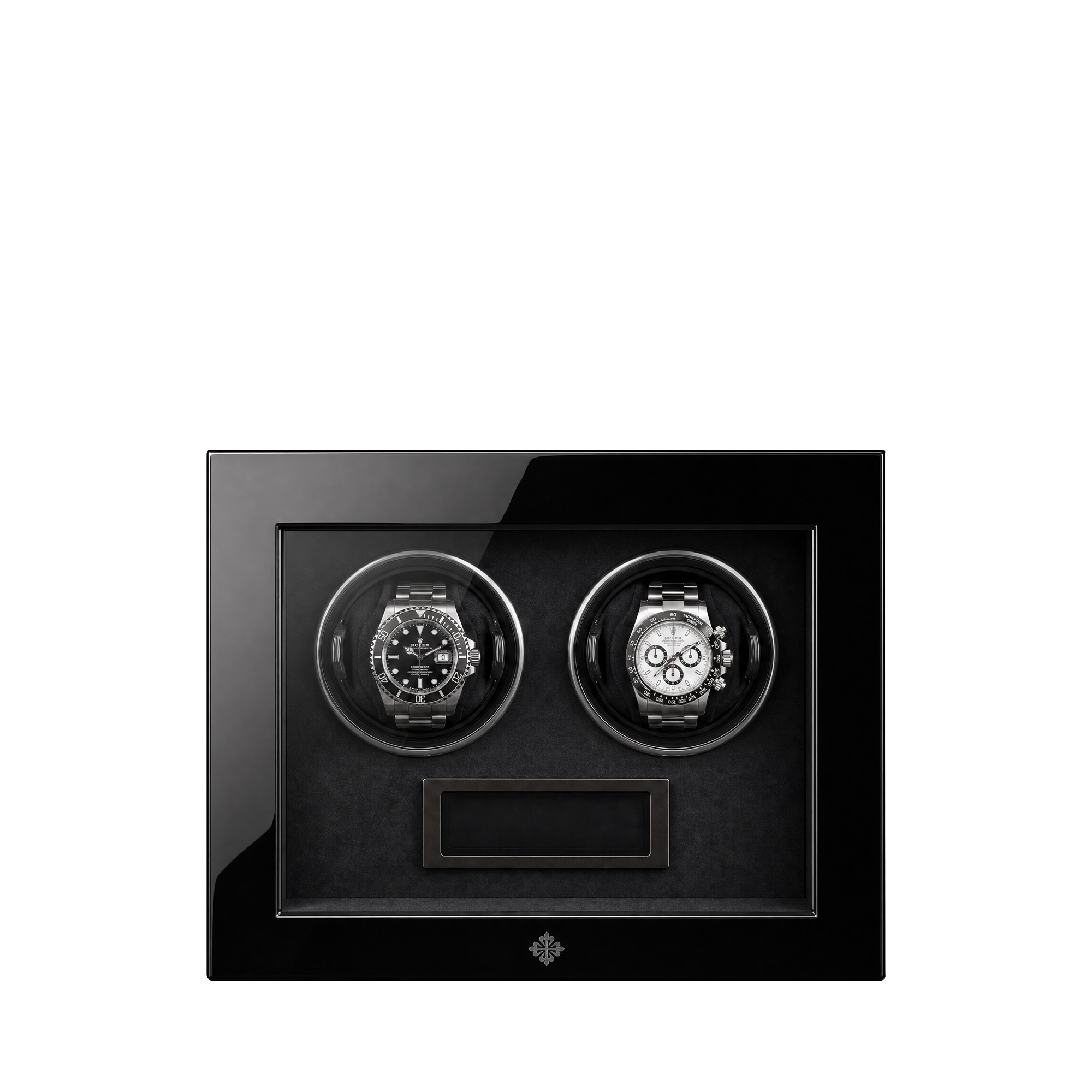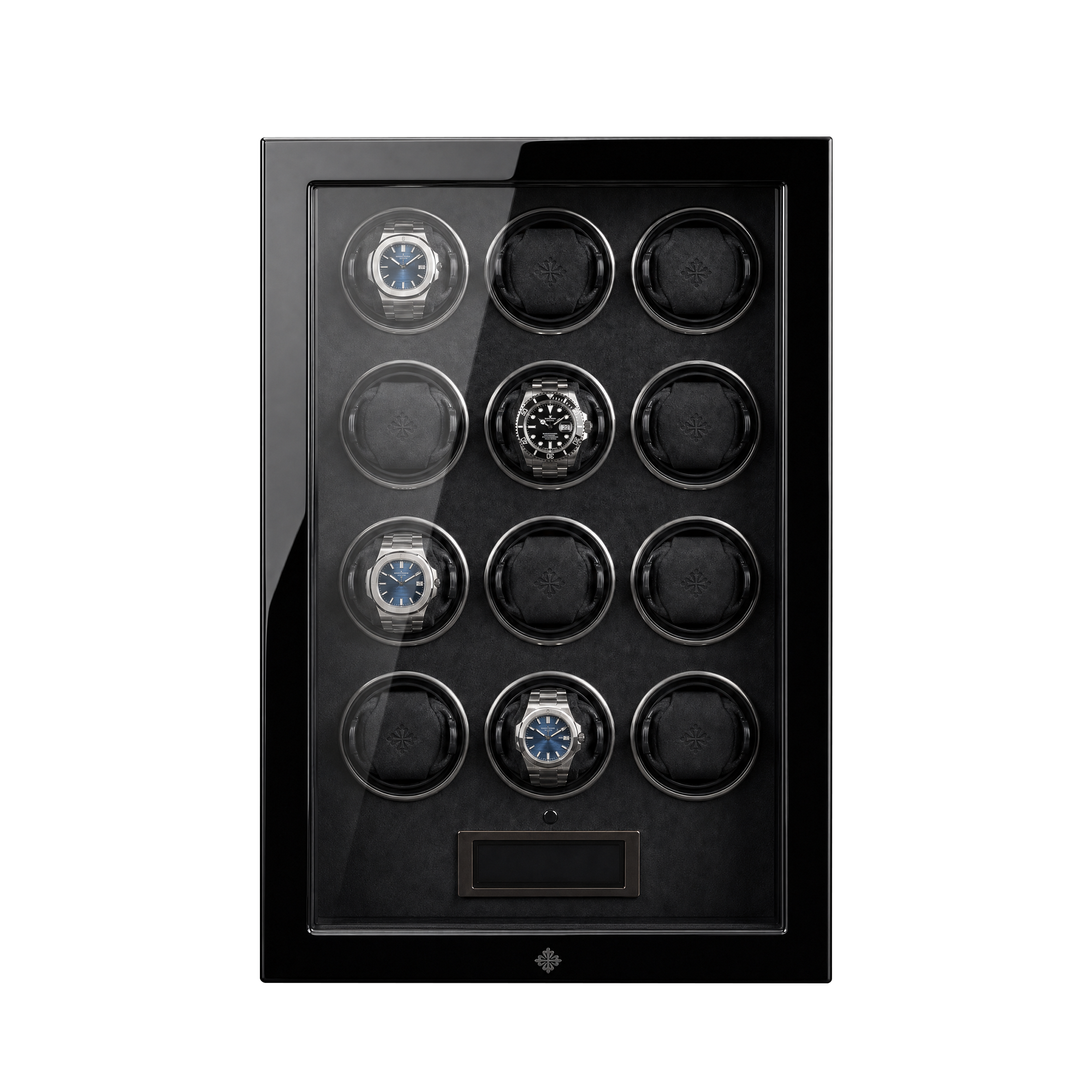

Watch winder cabinet weight is a structural question long before it’s a design question — and most collectors skip the floor math entirely. This guide walks through how to check what your floor can actually hold before a 200-plus-pound safe or cabinet goes anywhere near an upstairs bedroom.
- Watch winder cabinet weight is a floor-engineering question, not a furniture question — treat anything over 300 lbs as a structural load.
- US residential floors are typically built for 40 psf under the International Residential Code, fine for one winder but tight for a full vault-style safe.
- Center placement over joists beats a corner or a mid-span spot — the same weight concentrated in a smaller footprint stresses the floor more.
- Twenty-slot vault safes belong on a ground floor or slab in 2026 unless a contractor has confirmed joist capacity in writing.
- Enigwatch offers professional installation on its watch safes and cabinets — use it before anchoring anything heavier than a nightstand.
Why This Matters
A basic four-slot watch box weighs less than a stack of books. A vault-grade watch safe with a steel frame, ballistic lining, and a fire-rated door is a different animal entirely — closer to a home safe than a jewelry box. Add a built-in cabinet housing dozens of rotors and the load moves from “heavy furniture” into “contact a contractor” territory.
The risk isn’t dramatic collapse. It’s slow floor sag, cracked drywall on the ceiling below, doors that stop closing right, and — in condo buildings — a management company asking questions after the fact. None of that is reversible once it’s happened, which is why the check belongs before delivery day, not after.
Enigwatch builds watch safes and winder cabinets ranging from compact single-drawer units to furniture-scale pieces meant to be built into a room. The weight question scales with that range, and so does the floor prep.
What You’ll Need
- A tape measure and a stud/joist finder
- The dimensions and rough weight class of the specific safe or cabinet you’re installing
- Basic knowledge of your floor construction: slab, crawl space, or framed joists, and their spacing (usually 16″ or 24″ on center in US homes)
- A level, to confirm the floor itself is flat before anything gets set down
- A contractor or structural engineer on call for anything installed above the ground floor
- Optional: a plywood load-distribution plate if the unit will sit between joists rather than on top of one
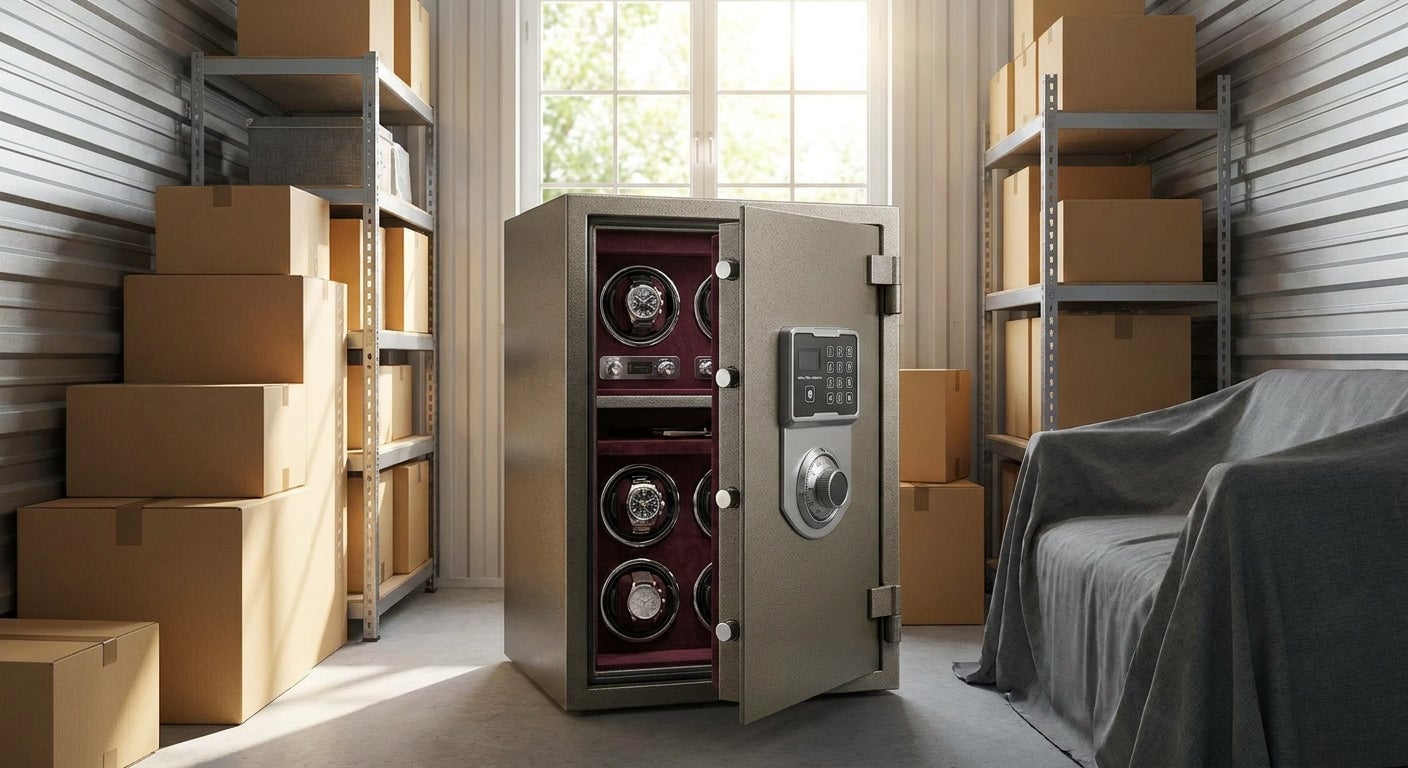
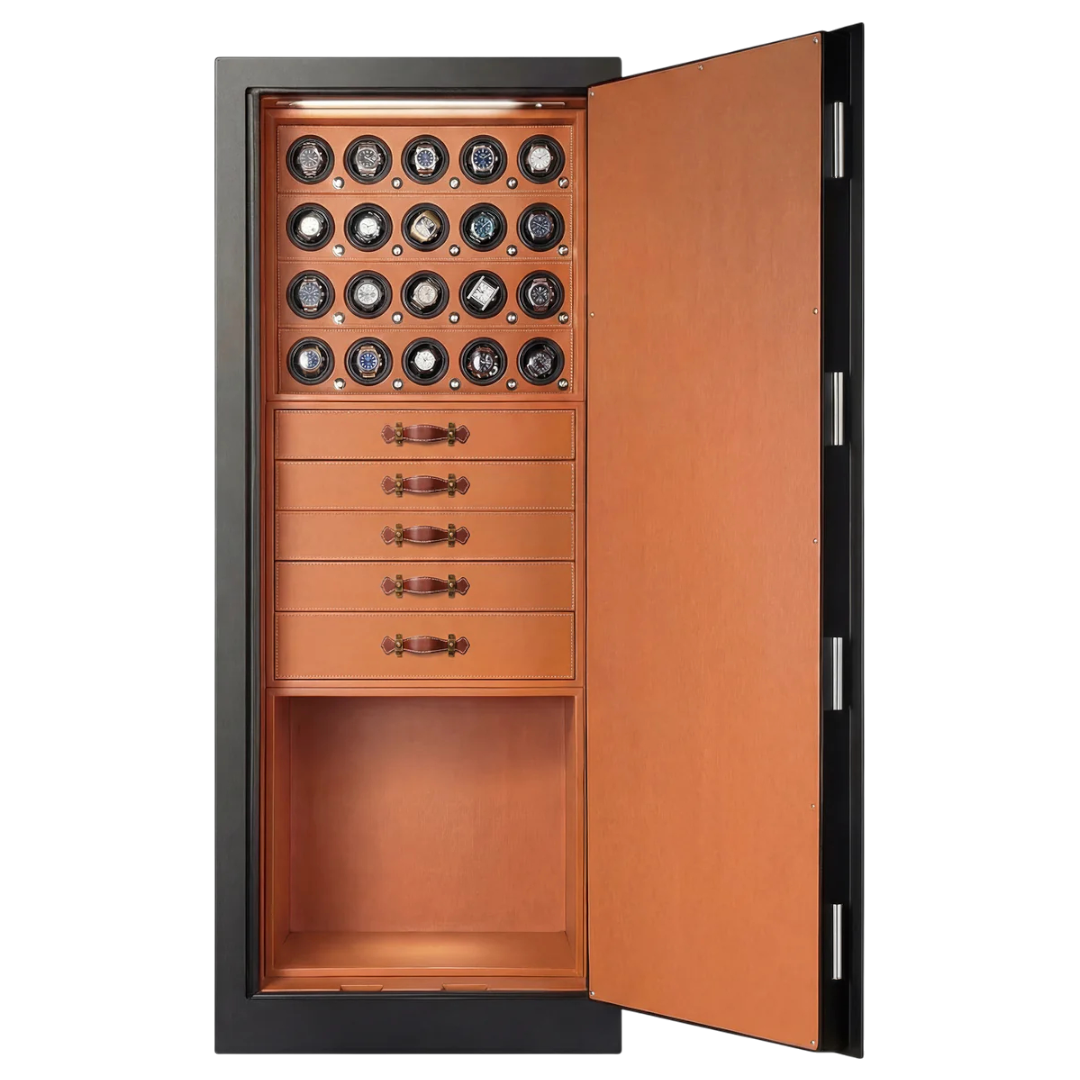
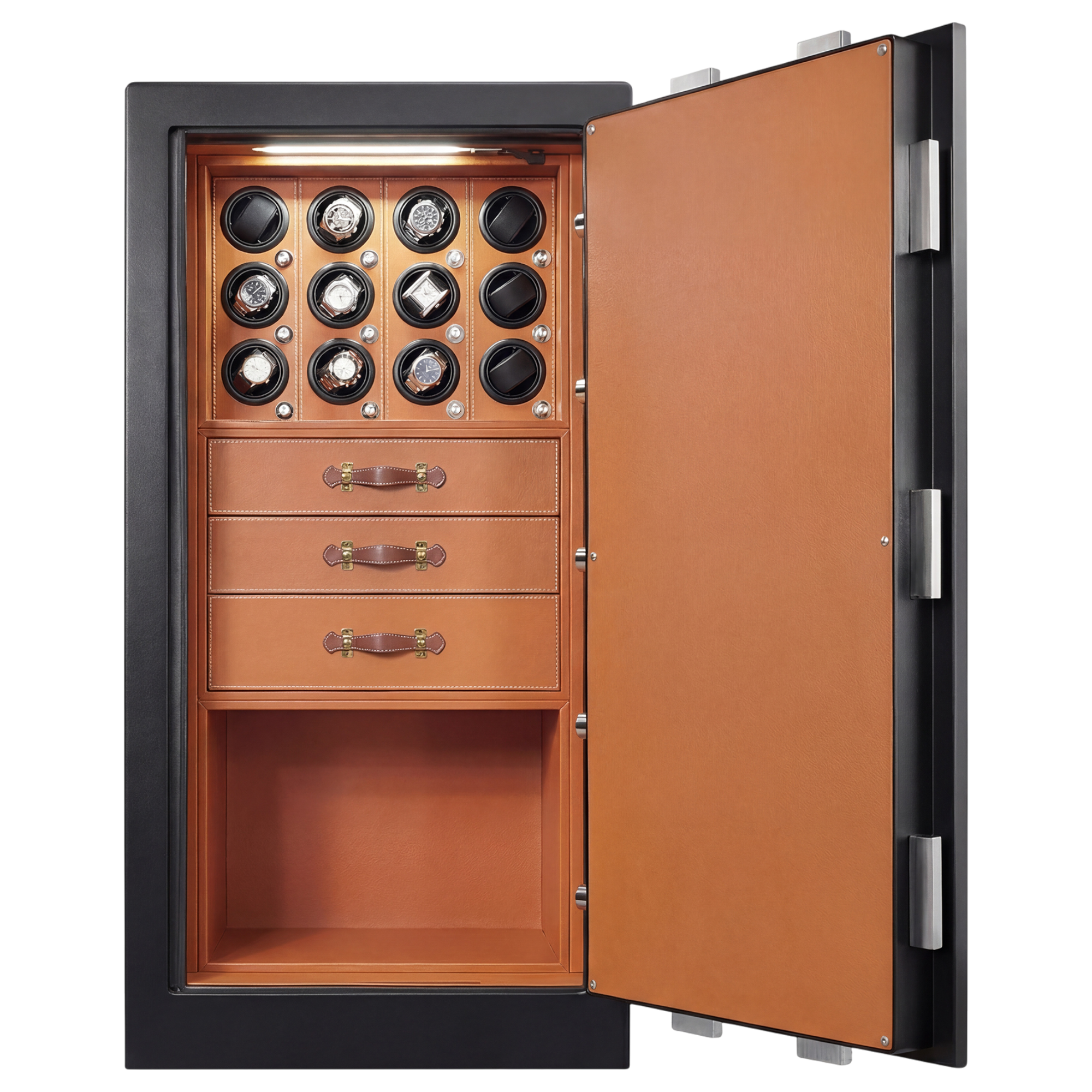
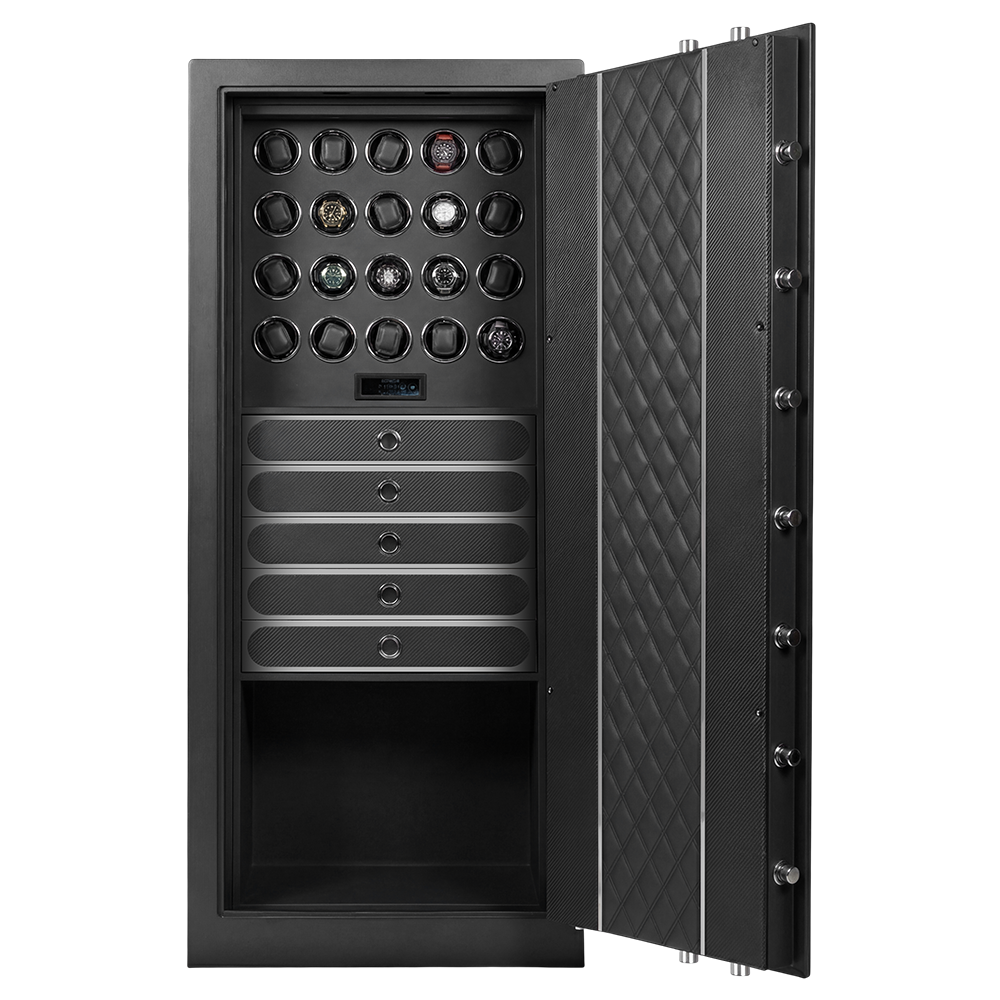
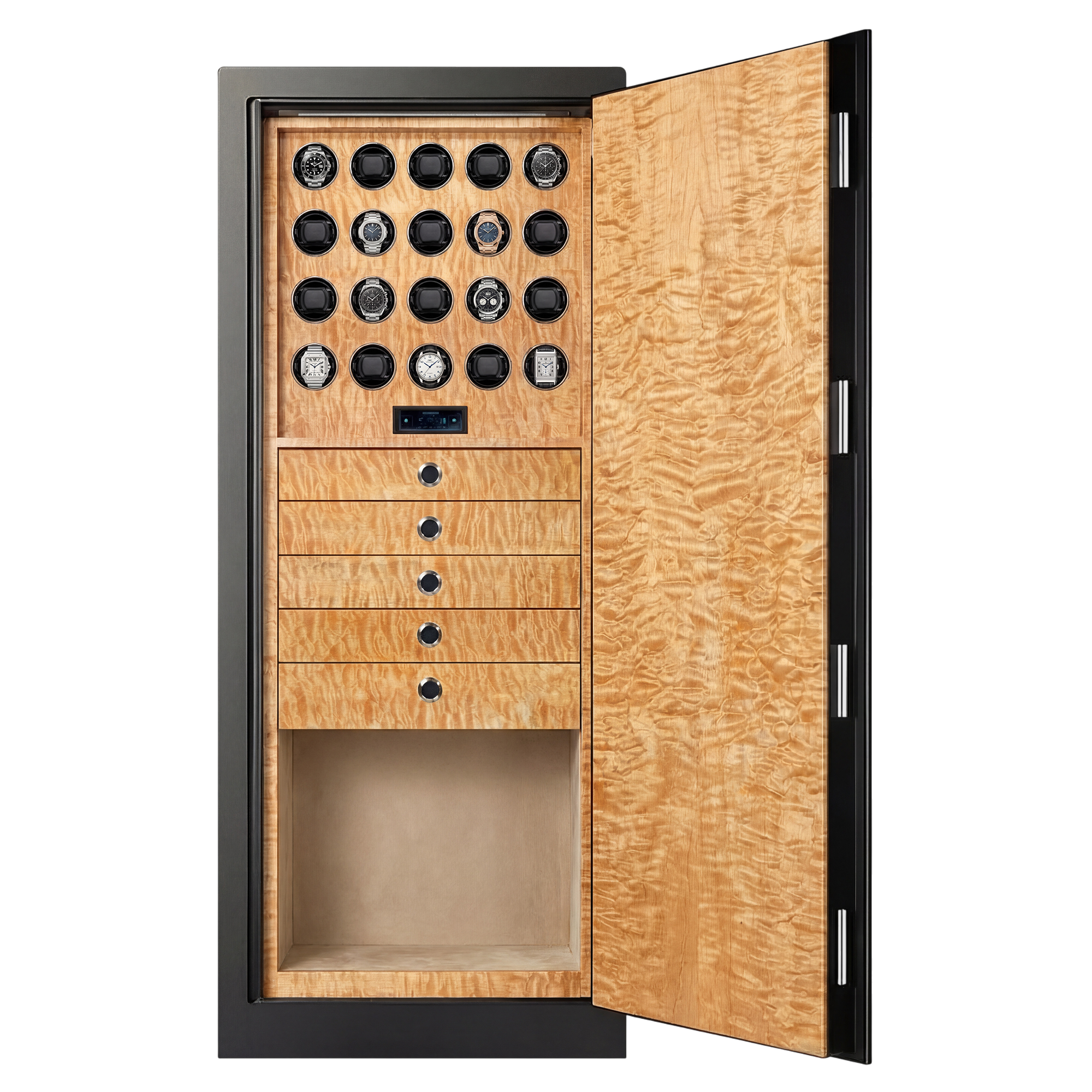
If the piece in question is something like the Titan Sanctum 20 Watch Safe — a Grade 304 stainless steel frame with AR500 ballistic plating and a UL TL-30 vault door — assume it’s closer to a small home safe than a dresser, and plan the floor check accordingly.
Why This Matters — Read the Manual
Every watch safe and cabinet ships with weight and dimension specs somewhere in its documentation. That number is your starting point for every calculation below. Skipping it and eyeballing “it’s heavy but manageable” is the single most common mistake collectors make with vault-style safes and multi-slot cabinets.
The Steps to Check Your Floor
1. Identify your floor type
Ground-floor slab construction on grade generally has no practical weight limit for residential furniture — the load goes straight into the earth. Framed floors, especially on a second story or above a crawl space, are the ones that need real attention. Walk your basement or crawl space and look up: if you see joists and subfloor, you’re on a framed floor, and every step after this matters.
2. Find the joists and note the spacing
Run a stud/joist finder across the install area. Standard US residential framing uses 16-inch or 24-inch on-center spacing. Mark every joist location with tape so you know exactly where the structural members run before the safe arrives.
3. Estimate the load, including contents
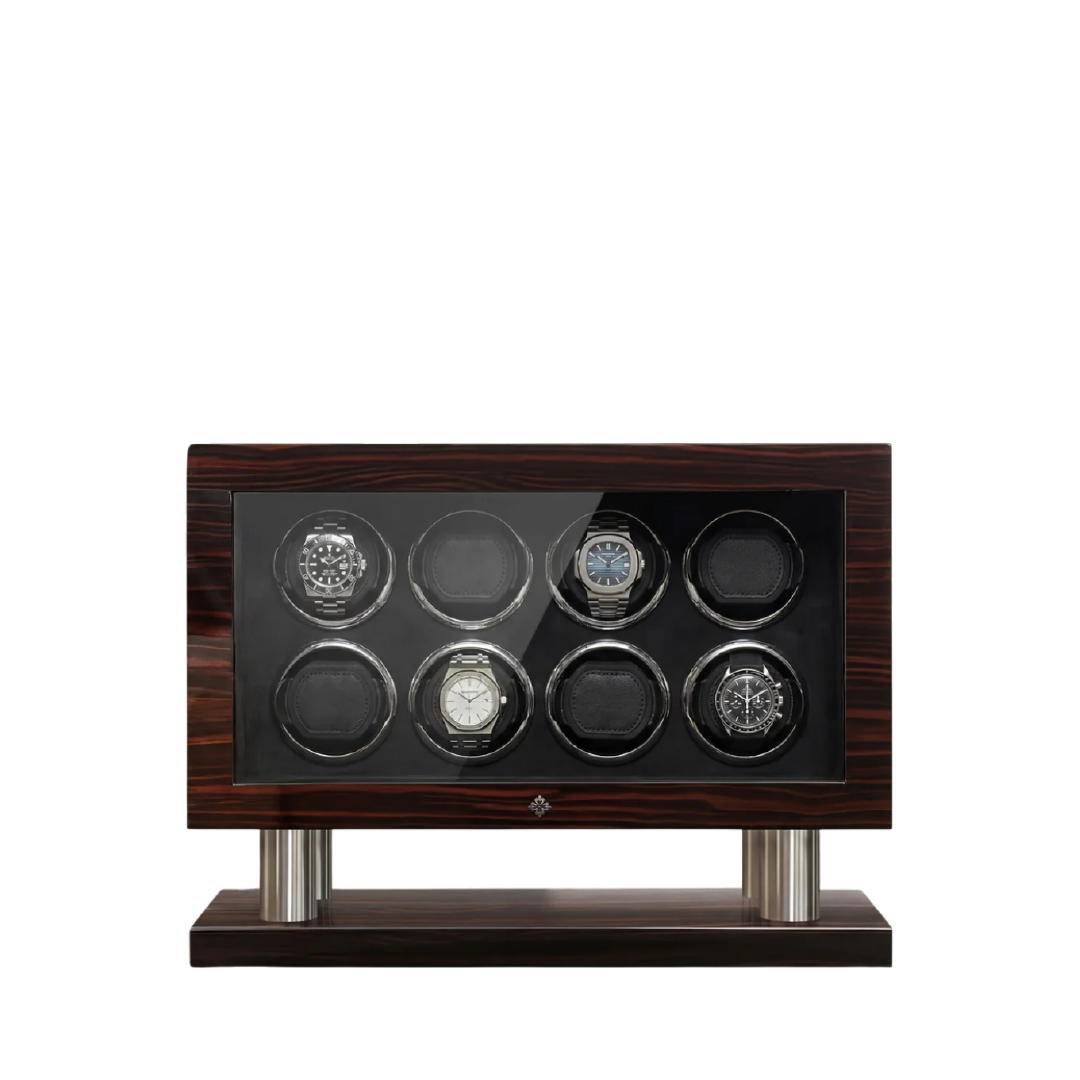
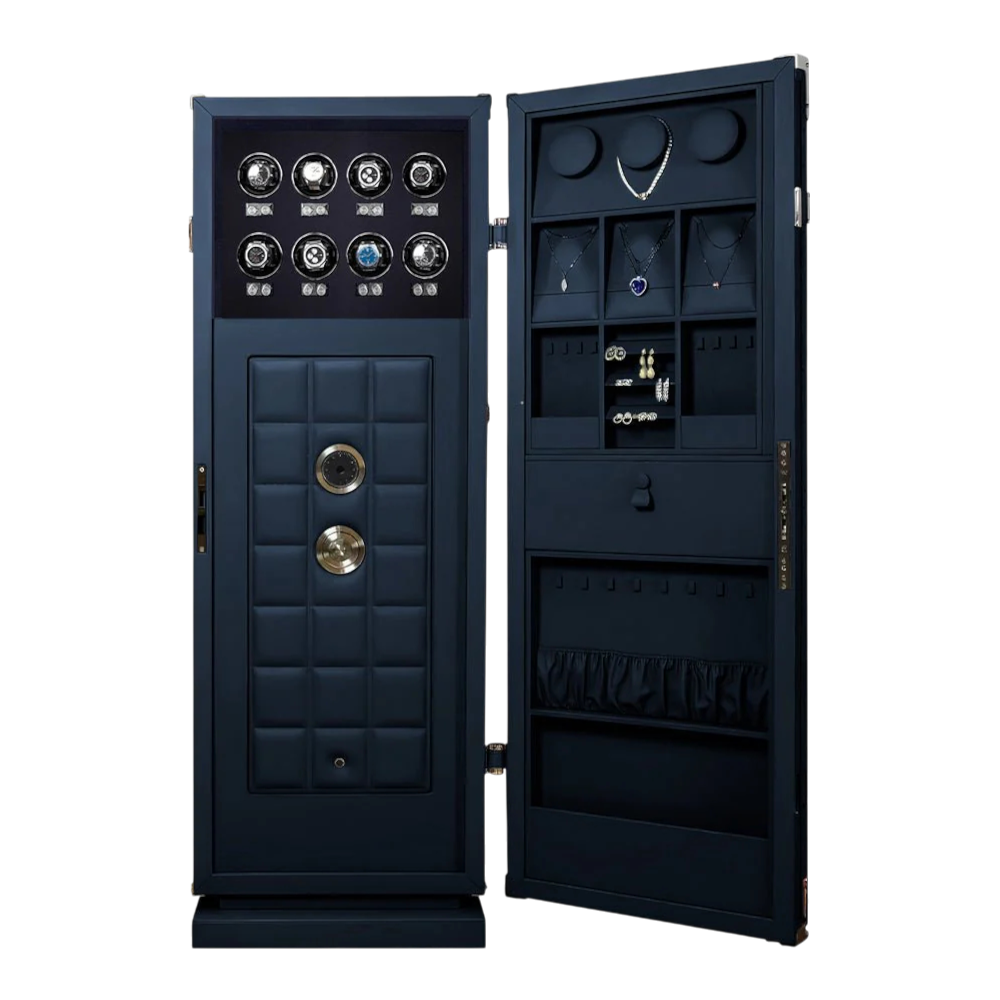
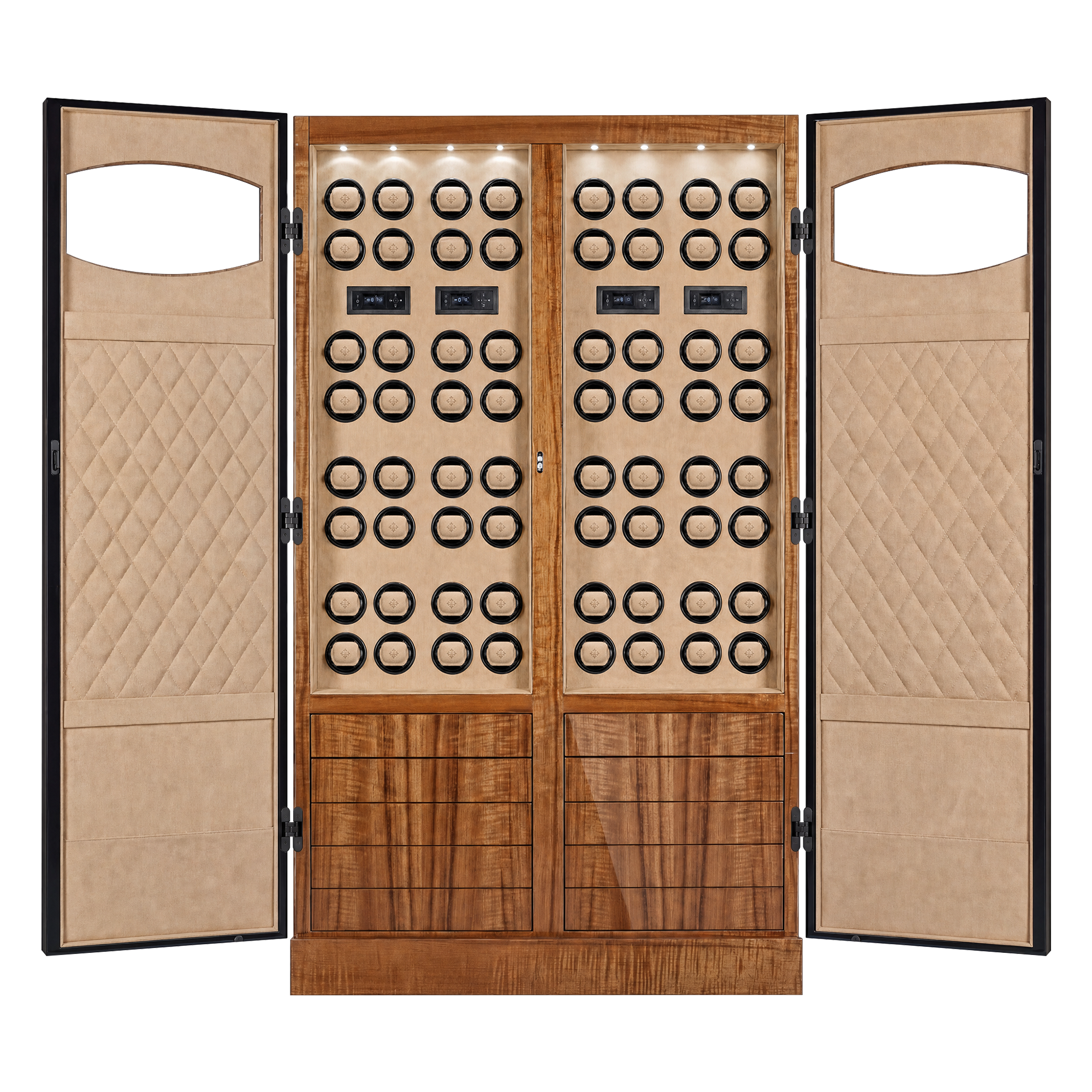
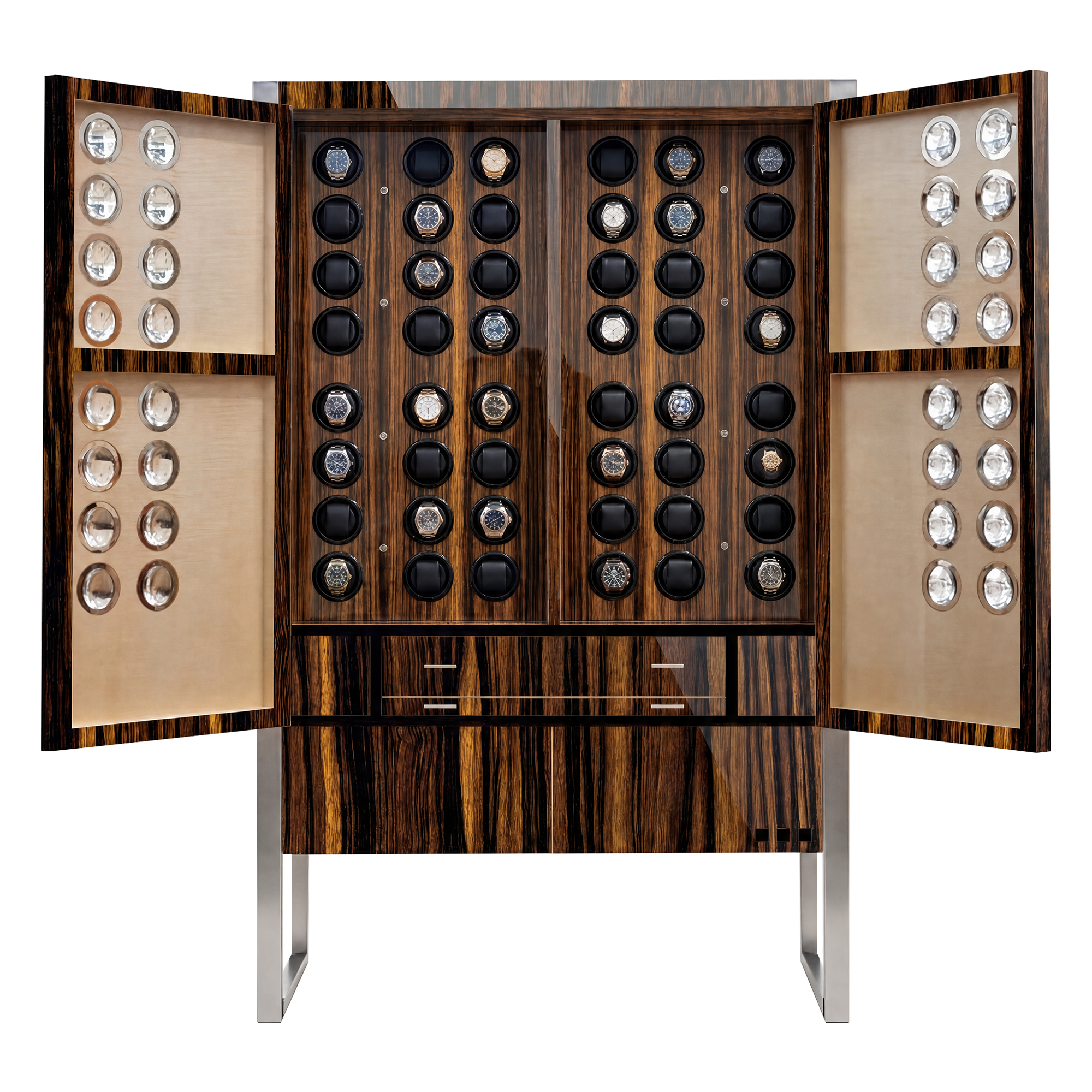
Add the safe’s own weight to what’s inside — watches, boxes, papers — plus any interior lighting or motor hardware. A furniture-scale cabinet like the Enclave 64 or Eterna, built to house dozens of watches across dozens of independent rotors, carries meaningfully more mass than a single 12-slot safe simply from the amount of steel, motor hardware, and hardwood veneer involved. Compare that combined figure against the International Residential Code’s standard residential live load design of 40 pounds per square foot — a common benchmark contractors use, not a hard ceiling, but a useful sanity check.
4. Position the unit directly over a joist
A safe sitting on top of a joist transfers load efficiently into the structure. The same weight sitting mid-span between two joists concentrates stress on the subfloor alone. Move the intended placement a few inches if it lands you over a joist instead of between two.
5. Add reinforcement if the numbers are close
When the estimated load sits near the edge of what the joist spacing comfortably handles, a sheet of 3/4-inch plywood under the unit spreads the point load across a wider area of subfloor. This is a five-minute fix that removes most of the risk for mid-weight safes.
6. Anchor the unit separately from the floor-load question
Floor capacity and tip-over resistance are two different problems. A safe that passes the weight check can still tip forward if it’s tall and narrow. Bolting it to a wall stud or the floor itself solves the second problem — see the full walkthrough on how to bolt down a watch safe at home.
7. Get a second opinion above the ground floor
Anything in the 300-plus-pound range going onto a second story or above deserves five minutes of a contractor’s time. Most will look at joist span and spacing and give a yes or no on the spot — cheaper than finding out the hard way.
Troubleshooting
- The floor bounces slightly under the safe’s weight. That’s a span or joist-size issue, not a weight-limit issue — add blocking between joists or move the unit closer to a load-bearing wall.
- You can’t locate joists through plaster or a finished ceiling below. Check the attic or crawl space above or below instead, where joists are usually exposed, and measure from a known reference point like an exterior wall.
- The safe rocks slightly on an otherwise flat-looking floor. Old houses settle unevenly. Use adjustable furniture shims under the low corners before you anchor anything.
- Your condo association has weight restrictions in the bylaws. These exist for a reason — get written sign-off before delivery, not after the unit is sitting in the hallway.
- Carpet padding compresses unevenly under a heavy footprint. Pull the safe onto a hard platform or thin plywood base rather than setting it directly on thick padding.
- Moving day reveals stairs the safe won’t fit around. Confirm hallway and stairwell clearances against the unit’s crated dimensions before delivery day, not during it.
Tools and Resources
- Stud/joist finder (electronic models read through drywall reliably)
- 4-foot level
- 3/4-inch plywood, cut to size, for load distribution
- A local contractor or structural engineer for anything above the ground floor
- The manufacturer’s weight and dimension spec sheet for your specific unit
- Background reading: watch safe weight and why it matters for home installation
What to Do Next
Once the floor checks out, the next decision is mounting — freestanding versus anchored to a wall stud. That’s a separate calculation from load-bearing capacity, covered in the wall-stud mounting guide, and it’s worth doing before the safe is fully loaded with watches rather than after.
FAQ
How much does a watch winder cabinet weigh?
It depends entirely on size and construction — a compact winder can weigh under 30 lbs, while a vault-grade safe with a steel frame and ballistic lining can run into the hundreds of pounds. Check the specific unit’s spec sheet rather than assuming a category average.
Is a 20-slot watch safe too heavy for an upstairs bedroom?
Not automatically, but it needs verification. A framed second-floor joist system built to the standard 40 psf residential live load can often handle it if the unit sits over a joist rather than mid-span — confirm with a contractor if the estimated weight tops 300 lbs.
Can a normal floor support a vault-style watch safe?
Most ground-floor slab installations have no practical limit. Framed upper floors depend on joist spacing and span, which is why the safe check in this guide happens before delivery, not after.
Do watch safes need anchoring even on a slab foundation?
Yes — anchoring addresses tip-over risk, which is separate from floor load. A slab eliminates the weight-capacity question but not the stability question for a tall, narrow unit.
What floor load can a typical US home support in 2026?
Standard residential construction is designed to the International Residential Code’s 40 psf live load benchmark, which covers normal furniture and foot traffic comfortably but gets tight with concentrated point loads like a steel safe.
Should I hire a contractor before installing a heavy watch safe?
For anything estimated over roughly 300 lbs going onto a framed floor above ground level, yes. A quick joist-and-span check from a contractor costs far less than repairing a sagging floor later.
Does a wood floor need reinforcement under a watch winder cabinet?
Only when the estimated load sits near the edge of what the joist spacing supports. A sheet of 3/4-inch plywood under the footprint spreads the point load and solves most borderline cases.
Does watch winder cabinet weight affect where I can install it?
Yes — weight is often the deciding factor between a closet installation, a ground-floor placement, and a built-in cabinet installation, more so than the room’s aesthetics.
One Last Thing
The detail collectors miss most often isn’t the safe itself — it’s the delivery path. A 20-slot vault safe that clears every joist calculation can still get stuck on a stairwell turn or a narrow hallway door, and by the time that’s discovered the crate is already inside the house. Measure the path in, not just the spot it lands.
Related Guides
Protect Your Watch Collection
Designed for collectors who demand the best. Explore our premium watch winders and luxury safes.
Protect Your Watch Collection
Designed for collectors who demand the best. Explore our premium watch winders and luxury safes.