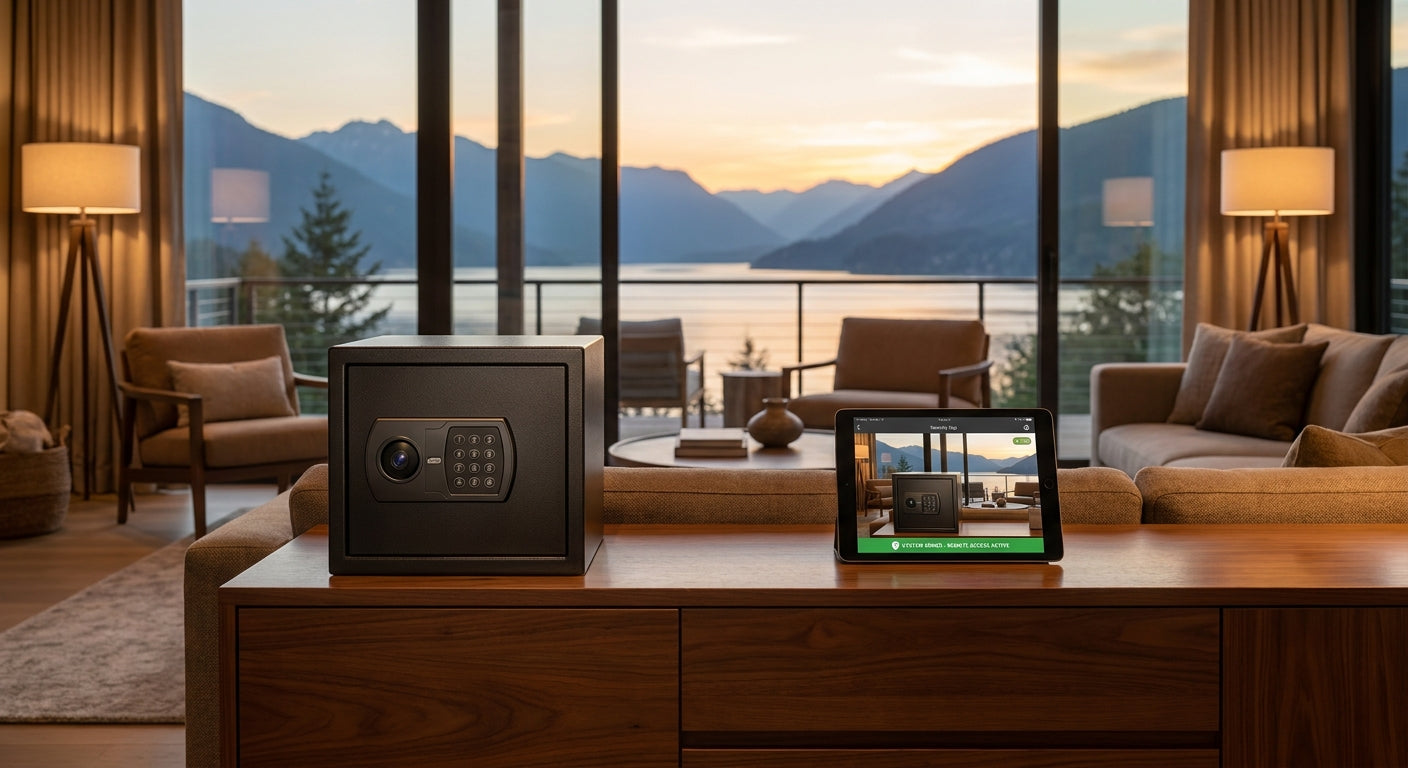
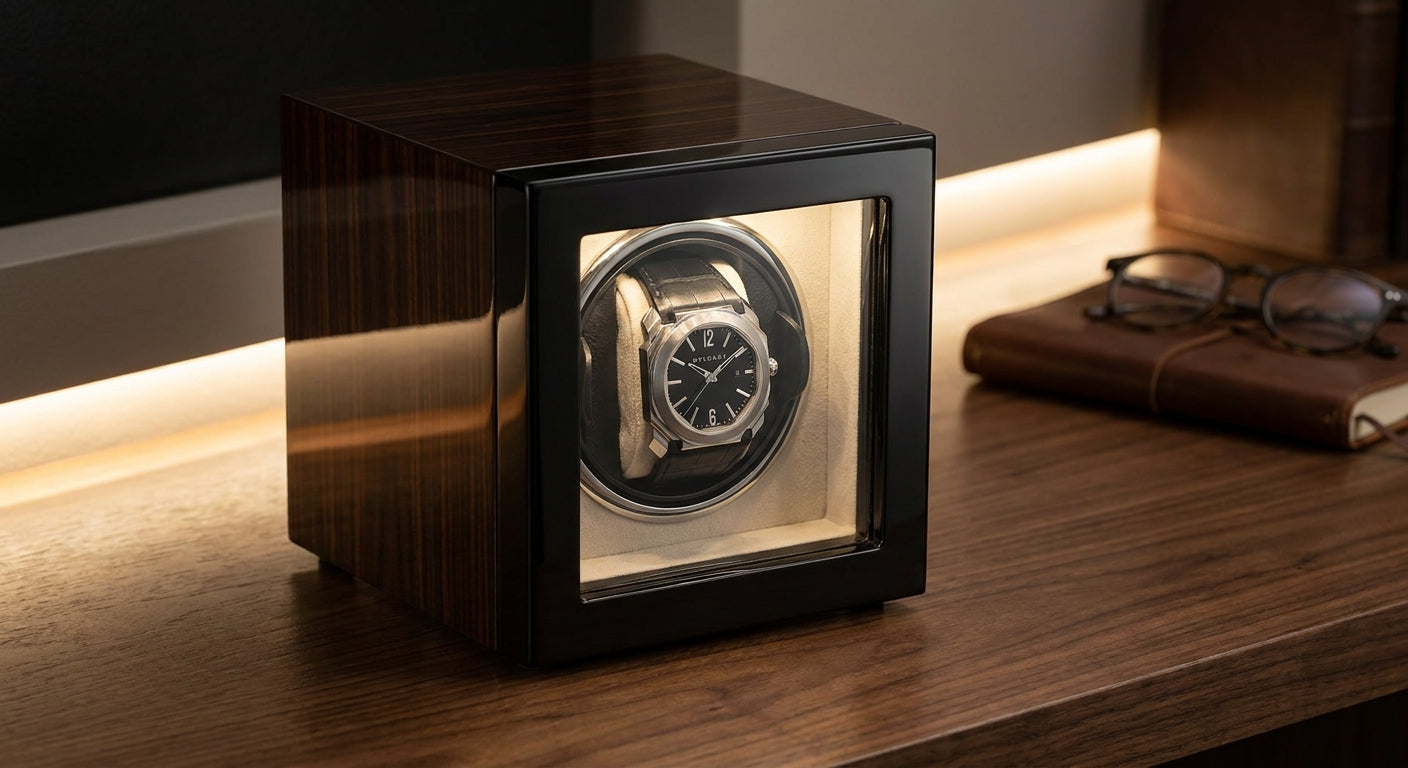
A watch safe's weight determines whether it protects your collection or becomes a hazard on the second floor of your house — this guide breaks down what the number on the spec sheet actually means for installation.
TL;DR: Watch safe weight ranges from roughly 150 lbs for compact single-tier units to over 800 lbs for steel-bodied safes like the Centennial Bulletproof Watch Safe Box. Floor load capacity, stud location, and anchor hardware matter more than the safe's price tag once it's time to actually put the thing in a room. Ground-floor concrete slabs handle almost anything; second-floor installs need a contractor's sign-off above roughly 300-400 lbs. Verdict: match the safe's weight to your floor before you match it to your décor, and always anchor to studs or slab, never drywall alone.
Why this matters
A watch safe isn't a jewelry box you set on a dresser. Once loaded with a dozen automatic watches, a decent winder mechanism, and a steel or composite body, the unit can weigh more than a washing machine. Residential floors are rated for a specific load per square foot — typically 40 lbs per square foot for living areas under most U.S. building codes — and a 500 lb safe concentrated on a 2-square-foot footprint blows past that number fast.
The collectors who get this wrong usually find out during a move or a renovation, when a contractor asks how the safe got into a second-floor closet in the first place. Getting the weight question right before delivery day saves you from a very awkward conversation with a structural engineer in 2026.
What you'll need
- The safe's empty weight and loaded weight (ask before ordering — reputable makers publish both)
- Floor plan or joist layout for the installation room
- A stud finder or joist locator
- Lag bolts or the anchor hardware specified by the manufacturer
- A helper or two — safes over 200 lbs are a two-person carry minimum
- A tape measure and level
- Optional: a professional installer, especially for anything destined for a second floor
If you're deciding between models, weight is one of the first filters. A compact option like the Veron 20 Watch Safe Box sits at a different weight class than a full steel-bodied unit, and that difference changes where in the house it can realistically go.
The steps
1. Confirm the safe's loaded weight, not just the empty spec
Manufacturers list empty weight because it's the bigger, more impressive number for marketing. What matters for your floor is loaded weight — safe body plus winder motors, plus the watches themselves. Add roughly 1-2 lbs per watch and 3-5 lbs per winder module to the base figure. A 12-slot unit with motors installed can run 30-40 lbs heavier than its shipping weight suggests. Skipping this step is the single most common mistake buyers make before ordering.
2. Check your floor's load rating
Most U.S. residential floors are built to code minimums of 40 lbs per square foot for living spaces and 30 lbs per square foot for sleeping areas — bedrooms specifically. A safe weighing 400 lbs with a 2-square-foot footprint puts 200 lbs per square foot on that spot, five to seven times the baseline rating. This is fine on a slab-on-grade ground floor. It's a real concern on a second-story bedroom floor, which is exactly where most people want to put a watch safe. Call a structural engineer or contractor if you're above 300 lbs loaded and building above ground level.
3. Locate the studs or joists before you pick a spot
A safe resting on drywall alone, unanchored, relies entirely on the floor to hold static weight — fine for weight distribution, useless for security since an unanchored safe can be tipped or carted off. Studs typically sit 16 inches on center in U.S. construction; joists usually run 16 to 24 inches on center. Mapping these out before you commit to a corner determines whether you'll need blocking added or can bolt straight through. Full walkthrough: mount a watch safe to a wall stud.
4. Plan the carry path before delivery
A 500 lb safe doesn't turn corners the way a couch does. Measure doorways, stair turns, and hallway widths against the safe's crated dimensions before delivery day, not the morning of. Anything over 250 lbs loaded generally needs professional movers with a hand truck rated for the weight, plus a second person to manage corners. Skipping this step is why safes end up stuck on a staircase landing for a week.
5. Anchor the unit to the structure, not just the floor
Weight alone doesn't stop a determined thief — mass slows removal, anchoring stops it. Lag bolts driven into studs or a concrete slab turn a heavy object into an immovable one. For a full walkthrough on hardware sizing and torque, see bolt down a watch safe at home. Skip this step and you've paid for security you haven't actually installed.
6. Reassess for closet or built-in installations
Closet floors are often thinner subfloor over joists with less reinforcement than a main living area, and built-in cabinetry installs add their own weight on top of the safe. If a closet is the target room, confirm both the floor rating and the closet's structural backing before ordering. Details specific to that scenario: closet installation.
7. Get professional installation for anything over 300 lbs
Beyond roughly 300 lbs loaded, DIY installation risks both the floor and the safe itself — a dropped 400 lb unit during a stair carry causes real damage to both the structure and the safe's mechanism. Professional installation, where offered, typically includes load assessment and proper anchoring in one visit rather than a guess-and-check approach.
Troubleshooting
- Floor feels springy under the safe — This usually means insufficient joist support for the load. Add blocking between joists or relocate to a slab-level room; don't ignore it.
- Can't find studs where you want the safe — Use a wall-mounted anchor plate rated for the weight, or shift the safe 6-8 inches to align with actual stud locations rather than forcing a spot.
- Delivery crew says the safe won't fit up the stairs — Measure the narrowest point in the path (usually a stair turn) against the crated width before ordering; some models can be uncrated on-site to shave a few inches.
- Contractor flags the second-floor install — Get a written load assessment before proceeding. A 40 lbs per square foot rating is a code minimum, not a guarantee for concentrated point loads.
- Safe arrived heavier than expected — Compare the delivery manifest against the published empty weight; motors and interior fittings sometimes ship pre-installed, adding to the base figure.
- Anchoring hardware doesn't match the studs found — Use expansion anchors rated for the wall type rather than the safe manufacturer's default kit if your wall construction differs from standard framing.
Tools and resources
- Stud finder or joist scanner
- Lag bolts sized to the safe's mounting holes
- A tape measure for door and hallway clearance checks
- Centennial Bulletproof Watch Safe Box — for collectors who need steel-body security and are planning a ground-floor or reinforced installation
- A local contractor or structural engineer for anything above 300 lbs loaded on an upper floor
What to do next
Once placement and anchoring are sorted, the next decision is fire and humidity protection inside the unit — a heavy, well-anchored safe still needs the right internal environment for automatic movements. Read the full breakdown on ratings and numbers in the fire rating explainer before finalizing your model choice for 2026.
FAQ
How much does a watch safe weigh? Compact single- or two-tier units typically weigh 100-200 lbs empty, while larger steel-bodied safes designed for 12-20 watches often weigh 300-800 lbs loaded. Weight scales with steel gauge, fire lining, and slot count.
Can a watch safe go on a second floor? Yes, but only after checking floor load capacity — most U.S. residential floors are rated for 30-40 lbs per square foot, so a safe above roughly 300 lbs loaded generally needs a structural assessment before a second-floor install.
Do I need to bolt down a watch safe? Bolting is strongly recommended regardless of weight, since an unanchored safe can be tipped or removed even at 300+ lbs. Anchoring into studs or a concrete slab is the standard approach.
Is a heavier watch safe more secure? Weight adds a layer of deterrence by making removal harder, but it doesn't replace a proper lock mechanism or anchoring. A 500 lb unanchored safe is still easier to compromise than a 200 lb bolted-down one.
What's the difference between empty and loaded weight? Empty weight is the safe's base construction; loaded weight adds winder motors, interior fittings, and the watches themselves, which can add 30-50 lbs to larger multi-slot units.
Does closet flooring support the same weight as a living room? Not always — closet subfloors sometimes have less joist reinforcement than main living spaces, so confirm the specific room's structure rather than assuming a blanket floor rating applies.
Should I hire professional installation? For anything above roughly 300 lbs loaded, yes — professional installation typically handles load assessment and anchoring in a single visit and avoids the risk of a dropped unit during a stair carry.
What weight range fits a 20-watch collection safe? Safes built for 20-watch capacity with steel bodies commonly land in the 400-800 lb range loaded, depending on fire lining thickness and slot hardware.
One last thing
Most buyers spend weeks comparing lock types and interior finishes and then place the order without ever asking their contractor what the floor is rated for — do that call first, not last, and you'll skip the most expensive mistake in this whole process.
Related guides
Protect Your Watch Collection
Designed for collectors who demand the best. Explore our premium watch winders and luxury safes.