
Installing a watch safe for closet use sounds simple until you pull out a tape measure and realize your shelving, door swing, or floor depth rules out half the options on the market. This guide covers every dimension, anchoring method, and fit variable you need to match the right safe to your closet in 2026.
TL;DR: A watch safe for closet installation needs an exterior depth under 18 inches for standard reach-in closets, a door swing that clears shelves or clothing rods, and a bolt-down footprint that works with the floor or wall surface available. Enigwatch’s Apollo, Veron, and Regent Oxford safes each target different capacity and space constraints. Measure twice before you buy — the wrong safe ships back at your expense.
Why closet placement changes everything
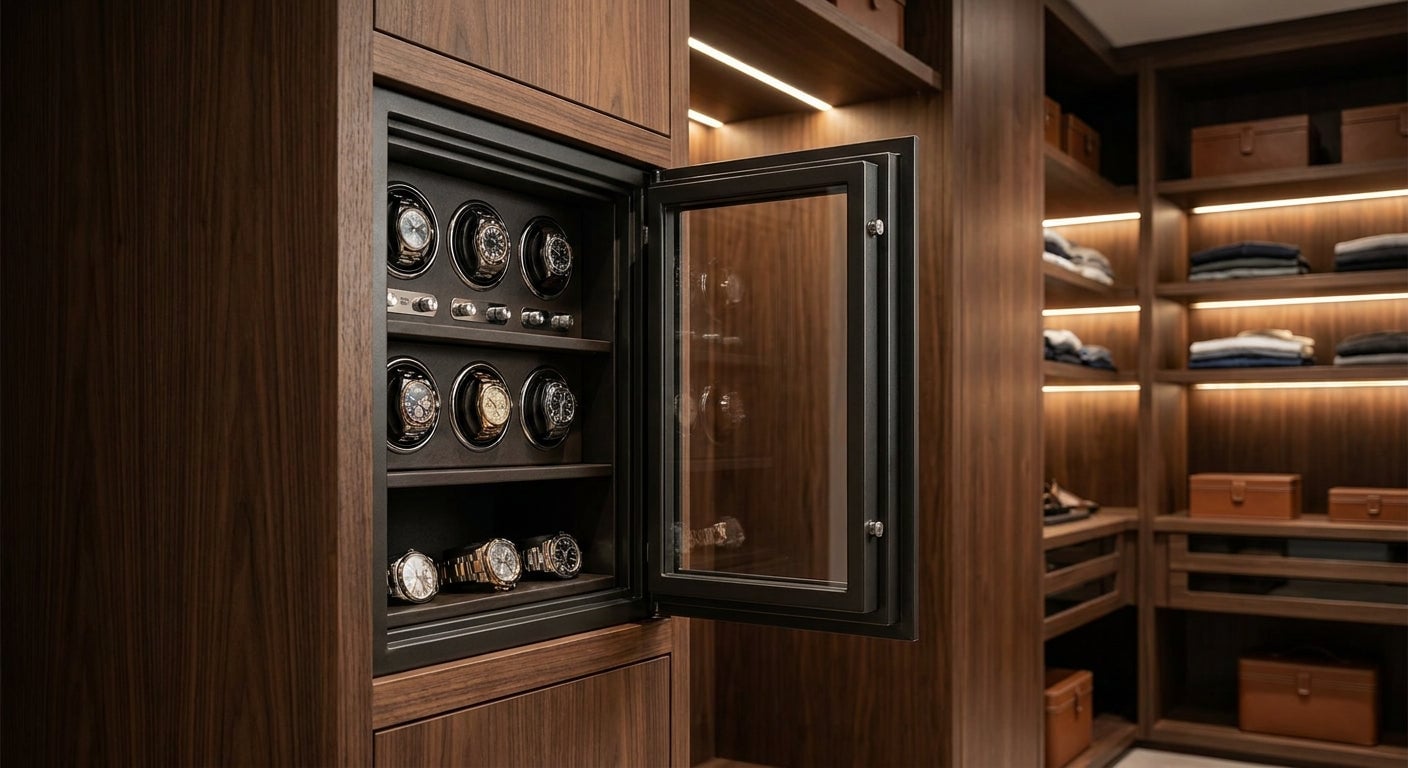
A closet is not a neutral installation site. You are working inside a fixed box, often with a single overhead light, shelving on three walls, and a door that opens inward. The safe has to fit through the closet door before it can live there permanently. The door of the safe has to swing open without hitting a clothing rod, shelf edge, or the opposite wall. And whatever bolt-down method you use has to work on the substrate underneath — whether that is a plywood shelf, a hardwood floor, or a concrete slab inside a walk-in.
In 2026, the most common installation failures are: buying a safe that is too deep for a reach-in, mounting a safe on a shelf rated for 50 lbs when the unit weighs 180 lbs, and forgetting to account for door swing clearance. All three are preventable with 10 minutes of measuring.
What you’ll need
- Tape measure (at minimum 25 feet for diagonal clearance checks)
- Stud finder or rare-earth magnet (to locate floor joists or wall studs for anchoring)
- Level (any safe tilted more than 2 degrees will have door alignment issues over time)
- Power drill with masonry or wood bits depending on floor material
- Anchor bolts rated for the safe’s weight — confirm rating before purchase
- A second person for any unit over 80 lbs (most watch safes above 8-slot capacity)
- Phone flashlight or work light (closets are dark; you will miss measurements without it)
- Notepad with three measurements recorded before you order: interior width, interior depth floor-to-back-wall, and door swing clearance
Step 1: Measure the closet opening first, not the interior
The safe has to enter the closet before it can be installed. Standard residential closet door openings are 24 to 30 inches wide and 80 inches tall. Most luxury watch safes in the 10–20 slot range have an exterior width of 16–22 inches, which clears a 24-inch door frame comfortably when moved at an angle.
The critical number is diagonal clearance: a unit 18 inches wide and 14 inches deep has a diagonal of roughly 22.5 inches. If your door opening is 24 inches, it passes. If your door opening is 22 inches, it does not pass at any angle. Calculate the diagonal of every candidate safe before ordering.
Common mistake: measuring the interior closet width and assuming the safe will fit through the door. The door frame is always narrower than the interior. Measure the opening, not the room.
Step 2: Map the interior footprint and door swing
With the tape measure inside the closet, record:
- Floor width from wall to wall at the point where the safe will sit
- Floor depth from the closet back wall to the interior face of the closet door (closed)
- Safe door swing radius — this is the exterior depth of the safe, since the door typically opens 90–180 degrees
A standard reach-in closet has a depth of 24 inches. An 18-inch-deep safe leaves 6 inches for the door swing, which is not enough — the safe door will hit the closet door frame. Either the safe needs to sit flush against the back wall with its own door swinging inward toward you (requiring at least the safe’s full depth as clearance), or the safe must be shallow enough that the door clears fully when the closet door is open.
Walk-in closets are different. A walk-in with 5 feet of clear floor depth gives you room for a safe up to 22 inches deep with full door swing. If you are planning a walk-in installation, the depth constraint disappears, and weight capacity of the floor becomes the binding variable instead.
Common mistake: assuming the safe door swings the same direction as the closet door. Most watch safes hinge on the left by default. If your closet’s best wall is on the left side of the space, the safe door may swing into clothing. Confirm hinge side before ordering.
Step 3: Identify your anchor substrate
Every serious watch safe for closet use should be bolted down. A 120-lb unanchored safe can be carried out in under 2 minutes — anchoring adds 10–15 minutes of work and dramatically increases theft resistance.
Three substrates are common in closets:
- Hardwood or engineered wood floor: Use 3/8-inch lag bolts into floor joists. Locate joists with a stud finder before drilling. Joists typically run perpendicular to the hallway and are spaced 16 inches on center.
- Concrete slab: Use 3/8-inch concrete anchor bolts. Hammer-drill required. Allow 24 hours before applying any load if you use anchor adhesive rather than mechanical expansion bolts.
- Plywood shelf or closet organizer base: Do not anchor a heavy safe to a shelf unless the shelf is independently rated for dynamic load. A shelf rated at 75 lbs static load may fail under a 100-lb safe on a vibrating floor. Relocate the safe to the floor or add structural blocking beneath the shelf.
Common mistake: running anchor bolts into shelf particleboard. Particleboard strips under torque. If your closet has a built-in organizer with a particleboard floor, treat it as decorative and anchor through it into the structural floor below.
Step 4: Select the safe for the space, not just the collection size
Once you have your three measurements — door clearance diagonal, interior depth, and anchor substrate — you can filter candidates accurately.
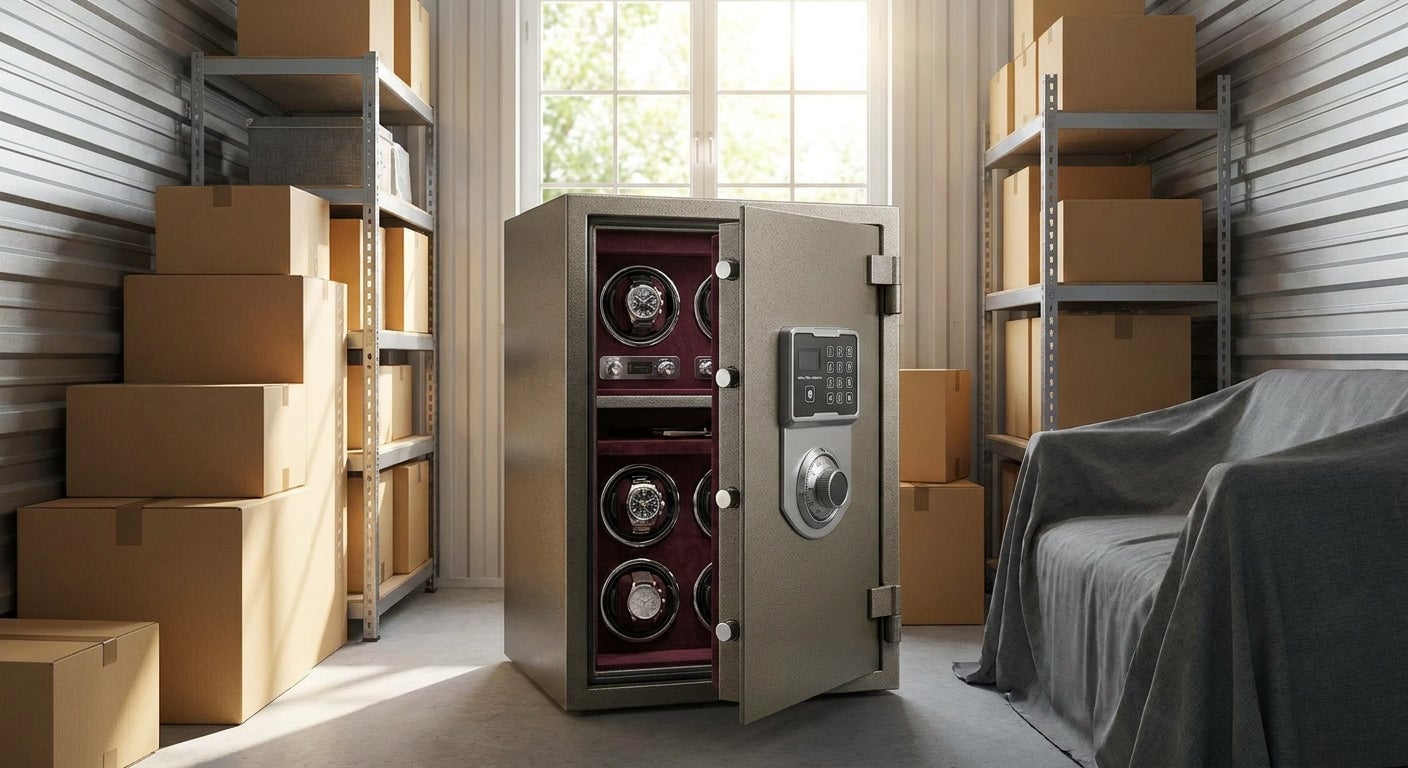
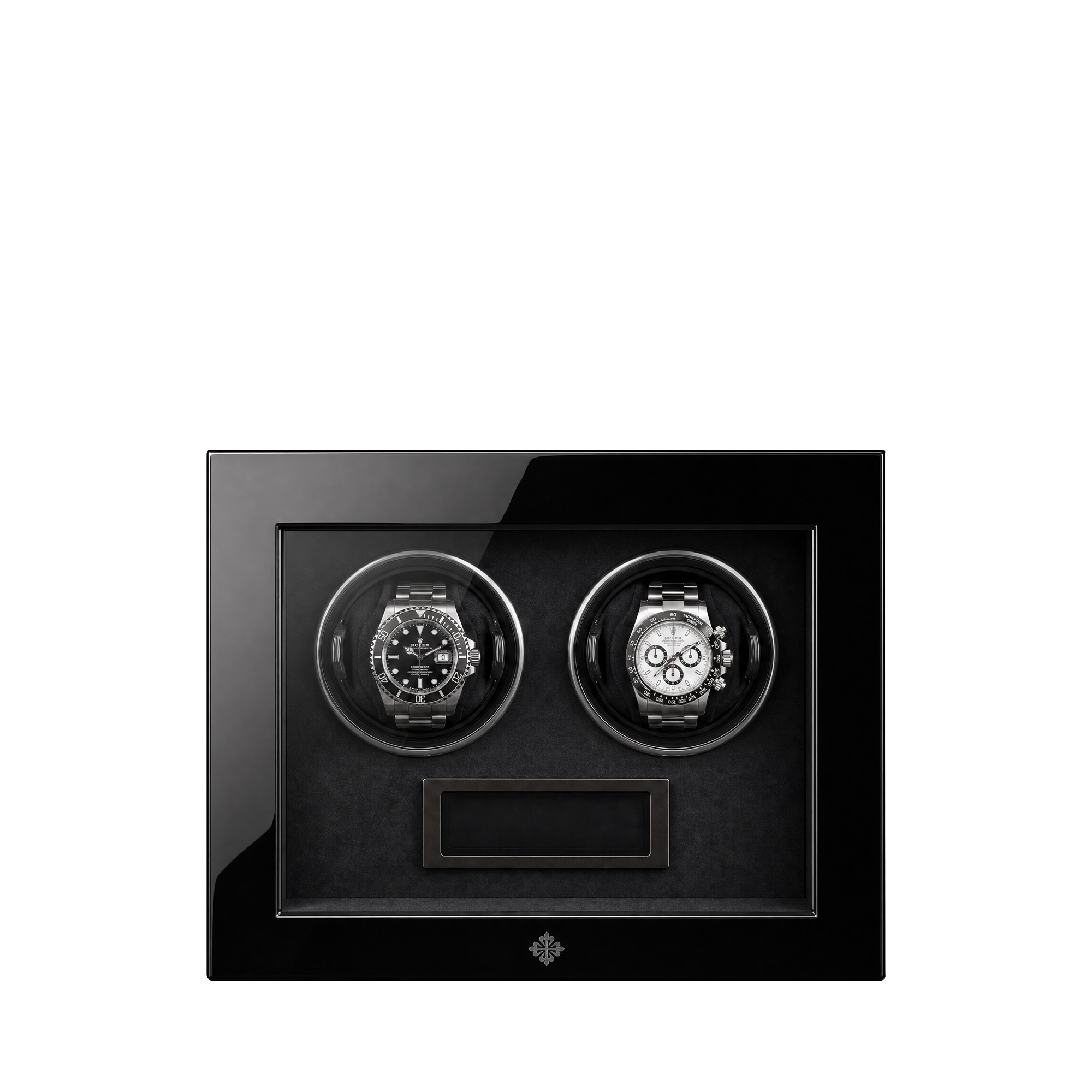
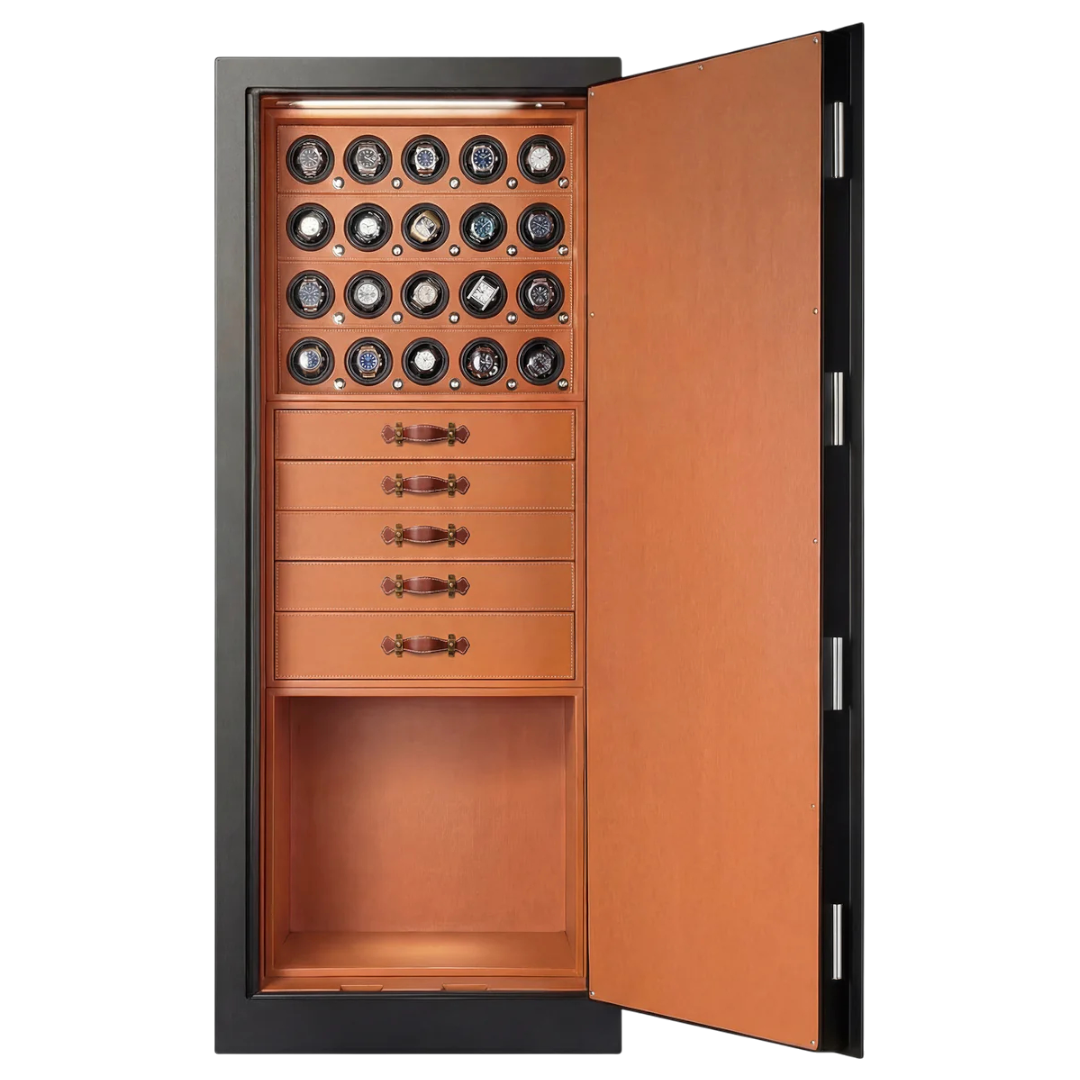
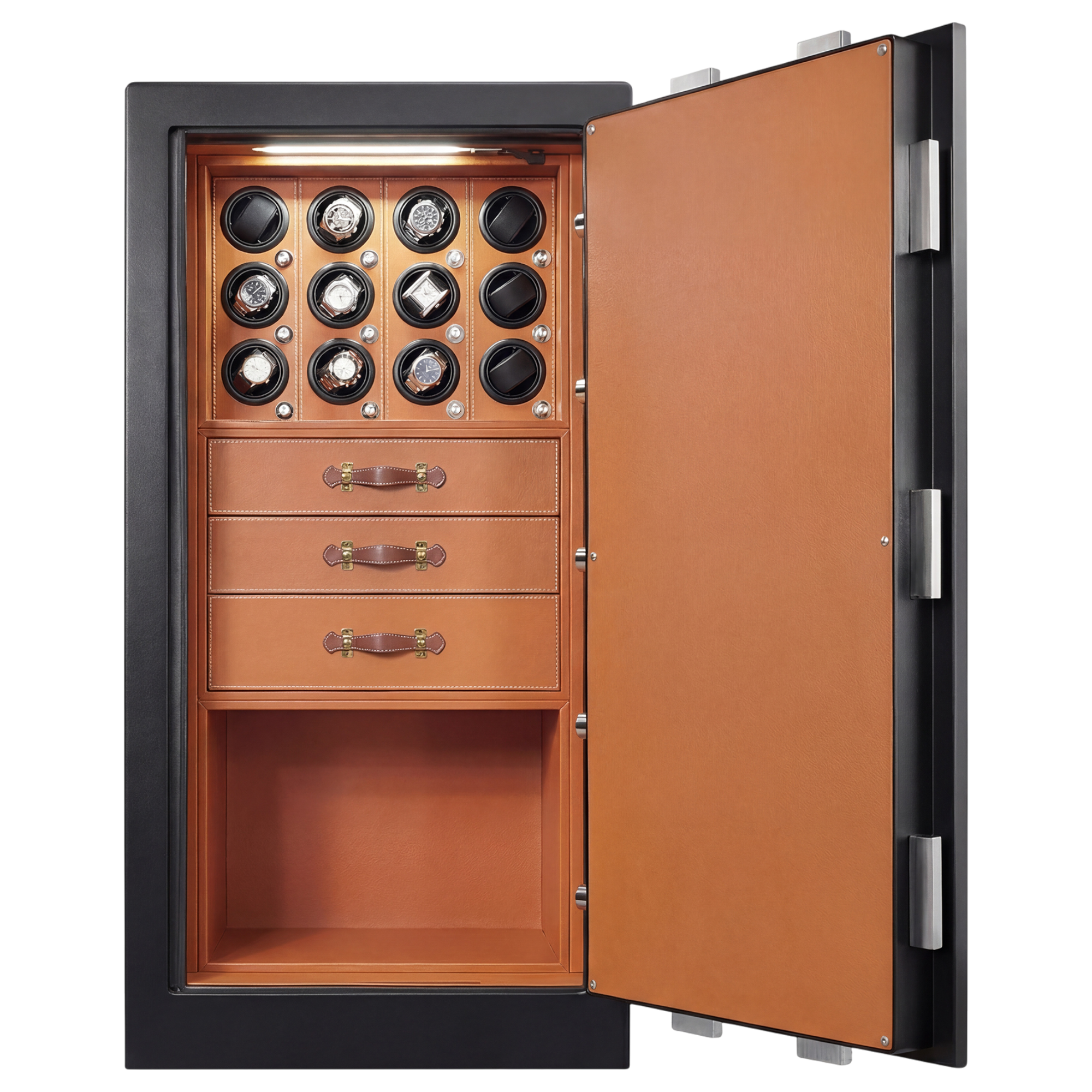
For a standard 24-inch-deep reach-in closet, safes with an exterior depth at or below 16 inches are the safest fit. Enigwatch’s Apollo watch safe is purpose-built for tighter installs; its compact footprint leaves enough swing clearance even when positioned against the back wall.
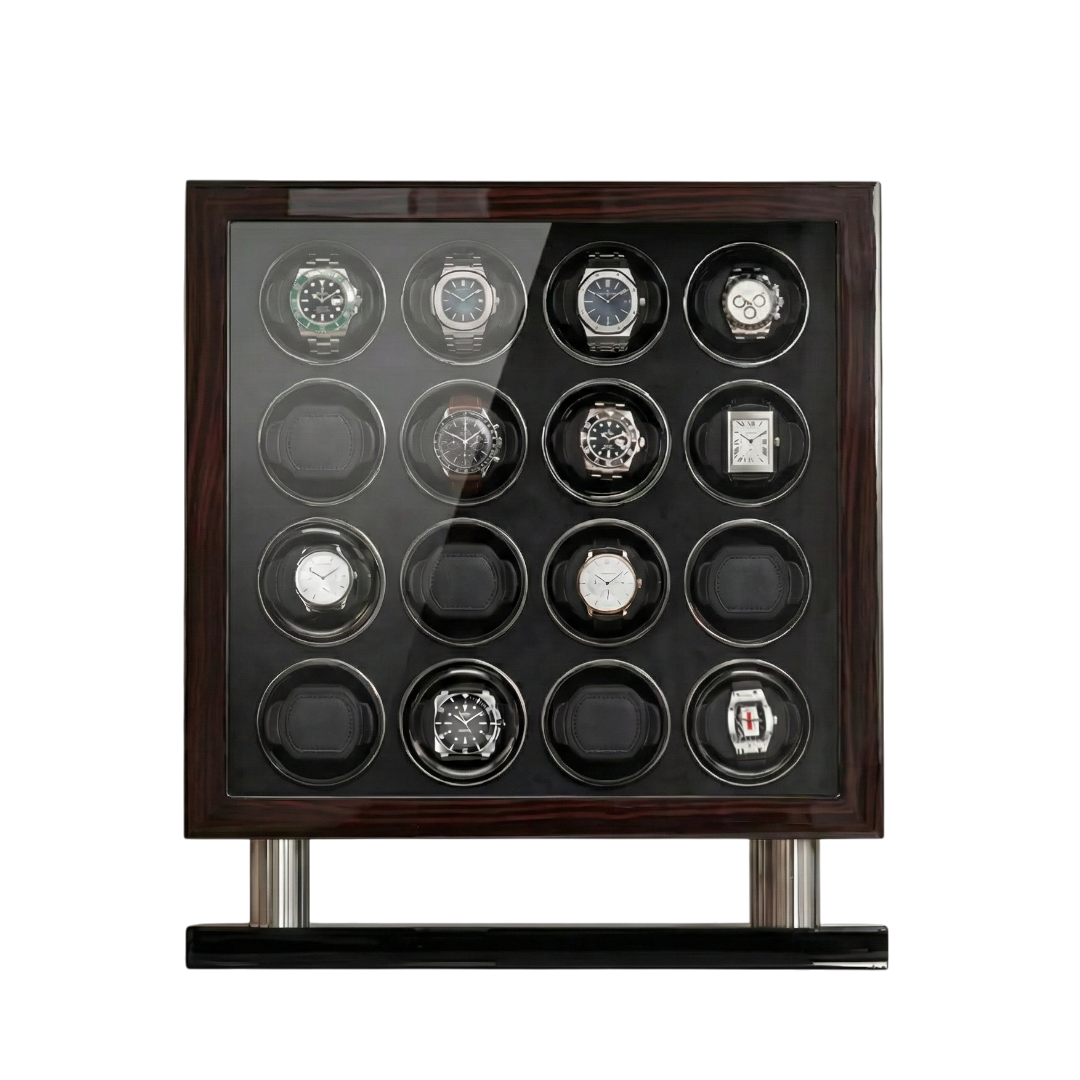
For a walk-in or dedicated dressing room, capacity becomes the primary variable. The Veron 20 watch safe box holds 20 timepieces and suits a walk-in floor installation where depth is not a constraint.
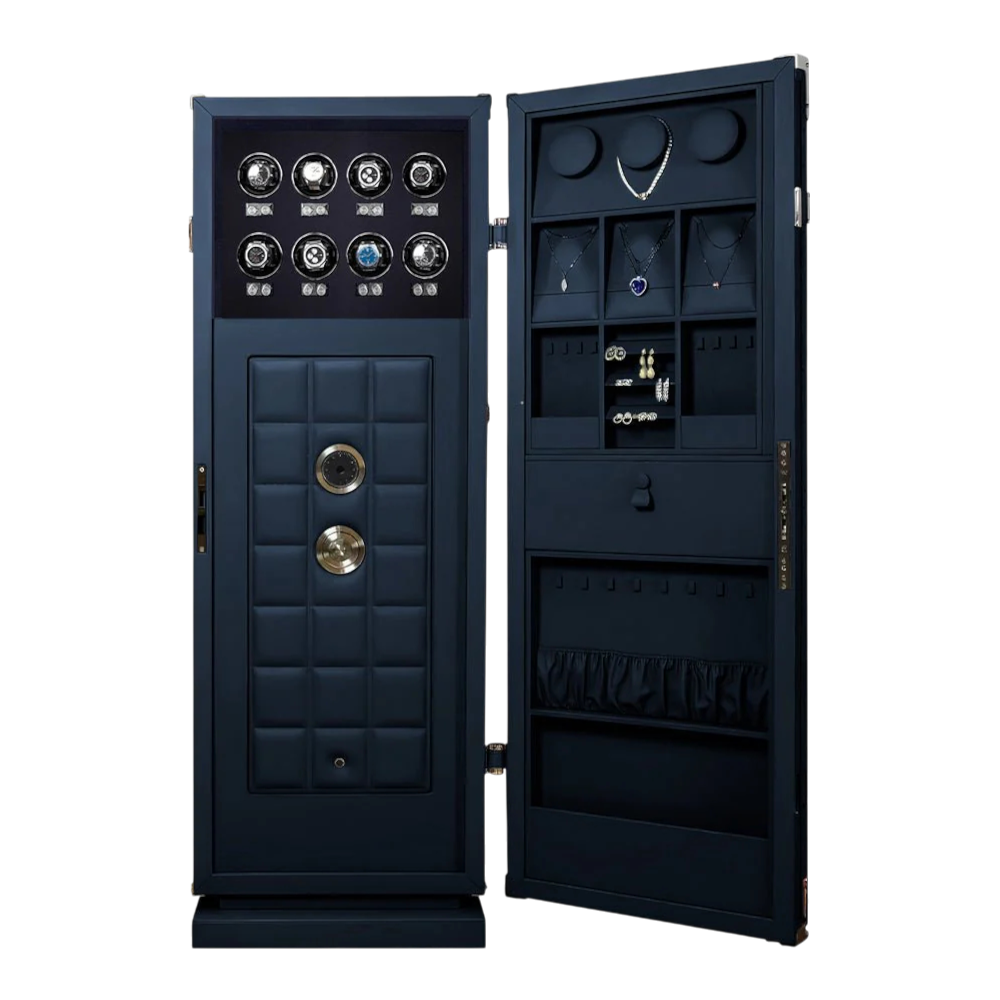
For collectors who want a combination of secure storage and jewelry access in a single piece, the Regent Oxford safe adds interior organization depth without requiring a wider footprint.
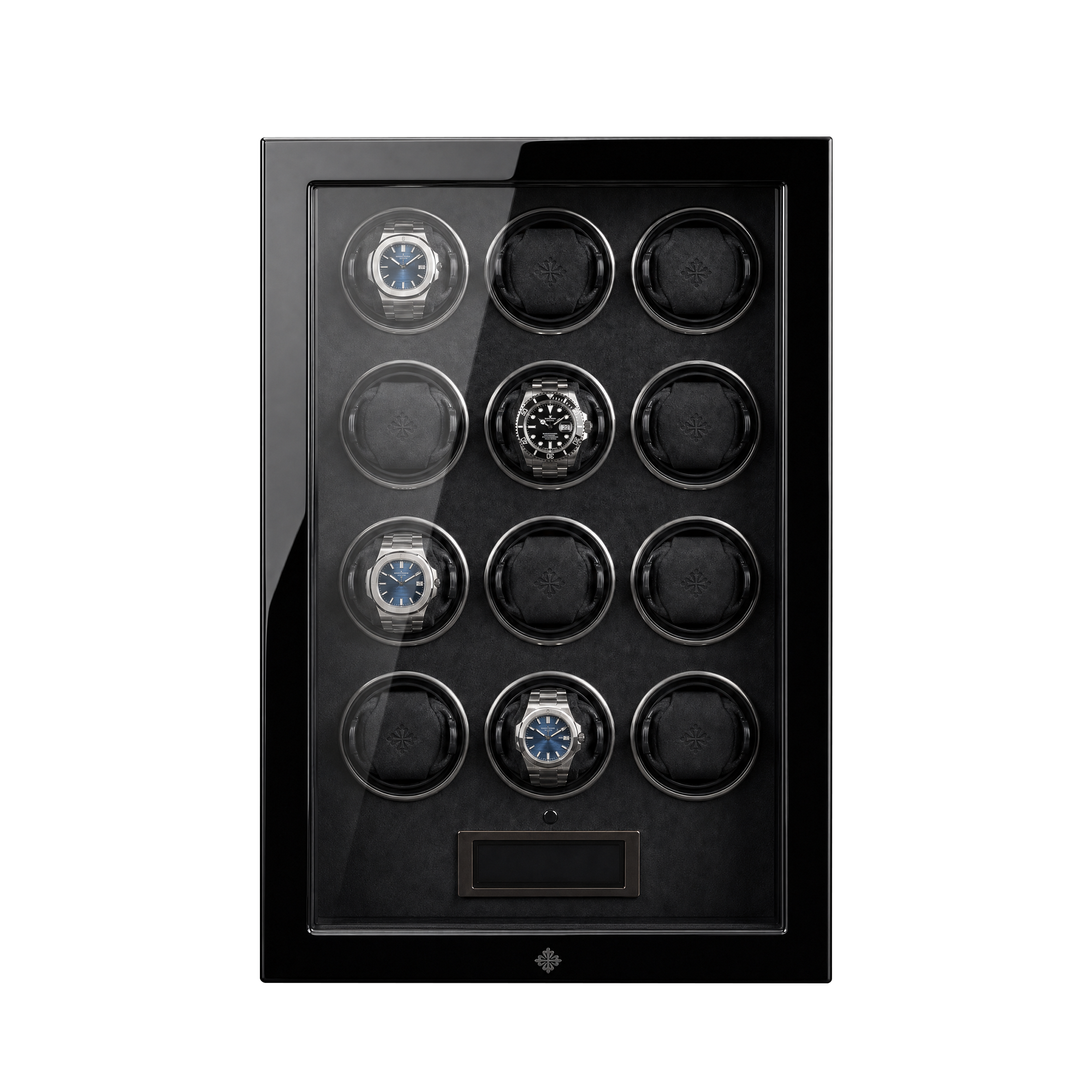
Common mistake: buying to current collection size. If you own 8 watches in 2026 and buy an 8-slot safe, you have no room for additions. Size up by at least 30% — a 12-slot safe costs marginally more than an 8-slot and eliminates the problem entirely.
Step 5: Position, level, and anchor
Set the safe in its final position before drilling. Use a level on the top surface — adjust with shims if the floor is uneven. An unlevel safe puts uneven stress on the bolt hinges and will cause the door to drift out of alignment within 12–18 months.
Mark the anchor hole positions through the pre-drilled floor holes inside the safe (most units have 2–4 mounting holes in the base). Slide the safe out, drill the marked points, set anchors, slide the safe back, and run the bolts. Torque to manufacturer spec — over-torquing distorts the base on thinner-gauge units.
Final check: open the safe door through its full swing without obstruction, confirm the lock engages cleanly, and verify the safe does not rock or shift under lateral pressure.
Troubleshooting
Safe door hits the closet door frame when opened fully. The safe is too deep for the remaining clearance. Move the safe back against the wall, or switch to a model with a shallower exterior depth.
Safe rocks after anchoring. Floor is uneven. Add stainless steel shims between the base and the floor before final bolt torque. Do not rely on the anchor bolts to pull the base flat — this bends the base plate.
Anchor bolts spin in place. You drilled into the gap between joists or hit hollow concrete. Relocate the bolt position 3–4 inches and redrill. For concrete, switch to a larger diameter anchor.
Lock stiffens after installation. The safe is under torsional stress from uneven anchoring or an uneven floor. Loosen the anchor bolts, re-shim the base level, retorque evenly.
Door swing clears the frame but hits a hanging rod. Relocate or shorten the rod. Watch safes in a closet should not sit directly beneath a rod at swing height — the door travel is typically 90 degrees and needs clear vertical and horizontal space.
Condensation inside the safe. Closets in exterior walls accumulate humidity. Add a small silica gel canister (replace every 3–4 months) or use a safe model with a sealed door gasket. Enigwatch safes with interior felt lining provide a degree of moisture buffering, but they are not a substitute for humidity management in damp climates.
Tools and resources
- Tape measure, stud finder, level, power drill, rated anchor bolts
- Manufacturer spec sheet — exterior dimensions, weight, anchor hole spacing, hinge side
- Apollo watch safe box — compact footprint, suited to reach-in closets
- For deeper context on locking mechanisms that suit closet installations: watch safe with combination lock for collectors
What to do next
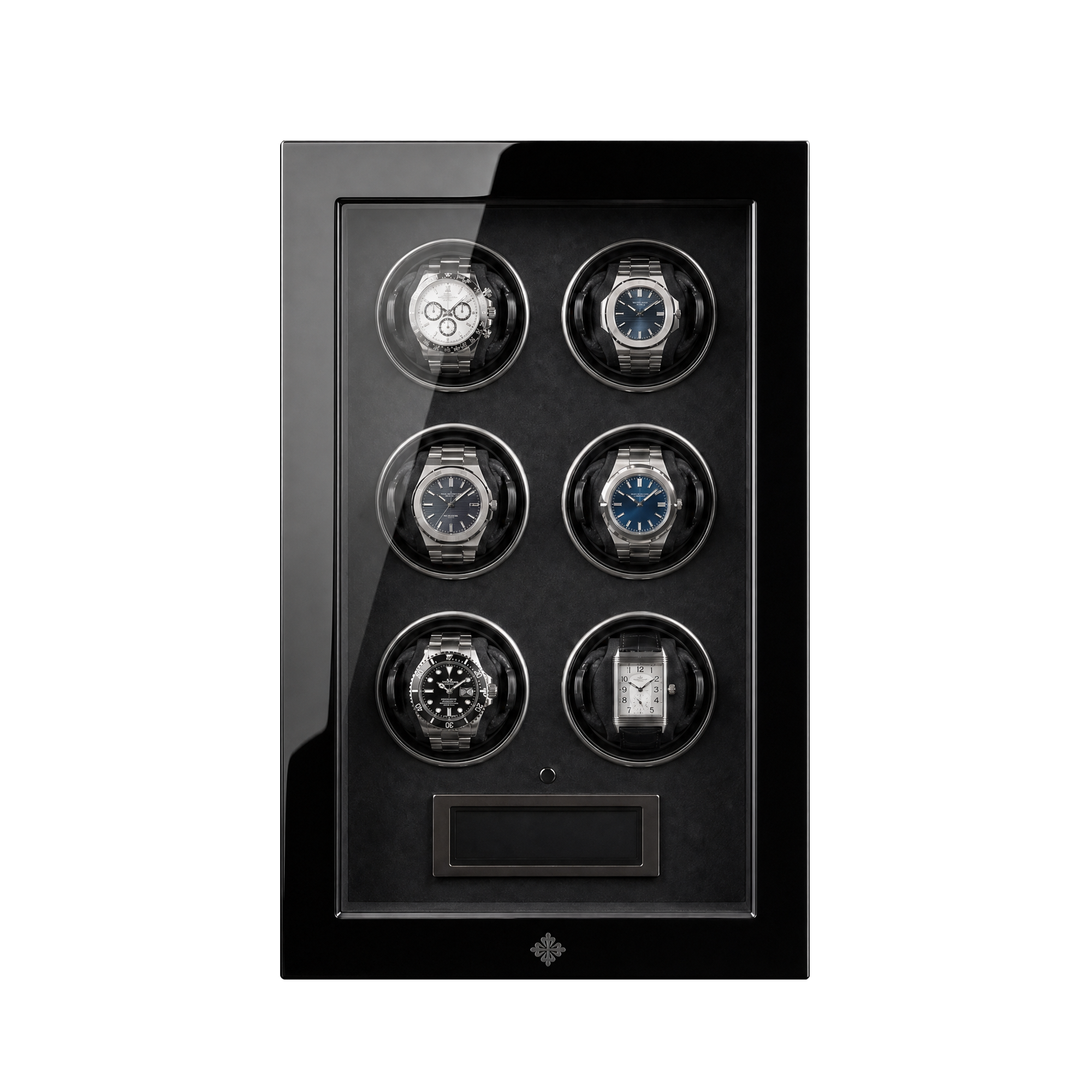
Once the safe is anchored and functioning, the next decision is whether your collection warrants a winding module inside the same footprint or as a companion unit. A watch safe for closet use stores; it does not wind. If you keep automatic watches in storage longer than 5 days, a winder matters. The guide on how to store 6 automatic watches safely covers that decision with specific capacity and winding spec guidance for 2026.
FAQ
What size watch safe fits a standard reach-in closet?
An exterior depth of 16 inches or less fits a standard 24-inch reach-in closet without blocking the door swing. Width should be at least 4 inches narrower than the closet interior to allow positioning and anchor access.
Can I bolt a watch safe to a closet shelf?
Only if the shelf is solid wood or plywood rated for static loads above the safe’s weight, and you run the bolts through into structural framing below. Particleboard organizer shelving is not rated for safe anchoring.
How heavy is a typical watch safe for closet installation?
A 10–12 slot luxury watch safe typically weighs between 80 and 150 lbs empty. Add watch and jewelry weight. Anything above 100 lbs requires two people for placement and confirmed floor load capacity.
Does a watch safe for closet use need ventilation?
No active ventilation is needed, but closets on exterior walls in humid climates should use silica gel desiccant inside the safe. Replace desiccant every 3–4 months or when the indicator changes color.
What is the minimum closet depth for a watch safe with a built-in winder?
Combined winder-safe units tend to run 18–24 inches deep. You need a walk-in closet or a reach-in with a depth of at least 30 inches (door open) to install one without blocking the closet door.
Is a biometric lock better than a combination lock for a closet safe?
Biometric is faster in low-light conditions — a closet at night with no light is where a combination lock becomes genuinely slow. Biometric adds a battery dependency; keep a backup key stored separately.
Can a watch safe be installed in a wardrobe or armoire instead of a built-in closet?
Yes, if the wardrobe floor supports the weight and you can run anchor bolts through the base into the floor below. Do not anchor solely to the wardrobe cabinet — the cabinet itself is not a theft-resistant structure.
What is the best placement inside a walk-in closet?
Back corner, anchored to the floor, positioned so the door swings away from the main traffic path. Avoid exterior walls in humid climates and any wall with plumbing behind it.
One last thing
The single most overlooked dimension is hinge clearance — not door swing, but the arc the door edge traces as it opens. A safe door 14 inches tall traces a 7-inch arc at its leading edge. If a shelf sits 6 inches above the safe top, that shelf will stop the door at roughly 50 degrees. You may not notice this during installation because the door opens “enough” — until you try to retrieve a watch from the back row and realize the door cannot clear the tray. Measure from the safe top to the nearest obstruction above and confirm it exceeds half the door height before you commit to a final position.
Related guides
Protect Your Watch Collection
Designed for collectors who demand the best. Explore our premium watch winders and luxury safes.