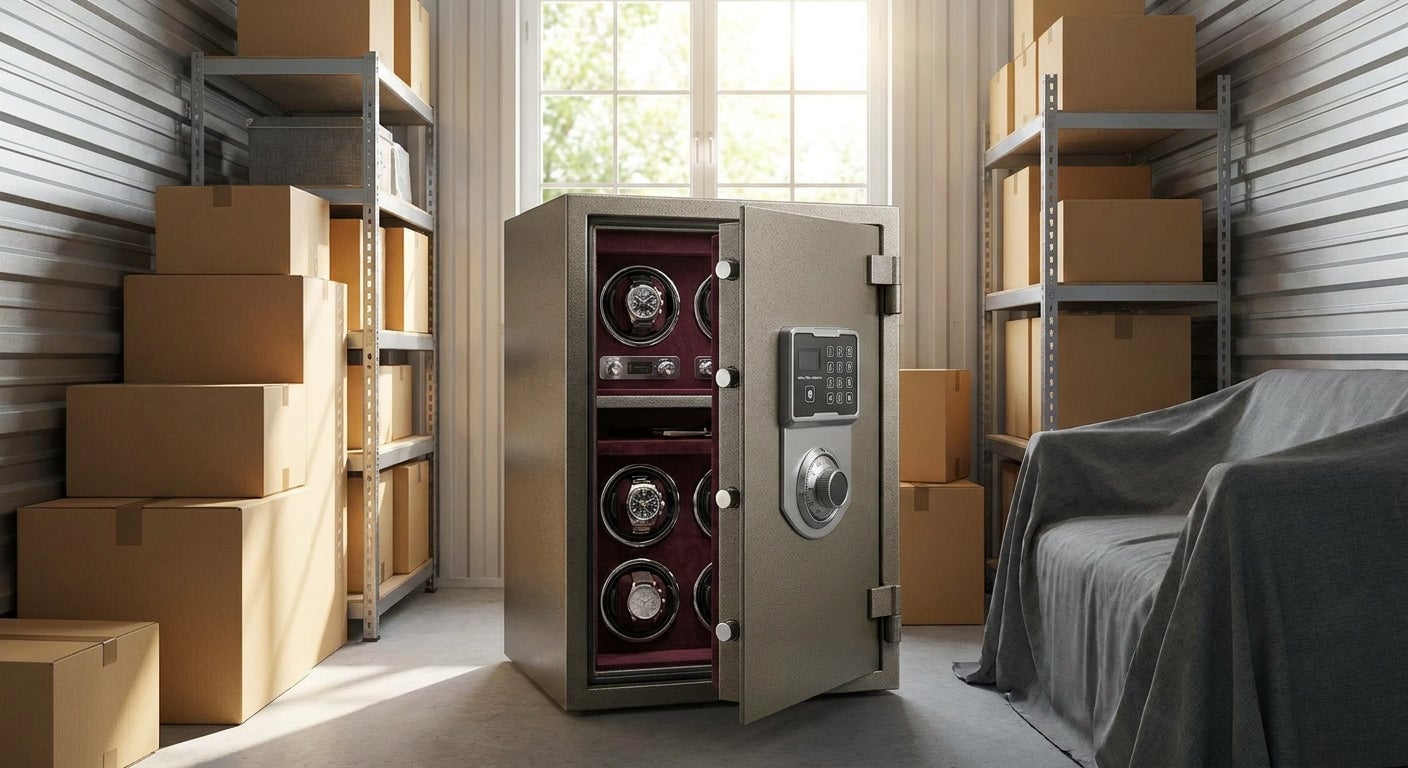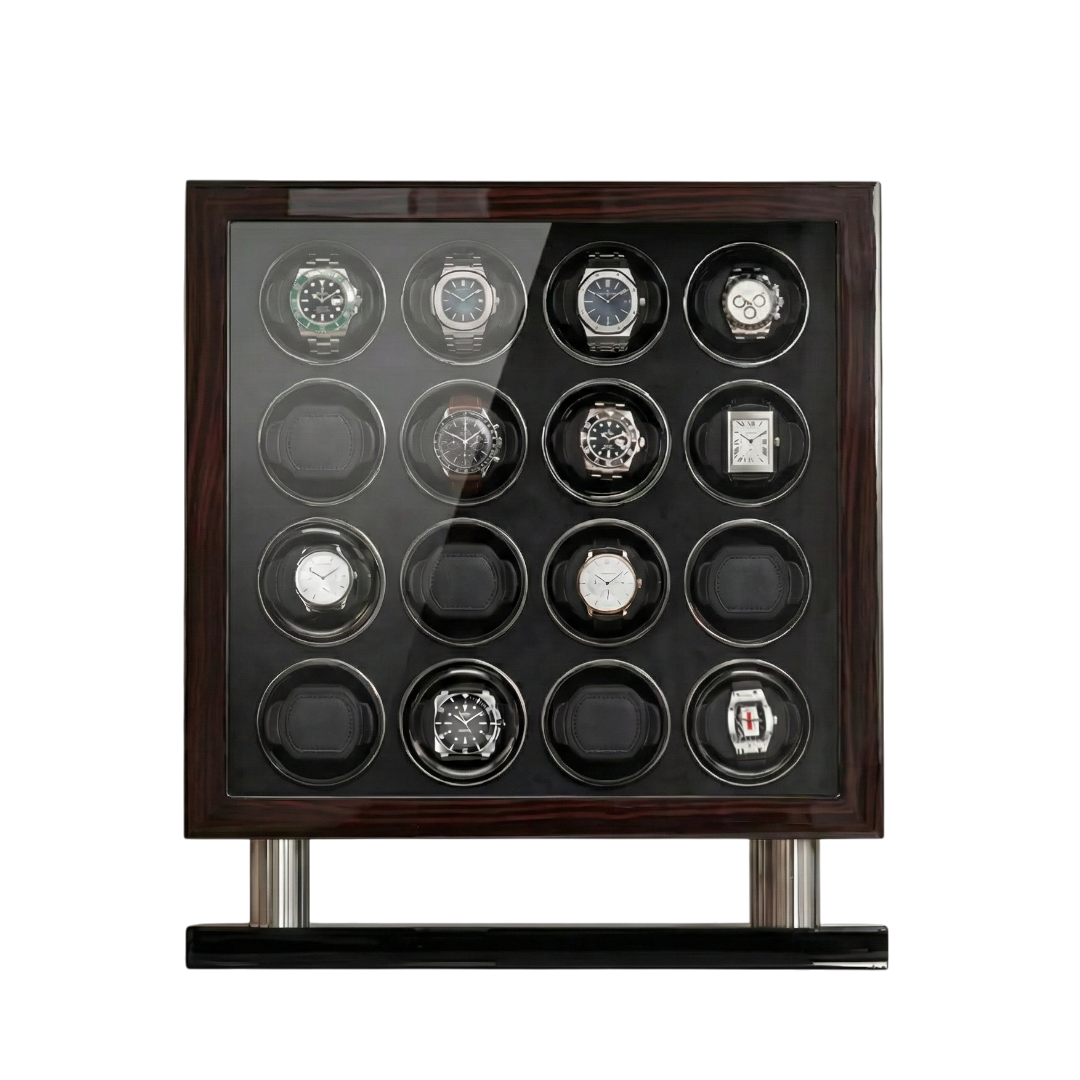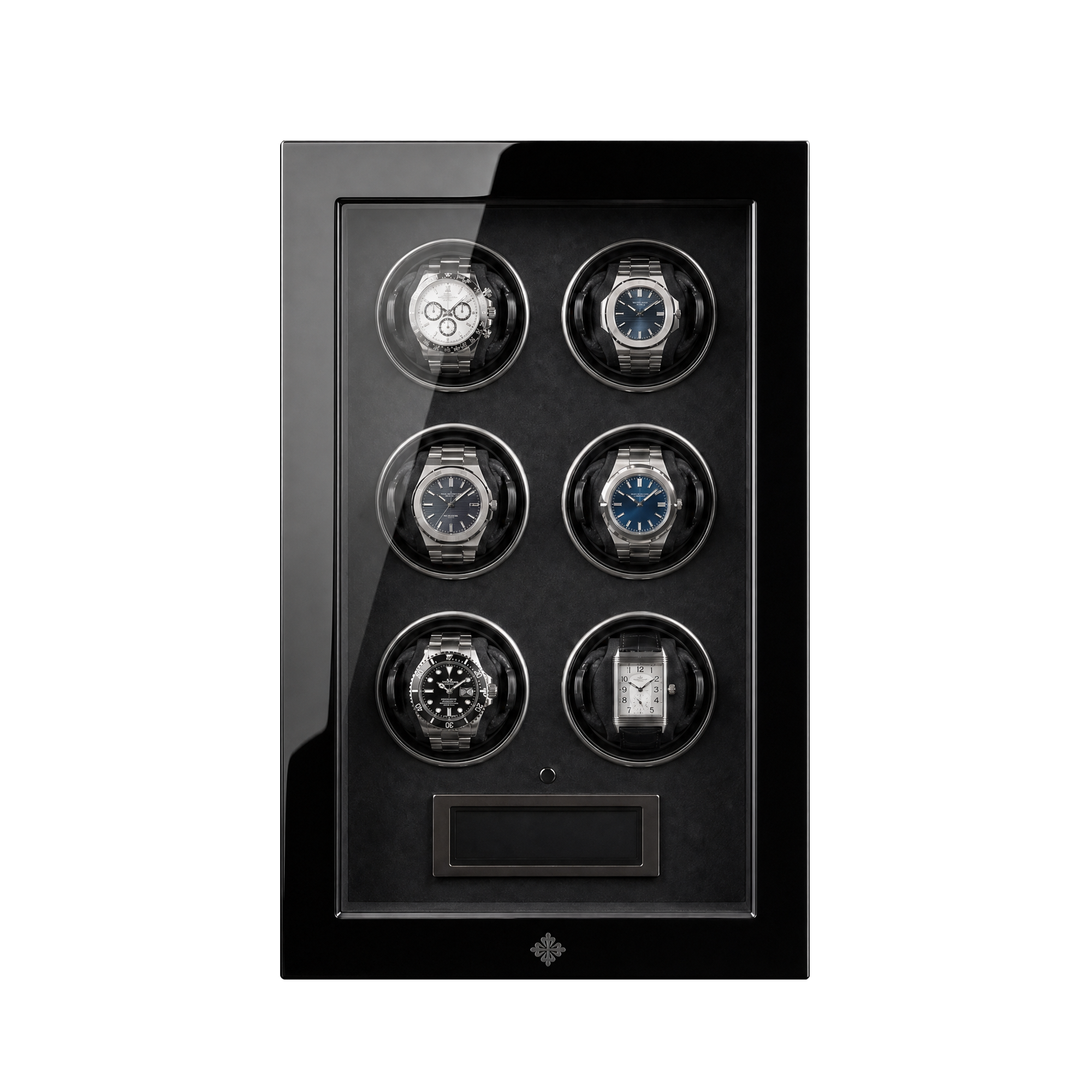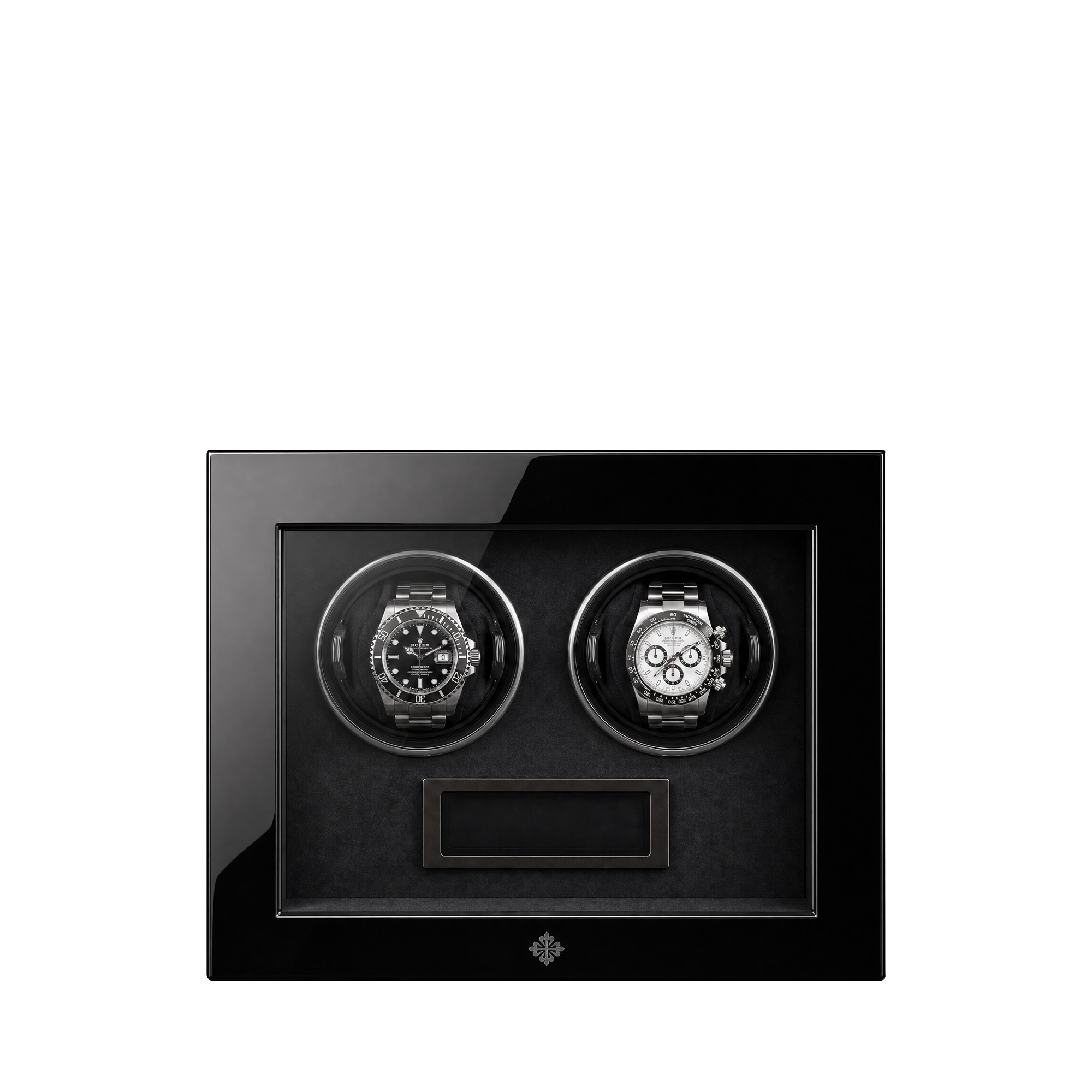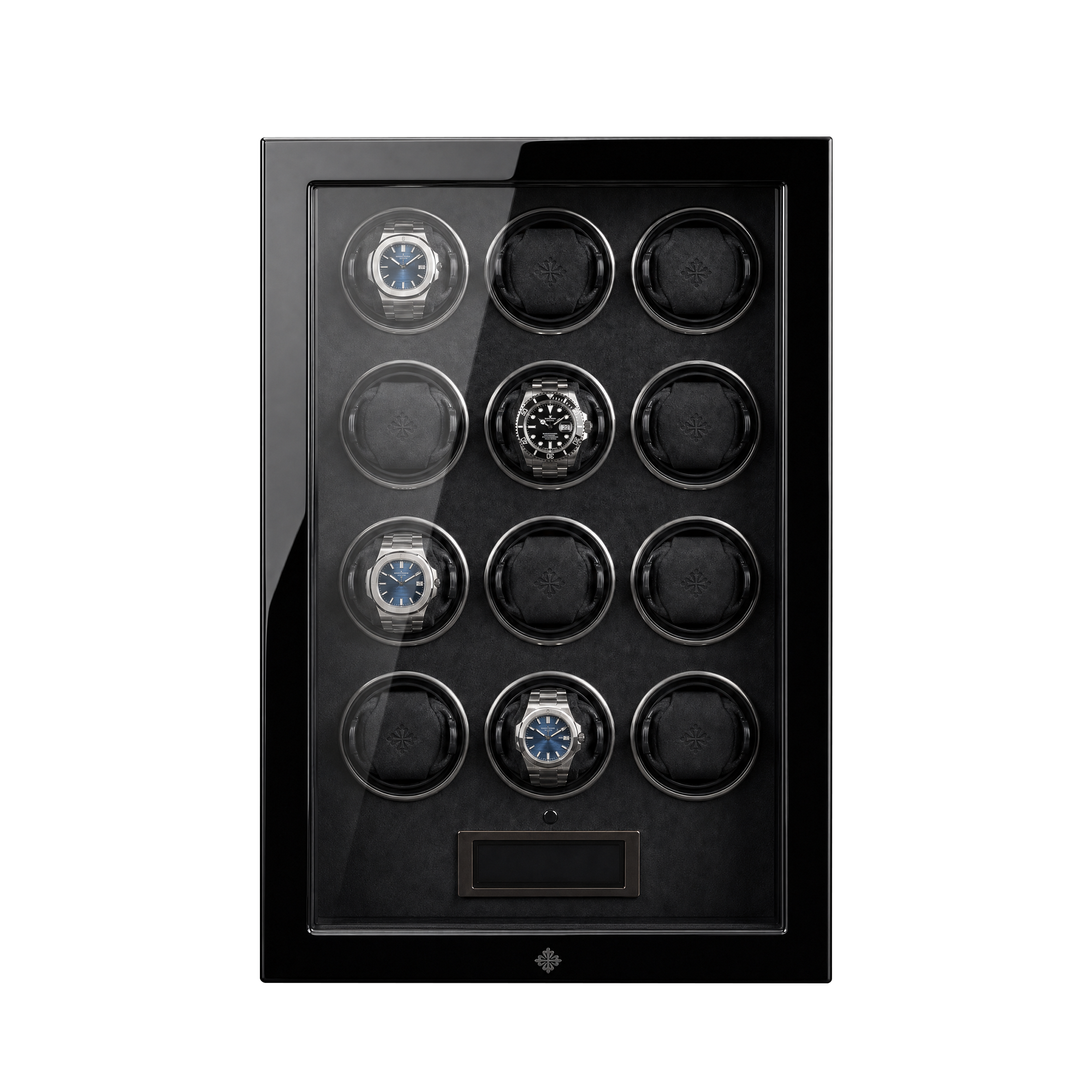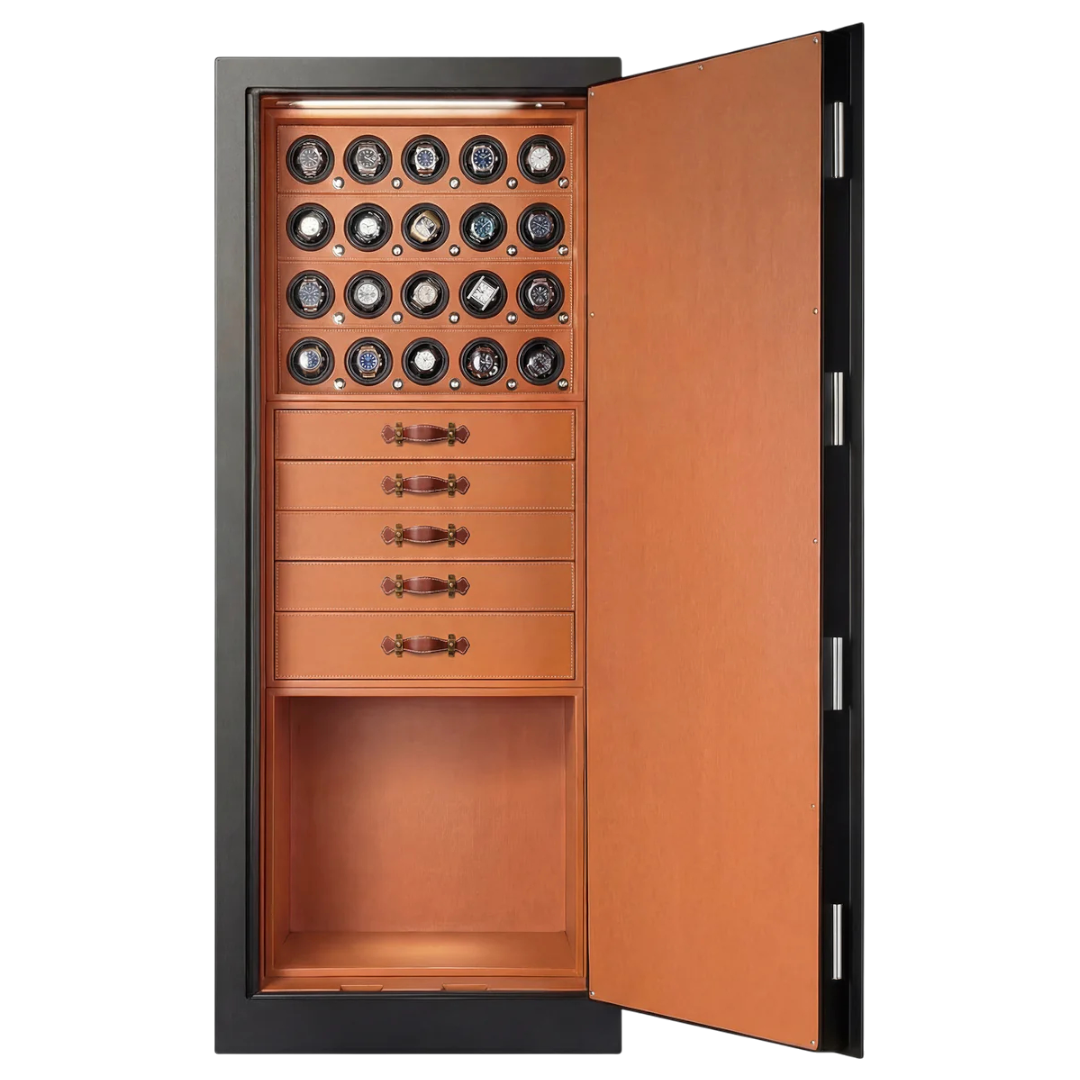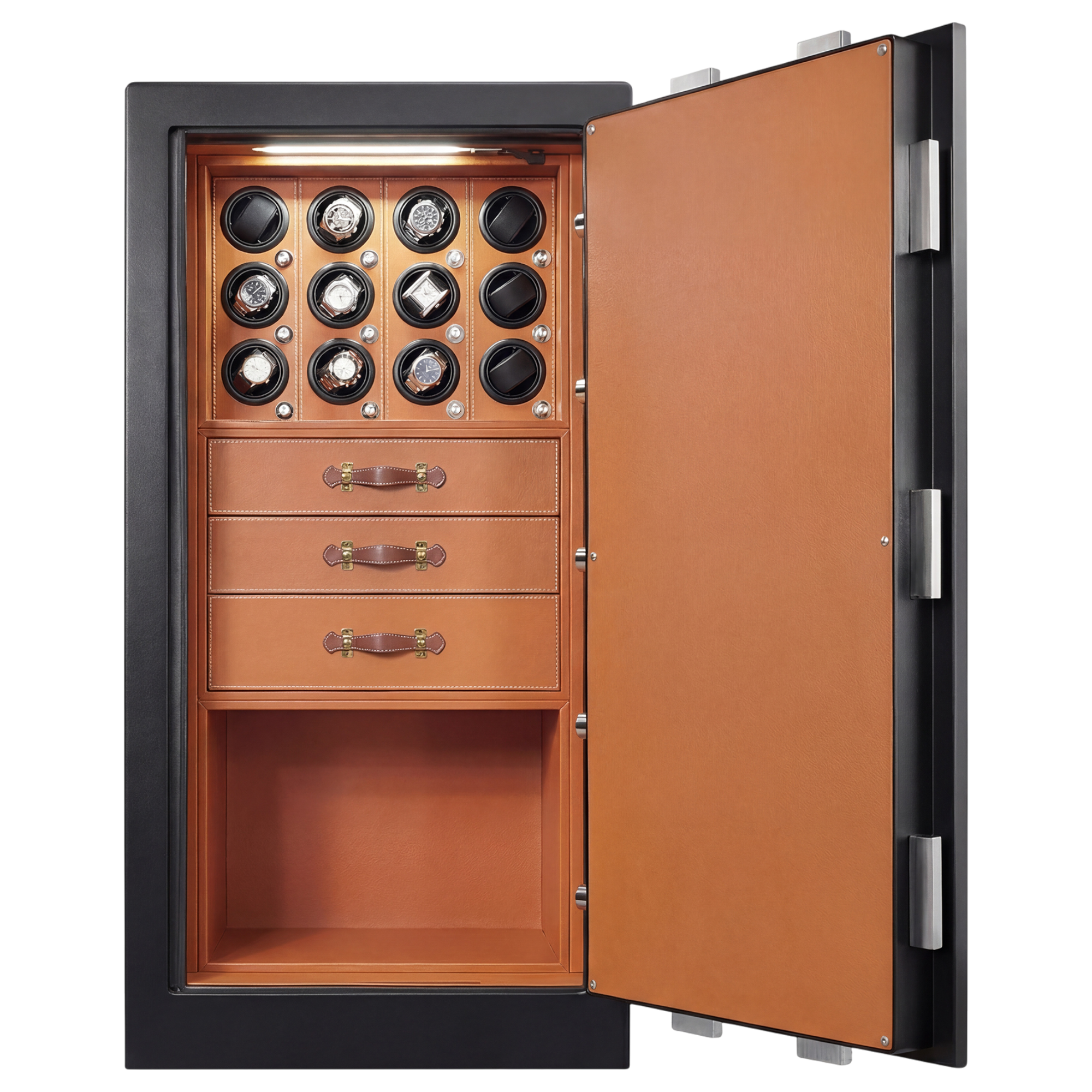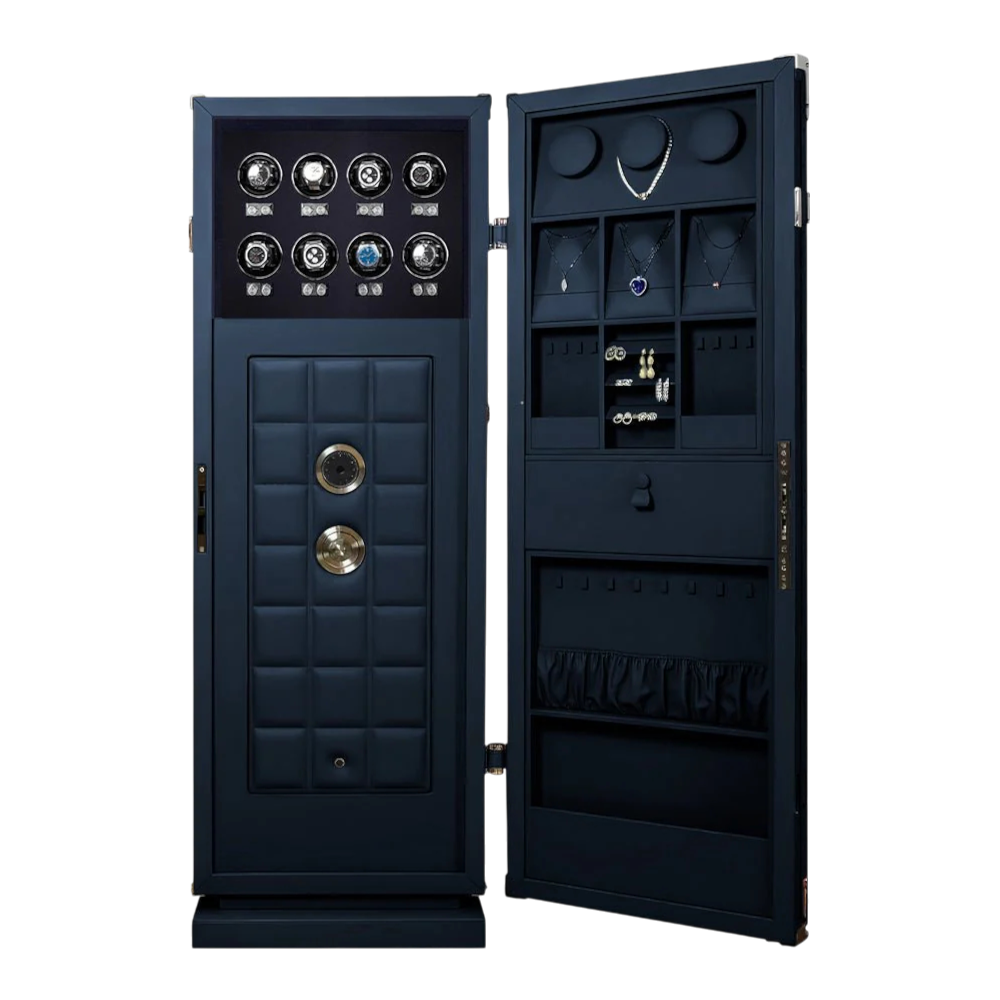


A watch safe with combination lock is the standard security choice for collectors who want fast daily access without keeping a key in their pocket — and the right model depends almost entirely on how many watches you own, how you store them, and how seriously you treat the risk of theft or fire.
TL;DR: Collectors buying a watch safe with combination lock in 2026 need to match slot count to their actual collection size, confirm the lock mechanism (mechanical dial vs. electronic keypad), and verify steel gauge before spending. Enigwatch’s lineup — spanning the Apollo watch safe box, the Centennial, and the Veron series — covers collections from 6 to 20 watches with combination-compatible locking systems. Skip any safe rated under 2mm steel; it won’t stop a determined smash-and-grab.
Why this matters in 2026
Watch theft from private residences rose sharply after the pandemic resale boom pushed Rolex and Patek secondhand prices to all-time highs. A $30,000 Daytona sitting in a drawer or an unlocked display box is a liability, not an asset. A quality watch safe with combination lock removes the weakest point — physical access — without adding the single-point-of-failure risk of a lost key. For a collector, the combination lock also means one authorized user can open the safe in under 10 seconds, even in the dark.
Who this is for
This guide is for the collector who already owns between 6 and 20 luxury timepieces and is buying serious storage for the first time — or upgrading from a basic lockbox or watch roll. You’re probably storing at least one watch worth more than $5,000, which puts you in the range where a consumer-grade safe starts making financial sense. If you also run automatic watches that need winding between wears, several options below can be paired with a winder — covered in the related guides at the bottom.
What to look for in a watch safe with combination lock
Steel gauge and construction
Anything under 2mm of solid steel on the door is decorative, not protective. Entry-level “watch boxes” sold as safes often use 1mm or thinner sheet metal that bends with a pry bar. Look for a minimum door thickness of 5mm and a body of at least 3mm. The best units in Enigwatch’s 2026 lineup publish these numbers in the spec sheet — ask before you buy if the listing doesn’t show them.
Lock mechanism type
Combination locks come in two formats: mechanical dial (no batteries, virtually no failure mode, slower to operate) and electronic keypad (faster, PIN-programmable, battery-dependent). For a bedroom or study safe you open daily, an electronic keypad combination is practical. For a secondary storage safe you open monthly, a mechanical dial is more reliable long-term. Confirm which type a model uses before ordering — the word “combination” appears on both.
Interior configuration and slot count
Cylindrical watch pillows versus flat trays matter more than most buyers realize. Cylindrical pillows hold watches upright and prevent crown stress from lateral pressure. Flat trays look cleaner but stack watches at angles that can scratch bracelets. For 2026, Enigwatch’s Veron and Titan Sanctum series use pillow-style interiors purpose-built for automatic and mechanical watches. Match the slot count to your current collection plus 30% growth — a 12-slot safe feels cramped at 10 watches.
Fire and humidity rating
Most combination-lock watch safes sold at the collector tier carry no fire rating at all. A UL 72 Class 350 rating means the interior stays below 350°F for a rated duration (30, 60, or 120 minutes). Mechanical watch lubricants begin degrading above 120°F; dials and straps fail sooner. If you’re storing watches worth more than $20,000 in aggregate, a fire-rated model is not optional. Check the best fireproof watch safe guide for full rating comparisons.
Mounting options
A safe that isn’t bolted down is a carry-out safe. Pre-drilled floor anchor points are standard on quality units; wall-anchor compatibility is rarer but useful for a closet installation. The Centennial Bulletproof and the Titan Sanctum 20 both ship with anchor bolt hardware. A safe weighing under 30 lbs should always be anchored — weight alone is not a deterrent for a two-person theft.
Exterior finish and room fit
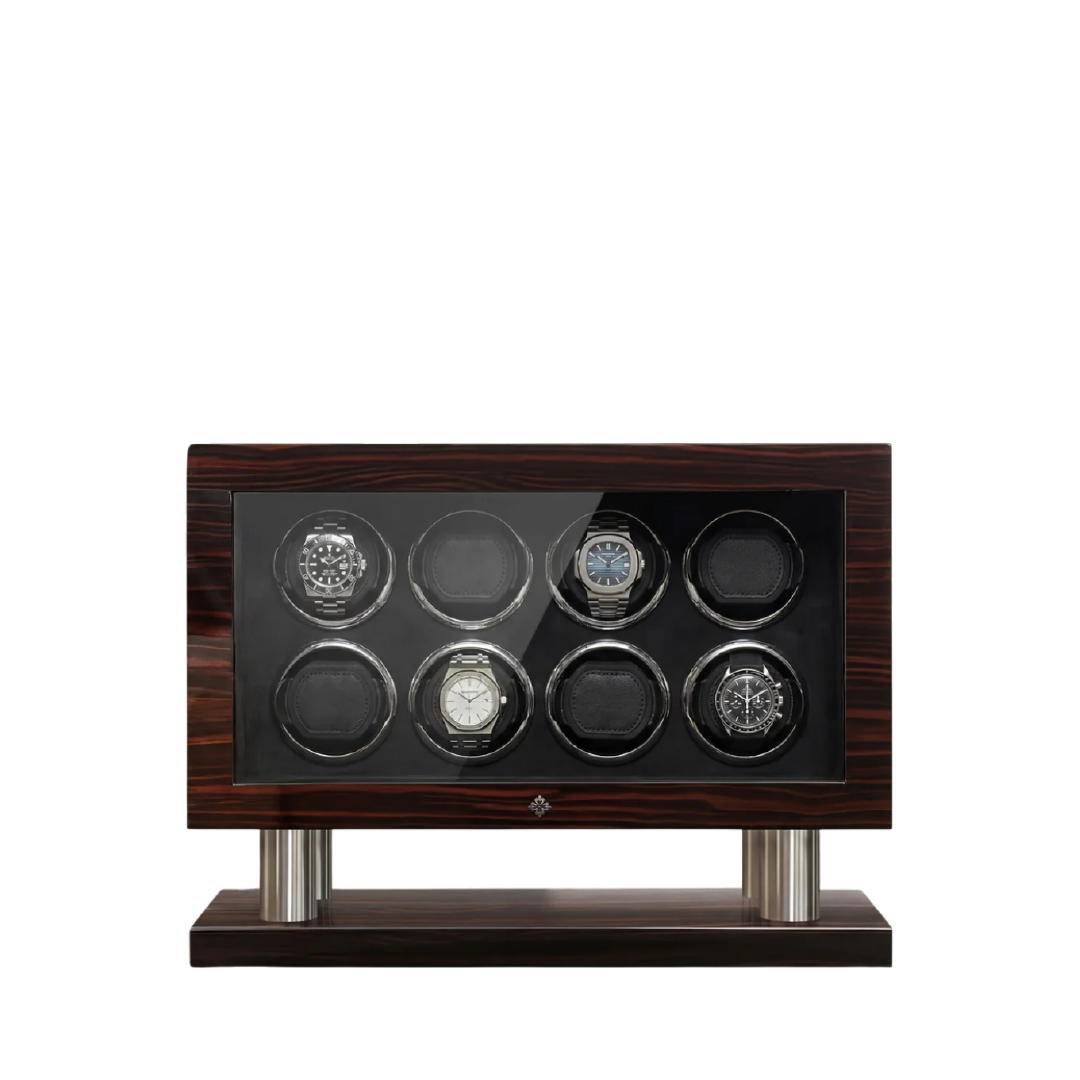
For collectors, the safe often lives in a primary closet, study, or display room rather than a garage. Exterior finish — matte steel, lacquered wood veneer, leather wrap — determines whether the safe belongs in the room or needs to be hidden. Enigwatch’s Macassar Ebony and Gatsby Soiree are designed to be visible furniture, not hidden appliances. The tradeoff: decorative exteriors sometimes sacrifice steel gauge. Check specs, not aesthetics, first.
Top picks for collectors
The volume safe: Veron 20
The workhorse. The Veron 20 watch safe box holds 20 watches on pillow-style mounts with an electronic combination keypad. It’s the right call for a collector who has passed the 12-watch mark and doesn’t want to buy again in two years. The interior layout separates watches with enough clearance to avoid bracelet contact. Verdict: Buy if your collection is 12–20 pieces.
The mid-size pick: Veron 12
The safe-bet middle ground. The Veron 12 watch safe box fits a 10–12 piece collection without the footprint of the Veron 20. Electronic combination lock, pillow interior, and clean steel construction. For the collector who bought 6 watches two years ago and now owns 10, this is the right size in 2026. Verdict: Buy for mid-size collections.
The statement safe: Gatsby Soiree
The display-first option. The Gatsby Soiree watch safe is built for collectors who want the safe visible in the room, not hidden in a closet. Decorative exterior, combination lock, purpose-built watch interior. Confirm the steel gauge matches your security requirements before choosing over a utilitarian option. Verdict: Consider if aesthetics matter as much as protection.
The hardened vault: Centennial Bulletproof
The serious threat model. The Centennial Bulletproof watch safe box is for the collector who has done the math on collection value and isn’t satisfied with standard residential-grade steel. The name signals the construction standard — verify the specific ballistic or pry ratings in the product spec sheet. Verdict: Buy for high-value collections ($50,000+) or collections in higher-risk locations.
The compact entry: Apollo
The first-safe pick. The Apollo watch safe box is the lowest-barrier Enigwatch combination-lock option for collectors just crossing into serious storage territory — typically a 6–10 piece collection with at least one significant piece. Size and slot count are more limited than the Veron series; this is a starter safe, not a forever safe. Verdict: Consider if you own under 8 watches and plan to upgrade later.
What to avoid
- “Watch safes” with key-only locks marketed as combination units. The term “combination” sometimes appears in product titles referring to “combination watch box + safe.” Read the lock description specifically — you want a dial or keypad, not a barrel key.
- Thin-wall decorative boxes at safe prices. A lacquered box with a padlock hasp is a watch box. If the product listing doesn’t specify steel thickness, assume it is under 1mm. This offers zero protection against tool-assisted entry.
- Undersized interiors for your current collection. Buying a 6-slot safe when you own 9 watches means 3 watches live somewhere else, which defeats the purpose. Size up at least one tier from your current count.
Comparison: 2026 watch safes with combination lock
| Model | Slots | Lock type | Best for | Verdict |
|---|---|---|---|---|
| Veron 20 | 20 | Electronic keypad | 12–20 piece collections | Buy |
| Veron 12 | 12 | Electronic keypad | 8–12 piece collections | Buy |
| Gatsby Soiree | Varies | Combination | Display-forward setups | Consider |
| Centennial Bulletproof | Varies | Combination | High-value collections | Buy |
| Apollo | Varies | Combination | First-time buyers, under 8 watches | Consider |
FAQ
What is the best watch safe with combination lock for a collector?
The Veron 20 is the strongest all-around pick for a collector with 12 or more watches in 2026 — pillow interior, electronic keypad combination lock, and enough slots to absorb 2–3 more acquisitions before the safe becomes the bottleneck.
Is an electronic keypad combination lock better than a mechanical dial for a watch safe?
For daily access, yes. An electronic keypad opens in under 5 seconds versus 20–30 seconds for a mechanical dial. The tradeoff is battery dependency — most electronic locks warn at low battery and have an emergency key override. For a safe you open once a month or less, a mechanical dial is more reliable.
How many slots do I actually need in a watch safe?
Buy for your collection in 18 months, not today. If you own 8 watches now and typically add 2–3 per year, a 12-slot safe will feel right for about 18 months. A 20-slot safe buys you 4+ years of runway.
Can a watch safe with combination lock be fireproof?
Yes, but not all are. Fire protection requires specific insulation that adds weight and cost. Check for a UL 72 Class 350 fire rating before assuming a combination-lock safe offers any fire protection — most do not unless explicitly rated.
What steel thickness should a watch safe have?
Minimum 3mm body steel and 5mm door steel for a residential-grade collector safe. Below that, the unit resists opportunistic theft but not a pry bar or hammer attack.
How do I reset the combination on a watch safe?
Process varies by manufacturer and lock model. Most electronic keypads require a reset code provided at purchase plus physical button access inside the door (requires the safe to already be open). Never discard the original reset documentation.
Should a watch safe be bolted to the floor?
Yes, unconditionally, if the safe weighs under 60 lbs. A 30-lb safe can be carried out by one person in 20 seconds. Anchor bolt hardware ships with most Enigwatch safes — use it.
Is a watch safe better than a bank safety deposit box for collectors?
For day-to-day access, a home watch safe wins. A deposit box requires a bank visit during business hours; a home safe gives you access at 6 AM before a trip. The risk trade-off is home burglary versus bank-level security. Most serious collectors use both: primary daily-wear watches at home, rarely-worn pieces in a deposit box.
One last thing
The combination lock itself is not the strongest point of a watch safe — the hinges are. A door with a strong lock but exposed external hinges can be defeated with a grinder in under two minutes. Look for internal or anti-removal hinges on any safe you’re serious about. Most manufacturers don’t advertise this; it’s worth asking directly before you commit to a model.
Related guides
Protect Your Watch Collection
Designed for collectors who demand the best. Explore our premium watch winders and luxury safes.