Patek Philippe Grand Complications run some of the most delicate automatic movements built today, and a watch winder set wrong stalls the perpetual calendar or leaves a minute repeater under-wound between wears. This guide breaks down the TPD, rotation direction, and program settings collectors use to keep grand complication calibers running true in 2026.
- Watch winder settings for Patek Philippe Grand Complications: run 650-800 TPD bidirectional per caliber, not a generic default.
- Impresario Series 12 Watch Winder wins for mixed grand complication collections at $1,499 with 12 independent rotor programs. Buy.
- Virtuoso Series 2 Watch Winder handles a two-piece pairing at $599 with independent TPD per rotor. Buy.
- Single-direction budget winders under $200 stall perpetual calendar wheels within days. Skip for Grand Complications.
- Pair any winder with vault-rated storage - a Titan Sanctum 20 at $17,999 covers winding and security together.
Why this matters
Patek Philippe Grand Complications carry calibers like the 240 Q perpetual calendar, the CHR 27-525 PS split-seconds chronograph, and repeater movements assembled by hand over months of bench work. These calibers do not forgive guesswork on rotation.
Get the turns-per-day wrong and the perpetual calendar's date wheel drifts out of sync with the moon-phase display. Get the direction wrong and a caliber built for bidirectional winding never reaches full mainspring tension between wears. The watch winder TPD reference guide covers the numbers across brands - this page narrows it to Patek Philippe's most complicated references specifically for 2026 storage.
Who this is for
This is for owners of Patek Philippe Grand Complications references - perpetual calendars, minute repeaters, split-seconds chronographs, and tourbillon models - who wear the watch occasionally and need it running to spec between wears. If the collection pairs a 5204 or 5270 chronograph with a simpler three-hand piece, the settings below still apply, but the complicated caliber sets the floor for every winder in the rotation.
What to look for in watch winder settings for Patek Philippe Grand Complications
TPD calibrated to the complication, not the case size
A Patek Philippe caliber's turns-per-day requirement comes from its mainspring geometry and gear train friction, not the watch's diameter. Grand complication calibers generally sit in the 650-800 TPD band, and setting a winder to a flat 650 across a mixed case of chronographs and perpetual calendars under-winds the heavier movement every time.
Bidirectional rotation as the default
Most modern Patek Philippe automatic calibers wind in both directions, and a winder locked to single-direction rotation leaves half the automatic module doing nothing. Bidirectional is the safe default for any Grand Complications reference built after the 1980s.
Independent programs when the collection is mixed
A perpetual calendar and a minute repeater do not share a TPD number, and running them on one shared program means one of them is always wrong. A winder with independent per-rotor programs - not just independent motors - is the only way to run a mixed grand complication case correctly.
Gentle start torque for repeater and tourbillon trains
Repeater gongs and tourbillon cages sit closer to the case back than a standard automatic rotor, and a winder with an abrupt start can transmit vibration into components not designed to absorb it. Look for a soft-start motor curve, not just a motor brand name on a spec sheet.
Quiet operation at rest
A winder running 24 hours a day next to a $300,000 Grand Complications piece needs to be near-silent in a bedroom or study. Motor noise above a whisper at close range is a signal the gear train is running rougher than it should, which is worth noting on any unit before it sits next to that kind of watch for years.
Top picks for Patek Philippe Grand Complications
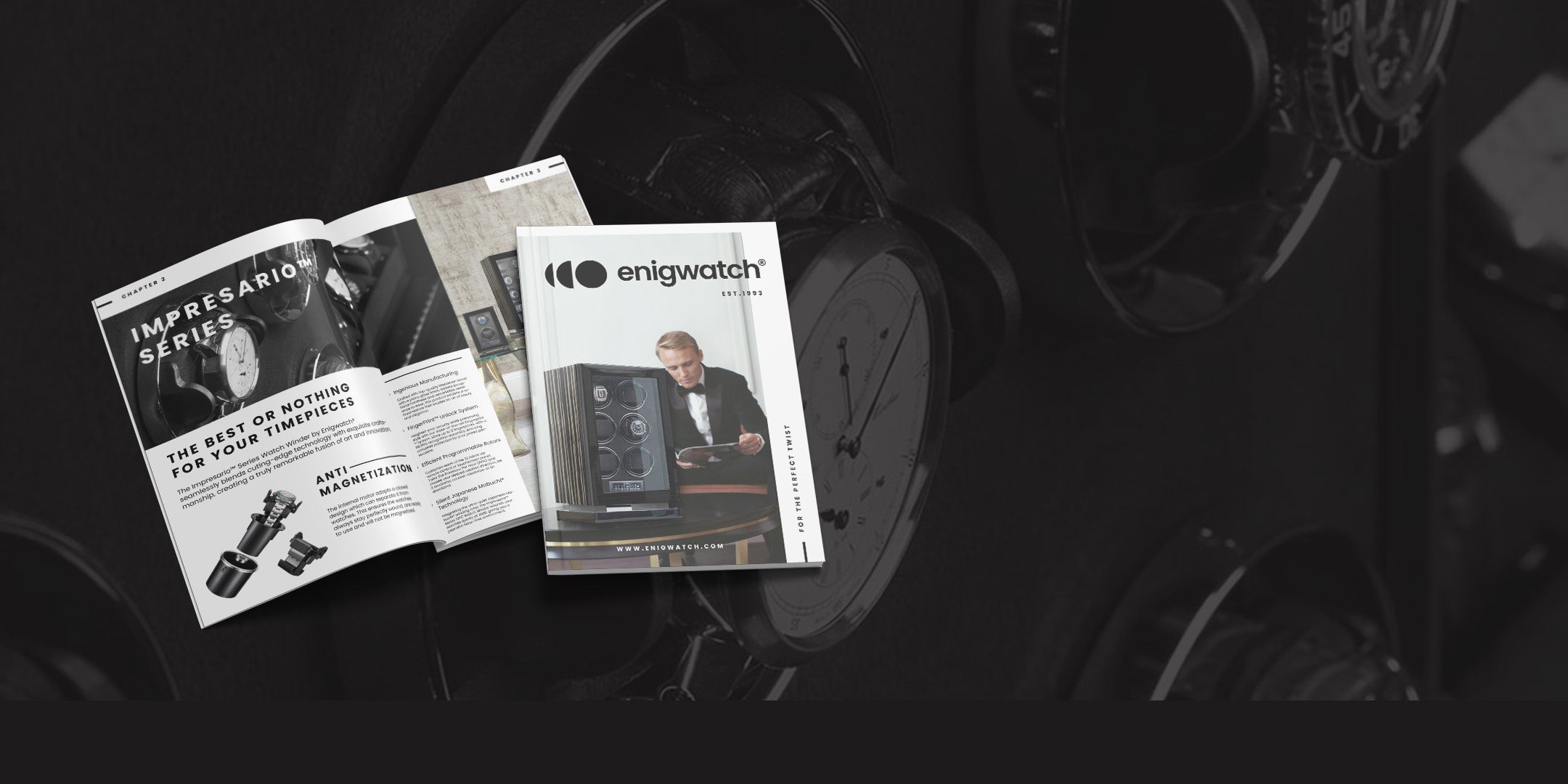
Impresario Series 12 Watch Winder - the flagship for a full grand complication case. Twelve independent Mabuchi rotors, each on its own program, fingerprint access, priced at $1,499. This is the winder built for a collector running a perpetual calendar, a split-seconds chronograph, and a repeater side by side without compromising any of them. Buy.
Virtuoso Series 2 Watch Winder - the pairing pick. Two references, each with independent TPD settings on its own rotor, at $599. Right for the collector who splits time between one Grand Complications piece and a daily-wear automatic. Buy.
Yachtline Series 8 Watch Winder - the display piece. Eight rotors arranged horizontally like a gallery tray, biometric access, at $1,399. Strong for a larger case that includes several Grand Complications references shown together, though the horizontal layout eats more shelf depth than a vertical winder of the same slot count. Consider.
Watch Winders Pillow - the fit-tuning accessory, telescopic from 36mm to 55mm at $59. A repeater or tourbillon case that sits proud of a standard cushion needs this kind of adjustable support to avoid pressure on the case back. Buy as an add-on, not a standalone solution.


What to avoid
- Single-direction "universal" winders under $200. These stall a perpetual calendar's date-change wheel within days and are built for simple three-hand automatics, not Grand Complications.
- Foam-pillow winders without telescopic depth control. A repeater or tourbillon case sits differently than a standard automatic, and a fixed cushion presses on components that shouldn't take that pressure.
- Shared-program winders for a mixed complication case. If every rotor runs the same TPD number, at least one grand complication caliber in the case is being wound wrong every single day.
"If a winder can't hold a bidirectional program above 650 TPD, a Grand Complications perpetual calendar drifts out of sync within a week."
“If a winder can't hold a bidirectional program above 650 TPD, a Grand Complications perpetual calendar drifts out of sync within a week.”
Verdict comparison
| Model | TPD Programs | Rotor Slots | Price | Verdict |
|---|---|---|---|---|
| Impresario Series 12 Watch Winder | Independent per rotor | 12 | $1,499 | Buy |
| Virtuoso Series 2 Watch Winder | Independent per rotor | 2 | $599 | Buy |
| Yachtline Series 8 Watch Winder | Independent per rotor | 8 | $1,399 | Consider |
| Watch Winders Pillow | N/A - accessory | N/A | $59 | Buy (add-on) |
A Grand Complications collection this valuable also needs storage that matches the winder's security tier. The Titan Sanctum 20 Watch Safe runs a Grade 304 stainless frame with biometric access at $17,999 and holds twenty pieces, which covers winding infrastructure and vault-grade protection under one roof for a full 2026 collection.
FAQ
What TPD should I use for a Patek Philippe Grand Complications watch?
Most Grand Complications calibers run 650 to 800 TPD bidirectional. A perpetual calendar or split-seconds chronograph typically sits at the higher end of that range, so check the caliber before setting a shared program.
Is bidirectional rotation necessary for Patek Philippe perpetual calendars?
Yes, most modern Patek Philippe automatic calibers wind in both directions, and a single-direction winder only engages half the automatic module. Bidirectional is the correct default for any Grand Complications reference built after the 1980s.
Can one watch winder run a minute repeater and a chronograph together?
Only if the winder has independent programs per rotor, not just independent motors. A shared TPD setting across different complications means at least one caliber is wound incorrectly every day.
How many turns per day does a Patek Philippe 240 Q movement need?
The 240 Q perpetual calendar caliber generally falls in the 650 to 800 TPD bidirectional range based on aggregated watchmaker guidance for automatic perpetual calendars of similar architecture.
What's the best watch winder for a Patek Philippe Grand Complications collection?
The Impresario Series 12 Watch Winder is the strongest pick for a mixed grand complication case in 2026, running 12 independent programs at $1,499. A two-piece rotation is better served by the Virtuoso Series 2 at $599.
Should Grand Complications be stored in a safe or just a winder?
A winder alone leaves a six-figure watch exposed to theft and fire. Pairing a winder with a vault-rated safe, such as the Titan Sanctum 20 at $17,999, covers both winding and security.
How much does a watch winder for Patek Philippe cost in 2026?
Single and dual-rotor options for Patek Philippe references start around $599 with the Virtuoso Series 2, while a 12-slot unit built for a full grand complication case runs $1,499.
Does an overwind risk exist with modern Patek Philippe automatic movements?
No, modern automatic calibers including Patek Philippe's Grand Complications movements use a slipping mainspring clutch that prevents mechanical overwinding. The real risk with a winder is under-winding from the wrong TPD or direction, not overwinding.
One last thing
One detail most collectors miss: never let a winder's rotation cycle land near midnight if the piece carries a perpetual calendar with an instant date-change mechanism. The date, day, and moon-phase wheels engage in that window, and forcing rotation through it stresses the same gear train that watchmakers advise against disturbing manually between roughly 9 p.m. and 3 a.m. Setting the winder's cycle to complete its rotation before evening avoids the issue entirely, and it costs nothing to schedule around it in 2026.
Related guides
Protect Your Watch Collection
Designed for collectors who demand the best. Explore our premium watch winders and luxury safes.