
The best USB watch winder in 2026 is a single-slot travel model built for one automatic watch on the road; a dual-slot desktop unit handles a two-watch rotation; and a multi-slot USB hub winder is the one to skip once a collection passes four pieces, because shared power draw softens torque the moment every rotor spins at once.
- A single-slot USB watch winder suits one automatic watch traveling with you in 2026 – buy it.
- Multi-slot USB hub winders split power across rotors, weakening torque as more slots run at once.
- USB-C power-bank winders lose TPD accuracy as battery voltage drops during a wind cycle.
- Collections past four automatics do better on mains-powered rotors like Enigwatch’s Virtuoso Series 2.
- No Enigwatch winder runs on USB power – Mabuchi rotors need constant voltage, not battery current.
Why this matters
USB watch winders exist because not every automatic watch owner wants a mains-powered cabinet sitting on a dresser. A single USB-A or USB-C cable into a laptop, a power bank, or a car charger keeps one rotor turning without an outlet nearby, and that convenience is genuine for a traveling collector.
The gap between a USB-powered watch winder and a mains-powered one shows up as soon as more than one rotor draws from the same port – a distinction covered in detail in how a USB-powered watch winder compares to a plug-in model. Nobody who owns more than three automatics worth winding gets away with ignoring that gap for long.
This guide ranks USB watch winders by what they're actually built to do in 2026 – one watch, two watches, cordless operation, or a growing collection – not by brand hype. Every format has a genuine best use, and only one deserves an outright skip.
What makes the best USB watch winder
A USB watch winder lives or dies on a handful of specifics, not the cable it plugs into:
- Motor and rotor consistency – does torque stay steady across a full wind cycle, or drop as the session runs long
- TPD program range – how many turns-per-day settings the unit offers, and whether they cover a real spread of calibers
- Power source – USB-A wall adapter, USB-C fast charger, or power bank, and what happens to output when voltage dips
- Independent rotors per slot – whether each watch gets its own program or shares one setting with the slot next to it
- Cushion and enclosure material – foam, velvet, or leather, and how well it holds a case without marking the bracelet
- What happens past slot four – every USB winder eventually runs out of headroom; the honest ones say so upfront
USB watch winders at a glance
| Type | Best for | Standout feature | Key limitation |
|---|---|---|---|
| Single-slot USB travel winder | One automatic watch on the road | Runs off any USB-A port or power bank | One TPD program, no security |
| Dual-slot desktop USB winder | A two-watch rotation at a desk | Independent programs per rotor | Shared USB power can undercut torque |
| USB-C power-bank winder | Cordless operation away from an outlet | Works with a standard phone charger | TPD accuracy drops as battery voltage falls |
| Multi-slot USB hub winder | Four to eight watches on a budget | Lowest cost per slot | Torque per rotor weakens as more slots run |
1. Single-slot USB travel winder: best USB watch winder for frequent travel
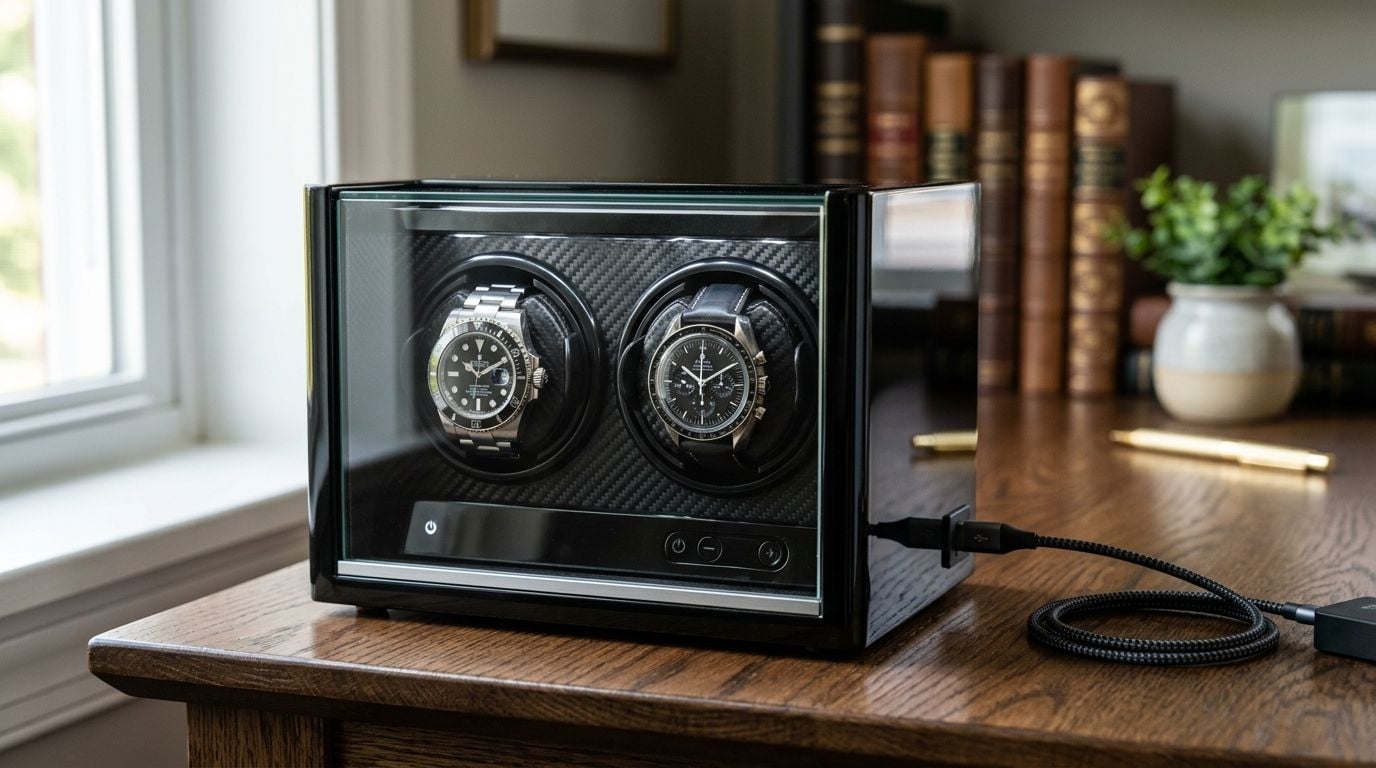
A single-slot USB winder is one rotor, one cushion, and one cable – usually USB-A, sometimes USB-C – built to fit a carry-on or a hotel nightstand. It runs off a laptop port, a wall adapter, or a power bank, which is the entire point of the format.
Single-slot USB winder pros:
- Fits in a jacket pocket or a small travel case
- Runs from almost any USB power source, including a power bank
- Lower cost of entry than a mains-powered cabinet
Single-slot USB winder cons:
- Usually one TPD setting or a narrow range, not a full spread of calibers
- No lock, no security, no climate control
- Cushion material varies a lot between manufacturers
Verdict: Buy. For one automatic watch that travels with you, this is the right category, full stop.
2. Dual-slot desktop USB winder: best USB watch winder for a two-watch rotation
A dual-slot USB winder puts two independent rotors on one desk footprint, each running its own program off a shared cable. It suits a collector alternating between two watches worn on different days.
Dual-slot USB winder pros:
- Independent TPD programs per slot
- No mains outlet required, works from a standard USB port
- Small enough for a nightstand or a desk drawer
Dual-slot USB winder cons:
- Shared power draw can soften torque when both rotors spin together
- Motor consistency varies unit to unit in this price band
- Cushion telescoping is often fixed, not adjustable, on cheaper models
Verdict: Hold. Reasonable for two everyday watches – test the torque with both slots running before trusting a grail piece to it.
3. USB-C power-bank winder: best USB watch winder for cordless operation
This format swaps the wall adapter for a USB-C power bank, aimed at a drawer, a closet, or a trip where an outlet isn't guaranteed. It's the newest entry in the category and the least consistent one in 2026.
USB-C power-bank winder pros:
- Genuinely cordless, no outlet dependency
- Compatible with the same USB-C charger most phones already use
- Easy to relocate without rewiring anything
USB-C power-bank winder cons:
- TPD accuracy drops as the power bank's voltage falls over a wind cycle
- Battery drains faster under continuous winding than most listings suggest
- Runtime between charges depends on the power bank's own capacity, not the winder
Verdict: Wait. The idea is sound; execution across the category is inconsistent enough in 2026 to let the format mature before buying in.
4. Multi-slot USB hub winder: best USB watch winder for a budget-conscious growing collection
A USB hub winder feeds four to eight rotors off one hub, letting a collector wind a growing stack of automatics without buying a mains-powered cabinet. It's the cheapest way to cover more watches.
Multi-slot USB hub winder pros:
- Lowest cost per slot in the USB category
- Compact footprint relative to the number of watches it holds
- Easy to add slots as a collection grows
Multi-slot USB hub winder cons:
- Shared power draw softens torque per rotor as more slots run at once
- No lock, no fire rating, no biometric access
- Cushion and enclosure quality is inconsistent across manufacturers
Verdict: Skip. Once a collection passes four automatics worth winding, shared power stops being a minor tradeoff and becomes the whole problem.
How we ranked these
The ranking above weighs three things in order: motor and rotor consistency under a full wind cycle, TPD program range against real-world calibers, and what happens to torque once every slot on the unit runs at the same time. A USB watch winder that scores well on the first two but collapses on the third – which is most multi-slot hub winders – drops to the bottom of the list regardless of cost.
“If a winder only hits its stated torque with every other slot idle, the spec sheet is measuring the wrong thing.”
Which USB watch winder should you choose?
For one automatic watch traveling with you, buy a single-slot USB winder – it's cheap, portable, and does the one job it's built for. For a two-watch rotation at home, a dual-slot desktop USB winder holds up fine, provided the torque checks out with both slots running together.
Past three or four automatics worth winding regularly, a USB watch winder stops being the right tool for the job in 2026. Shared power draw isn't a flaw at that point – it's the design limit of the category.
When USB power stops being enough
Enigwatch doesn't build a USB watch winder, and that's by design rather than an oversight. Every rotor in the Enigwatch lineup runs on a proprietary Japanese Mabuchi motor that needs constant mains voltage to hold its TPD program – the same reason a USB hub winder loses torque past slot four is the reason Enigwatch skipped USB power entirely.
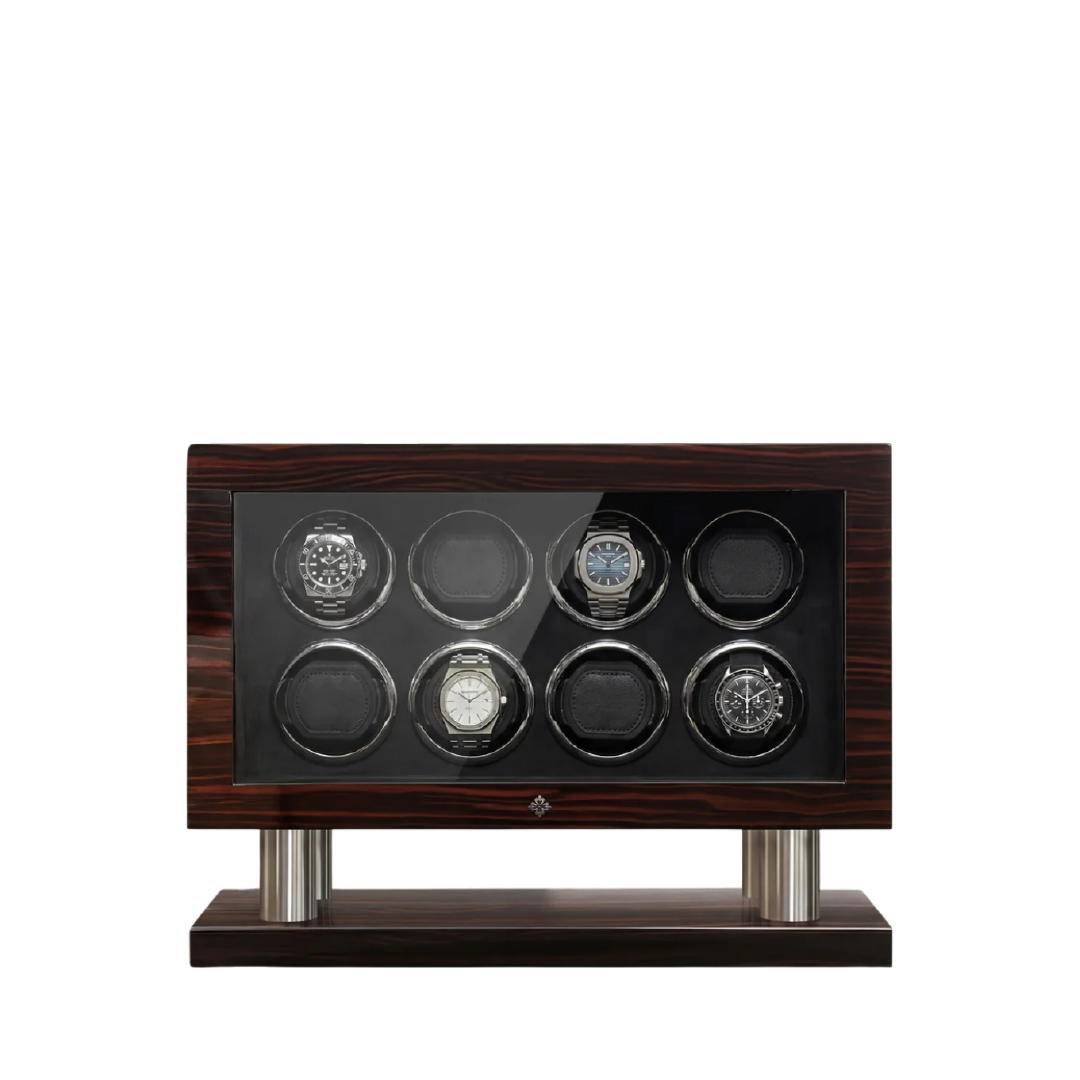
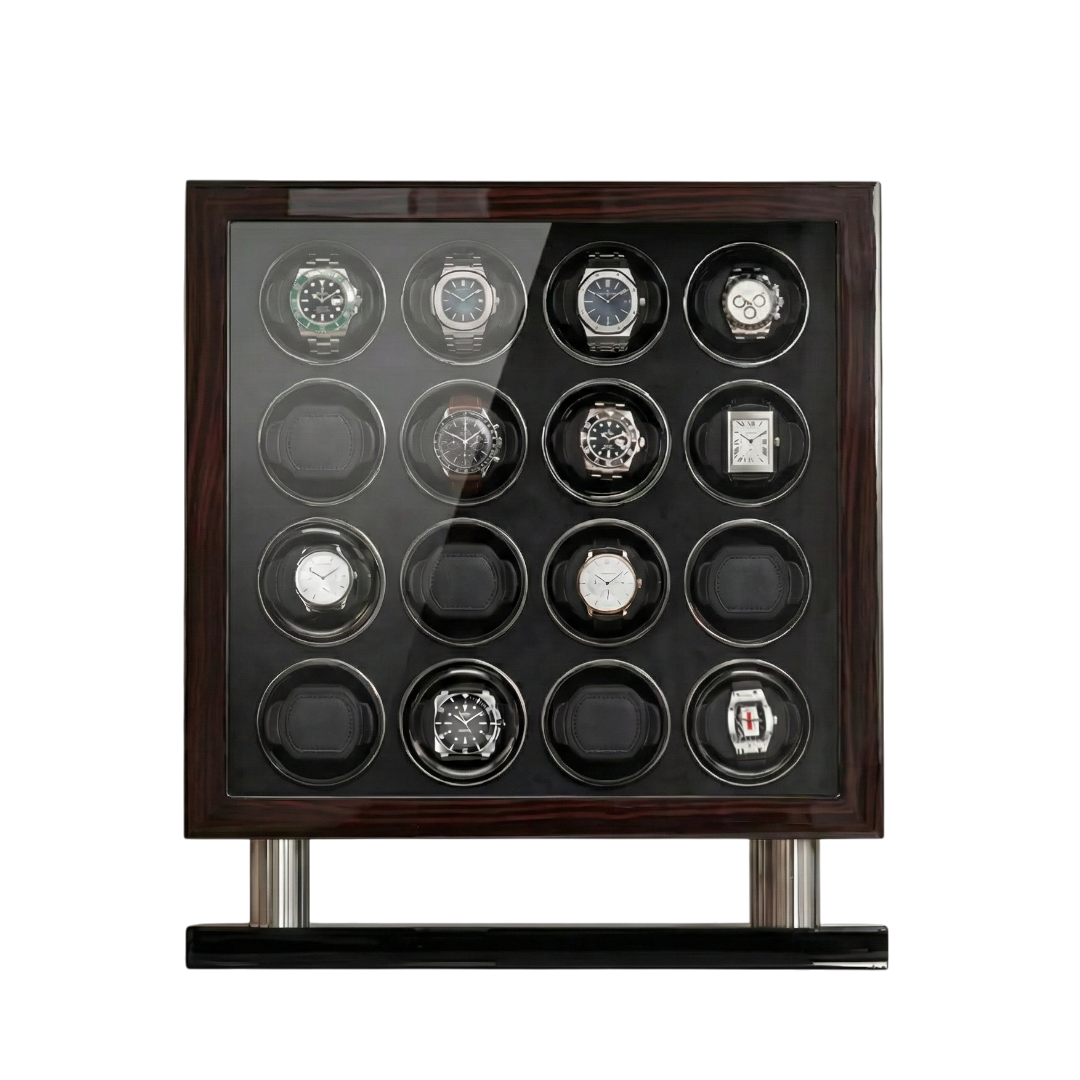
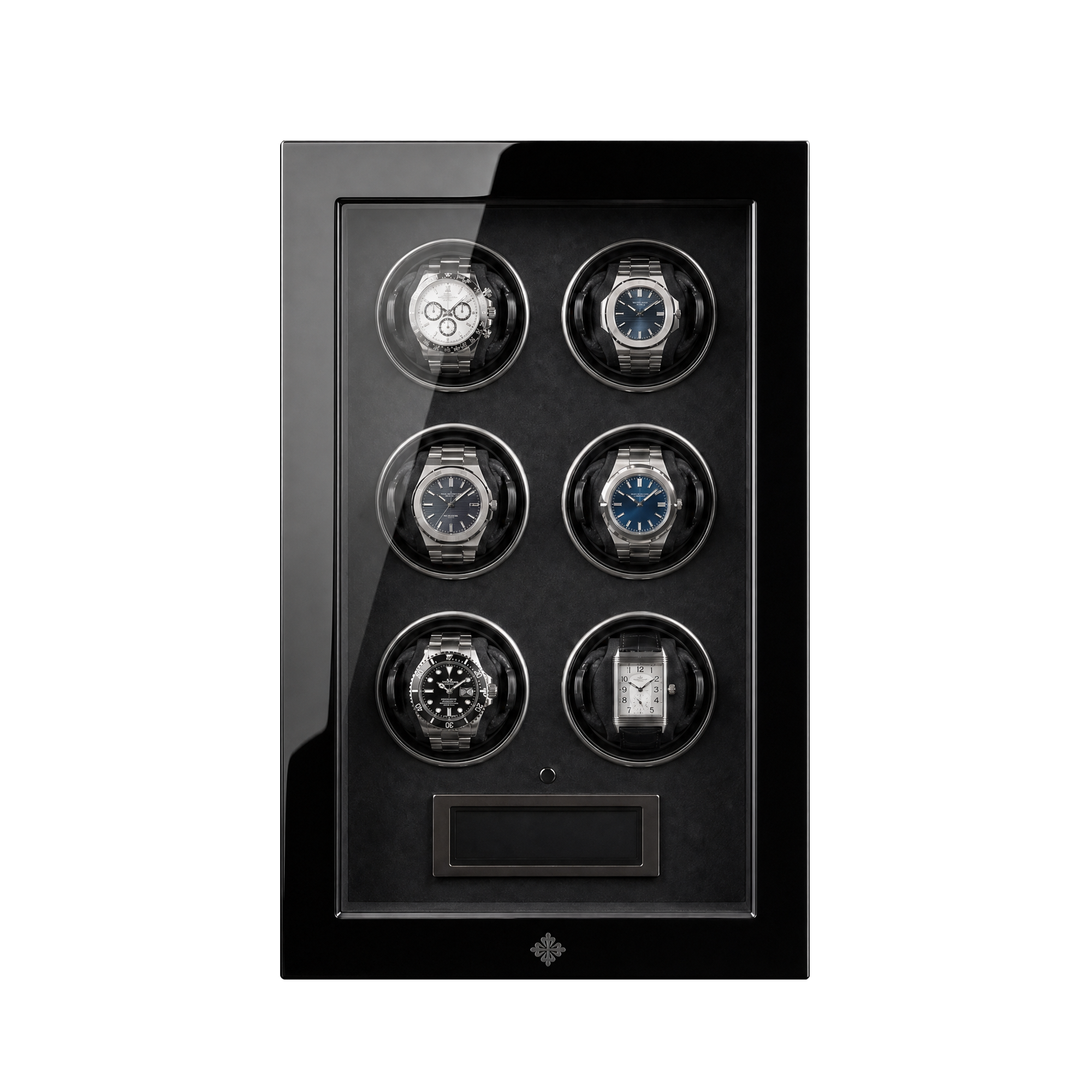
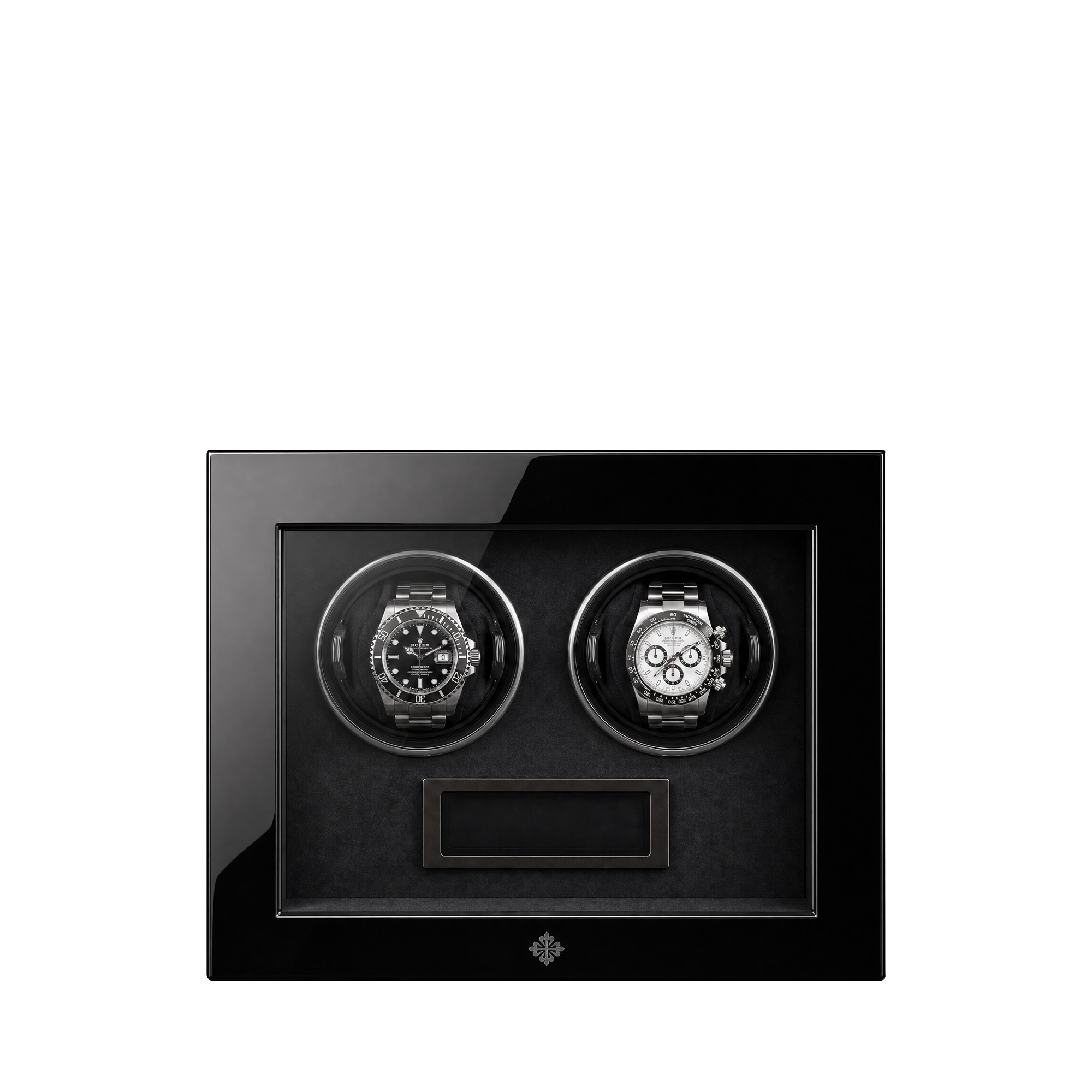
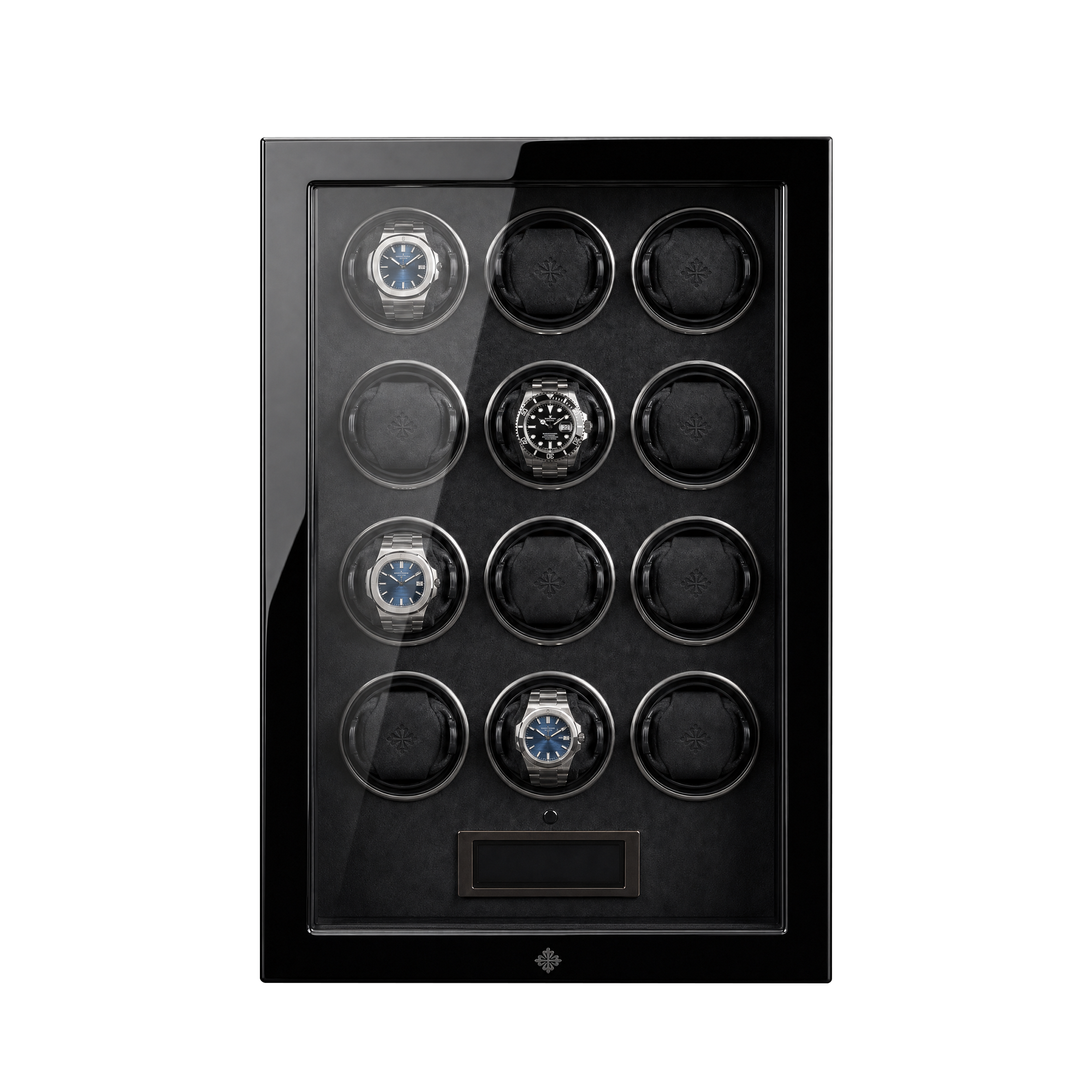
The Virtuoso Series 2 watch winder is the closest match to a dual-slot USB winder in scale – two watches, two independent programs – but built with a Macassar Ebony exterior and Alcantara lining instead of a plastic hub. The fingerprint-locked Impresario Series 2 adds a security layer most USB winders skip entirely. And the Yachtline Series 8 watch winder lays eight rotors flat across a credenza – the kind of scale where a USB hub winder would already have failed on torque.
None of these run on a USB cable, and none of them need to. A collector who's outgrown a USB watch winder isn't looking for a bigger hub – they're looking for a rotor that doesn't care how many slots are running at once.


FAQ
What’s the best USB watch winder in 2026?
A single-slot USB watch winder is the best choice in 2026 for one automatic watch that travels with its owner. Dual-slot desktop units work for two watches, but multi-slot USB hub winders lose torque as more rotors draw from the same port.
Is a USB-powered watch winder as reliable as a plug-in winder?
A USB-powered watch winder shares power across a single port, so torque and TPD accuracy can dip as more slots run, while a mains-powered winder like the Virtuoso Series 2 draws steady voltage per rotor. The gap widens as slot count rises.
Can a USB watch winder damage an automatic watch?
A USB watch winder itself rarely damages a watch, but an inconsistent TPD program can underwind or overwind a movement relative to its factory spec. Checking the winder’s stated TPD range against the watch’s own caliber requirements avoids the issue.
What’s the difference between USB-A and USB-C watch winders?
USB-A winders draw from an older, lower-current port standard, while USB-C units generally pair with faster chargers and the same cable most 2026 phones use. Neither format changes how much torque the rotor itself can deliver.
Does Enigwatch make a USB-powered watch winder?
No – every Enigwatch watch winder, including the Virtuoso Series 2 and Yachtline Series 8, runs on mains power through a proprietary Japanese Mabuchi motor. The brand skips USB power because its rotors need constant voltage to hold precise TPD programs.
Is a multi-slot USB hub winder worth it for a growing collection?
A multi-slot USB hub winder is worth it only below four watches; past that point, shared power draw softens torque per rotor. Collectors past that threshold typically move to independently powered winders instead.
How many turns per day does a USB watch winder need to run?
The right TPD setting depends on the specific caliber inside the watch, not the winder’s power source – a USB winder needs the same program range as a mains-powered one to wind correctly. Checking the movement’s factory TPD spec before buying either type avoids under- or overwinding.
How much should I spend on a USB watch winder?
Spending should scale with slot count and travel needs – a single-slot USB winder for one travel watch costs far less than a multi-slot hub, and current pricing on any given model is worth checking directly on the retailer’s site.
One last thing
The failure point on a multi-slot USB hub winder almost never shows up on the spec sheet – it shows up the first time all eight slots spin at once and the watch on the end of the chain gets less torque than the one nearest the port. Test a hub winder with every slot loaded before trusting it with a full collection, not with one watch running alone.
Related guides
Protect Your Watch Collection
Designed for collectors who demand the best. Explore our premium watch winders and luxury safes.