
Omega Seamaster owners need a watch winder that clears 650 to 950 turns per day, bidirectional, without enough vibration to scuff the bracelet clasp against the box lining. This guide ranks five Enigwatch watch winders built around that spec, from a single-slot box to a twelve-rotor vault, and names which one fits your Seamaster collection in 2026.
- Best Omega Seamaster watch winder overall in 2026: Impresario Series 2, biometric with independent rotor programs.
- A single Seamaster or a Seamaster-plus-one runs well on the Virtuoso Series 2 at 650-950 TPD, bidirectional.
- Mixed-brand collections need independent TPD per rotor — the Virtuoso Series 6 handles a Seamaster next to a Rolex or Tudor.
- Collections of eight-plus Seamaster references call for the Yachtline Series 8 or the twelve-rotor Impresario Series 12.
Why this matters
A Seamaster left sitting for more than a day or two stops and needs resetting — date wheel, time sync, the whole routine. The TPD guide for Omega winders breaks the range down by caliber, and a winder tuned to that actual TPD keeps the mainspring at consistent tension instead of over- or under-winding it between wears.
Get the TPD wrong in either direction and it costs you. Too few turns and the watch loses power reserve overnight; too many turns on an older automatic adds unnecessary wear to the mainspring bridle over years of daily cycling. This article works from the 650-950 TPD, bidirectional baseline that covers most co-axial Seamaster movements sold since the early 2000s — Aqua Terra, Diver 300M, and Planet Ocean references included — and that baseline remains the reference point heading into 2026.
Enigwatch builds every winder on this list around that spec, pairing Japanese Mabuchi motors with a lifetime warranty and worldwide shipping, so the TPD program is a design decision, not an afterthought bolted onto a generic box.
Which Seamaster reference are you winding?
Omega sells the Seamaster across several sub-families, and the winder decision shifts slightly with each one. The Diver 300M and Planet Ocean run larger cases, 42mm to 45.5mm, and usually want a telescopic pillow rather than a fixed cushion. The Aqua Terra 150M runs slimmer and pairs well with a smaller pillow diameter. The Railmaster and older pre-2000 references may run automatic calibers outside the 650-950 TPD range covered here — check the caliber-specific figure before assuming the same setting applies across the whole Seamaster line.
What makes the best Omega Seamaster watch winder
A winder that runs one shared program across two rotors gives both watches whatever TPD the box ships with by default — rarely tailored to either caliber specifically. That flattening is the single biggest difference between the picks below and generic single-program boxes sold elsewhere.
- TPD range and rotation direction matched to the Seamaster's caliber, not a generic factory default
- Motor quality — Japanese Mabuchi motors run quieter over years of continuous cycling than generic stepper motors
- Pillow material — Alcantara or Nappa leather protects the bracelet and dial from the scuffing that shows up inside foam-lined boxes after months of use
- Access control — biometric lock versus an open shelf, depending on where the watch lives
- Capacity matched to the actual collection — a single-slot box for a three-Seamaster rotation means buying twice within a year
- Finish appropriate to placement — a nightstand box and a credenza-sized cabinet solve different problems
Omega Seamaster watch winders at a glance
| Winder | Best for | Standout feature | Key limitation |
|---|---|---|---|
| Impresario Series 2 | Overall pick, security-conscious owners | Biometric fingerprint lock, independent rotor programs | Two-slot capacity |
| Virtuoso Series 2 | A single Seamaster or Seamaster-plus-one | Independent programs in a compact footprint | No biometric lock |
| Yachtline Series 8 | A growing dive-watch collection, display-forward | Horizontal tray layout across eight rotors | Larger footprint, needs credenza space |
| Virtuoso Series 6 | Mixed-brand collections with different TPD needs | Six independently programmable rotors | No biometric lock |
| Impresario Series 12 | A large Seamaster vault, eight-plus pieces | Twelve independent rotors behind one fingerprint lock | Largest footprint on this list |
The table order matches the sections below — read it top to bottom as a decision tree, not a leaderboard, since no two entries compete for the same slot.


1. Impresario Series 2 Watch Winder: best Omega Seamaster watch winder for security-conscious owners
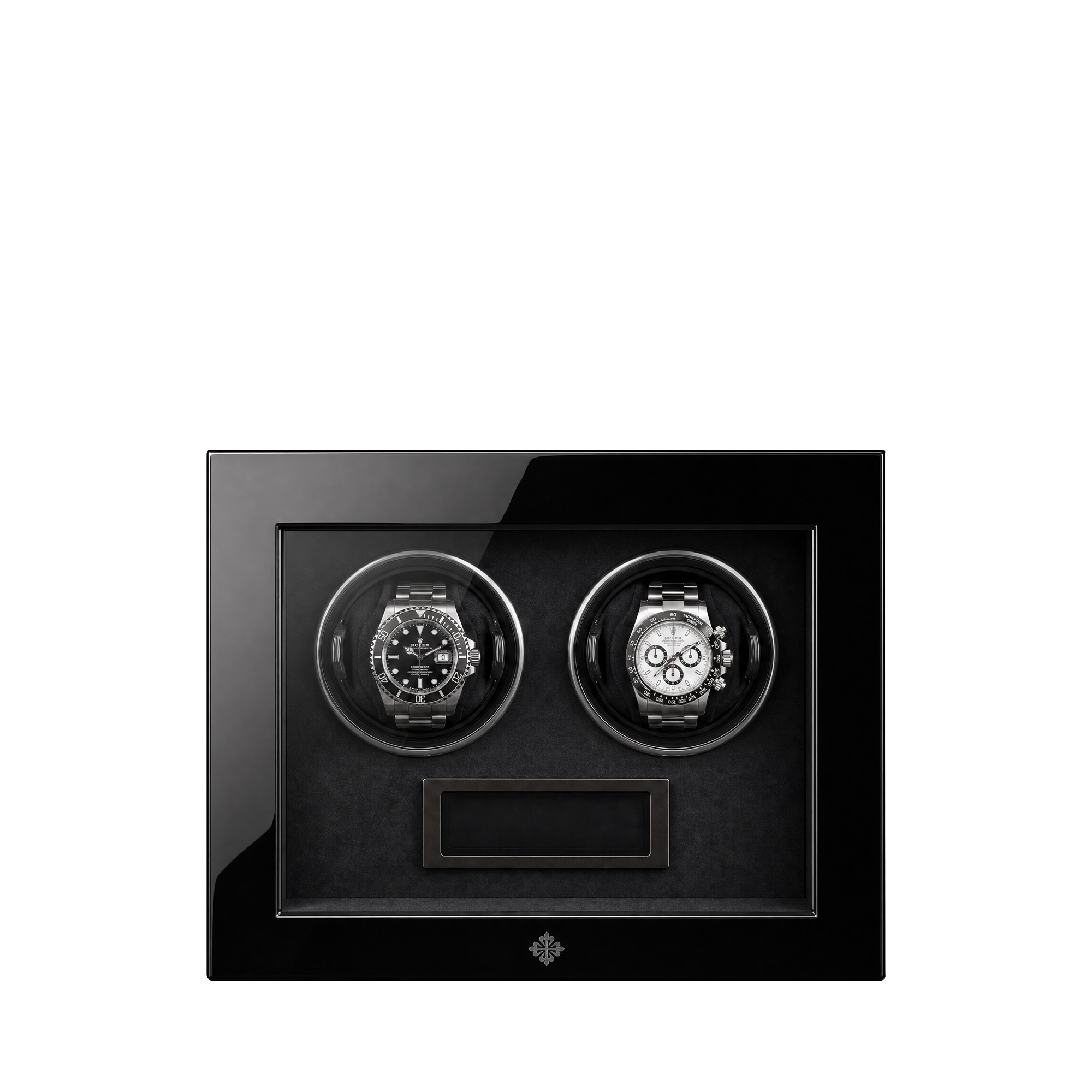
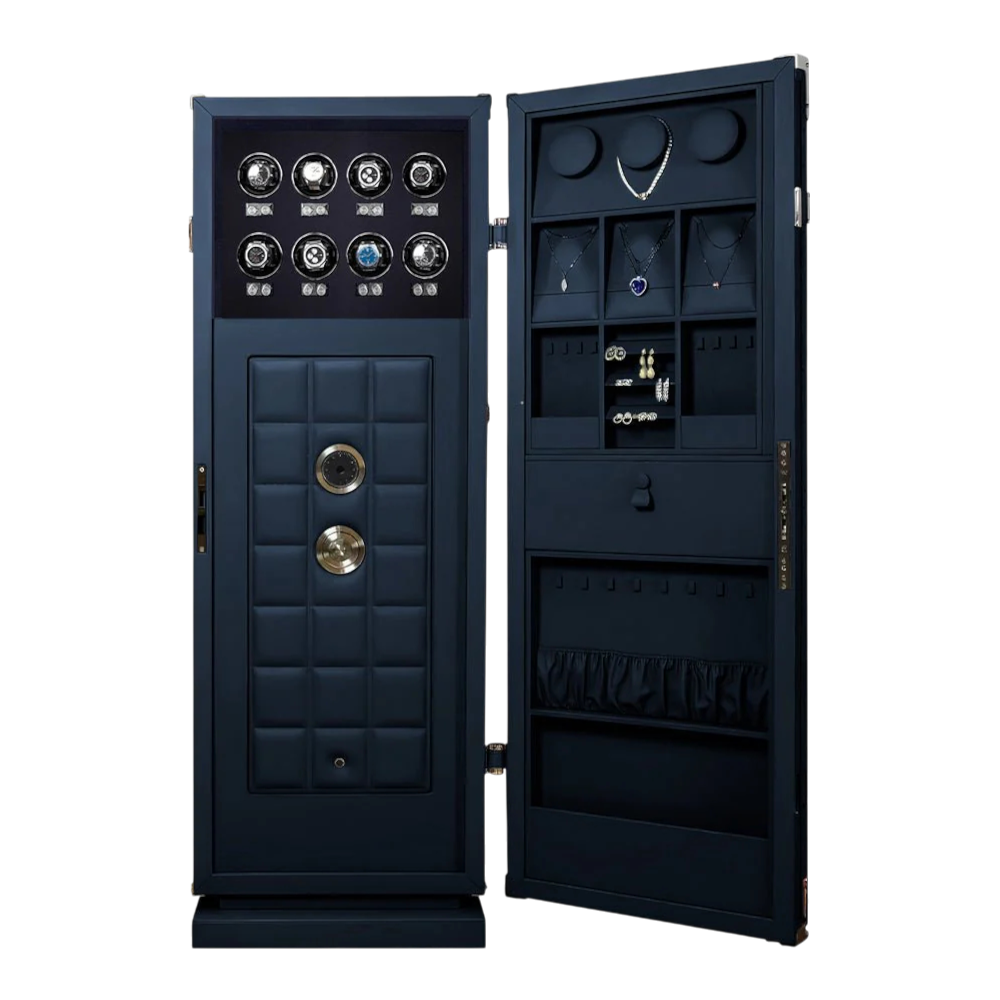
The Impresario Series 2 unlocks with a fingerprint and runs two independent rotor programs, so a Seamaster and a second watch each get their own TPD and direction setting instead of sharing one dial. The case is Macassar Ebony with an Alcantara interior, and the telescopic pillows adjust for case sizes from a 36mm dress piece through a 44mm Planet Ocean. It suits a Diver 300M or Aqua Terra owner who also wears something else in rotation — a Speedmaster, a dress watch, whatever sits in the second slot.
Impresario Series 2 pros:
- Biometric access keeps the winder closed to anyone but the owner
- Two rotors run independent TPD and direction settings
- Telescopic pillow fits Seamaster case sizes without a spacer
Impresario Series 2 cons:
- Two slots means a third watch needs a second winder
- A fingerprint lock adds a step compared to an open shelf
Best for: a Seamaster owner who wants the watch behind a lock, not sitting open on a dresser. Verdict: Buy.
2. Virtuoso Series 2 Watch Winder: best for a single Seamaster or a Seamaster-plus-one
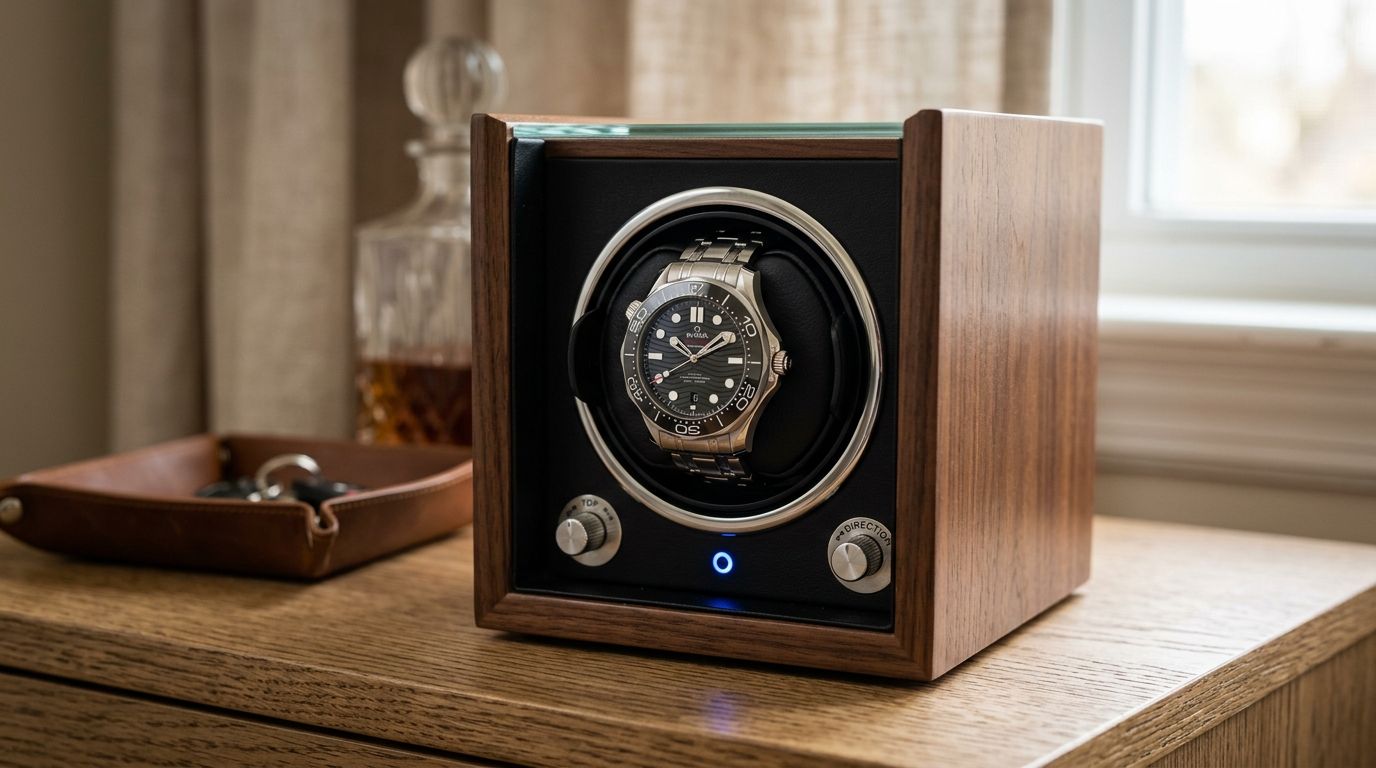
The Virtuoso Series 2 runs two watches on independent programs without the biometric lock — a simpler build for a collector who owns one Seamaster and maybe one other automatic. Same Macassar Ebony exterior and Alcantara lining as the Impresario line, same telescopic pillow system, no fingerprint sensor. It's the right call for a first Planet Ocean or Aqua Terra bought as an entry into serious collecting, before a second or third watch shows up.
Virtuoso Series 2 pros:
- Independent TPD and direction per rotor, matching the Impresario line's precision
- Smaller footprint than an eight- or twelve-slot cabinet
- Alcantara lining protects the Seamaster's steel bracelet without marking it
Virtuoso Series 2 cons:
- No fingerprint lock — sits open on a shelf or in a drawer
- Two slots is a ceiling most collectors outgrow within a year or two
Best for: a first Seamaster winder, or a two-watch rotation. Verdict: Buy if the collection stays at two pieces; Hold if a third watch is already on the way.
3. Yachtline Series 8 Watch Winder: best for a growing dive-watch collection
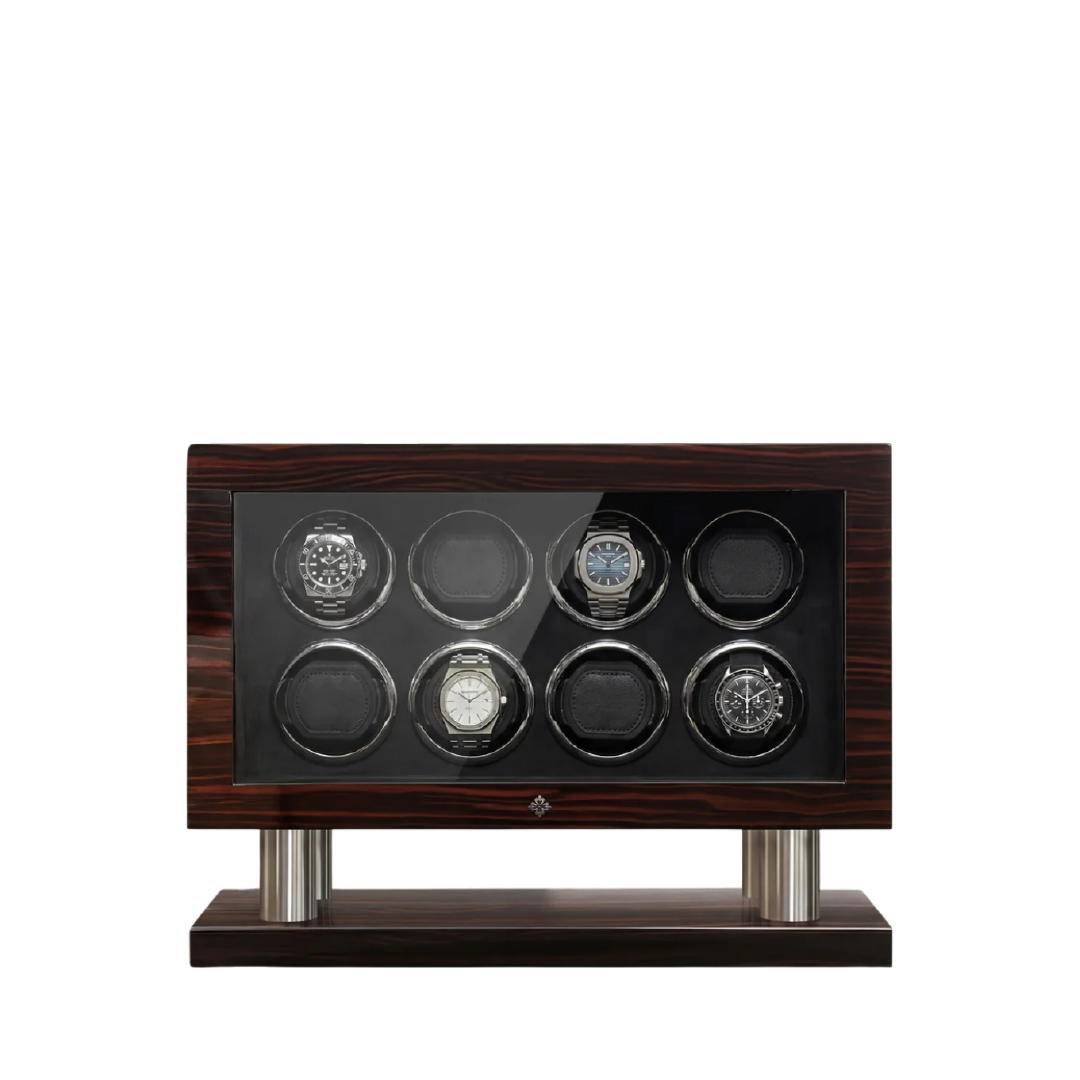
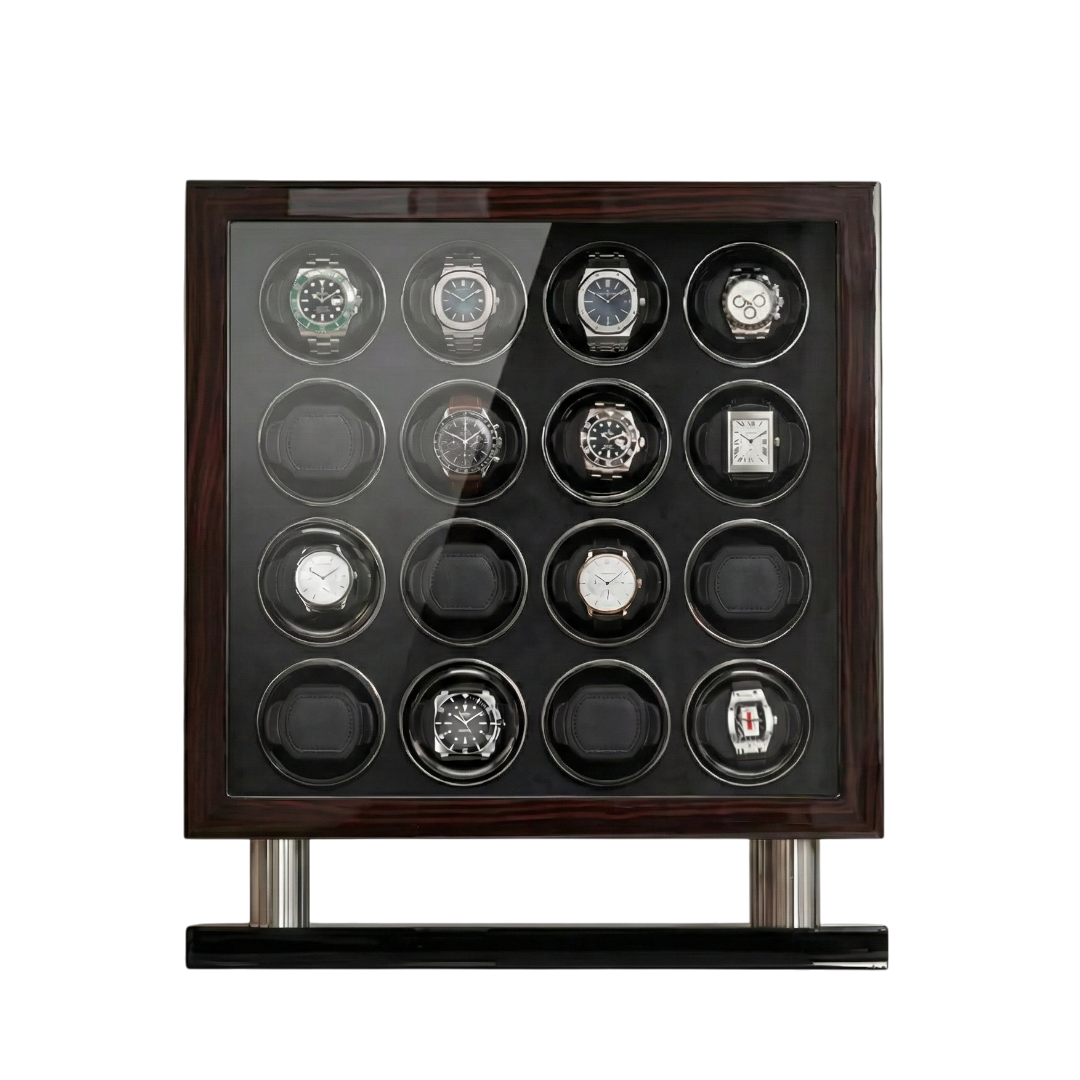
The Yachtline Series 8 lays eight watches flat in a horizontal tray instead of stacking them vertically, which suits a Seamaster Diver 300M or Planet Ocean sitting next to seven other dive watches. Biometric access, Mabuchi rotors, Macassar Ebony exterior throughout. A Seamaster Diver 300M sitting next to a Tudor Pelagos or a Rolex Sea-Dweller is exactly the kind of rotation this tray was built to hold.
Yachtline Series 8 pros:
- Horizontal layout reads more like a display case than a storage box
- Eight independent rotors cover a mixed dive-watch rotation
- Biometric lock included at this capacity tier
Yachtline Series 8 cons:
- Needs a credenza or console with real depth, not a nightstand
- Overkill for a one- or two-watch Seamaster owner
Best for: a Seamaster owner whose collection has grown past dive watches into a full rotation. Verdict: Buy.
4. Virtuoso Series 6 Watch Winder: best for mixed-brand collections
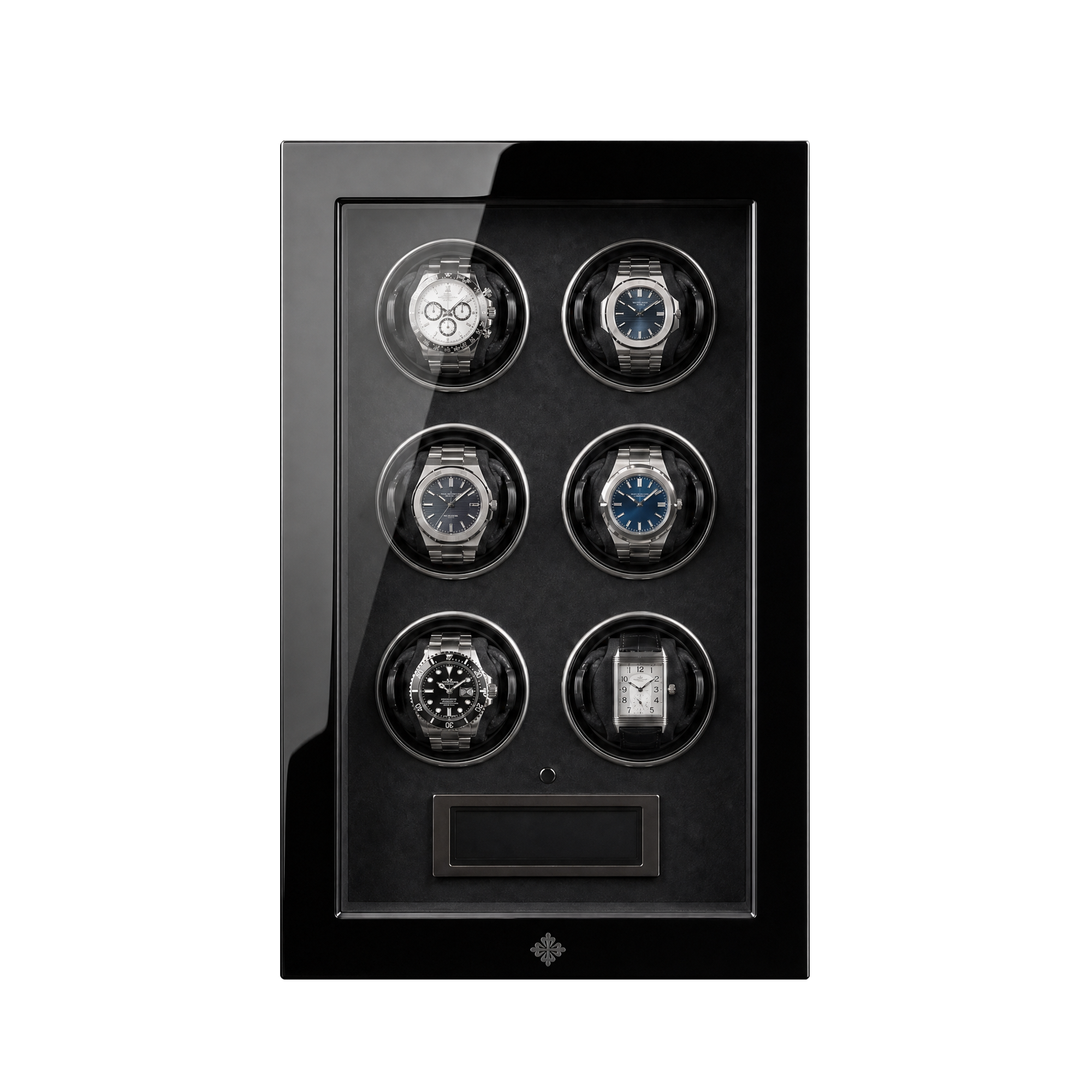
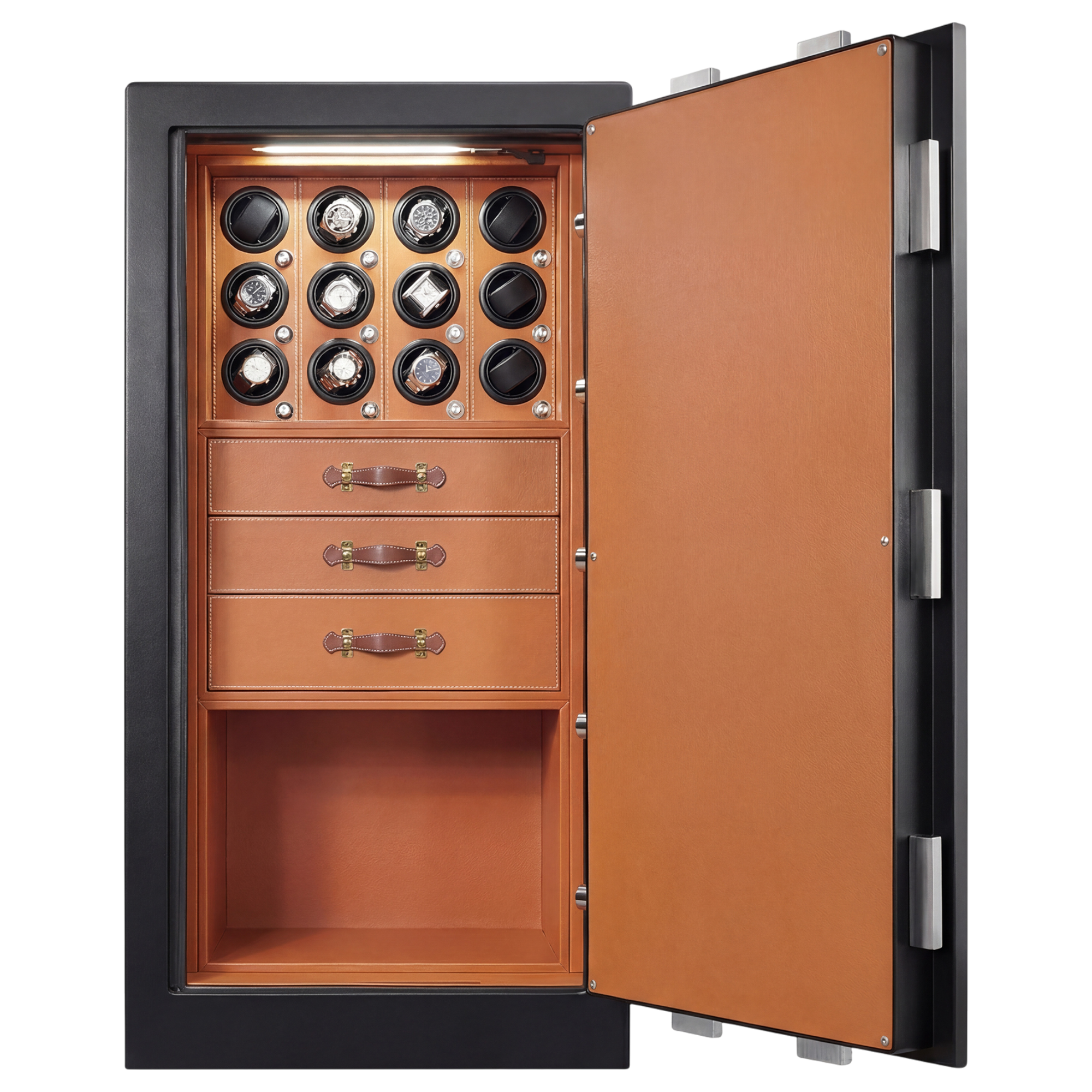
A Seamaster sitting next to a Rolex or a Tudor creates a TPD mismatch problem: different calibers want different turn counts, and a shared-rotor box averages both wrong. The Virtuoso Series 6 runs six rotors on six independent programs, so the Seamaster gets its 650-950 TPD while a neighboring Submariner or Black Bay gets its own setting entirely. Pair a Seamaster Aqua Terra with an unrelated dress watch or chronograph and the independent programs keep both correct without manual adjustment.
Virtuoso Series 6 pros:
- Six independent programs solve the mixed-brand TPD problem directly
- Same Alcantara lining and Mabuchi motors as the rest of the Virtuoso line
- Mid-size footprint fits most closet shelving
Virtuoso Series 6 cons:
- No biometric lock at this tier
- Six slots fill fast once a collection crosses into double digits
Best for: a Seamaster owner whose collection already spans two or three brands. Verdict: Buy.
5. Impresario Series 12 Watch Winder: best for a large Seamaster vault
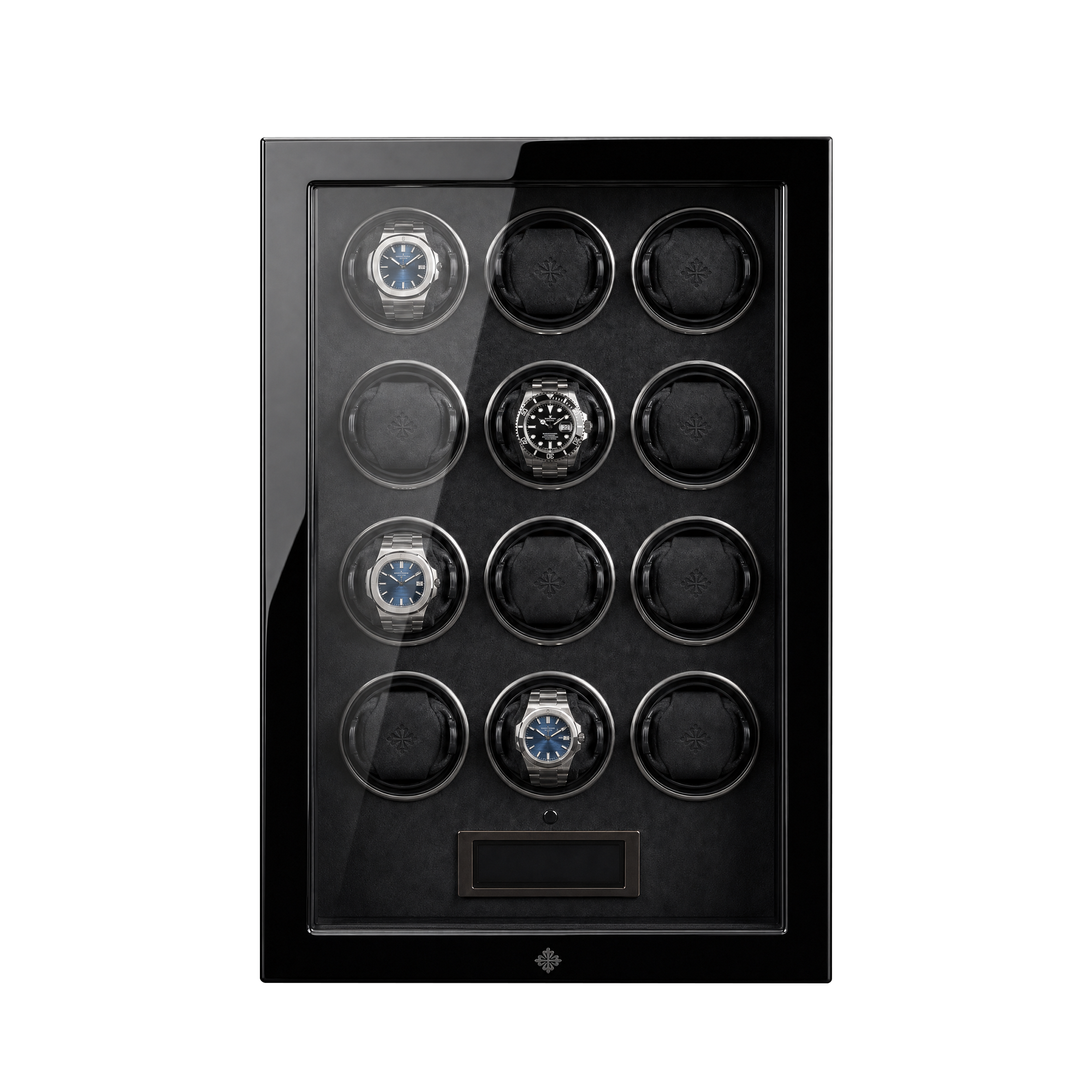
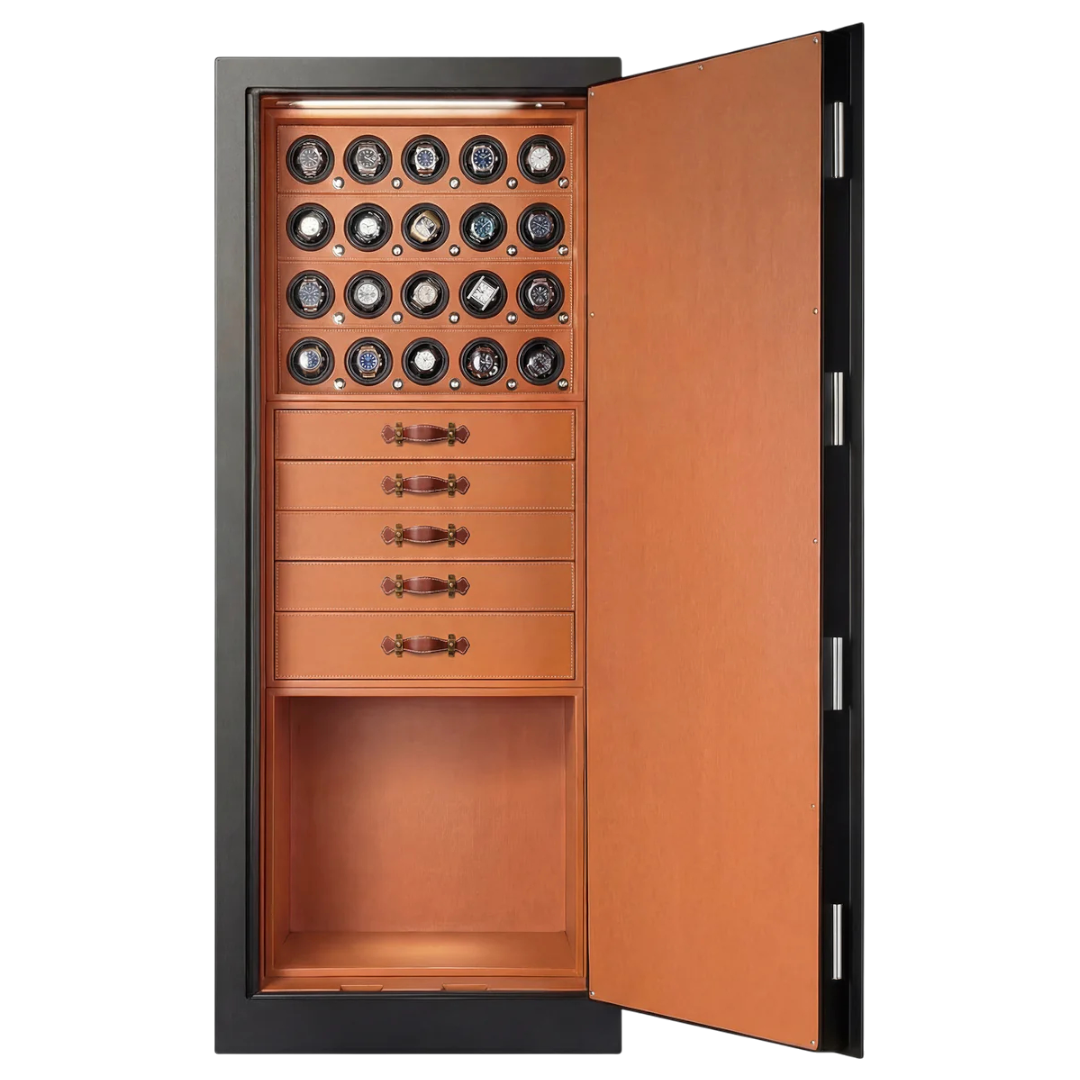
Collectors who own eight or more Seamaster references — different generations of the Aqua Terra, the Diver 300M, the Planet Ocean — need twelve independent rotors behind one lock rather than three or four smaller boxes scattered across a shelf. The Impresario Series 12 is the largest fingerprint-locked winder in the Enigwatch line, running each rotor on its own TPD and direction program through a shared control panel. A collector chasing every Diver 300M variant released over the past two decades runs out of nightstand space long before they run out of references.
Impresario Series 12 pros:
- Twelve independent programs cover a full multi-generation Seamaster collection
- One biometric lock instead of managing several smaller winders separately
- Same Mabuchi motor and Alcantara build quality as the rest of the range
Impresario Series 12 cons:
- The largest footprint on this list, closer to furniture than a nightstand box
- More winder than a one- or two-watch owner needs
Best for: a serious, multi-Seamaster collection that has outgrown smaller winders. Verdict: Buy for eight-plus watches; Skip if you own fewer than four.
How we ranked these
Every winder on this list runs bidirectional rotation with independently programmable TPD per rotor — a non-negotiable given the Seamaster's 650-950 TPD range across its calibers. From there, the ranking weighs motor quality, pillow material, access control, and capacity against how a Seamaster collection actually grows, not against the spec sheet alone. Any winder without independently programmable TPD per rotor was excluded outright, regardless of capacity or finish.
Which Omega Seamaster watch winder should you choose?
For most Seamaster owners in 2026, the Impresario Series 2 is the right first Enigwatch watch winder — biometric, independently programmable, and sized correctly for a one- or two-watch rotation. Collectors already past that point should look at the Virtuoso Series 6 for mixed brands or the Yachtline Series 8 for a dive-watch-forward display. The Impresario Series 12 is the correct call only once the Seamaster collection itself has grown past eight pieces, not before. Buying capacity before you need it rarely pays off — a two-slot winder used to its limit beats a twelve-slot cabinet with ten empty rotors, at least until the collection actually grows into it.
FAQ
What’s the best watch winder for an Omega Seamaster in 2026?
The Impresario Series 2 is the best overall pick for most Seamaster owners in 2026 — biometric access with two independently programmable rotors. Larger collections should move up to the Virtuoso Series 6 or Yachtline Series 8.
How many TPD does an Omega Seamaster need?
Most co-axial Seamaster calibers run well at 650 to 950 turns per day, bidirectional. The exact figure varies by reference, and a dedicated TPD guide by caliber is the more precise source.
Does an Omega Seamaster need a bidirectional winder?
Yes — the co-axial movements used across current Seamaster references wind in both directions, so a one-way winder wastes half its rotations. Every winder on this list runs bidirectional.
Is a biometric watch winder worth it for a Seamaster?
It’s worth it if the winder sits somewhere accessible to more than one person, like a shared bedroom or an office. For a locked closet or safe, an open-access winder like the Virtuoso Series 2 works just as well mechanically.
Can one winder handle a Seamaster and a Rolex together?
Only if the winder runs independent TPD programs per rotor — a shared-setting box averages the two calibers’ needs incorrectly. The Virtuoso Series 6 is built for exactly this mixed-brand scenario.
How many watches should a Seamaster collector’s winder hold?
Size the winder to the collection plus one or two slots for growth, not to the single watch you own today. A one-Seamaster owner who buys a two-slot winder avoids replacing it within the year.
Does a watch winder damage an Omega Seamaster’s movement?
A properly programmed winder at the correct TPD does not damage the movement — it replicates normal wrist motion. The risk comes from mismatched TPD or foam linings that scuff the bracelet over time, not the winding itself.
What material should line a Seamaster’s winder pillow?
Alcantara or Nappa leather protects the bracelet clasp and case from the scuffing that shows up inside foam-lined boxes after months of daily cycling. It’s a bigger factor in long-term wear than the motor spec sheet.
One last thing
The clasp, not the case, is usually what scuffs first inside a cheap winder — a Seamaster's steel bracelet rubbing against foam lining for months leaves marks the case coating never will. That's the real argument for Alcantara or Nappa pillows over foam, more than any motor spec ever will be. Check the pillow lining before checking the TPD number; a wrong TPD is fixable in software, a scuffed bracelet link is not.
Related guides
Protect Your Watch Collection
Designed for collectors who demand the best. Explore our premium watch winders and luxury safes.