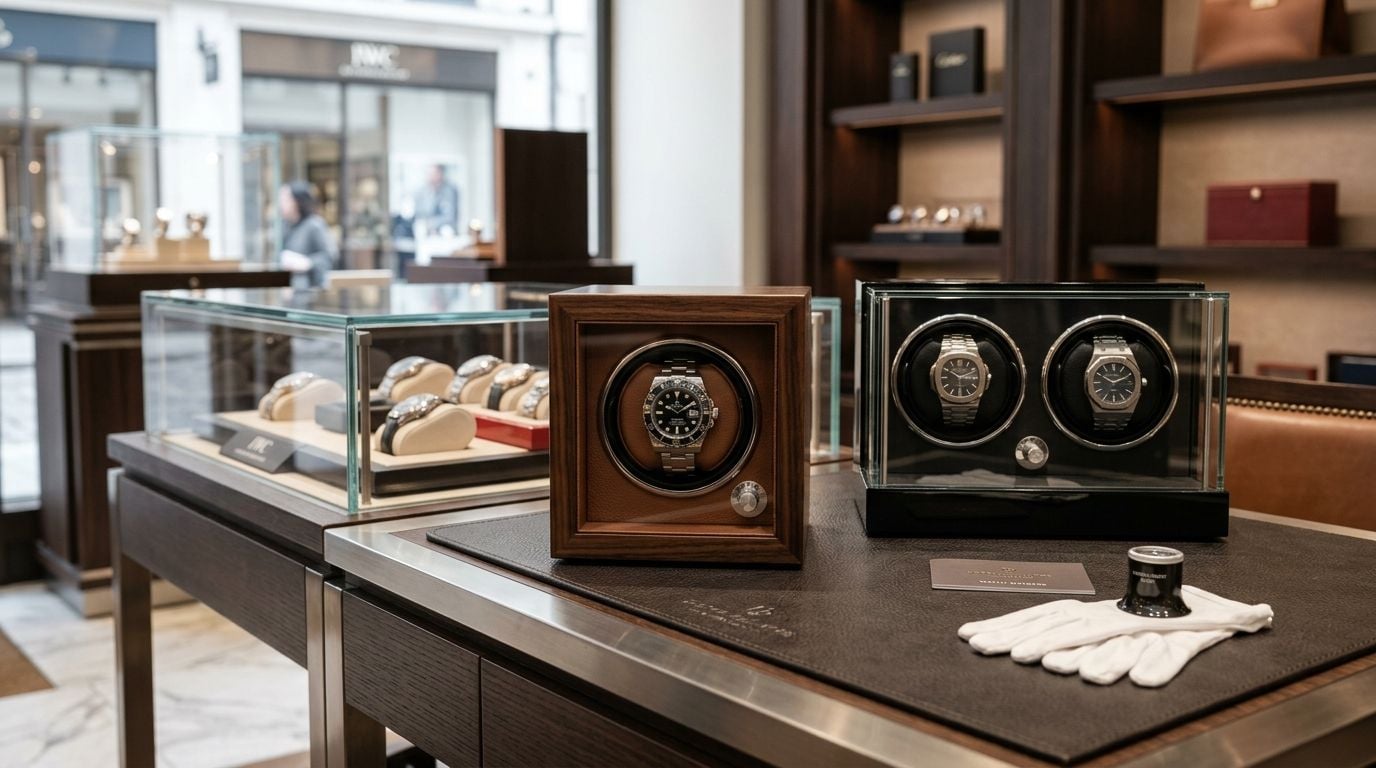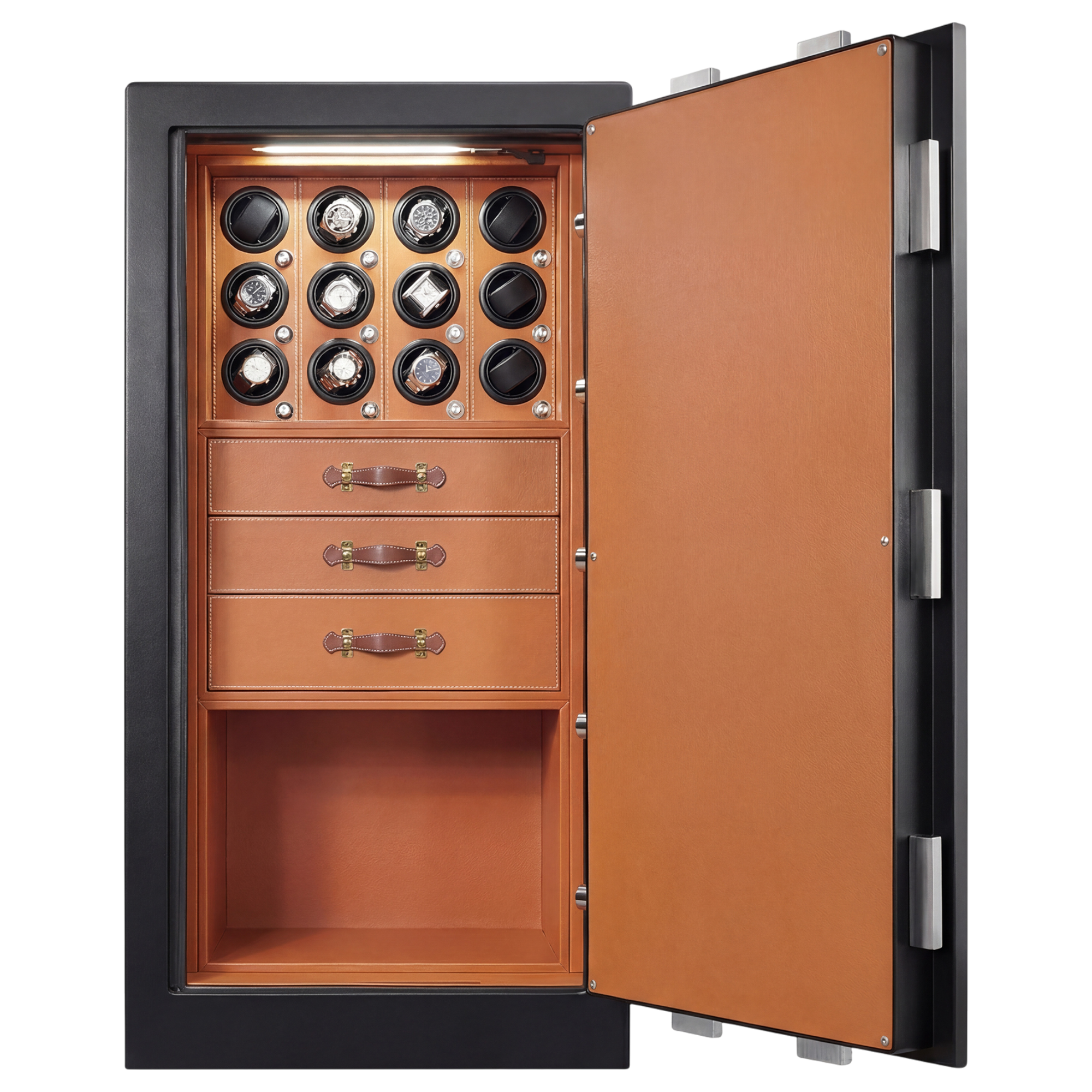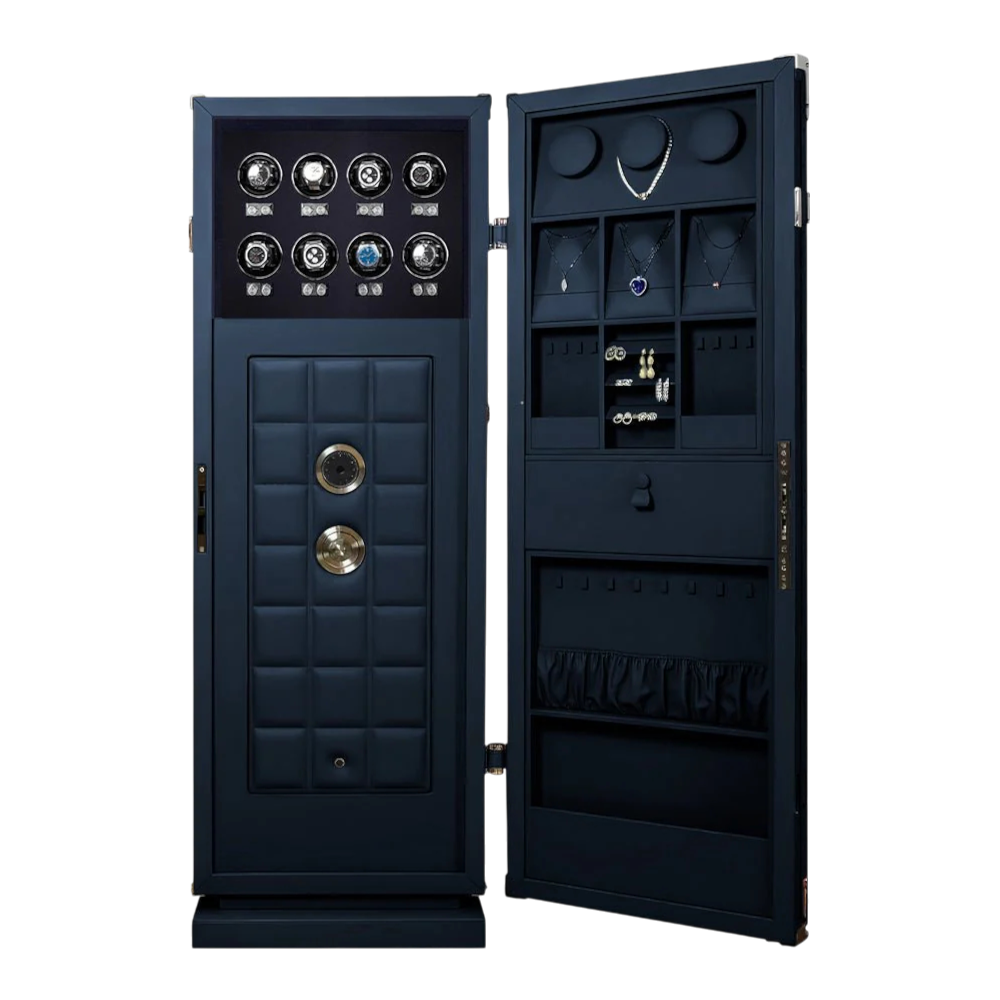

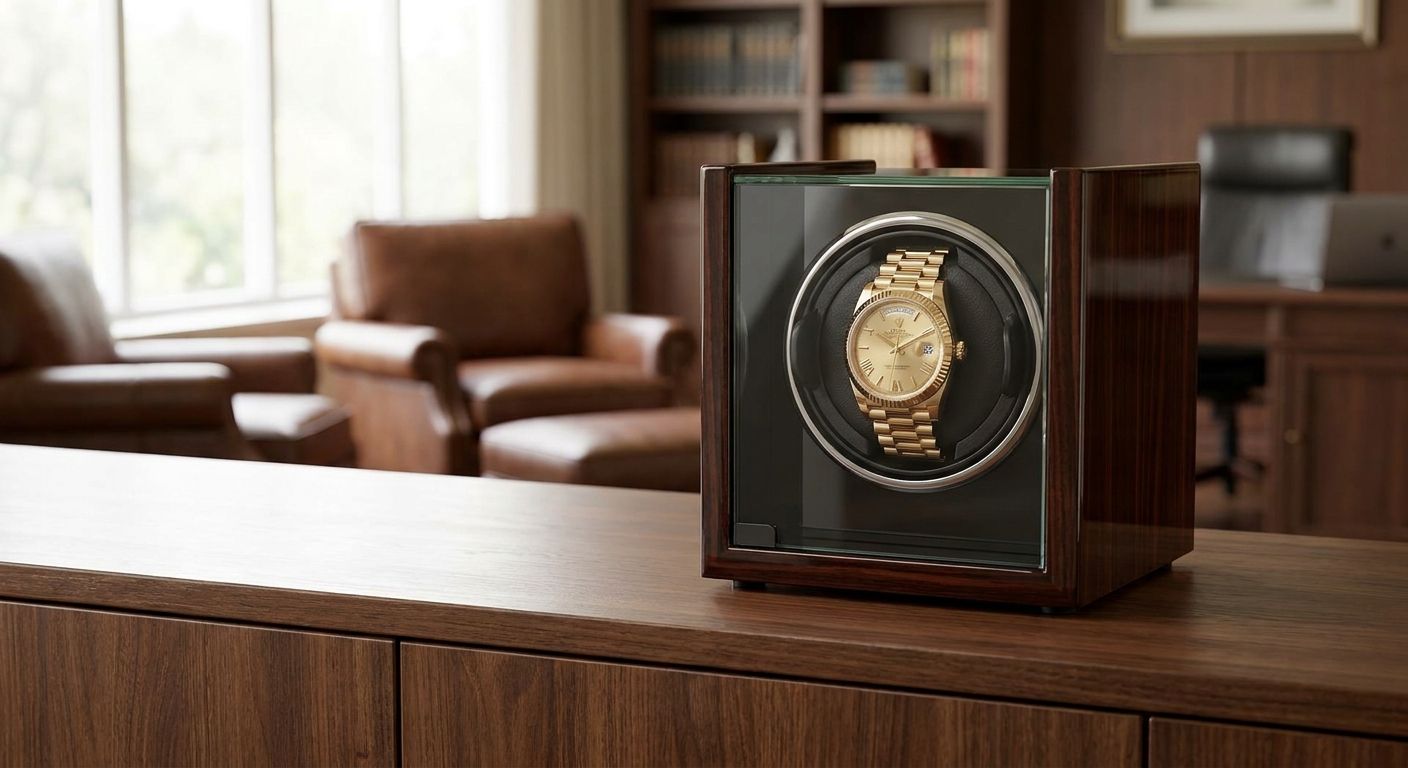
A Rolex Day-Date runs on calibre 3255, a bidirectional automatic with a 70-hour power reserve, and it needs a winder that matches that torque curve rather than a generic single-watch box built for a two-hand quartz piece. This guide ranks five winders built for exactly that job in 2026, from a two-watch unit with independent programs to a budget pillow upgrade for a case you already own.
- The best rolex day-date watch winder in 2026 is the Virtuoso Series 2 for independent per-rotor TPD control.
- Impresario Series 2 wins on security with a fingerprint lock and two-watch capacity.
- Yachtline Series 8 suits collectors building a horizontal display around a Day-Date and a growing case.
- Calibre 3255 runs a 70-hour power reserve and typically needs 650 to 800 TPD, bidirectional.
- Watch Winders Pillow is the budget move for owners who already own a case and just need the right cushion size.
Why this matters
A Day-Date isn't just an automatic — it's a double calendar. When the rotor stops turning and the mainspring runs down, the day disc and the date wheel stop with it. Restart the watch after a week of sitting still and you're not just resetting the time; you're advancing a complication through seven separate midnight crossings by hand.
The watch also ships in case sizes from 36mm to 44mm across references, so a cushion sized for a slim dress watch won't seat a wider Day-Date bracelet correctly. Getting the winder wrong means either an underpowered mainspring or a cushion that leaves the crown catching on the pillow edge.
What makes the best watch winder for a Rolex Day-Date
- Bidirectional rotation that matches calibre 3255's rotor, not a one-direction motor built for older Swiss movements
- TPD programmability in the 650-800 range without guessing at a fixed factory setting
- A telescopic cushion sized for 36mm to 44mm cases, since Day-Date references vary by year and metal
- Japanese Mabuchi motors, which run quieter and hold tolerance longer than unbranded steppers
- Security matched to the collection — a fingerprint lock matters more once a Day-Date sits next to a second or third piece
- Lining that won't mark a bracelet — Alcantara or Nappa over open foam
Rolex Day-Date watch winders at a glance
| Winder | Best For | Standout Feature | Key Limitation |
|---|---|---|---|
| Virtuoso Series 2 | Independent TPD control | Two rotors, two separate programs | Two-watch capacity only |
| Impresario Series 2 | Biometric security | Fingerprint lock, telescopic cushions | Adds a step to daily access |
| Yachtline Series 8 | Display-forward collections | Horizontal gallery layout | Takes more shelf depth than a vertical box |
| Virtuoso Series 6 | Mixed multi-complication rotation | Six independent programs | Overbuilt for a single watch |
| Watch Winders Pillow | Budget upgrade to an existing box | Adjustable 36mm-55mm cushion | Not a stand-alone winder |
1. Virtuoso Series 2: best rolex day-date watch winder for independent TPD control
The Virtuoso Series 2 watch winder runs two watches on two separate programs, so a Day-Date set to 700 TPD bidirectional doesn't have to share a fixed cycle with a second watch that needs something different. The case is Macassar Ebony with an Alcantara-lined interior, and each rotor operates independently through its own panel.
Virtuoso Series 2 pros:
- Two independent TPD programs, not a shared master setting
- Alcantara lining that won't scuff a bracelet clasp
- Compact enough for a nightstand or closet shelf
Virtuoso Series 2 cons:
- Only two watches — no room to grow past a pair
- No biometric lock if security is the priority
Best for: a Day-Date owner running it alongside one other automatic. Verdict: Buy.
2. Impresario Series 2: best for biometric security on a Day-Date
The Impresario Series 2 watch winder unlocks with a fingerprint and runs both rotors on independent programs, which matters for a watch that retails well into six figures on the secondary market. The interior pairs Macassar Ebony with Alcantara, and the cushions telescope to fit a Day-Date's wider case sizes.
Impresario Series 2 pros:
- Fingerprint access instead of a key that can be lost or copied
- Telescopic cushions that adjust to 36mm-55mm cases
- Independent TPD per rotor
Impresario Series 2 cons:
- Fingerprint access is one more step for daily wear-and-store routines
- Two-watch capacity, same ceiling as the Virtuoso Series 2
Best for: collectors who want lock-and-key control over a Day-Date without a full safe. Verdict: Buy.
3. Yachtline Series 8: best for a display-forward Day-Date collection
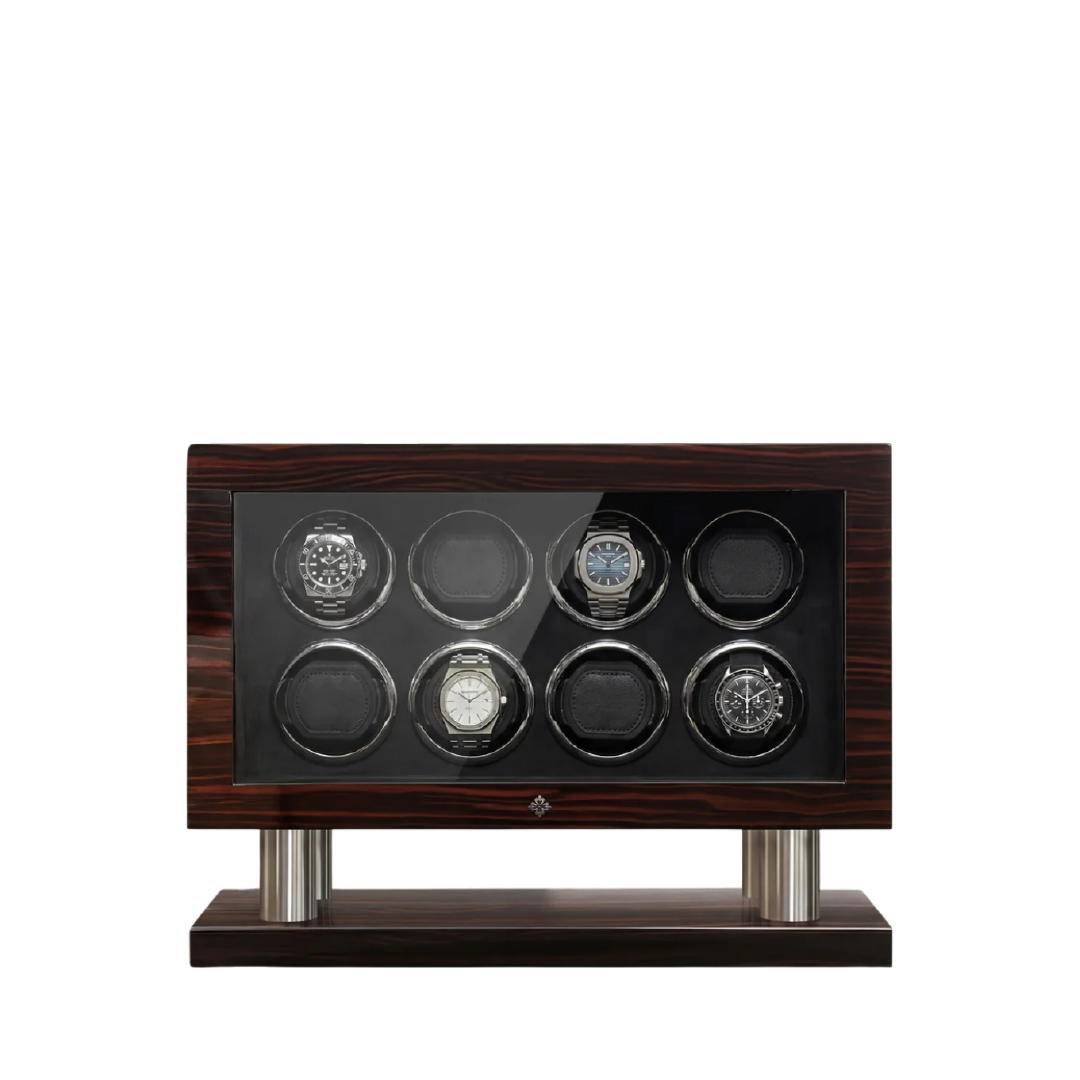
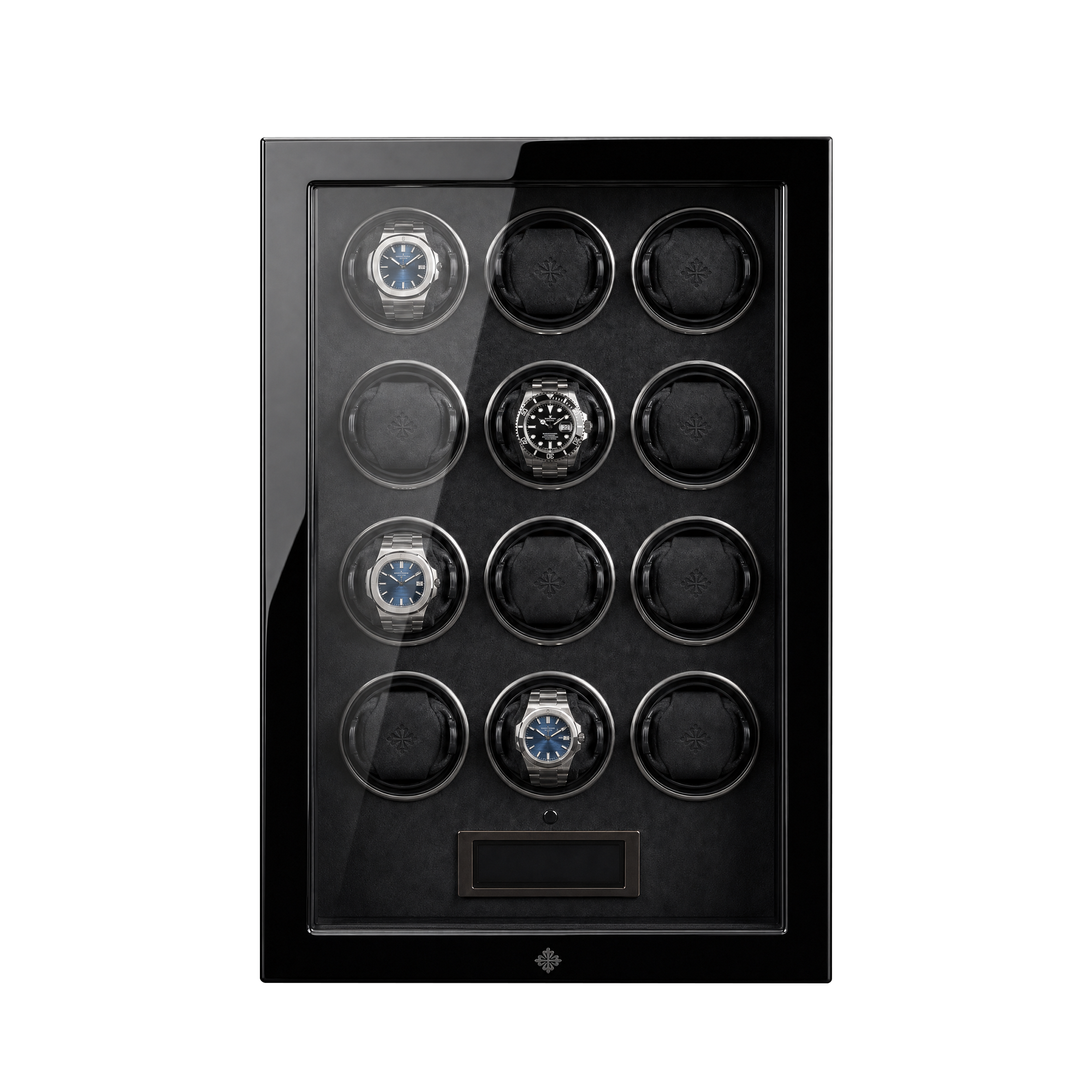
The Yachtline Series 8 watch winder lays eight watches flat along a credenza or console rather than stacking them vertically behind a door. Eight rotors run in a tray arrangement with biometric access and Mabuchi motors on each unit.
Yachtline Series 8 pros:
- Horizontal layout doubles as a display case
- Room to add references as a Day-Date collection grows
- Biometric access across all eight slots
Yachtline Series 8 cons:
- Needs more shelf depth than a vertical box
- Six unused slots if you only own one or two watches right now
Best for: a collector building a Day-Date-anchored display, not just storing one watch. Verdict: Buy if the collection is already growing; Hold if it's just the Day-Date for now.
4. Virtuoso Series 6: best for a mixed multi-complication rotation
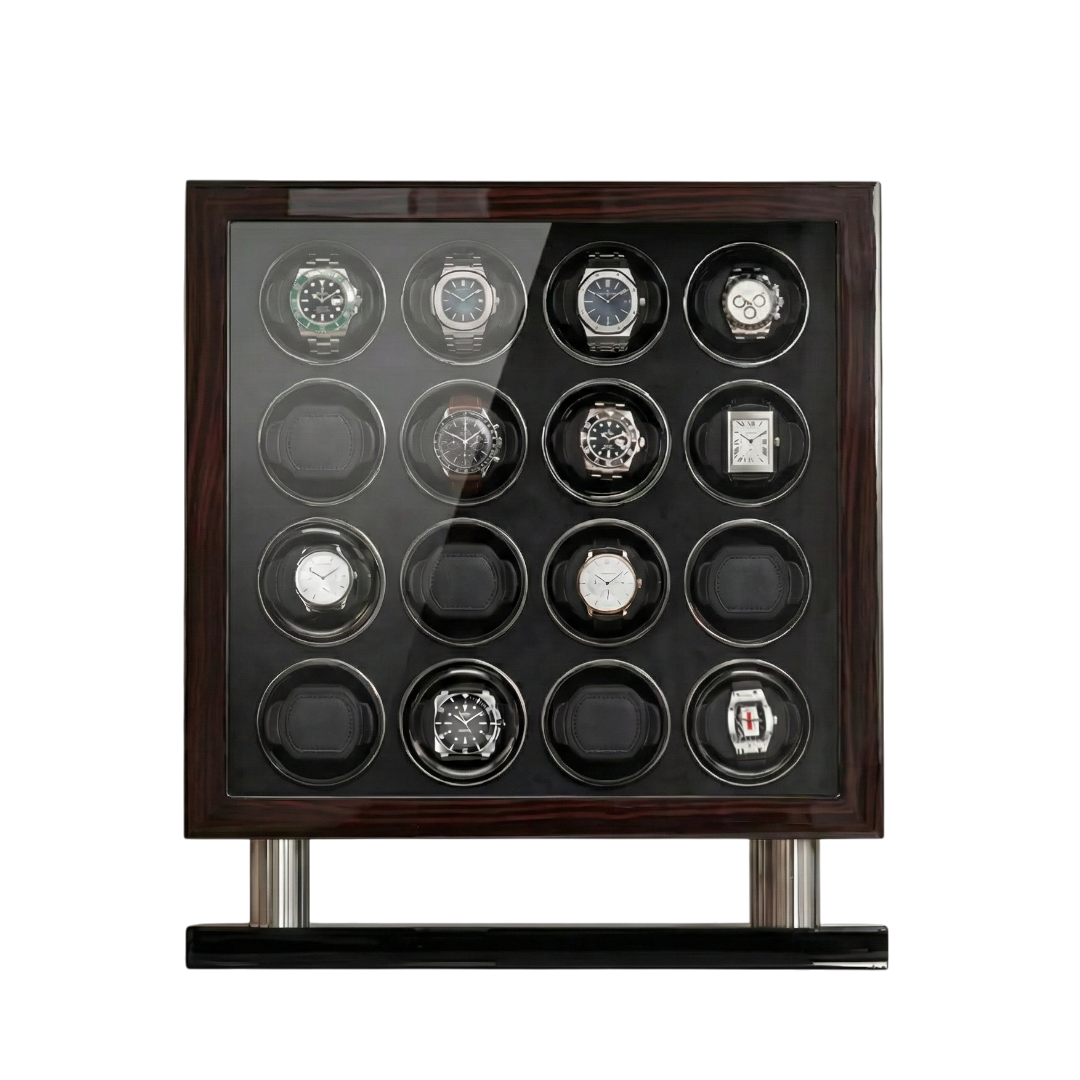
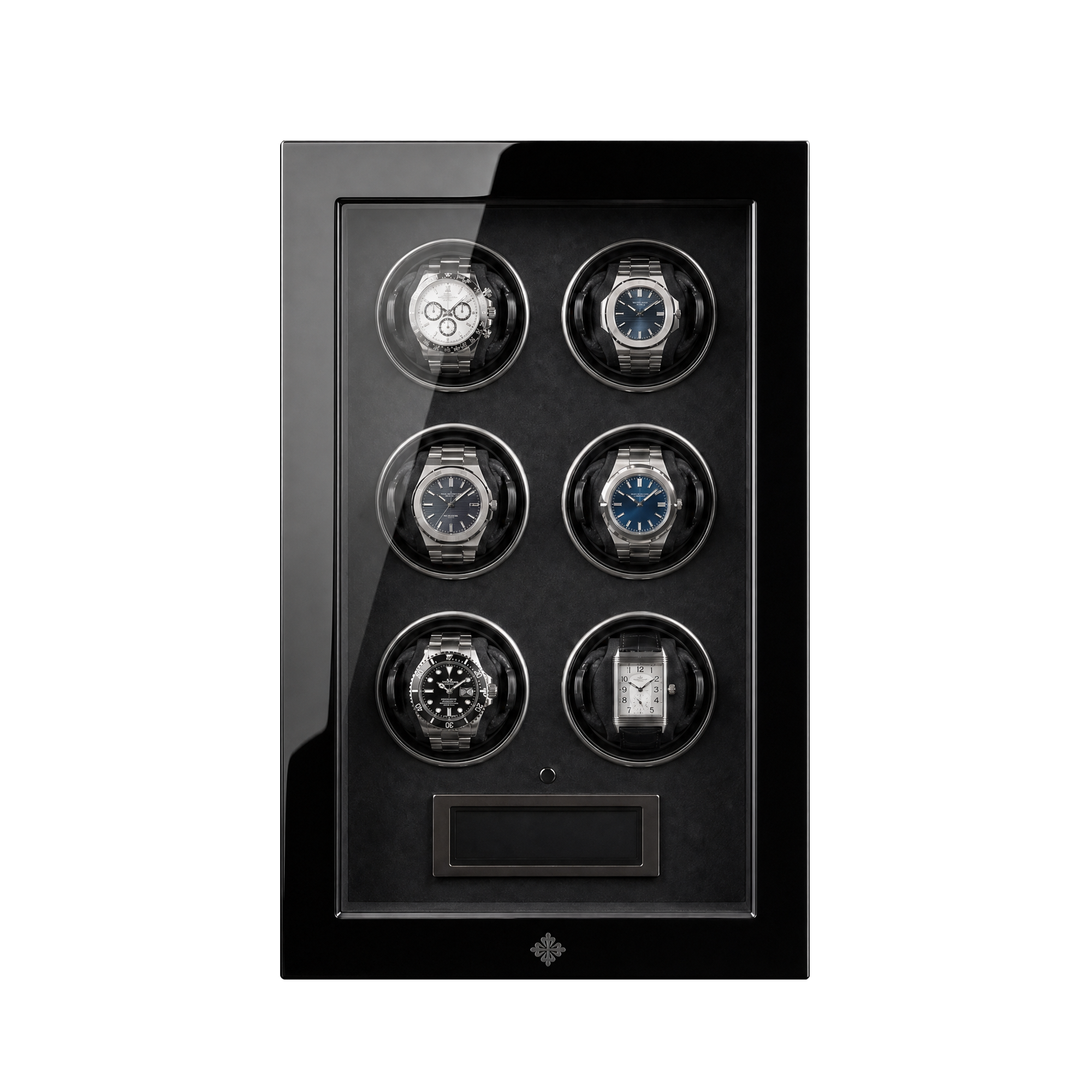
Virtuoso Series 6 runs six watches, each on its own TPD program, which matters once a Day-Date is rotating alongside chronographs, perpetual calendars, or GMTs that each need a different setting. It shares the Macassar Ebony and Alcantara build of the rest of the Virtuoso line, scaled up to six independent rotors.
Virtuoso Series 6 pros:
- Six fully independent TPD programs
- Handles a Day-Date next to complications with different torque needs
Virtuoso Series 6 cons:
- Six empty slots is a lot of unused capacity for one watch
- Higher cost of entry than a two-watch unit
Best for: a collector already running four or more automatics with different TPD requirements. Verdict: Wait until the collection justifies six slots.
5. Watch Winders Pillow: best budget option for an existing box
The Watch Winders Pillow is a telescopic cushion built to fit case sizes from 36mm to 55mm, which covers every Day-Date reference on the market. It's an accessory, not a motor unit — it upgrades the cushion inside a winder or case you already own.
Watch Winders Pillow pros:
- Fits Day-Date cases at both ends of the size range
- Cheapest way to fix a poorly-fitting stock cushion
Watch Winders Pillow cons:
- Does nothing on its own without a motor already in place
- Not a substitute for a real winder if you don't own one
Best for: an owner whose current winder cushion doesn't seat a Day-Date properly. Verdict: Buy as an add-on; skip if you don't already own a motor box.


How we ranked these
Every winder on this list runs bidirectional rotation, since calibre 3255 requires it — a one-direction motor is disqualified before it even gets to TPD range. From there the ranking splits by what a Day-Date owner actually needs: independent programs if there's a second watch involved, biometric access if security is the concern, and slot count once the collection outgrows one piece. For a breakdown of TPD by specific Day-Date reference, the guide on what serious collectors run on a Day-Date goes deeper than a single comparison table allows.
Which watch winder should you choose?
Buy the Virtuoso Series 2 if the Day-Date is your primary automatic and you want per-rotor TPD control without paying for slots you don't need. Step up to the Impresario Series 2 when access control matters as much as rotation. Choose the Yachtline Series 8 once the collection has already outgrown a single watch and display space matters. Wait on the Virtuoso Series 6 unless four or more complications are already in rotation, and treat the Watch Winders Pillow as a companion purchase, never a stand-alone fix.
FAQ
What TPD setting should a Rolex Day-Date use in a winder?
A Rolex Day-Date typically runs 650 to 800 TPD, bidirectional, to match calibre 3255’s rotor. Most winders built for Rolex references, including the Virtuoso and Impresario lines, let you set that range per rotor rather than using one fixed cycle.
Is a watch winder necessary for a Rolex Day-Date?
It’s not strictly necessary, but it’s convenient given the day-date double complication. Let the watch stop for a week and restarting it means advancing the day and date through seven separate midnight crossings by hand.
What’s the best watch winder for a Rolex Day-Date in 2026?
The Virtuoso Series 2 is the best rolex day-date watch winder in 2026 for owners who want independent TPD control on a two-watch unit. Collectors prioritizing security should look at the Impresario Series 2 instead.
Can one winder run a Day-Date and a second Rolex on different settings?
Yes, as long as the winder offers independent programs per rotor rather than one shared cycle. The Virtuoso Series 2 and Virtuoso Series 6 both run each watch on its own TPD setting.
Does winding a Day-Date on a machine wear it out faster than hand winding?
No, modern automatic movements including calibre 3255 use a slip clutch that disengages once the mainspring is fully wound, so a properly set TPD won’t overwind the watch. The risk is setting TPD too low, not too high.
What cushion size fits a Rolex Day-Date?
Day-Date references run from 36mm to 44mm depending on year and metal, so a telescopic cushion built for that range fits every version. The Watch Winders Pillow and the pillows built into the Virtuoso and Impresario lines both cover that spread.
Should a Day-Date winder rotate clockwise, counterclockwise, or both?
Calibre 3255 winds bidirectionally, so the winder needs to rotate both directions to charge the mainspring efficiently. A one-direction motor built for older Swiss calibers will still wind a Day-Date, just less efficiently.
One last thing
The detail most buyers miss isn't TPD, it's the day disc. A Day-Date that stops mid-cycle doesn't just need the date corrected — the day wheel has to be advanced through every missed midnight one at a time, and Rolex's own guidance against setting the calendar between roughly 9pm and 3am means a watch that dies overnight can sit uncorrected until morning. That's the actual argument for keeping one in rotation, not accuracy drift.
Related guides
Protect Your Watch Collection
Designed for collectors who demand the best. Explore our premium watch winders and luxury safes.