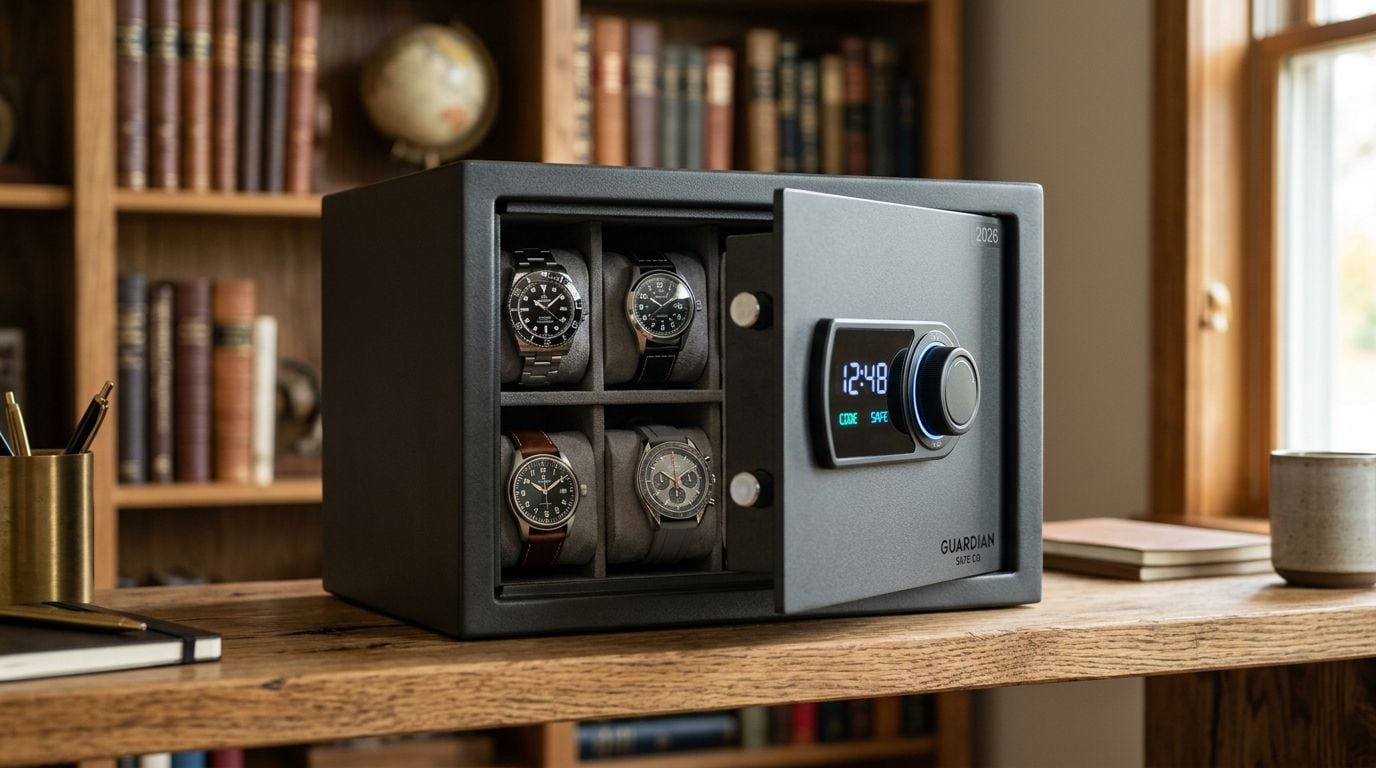

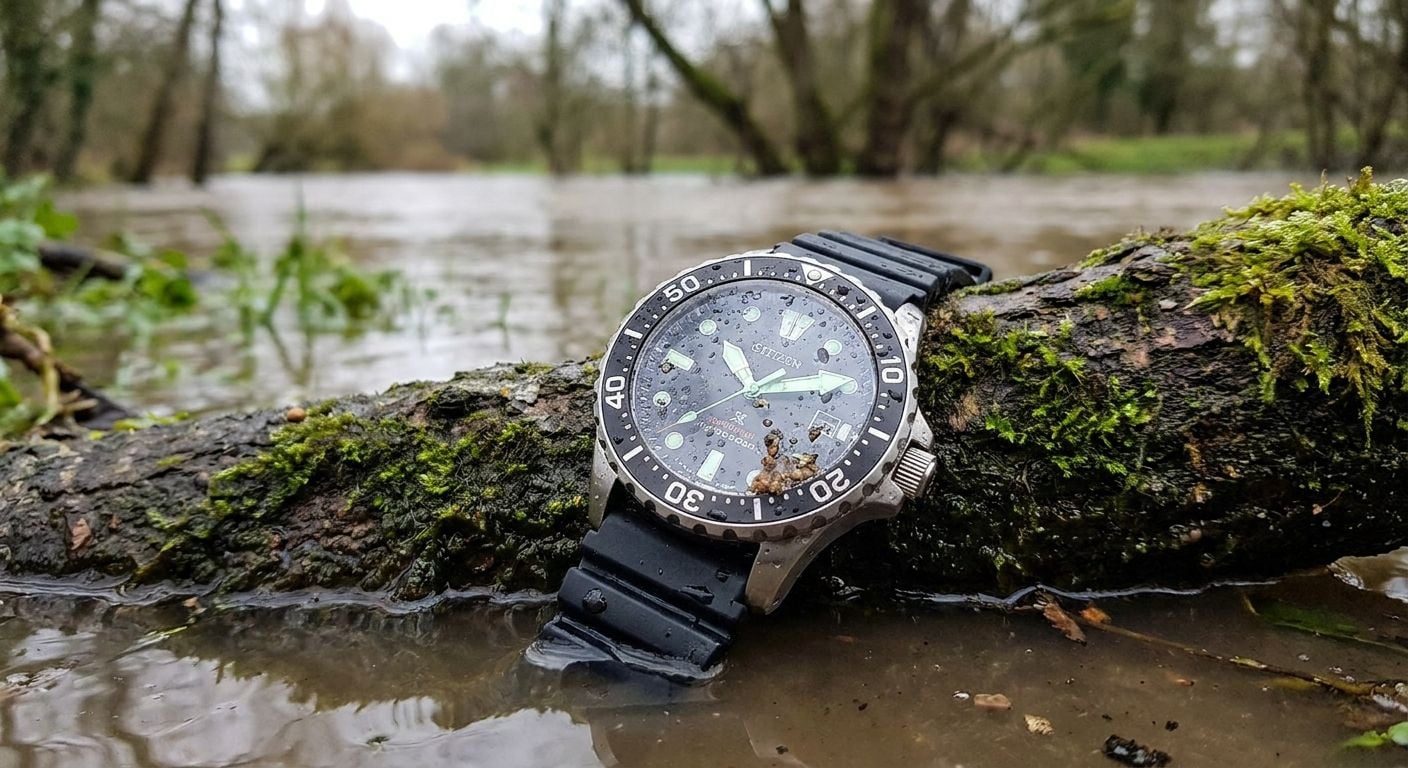
Standing water ruins more watch collections than fire ever does, and most "waterproof" watch safes on the market were never tested against a real flood.
- A true waterproof watch safe needs an IP65-rated door seal, not just a marketing claim — most budget models skip this.
- Elevation above the flood line matters more than the safe’s water rating in a real 2026 flood event.
- Fire-and-water dual-rated safes are the only category that protects a collection through both a fire and the water used to fight it.
- Bolting the safe to a stud or slab keeps it from becoming a floating hazard once water rises past 12 inches.
- Humidity control after the flood recedes is where most collections actually get damaged, not the water itself.
Why this matters
A flood doesn't announce itself the way a fire does. Water finds the lowest point in a house, sits there for days, and by the time it recedes the real damage is humidity-driven corrosion inside a case that looked untouched. A waterproof watch safe built for this scenario is a different product than a standard home safe with a splash-resistant sticker on the box.
Most fire safes marketed as "waterproof" are rated for brief exposure to hose spray during firefighting, not for sitting in six inches of standing water for 48 hours. That distinction is the entire buying decision for anyone storing a collection in a basement, ground-floor closet, or a coastal property.
How this list is ranked
The criteria below come from what actually determines survival in a flood scenario: seal rating, structural placement, material, humidity management after the fact, and documented fire-and-water certification. Each item is ranked by how much it changes the outcome in a real flood, not by price or finish, which is a separate conversation for a $5,000 to $21,000-plus category in 2026.
The ranked protection factors
1. Elevation above the flood line — the non-negotiable
No safe rating beats physics. A safe positioned on a ground floor in a flood-prone zip code sits in the first foot of water that enters the house, regardless of its door rating. Moving storage to a second floor or a raised platform eliminates the problem before any spec sheet matters. Verdict: Buy the elevation change first, before upgrading the safe itself.
2. Sealed door gasket rated IP65 or higher — the seal that actually matters
The IP65 standard (dust-tight, protected against low-pressure water jets) is the realistic minimum for a safe that might see standing water. Many home safes carry no IP rating at all because they were engineered for fire, not water. Ask for the IP number directly — "waterproof" without a number behind it is a word, not a spec. Verdict: Buy only models that publish an IP rating; Skip anything that just says "water-resistant."
3. Marine-grade or stainless steel body — the material that survives standing water
Carbon steel bodies with a painted finish corrode from the inside out once water sits against a seam for days. Stainless or marine-grade steel resists that corrosion long enough to matter, which is the difference between a recoverable collection and a rusted-shut door. Verdict: Consider this a hard requirement for coastal or basement installations, less critical for upper-floor placements.
4. Fire-and-water dual rating — the paperwork that matters after a claim
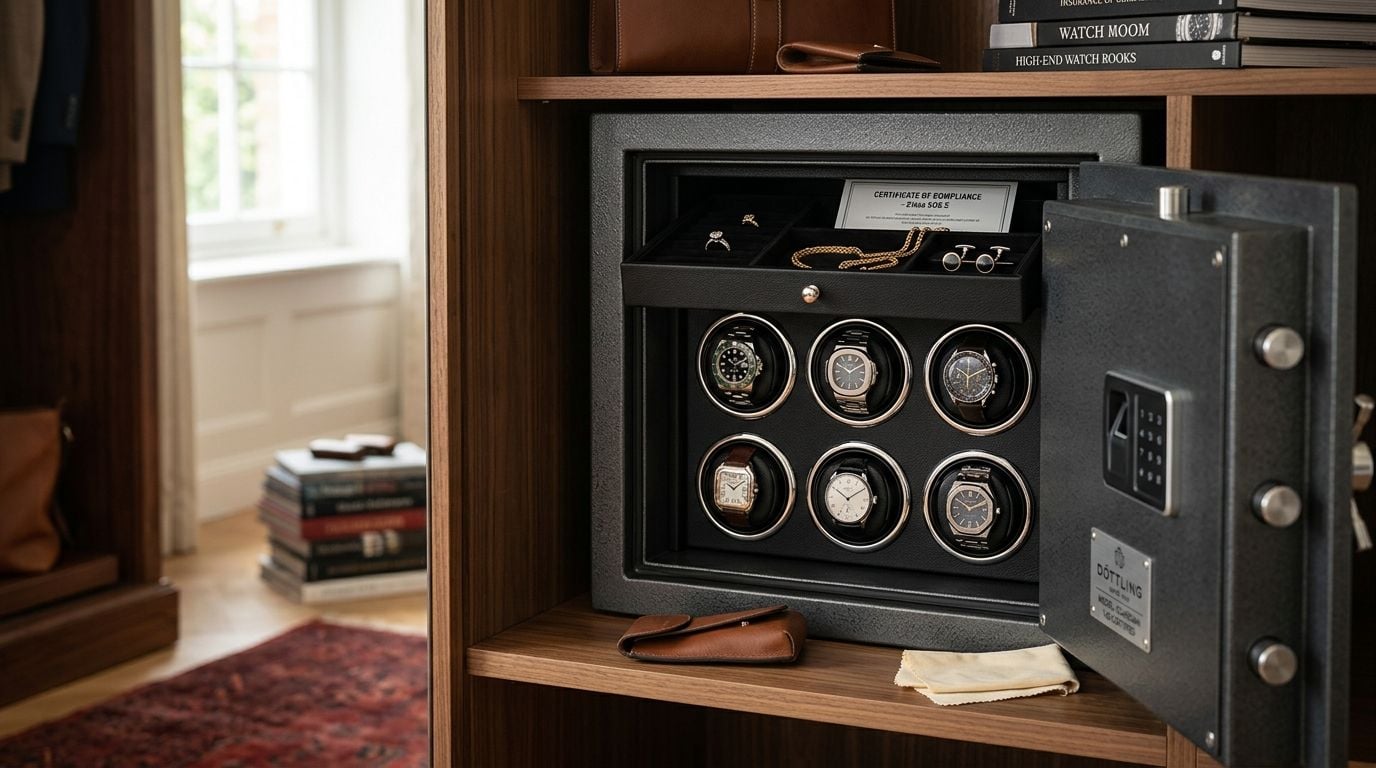
A safe rated for fire alone can fail the moment firefighting water or flash flooding hits it, because fire-rated insulation is not the same material as a water-sealed gasket. A dual-rated watch safe fire rating gives you documentation an insurer will actually accept after a claim. Verdict: Buy dual-rated units when the property sits in a flood zone with fire risk too.
5. Anchored, bolted mounting — the anchor that keeps it from floating away
A safe under roughly 750 lbs can shift or tip once water rises past a foot, undoing every other protection on this list. Bolting it into a stud or concrete slab, using the same method described in a how to mount a watch safe to a wall stud guide, keeps the unit fixed in place through the event. Verdict: Buy the anchoring hardware alongside the safe — it's not optional in a flood-prone install.
6. Post-flood humidity control — where collections actually get damaged
Water recedes; humidity lingers. A movement sealed inside a case can still corrode weeks later if the interior environment stays damp, which is the actual mechanism behind most flood-related watch losses. Verdict: Consider this the second half of the purchase decision, not an afterthought.
“A safe that survives fire but drowns in six inches of standing water was never built for a flood.”
What to avoid
- Any safe marketed only as "water-resistant" with no IP number — that phrase covers everything from a splash to nothing at all.
- Ground-floor placement in a documented flood zone, regardless of the safe's rating — elevation solves the problem the safe can't.
- Painted carbon steel bodies in coastal or basement installs — salt air and standing water corrode the seams first.
Ask about flood-zone placement
Get guidance on IP rating, anchoring, and humidity control before you install.
Comparison at a glance
| Factor | Why it matters in a flood | 2026 verdict |
|---|---|---|
| Elevation above flood line | Physics beats any rating | Buy |
| IP65+ door seal | Realistic minimum for standing water | Buy |
| Stainless/marine-grade body | Resists corrosion over days of exposure | Consider |
| Fire-and-water dual rating | Covers combined fire/flood scenarios | Buy |
| Bolted anchoring | Prevents shifting or tipping | Buy |
| Humidity control post-flood | Prevents delayed corrosion | Consider |
How to source the right one
- Request the IP rating in writing before buying anything labeled "waterproof" — a verbal claim from a sales page isn't documentation an insurer will accept.
- Confirm fire-and-water certification separately — a UL fire rating does not automatically include a water rating, and vice versa.
- Plan the install location before the purchase, not after — a $15,000 safe on a flood-prone ground floor is still a ground-floor risk.
FAQ
What makes a watch safe actually waterproof?
A genuinely waterproof watch safe carries a published IP rating, typically IP65 or higher, plus a sealed gasket door tested against standing water, not just fire. Marketing copy that says "water-resistant" without a number is not a waterproof claim you can verify.
Is a fireproof watch safe also flood-safe?
Not automatically. Fire-rated insulation and water-sealed gaskets are different engineering problems, so a safe needs both certifications listed separately to cover a flood scenario.
Where should a watch safe go in a flood-prone home?
Above the documented flood line, ideally on a second floor or elevated platform, and bolted to a stud or slab so it can’t shift once water rises. Elevation solves the problem before the safe’s rating even comes into play.
Does humidity control matter after a flood?
Yes, and it matters more than most owners expect. Movements can corrode weeks after water recedes if the interior environment stays damp, which is why humidity-controlled interiors matter as much as the initial water seal.
How much does a flood-rated watch safe cost in 2026?
Luxury watch safes with fire-and-water dual ratings, biometric locks, and Alcantara interiors run from roughly $5,000 to over $21,000 in 2026, with price driven by capacity, materials, and certification level rather than the water rating alone.
Can I retrofit an existing safe to be flood-resistant?
Sealing gaskets and anchoring hardware can be added, but a body without an IP rating from the factory can’t be retrofitted to match one — the corrosion resistance is built into the steel and seam welding, not added afterward.
Does salt air change the buying decision for coastal homes?
Yes, salt air accelerates corrosion on painted carbon steel far faster than fresh water alone, which is why stainless or marine-grade bodies matter more for coastal installs than for inland flood zones.
One last thing
The most overlooked detail in a flood-prone install isn't the safe at all — it's the humidity level inside the room for the weeks after the water recedes, since that's when corrosion actually sets in on a sealed case. Elevate first, verify the IP number in writing second, and treat the fire rating and water rating as two separate purchases even when they're marketed as one.
Related guides
- Watch safe humidity levels collectors should know
- Watch safe for a beach house: humidity and salt air concerns
- Watch safe vs. wall safe: which suits watch collectors
Protect Your Watch Collection
Designed for collectors who demand the best. Explore our premium watch winders and luxury safes.