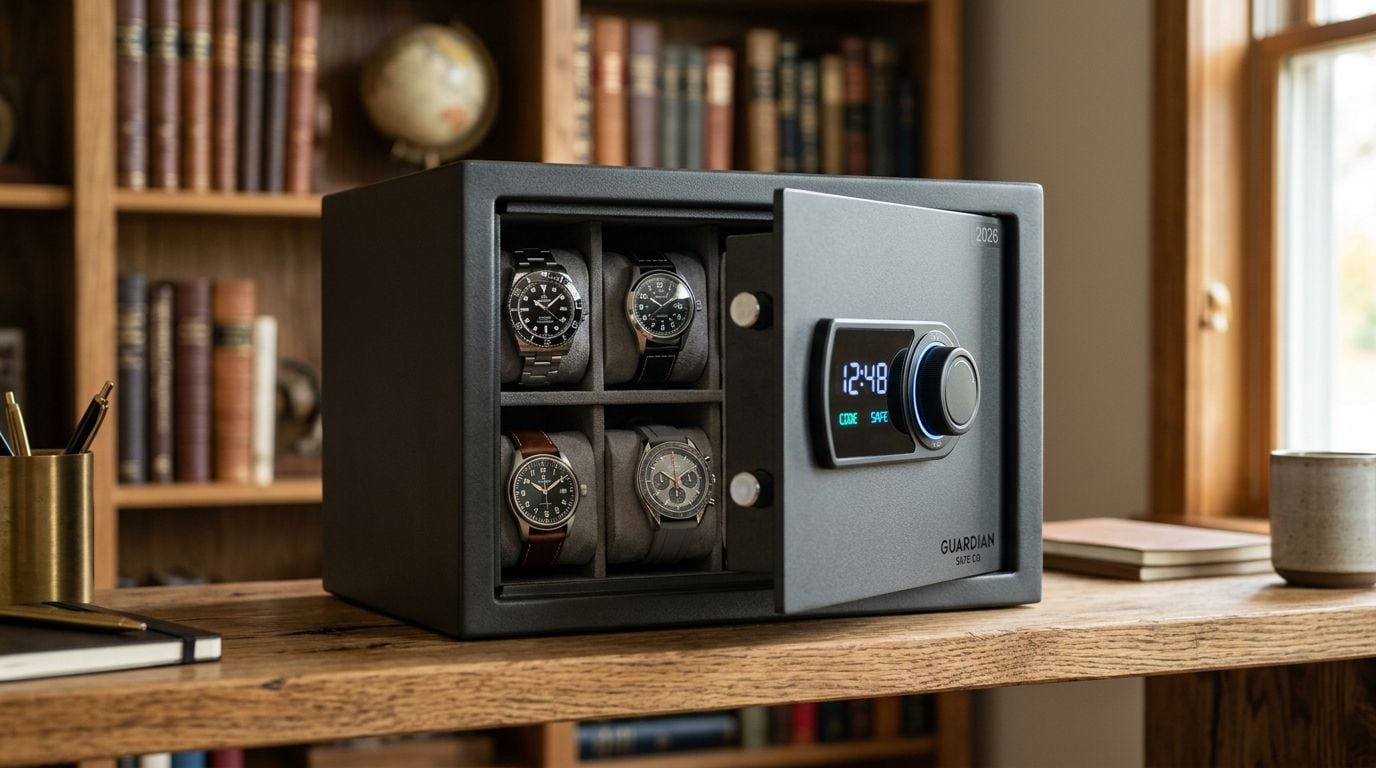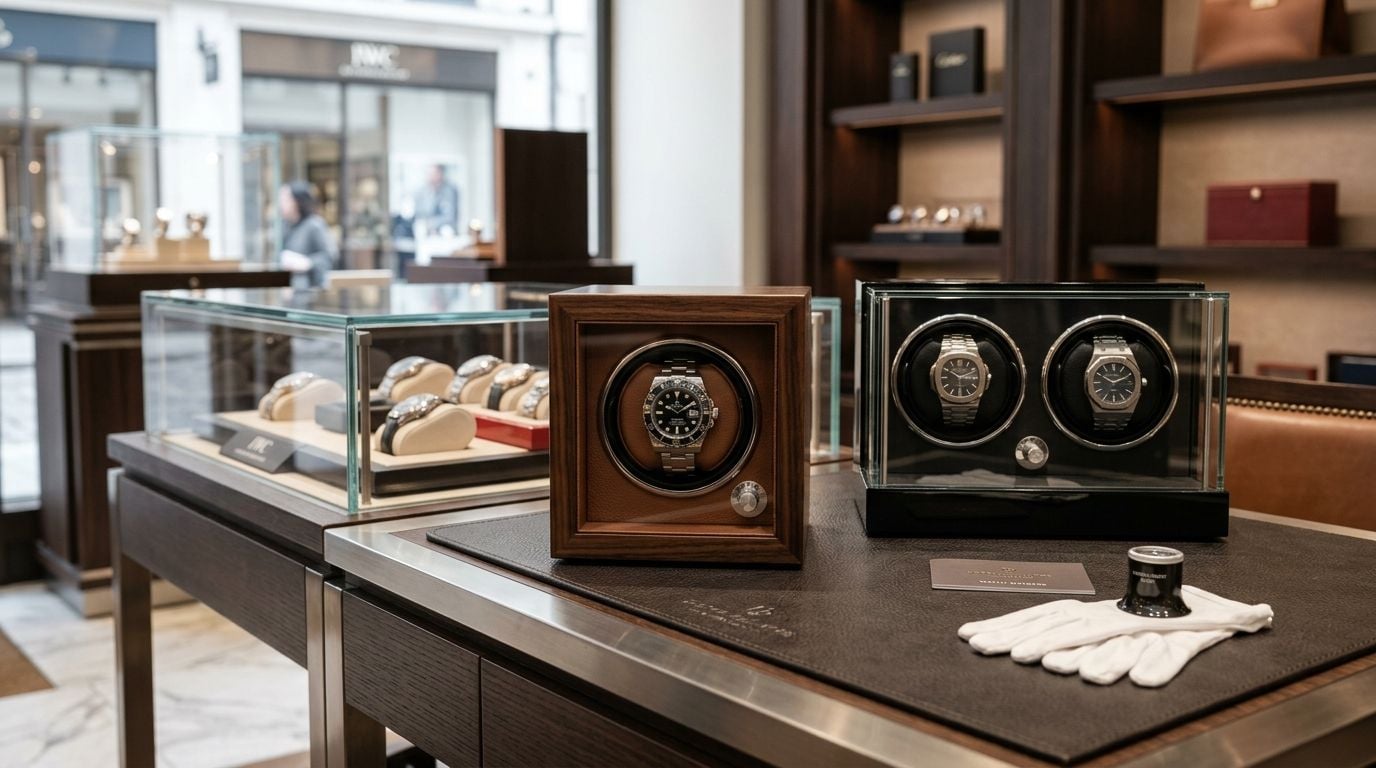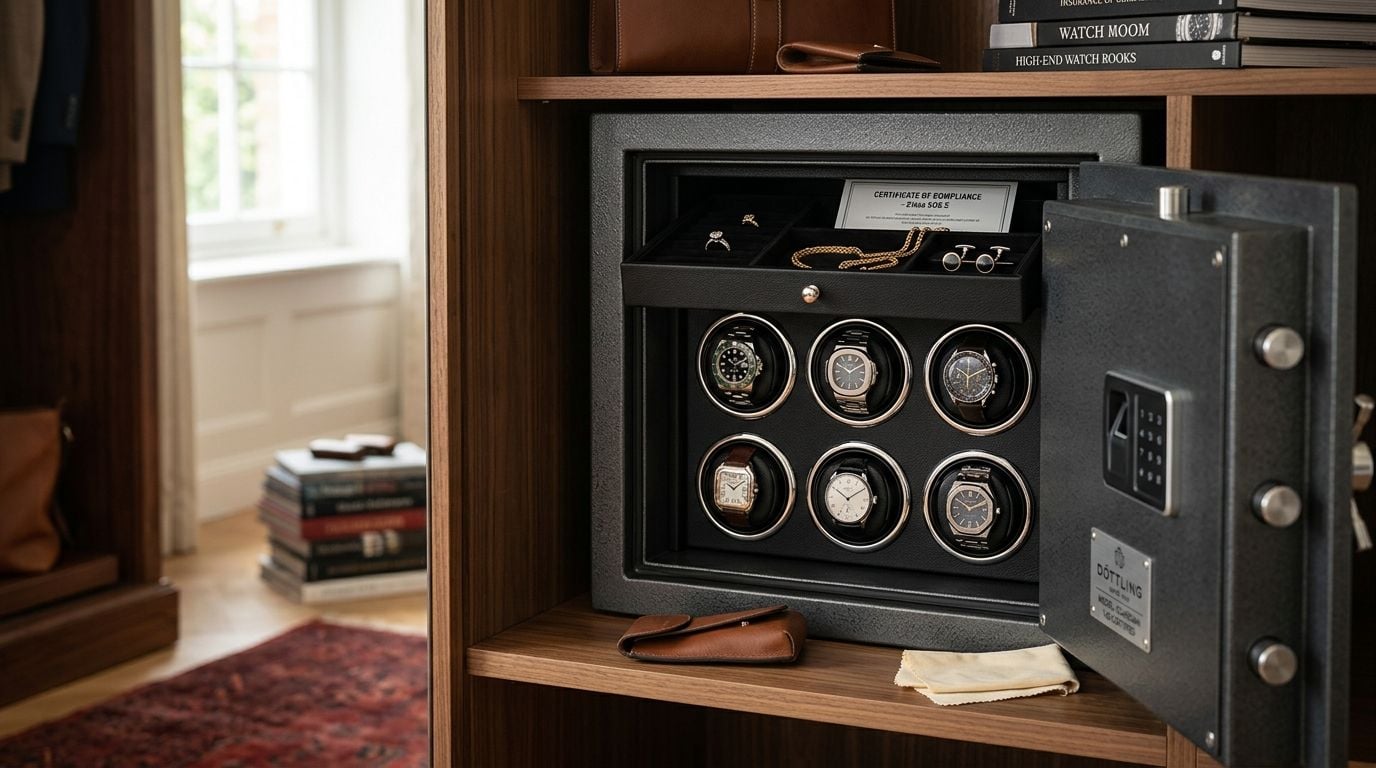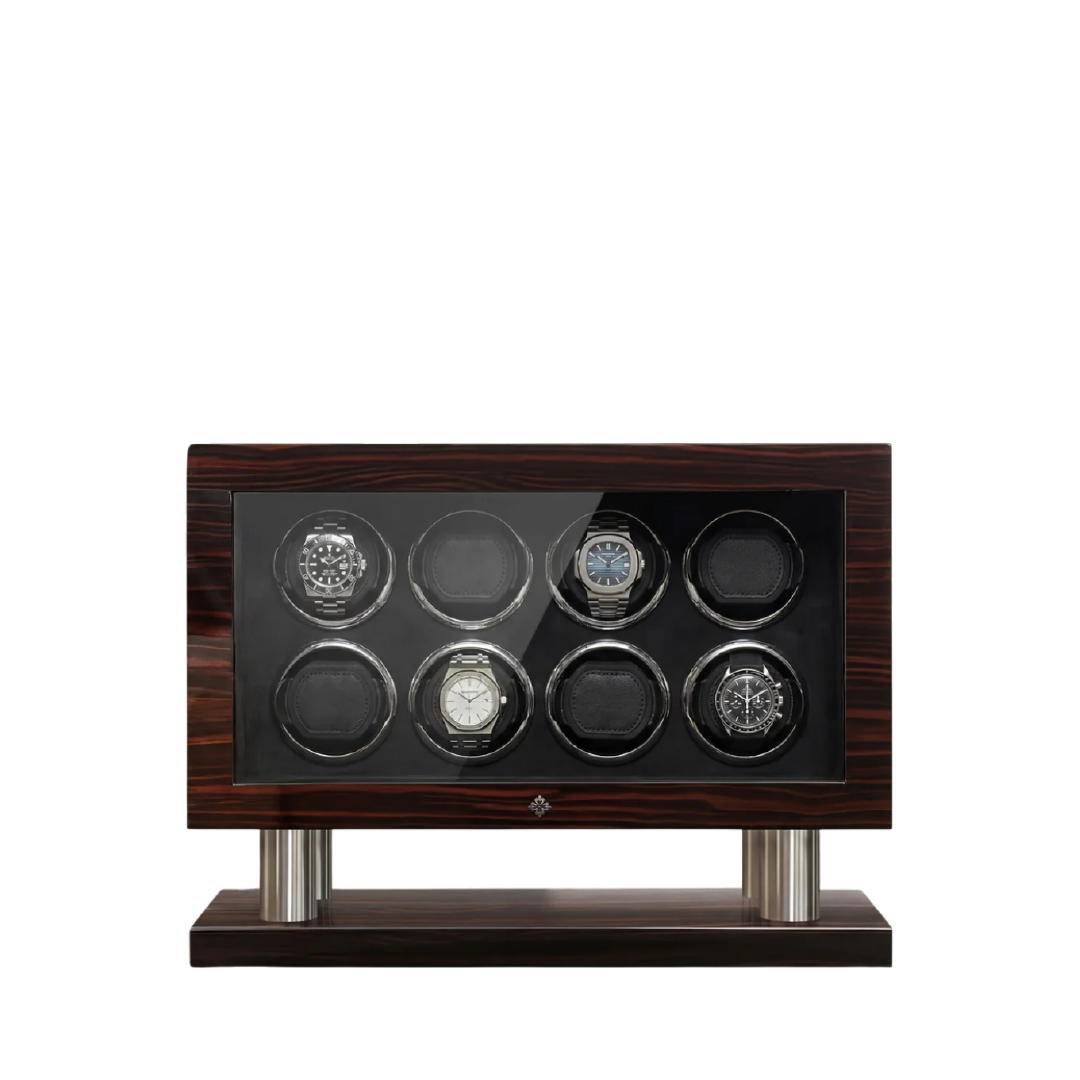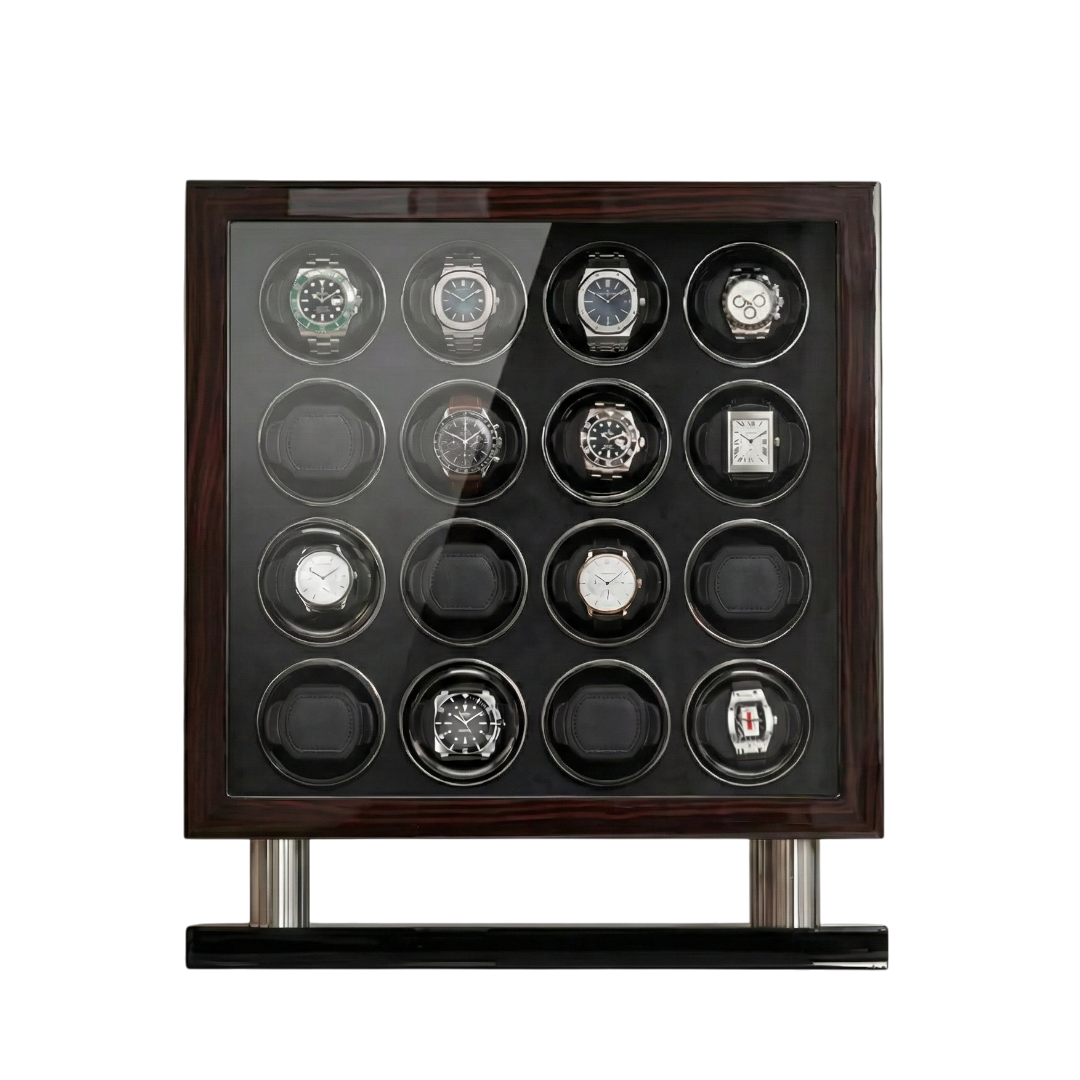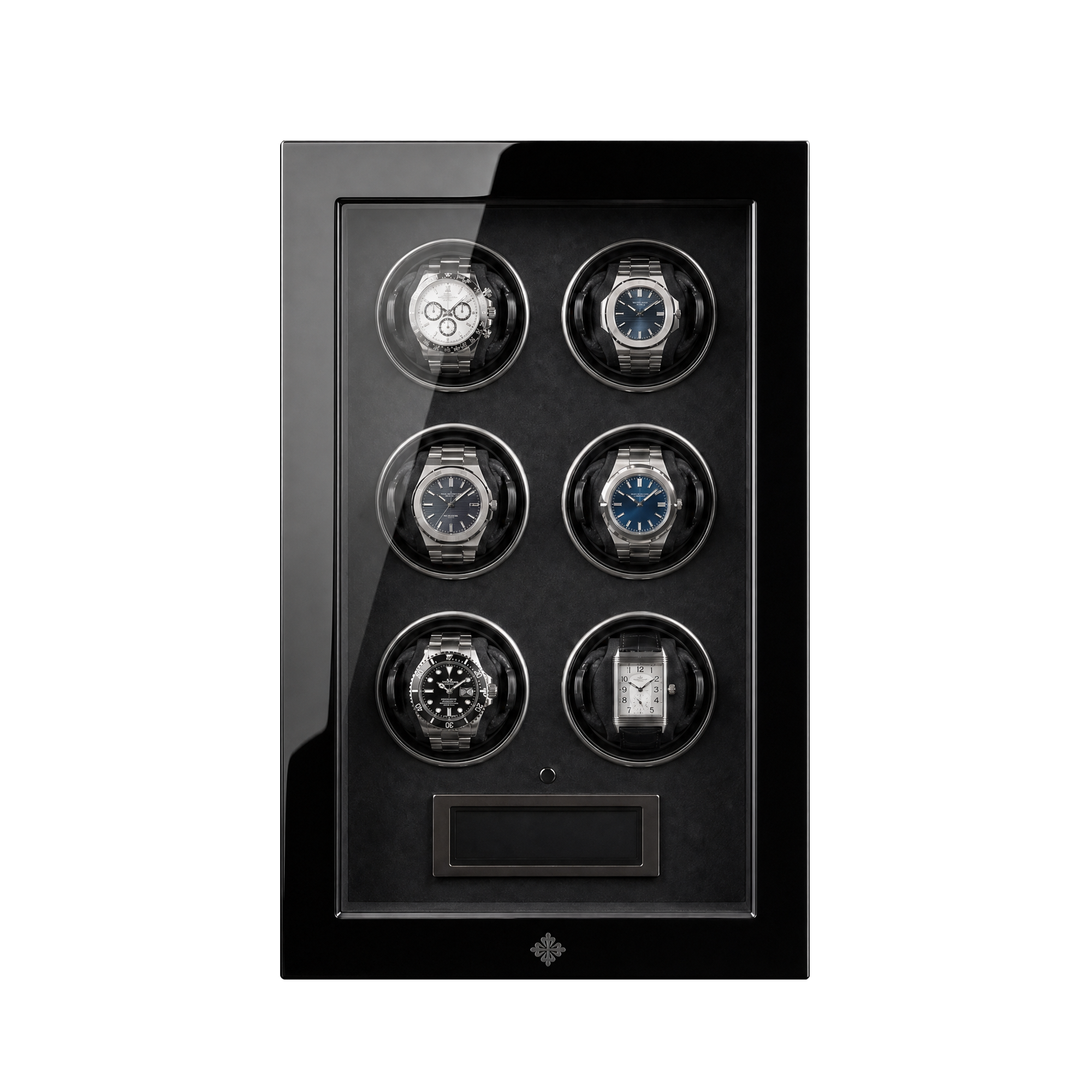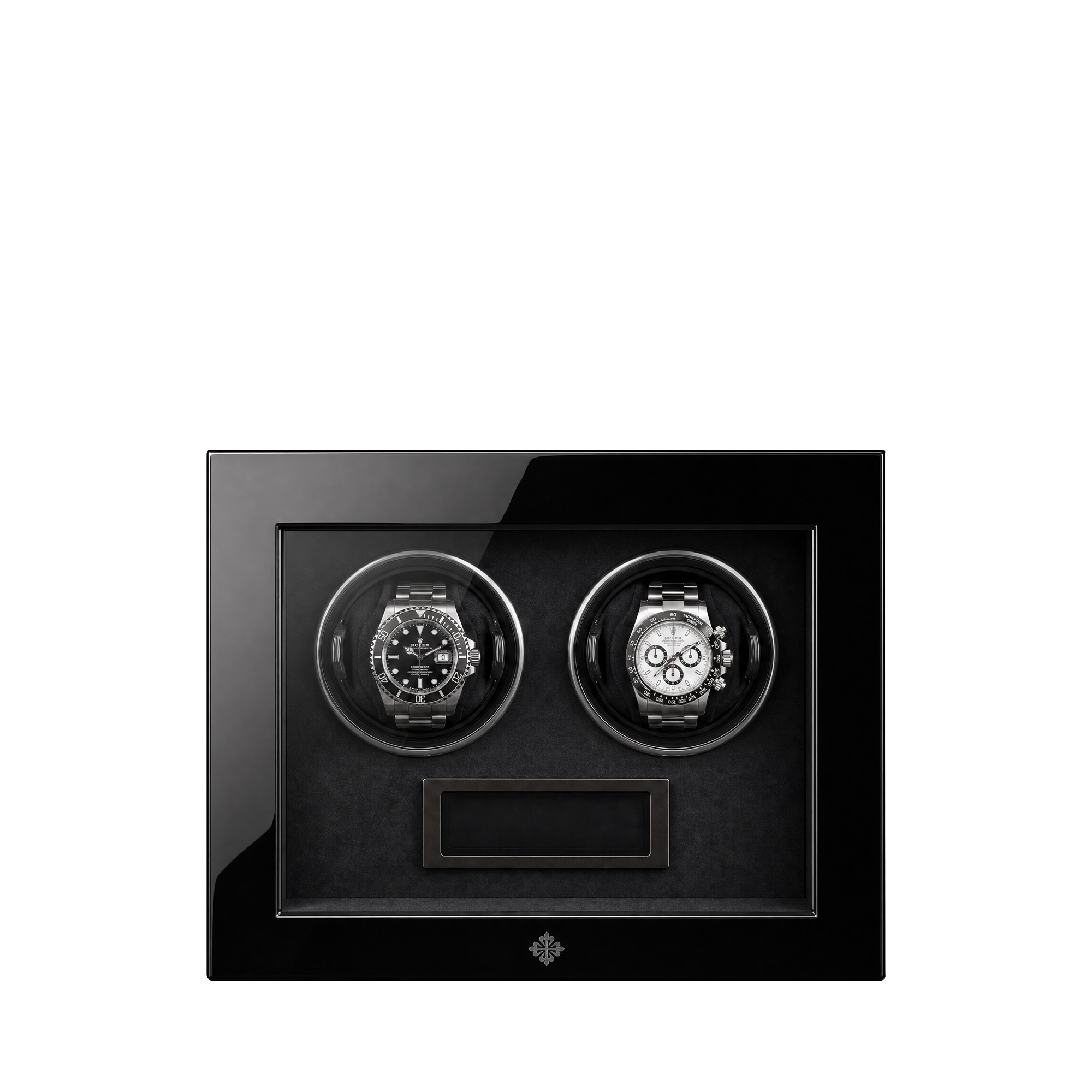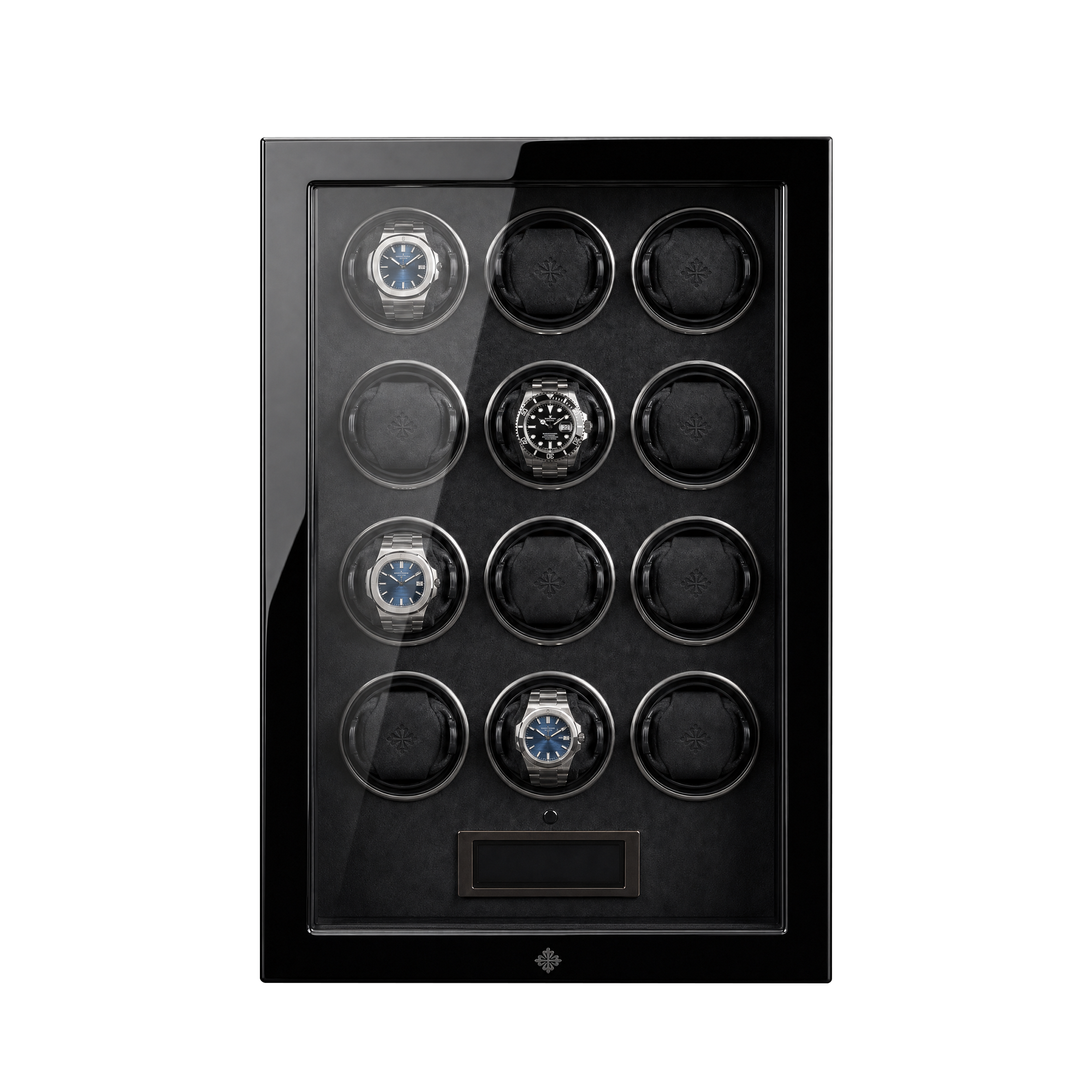


A watch safe for a co-working space is a shared, lockable vault installed in a common work area so members can secure automatic watches during business hours without carrying them home in a coat pocket. It has to serve more than one authorized user without collapsing into a single shared code that everyone eventually writes down and tapes under a keyboard.
- A watch safe for a co-working space needs individual access credentials, not one shared combination everyone memorizes.
- The Centennial Bulletproof Watch Safe fits a two-person shared office; the Titan Sanctum 20 Watch Safe fits a larger co-working suite with up to 20 watches.
- Bolt the unit to a wall stud or floor anchor — an unanchored safe is a box, not security.
- Fire rating and vault grade matter more in a shared office than at home, since nobody watches the room after hours.
Why watch safes matter for co-working spaces
Most co-working memberships come with a keycard for the building and a locker for a laptop — nothing built for a watch collection. A watch safe for a corporate office display is designed around one desk and one routine visitor list. A co-working unit has to work for a membership roster that turns over every quarter, which means access control has to survive turnover without a locksmith visit every time someone cancels.
That's the difference that matters in 2026: a home watch safe assumes one owner and one code. A shared-office unit needs individual credentials, a lock that resets without re-keying, and a build rated for a room nobody watches after 6 p.m. Enigwatch builds every watch safe in this comparison around combination or biometric access that resets per user, which is the mechanic that actually solves the co-working problem — not a bigger door or heavier steel.
Map who actually needs access
Start with the manual version before you buy anything. This is a roster exercise, not a hardware decision.
- List every member who stores a watch, not every member with a desk
- Assign one primary keyholder per unit even if the lock is biometric
- Set a rule for guest members and short-term renters before they arrive
- Log access changes on the same sheet used for badge revocation
- Decide whether watches leave the building overnight or stay locked in the safe
Separate personal storage from shared display pieces
- Assign each member's watch its own slot, never a shared open tray
- Keep loaner or communal pieces out of the personal rotation entirely
- Photograph slot assignments so disputes have a paper trail
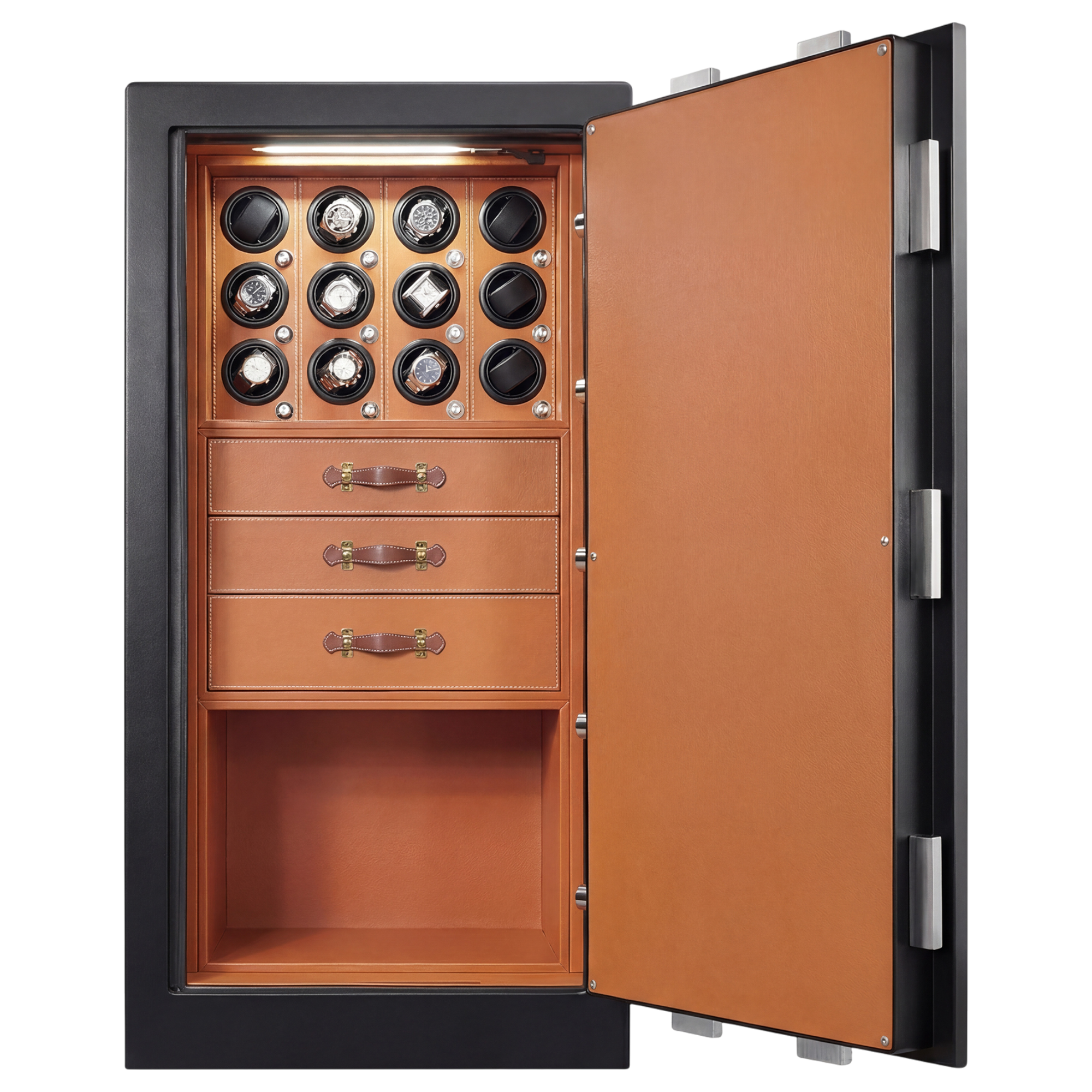
The Apollo 12 Watch Safe solves this at scale with twelve individually assigned slots inside a UL TL-30 Grade III vault — the point where a shared office needs to move past a locker and into a real watch safe.
Choose a lock type built for multiple users
- Combination locks work, but the code has to rotate every time a member leaves
- Biometric locks assign one fingerprint per authorized user without a shared code to leak
- Key locks are the weakest option in a shared office — keys get copied and keys get lost
- Pick the lock type before the cabinet finish; it decides how the whole rollout works
Size the safe to desk count, not watch count
- Count desks that could plausibly store a watch on any given day, not just today's headcount
- Add extra slots for anticipated membership growth instead of sizing exactly to the current roster
- Confirm floor loading before ordering a larger vault safe
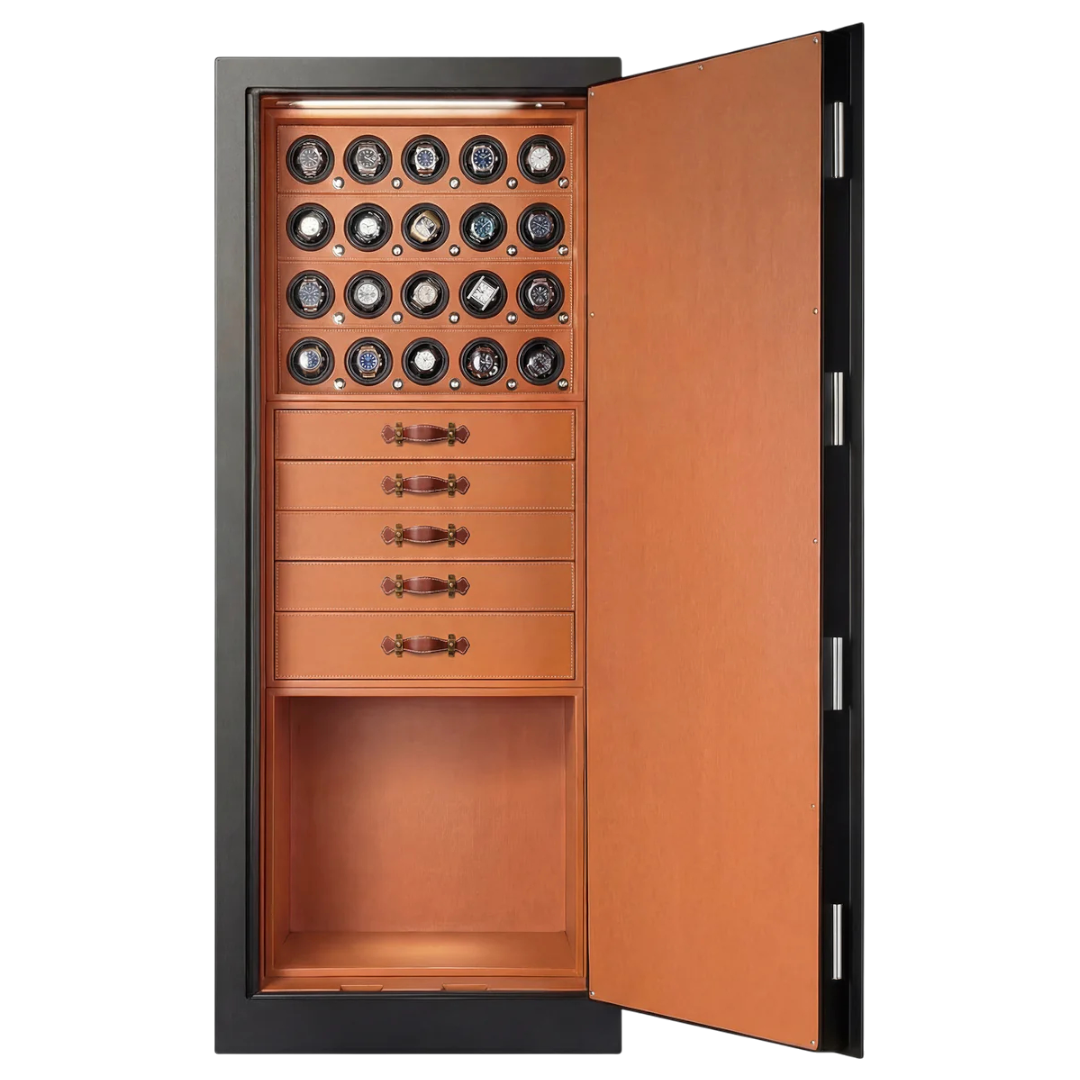
The Titan Sanctum 20 Watch Safe holds 20 watches in a Grade 304 stainless steel frame with AR500 ballistic protection — sized for a co-working suite that expects to grow, not one that's guessing.
Anchor the safe to the building, not just to a desk
- Bolt through the base plate into a wall stud or a concrete floor anchor
- Never rely on the unit's own weight in a space with public foot traffic during business hours
- Confirm the co-working operator's lease terms allow permanent anchoring before installation
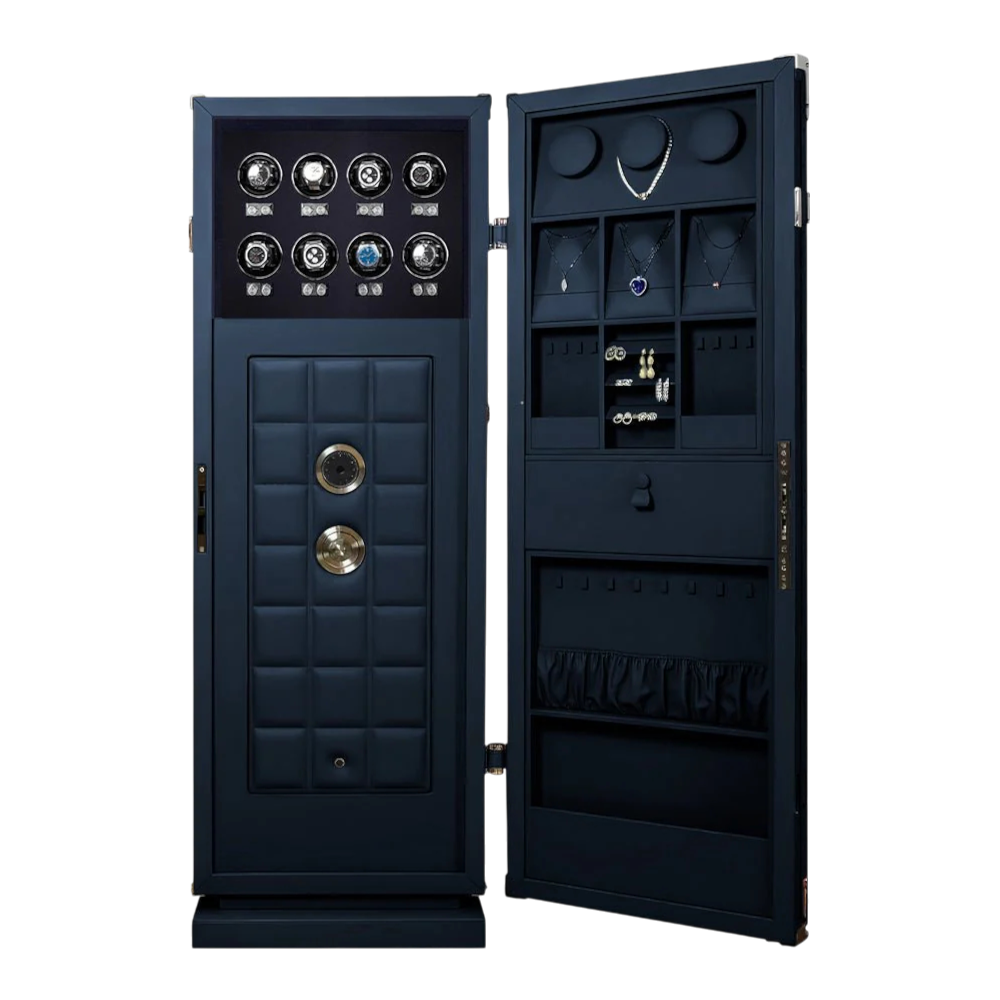
A compact unit like the Centennial Bulletproof Watch Safe still needs the same anchoring discipline — a two-hour fire rating at 695°C doesn't help if the whole box walks out the front door.
Build a winding schedule for watches that idle between members
- Rotate winding programs by desk assignment, not by day of the week
- Set turns-per-day to the specific caliber in the safe, not a blanket setting for everything
- Log which watches need daily winding versus weekly winding
- Flag automatics that sit unworn for more than a week so the next desk holder isn't guessing
Document access and insurance details before the first watch goes in
- Photograph each watch at intake with serial and reference number
- File a copy of the insurance appraisal with the safe's paperwork, not just at home
- Put access rights in writing, signed by each member
- Review the access list every time a membership lapses
Comparison: safes for a shared office in 2026
| Option | Best for | Capacity | Key limitation |
|---|---|---|---|
| Centennial Bulletproof Watch Safe | Two-person shared office wanting a compact footprint | 2 watches | Single lock, no multi-user biometric profiles |
| Apollo 12 Watch Safe | Mid-size co-working suite with a rotating desk roster | 12 watches | Vault-grade weight needs a checked subfloor |
| Titan Sanctum 20 Watch Safe | Larger co-working spaces with a dedicated storage room | 20 watches | Largest footprint here, needs professional anchoring |
| Combination drawer lockbox (non-branded) | Testing shared storage before committing to a vault-grade safe | 1-3 watches | No fire rating, no biometric access, pried open in minutes |
Verdict: a two-person office should buy the Centennial and stop there; anything past eight regular members belongs in the Apollo 12 or Titan Sanctum 20, not a stack of drawer lockboxes.


Common mistakes co-working spaces make
- Sharing one combination among every desk holder — one compromised member exposes the whole roster
- Buying capacity for today's headcount instead of headroom for the next lease renewal
- Skipping the anchor bolt because the safe "feels heavy enough" to stay put
- Treating the safe like a locker and skipping intake photos and appraisals
- Storing loaner or communal watches in the same slot rotation as personal pieces
“The single biggest failure in shared-office watch storage isn’t a break-in. It’s a shared code that everyone eventually writes down.”
FAQ
What’s the best watch safe for a co-working space?
The Centennial Bulletproof Watch Safe fits a two-person shared office, and the Apollo 12 Watch Safe or Titan Sanctum 20 Watch Safe fit larger co-working rosters. Match the pick to headcount, not to the room size.
Can multiple people access one watch safe with separate credentials?
Yes, when the lock is biometric or combination-based with per-user resets. Key locks in a shared office get copied and lost, which defeats the point of individual access.
How many watches does a shared-office watch safe need to hold?
Size to the number of desks that could plausibly store a watch on any given day, plus headroom for growth. A 12-slot Apollo 12 or 20-slot Titan Sanctum 20 covers most mid-size co-working rosters in 2026.
Is a biometric lock better than a combination lock for a shared office?
Biometric locks assign one fingerprint per user without a code that can be shared or written down. Combination locks work too, but the code has to rotate every time a member leaves.
Does a watch safe need a fire rating in an office setting?
Yes — a shared office isn’t watched around the clock the way a home is. The Centennial Bulletproof Watch Safe carries a two-hour fire rating at 695°C, which matters more in a building nobody occupies overnight.
How do you anchor a watch safe in a rented co-working suite?
Bolt the base plate into a wall stud or concrete floor anchor and confirm the lease allows permanent installation first. An unanchored safe, regardless of weight, isn’t secured to anything.
Should a co-working watch safe include a winder?
Only if watches sit idle between members long enough to stop. Rotate winding programs by desk assignment and set turns-per-day to each caliber rather than a blanket setting.
What happens to access rights when a co-working membership ends?
Access should be revoked the same day, on the same sheet used for badge deactivation. Biometric locks make this a one-step removal instead of a re-key.
One last thing
Skip the shared code entirely. The fix that actually eliminates lockout calls and departure-day panic in a co-working setup is per-user biometric access tied to a named member, not a rotating four-digit combination the whole office ends up copying onto a sticky note by month three of 2026.
Related guides
- Watch safe for a shared household with multi-user access
- Watch safe lock types compared: key, combination, biometric
Protect Your Watch Collection
Designed for collectors who demand the best. Explore our premium watch winders and luxury safes.