
A new Rolex Submariner retails for $9,200. A new Datejust 36 starts at $7,950. A new Air-King — Rolex’s most accessible model — is $7,800 before tax.
So when someone Googles “Rolex under $3,000,” the honest answer is: not at retail. Not even close.
But shift one window over — to the vintage pre-owned market — and a different conversation opens up. There are real Rolex references, made in real Rolex factories, with real Rolex calibres, that trade today between $2,000 and $3,200. They’re not Submariners. They’re not GMTs. They have honest wear, not box-fresh polish. And they make for some of the most quietly elegant entries into Rolex ownership available.
This is a guide to seven of them. Written honestly — with realistic prices, what to look for, and what to walk away from.
The honest answer: can you really get a Rolex for under $3,000?
Yes — but only on three conditions:
- It has to be vintage. Realistically, pre-1990. Most picks below were produced between the 1960s and the late 1980s.
- It will be pre-owned. No new Rolex is sold at this price point. Anyone offering one is selling a replica.
- It won’t be a sport model. No Submariner, GMT, Daytona, or Explorer fits this budget — not even vintage. Sport Rolex starts around $7,000 minimum, and that’s for rough examples of 1970s Submariners.
What you can get: dress and time-only references. Oyster Perpetuals, Datejusts, Air-Kings, Oysterdates, Cellinis. These are the watches that built Rolex’s reputation before sport models became the obsession. They’re slimmer than modern Rolex (mostly 34–36mm), worn flat against the wrist, and look genuinely elegant under a cuff.
A reasonable expectation: $2,400–$3,200 buys a clean, serviced vintage Rolex in a reputable transaction. Below $2,000, you’re in “redial / replacement movement / questionable” territory.
Quick comparison table
| Reference | Era | Case | 2026 Price Floor | Movement | Risk |
|---|---|---|---|---|---|
| Datejust 1601 | 1960s–70s | 36mm steel | $2,400–$3,400 | Cal. 1570 (auto) | Low |
| Oysterdate 6694 | 1960s–80s | 34mm steel | $1,800–$2,800 | Cal. 1225 (manual) | Low |
| Lady Datejust 6917 | 1970s–80s | 26mm steel | $1,500–$2,400 | Cal. 2030/2035 (auto) | Low |
| Air-King 5500 | 1957–89 | 34mm steel | $2,500–$3,800 | Cal. 1520/1530 (auto) | Medium |
| Cellini 4112 | 1970s | 32mm steel/gold-cap | $1,800–$2,900 | Cal. 1601 (manual) | Medium |
| OP 1002 | 1960s–80s | 34mm steel | $2,400–$3,500 | Cal. 1560/1570 (auto) | Low |
| OP Date 1500 | 1960s–70s | 34mm steel | $2,800–$3,800 | Cal. 1560/1570 (auto) | Medium |
Three of seven sit comfortably under $3,000 in clean condition. Three more straddle the line — strong examples push above $3K, but average-condition pieces land below. One (the OP Date 1500) is at the edge and getting harder to find under budget each year.
The 7 picks
1. Datejust 1601 — the smartest first Rolex
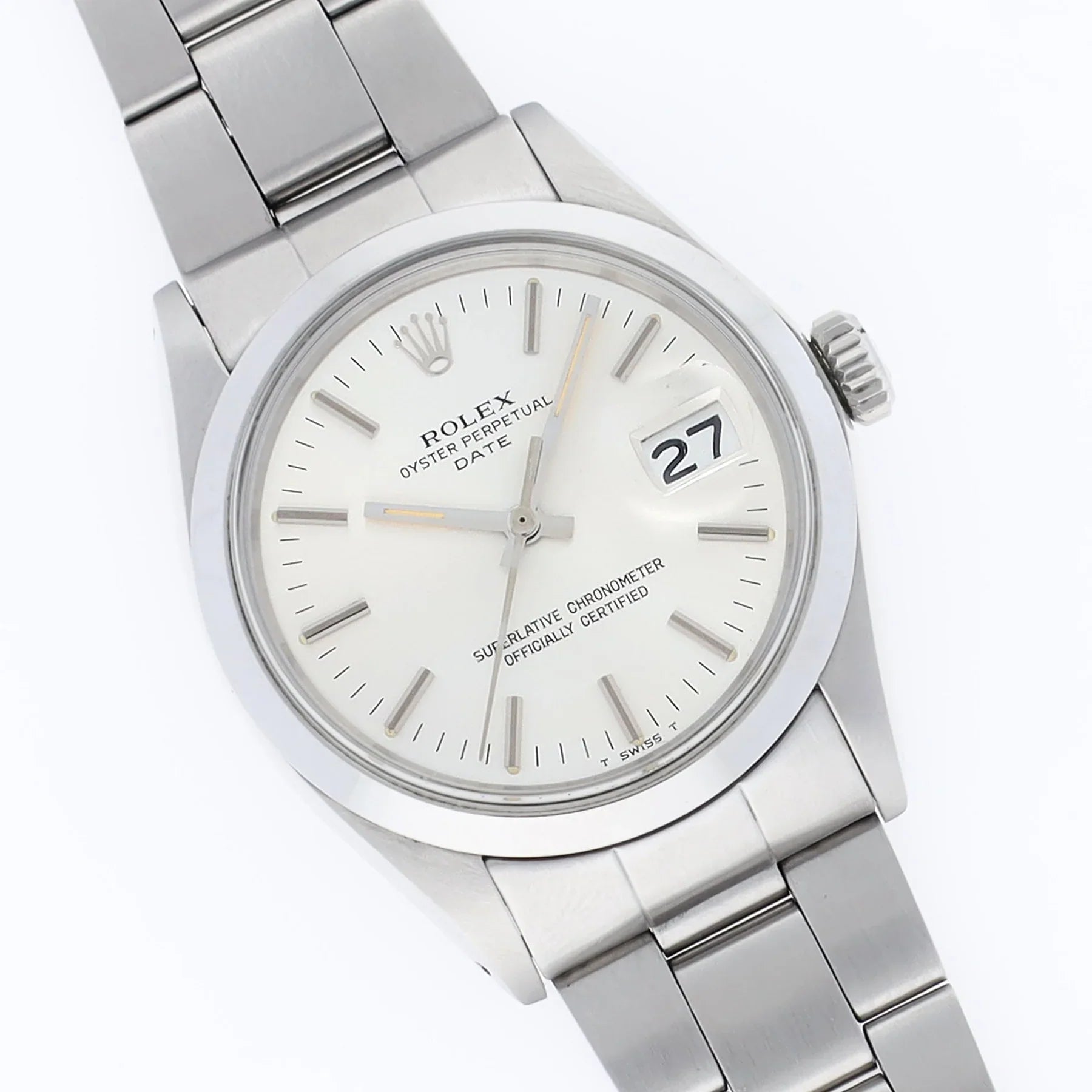
If we had to pick one, this is it. The Datejust 1601 (1960–1977) is the reference that defined modern Rolex design: fluted bezel, Jubilee or Oyster bracelet, 36mm steel case, applied indices, cyclops over the date. Every Datejust made since looks like a 1601 with refinements.
In 2026, clean steel examples with original dials trade between $2,400 and $3,400 on Chrono24. The Caliber 1570 movement is bulletproof — Rolex’s first high-beat (19,800 vph) and arguably the most serviced movement in horological history. Any competent watchmaker can work on it, and parts are still made.
What to inspect: dial originality (refinishes drop value 30%), the cyclops (often replaced), and the bracelet stretch (older Jubilees go floppy — costs $400–$800 to replace).
Why this one for a first Rolex: it does everything. Office, dinner, weekend. Holds value. Easy to service. And at 36mm, it wears closer to modern proportions than the 34mm Air-King.
- Reference Number: 1601
- Production Years: 1960–1977
- Case Diameter: 36mm
- Material: Stainless Steel (some white gold bezel variants)
- Movement: Rolex Caliber 1570 (Automatic)
- Approx. Price: $2,400–$3,400 (Pre-Owned)
2. Rolex Oysterdate Precision 6694 — the vintage purist’s choice
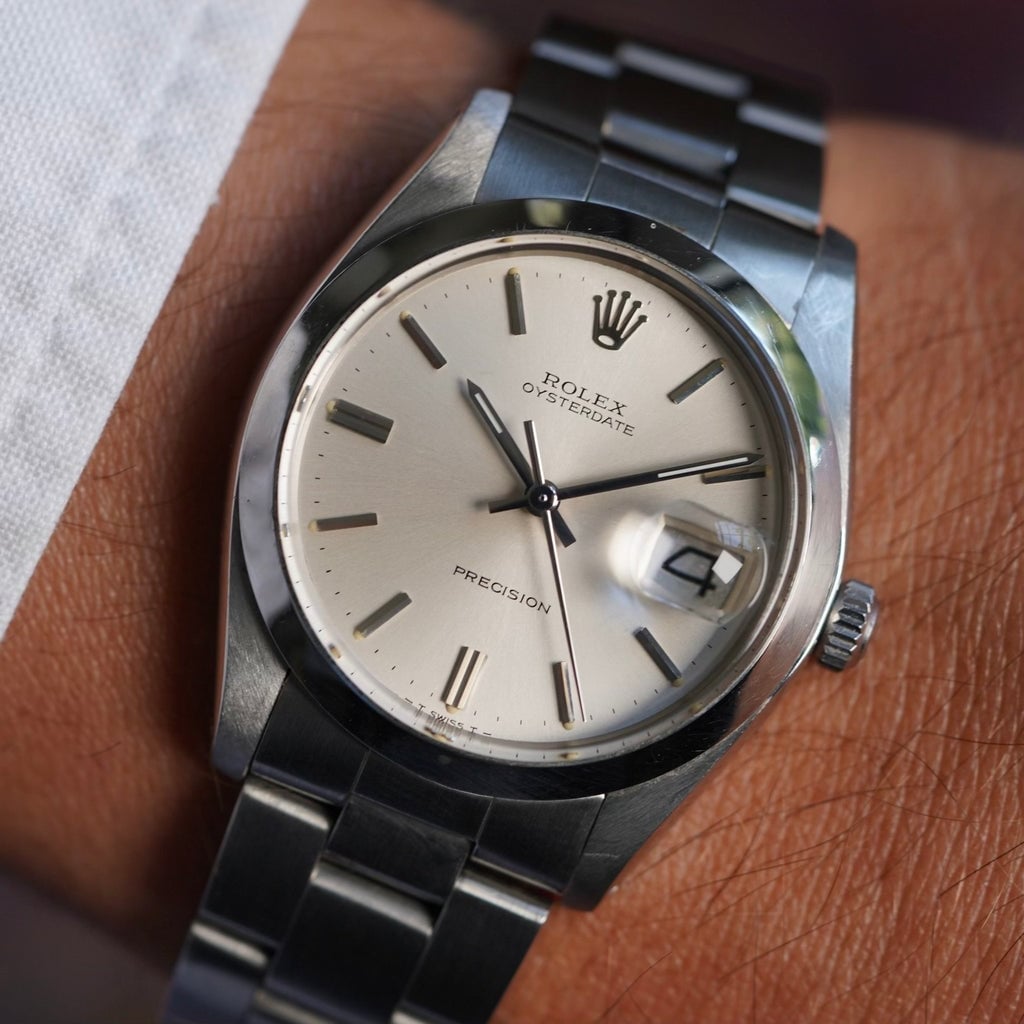
The 6694 (1960s–1980s) is a manual-wind, 34mm dress Rolex with a date. No automatic rotor, no “Perpetual” on the dial — just a hand-wound Caliber 1225 doing one thing well.
Prices: $1,800 in average condition, up to $2,800 for a serviced example with original papers. One of the few Rolex references where average-condition examples still slip under $2K.
What to inspect: the manual movement should wind smoothly without grit; the small-second-hand variant exists in some references and is rarer; redials are common at this price point (look for crisp printing).
Who it’s for: anyone who wants a vintage Rolex without paying the automatic-movement premium. Manual-wind has become a feature, not a bug, for collectors who want to interact with their watch each morning.
- Reference Number: 6694
- Production Years: 1960s – 1980s
- Case Diameter: 34mm
- Material: Stainless Steel
- Movement: Rolex Caliber 1225 (Manual-Wind)
- Approx. Price: $1,800–$2,800 (Pre-Owned)
3. Lady Datejust 6917 — the under-budget standout
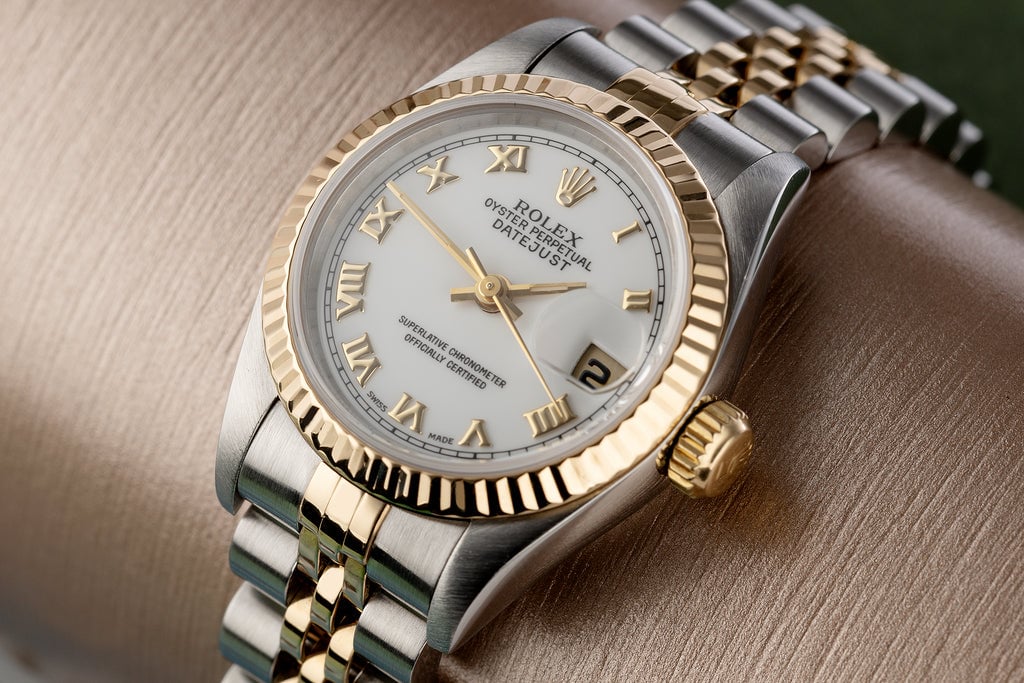
The 6917 (1970s–1980s) at 26mm steel is the most consistently sub-$3,000 Rolex on this list. Clean examples trade between $1,500 and $2,400. White, silver, and champagne dials all sit in the same price band.
It’s worth saying clearly: a 26mm watch is small by 2026 standards. But it wears beautifully on smaller wrists, makes a stunning gift, and is the cheapest path into Rolex ownership that doesn’t involve compromises on authenticity.
What to inspect: the bracelet (Lady President bracelets stretch faster than Oyster) and the dial (gold-plated bezel can show wear).
- Reference Number: 6917
- Production Years: 1970s – 1980s
- Case Diameter: 26mm
- Material: Stainless Steel
- Movement: Rolex Caliber 2030 or 2035 (Automatic)
- Approx. Price: $1,500–$2,400 (Pre-Owned)
4. Rolex Air-King 5500 — the heritage piece
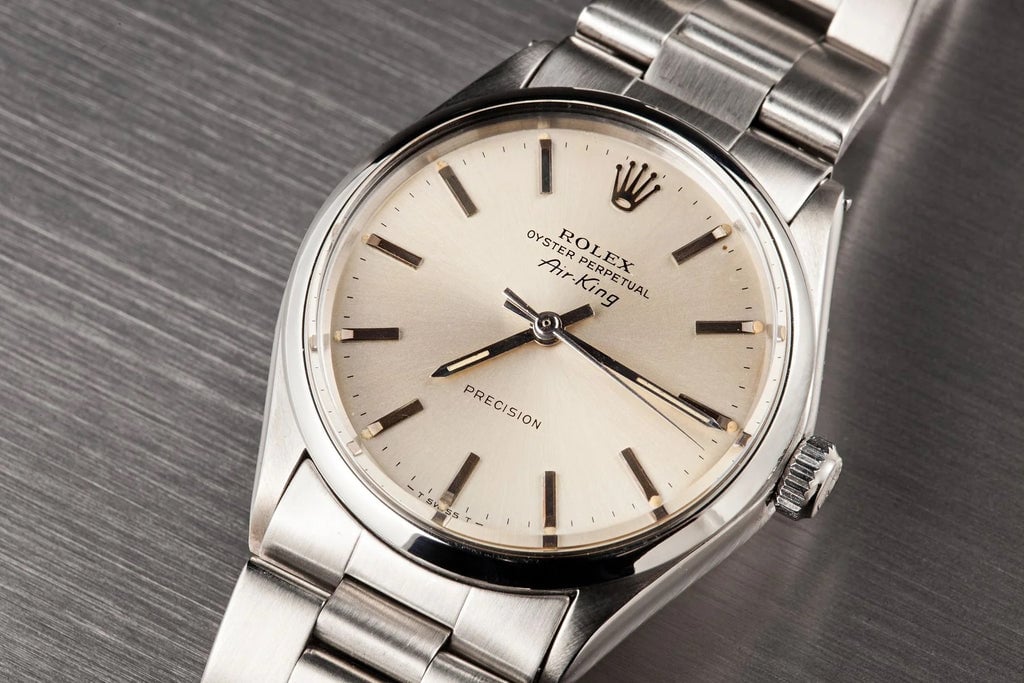
The Air-King 5500 ran for 32 years (1957–1989) — one of the longest production runs in Rolex history. It’s a 34mm steel Oyster case, no date, often with an applied “AIR-KING” script at six o’clock. Pure tool-watch heritage from Rolex’s pilot-watch era.
Prices have risen. Clean examples that were $1,800 in 2018 are now $2,500–$3,800 in 2026. The cleanest examples with original “AIR-KING” dials and tritium lume push above budget.
Risk note: the movement varies by year (Cal. 1520 vs 1530). Both are reliable, but service records matter. Walk away from any seller who can’t say what caliber is inside.
- Reference Number: 5500
- Production Years: 1957 – 1989
- Case Diameter: 34mm
- Material: Stainless Steel
- Movement: Rolex Caliber 1520 or 1530 (Automatic)
- Approx. Price: $2,500–$3,800 (Pre-Owned)
5. Cellini 4112 — the dress-watch sleeper
Almost nobody talks about vintage Cellinis, which is exactly why they’re undervalued. The Cellini line was Rolex’s formal-dress division — thin cases, manual movements, gold-capped or solid 14k/18k.
The reference 4112 (1970s) in steel or gold-capped trades between $1,800 and $2,900. Solid gold examples are out of budget. Steel and capped examples slip in.
Who it’s for: somebody who already owns a Datejust or doesn’t need “the Rolex everyone recognizes.” Cellinis are the watch-people watch — recognized by collectors, invisible to everyone else.
Risk note: parts are harder to source than for Oyster-case Rolex. Pick one with recent service history.
- Reference Number: 4112
- Production Years: 1970s
- Case Diameter: 32mm
- Material: Stainless Steel or Gold-Capped
- Movement: Rolex Caliber 1601 (Manual-Wind)
- Approx. Price: $1,800–$2,900 (Pre-Owned)
6. Oyster Perpetual 1002 — the minimalist
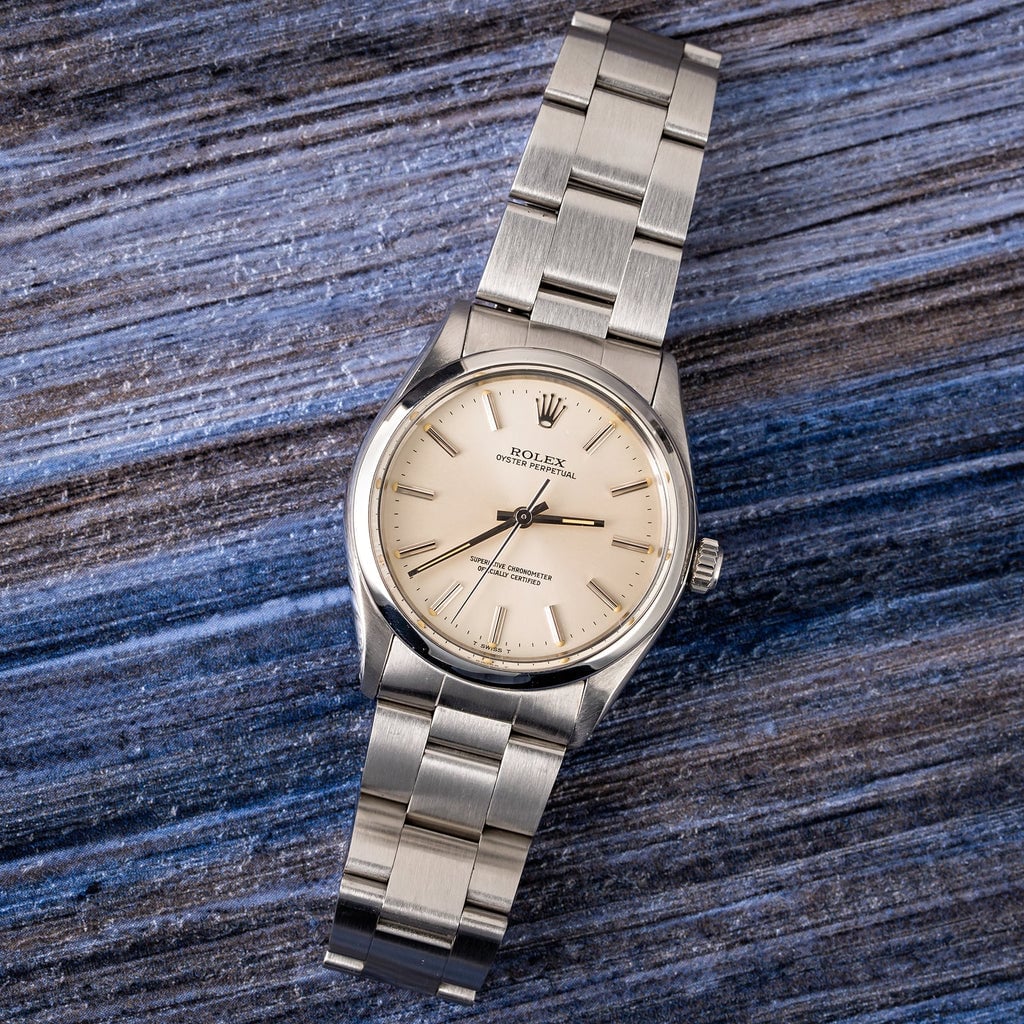
The 1002 is the Oyster Perpetual without the date. 34mm steel, automatic Caliber 1560 or 1570, smooth bezel, simple stick markers. It’s the cleanest dial in vintage Rolex.
Realistic 2026 prices: $2,400 to $3,500. Champagne dials at the lower end; silver/white dials at the higher end. Anything with a “linen” textured dial gets a 20–30% premium and pushes above budget.
Why this matters: for people who want a Rolex that doesn’t announce itself. The 1002 is what serious collectors wear when they don’t want to wear a Submariner.
- Reference Number: 1002
- Production Years: 1960s – 1980s
- Case Diameter: 34mm
- Material: Stainless Steel
- Movement: Rolex Caliber 1560 or 1570 (Automatic)
- Approx. Price: $2,400–$3,500 (Pre-Owned)
7. Oyster Perpetual Date 1500 — at the edge
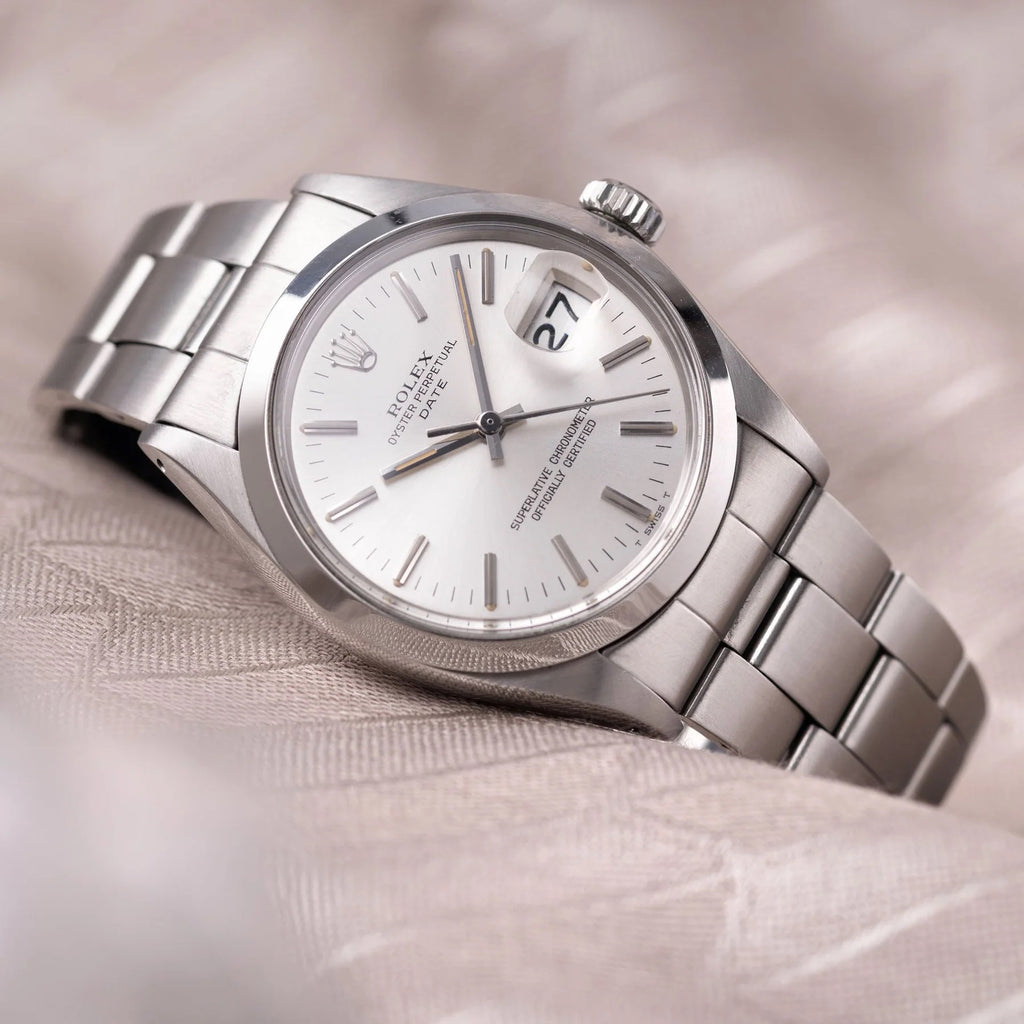
This one is closer to the budget edge than the others. The OP Date 1500 (1960s–late 1970s) is essentially a 1002 with a date window. Same case, same movements. The date function adds $300–$500 to typical pricing.
Clean examples: $2,800–$3,800. Below $2,800, you’re looking at heavily polished cases or non-original dials. The honest reality is that “under $3,000” examples exist, but the good under-$3,000 examples are getting rare each year.
If you’re set on a vintage Rolex with a date function under $3K, the Datejust 1601 (pick #1) is usually the better value. The 1500 is for someone who specifically wants the smooth bezel + date combination.
- Reference Number: 1500
- Production Years: 1960s – late 1970s
- Case Diameter: 34mm
- Material: Stainless Steel
- Movement: Rolex Caliber 1560 or 1570 (Automatic)
- Approx. Price: $2,800–$3,800 (Pre-Owned)
Where to buy — and what to walk away from
The pre-owned vintage Rolex market in 2026 is concentrated across four sources, in order of trust and price:
- Chrono24 — largest global marketplace. Filter by “Buyer Protection” sellers (escrow). Prices reflect global demand, so expect higher than local dealer prices, but lower than auction house premiums.
- WatchUSeek classifieds — peer-to-peer, often best pricing, but requires that you can verify authenticity yourself. Best for buyers who’ve done their research.
- Local Authorized Dealer trade-ins — your local AD sometimes has vintage pieces taken in trade. Limited selection but high trust.
- Auction houses (Bonhams, Christie’s, Phillips) — premium pricing, full provenance. Above this budget for most lots.
Red flags to walk away from:
- No service history within the last 5 years. A vintage Rolex needs servicing every 5–7 years (~$400–$800). If a seller can’t tell you when it was last serviced, budget another $600 minimum.
- Refinished dials sold as original. Look for crisp, slightly imperfect printing — original dials show their age. A “too clean” vintage dial is suspect.
- Replacement movements. The reference number on the case should match the caliber inside (e.g., a 1601 should have Cal. 1570, not 3035). Any reputable seller will confirm this.
- Over-polished cases. Rolex cases have crisp, faceted lugs from the factory. If the lugs look soft and rounded, the case has been over-polished — value drops 25–40%.
- No box or papers — but priced as if it has them. Without papers, you should pay 10–20% less than the comparable carded example.
The 2026 market reality
Vintage Rolex prices have appreciated 5–8% per year for most of the past decade. Some examples are sharper:
- A clean Datejust 1601 that traded at $1,800 in 2019 is $2,800–$3,200 in 2026.
- An Air-King 5500 that traded at $1,500 in 2018 is $2,800 in clean condition today.
- The Cellini line, undervalued for years, has begun to appreciate — Cellini 4112s have gone from sub-$1,500 average to $2,000+ in the last 24 months.
The implication: the “under $3,000 vintage Rolex” window is real, but it’s narrowing. Some references on this list will graduate above $3,000 average in the next 24–36 months. Buying now still makes sense — and for collectors-as-investors, vintage Rolex remains one of the few luxury categories where the depreciation curve runs in reverse.
After you buy: protecting it
Owning a vintage Rolex is different from owning a modern one. Three things to handle in the first 90 days:
1. Service it (if needed). If the watch hasn’t been serviced in 5+ years, send it to a Rolex Service Center or a reputable independent watchmaker. Expect $400–$800. Rolex Service includes a 2-year warranty.
2. Insure it. Rule of thumb: schedule the watch on your homeowner’s policy at replacement value (not purchase value). Vintage Rolex appreciates, and replacement cost in 5 years will exceed what you paid.
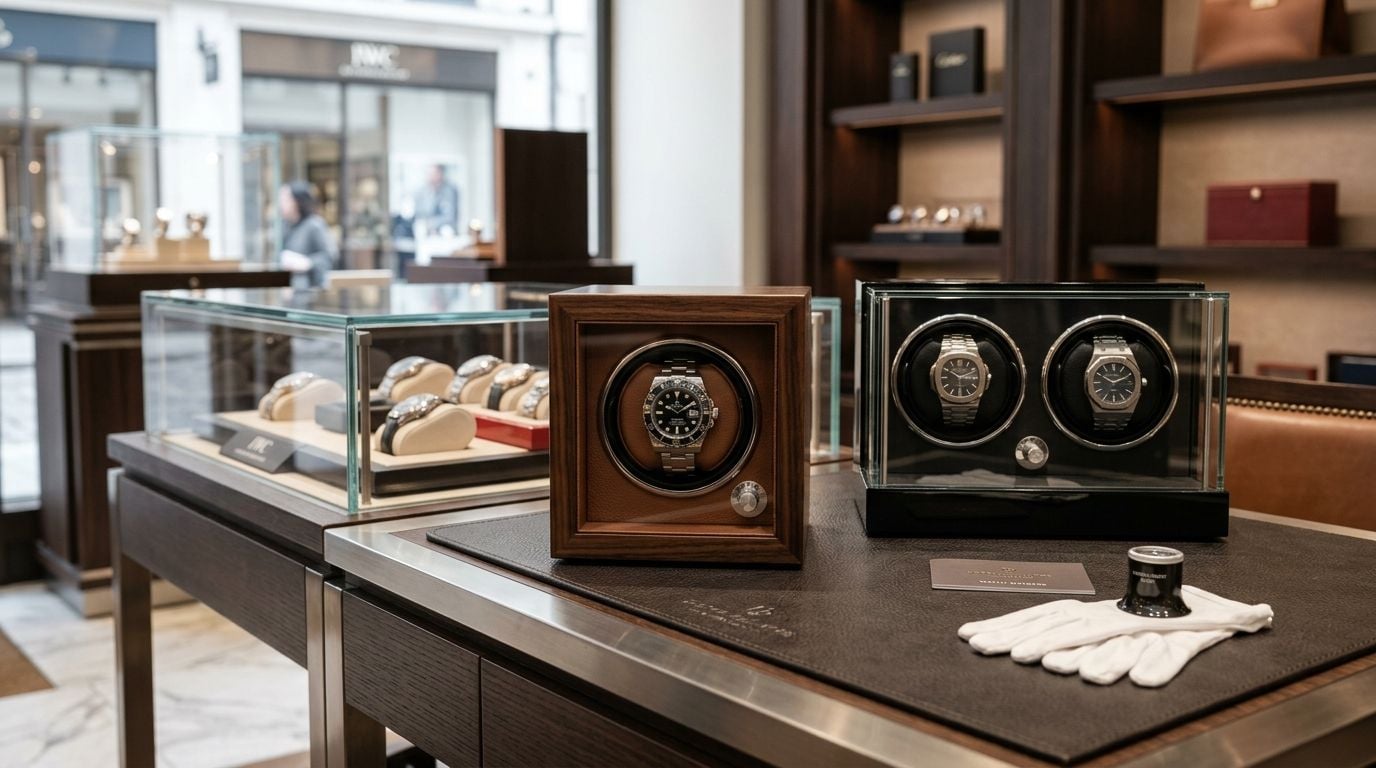
3. Store it correctly. Vintage automatic Rolex movements benefit from gentle, continuous winding when not worn — daily wear is ideal, but a quality watch winder is the next best thing. For a vintage Cal. 1570 or 1530, 650–800 turns per day at bidirectional setting is the spec.
After You Buy
Protect Your First Rolex
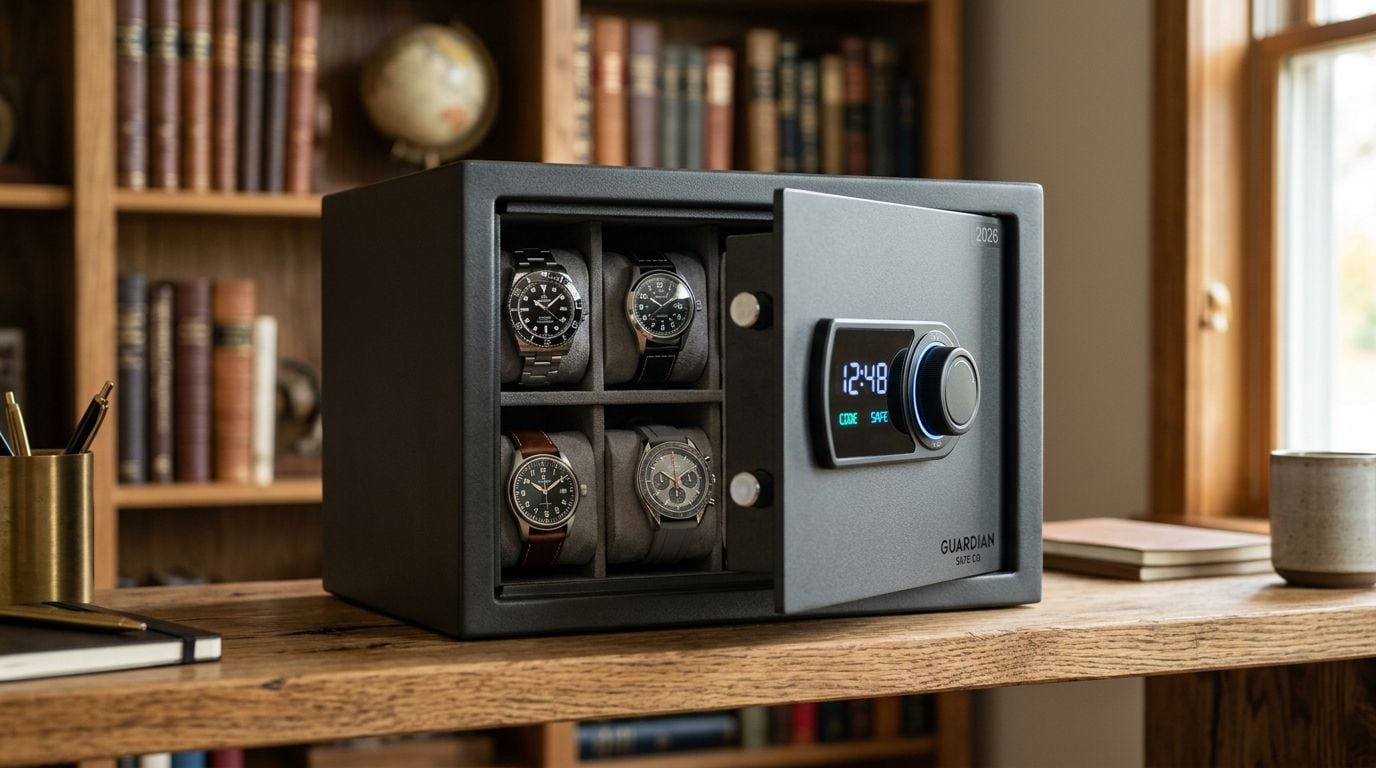
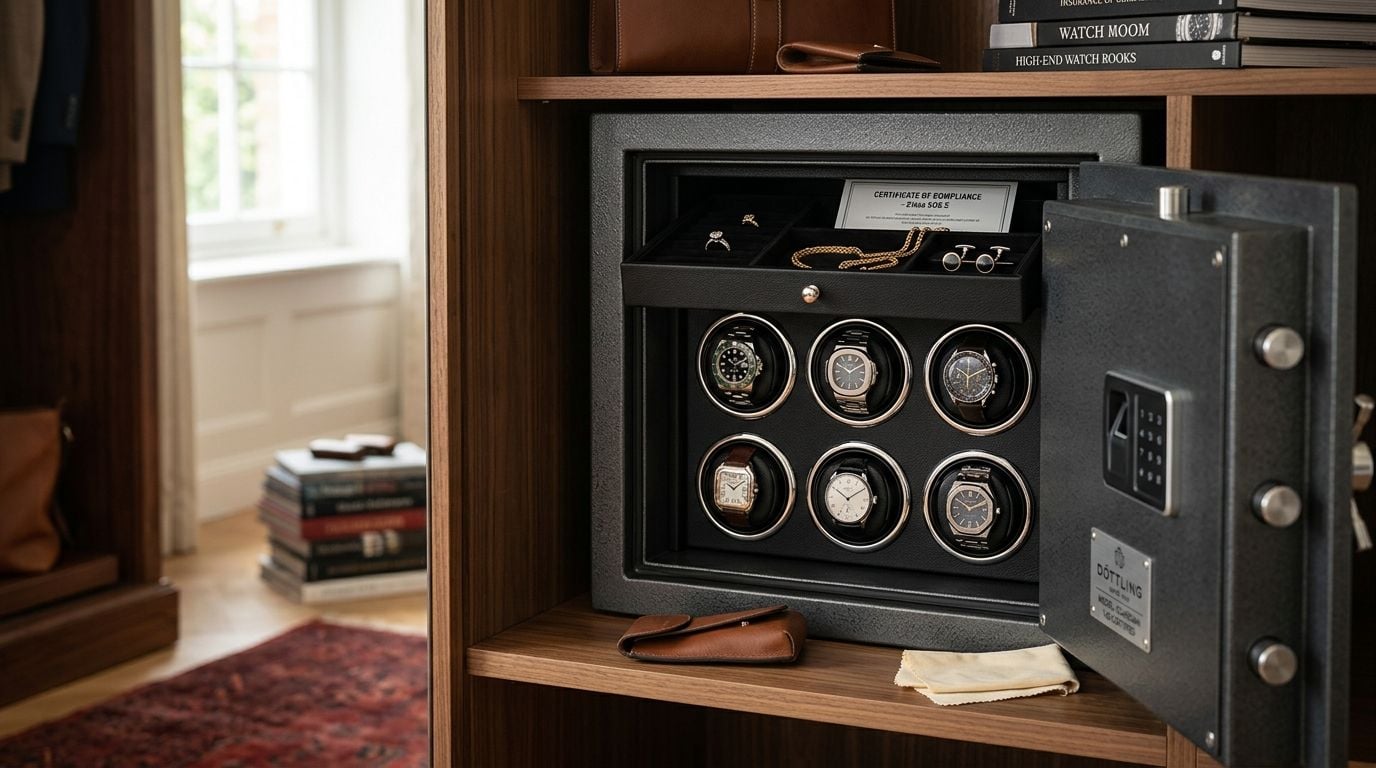
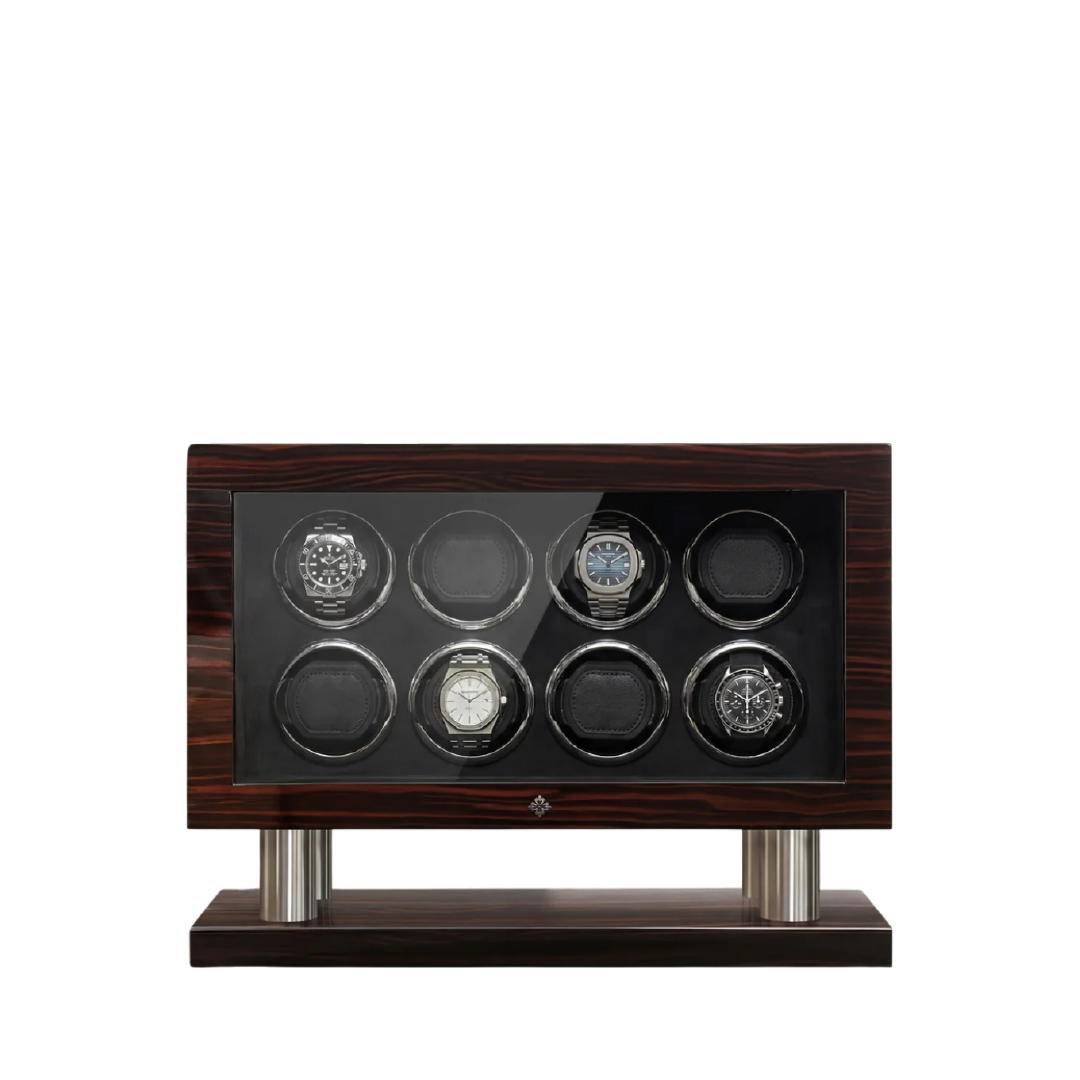
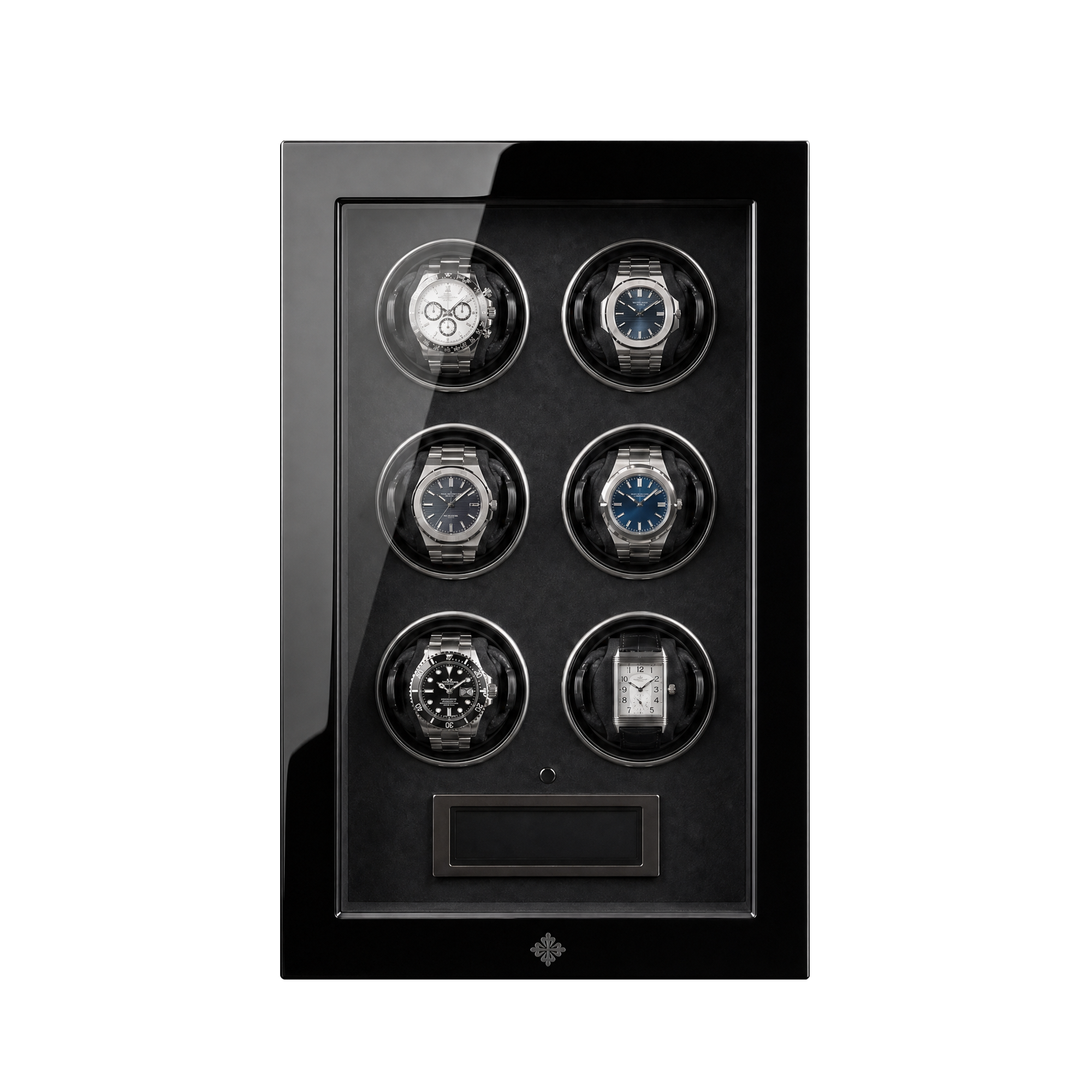
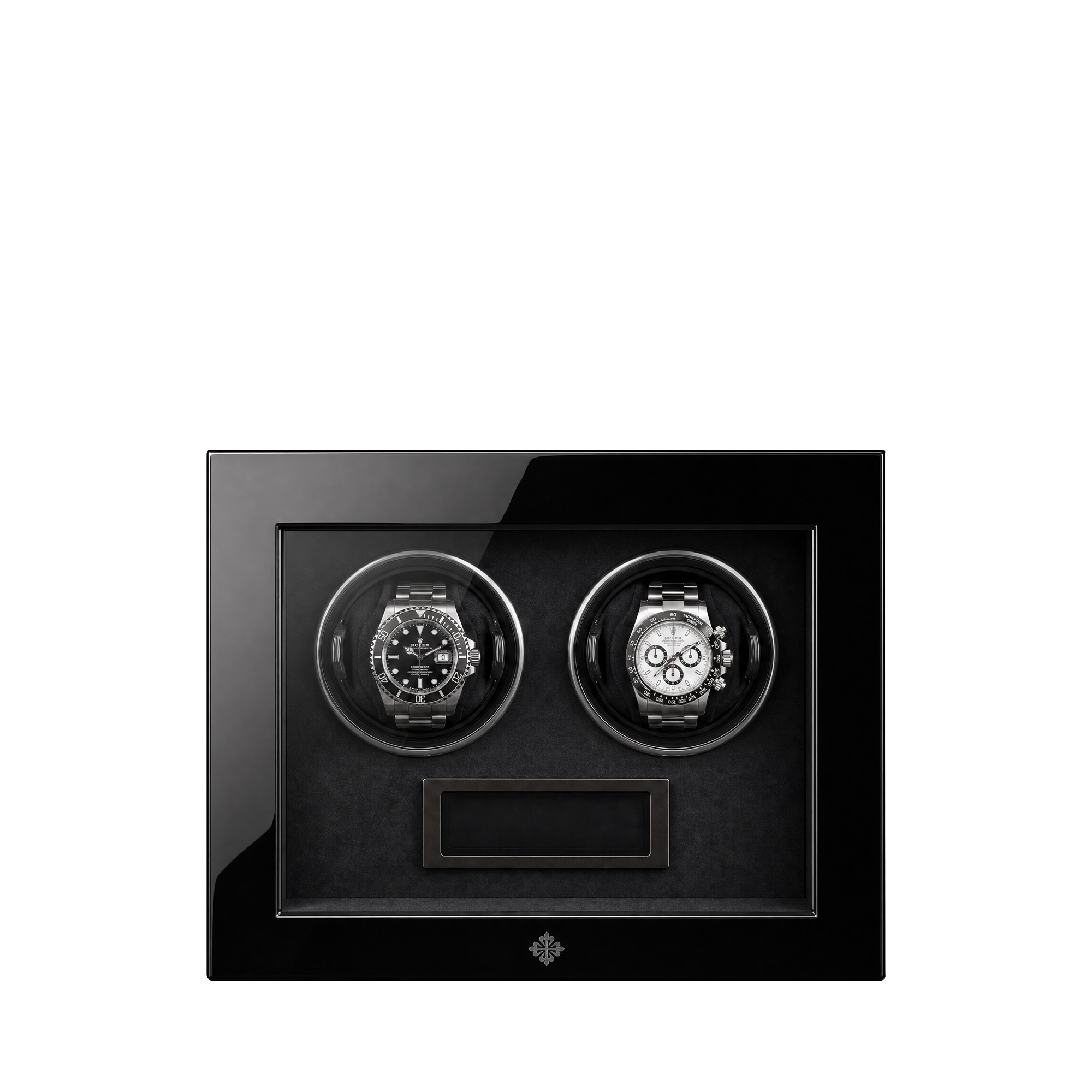
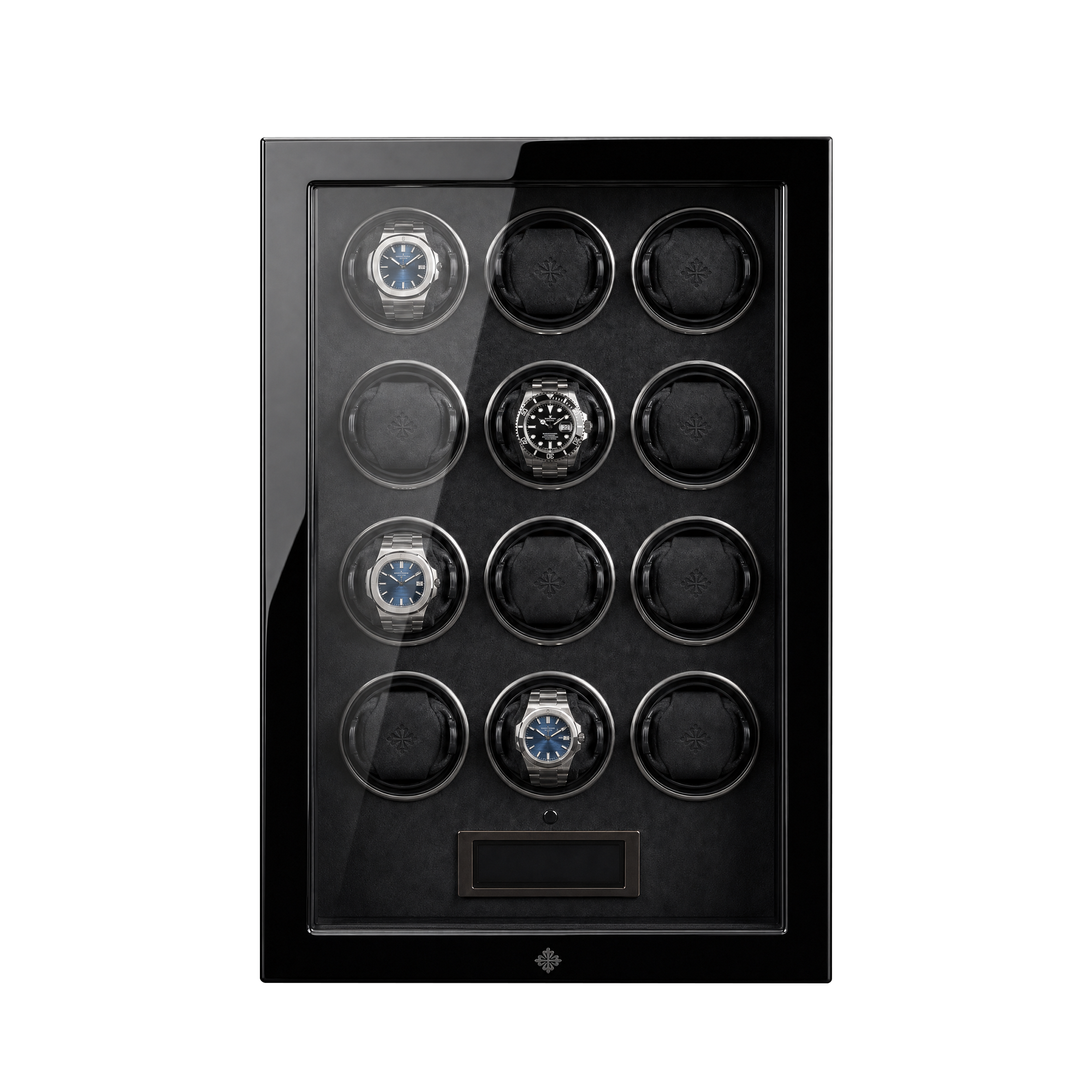
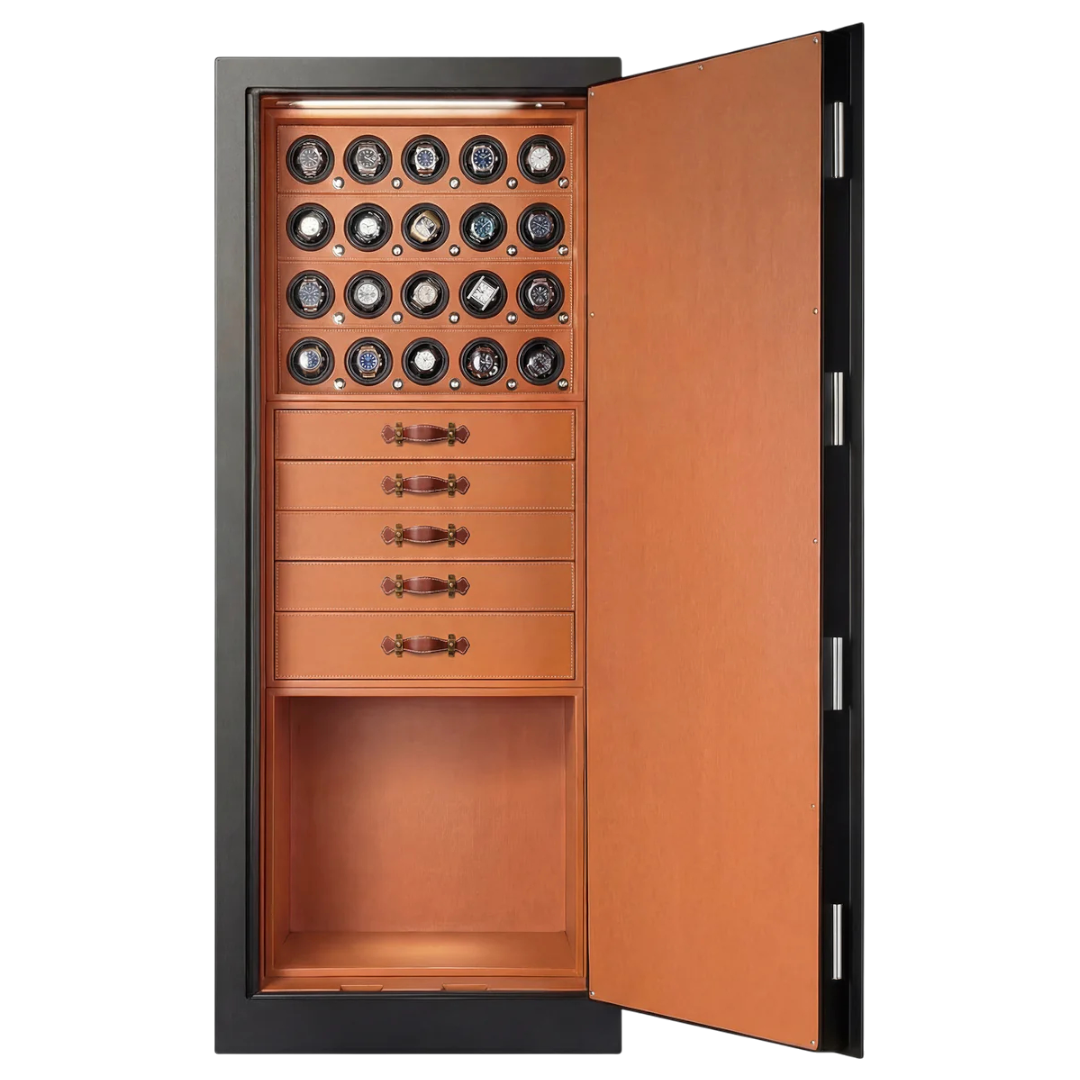
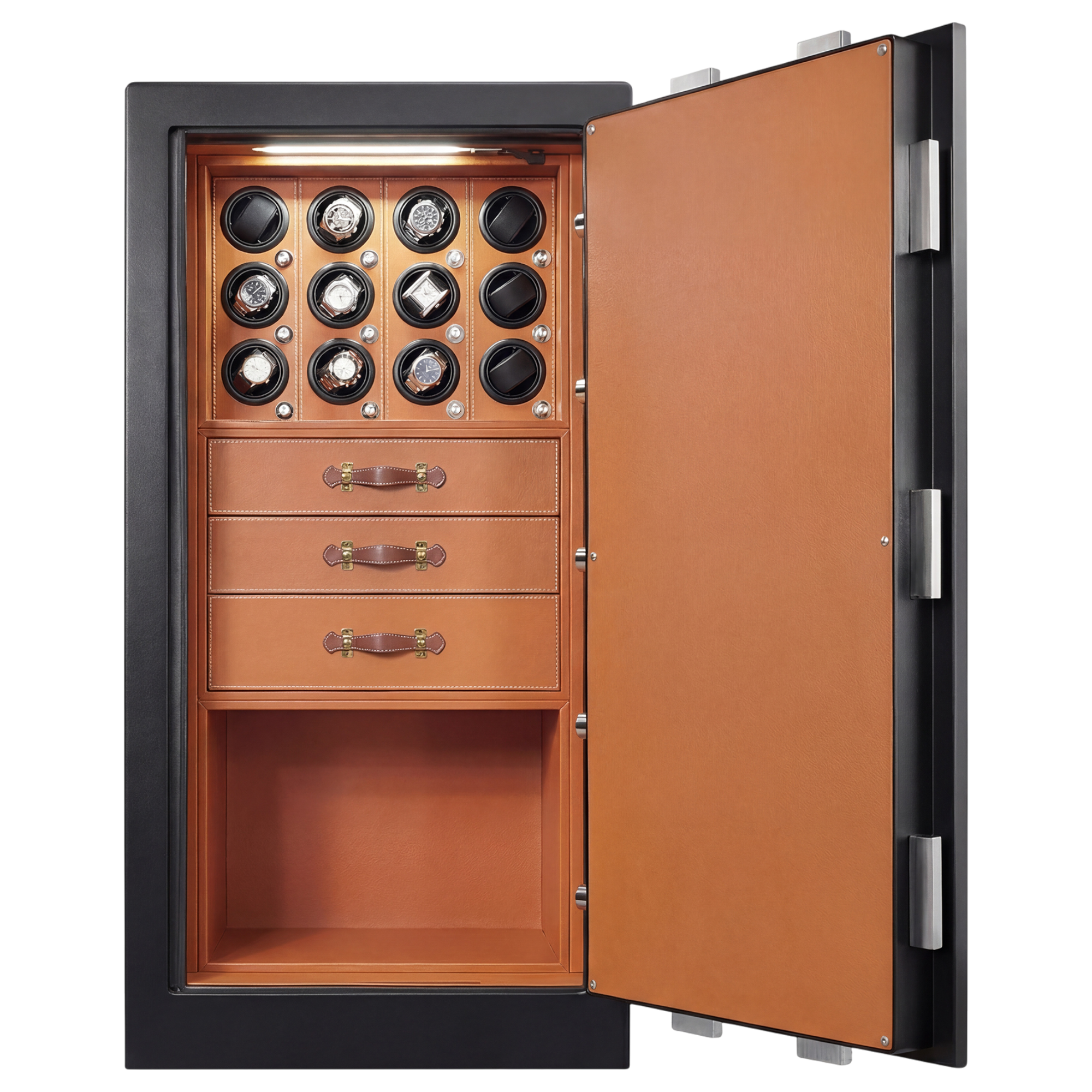
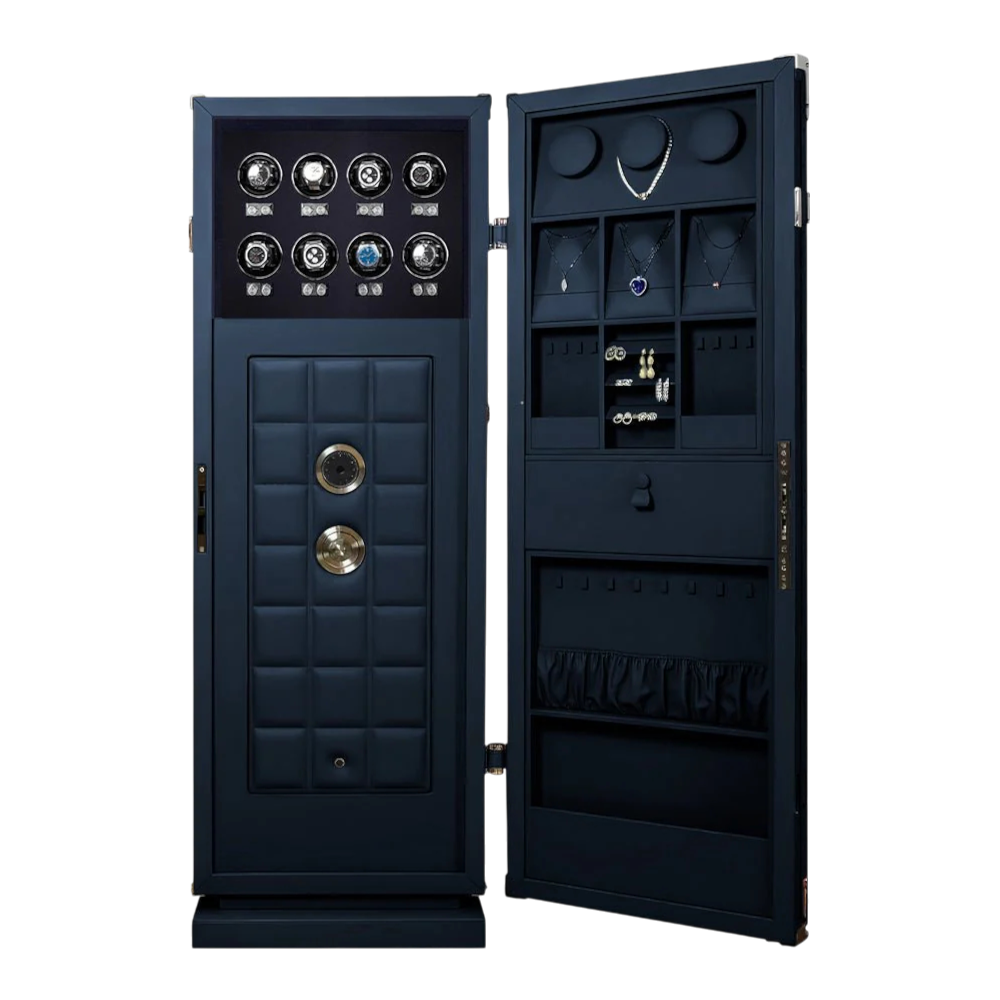
Enigwatch’s Virtuoso Series 6 Watch Winder ($949) is priced in the same tier as your vintage Rolex and offers the bidirectional, programmable winding that Caliber 1570/1530 movements respond well to. When your collection grows, the Apollo 12 Watch Safe ($7,499) integrates a winder with bulletproof storage — the next logical step after your second or third Rolex.
Frequently asked questions
Can you actually buy a real Rolex for under $3,000 in 2026?
Yes, but only in the vintage pre-owned market. New Rolex starts at $6,800 for the smallest Oyster Perpetual. Under $3,000, you’re looking at 1960s–1980s references like the Datejust 1601, Oysterdate 6694, and Air-King 5500.
What’s the cheapest Rolex ever made?
The Rolex Oysterdate Precision 6694 is often the most affordable vintage reference in clean condition, with average examples trading at $1,800–$2,400. The Lady Datejust 6917 is similarly priced. The cheapest “new” Rolex available today at retail is the Oyster Perpetual 28mm at $5,800.
Is buying a vintage Rolex a good investment?
For most references on this list — yes. Vintage Rolex has appreciated 5–8% per year on average over the past decade, outperforming many traditional asset classes when you factor in the wearable value. Datejust 1601 and Air-King 5500 are particularly strong recent performers.
Do I need to service it before buying?
You don’t have to — but you should ask when it was last serviced. Anything beyond 5 years means budget another $400–$800 for service within the first year. Walk away from sellers who can’t provide service history.
Will an under-$3,000 Rolex look “vintage” or “modern”?
Vintage. At 34mm (most picks here) or 36mm (the Datejust 1601), these watches wear smaller than modern Rolex. The dials show patina, the lume is yellowed, the cases have honest marks. That’s the look — and increasingly, that’s what collectors want.
Where’s the safest place to buy a vintage Rolex online?
Chrono24 with Buyer Protection (escrow). Filter to “Trusted Seller” badge, request additional photos, and verify the reference number matches the movement caliber before sending payment. For higher-trust transactions, Hodinkee H Shop and Bob’s Watches both authenticate every piece they sell.
What’s the best Rolex under $3,000 for a first-time buyer?
The Datejust 1601. It runs the reliable Caliber 1570 movement, wears well at 36mm, and its fluted bezel and Jubilee bracelet read unmistakably as Rolex. Clean examples still trade in the $2,500 to $3,000 range, which makes it the reference that gives you the most watch, and the most resale confidence, for the money. It is the pick we would steer almost every first-time buyer toward.
Can you get a Rolex Submariner, Daytona, or GMT-Master under $3,000?
No. The sports references (Submariner, Daytona, GMT-Master, Explorer) start well above $8,000 even in older vintage condition, and clean examples run far higher. Any Submariner or Daytona advertised under $3,000 is a replica, a heavily modified “franken” watch, or an outright scam. To buy a genuine Rolex on this budget, stay with the Datejust, Oysterdate, Air-King, and Oyster Perpetual references covered above.
Are vintage Rolex watches under $3,000 automatic, and do they need a watch winder?
Almost all of them are automatic, including every Datejust, Oyster Perpetual, and Air-King on this list. Left unworn they stop within about 40 hours, which means resetting the time and date each time you pick one up. A watch winder keeps a vintage automatic ready to wear and helps keep an older movement’s lubricants evenly distributed. Our guide to watch winders for Rolex covers whether it is worth it for your specific reference.
Written by the Arnold Dupagan from Enigwatch Editorial Team — horologists and collectors who test, source, and write about luxury watch ownership for serious buyers. Published September 11, 2023. Last updated .
Protect Your Watch Collection
Designed for collectors who demand the best. Explore our premium watch winders and luxury safes.
Protect Your Watch Collection
Designed for collectors who demand the best. Explore our premium watch winders and luxury safes.