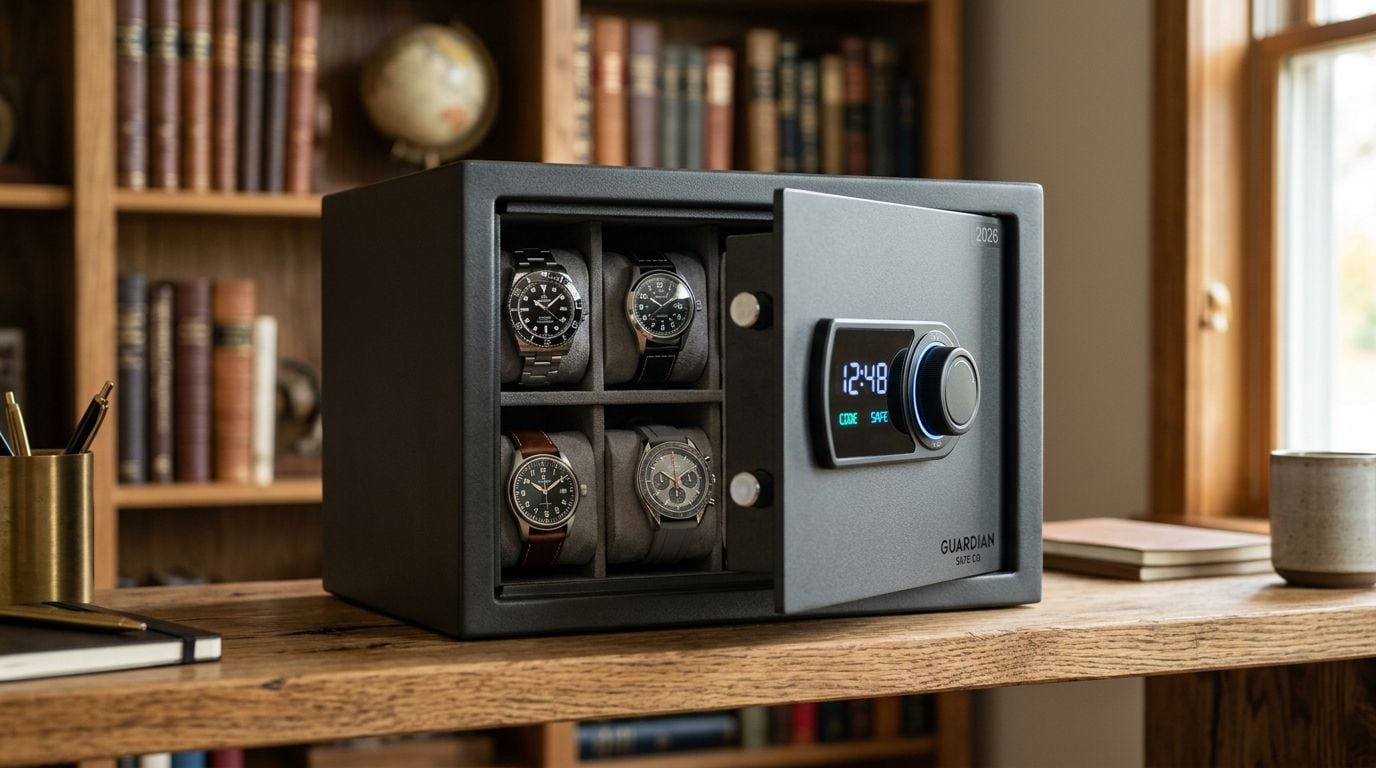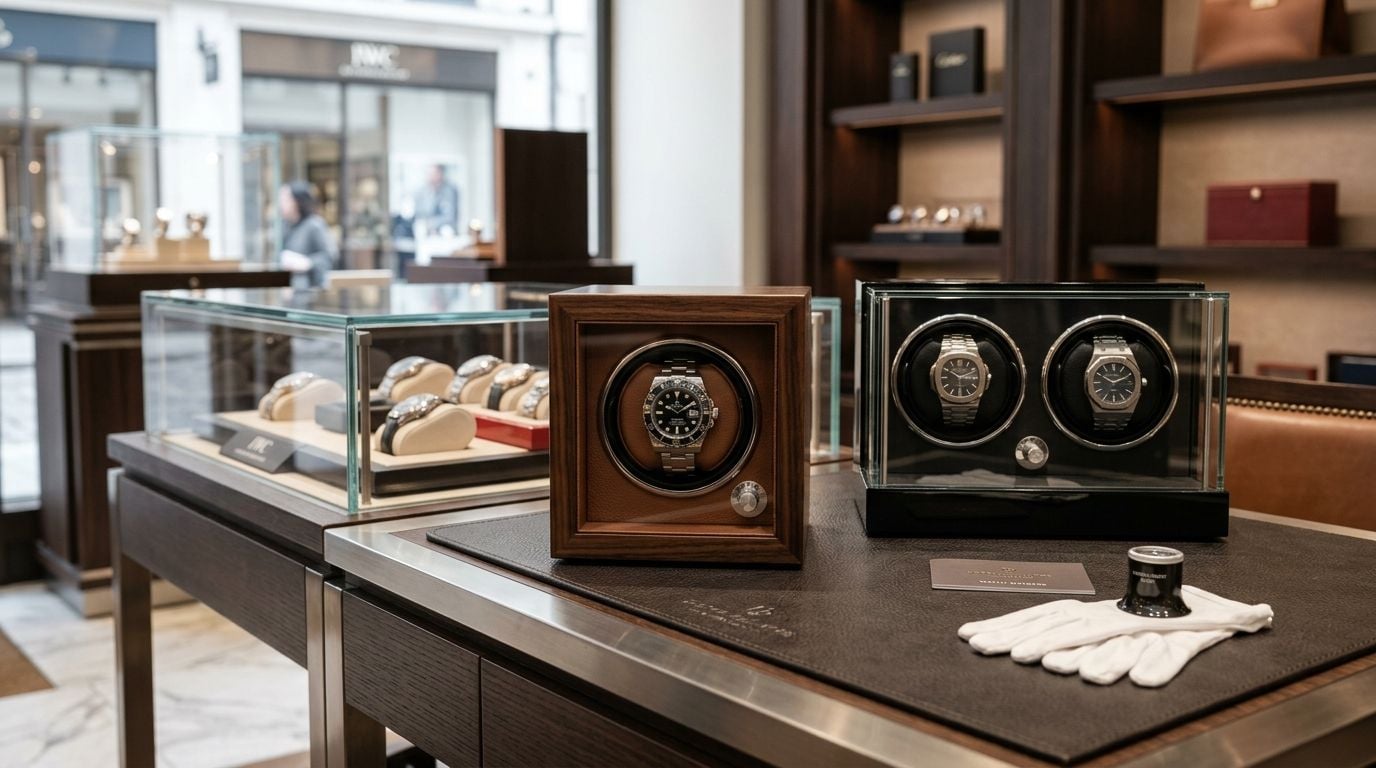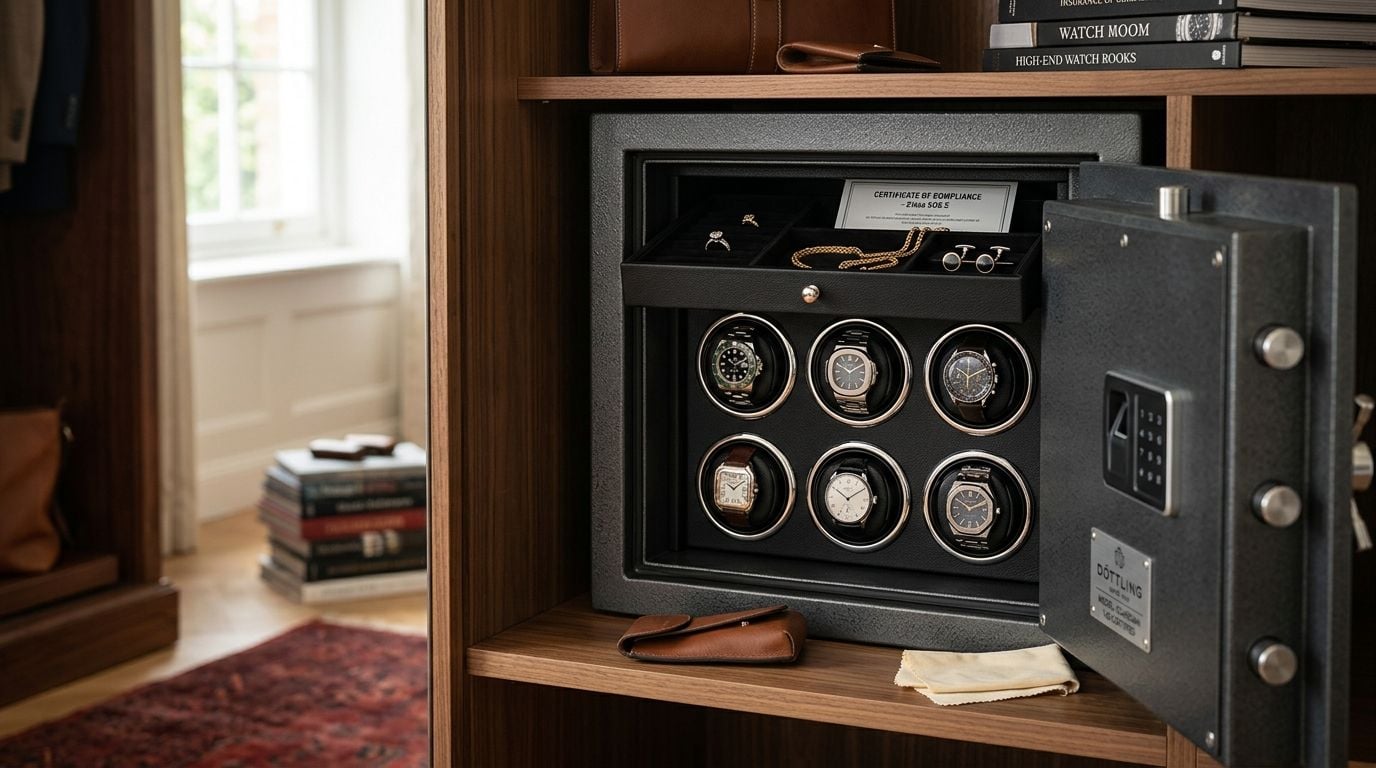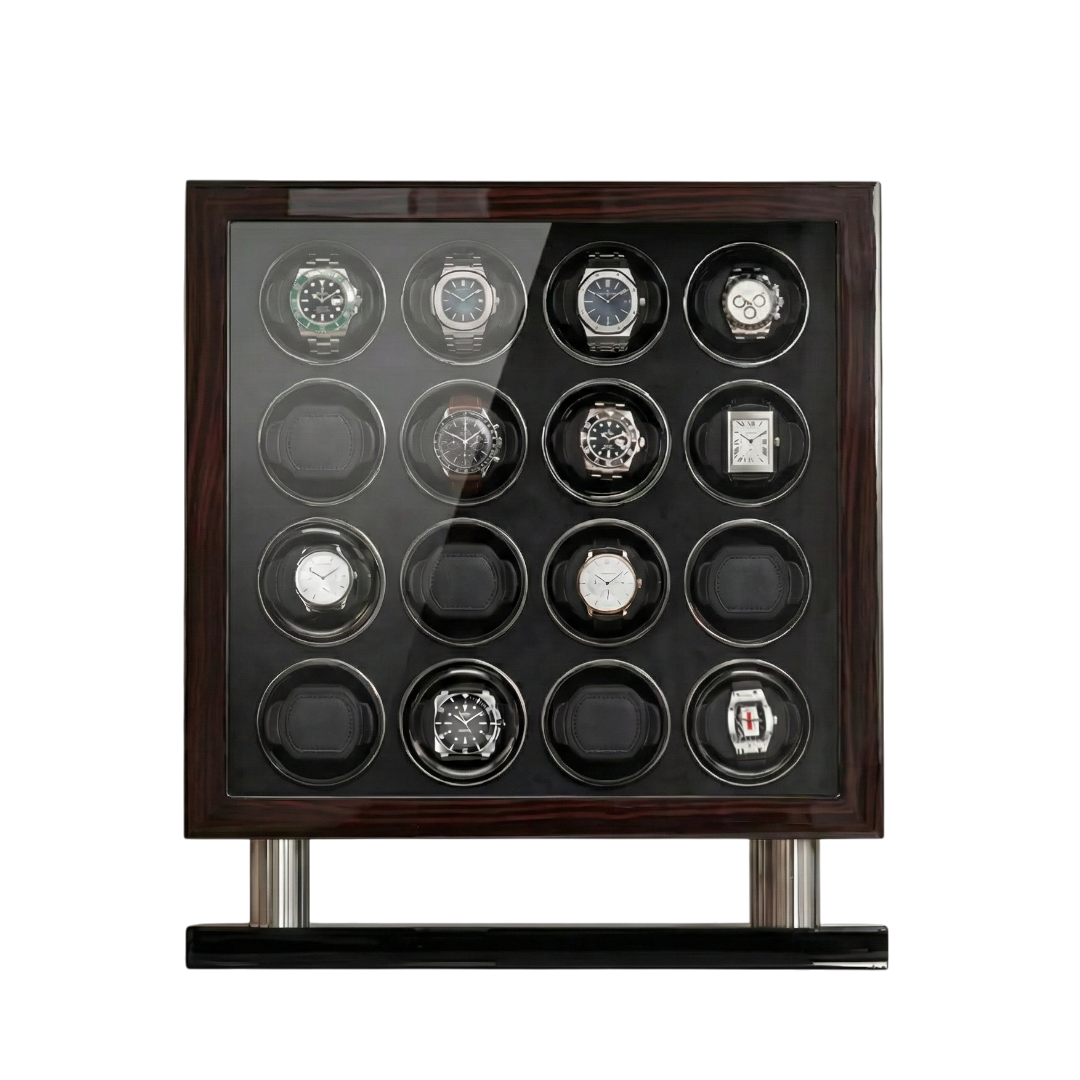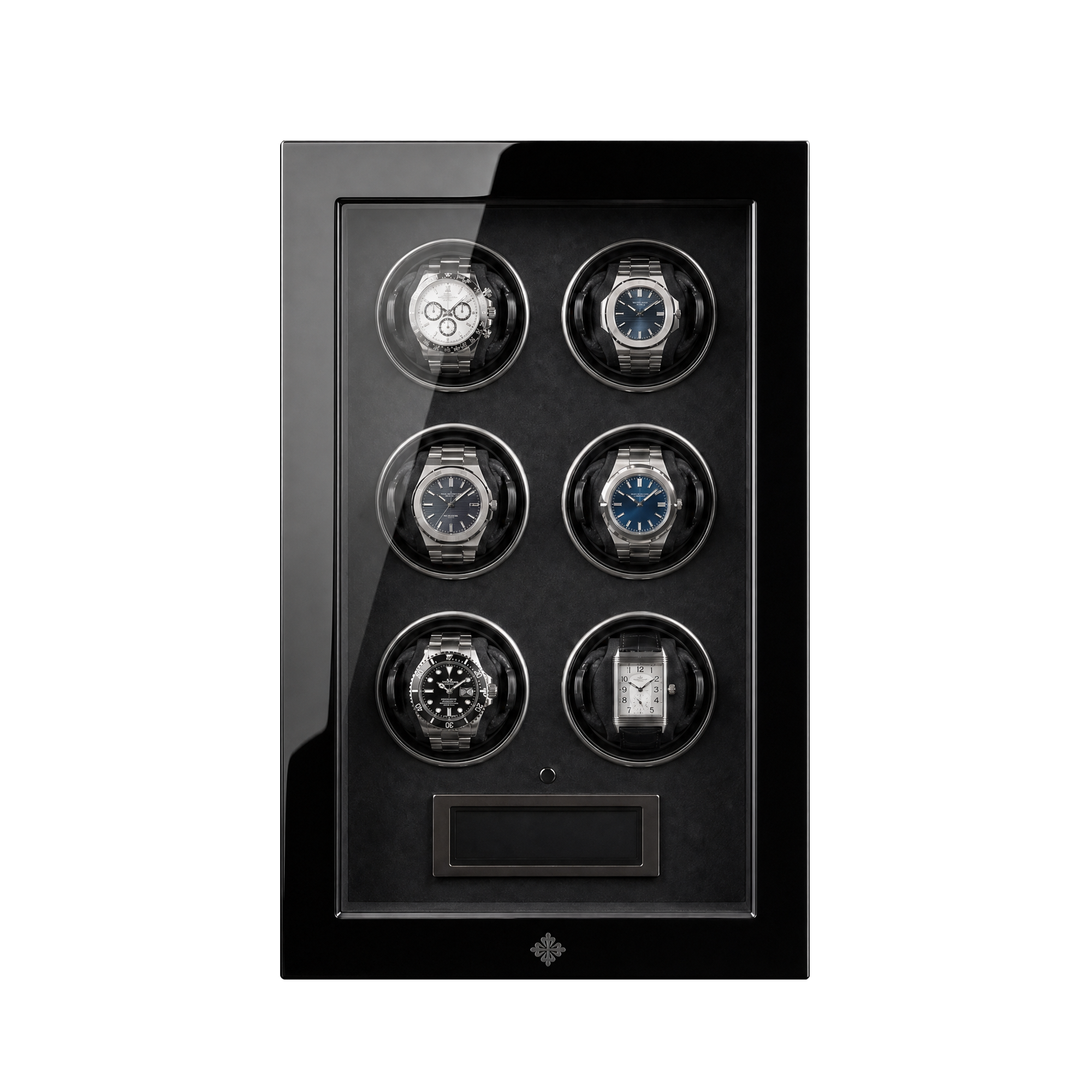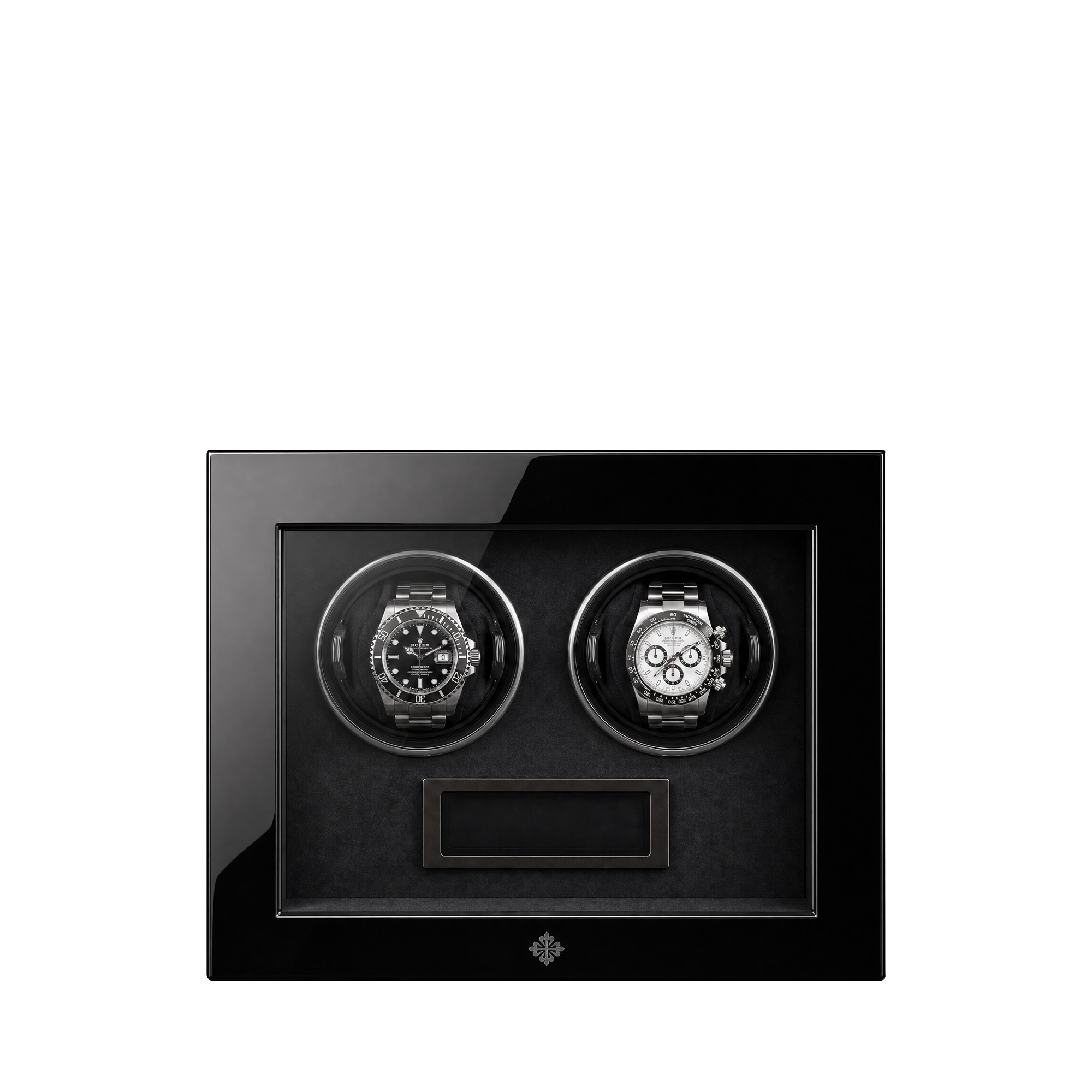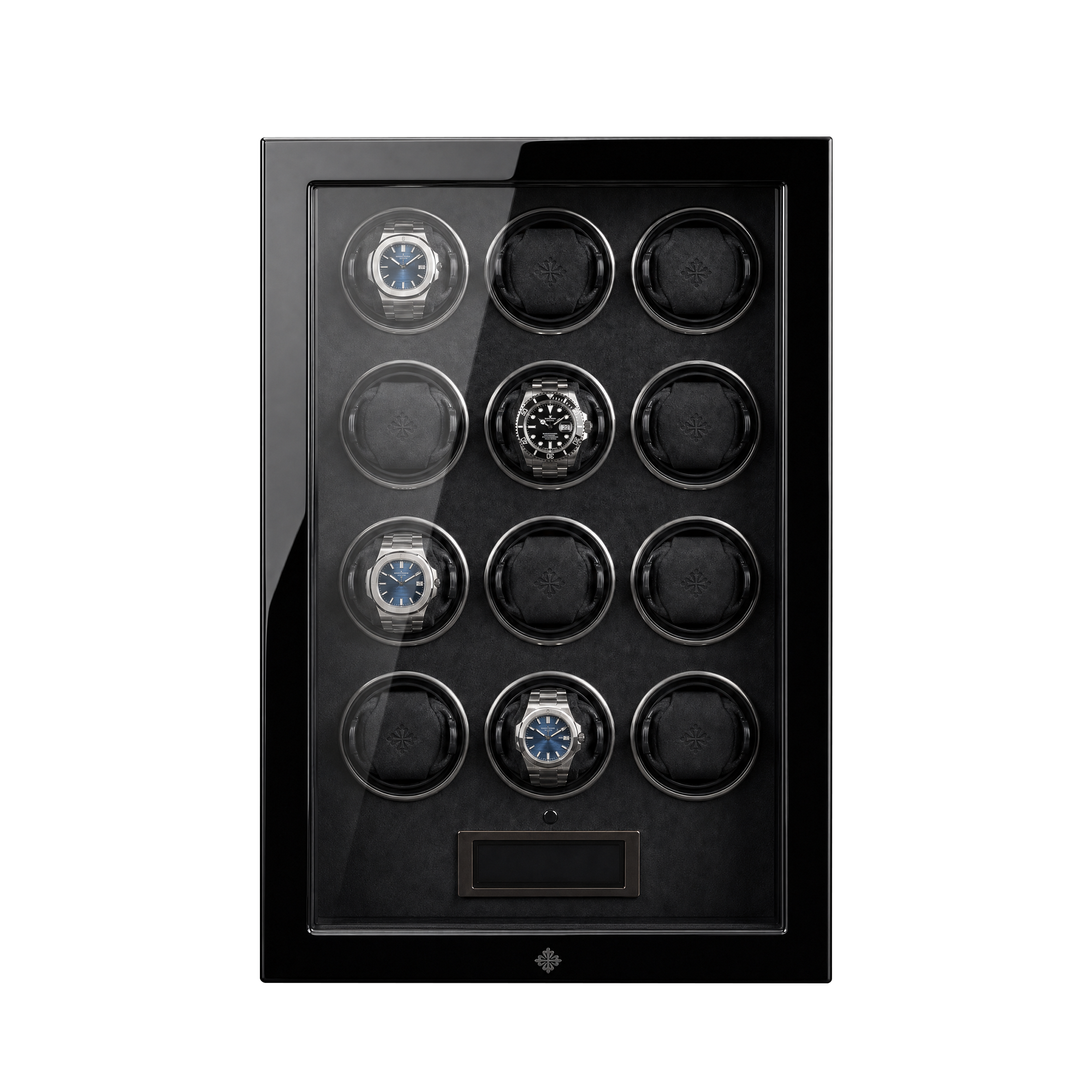

A watch safe for escrow transactions is a dedicated storage unit — not a bank box, not a shipping crate — used to hold a watch under verifiable custody between the moment a buyer and seller agree on terms and the moment funds finish clearing. This isn't the same job as long-term collection storage: the priority is a lock that produces a record of who opened it and when, sized for one or two pieces, not a twenty-slot cabinet. Sellers, dealers, and private brokers handling direct peer-to-peer sales in 2026 are the ones most often searching for this, usually after a deal already fell through once over a custody dispute.
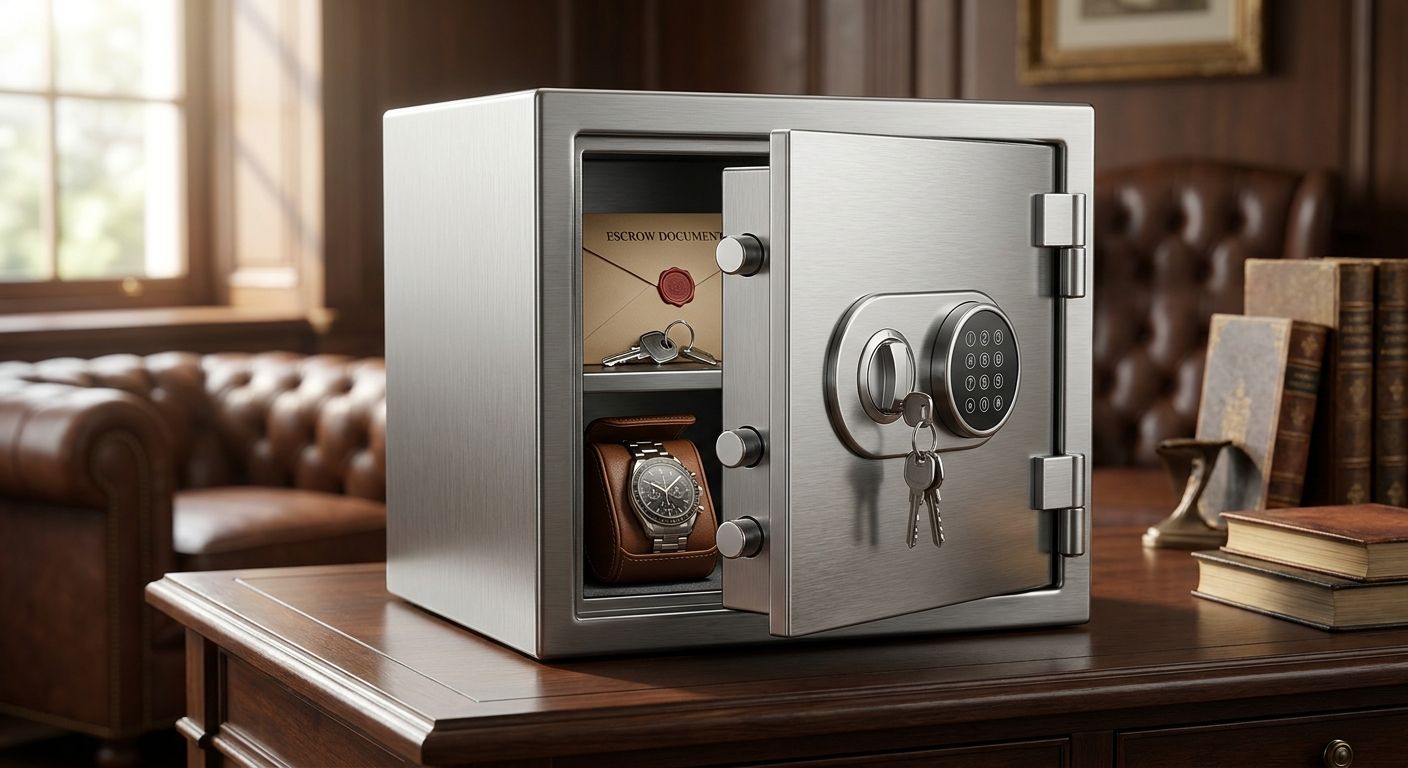
- A watch safe for escrow transactions needs a lock that logs access, not just a heavy door.
- Separate the escrow watch from the rest of any collection so custody claims hold up later.
- UL TL-30 burglary ratings and biometric locks matter more here than overall safe capacity.
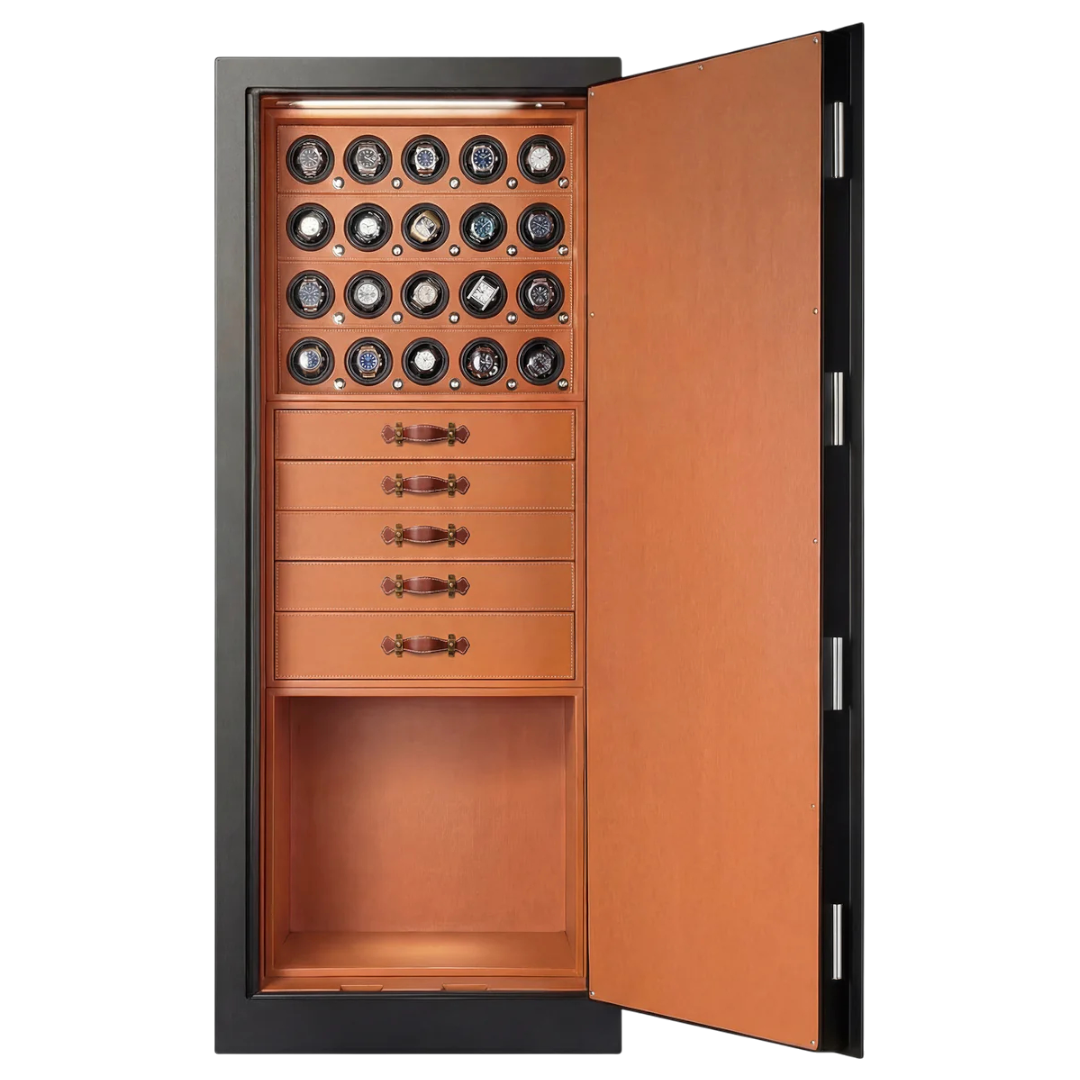
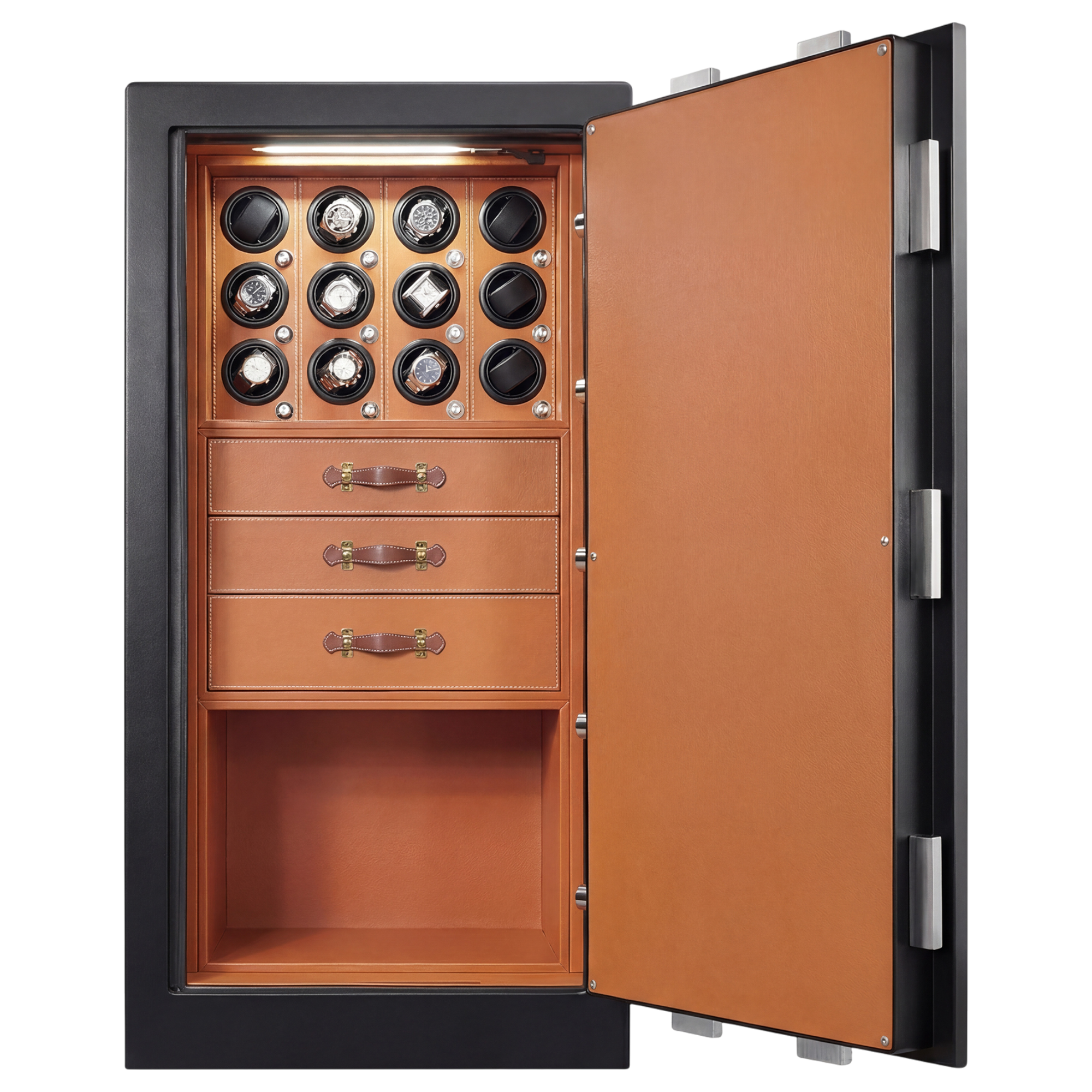
- A single-watch deal rarely needs a 12- or 20-slot cabinet — right-size the safe to the job.
- Photograph the watch and agree on release terms in writing before it enters the safe.
Why this matters for buyers and sellers in escrow
A private watch sale has no auction house standing between the parties, so whoever holds the watch physically holds the leverage. If the buyer already wired money and the seller still has the piece, the buyer has no recourse if the seller stalls. If the watch shipped ahead of payment, the seller has the same problem in reverse.
A neutral, documented storage step closes that gap. It doesn't require a professional escrow company — it requires a safe that produces proof of access, agreed in advance by both sides. Direct collector-to-collector deals have grown through 2026 as fewer buyers route through dealers, which means more of these transactions rely on whoever is holding the watch to manage the risk correctly, not on someone else's paperwork.
A watch safe with lock types compared side by side makes the difference concrete: a combination lock proves nothing about who dialed it in, while a biometric or dual-authentication lock timestamps every open.
Separate the transaction from the collection
Before anything else, get the escrow watch out of the same space as any personal collection. Mixing it in creates room for someone to argue later that the watch was already there, or that another piece got confused with it.
- Use a safe or drawer the watch has never occupied before, so custody starts with a clean slate
- Keep the escrow piece out of any personal wear rotation until funds clear
- Log the exact date and time it entered custody, on paper or in a shared note
- Photograph the case serial number as part of intake, not after the fact
Document the watch before it goes in
This step is free and it's the one most sellers skip under time pressure. A five-minute photo set at intake settles almost every dispute that comes up later.
- Photograph the dial, caseback, crown, and clasp from all four sides
- Record the movement serial and case serial as separate entries
- Note existing wear — dial spots, bezel scratches, bracelet stretch — that the buyer already flagged during negotiation
- Have both parties sign off on the condition notes before the watch enters the safe
Choose a lock type that produces a record
This is where the safe itself starts to matter more than a drawer or a shipping box. A combination lock is cheap and fast, but it leaves no trace of who actually opened the door.
- Combination locks: no record of who dialed it in, easy to share by accident
- Key locks: proof someone had physical possession, but no timestamp
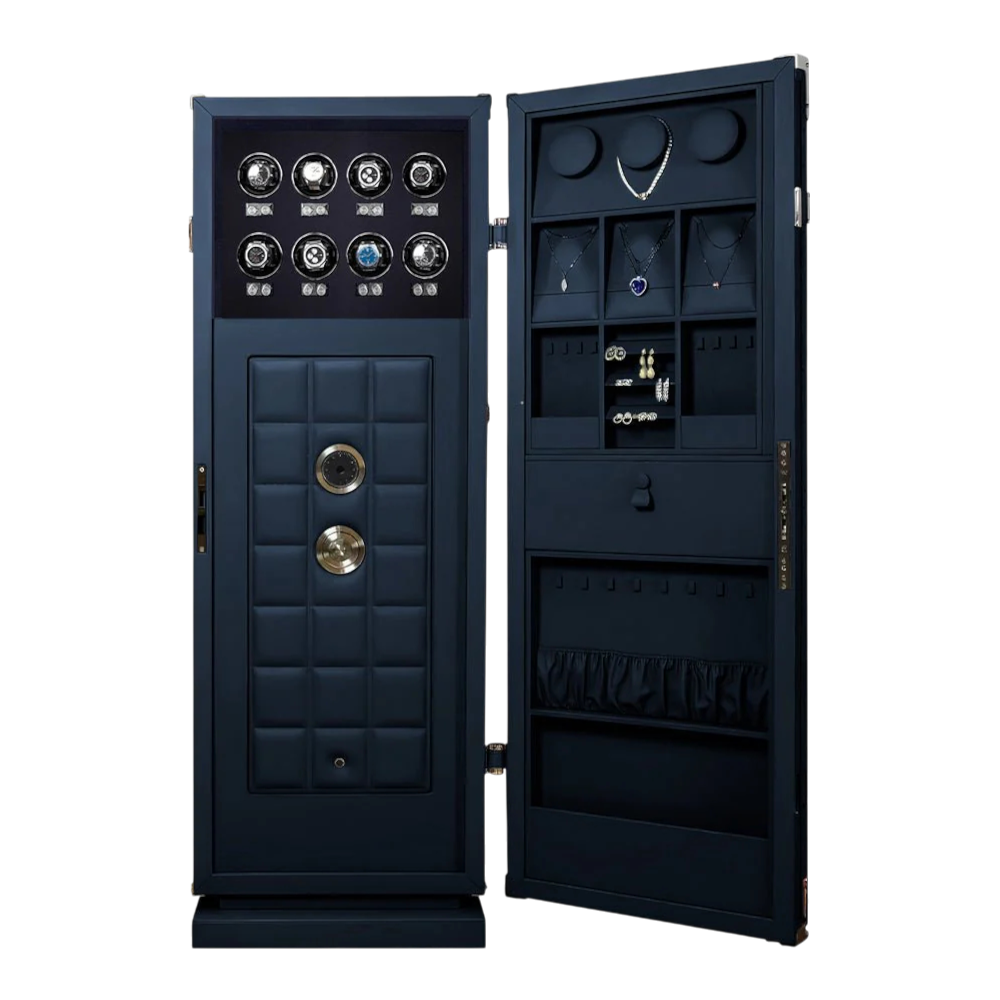
- Biometric locks, like those on the Impresario Series 2 Watch Winder's fingerprint-secured sibling models and the Apollo 12 Watch Safe, log every open and close event
- Dual-authentication (fingerprint plus PIN) works when both the buyer and seller need to confirm access independently
An Enigwatch watch safe built around fingerprint access exists for exactly this kind of accountability — the lock itself becomes the record, not a log book someone forgot to fill in.
Match the safe's rating to what's actually inside
Capacity and security tier are not the same thing, and escrow deals get this backwards constantly. A single watch does not need a large cabinet — it needs a rating that matches its value.
- Check the UL burglary rating before assuming a heavier safe is a safer one
- Fire rating matters more the longer the custody window runs — the Centennial Bulletproof Watch Safe carries a 2-hour rating at 695°C, built for pieces that might sit for weeks, not hours
- AR500 ballistic steel matters more in a high-crime location than in a controlled office
- Don't buy a 20-slot cabinet for a one-watch deal — extra capacity adds nothing to the security tier that actually protects the piece
Confirm insurance covers the custody window
An appraisal from three years ago and a policy written for the seller's home don't automatically cover a watch sitting in someone else's safe mid-transaction.
- Ask whether the policy transfers coverage to whoever holds physical custody during escrow
- Get insuring a watch collection sorted with a written appraisal dated inside the escrow window, not years earlier
- Confirm the rider covers in-safe periods separately from in-transit periods, since carriers often treat them differently
- File the appraisal alongside the safe's access log — together, they're what an insurer or a disputing party will ask for first
Plan the release before the watch goes in
The release terms should be agreed on paper before the watch ever touches the safe, not negotiated after funds move.
- Define in writing exactly what triggers release: cleared wire, a set number of business days, or a specific confirmation number
- Decide upfront who holds the only credential during the custody window
- Set a hard deadline for release so the watch doesn't sit indefinitely if the deal stalls
- Document the handoff with the same rigor as the intake — photos, timestamp, signatures
Comparison: storage options for an escrow watch
| Escrow Storage Option | Best For | Key Limitation |
|---|---|---|
| Bank safe deposit box | One-off deals between parties who already bank at the same branch | Bank hours restrict pickup and release timing; no access log |
| Dealer's on-site vault | Consignment sales routed through a shop | You depend entirely on the dealer's own record-keeping |
| Third-party escrow service | Remote deals where neither party wants physical custody | The watch leaves both parties' hands and adds a shipping leg |
| Personal high-security safe like the Titan Sanctum 20 Watch Safe | Direct buyer-seller deals meeting in person | Still relies on both parties trusting whoever physically holds the safe |
“If the safe doesn’t record who opened it and when, it isn’t an escrow tool — it’s a moving box.”


Common mistakes buyers and sellers make in escrow
- Storing the escrow watch with the rest of a collection. No separation means no clean answer if someone later questions when the watch actually arrived.
- Skipping photos of the movement side. Without them, there's no record if a movement gets swapped before release.
- Reaching for a combination lock because it's already in the house. The deal calls for a log of exactly who opened the safe, and a shared four-digit code doesn't provide one.
- Agreeing to hold the watch "until funds clear" with no written definition of cleared. A wire hitting the account and a wire confirmation email are not the same moment — decide which one triggers release, in writing, before the watch goes in.
- Buying a 12- or 20-slot cabinet for a single-watch deal. Capacity has nothing to do with security tier, and it adds cost and complexity to a job that's short-term custody, not display.
FAQ
What is a watch safe for escrow transactions?
It’s a secured storage unit used to hold a watch under verifiable custody between deal agreement and cleared funds. The lock needs to produce a record of access — biometric or dual-authentication — rather than just resist forced entry.
Is a bank safe deposit box good enough for a watch sale in escrow?
It works for simple deals but has real limits: bank hours restrict pickup and release timing, and most boxes have no access log tying a specific person to a specific visit.
Does a biometric watch safe log who opens it?
Yes — fingerprint-locked safes like the Apollo 12 Watch Safe timestamp every open and close event, which is the record a custody dispute actually needs.
How long can a watch safely sit in escrow storage?
There’s no fixed limit, but the release terms should set a hard deadline in writing before the watch enters the safe. Open-ended custody windows are where most disputes start.
Does homeowners insurance cover a watch held for someone else?
Not automatically. Confirm with the insurer whether coverage transfers to whoever holds physical custody, and get an appraisal dated inside the escrow window rather than relying on an old one.
What UL rating should an escrow watch safe carry?
UL TL-30 or higher resists tool attacks for at least 30 minutes, which covers most residential and office escrow scenarios. Higher-value pieces or longer custody windows justify a higher grade.
Can a watch winder double as escrow storage?
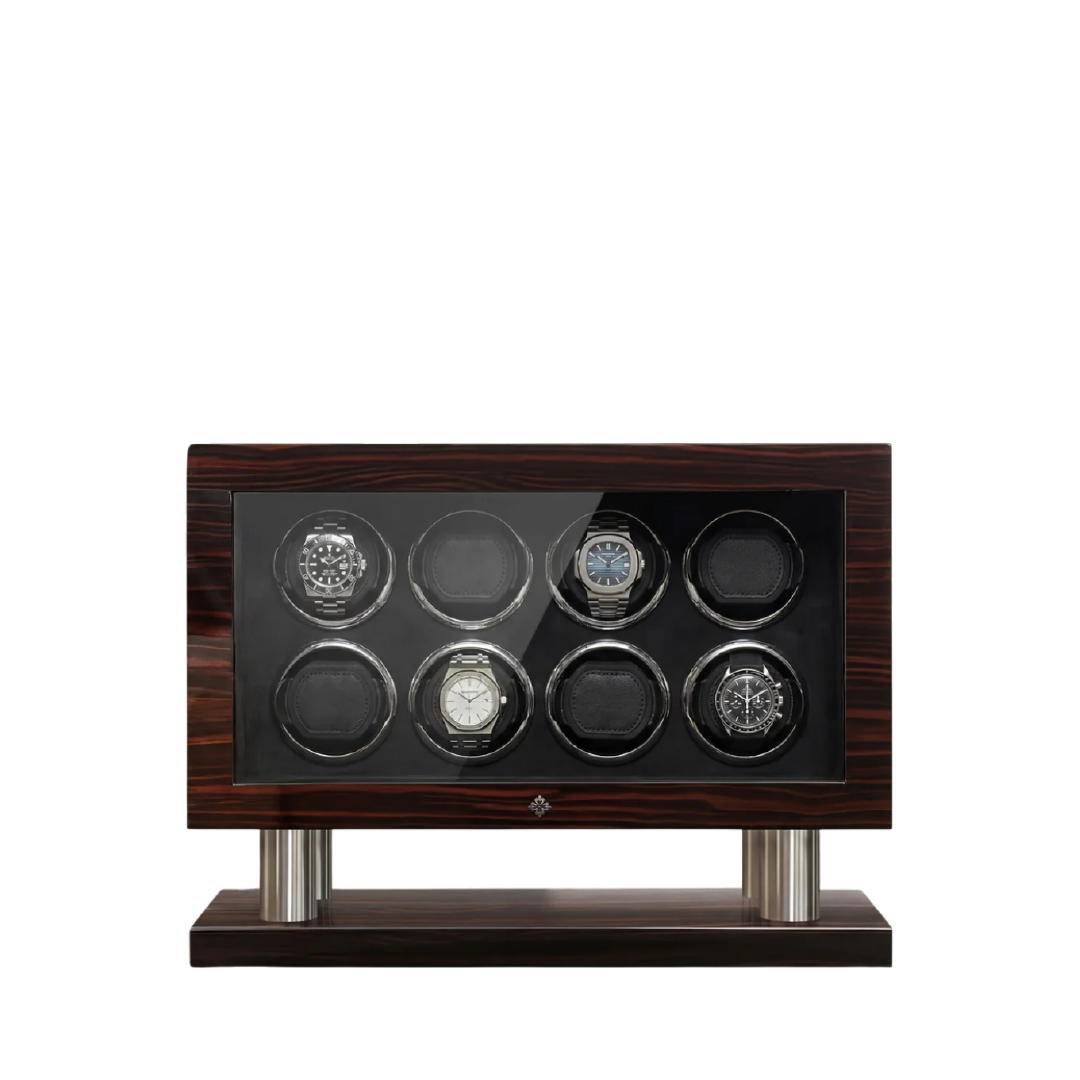
No. A winder keeps an automatic movement running but has no lock, no access log, and no fire or burglary rating — none of what an escrow custody step requires.
Is a dealer’s vault safer than a personal safe for escrow?
It depends entirely on the dealer’s own record-keeping. A personal high-security safe with a biometric lock, like an Enigwatch watch safe, can produce a cleaner access log than a dealer vault with shared staff access.
One last thing
The cheapest fix for most escrow disputes has nothing to do with the safe's rating: photograph the lock's confirmation screen or fingerprint indicator light at the exact moment of intake and release, on a device both parties can see. That single image, timestamped, does more to settle a disagreement than any UL certificate, because it proves the moment of access rather than just the safe's theoretical resistance to one.
Related guides
- Insuring a watch collection: what appraisers need
- Watch safe for a collector who buys and sells frequently
Protect Your Watch Collection
Designed for collectors who demand the best. Explore our premium watch winders and luxury safes.