
Watch safe for cash and documents buyers are solving two storage problems at once: protecting mechanical watches and protecting paper and currency in a single locked unit. A safe built only for watch cases assumes soft, low-heat contents; cash and documents need a different fire threshold and different interior organization entirely.
- A watch safe for cash and documents needs a UL 350 paper rating, not just a jewelry-grade interior.
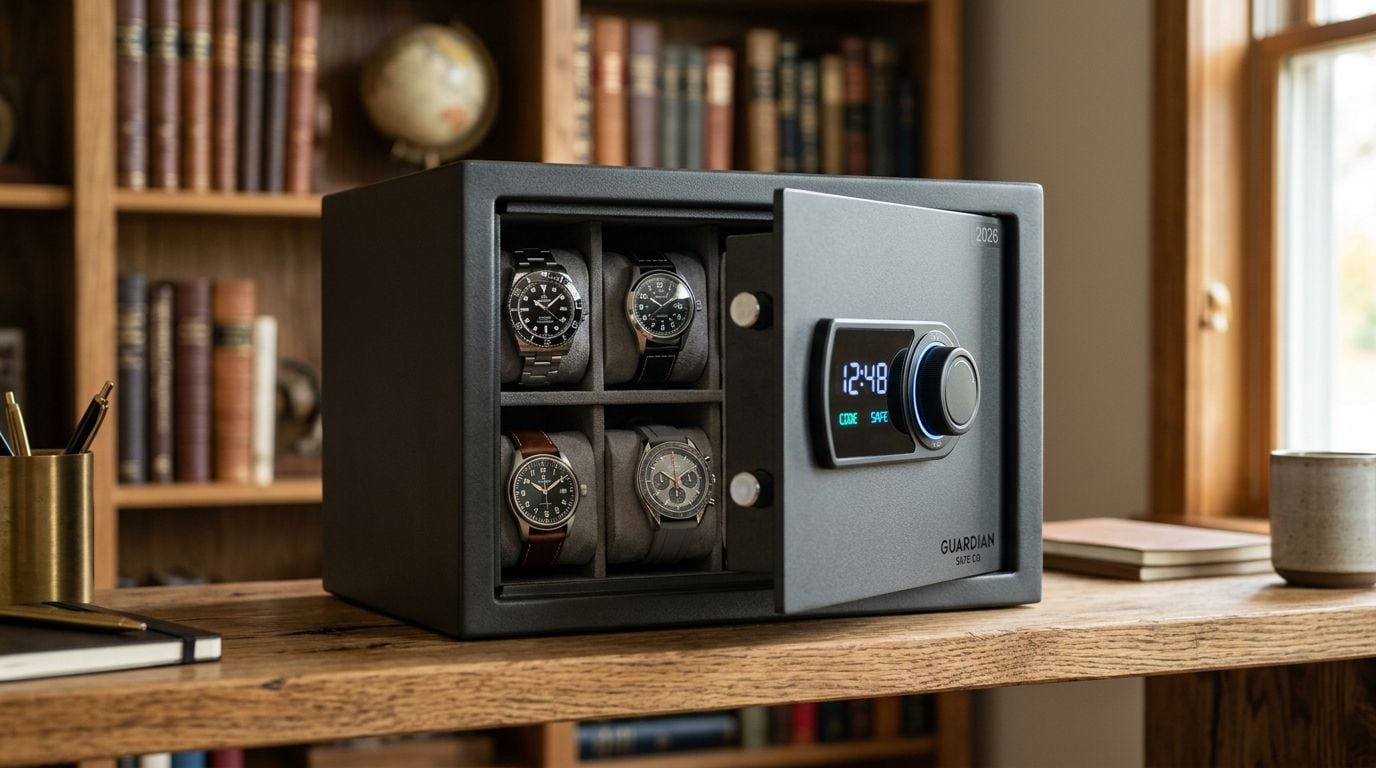
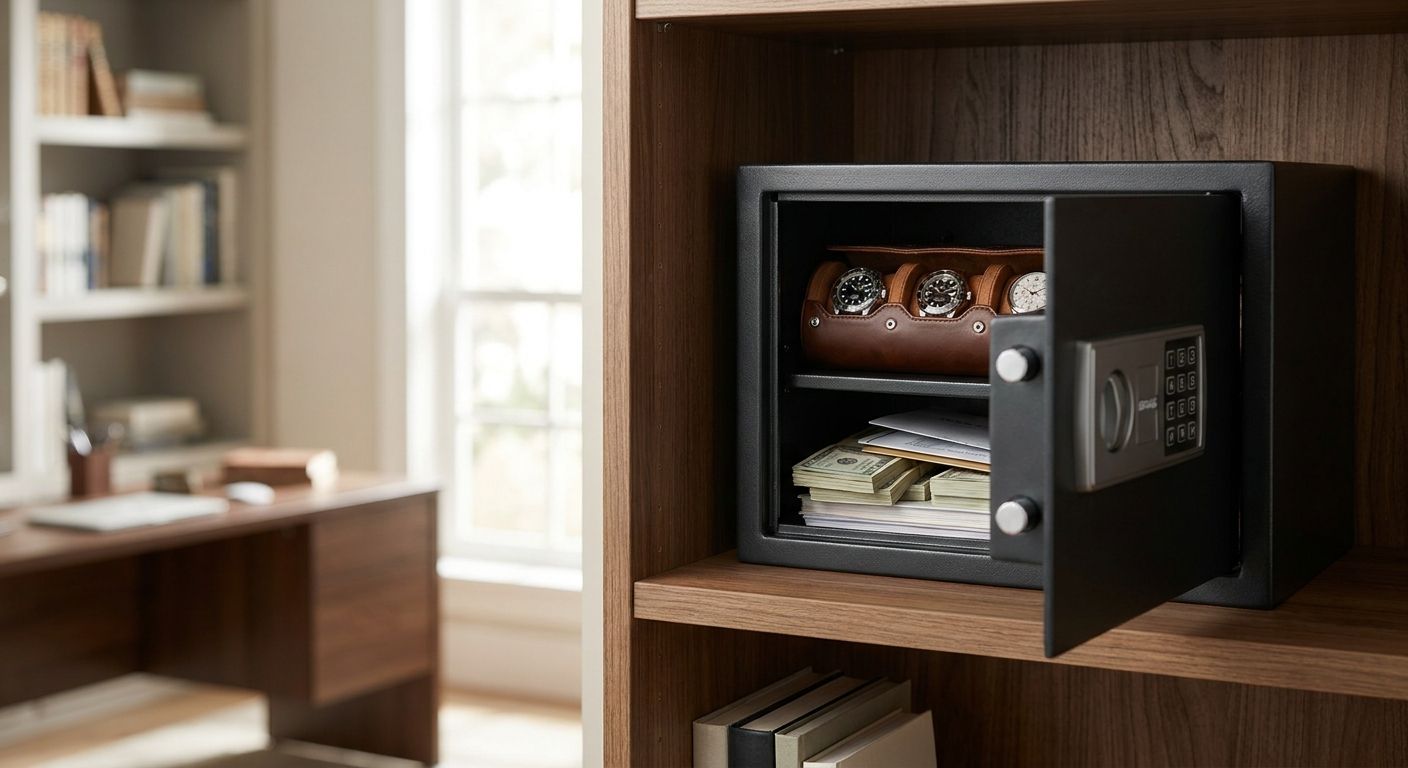
- Centennial Bulletproof Watch Safe fits documents plus 2 watches with a two-hour, 695°C fire rating.
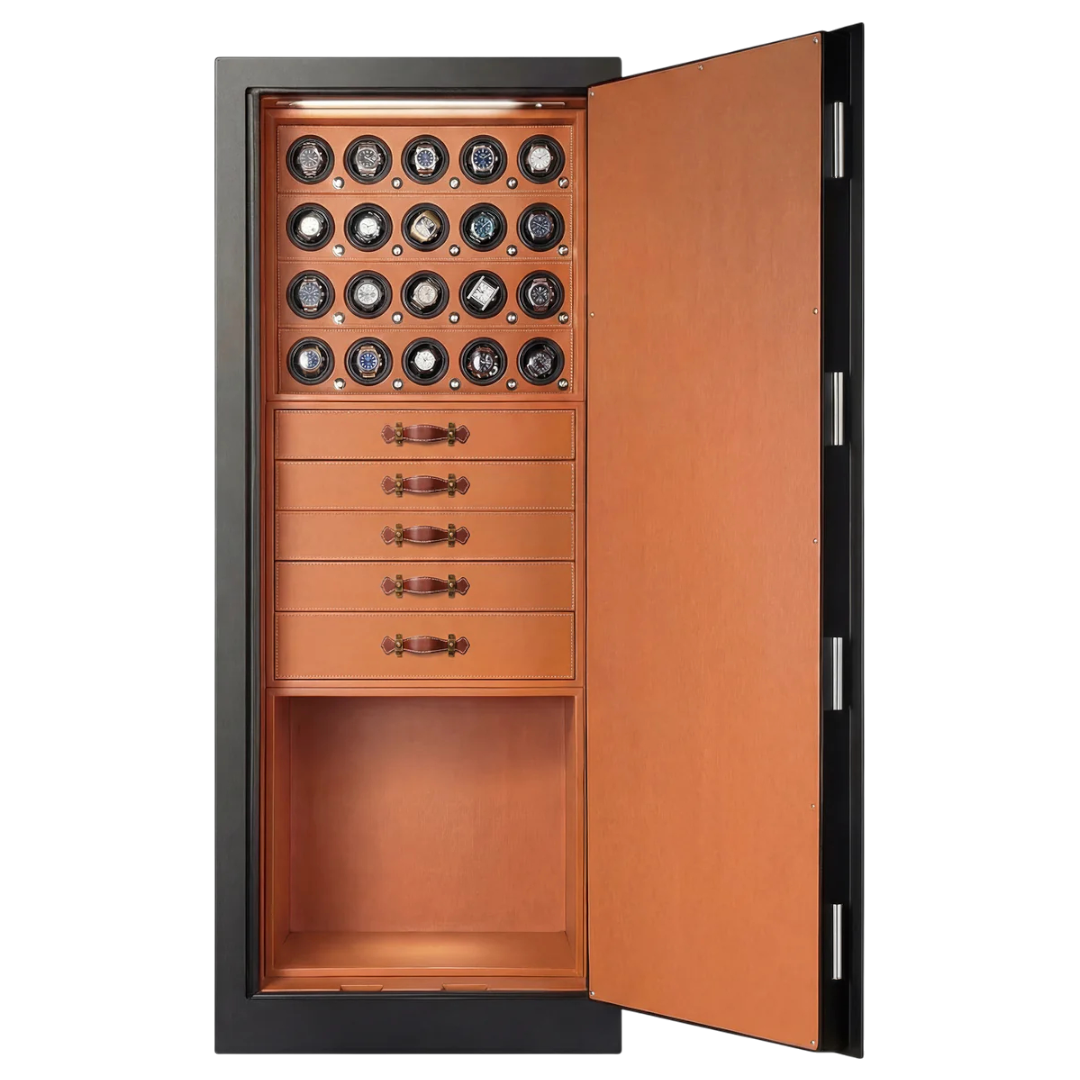
- Titan Sanctum 20 Watch Safe suits collectors who need 20 watch slots alongside a document tray.
- Separate cash and papers from watch cushions — loose bills and folders scratch cases and bracelets.
- UL TL-30 burglary ratings matter more once cash sits inside — verify the grade before buying.
Why this matters for this kind of buyer
Most watch safes on the market are designed around one job: keeping automatic movements wound or simply cushioned. Collectors who also want to lock up cash, a passport, property deeds, or appraisal paperwork run into a mismatch — the interior is built for watch cases, not folders or bill stacks.
That mismatch shows up two ways. First, fire ratings on watch-only safes are sometimes tuned to protect steel and leather, materials that tolerate more heat than paper does. Second, the interior layout — cushions, pillows, winder rotors — leaves no flat surface for documents to sit flush without curling against a case back.
The fix isn't a separate safe for each category. It's picking one unit rated and organized for both, at Enigwatch or elsewhere, before you load anything into it.
Inventory what actually needs to share the safe
Before comparing models, write down every category of item going inside. A safe sized for six watches and a passport looks nothing like one sized for six watches, cash reserves, and a stack of appraisal folders.
- Number of watches, including anything currently in a drawer or box
- Loose cash or a currency reserve, and whether it needs to stay flat or can be banded
- Passports, deeds, or titles that need to lie flat without folding
- Jewelry appraisals or watch service papers tied to insurance claims
- Extra straps, links, or winder accessories that take up interior space
- Anything oversized — a jewelry box, a small stack of loose photos, external drives
Match the fire rating to paper, not just steel
A watch movement survives heat that would already have destroyed the documents next to it. The fire-safe industry benchmark for paper protection is a UL 350 rating, meaning interior temperature stays below 350°F even during a structure fire — well under the point where paper chars. A safe advertised for watches alone may not carry that rating.
- Check for an explicit fire-rating figure and duration, not just a marketing claim of "fireproof"
- Confirm the rating covers the specific compartment holding documents, not just the exterior shell
- Look for a stated maximum interior temperature during the rated fire duration
- Ask whether the rating is third-party certified or self-reported by the manufacturer
- Prioritize duration (60 minutes vs. two hours) over exterior temperature alone
The Centennial Bulletproof Watch Safe carries a two-hour fire rating at 695°C on Kevlar-reinforced steel, which covers both the watch compartment and any documents stored alongside it.
Check the burglary rating once cash is involved
A watch collection is a target on its own. Add cash and you've raised the stakes on the lock and the body construction. UL TL-30 is a torch-and-tool resistance rating used across the safe industry — the grade after it (II, III, V) reflects how long the body resists sustained attack.
- Confirm the UL TL-30 grade, not just the presence of the label
- Check whether the body is stainless steel or a lighter composite shell
- Look for ballistic resistance (AR500 or similar) if the safe sits in an accessible room
- Verify the lock type — biometric, combination, or dual-authentication — matches how many people need access
- Ask whether the door thickness is stated, since thin doors are the weak point in most break-ins
Separate watches from cash and documents inside the unit
Even inside a rated safe, cash and paper shouldn't touch watch cushions directly. Bills leave residue, folders shed dust, and neither belongs pressed against a caseback or bracelet clasp.
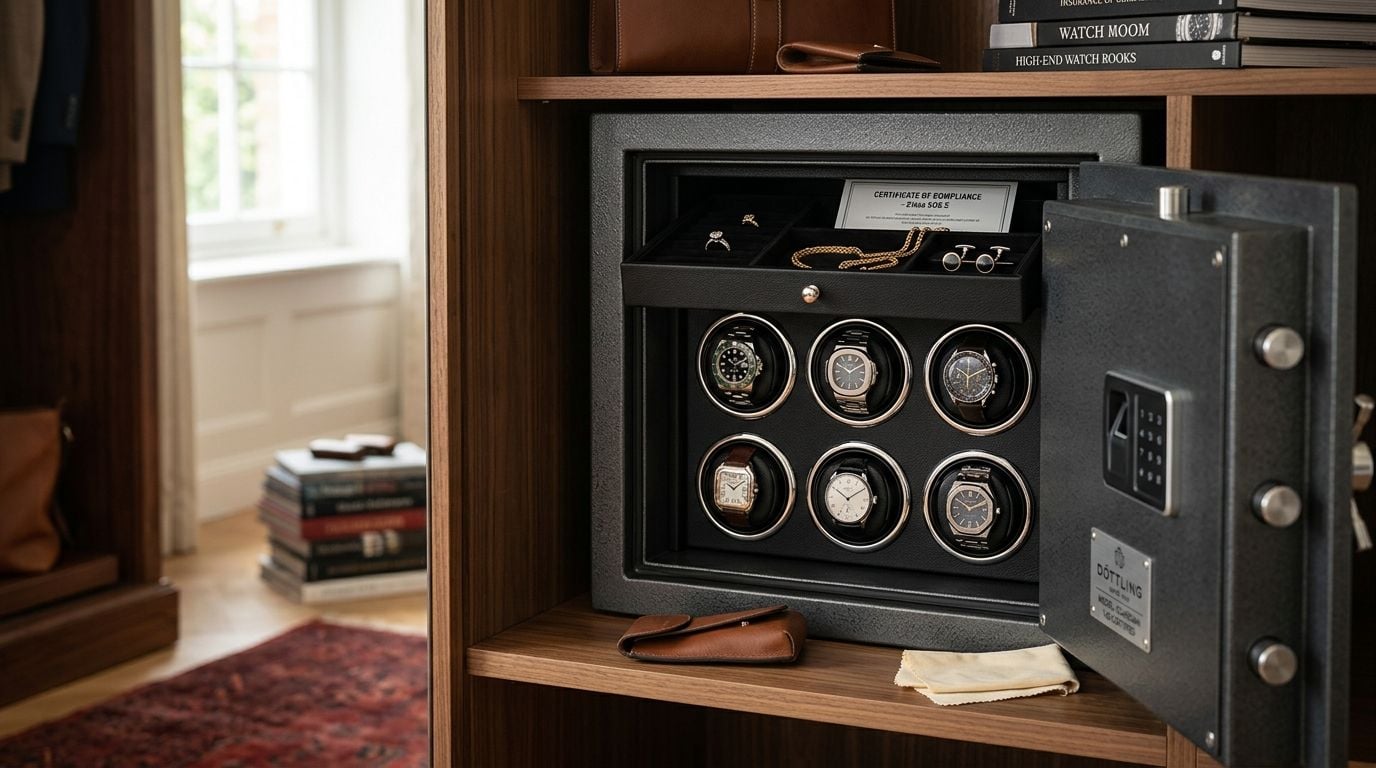
- Use a removable tray or drawer for cash and documents, separate from the watch cushions
- Keep paperwork flat rather than folded to avoid long-term creasing
- Store loose straps or links in a small pouch rather than directly against the tray
- If the safe includes a winder function, keep documents away from the rotor motor housing
- Photograph the layout once organized, useful later for insurance documentation
Anchor the safe before you load anything
A safe holding both a watch collection and cash is worth stealing whole if it isn't secured to the structure. This step comes before organizing the interior, not after.
- Bolt through the base into a stud or concrete slab, not just drywall
- Use the manufacturer's specified anchor points rather than aftermarket holes
- Confirm the floor or shelf can support the safe's loaded weight
- Position it where it isn't visible from a window or an open door
- Test the bolts periodically — vibration loosens hardware over years, not months
Set access rules before more than one person uses it
Once a safe holds shared household valuables — not just one person's watches — access control becomes a household decision, not an individual one.
- Decide who gets biometric or combination access and who doesn't
- Keep a backup key or code stored off-site, not inside the same room
- Log any change in contents so cash amounts and document lists stay current
- Review access after any household change — a new tenant, a divorce, a departing employee
Comparing options for mixed watch, cash, and document storage
| Option | Best for | Security / fire rating | Key limitation |
|---|---|---|---|
| Centennial Bulletproof Watch Safe | Compact storage for 2 watches plus cash and papers | Two-hour fire rating at 695°C, Grade 3A bulletproof, Kevlar-reinforced steel | Only two watch slots — tight once a collection grows |
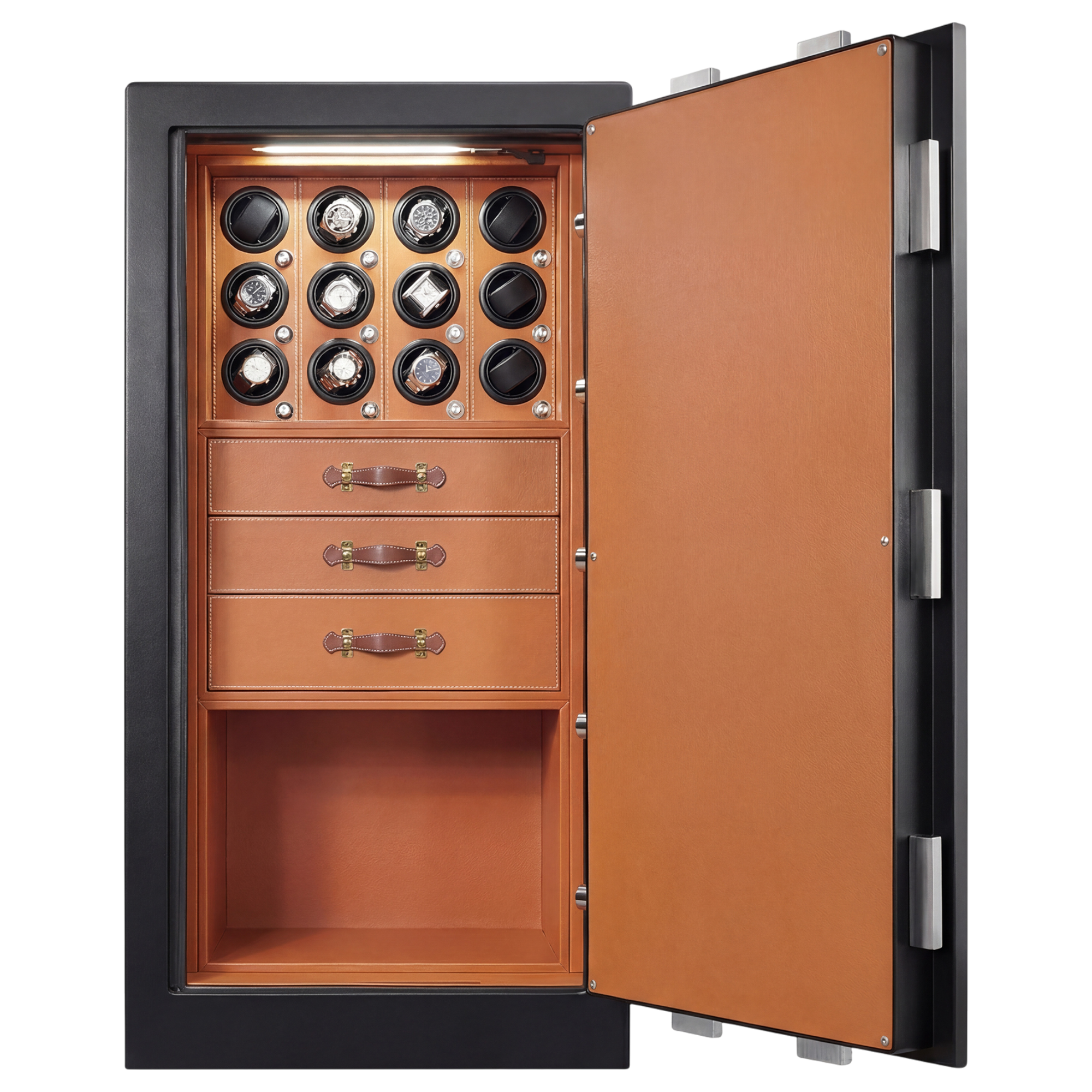
| Apollo 12 Watch Safe | Vault-grade security with room for a 12-watch collection | Grade 304 stainless steel, AR500 ballistic, UL TL-30 Grade II, biometric | Interior favors watch cushions over flat document space |
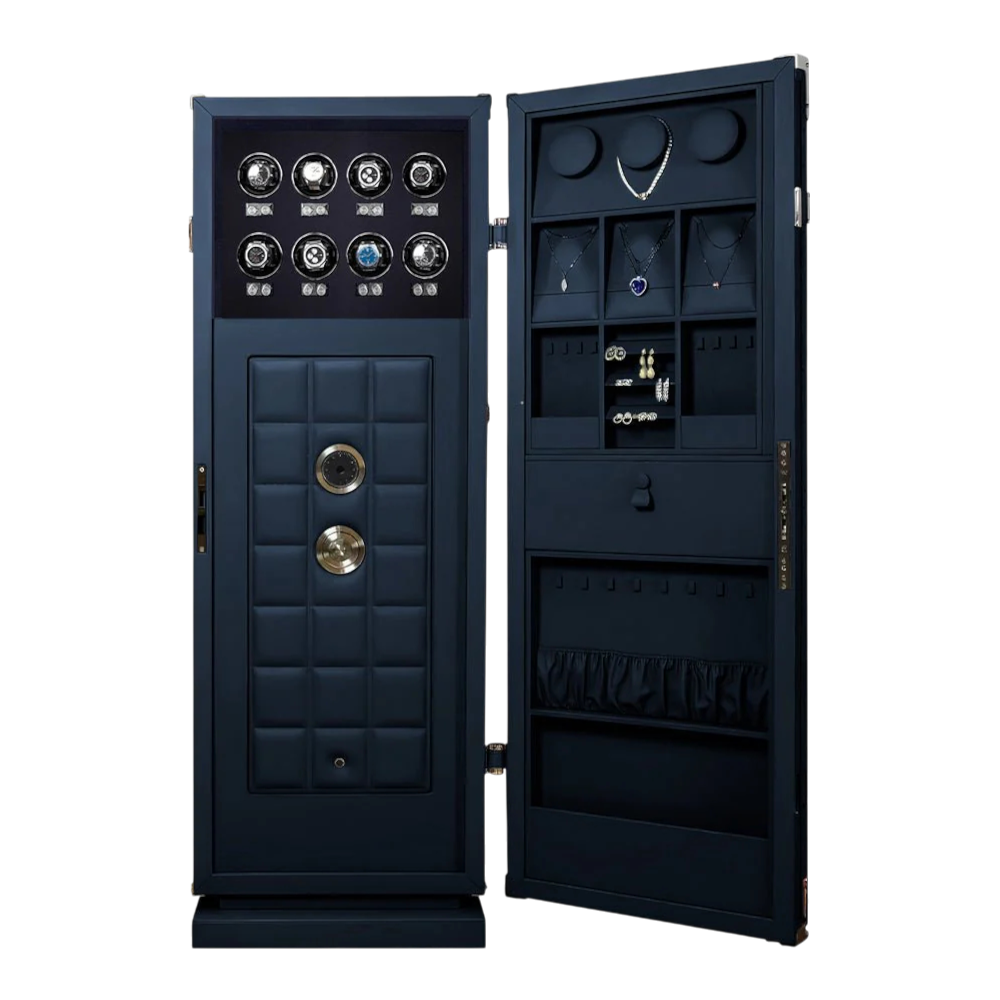
| Veron Elite 12 Watch Safe | Buyers who want Italian-built styling with vault security for 12 watches | Grade 304 stainless steel, UL TL-30 Grade III, Nappa-lined interior | Nappa lining is built for watches, not loose cash |
| Titan Sanctum 20 Watch Safe | Larger collections that also need space for cash and paperwork | Grade 304 stainless steel, AR500 ballistic Level 1, UL TL-30 rated | Larger footprint needs a planned spot before delivery |
Verdict: the Centennial Bulletproof Watch Safe is the right call for a compact mix of two watches, cash, and a passport; the Titan Sanctum 20 Watch Safe is the right call once the collection and the paperwork both outgrow a small unit.


Common mistakes this segment makes
- Buying by watch-slot count alone. A safe advertised for 12 watches often assumes the interior is entirely cushions — leaving nowhere flat for a folder of deeds or a cash band.
- Assuming any "fireproof" label covers paper. Fire ratings vary by duration and interior temperature; a rating good enough for a steel case is not automatically good enough for paper.
- Skipping the anchor step because the safe feels heavy enough. Weight alone doesn't stop a safe from being carried out whole once it holds cash worth the effort.
- Storing cash directly against watch cushions. Bill residue and dust transfer onto leather straps and casebacks over time.
- Never updating the inventory after adding cash or documents. A safe's contents list matters for insurance, and it goes stale the moment nobody updates it after the fact.
FAQ
What’s the best watch safe for storing cash and documents together?
For a small mix of watches, cash, and a passport, the Centennial Bulletproof Watch Safe covers it with a two-hour, 695°C fire rating in a compact footprint. Larger collections with more paperwork fit better in a 12- or 20-slot model with a dedicated document tray.
Is a watch safe different from a document or cash safe?
Yes — a watch-only safe is built around cushions and winder rotors, while a cash or document safe prioritizes a UL 350 paper rating and flat interior space. A safe for cash and documents alongside watches needs both.
How much does a watch safe for cash and documents cost in 2026?
Pricing varies by security grade, fire rating, and watch capacity, so check current pricing directly on the product page before comparing models. Higher UL TL-30 grades and longer fire ratings generally sit at the upper end of a manufacturer’s lineup.
What fire rating should a watch safe have if it also holds documents?
Look for a UL 350 benchmark or better, since paper chars at a lower temperature than most watch materials tolerate. A stated duration — one hour, two hours — matters as much as the peak temperature figure.
Can I store cash directly next to my watches in the same safe?
You can, but a separate tray or drawer keeps bill residue and dust off leather straps and casebacks. Most vault-style safes with more than 12 slots include separate compartments for exactly this reason.
Does a higher UL TL-30 grade matter for a mixed-value safe?
Yes — once cash sits inside alongside watches, the safe becomes a higher-value target, and a higher TL-30 grade (III or V) reflects longer resistance to torch and tool attacks. Grade II is adequate for lighter-value contents but not ideal once cash reserves are added.
Should documents be stored flat or folded inside a watch safe?
Flat, whenever the interior allows it — folding creates long-term creasing that complicates scanning or notarizing documents later. A dedicated document tray, rather than a folder wedged between cushions, avoids this entirely.
Do I need to bolt down a safe that holds cash and watches?
Yes — anchoring through the base into a stud or concrete slab prevents the entire safe from being carried out, which matters more once cash raises the resale value of the contents. This applies to every safe over roughly a 12-watch capacity, not just the largest models.
One last thing
The detail most buyers skip: a UL TL-30 rating measures resistance to sustained tool and torch attack, not just lock strength, and the grade number after it (II, III, V) is where the real difference sits. Two safes can carry the same TL-30 label in marketing copy while sitting two full grades apart in actual resistance — always ask for the grade number, not just the label, before 2026 pricing gets finalized on a mixed-storage build.
Related guides
- Watch safe for storing watch boxes and papers together
- Watch safe fire rating: what the numbers actually mean
- How to insure a watch collection: what appraisers need
Protect Your Watch Collection
Designed for collectors who demand the best. Explore our premium watch winders and luxury safes.