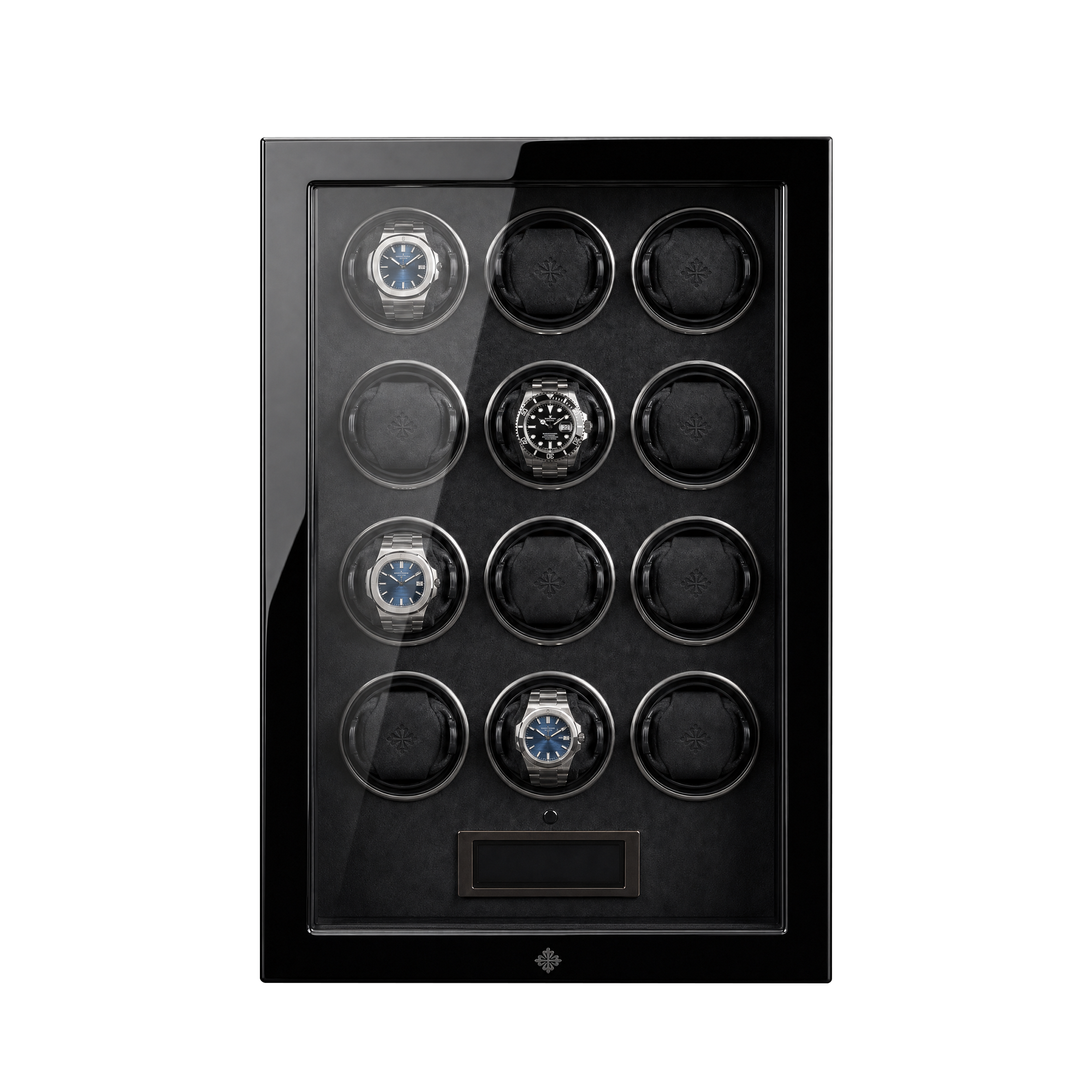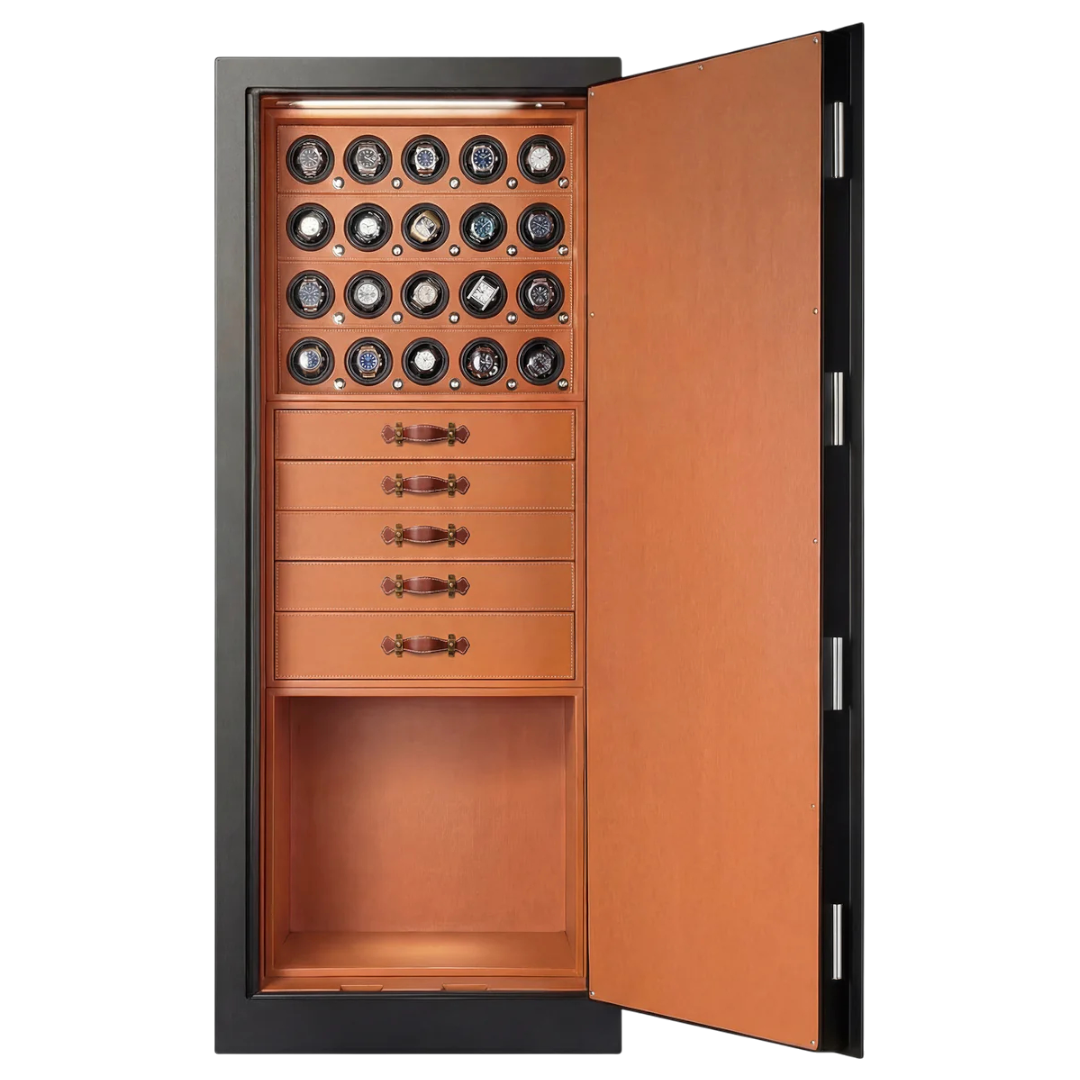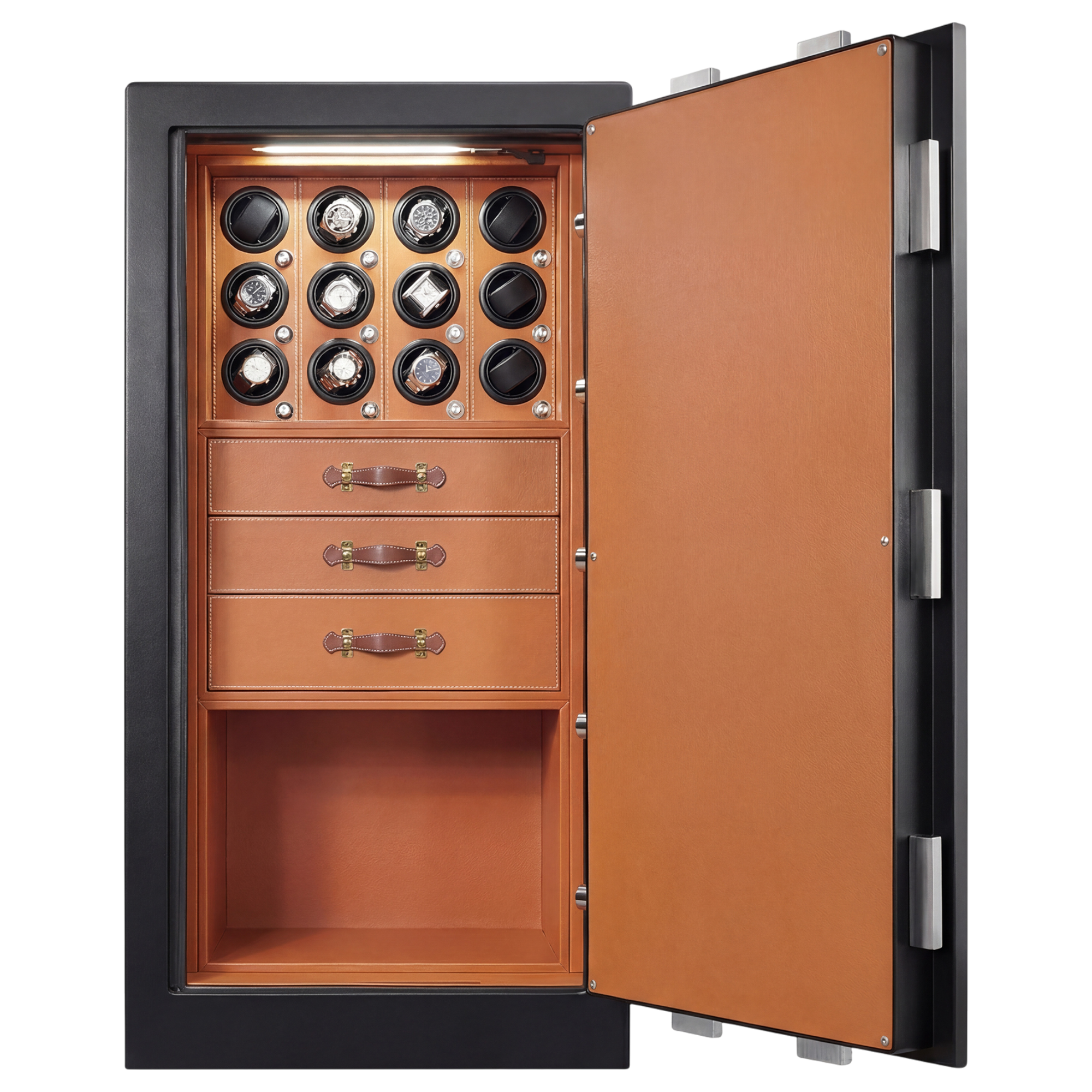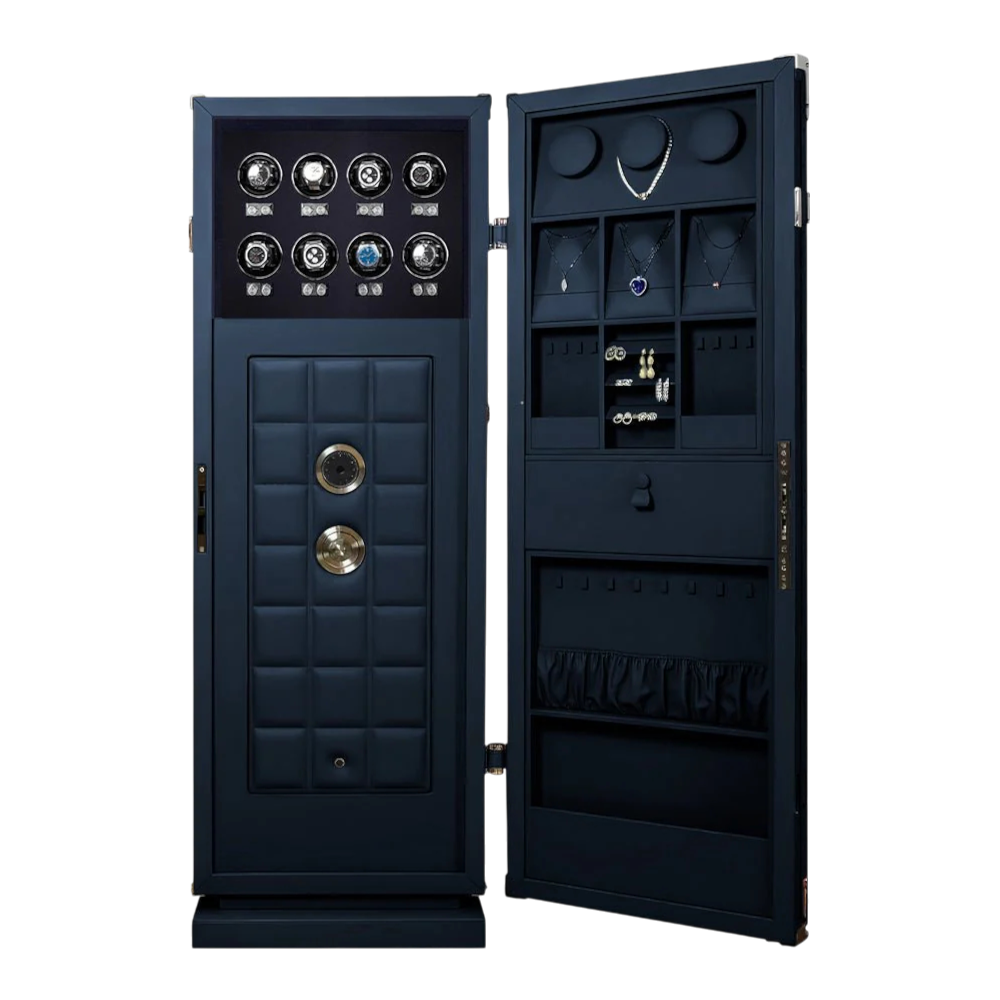

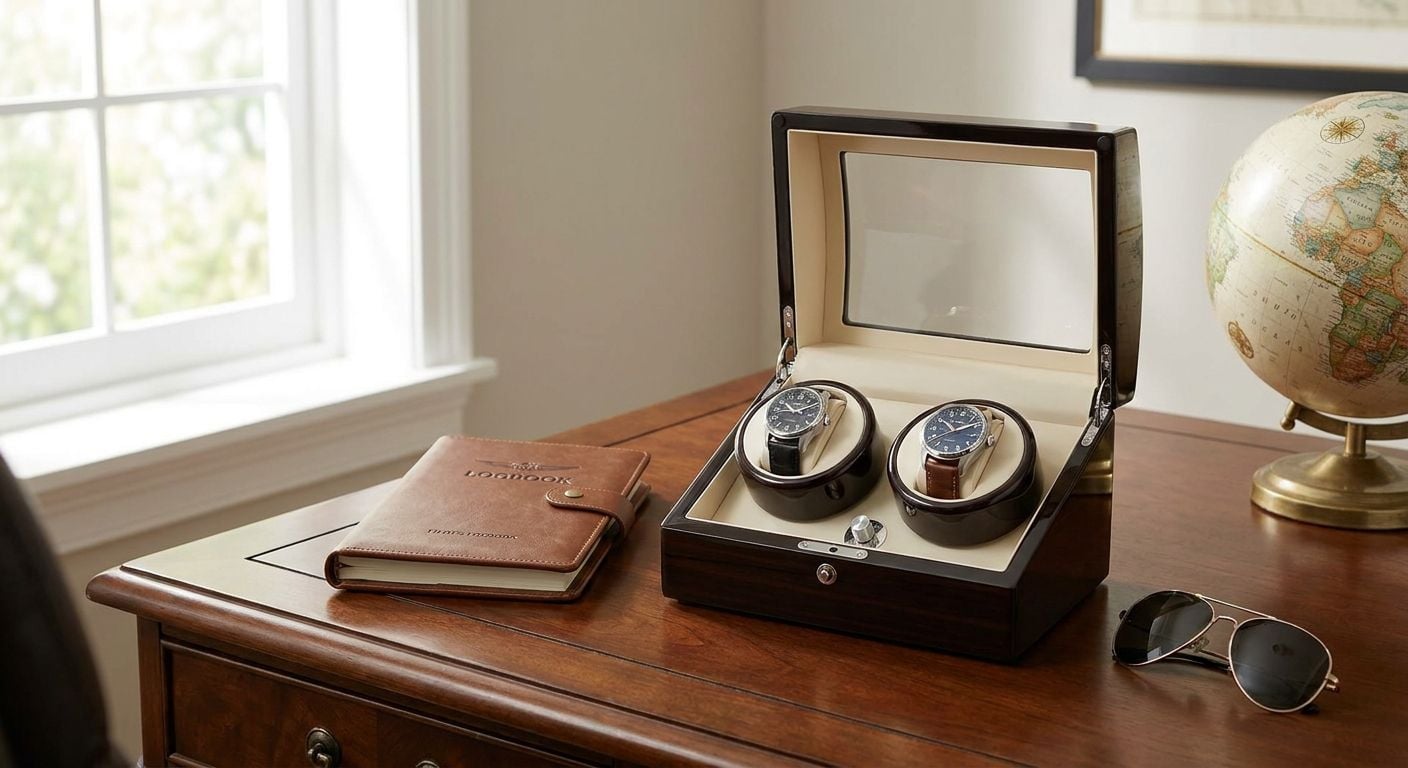
Pilots who fly international routes own watches that need to keep running through four-day layovers and six-time-zone jumps — a watch winder for a pilot has to handle voltage swings, GMT complications, and weeks of unattended operation without missing a beat.
- A watch winder for a pilot must run on 110V and 220V without adapters — Enigwatch builds dual-voltage as standard.
- Bidirectional rotation matters for GMT and dual-time pilot calibers; a unidirectional winder only serves half the mechanism.
- Away 5+ days on international rotations? Prioritize rotor memory and biometric access over slot count.
- Enigwatch winders run $5,000 to $21,000+ with a lifetime warranty — buy for your home base, not your suitcase.
Why this matters
A pilot flying Los Angeles to Singapore to Frankfurt and back doesn't keep a watch on a wrist that stays still. The GMT-Master or Pilot's Watch comes off at the hotel, sits for three or four days, and goes back on expecting the date and second time zone to still read correctly.
A dead automatic on a layover means resetting a GMT hand blind in a hotel room, not a convenience problem. That's the entire case for a watch winder for a pilot in 2026: it isn't about polish, it's about not losing thirty minutes of a layover fixing a watch that should have kept running itself.
Who this is for
This guide is for the international airline captain, first officer, or charter pilot who owns at least one automatic pilot or GMT watch — an IWC Pilot's Watch, a Breitling Navitimer, a Rolex GMT-Master II, or similar — and who is away from it for multiple days at a stretch on a rotating schedule. Enigwatch builds winders around exactly that kind of irregular-schedule ownership, and the pilot watch winder settings guide covers the caliber-specific side of setup once you've picked a unit.
It's also for the pilot who splits time between a domestic base and an overseas posting, where wall voltage isn't the same in both places. If either of those describes you, the criteria below matter more than slot count or finish.
What to look for in a watch winder for a pilot
Dual-voltage input, not a travel adapter
A winder rated for 110V only will run on a step-down converter in a 220V country, but converters fail, hum, and occasionally cook a motor over months of continuous use. A pilot splitting time between a US base and a European or Gulf posting needs a winder built for both voltages natively, not one patched with a plug adapter bought at a kiosk.
Bidirectional rotation for GMT and dual-time calibers
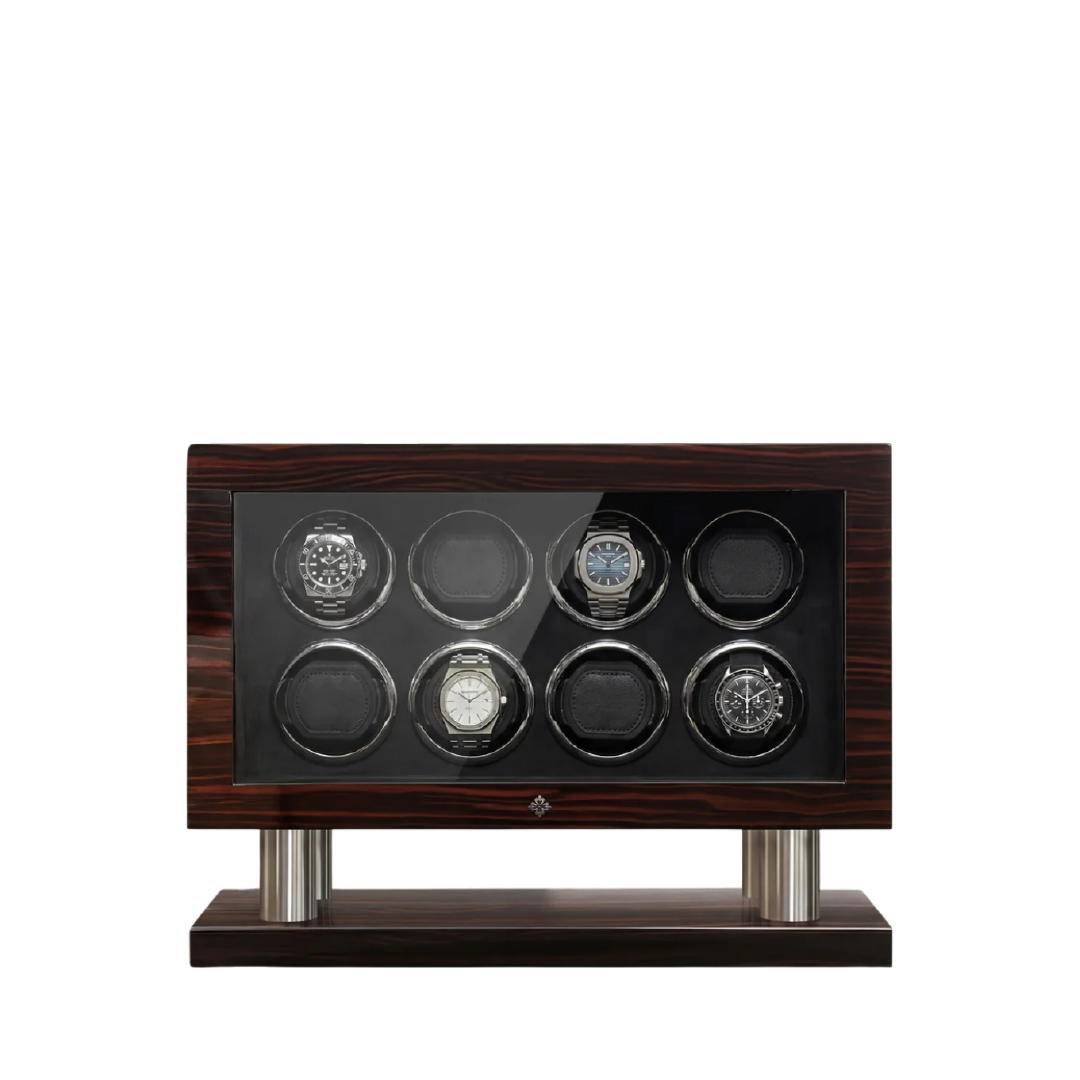
Most pilot watches carry a GMT or dual-time complication, and many of those movements need rotation in both directions to fully wind the mainspring and advance the independent hour hand correctly. A unidirectional winder built for a simple three-hand automatic winds the mainspring fine but can leave GMT functions undernourished over a long layover.
TPD flexibility for pilot chronograph movements
Turns-per-day requirements vary by caliber — most pilot chronograph and GMT movements from IWC, Breitling, and Rolex fall somewhere in the 650 to 950 TPD range depending on the specific movement. A winder locked to one fixed program forces you to guess; one with adjustable TPD lets you match the setting to the actual watch instead of the average watch.
Power-outage resilience for multi-day absences
A pilot can be gone five, six, sometimes ten days on a long international rotation. If the winder loses power for even a few hours during that stretch — a breaker trip, a housesitter unplugging it — the watch stops anyway unless the unit holds its rotor position and resumes cleanly. Cheap units restart from zero and can throw off a program that was mid-cycle.
A footprint that survives base changes
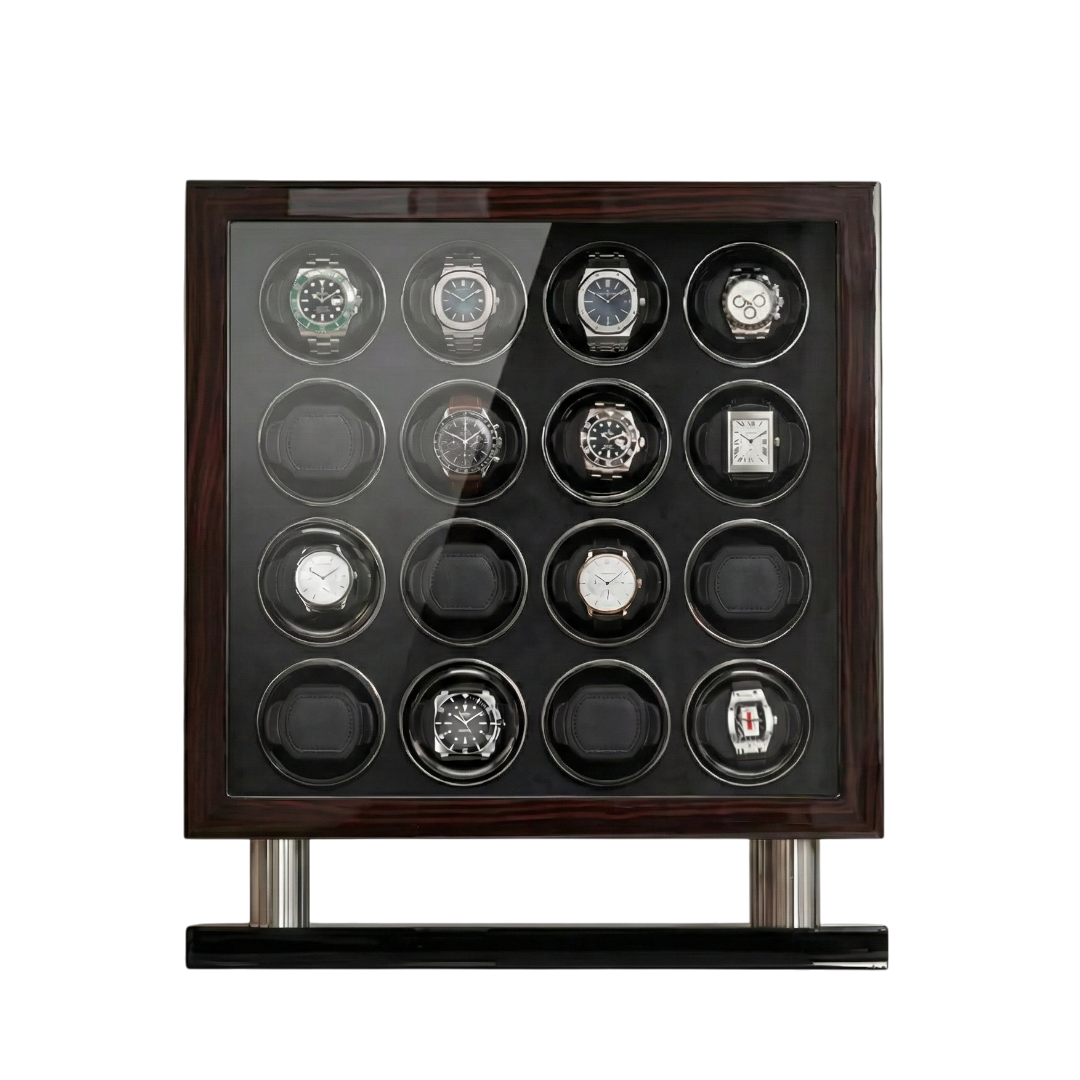
Pilots relocate. A winder bolted into a closet or built into furniture doesn't move easily; a freestanding cabinet or box does. If a base change is even a possibility in the next few years, weight and footprint matter as much as finish.
Top picks for a pilot who flies internationally
The dual-voltage anchor. Any Enigwatch winder built for global use runs on both 110V and 220V without an adapter — see the 110V and 220V voltage compatibility guide for how that switching actually works before assuming every winder handles it the same way. Verdict: Buy for anyone based across two voltage standards.
The GMT specialist. For a GMT-Master II, Pilot's Watch Timezoner, or similar dual-time piece, bidirectional rotation isn't optional — check the bidirectional watch winder guide for GMT watches before locking in a program, since the wrong direction setting can leave the independent hour hand drifting after a long layover. Verdict: Buy if a GMT caliber is the watch actually going in the winder.
The frequent-flyer's home-base pick. If the winder itself needs to travel — a corporate pilot rotating between two residences, say — review the portable watch winder options for frequent travelers before buying a fixed cabinet unit. Verdict: Consider only if the winder itself is the thing on the move, not the watch.
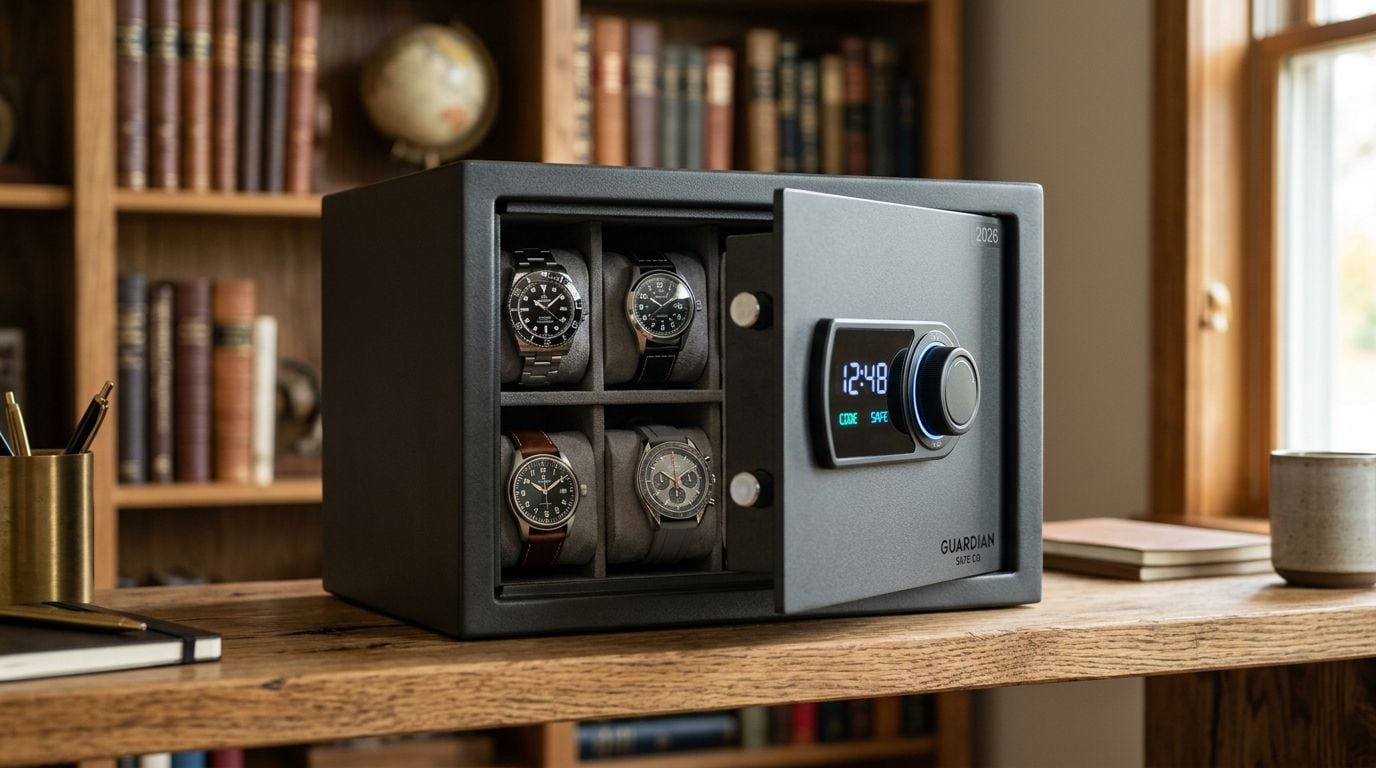
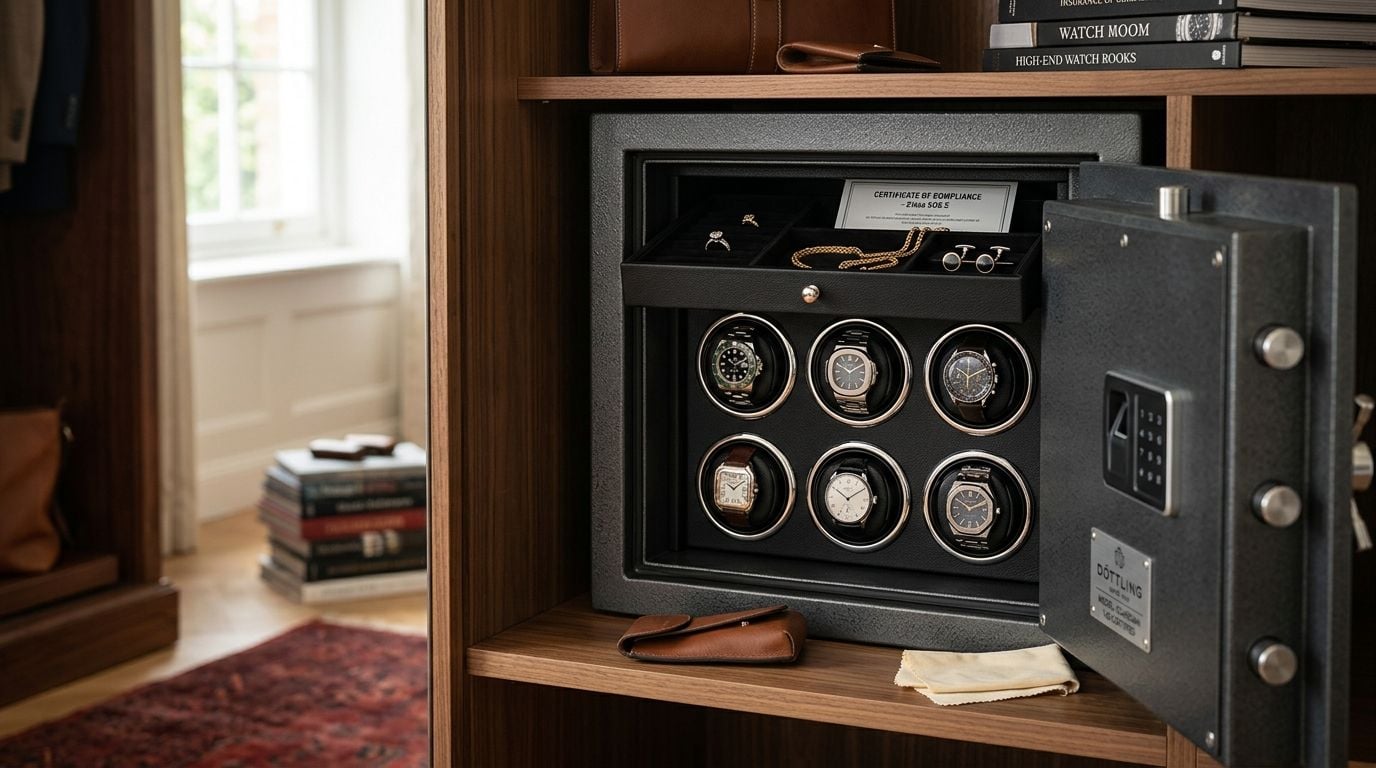
The wildcard. The Impresario series adds biometric access and Nappa leather trim over the standard line, which suits a pilot who's opening a safe or winder at odd hours after a red-eye and doesn't want to fumble a key or combination half-asleep. Verdict: Consider if biometric entry solves a real problem for your schedule, Skip if a simple lock does the job.
What to avoid
- A single-TPD fixed program with no override. Pilot calibers vary widely in mainspring requirements; a winder that can't be adjusted forces every watch onto one setting that fits none of them precisely.
- A unit with no rotor-position memory. If it restarts blind after a power blip during a ten-day rotation, you've lost the entire point of owning it.
- Anything sold as "universal voltage" without a spec sheet. If the listing doesn't state the actual input range, treat it as a domestic-only purchase.
“A dead automatic on a layover means resetting a GMT hand blind in a hotel room, not a convenience problem.”
Talk through your setup
Match voltage, rotation, and TPD to your actual watches before you buy.
Verdict comparison
| Pick | Voltage handling | Rotation | Best for | Verdict |
|---|---|---|---|---|
| Dual-voltage anchor | 110V/220V native | Program-dependent | Two-base pilots | Buy |
| GMT specialist | 110V/220V native | Bidirectional | GMT/dual-time calibers | Buy |
| Frequent-flyer pick | 110V/220V native | Program-dependent | Winder that travels with you | Consider |
| Impresario (wildcard) | 110V/220V native | Program-dependent | Biometric access preference | Consider/Skip |
FAQ
What’s the best watch winder for a pilot who flies internationally?
The best watch winder for a pilot is a dual-voltage unit, native to 110V and 220V rather than adapter-dependent, with bidirectional rotation for GMT calibers. Enigwatch builds this as the standard configuration rather than an upgrade.
Does a pilot watch need a bidirectional winder?
Yes, if it carries a GMT or dual-time complication, since many of those movements wind more completely and advance the independent hour hand correctly with rotation in both directions. A simple three-hand automatic can run fine on a unidirectional program.
How many turns per day does a pilot watch need?
Most pilot chronograph and GMT movements from IWC, Breitling, and Rolex fall in the 650 to 950 TPD range, depending on the specific caliber. Check the movement spec rather than relying on a single default program.
What happens to a watch winder during a power outage?
A winder without rotor-position memory restarts blind once power returns, which can throw off a program that was mid-cycle during a multi-day absence. Units built with memory resume where they left off.
Can a watch winder run on both 110V and 220V?
Yes, dual-voltage winders switch between 110V and 220V without a separate converter, which matters for pilots based across two countries with different wall voltage. A converter works as a stopgap but adds a failure point over months of use.
Is a portable watch winder worth it for a pilot?
Only if the winder itself needs to move with you between residences or postings; if the watch stays home while you travel, a fixed cabinet winder is the better buy. Portable units trade some rotation precision for size and weight.
How much does a luxury watch winder cost in 2026?
Enigwatch’s winders run from roughly $5,000 to over $21,000 in 2026, depending on slot count, finish, and features like biometric access. Pricing scales with materials and capacity more than with core winding function.
Does a GMT watch wind differently than a three-hand automatic?
Not always, but many GMT and dual-time calibers benefit from bidirectional rotation to fully engage the independent hour-hand mechanism. A three-hand automatic without a GMT function typically winds fine on a unidirectional program.
One last thing
The detail most pilots overlook isn't rotation direction or TPD — it's that a winder configured once against the actual caliber in the box keeps working the same whether you're gone two days or ten. Set it up right during a stretch at home in 2026, not during the scramble the night before a rotation, and the watch winder for a pilot stops being a decision you have to think about again.
Related guides
Protect Your Watch Collection
Designed for collectors who demand the best. Explore our premium watch winders and luxury safes.