
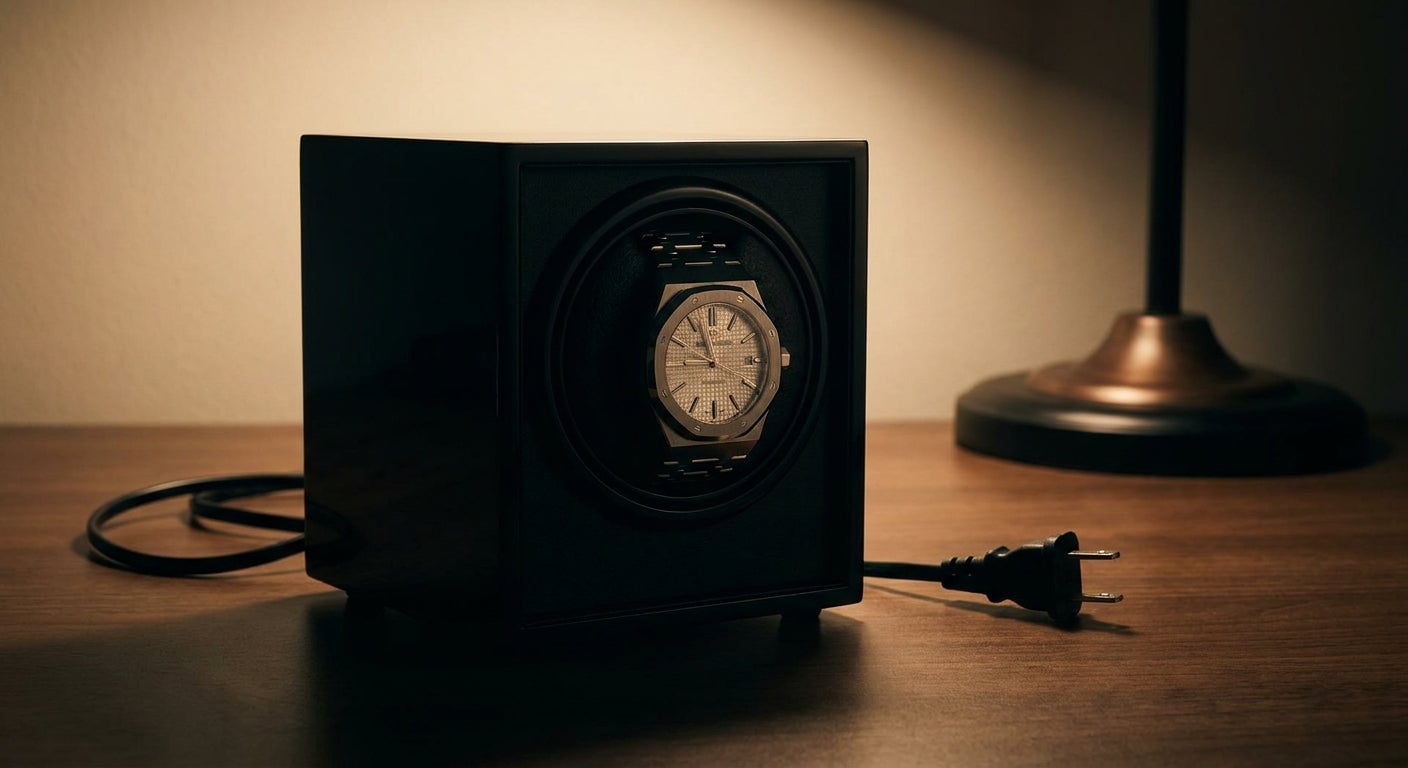
A watch winder power outage does not hurt your watch — the movement simply stops receiving artificial motion and behaves exactly as it would if you took the watch off your wrist. Here’s what actually happens during and after the blackout, and the exact steps to get your collection back on schedule once the power comes back.
TL;DR
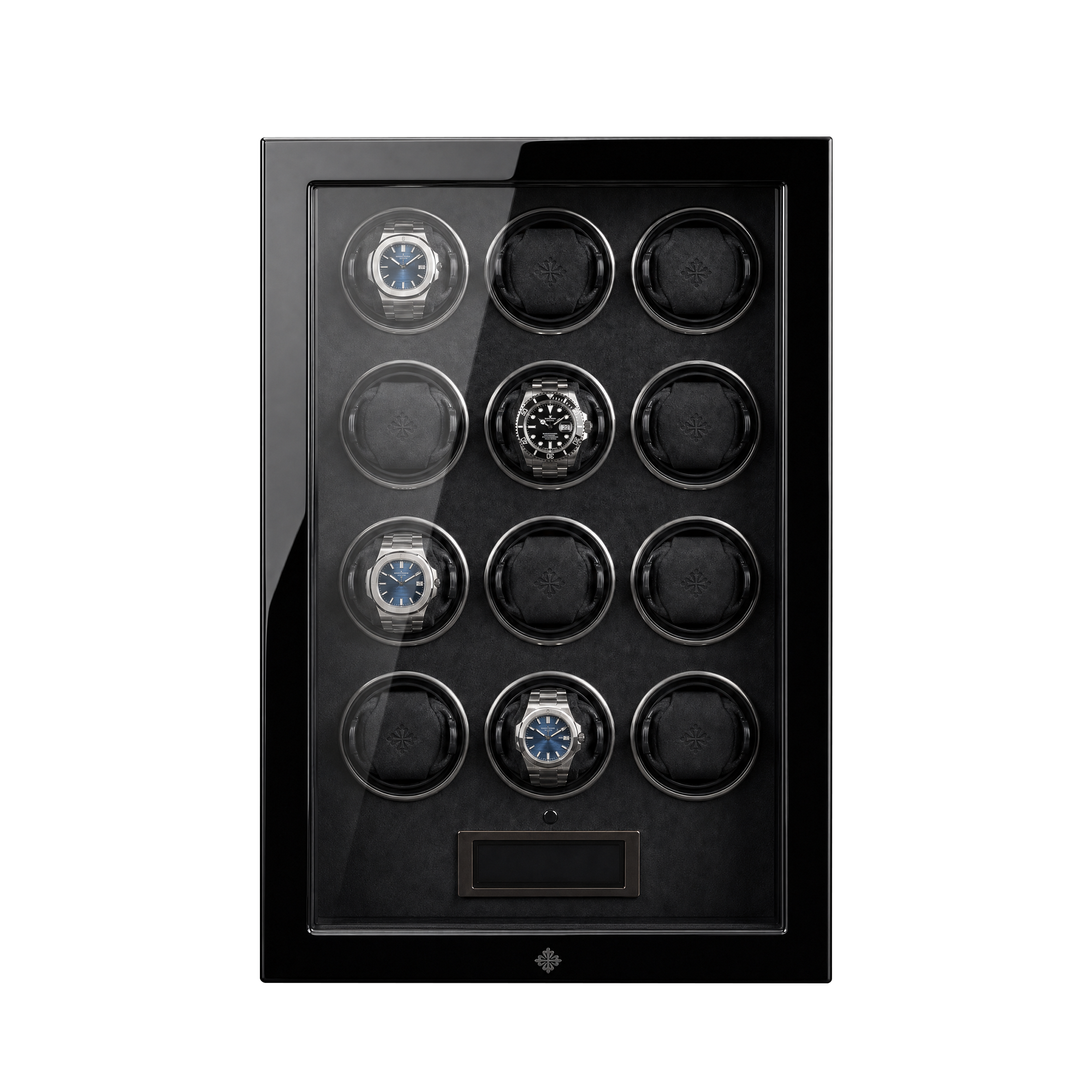
A watch winder power outage stops the rotor motion but causes zero mechanical damage to an automatic movement — the watch simply runs down according to its power reserve, typically 38 to 70 hours depending on the caliber, then stops until you rewind it manually or restore power to the winder. Automatic watch power reserve determines how much runway you have before a stoppage, and once electricity returns, a quality winder like an Enigwatch Impresario Series 12 resumes its rotation program with no reset needed beyond confirming the settings. Verdict: no repair, no service call, just a re-set of the date and time once power is back. In 2026, with more collectors keeping 8 to 20 pieces in a single cabinet, understanding this failure mode matters more than it did with a one-watch box.
Why this matters
Collectors panic when they walk into a home office after a storm and find the winder dark and silent. The fear is usually overwind or gear damage — neither applies here.
A mechanical movement has no idea whether it stopped because you took it off or because the winder lost power. It just stops. The only real cost of a watch winder power outage is time: hours or days where the watch isn’t running, plus the small task of resetting the time, date, and possibly the day-night indicator on a complication piece.
Where it does matter is for pieces with perpetual calendars or moonphase complications — those can require a longer manual correction sequence if the date rolls past midnight while stopped. That’s a setup inconvenience, not a mechanical risk.
What you’ll need
- A fully charged phone or backup light source if the outage happens at night
- The watch’s operating manual for date/day correction sequences, especially for annual calendars or moonphase models
- A soft microfiber cloth to handle the case without leaving fingerprints during resetting
- Surge protection or a UPS (uninterruptible power supply) if outages are frequent in your area
- Access to the winder’s control panel to reselect turns-per-day (TPD) and direction once power resumes
The steps
1. Confirm the outage isn’t a winder fault
Check whether the power strip, breaker, or the winder’s own internal fuse tripped before assuming it’s a grid-wide blackout. Plug in a lamp on the same circuit — if it doesn’t light either, the issue is external, not your winder.
2. Leave the watch inside the winder
Don’t remove the watch mid-outage. Opening the case or safe unnecessarily exposes the piece to dust and handling risk for no benefit — the watch will simply run down where it sits.
3. Track how long the outage lasts
Most automatic calibers hold 38 to 70 hours of power reserve; some manufacture pieces (Omega’s Co-Axial Master Chronometer calibers, for instance) push past 60 hours. If the outage runs shorter than the reserve, the watch may not stop at all.
4. Hand-wind if the outage exceeds the power reserve
If grid power is out for more than two days, unscrew the crown (on screw-down cases) and hand-wind 20 to 30 turns to keep the movement running. This is standard practice — see the full breakdown on how to store automatic watches without a winder for the manual-wind cadence by brand.
5. Restore power and reselect the program
Once electricity returns, plug the winder back in and reselect the TPD and rotation direction for each slot — most units don’t retain settings through a full power loss. This takes under two minutes per watch.
6. Reset time, date, and day
Set the time first, then correct the date. Never adjust the date between roughly 9 p.m. and 3 a.m. on movements with a quickset date complication — you risk jamming the date change mechanism if it’s mid-cycle.
7. Confirm the rotor is turning
Watch the winder for one full cycle to confirm the cradle is actually moving before walking away — a common mistake is assuming power restoration also restored the program without checking.
Common mistake: resetting the date immediately after power returns without checking the actual elapsed outage time first, which leads to a date that’s off by a day on longer stoppages.
Troubleshooting
The winder is plugged in but the rotor isn’t moving. Check the internal fuse or reset button most winders include near the power input; a power surge during the outage’s return can trip it.
The watch stopped but I’m not sure how long ago. Set the time to the current time, then correct the date — most movements tolerate a blind date reset without harm.
I’m worried the watch was damaged by sitting still. It wasn’t. Concerns about overwind or gear wear from stopping are largely myth — read the full explanation in does a watch winder damage automatic watches for the mechanics behind why a stopped mainspring causes no harm.
The date wheel seems stuck between two numbers. Move the hands forward past midnight slowly rather than forcing the quickset — a date wheel caught mid-jump can bind if pushed.
Power keeps cutting out repeatedly in my area. A basic UPS or surge protector rated for continuous small-load devices keeps a winder running through brief drops without you needing to reset anything.
The moonphase or annual calendar is now several days off. These complications require a full manual correction sequence and, in some cases, a watchmaker visit if the outage ran long enough to cross a month boundary — check your movement’s specific correction limits before forcing any pusher.
Tools and resources
- A surge-protected outlet or small UPS for winder cabinets in storm-prone regions
- The watch’s factory manual for correction limits on complicated calibers
- A winder with clear TPD settings, such as the Impresario Series 12 watch winder, which uses Japanese Mabuchi motors and lets you dial in rotation counts per slot quickly after any reset
- A basic multimeter if you suspect the outlet itself, not the grid, is the point of failure
What to do next
Once your collection is back on schedule, it’s worth understanding turns-per-day settings in more depth so a reset doesn’t mean guesswork — the full TPD reference guide covers recommended counts by brand and caliber.
FAQ
Does a power outage damage an automatic watch in a winder? No. The movement simply stops running once its power reserve is exhausted, the same as taking it off your wrist; there’s no mechanical harm from a watch winder power outage.
How long can a watch sit without power before it stops? Most automatic movements run 38 to 70 hours on a full wind before stopping, so outages under two days often won’t stop the watch at all.
Do I need to reset my watch after every outage? Only if the watch actually stopped — check the second hand first; if it’s still moving, no reset is needed.
Is it safe to hand-wind a watch that’s normally kept in a winder? Yes. Hand-winding 20 to 30 turns during an extended outage is standard practice and causes no damage.
Will a winder remember my settings after power returns? Most units, including budget models, require you to reselect TPD and direction manually; higher-end cabinets sometimes retain program memory, but confirm the rotor is actually turning either way.
Should I unplug my winder during a storm to protect it? If lightning risk is high, unplugging is a reasonable precaution — the watch inside won’t be harmed by sitting idle for a night.
What’s the best fix for frequent power outages at home? A small UPS or surge protector on the winder’s circuit prevents repeated resets and protects the unit’s internal electronics from surges when power snaps back on.
Can a power outage cause overwinding? No — overwinding is a myth for modern automatic movements with slipping clutch mechanisms; a stopped winder cannot overwind a watch.
One last thing
The part collectors overlook in 2026 isn’t the outage itself — it’s the surge when power snaps back on. A cheap winder’s motor and control board take that spike directly; a unit with proper internal fusing and a stable Mabuchi motor setup handles it without a service call, which is the real argument for spending on build quality rather than just slot count.
Related guides
Protect Your Watch Collection
Designed for collectors who demand the best. Explore our premium watch winders and luxury safes.
Protect Your Watch Collection
Designed for collectors who demand the best. Explore our premium watch winders and luxury safes.