
A Jaeger-LeCoultre Geophysic sits on a bidirectional automatic caliber, and getting the winder box wrong means either an overwound mainspring or a watch that stops between wears.
- A watch winder for Jaeger-LeCoultre Geophysic needs bidirectional rotation and a TPD setting in the 650-950 range for the caliber 898/899 family.
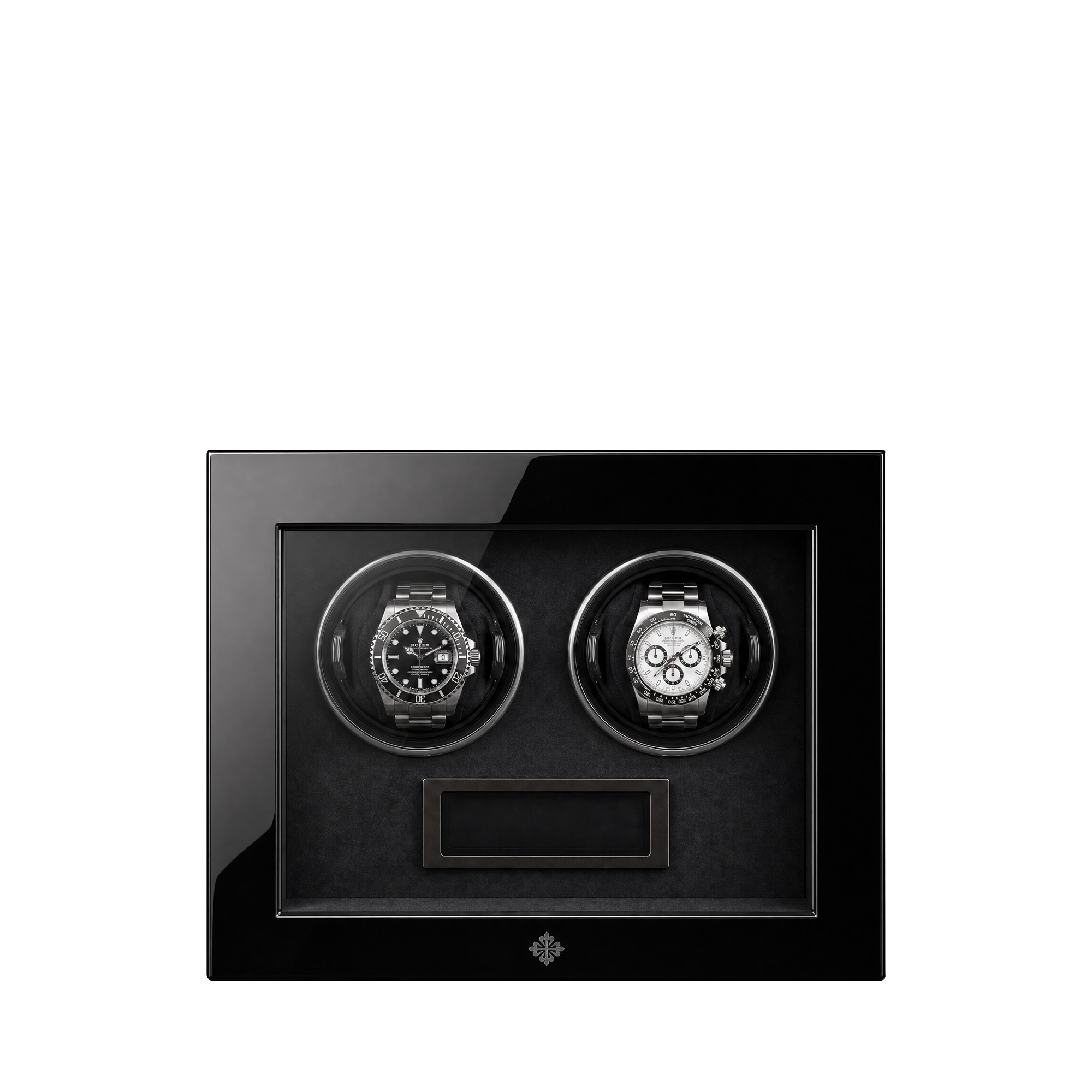
- Single-slot boxes suit a one-watch Geophysic owner; multi-slot cases only make sense once the collection passes three pieces.
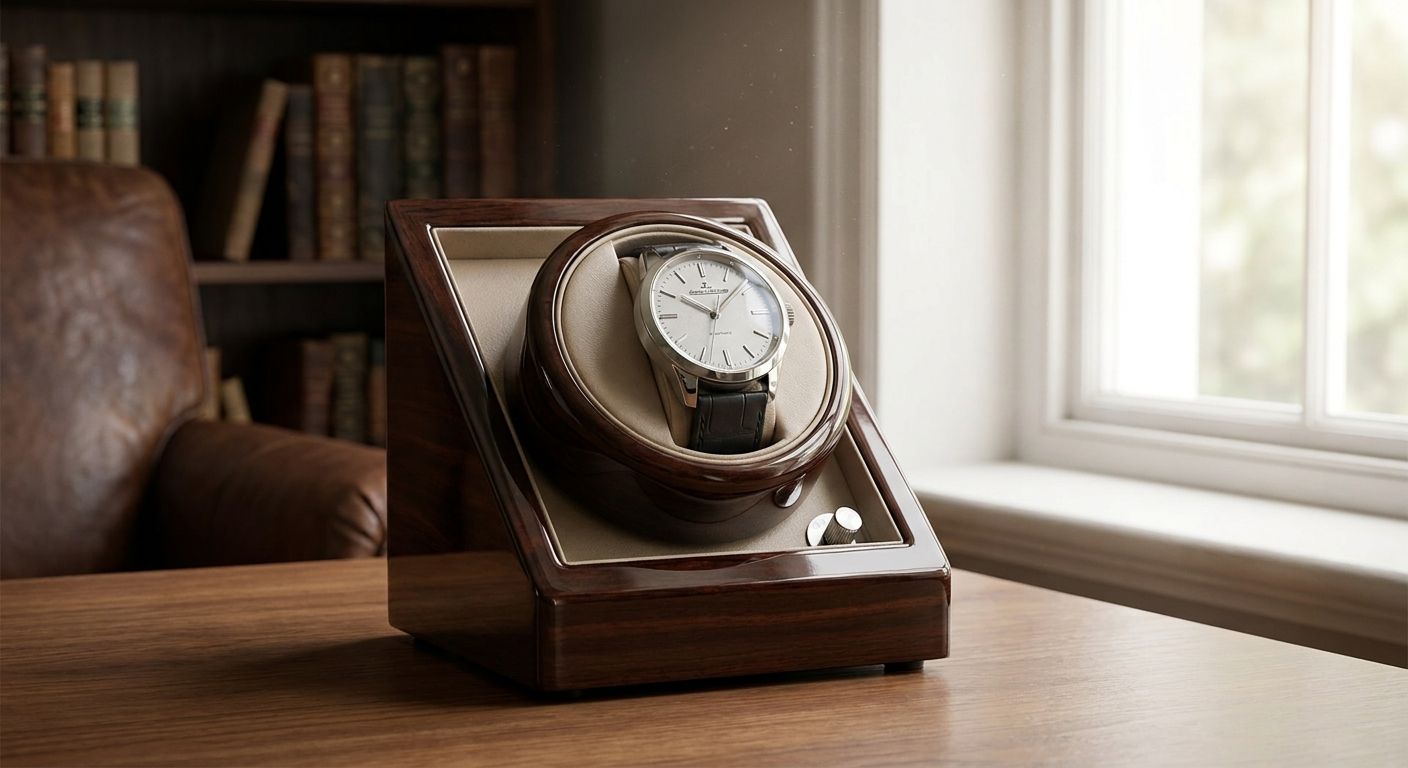
- Skip fixed foam clamps on a domed Geophysic crystal — an adjustable Alcantara cushion is the safer verdict for 2026.
- Quiet Japanese Mabuchi motors matter more here than motor speed, since most Geophysic owners keep the winder on a nightstand or in a bedroom cabinet.
Why this matters
The Geophysic runs on Jaeger-LeCoultre's self-winding caliber 898 (or the 899 in later references), a movement built for stability rather than showmanship — no display caseback theatrics, just a rotor doing its job quietly. Put it in the wrong winder and you either strain the keyless works with an aggressive one-directional motor or leave the mainspring under-wound between wears. Get the JLC Polaris TPD guide open in another tab if you own a Polaris alongside the Geophysic — the calibers share enough winding logic that the settings largely carry over.
2026 has seen more first-time JLC buyers move from a single Reverso or Master Control into a Geophysic as a second or third piece, which is exactly the moment a winder decision starts to matter. A watch this precise deserves a box that matches its winding behavior, not a generic unit sized for a Rolex Submariner.
Who this is for
This guide is for a Jaeger-LeCoultre Geophysic owner deciding between a single-slot box, a multi-slot case, or a cabinet upgrade — someone who already owns the watch (or is about to) and wants the winder decision made once, correctly, rather than replaced in a year.
What to look for in a watch winder for Jaeger-LeCoultre Geophysic
TPD range and bidirectional rotation
The Geophysic's caliber 898/899 winds in both directions, and most JLC-trained watchmakers cite a 650 to 950 TPD (turns per day) window as the safe range for automatic calibers of this type. A winder locked to a single direction or a fixed high TPD risks over-servicing the mainspring barrel over years of daily use. The full TPD reference guide breaks down settings by caliber family if you're cross-referencing against other JLC references you own.
Motor noise at rest
Mabuchi motors run quieter than the mass-market steppers found in sub-$200 boxes, and that difference is the whole point if the winder lives on a nightstand or inside a closed cabinet. A winder that clicks audibly every rotation interval is a nuisance at 2am regardless of how correct its TPD setting is.
Cushion fit for a domed crystal
The Geophysic's sapphire crystal has a gentle dome, and a rigid foam clamp designed for flat-crystal divers can press unevenly on the case and bezel over months of daily cycling. Look for an adjustable cushion in Alcantara or Nappa leather that seats the watch by the lug width rather than clamping the crystal.
Single-slot vs multi-slot sizing
One Geophysic on its own belongs in a single-slot winder — paying for six empty slots to house one watch is a waste of shelf space and money. Once a JLC sits next to two or three other automatics, a multi-slot case earns its footprint; the math flips around the third watch.
Interior material and static
Automatic watches with steel bracelets or leather straps both benefit from a non-abrasive interior — cheap velour pills and sheds fiber onto clasps over 2026's worth of daily use. Alcantara resists this far better than synthetic velvet linings found in entry-level boxes.
Confirm the right winder configuration
Match TPD, slot count, and interior material to your Geophysic before you buy.
Top picks for a Jaeger-LeCoultre Geophysic
The safe pick — single-slot, bidirectional, 650-950 TPD. One Geophysic, one slot, no wasted space. Look for a unit that lets you dial TPD in increments rather than fixed presets — the Geophysic's 898 caliber sits comfortably mid-range, so a winder locked at 1,200+ TPD is the wrong tool. Buy if this is your only automatic or your first Geophysic.
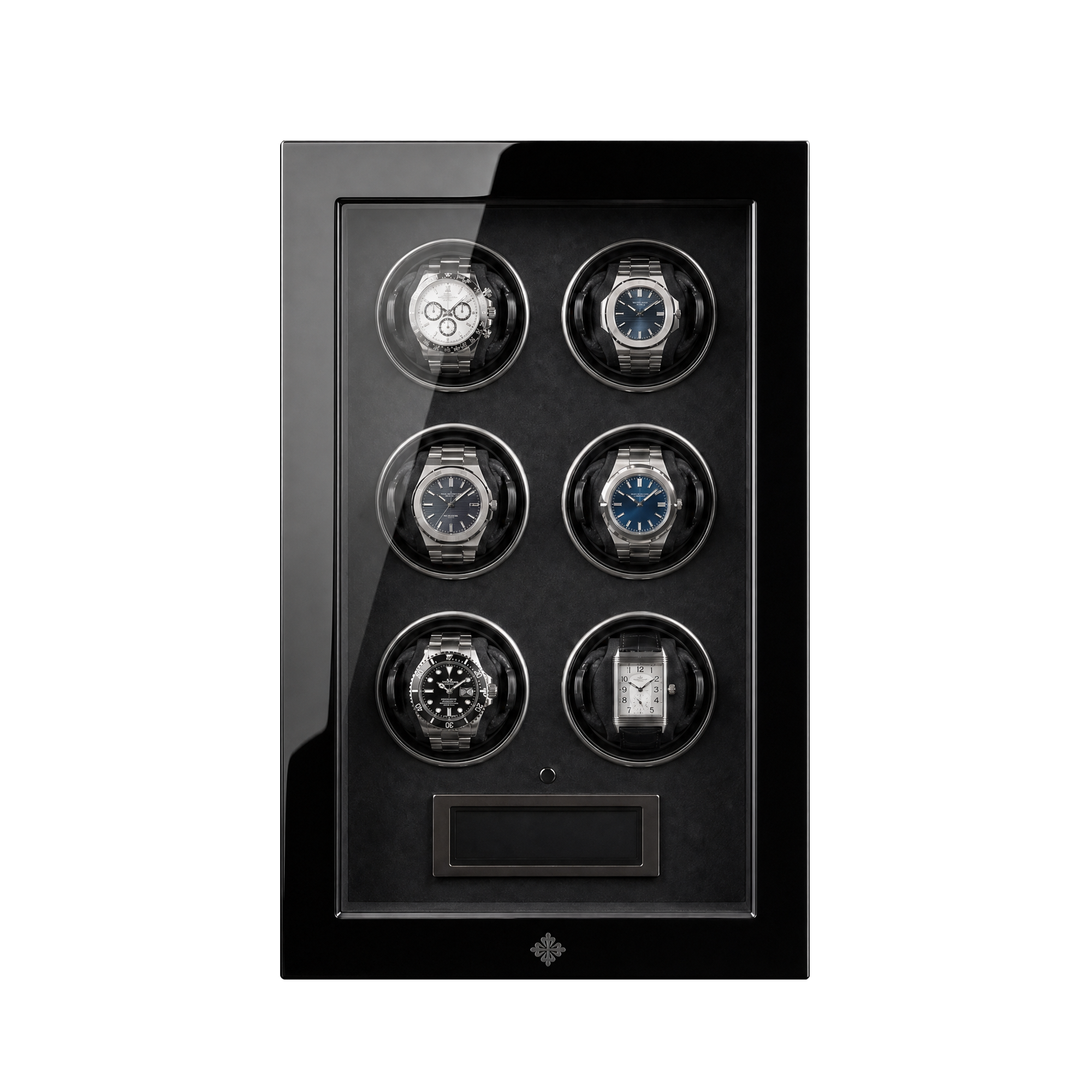
The mixed-collection pick — multi-slot with independent programs. Once a Geophysic sits alongside a Rolex or Patek Philippe in rotation, independent per-slot TPD and direction settings stop being a nice-to-have. The Rolex and Patek mixed collection winder guide covers exactly this scenario, since a Datejust and a Geophysic do not share the same winding tolerance. Buy for a three-to-six watch collection with mixed brands.
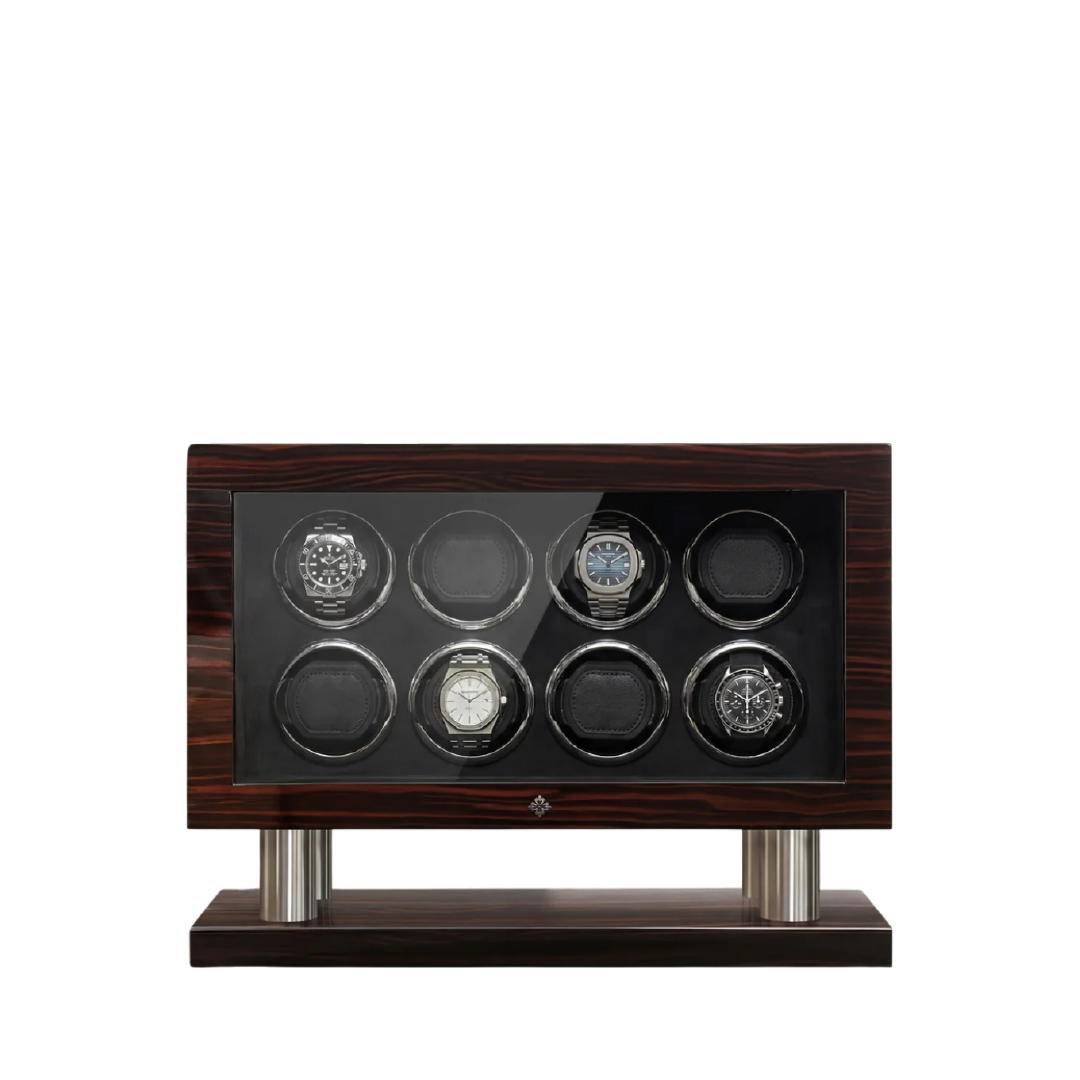
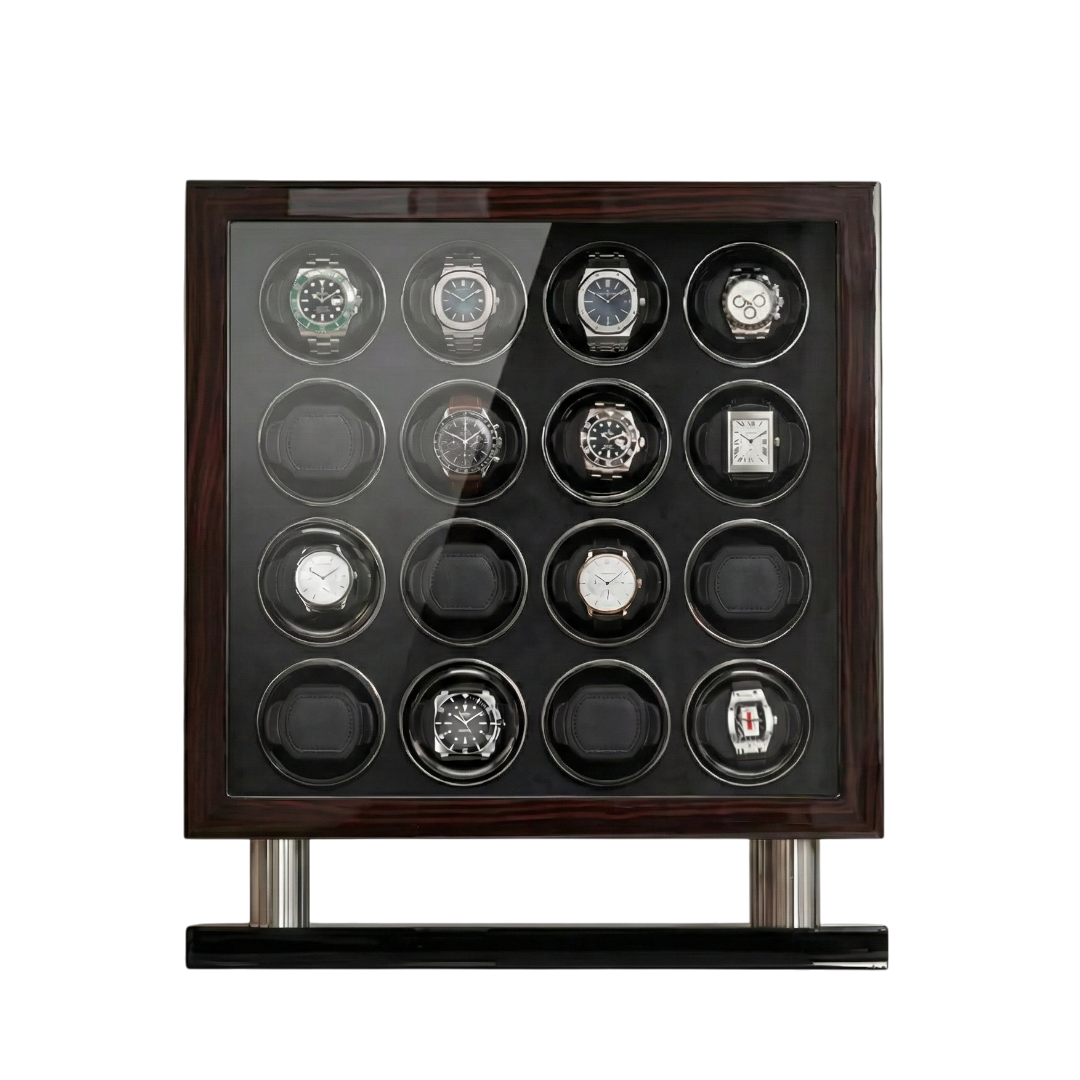
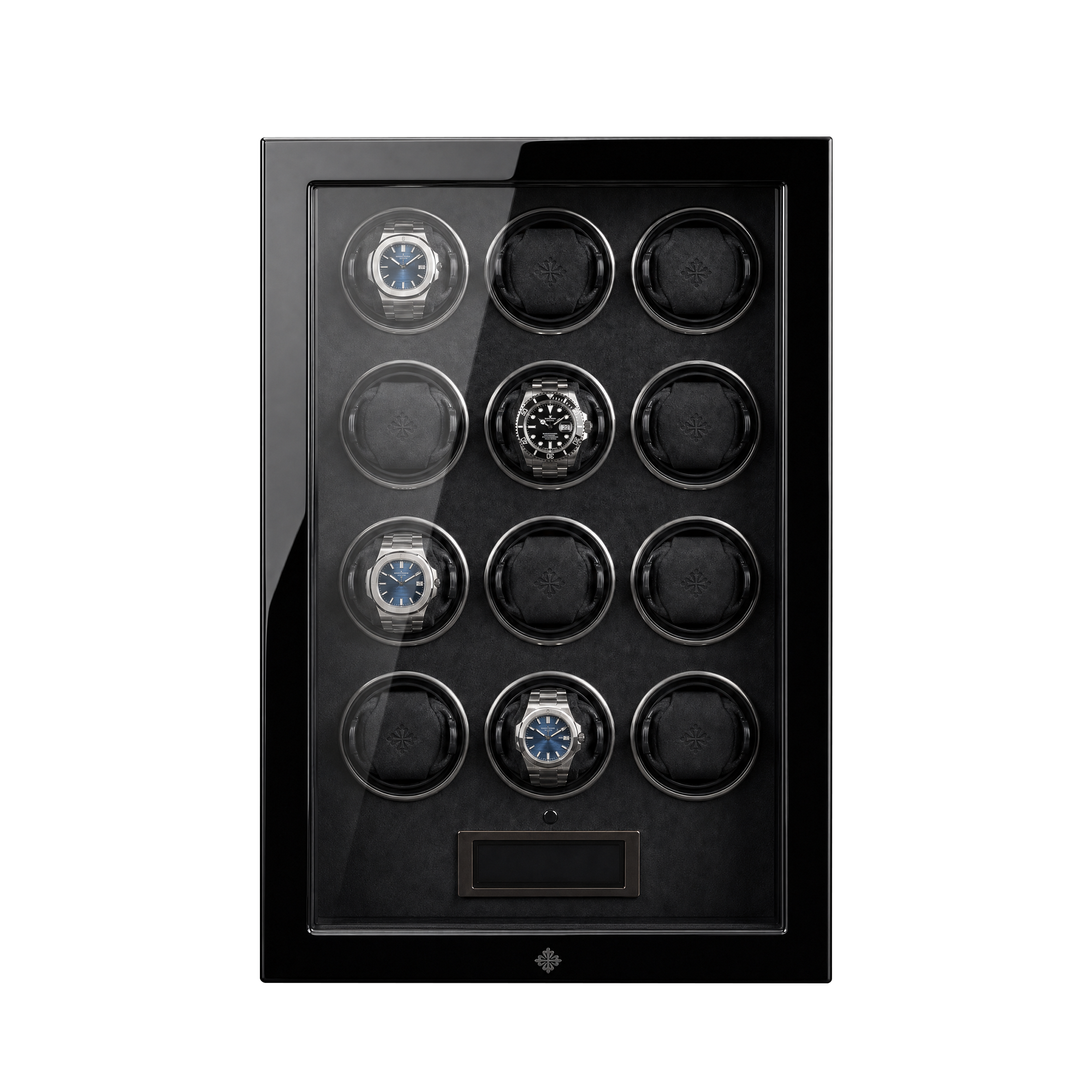
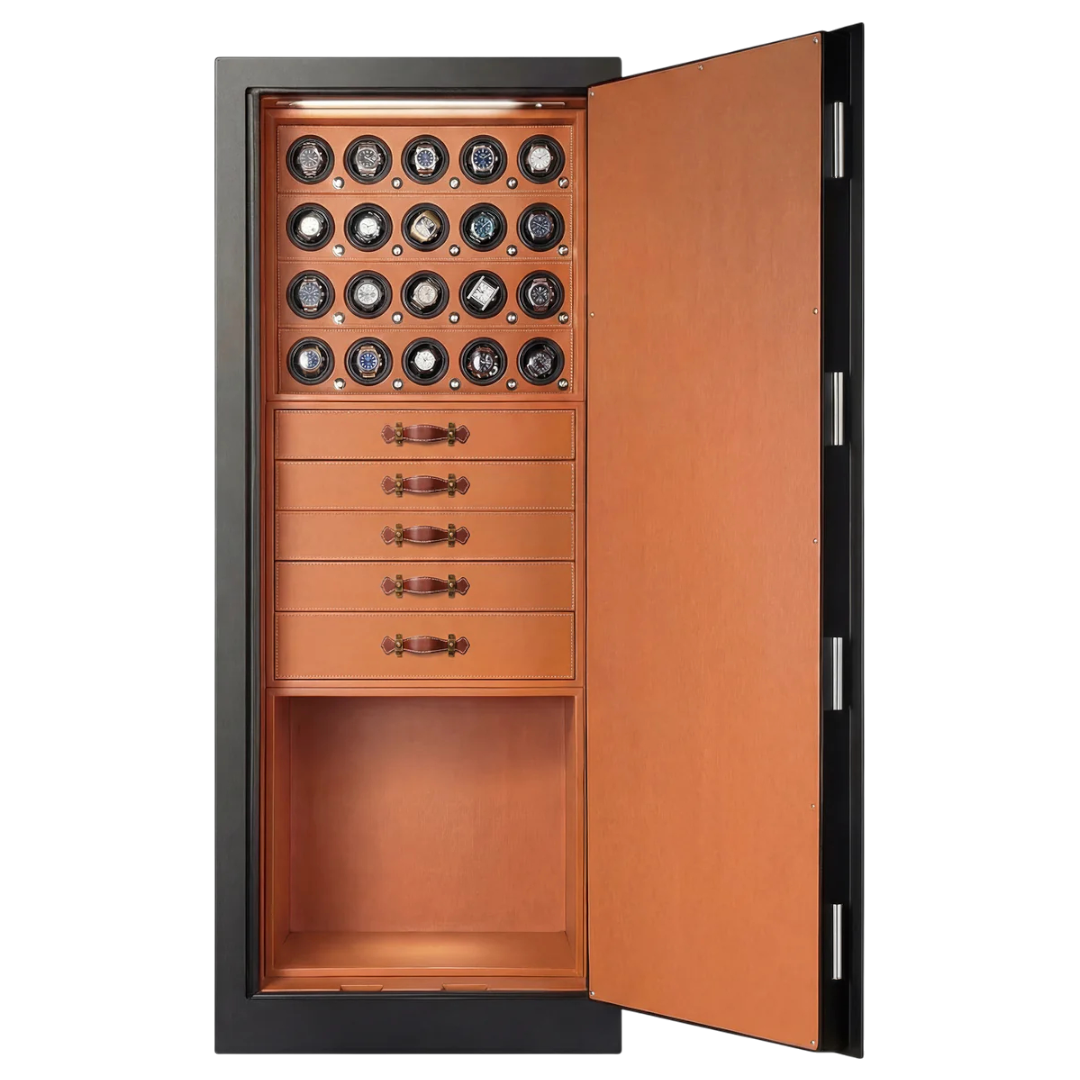
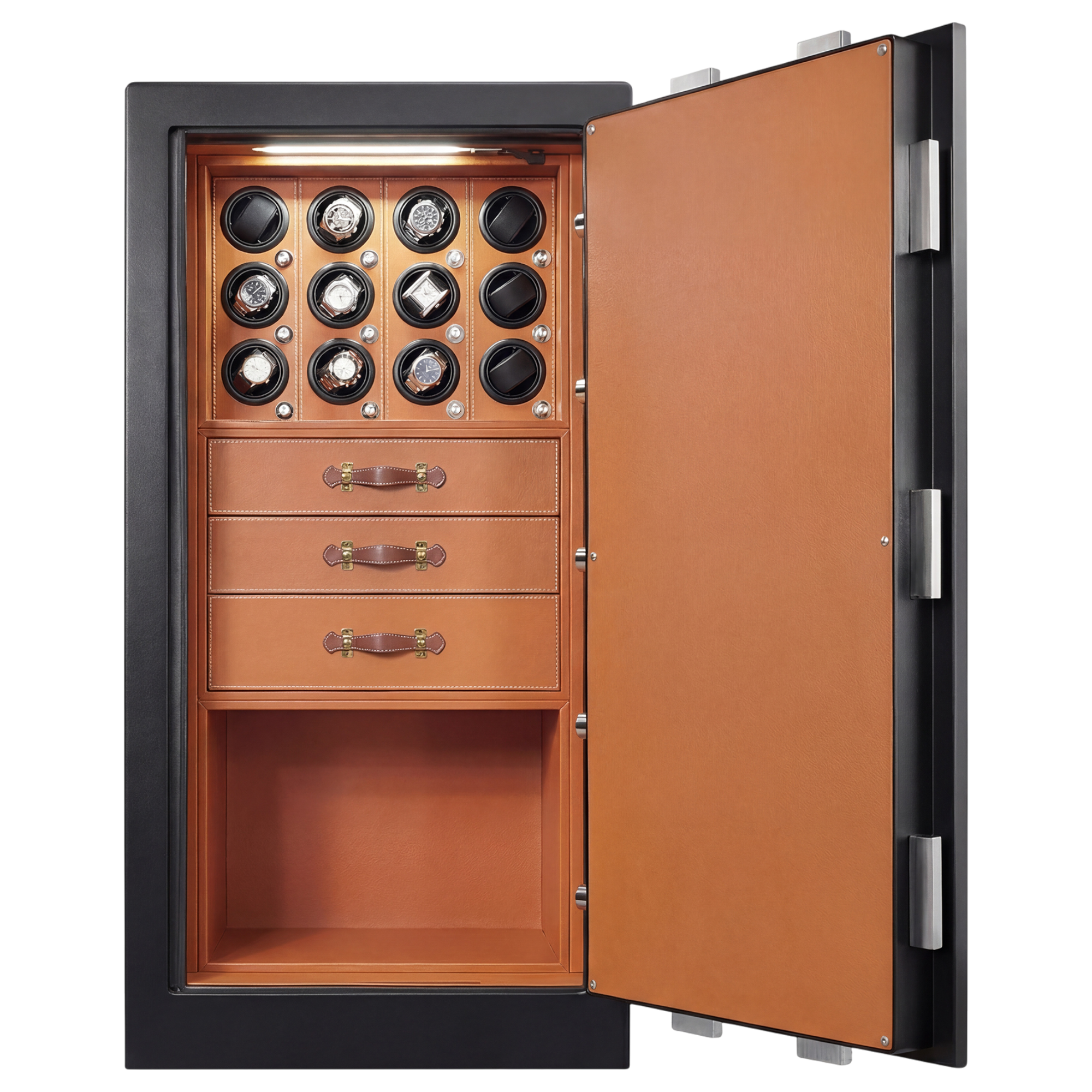
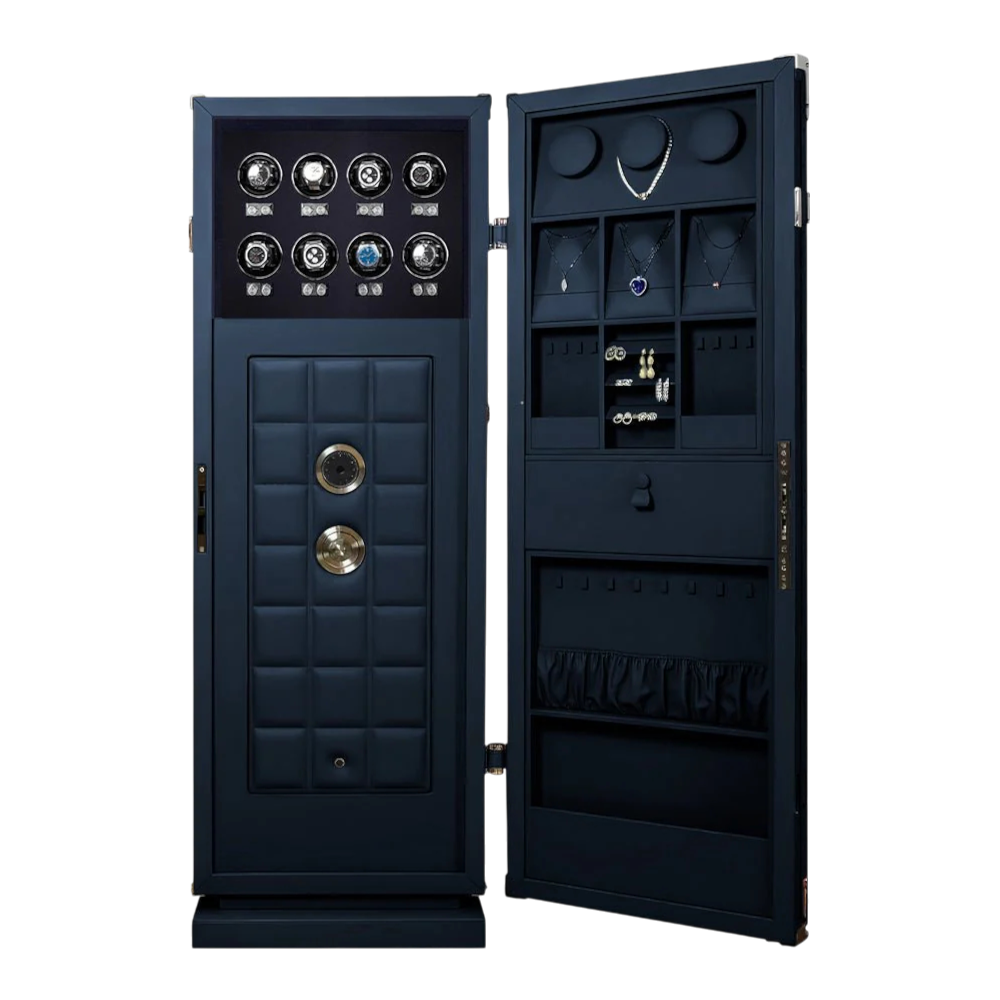
The wildcard — a cabinet upgrade for display plus winding. If the Geophysic is one piece in a growing collection you want visible as well as wound, a winder cabinet solves both problems at once rather than stacking a box on a shelf. Consider this route only once the collection justifies a dedicated piece of furniture rather than a countertop box.
The travel pick — compact, battery-capable single winder. A Geophysic that travels with its owner needs a winder that survives a suitcase, not a wall-powered unit built for a permanent bedroom install. Consider only if the watch genuinely leaves the house with you; otherwise this is spending twice for a feature you won't use.
The skip — generic multi-brand boxes with fixed 1,900+ TPD. These are built for divers and GMTs with stiffer mainsprings, not a Geophysic's caliber 898. Skip anything that doesn't let you set TPD below 1,000.
What to avoid
- Fixed one-direction winders. The Geophysic's bidirectional rotor doesn't need forced single-direction winding, and running it that way for years does nothing beneficial.
- Foam-only interiors with no cushion adjustment. A domed crystal against a flat foam clamp is a slow-motion pressure point, not a protective cradle.
- Undersized multi-packs bought "for later." Buying a 12-slot case to house one Geophysic in 2026 in anticipation of a collection that may or may not materialize ties up capital that's better spent on the watch itself.
Verdict comparison
| Configuration | TPD range | Slot count | Best for | Verdict |
|---|---|---|---|---|
| Single-slot, adjustable cushion | 650-950 | 1 | First Geophysic owner | Buy |
| Multi-slot, independent programs | 650-1,300 (per slot) | 3-6 | Mixed JLC/Rolex/Patek collection | Buy |
| Winder cabinet | 650-1,300 (per slot) | 6-24 | Display plus winding | Consider |
| Compact travel winder | 650-950 | 1 | Owners who travel with the watch | Consider |
| Generic fixed-TPD multi-pack | 1,900+ fixed | 4-8 | Divers and GMTs, not JLC calibers | Skip |
FAQ
What TPD should I use for a Jaeger-LeCoultre Geophysic?
650 to 950 turns per day with bidirectional rotation covers the Geophysic’s caliber 898/899 comfortably. Going above 1,000 TPD daily over years offers no winding benefit and adds unnecessary rotor cycles.
Does the Geophysic need a bidirectional winder?
Yes — the caliber 898/899 rotor winds in both directions, so a bidirectional program matches the movement’s natural winding behavior. A single-direction winder still charges the mainspring but ignores half the rotor’s motion.
Is a single-slot or multi-slot winder better for one Geophysic?
A single-slot winder is the right call for one watch — a multi-slot case only earns its cost once a collection reaches three or more automatics. Buying extra slots for future watches you don’t yet own wastes both money and shelf space.
Can I use a generic multi-brand winder for a Geophysic?
Only if it allows a TPD setting below 1,000 and bidirectional rotation — many generic multi-packs are tuned for divers and GMTs at 1,900+ TPD, which is higher than a Geophysic needs. Check the spec sheet for adjustable settings before assuming compatibility.
How much does a good watch winder for a Geophysic cost in 2026?
Winders built with Japanese Mabuchi motors and Alcantara interiors typically start around $5,000 in 2026, with cabinet-style multi-slot units running well past $21,000. Entry boxes under $500 exist but skip the adjustable-cushion and quiet-motor features a Geophysic benefits from.
Does winding a Geophysic daily affect its resale value?
Correct winding — matched TPD and bidirectional rotation — preserves movement condition and keeps the watch running when it’s time to sell or trade. Incorrect winding, like fixed one-direction motors or excessive TPD, is a maintenance red flag buyers and appraisers notice.
Should the winder sit in a closed cabinet or on an open shelf?
A closed cabinet with a quiet Mabuchi motor is preferable for bedroom placement, since even a quality winder produces some audible cycling noise. Open-shelf placement works fine in an office or study where ambient noise is less of a concern.
One last thing
Most Geophysic owners overthink slot count and underthink cushion adjustment — a $200 difference in cushion quality does more for long-term case and crystal condition over 2026 and beyond than an extra two empty slots ever will.
Related guides
- Watch winder for Jaeger-LeCoultre Master Ultra Thin
- Watch winder settings for Jaeger-LeCoultre Reverso
Protect Your Watch Collection
Designed for collectors who demand the best. Explore our premium watch winders and luxury safes.