
The Jaeger-LeCoultre Reverso runs a manually wound movement in most configurations — but the Reverso Tribute Duoface, Reverso Classic Duetto, and select Reverso models fitted with automatic calibers (Cal. 976, Cal. 822/2) do require winding. If yours has a rotor, the watch winder settings for Jaeger-LeCoultre matter more than most collectors realize: set them wrong and you risk overwinding the mainspring or leaving the watch permanently unwound.
TL;DR: Automatic Reverso models need 650–800 turns per day (TPD), bidirectional rotation, with rest cycles built in. The Cal. 976 and Cal. 822/2 both accept bidirectional winding and sit comfortably at 750 TPD. Manual-wind Reverso variants — the vast majority — do not belong in a winder at all. Confirm your caliber before touching any settings in 2026.
Why This Matters
The Reverso is JLC’s flagship rectangular icon, introduced in 1931. In 2026, vintage-adjacent pieces with manual movements make up roughly 80% of the Reverso lineup. Putting a manual-wind watch on a winder does nothing useful — and can stress the crown stem over time. For the minority of owners with an automatic Reverso caliber, the wrong TPD setting causes the mainspring to cycle without fully winding, which shortens power reserve and accelerates wear on the barrel bridge. Getting this right is a 5-minute setup that protects a watch worth $8,000–$40,000+.
What You’ll Need
- Your Jaeger-LeCoultre Reverso caliber number (found in the owner’s manual or on JLC’s website)
- A programmable watch winder with adjustable TPD (turns per day) and direction control
- Basic knowledge of whether your model is automatic or manual-wind
- 10 minutes to configure and confirm the settings
Step 1: Confirm Your Caliber Is Automatic
Action: Identify the exact movement powering your Reverso before setting anything.
Flip the case. If you see a rotor, it’s automatic. If the back is closed or engraved, check your papers. The most common automatic Reverso calibers in current and recent production are Cal. 976 (Reverso Classic Medium Automatic), Cal. 822/2 (older Reverso Joaillerie and Duetto variants), and Cal. 967 (Reverso Gyrotourbillon variants — which generally do not need a winder). The vast majority of Reverso models — Reverso Classic Small, Reverso Tribute Moon, Reverso One — are manually wound. If your caliber is manual-wind, stop here. Do not use a winder.
Common mistake: Assuming any JLC watch benefits from a winder. Only automatic calibers do.
Step 2: Set the Direction to Bidirectional
Action: Configure your winder’s rotation direction to Clockwise + Counter-Clockwise (CW+CCW), also labeled “bidirectional” on most winders.
The Cal. 976 uses a bidirectional rotor, meaning it winds on both rotation directions. Setting a winder to CW-only or CCW-only cuts your effective winding efficiency roughly in half. Every minute of rotation in the wrong single direction is wasted. Bidirectional is the correct setting for all automatic JLC Reverso calibers confirmed as of 2026.
Expected outcome: The winder will alternate rotation directions throughout its cycle, fully engaging the rotor on each pass.
Common mistake: Leaving the direction on factory default, which on many budget winders ships as CW-only.
Step 3: Set TPD to 650–800
Action: Program turns per day to 750 TPD as your starting point.
Jaeger-LeCoultre does not publish a precise TPD figure for the Reverso in its consumer documentation as of 2026 — this is standard practice across haute horlogerie. Based on aggregated data from movement specifications for similarly sized JLC automatic calibers (21,600 vph, 38-hour power reserve on Cal. 976), 650–800 TPD covers the winding requirement without over-cycling the mainspring. 750 TPD bidirectional is the industry-standard setting for this class of movement.
If your winder allows custom programming, set exactly 750 TPD. If it only offers preset steps (e.g., 600, 750, 900, 1000), choose 750. Do not exceed 900 TPD for any Reverso automatic caliber.
Common mistake: Setting TPD above 1,000 because “more is better.” Excess rotation adds heat and vibration with zero winding benefit once the mainspring is fully wound.
Step 4: Program Rest Cycles
Action: Enable automatic rest intervals — typically 30 minutes on, 60–90 minutes off per cycle.
A fully wound mainspring cannot absorb additional energy. Quality winders include rest periods so the motor stops spinning once the watch is topped up. Without rest cycles, the winder runs continuously, adding unnecessary mechanical stress to both the winder motor and the watch’s rotor bearing. Set the winder to run for 30 minutes, rest for 90 minutes, repeat throughout the day. This delivers ~750 TPD across a 24-hour period without continuous spinning.
Expected outcome: Your Reverso stays at or near full power reserve (38 hours for Cal. 976) without the mainspring being held under constant peak tension.
Common mistake: Disabling rest cycles to “make sure” the watch stays wound. It does not help and may shorten rotor service intervals.
Step 5: Mount the Watch Correctly
Action: Seat the Reverso in the winder’s cushion with the crown positioned away from pressure points, and verify the case is secure before starting the motor.
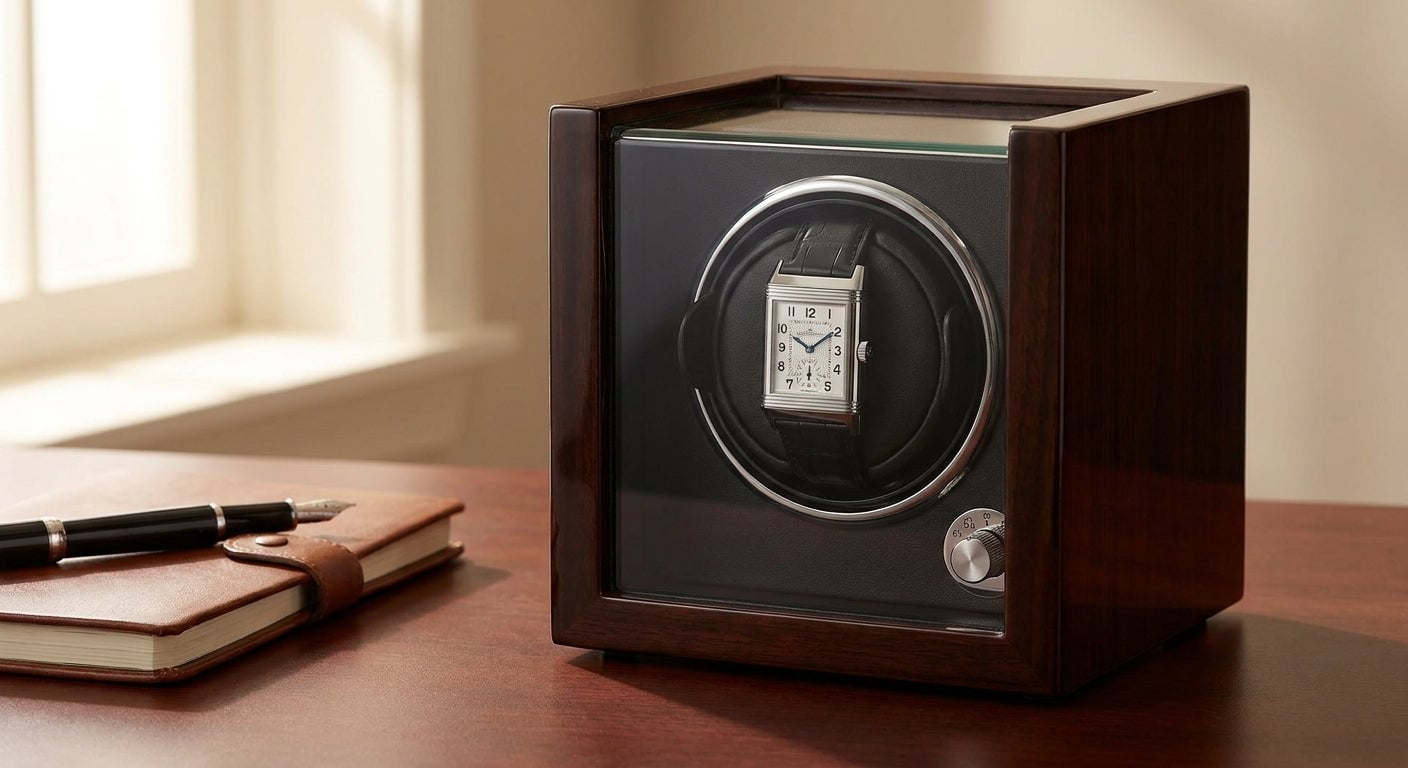
The Reverso’s rectangular case is wider than a round watch at the same lug width. Check that your winder’s cushion or watch holder accommodates the case shape without the crystal resting against a hard edge. Most quality winders with adjustable cushion sizes handle the Reverso without modification. Tighten the holder so there is no play — a loose watch inside a spinning winder will knock against the case holder on every direction change.
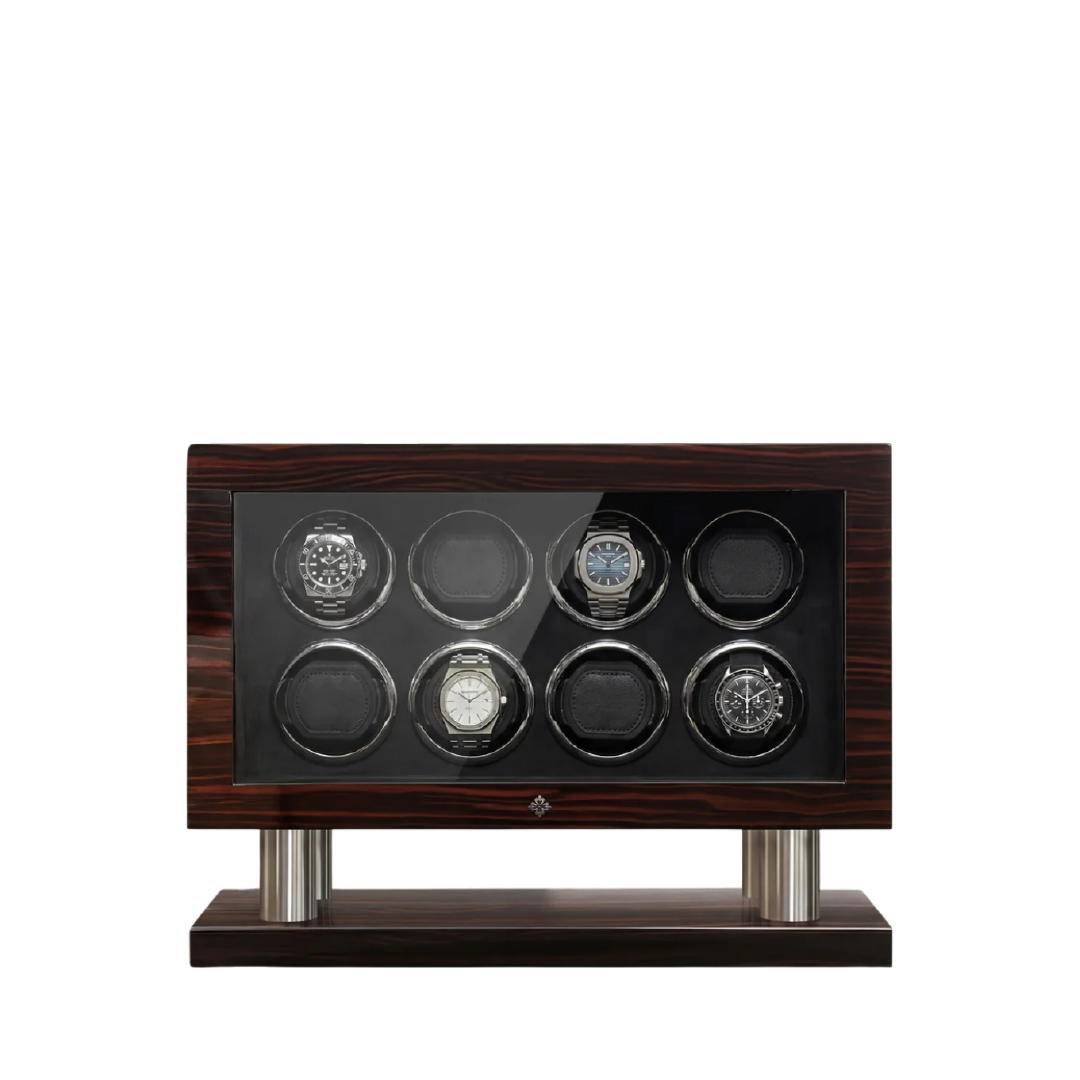
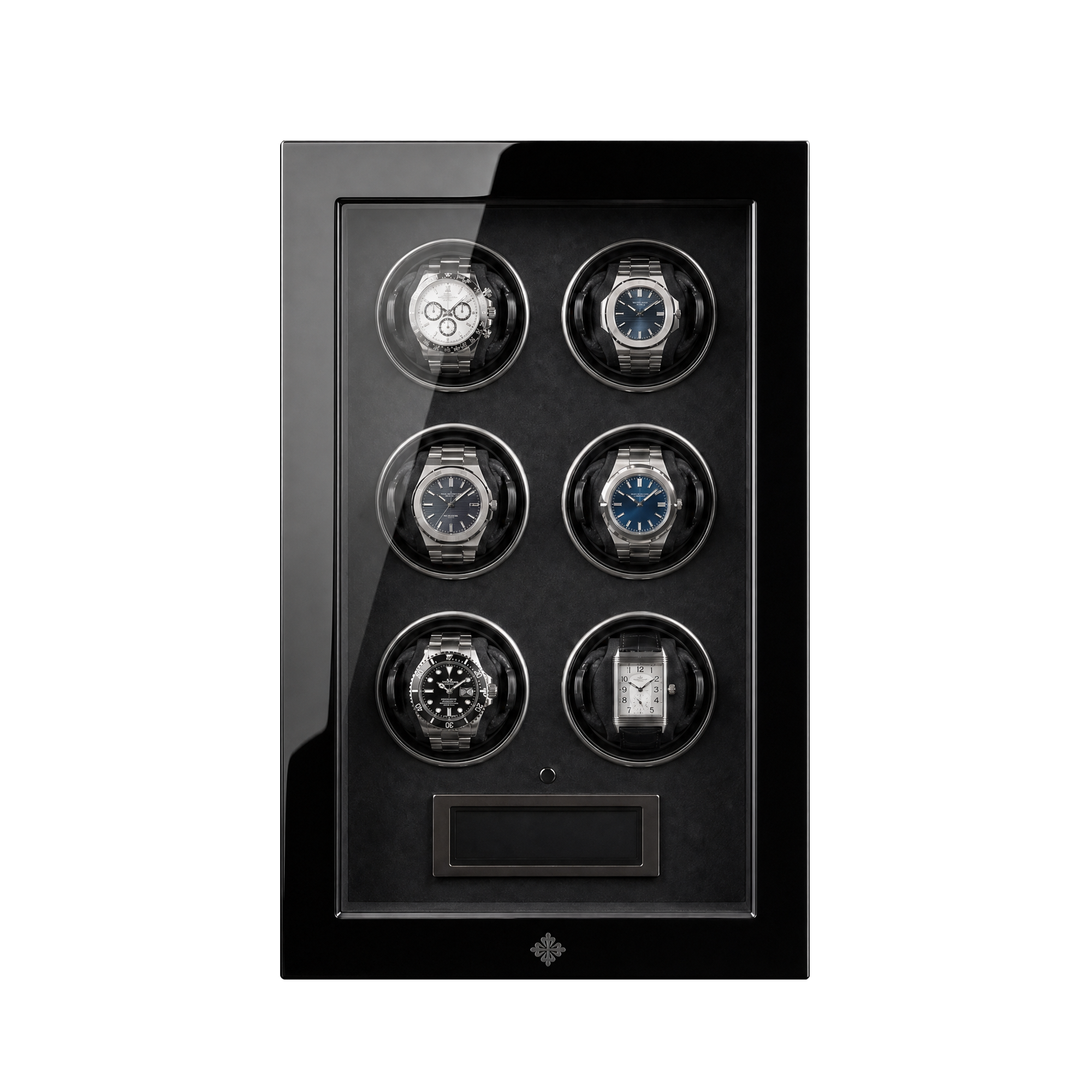
For a winder that holds multiple watches, keep the Reverso’s slot away from slots running at different TPD settings to avoid vibration cross-talk. The Impresario Series 6 watch winder is a practical choice for a Reverso alongside 5 other automatics, with per-slot TPD and direction control so each watch gets its own program.
Common mistake: Using an undersized or fixed cushion that lets the rectangular case wobble.
Step 6: Run the Watch for 24 Hours and Verify Power Reserve
Action: After the first full day on the winder, check that your Reverso is running and showing a full or near-full power reserve.
If the watch is running but power reserve reads below 30 hours on Cal. 976, increase TPD by 50 (to 800). If power reserve is full and the watch is running accurately, your settings are correct. Do not adjust further. If the watch stopped during the 24-hour period, confirm the winder ran properly and that the watch was seated correctly before increasing TPD.
Expected outcome: Cal. 976 should read 36–38 hours of remaining power reserve after 24 hours on a correctly configured winder.
Common mistake: Changing multiple settings at once when diagnosing a problem. Change one variable at a time.
Troubleshooting
Watch stopped after a full day on the winder:
First confirm the cushion was secure and the watch did not slip. If seating was correct, increase TPD from 750 to 800 and run another 24 hours.
Power reserve reads full but watch is running fast:
Overwinding is not the cause of rate error in modern automatic movements. Check for magnetization or service needs — a winder does not cause rate deviation in a healthy movement.
Winder is loud during rotation:
A rattling Reverso in the holder points to a loose cushion fit, not a winder fault. Readjust the holder. Persistent motor noise from the winder itself indicates a worn motor — see watch winder motor replacement parts if the unit is out of warranty.
Winder direction resets to default after power loss:
Some entry-level winders lose programmed settings during a power interruption. Confirm settings after any outage. Winders with onboard memory retain settings through power loss.
Reverso crystal shows micro-scratches after a few weeks in the winder:
The crystal is contacting the holder. Recheck case seating. Sapphire crystal on modern Reverso models is highly scratch-resistant, so actual contact pressure is needed to cause visible marks.
Manual-wind Reverso stopped — unsure if it’s the winder’s fault:
A manual-wind Reverso should not be in a winder. Remove it. Wind it by hand using the crown, rotating 20–25 full turns until resistance increases.
Tools and Resources
- Jaeger-LeCoultre owner’s manual (lists caliber number and power reserve spec)
- A programmable watch winder with per-slot TPD, direction, and rest-cycle control
- Impresario Series 6 watch winder — per-slot programming, supports 6 automatic watches with individual settings
- Watch winder settings for Cartier automatic watches — useful reference if you also own Cartier automatics with similar rectangular-case considerations
- Soft microfiber cloth for wiping the case after handling
What to Do Next
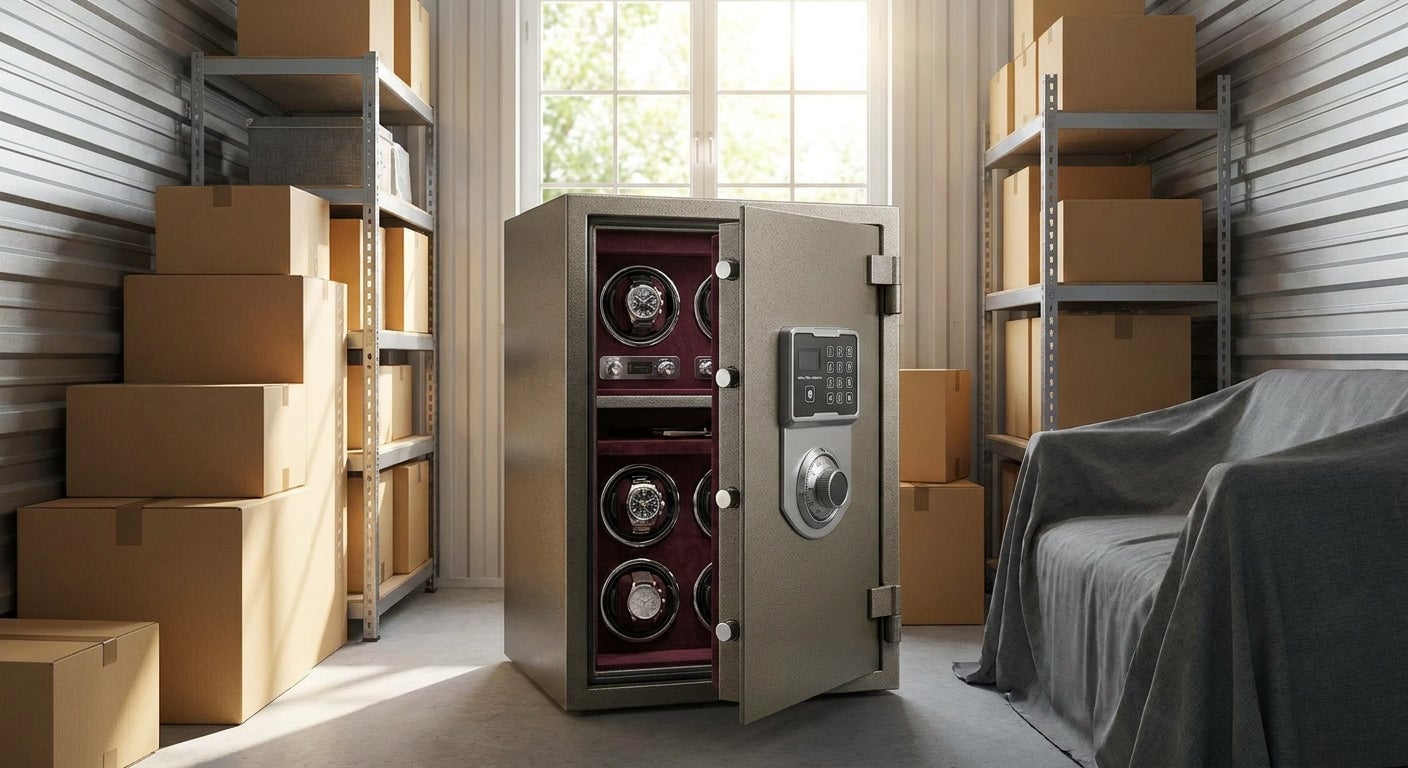
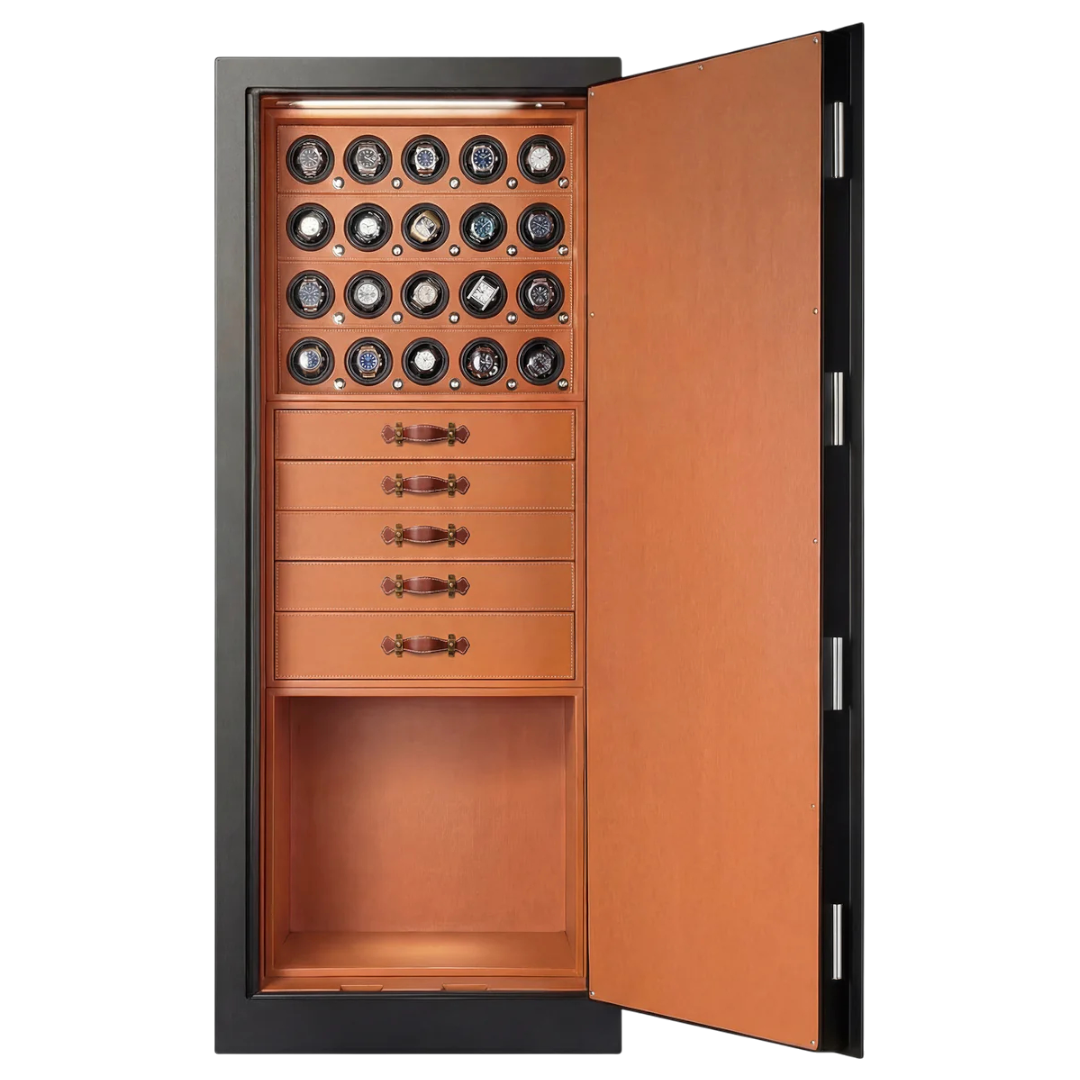
Once your Reverso is running correctly on the winder, the next optimization is storage security. A winder keeps the movement healthy; a safe keeps the watch protected. If your collection extends beyond the Reverso, the guide on how to choose a high-end watch safe walks through the specifications — fire rating, lock type, interior lining — that matter for pieces at this price point.
FAQ
What are the correct watch winder settings for Jaeger-LeCoultre automatic watches?
750 TPD, bidirectional rotation, with 30-minute run and 90-minute rest cycles. This applies to all current automatic JLC calibers including the Cal. 976 found in the Reverso Classic Medium Automatic as of 2026.
Does the Jaeger-LeCoultre Reverso need a watch winder?
Only if it has an automatic movement. Most Reverso models — including the Reverso Classic Small and Reverso Tribute Moon — are manually wound and do not need or benefit from a winder. Check your caliber number before purchasing a winder in 2026.
What TPD should I set for the JLC Reverso Cal. 976?
650–800 TPD covers the Cal. 976 winding requirement. Start at 750 TPD bidirectional. After 24 hours, check power reserve. If it reads below 30 hours, move to 800 TPD.
Is bidirectional or unidirectional better for a JLC Reverso?
Bidirectional. The Cal. 976 rotor winds in both directions. Unidirectional settings waste roughly half of each rotation cycle, leaving the watch chronically under-wound.
Can you overwind a Jaeger-LeCoultre automatic watch with a winder?
Modern JLC automatic calibers have a slipping mainspring that prevents overwinding. However, running a winder above 900 TPD adds unnecessary wear to the rotor bearing and winder motor without delivering any additional power reserve.
How often should a Reverso automatic be serviced if kept on a winder?
Jaeger-LeCoultre recommends service intervals of 5–8 years regardless of storage method. A correctly configured winder does not shorten service intervals — it keeps lubricants distributed, which can extend intervals in some cases.
What winder works well for a JLC Reverso alongside other watches?
Any winder with per-slot independent programming handles the job. The Enigwatch Impresario Series 6 supports 6 individual programs so a Reverso at 750 TPD bidirectional can run alongside a Rolex at 650 TPD unidirectional without conflict.
What happens if I put a manual-wind Reverso in a winder?
Nothing beneficial. The winder spins, the rotor does not exist, and the watch stays unwound. Prolonged vibration from the winder motor is unnecessary stress on a movement that expects manual winding. Remove the watch and wind it by hand.
One Last Thing
The Reverso was designed in 1931 specifically to survive polo matches — its case literally flips to protect the dial from impact. The irony is that the movement inside a modern automatic Reverso is far more sensitive to incorrect winder settings than to the shock it was designed to handle. In 2026, most winder-related damage to automatic JLC movements traces back to TPD set above 1,000 — usually by owners who assumed luxury watches need “premium” high-count winding. They do not. 750 TPD, bidirectional, with rest cycles is all a Reverso automatic needs.
Related Guides
Protect Your Watch Collection
Designed for collectors who demand the best. Explore our premium watch winders and luxury safes.