
Cartier automatic watches require bidirectional winding at 650 turns per day. Before setting up a winder, confirm your Cartier is actually automatic — several of Cartier’s most iconic models including many Tank and Ronde variants are quartz movements and do not require a winder at all. This guide covers which Cartier collections are automatic, the correct TPD settings for each, and winder recommendations for Cartier collectors. For a full reference across all major Swiss brands, see Enigwatch’s TPD reference guide.
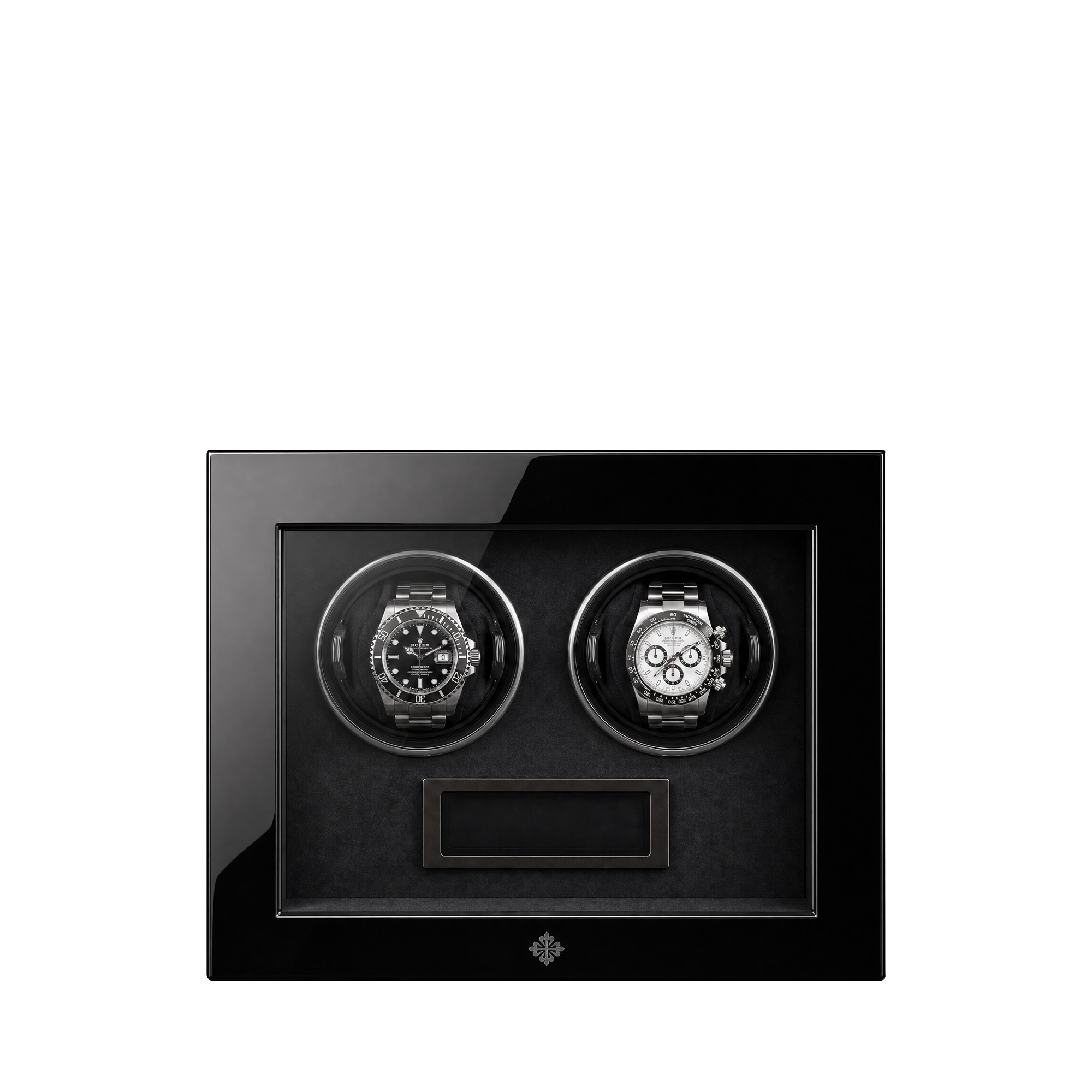
The right winder matters as much as the right setting. Our watch winders support per-rotor TPD for Cartier automatic calibres.
Which Cartier Watches Need a Winder?
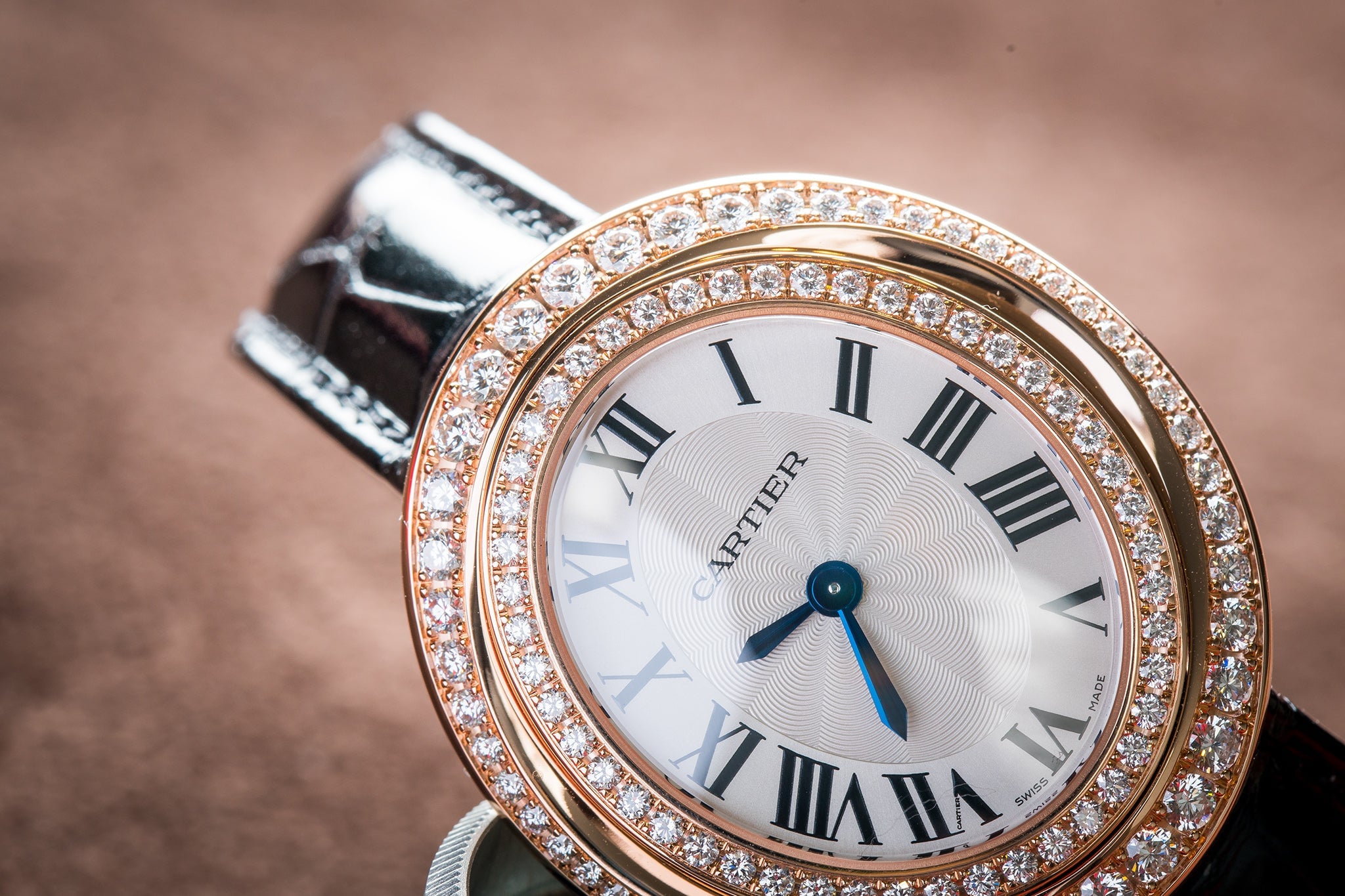 Not all Cartier watches are automatic. Cartier produces both quartz and mechanical movements across their collections — and the same model line often comes in both variants.
Automatic movements — winder required:
- Santos de Cartier (automatic variants)
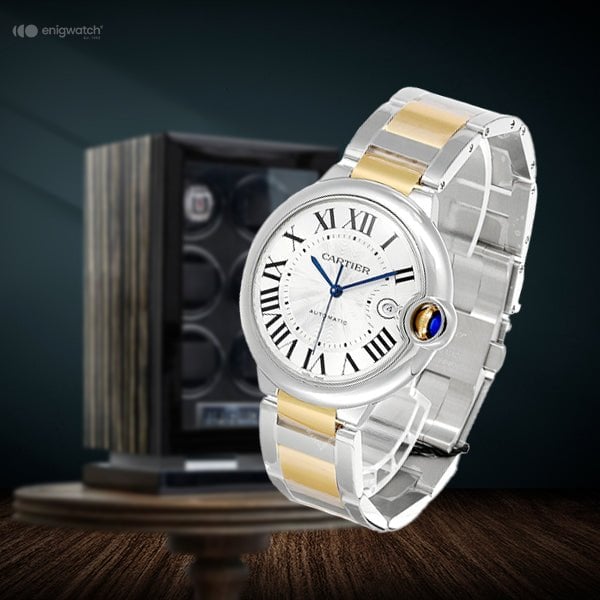
- Ballon Bleu de Cartier (automatic variants)
- Calibre de Cartier
- Drive de Cartier
- Clé de Cartier
- Cartier Ronde Croisière (automatic variants)
- Pasha de Cartier (automatic variants)
Quartz movements — winder not required:
- Tank Must (quartz in most references)
- Tank Solo (quartz in most references)
- Tank Louis Cartier (quartz in most references)
- Ronde Solo de Cartier (quartz)
- Santos-Dumont (manual or quartz depending on reference)
If you are unsure whether your Cartier is automatic or quartz, check the caseback. Automatic movements typically display “Automatic” or “Automatique” on the dial or caseback. Quartz movements are significantly thinner and lighter. The crown on a quartz Cartier only needs to be pulled to set time — it does not wind the watch.
Cartier Watch Winder Settings by Collection
| Collection | Movement | Power Reserve | Recommended TPD | Direction |
|---|---|---|---|---|
| Santos de Cartier (auto) | Cal. 1847 MC / 1847 MC+ | 42 hours | 650 | Bidirectional |
| Ballon Bleu (auto) | Cal. 1847 MC | 42 hours | 650 | Bidirectional |
| Calibre de Cartier | Cal. 1904 MC | 48 hours | 650 | Bidirectional |
| Drive de Cartier | Cal. 1904 PS MC | 40 hours | 650 | Bidirectional |
| Clé de Cartier | Cal. 1847 MC | 42 hours | 650 | Bidirectional |
| Pasha de Cartier (auto) | Cal. 1847 MC | 42 hours | 650 | Bidirectional |
| Ronde Croisière (auto) | Cal. 1847 MC | 42 hours | 650 | Bidirectional |
| Santos-Dumont (manual) | Cal. 430 MC | 38 hours | Not required* | N/A |
*The Santos-Dumont uses a manual-wind movement in most references — it must be wound by hand and should not be placed on an automatic winder.
A note on TPD: All Cartier automatic movements operate correctly at 650 TPD. Running a Cartier winder at 1,350 or above adds unnecessary rotor wear. Enigwatch winders offer five settings — 650, 900, 1350, 1800, and 2200. For every Cartier automatic in the table above, 650 is correct.
Cartier Movement Notes

Cal. 1847 MC — Cartier’s most widely used in-house automatic movement. Powers the Santos, Ballon Bleu, Clé, and Pasha. 42-hour power reserve, bidirectional winding. The movement is slim at 3.2mm thick, contributing to Cartier’s characteristically elegant case profiles.
Cal. 1904 MC — used in the Calibre de Cartier and Drive. A more robust movement with 48-hour power reserve. Still bidirectional, still 650 TPD. The 48-hour reserve means this movement can go two full days unworn before stopping — a winder is less urgent but still recommended for daily-ready convenience.
Cal. 430 MC (Santos-Dumont) — manual-wind only. No rotor. Must be wound by hand by rotating the crown. Do not place on an automatic winder.
How to Set Up Your Winder for a Cartier Watch
- Confirm your Cartier is an automatic movement before placing it on a winder
- Set rotation direction to bidirectional
- Set TPD to 650
- Place the watch on the winder — Cartier cases are typically round (Ballon Bleu, Pasha) or square/rectangular (Santos, Tank). Confirm the pillow supports the case shape without pressure on the bezel or crystal
- Run for 24 hours then verify the watch is keeping time correctly
The Santos de Cartier’s square-ish case and exposed screws on the bezel are distinctive — ensure the pillow does not contact the bezel screws. A soft, adjustable pillow handles this without modification on most quality winders. Not sure which size winder suits your collection? See our watch winder size guide.
Recommended Winders for Cartier Collections
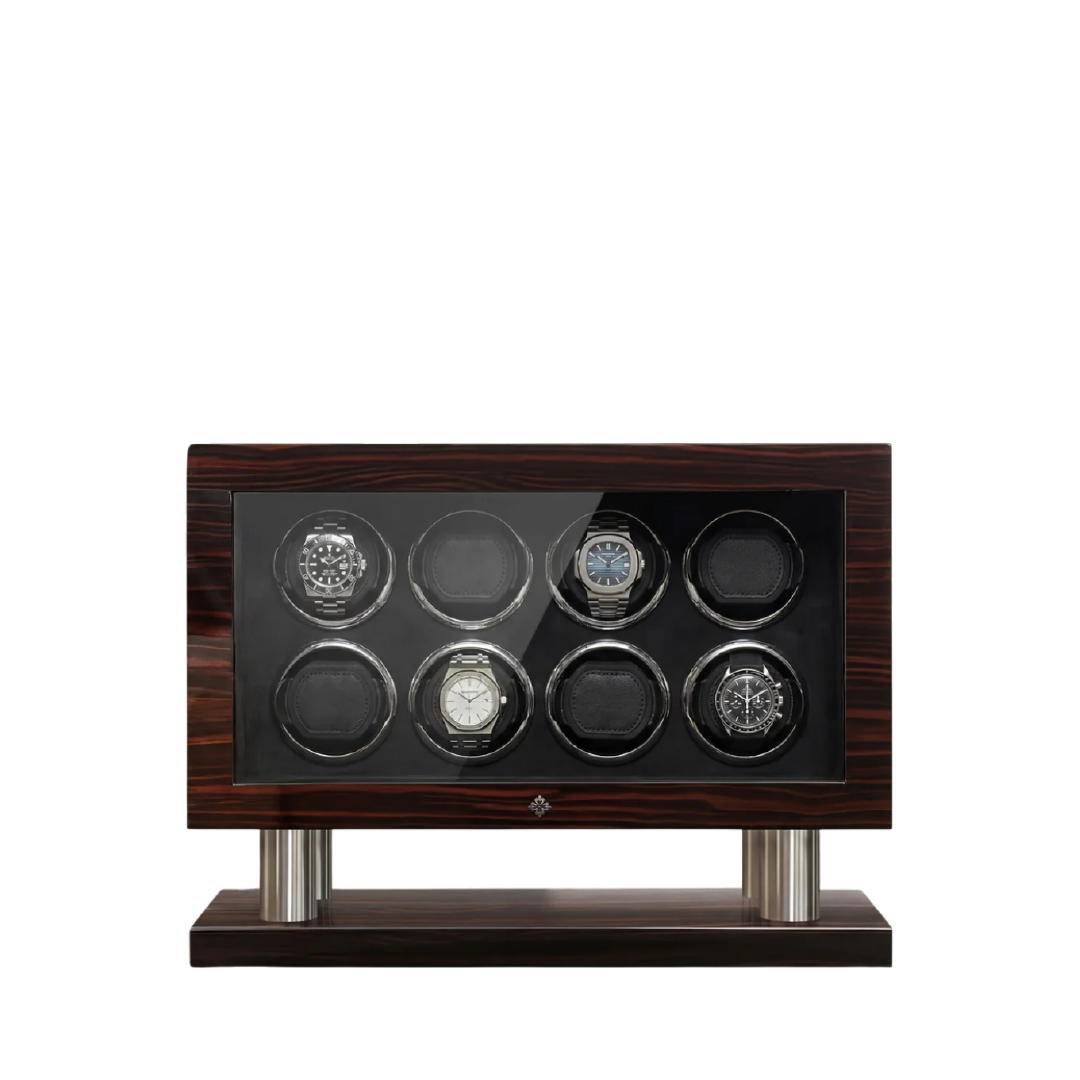
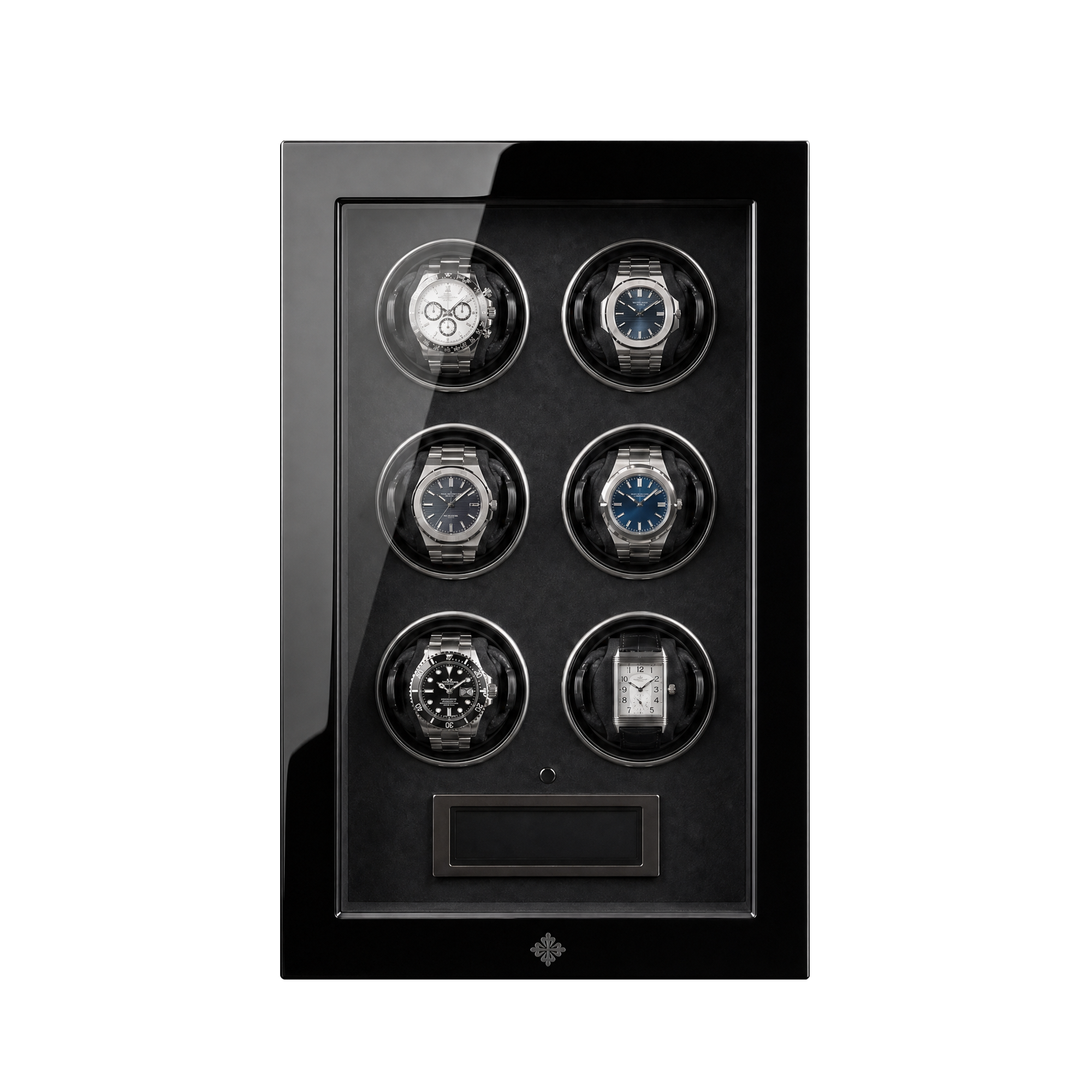
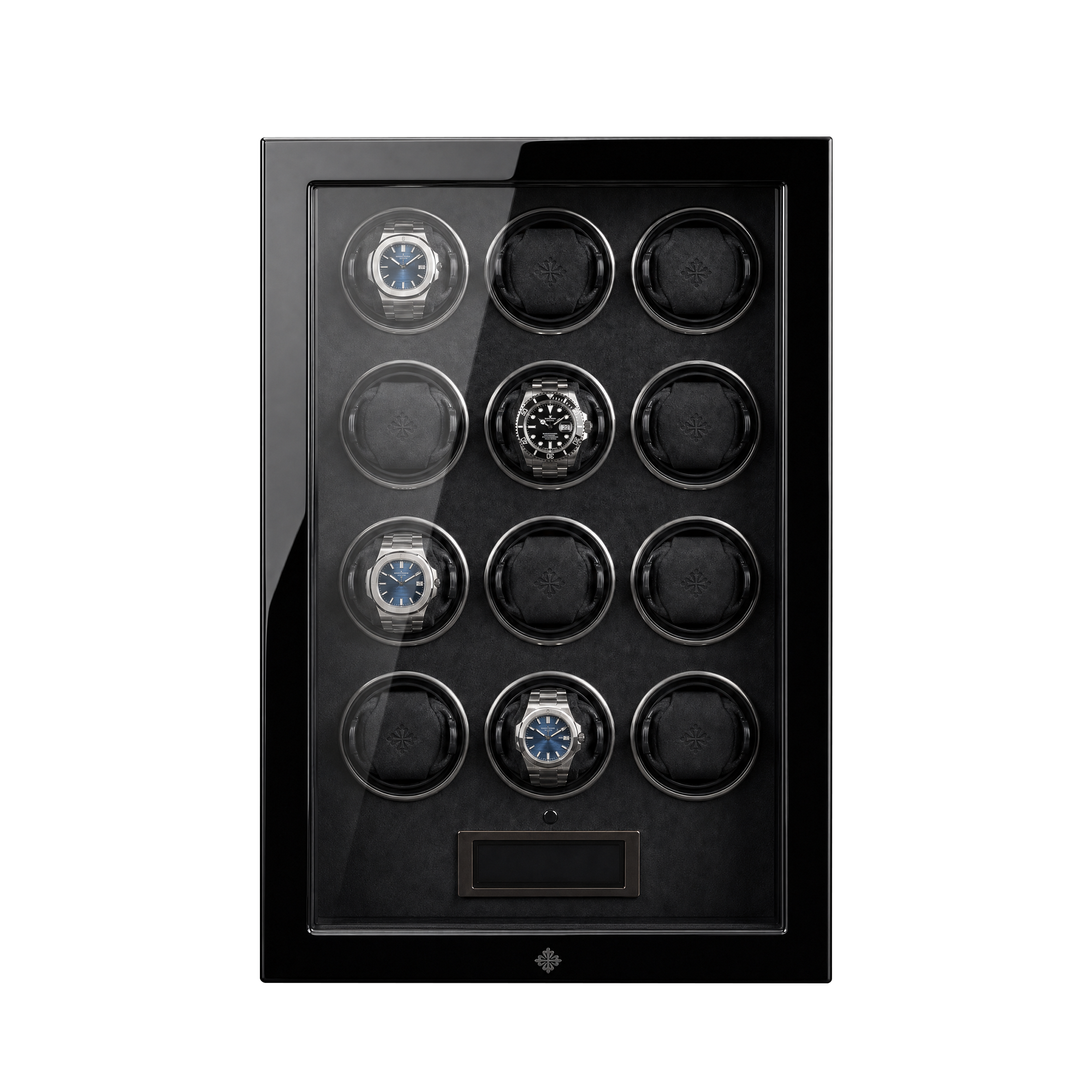
Impresario Series 12 Watch Winder
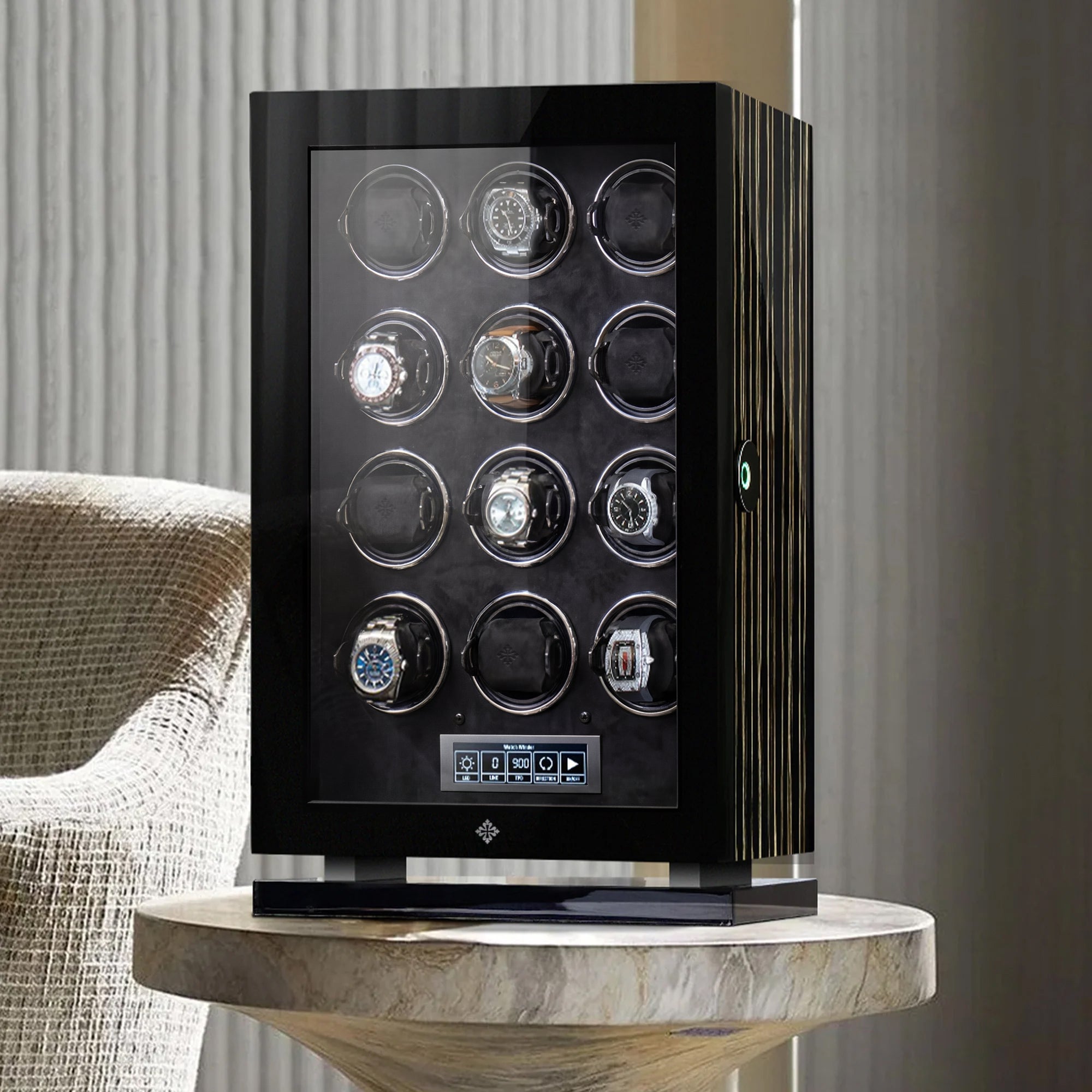
The strongest match for Cartier collectors. Twelve individually programmable rotors with Alcantara-lined interior — the soft lining protects Cartier’s polished case finishing and sapphire crystal from micro-abrasion during long-term storage. Fingerprint access, silent Mabuchi motor, bidirectional across all rotors. Ships 3-5 business days, lifetime motor warranty.
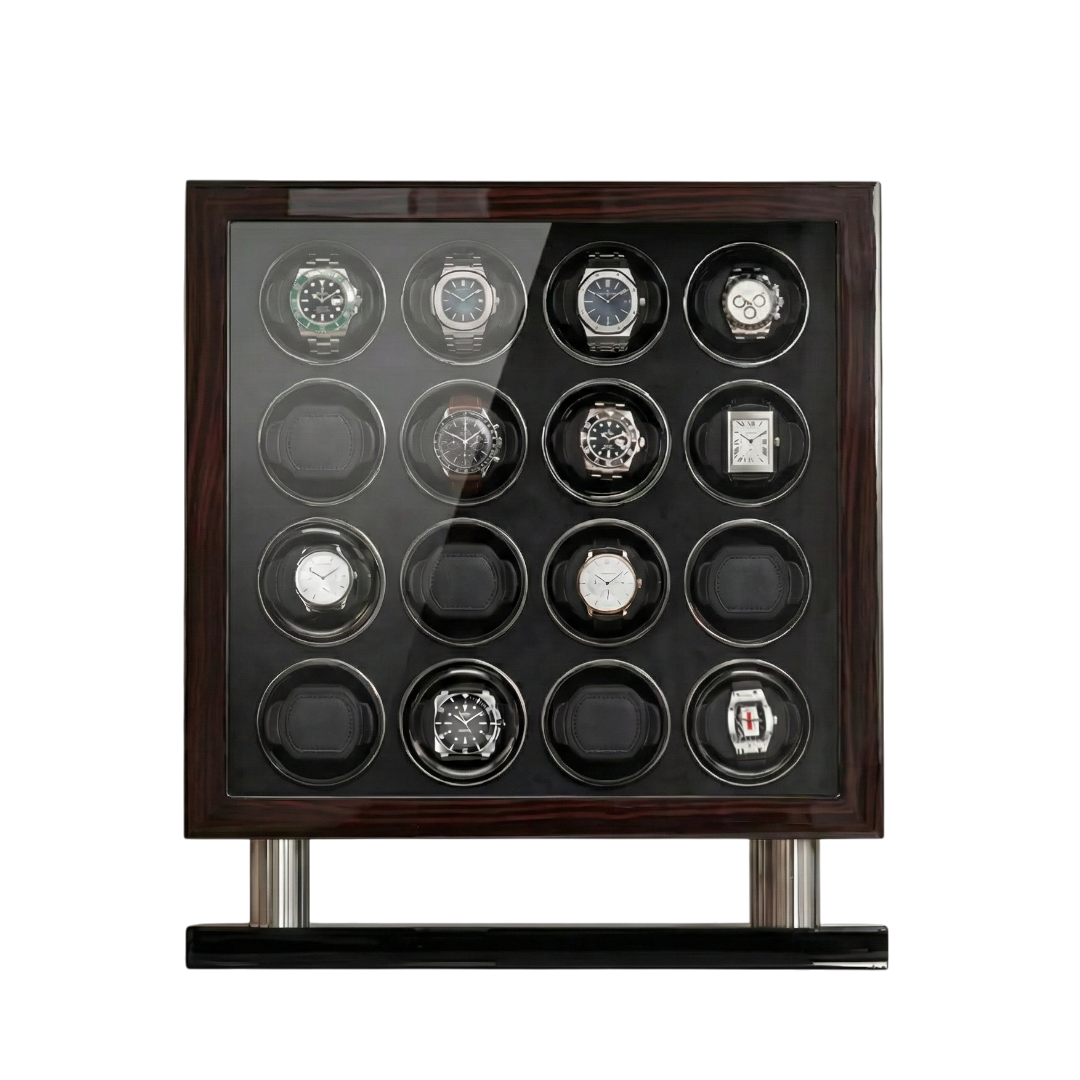
Yachtline Series 16 Watch Winder
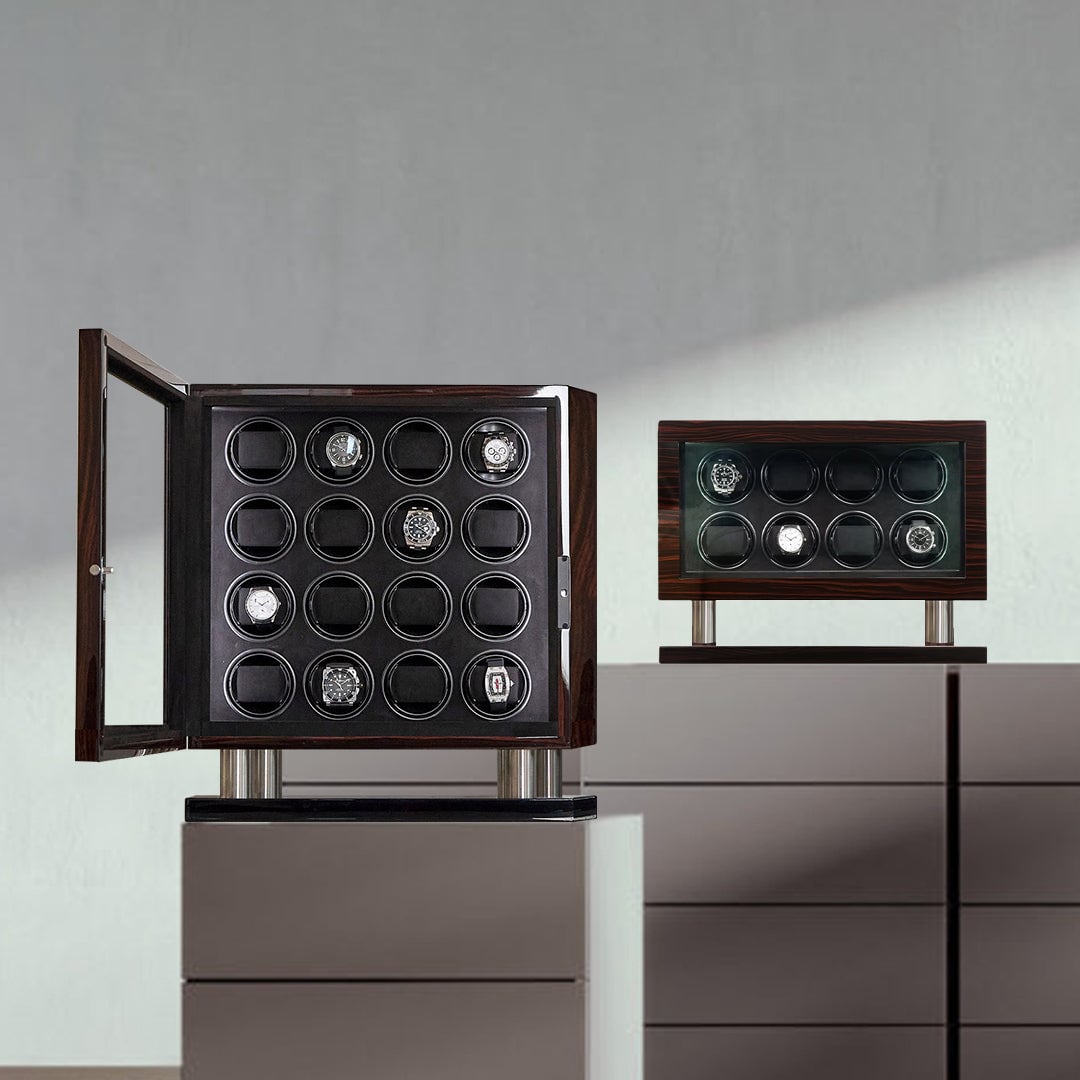 For larger collections or collectors with multiple brands. Sixteen individually programmable rotors, each set independently. The Yachtline‘s adjustable pillow system accommodates Cartier’s variety of case shapes — round Ballon Bleu, square Santos, cushion Pasha — without modification. Ships 3-5 business days, lifetime motor warranty.
When a Watch Safe Makes More Sense
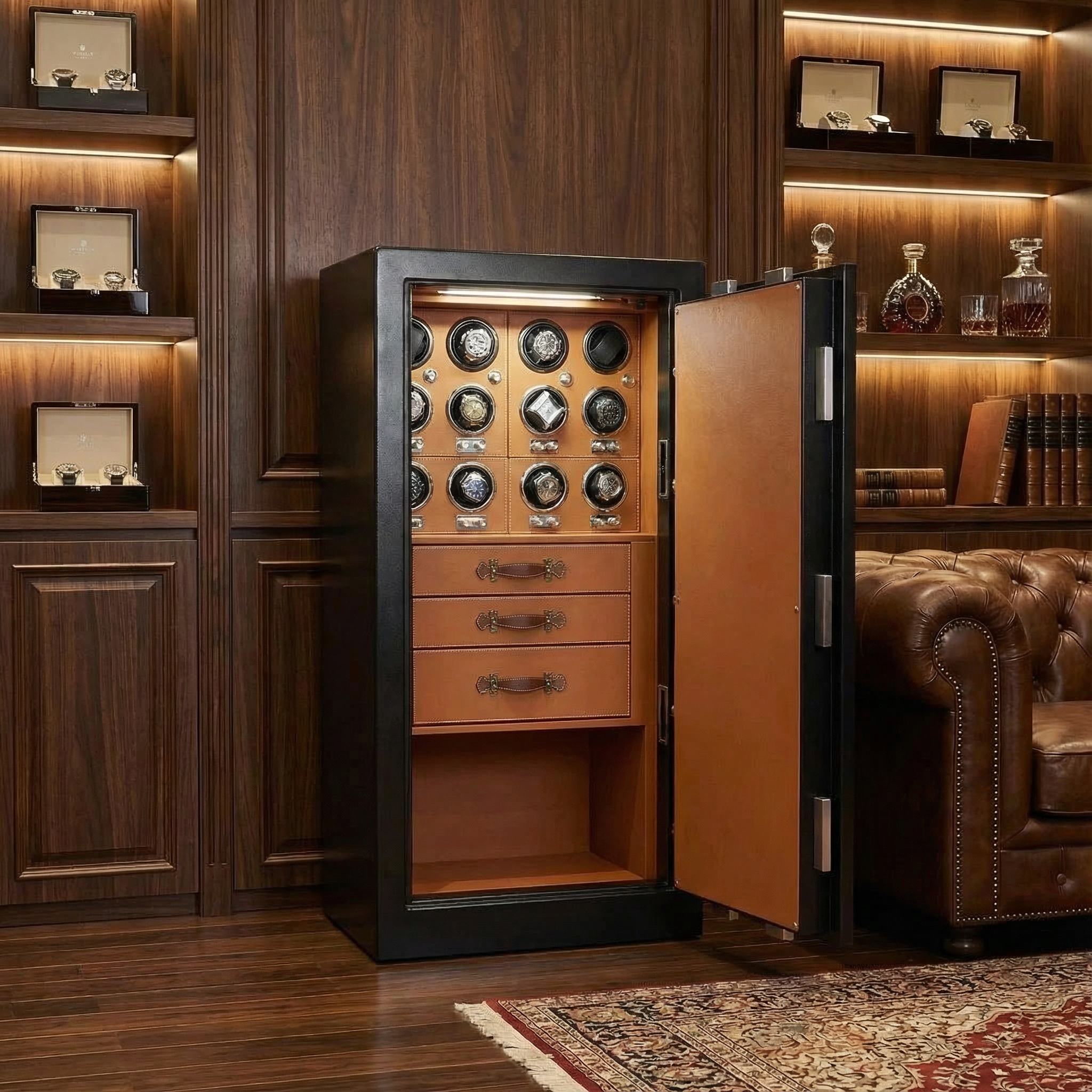 Cartier watches hold their value well — the Santos de Cartier in steel starts around $7,000, the Ballon Bleu above $6,000, and the Calibre de Cartier above $8,000. A collection of three to four Cartier pieces is a meaningful asset that warrants more than open display on a winder.
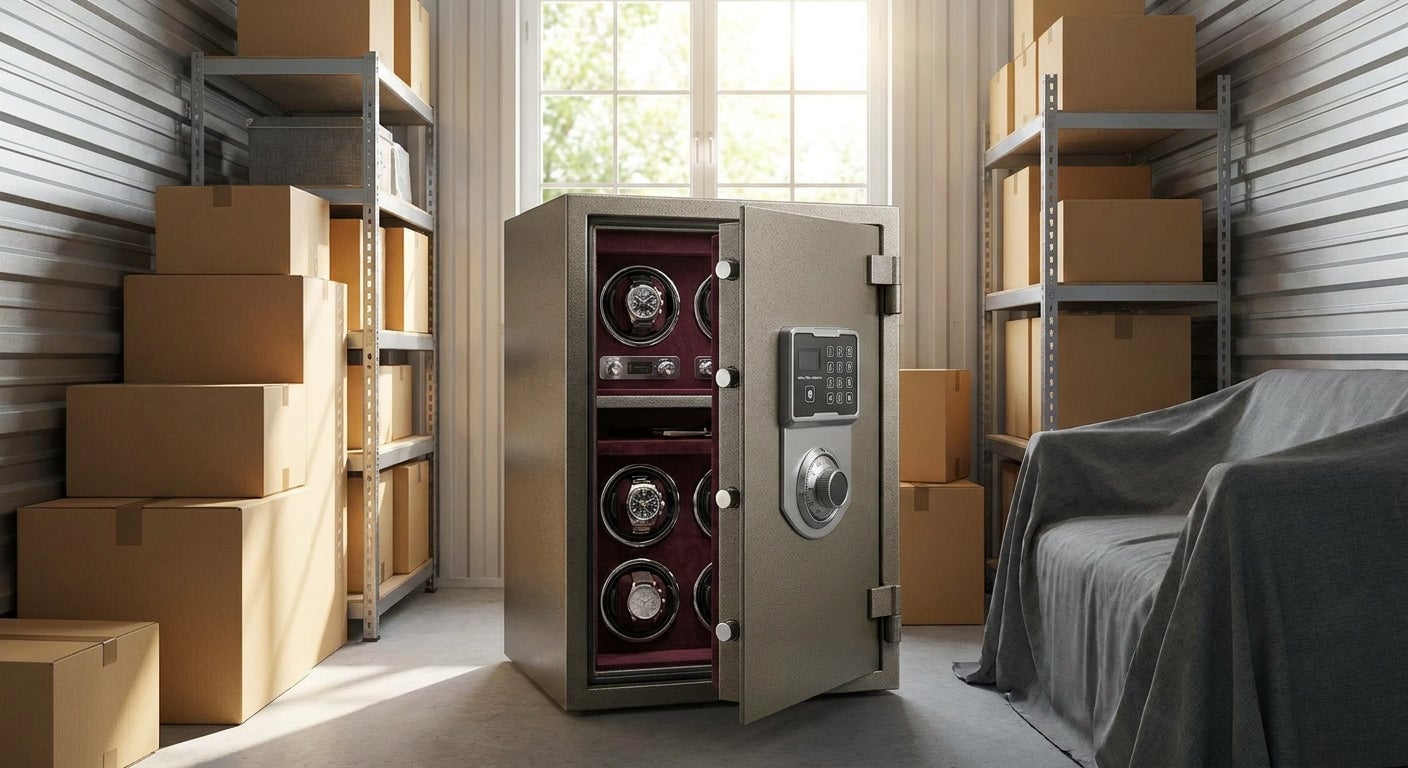
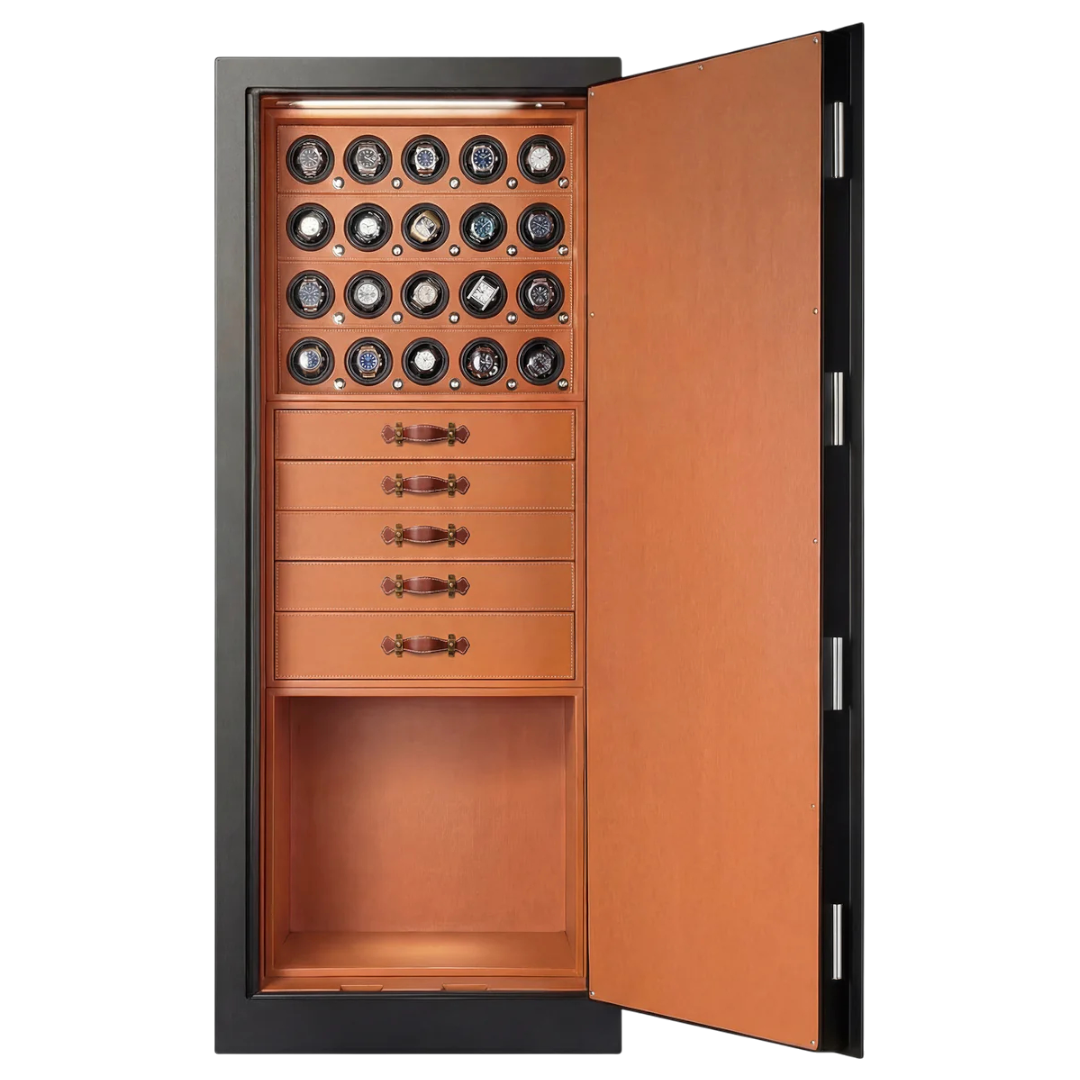
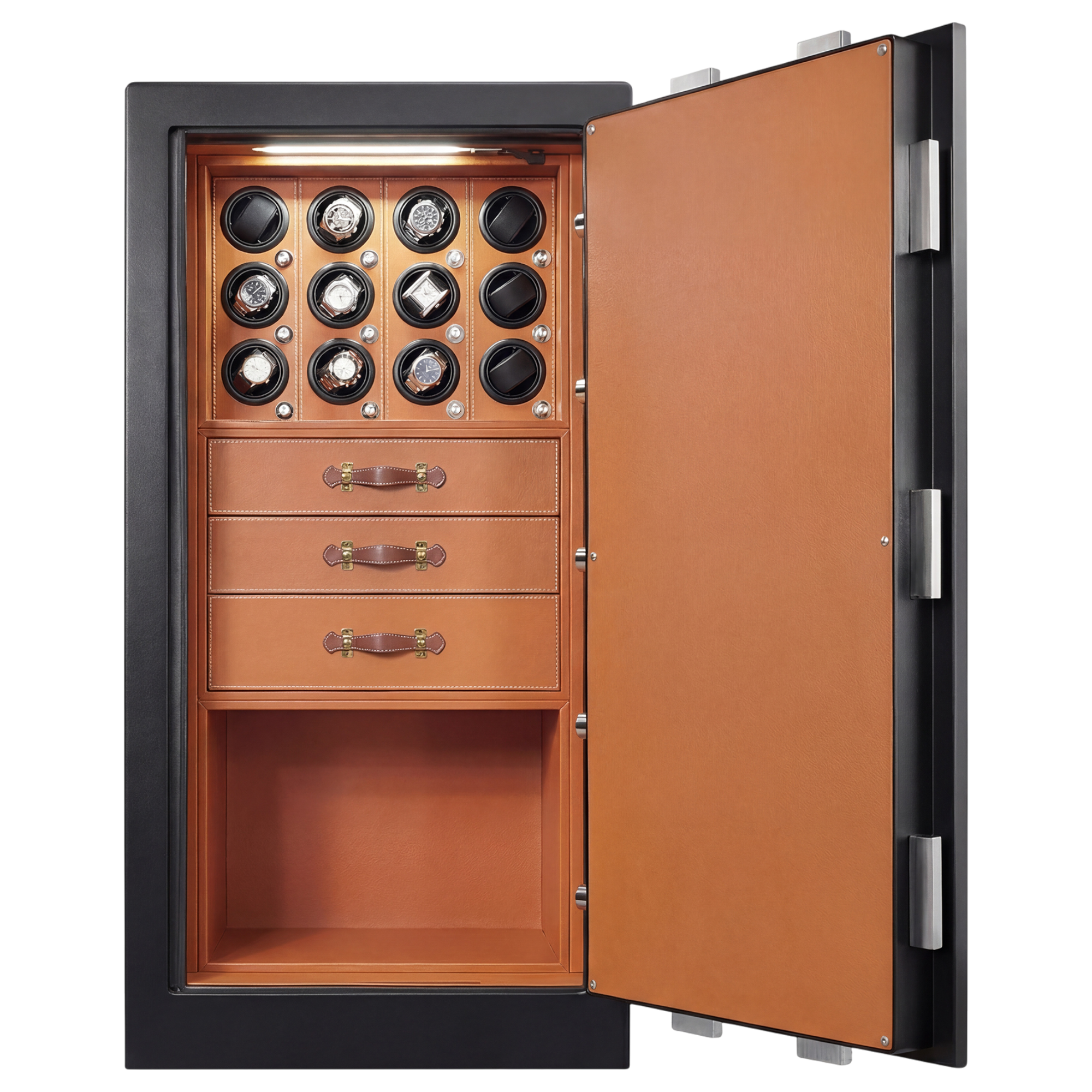
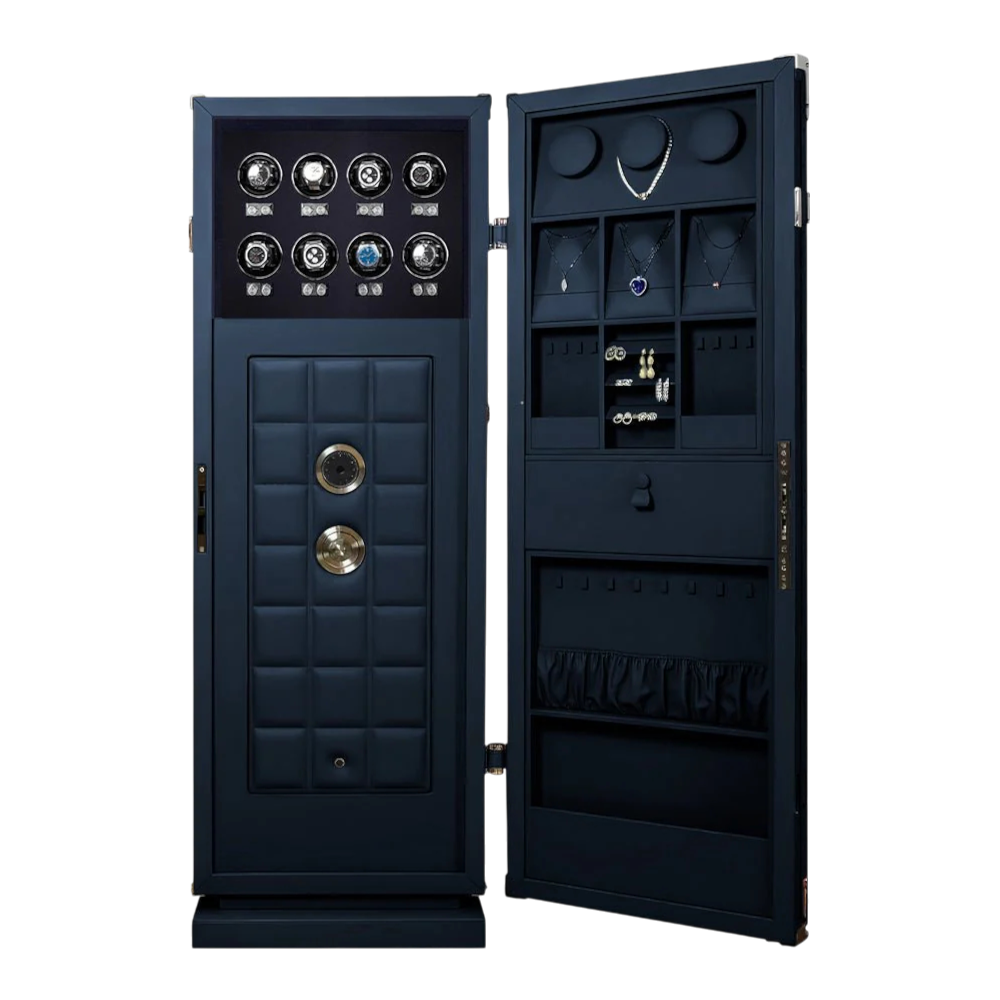
Enigwatch’s watch safes combine integrated winding rotors with certified fire-resistant, bulletproof glass and biometric access. For collectors holding Cartier alongside other high-value brands, the safe makes particular sense — every piece stays wound and secured simultaneously. See our watch safe buying guide for help choosing.
Veron Elite 20 — 20-watch capacity, individually programmable winding rotors, biometric and key access, fire and impact certified.
Titan Sanctum 20 — same 20-watch capacity with heavier gauge steel and Macassar Ebony finish. Production lead time 4-8 weeks with freight delivery.
Centennial Bulletproof Watch Safe — ballistic-rated glass, 12 winding rotors. Production lead time 4-8 weeks. Lifetime warranty on all three, with other components covered for 2 years against manufacturing defects.
Frequently Asked Questions
Does the Cartier Tank need a watch winder? Most Cartier Tank variants — including the Tank Must, Tank Solo, and Tank Louis Cartier — are quartz movements and do not require a winder. Only automatic Tank variants need winding. Check your dial or caseback for “Automatic” or “Automatique” to confirm your movement type.
What TPD should I use for a Cartier Santos? 650 TPD, bidirectional. The Santos de Cartier uses the Cal. 1847 MC with a 42-hour power reserve — 650 TPD maintains it fully without unnecessary rotor wear.
What TPD should I use for a Cartier Ballon Bleu? 650 TPD, bidirectional. The automatic Ballon Bleu uses the Cal. 1847 MC, same as the Santos. 650 TPD is the correct setting.
Does the Santos-Dumont need a winder? No. The Santos-Dumont uses a manual-wind Cal. 430 MC movement with no rotor. It must be wound by hand. Do not place it on an automatic winder.
How do I know if my Cartier is automatic or quartz? Check the dial — automatic Cartier watches typically read “Automatic” or “Automatique” below the brand name. Quartz models are often thinner and lighter. If you have the original documentation, the reference number will also confirm the movement type.
How does a Cartier winder setup compare to other luxury brands? Cartier and Omega share the same 650 TPD bidirectional requirement for their core automatic movements. The key difference with Cartier is that many of their iconic models are quartz — always confirm movement type before winding. See our Omega winder settings guide, Tag Heuer winder settings guide, and AP winder settings guide for direct comparisons.
Is a winder safe for a Cartier watch? Yes — modern Cartier automatic movements have a slipping mainspring that prevents overwinding. At 650 TPD bidirectional, a quality winder will not damage the movement. Ensure the pillow supports the case correctly without pressure on the bezel or crystal.
Protect Your Watch Collection
Designed for collectors who demand the best. Explore our premium watch winders and luxury safes.
Protect Your Watch Collection
Designed for collectors who demand the best. Explore our premium watch winders and luxury safes.