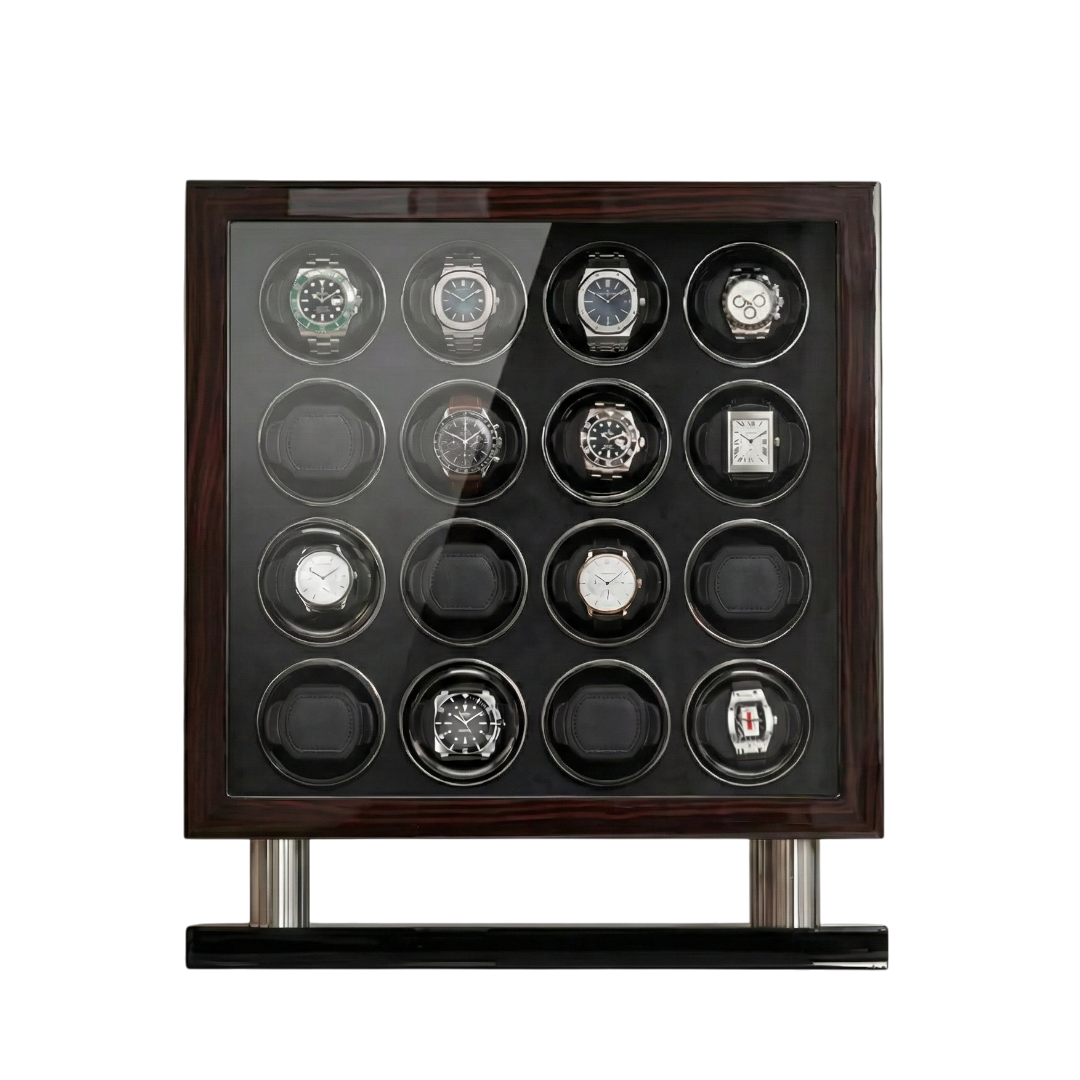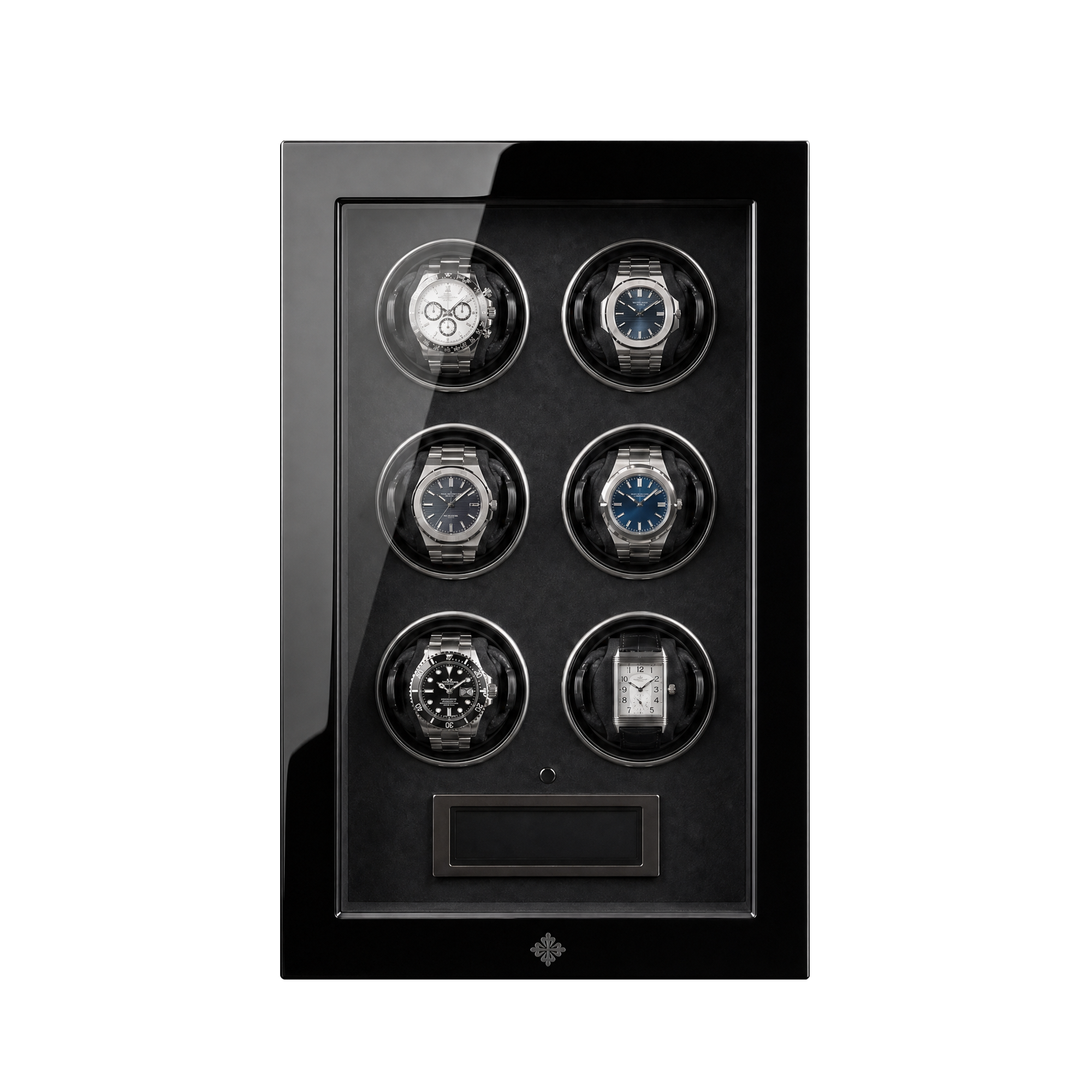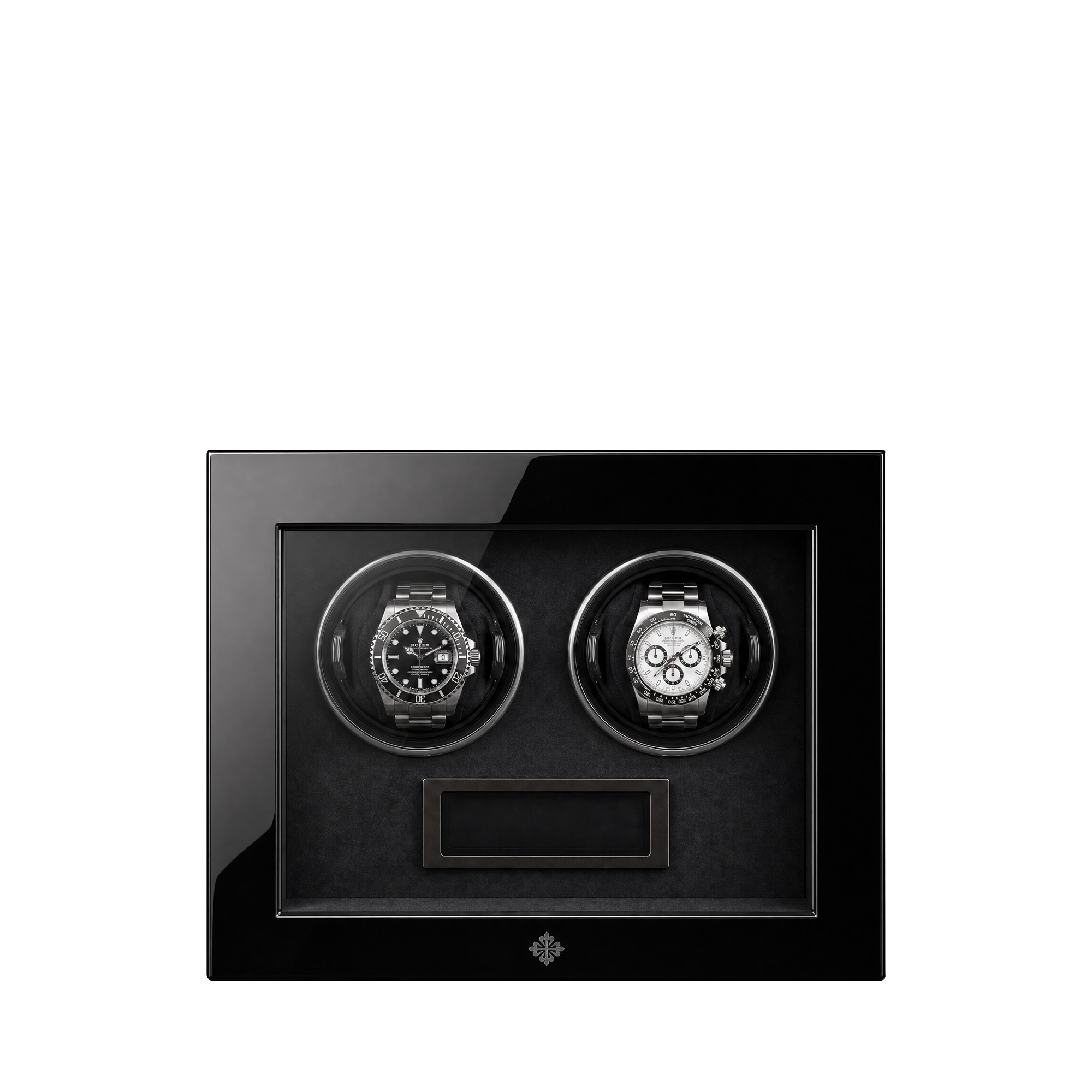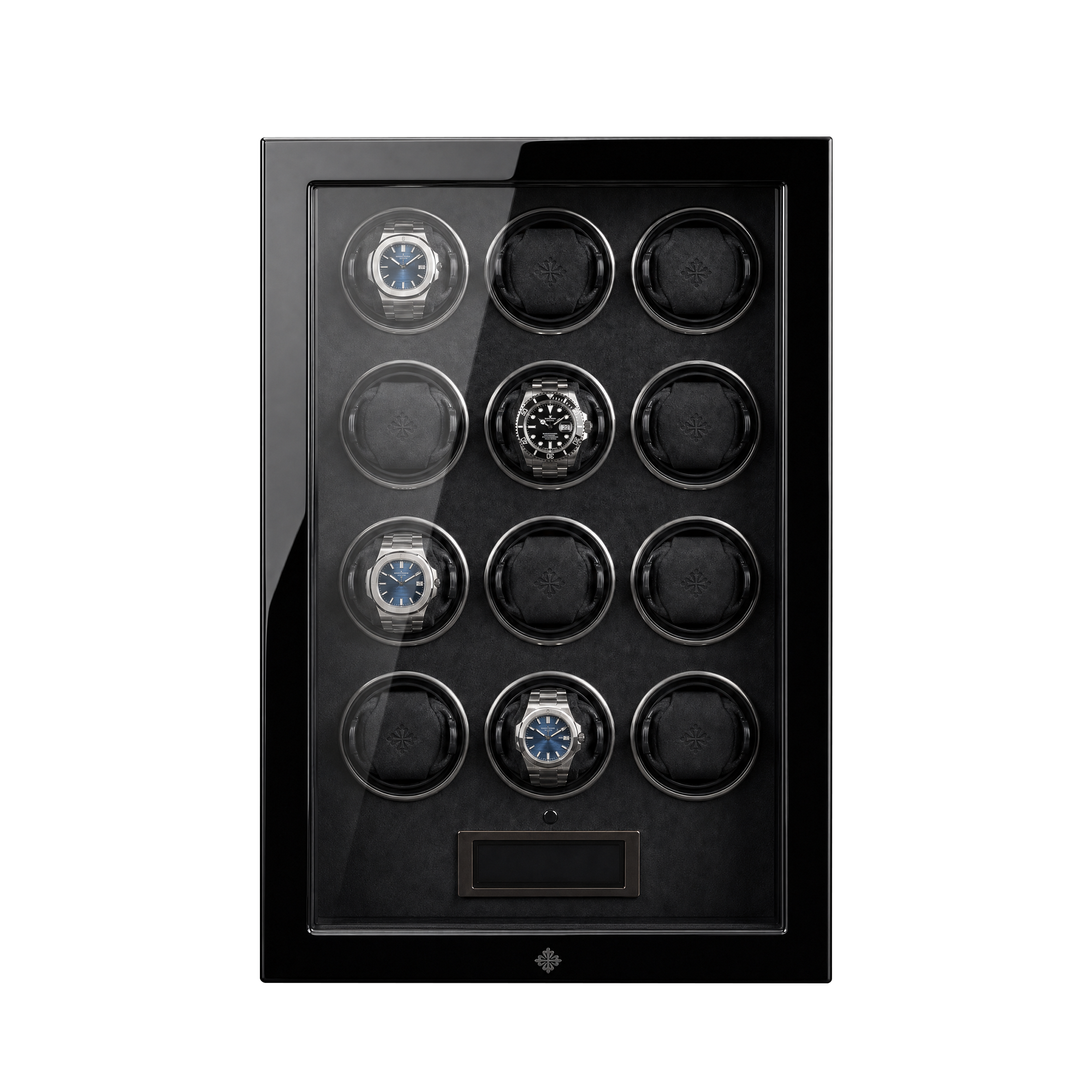

The Vacheron Constantin Patrimony pairs an ultra-thin case with a movement built for restraint, not brute-force winding, and matching it to a winder for Vacheron Constantin Patrimony means dialing in low turns-per-day settings and a motor quiet enough for a bedroom dresser.
- A watch winder for Vacheron Constantin Patrimony needs 650-950 TPD and bidirectional rotation to match the caliber’s micro-rotor winding system.
- Single winders with silent Japanese Mabuchi motors are the safe pick for one Patrimony; cabinet units suit collectors pairing it with other Vacheron pieces.
- Avoid any winder rated above 900 TPD as a default setting or missing a TPD adjustment dial entirely.
- Enigwatch’s high-end winders run Alcantara-lined pillows sized for slim dress cases, priced from roughly $5,000 in 2026.
Why this matters
The Patrimony's thin profile comes from a movement built to run efficiently, not endure aggressive winding cycles. A generic winder set to a high default TPD, or one with a single fixed program, works against that engineering rather than with it.
Get the rotation wrong and you either under-wind the mainspring on rest days or force the automatic module through more revolutions than the caliber needs. Neither ruins the watch overnight. Both add avoidable wear over years of daily use.
Who this is for
This guide is for owners of a Vacheron Constantin Patrimony, whether the 40mm or 42.5mm case, who want the piece running true between wears rather than reset and re-dated every time it comes out of a drawer. It also applies to collectors adding a Patrimony to a mixed dress-watch rotation alongside other slim automatics.
What to look for in a watch winder for Vacheron Constantin Patrimony
Turns per day matched to the caliber
Vacheron Constantin's slim automatic calibers, including the micro-rotor movements found across the Patrimony line, are built around lower winding thresholds than a sport watch with a full oscillating rotor. Look for a winder with a TPD range between 650 and 950, adjustable in fine increments rather than three broad presets. A full Vacheron Constantin winder settings reference is worth checking before you set the first cycle.
Bidirectional rotation
The self-winding module in a Patrimony winds in both directions, so a winder locked to clockwise-only rotation leaves half the winding mechanism idle. Bidirectional or alternating programs keep the automatic module engaged the way it would be on a wrist in daily motion.
Motor quietness and vibration control
A Patrimony usually sits on a nightstand or dresser, not in a display case across the room. A motor audible from six feet away defeats the point. Enigwatch builds its winders around Japanese Mabuchi motors, chosen specifically for low-decibel operation and minimal vibration transfer through the case.
Motor and drive quality
Not every winder motor is built to the same tolerance. Japanese vs Swiss motor types explains the practical difference in torque consistency and long-term reliability, which matters more for a delicate micro-rotor caliber than for a robust sport movement.
Pillow fit for a slim case
The Patrimony's thin case and low-profile bracelet or strap need a pillow sized to hold the watch snugly without pressure on the case back or crown. Oversized pillows built for chunkier sport watches let a slim dress piece shift during rotation, which can stress the strap lugs over months of use.
Finish that matches the piece
A Patrimony owner is buying into restraint and material quality, and the winder sitting next to it should read the same way. Alcantara or Nappa leather interiors, exotic wood veneers, and matte finishes suit the watch's understated case far better than a glossy display box built for a diver.
Top picks for a Patrimony owner
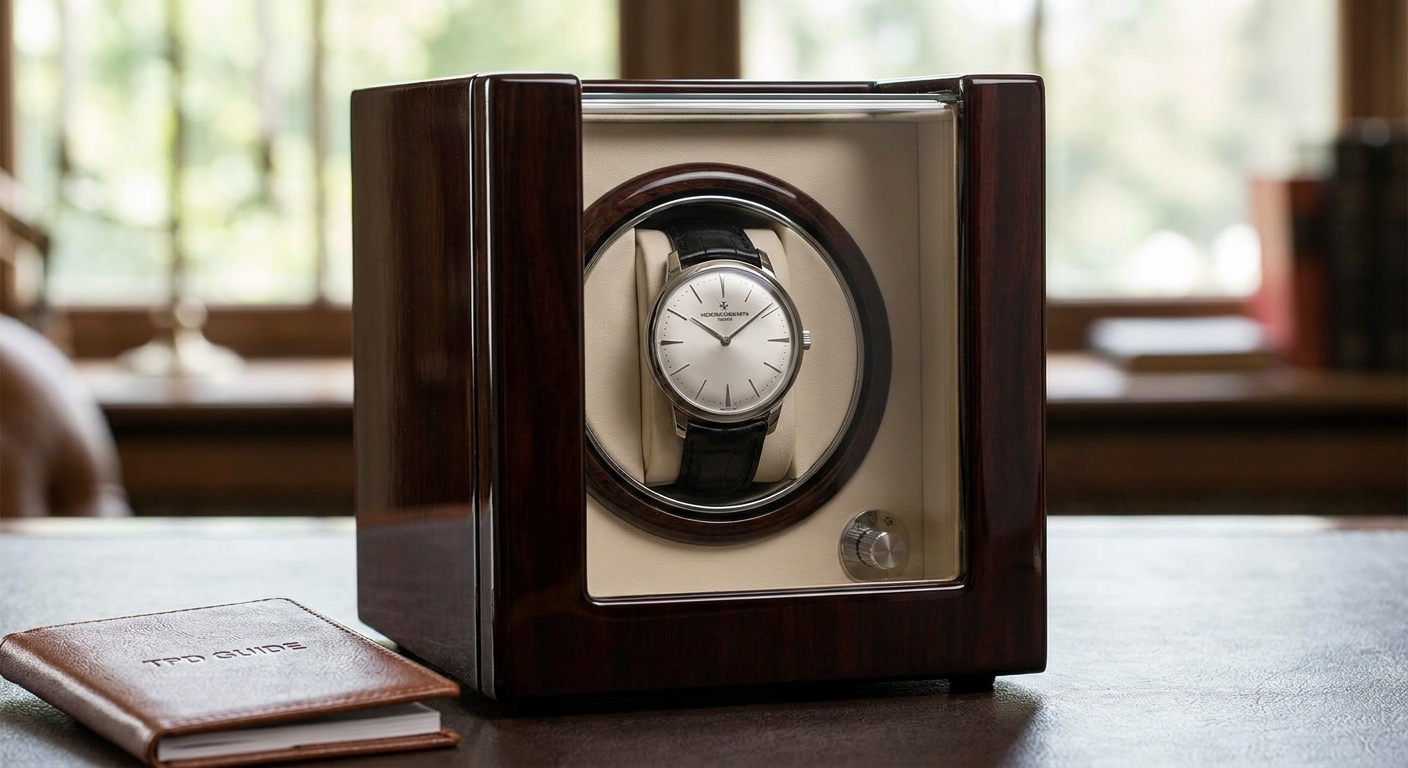
The quiet single winder — the safe pick for one Patrimony. Look for a single-slot unit with adjustable TPD down to the 650 range and a Mabuchi motor rated for continuous quiet operation. Verdict: Buy if the Patrimony is your only automatic in daily rotation.
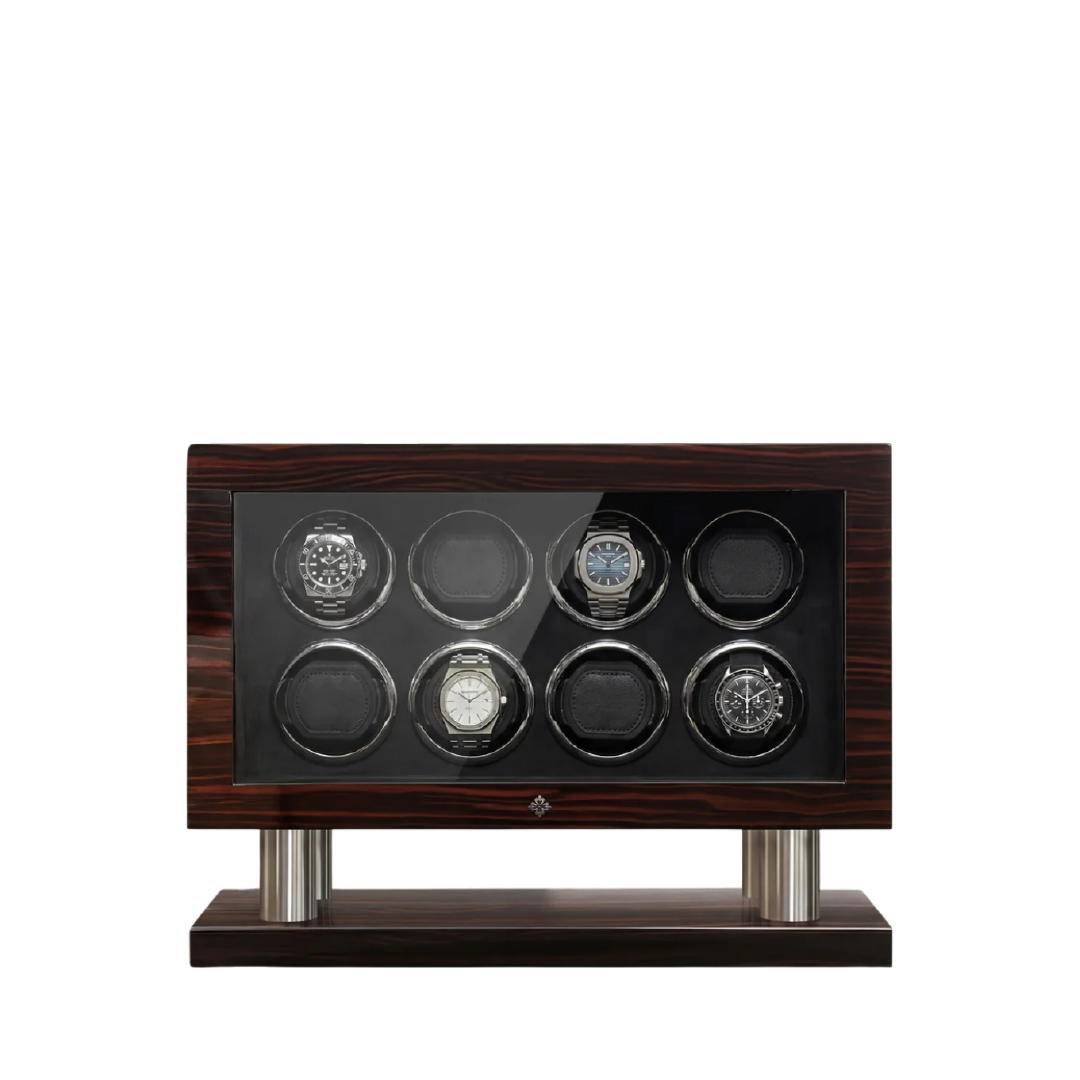
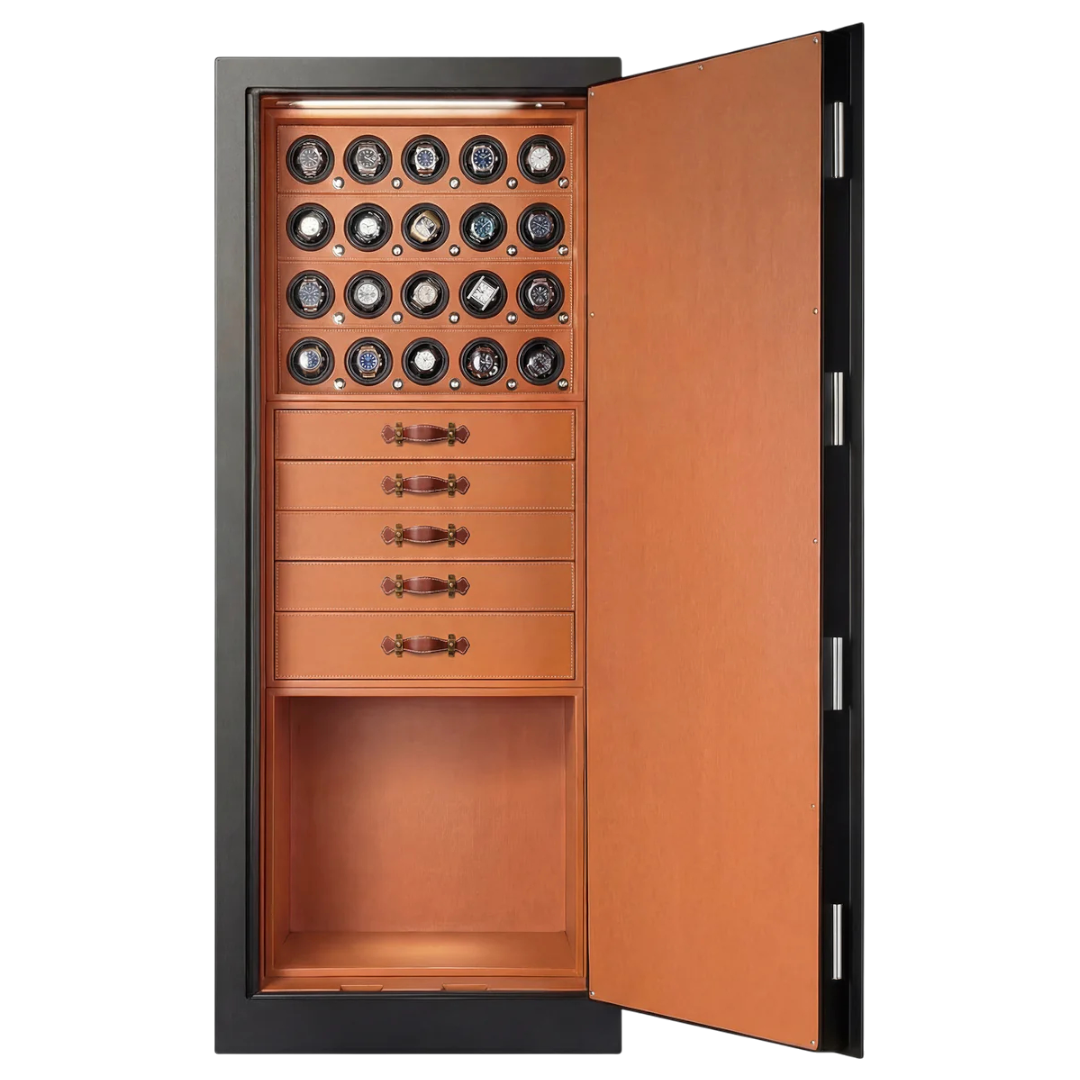
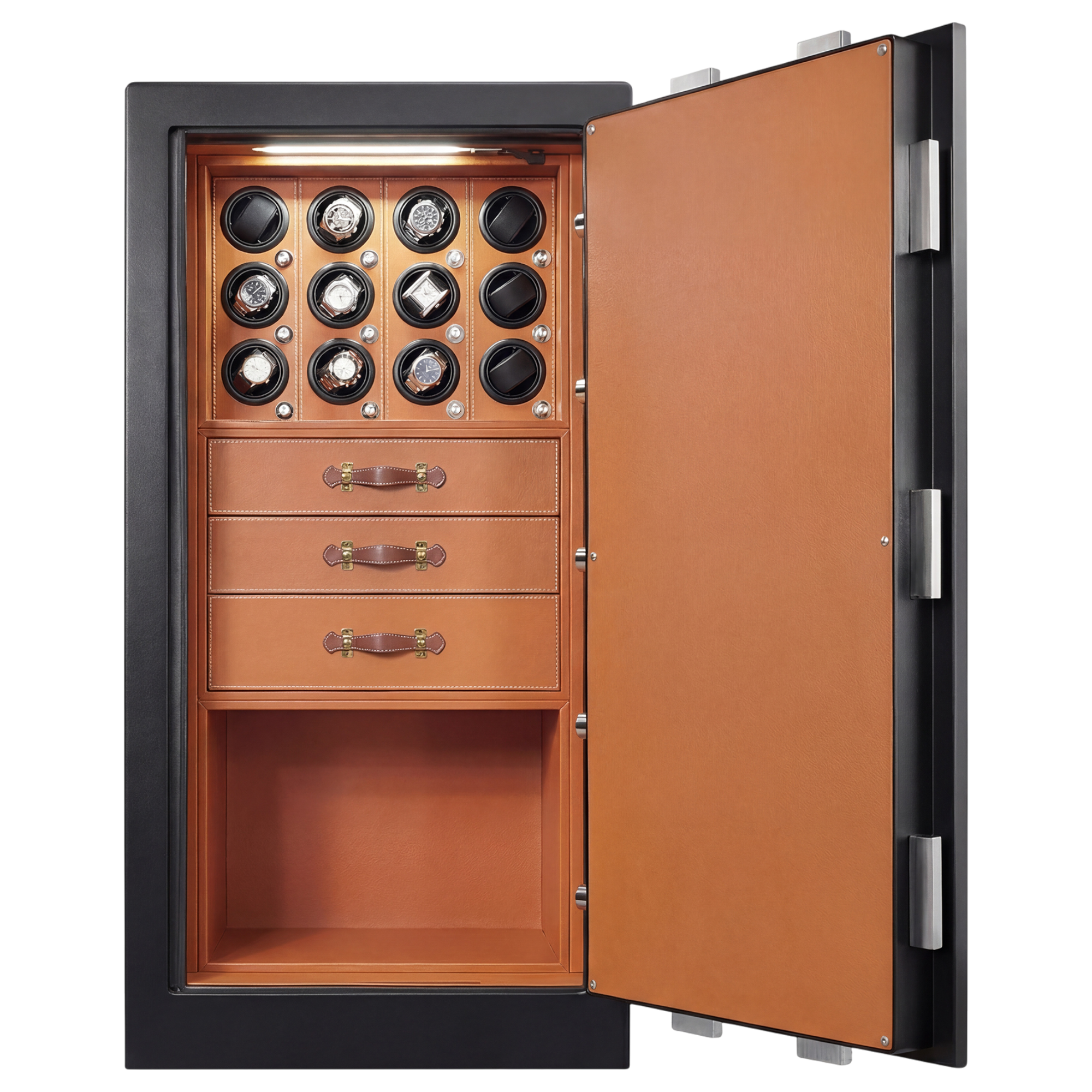
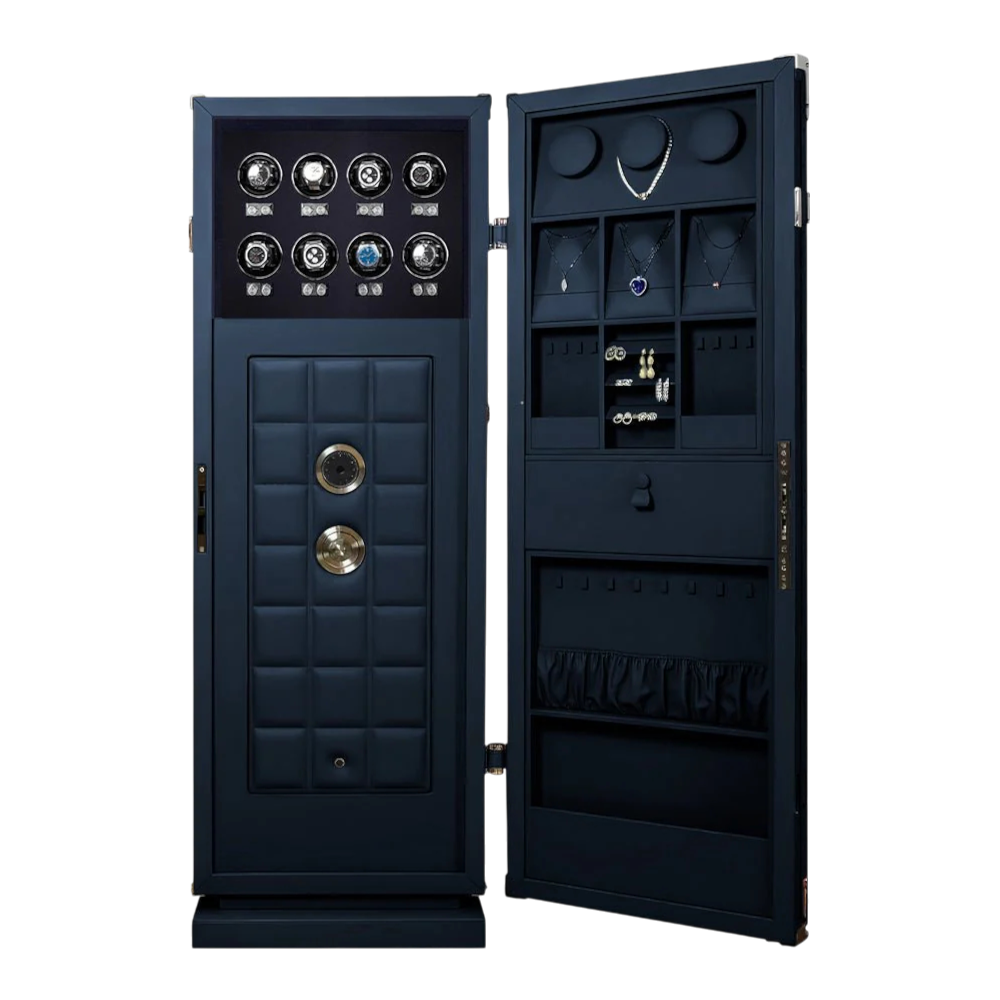
The serious collector's cabinet — the pick for anyone pairing the Patrimony with other Vacheron Constantin or Jaeger-LeCoultre pieces. A high-end watch winder for serious collectors gives each watch its own program instead of forcing a shared default across an entire collection. Verdict: Buy for collections of four watches or more.
The budget dual-purpose winder — the wildcard. Entry-level double winders sometimes advertise wide TPD ranges but ship with fixed programs and louder gear-driven motors. Fine for a robust sport watch. Riskier for a slim dress caliber that benefits from precision, not power. Verdict: Consider only if the TPD floor genuinely reaches down near 650 and the spec sheet confirms a quiet motor.
Find the right winder for your Patrimony
Match TPD, motor type, and finish to a single-caliber dress watch.
What to avoid
- High-default winders built for dive watches. Anything defaulting above 900 TPD with no adjustment is engineered for a robust sport caliber, not a slim micro-rotor movement.
- Foam or velvet-only pillows with no cushion adjustment. These look fine in photos but let a light, thin-cased Patrimony rattle slightly during rotation cycles.
- Unidirectional-only programs. If the winder only turns one way, it's not built for a watch whose winding module works in both directions.
Verdict comparison
| Criteria | Quiet single winder | Serious collector's cabinet | Budget dual-purpose |
|---|---|---|---|
| TPD range | 650-950, adjustable | 650-950 per slot | Often fixed, 3 presets |
| Motor | Japanese Mabuchi | Japanese Mabuchi | Varies, often louder gear-driven |
| Bidirectional | Yes | Yes | Sometimes |
| Interior finish | Leather or Alcantara | Alcantara, exotic veneer options | Basic foam |
| Verdict | Buy | Buy | Consider |
FAQ
What TPD should I use for a Vacheron Constantin Patrimony?
Set the winder between 650 and 950 turns per day, matching the low-power-consumption design of the Patrimony’s micro-rotor caliber. Going higher than 950 as a default offers no benefit and adds unnecessary wear over years of use.
Does the Patrimony need bidirectional rotation?
Yes. The self-winding module winds in both directions on the wrist, so a bidirectional or alternating program keeps the full winding mechanism engaged rather than leaving half of it idle.
Is a single winder or a cabinet better for one Patrimony?
A single winder is the better fit if the Patrimony is your only automatic in rotation. A cabinet only makes sense once you’re storing and winding three or more pieces together.
How much does a luxury watch winder cost in 2026?
Enigwatch’s luxury winders range from roughly $5,000 to over $21,000 in 2026, depending on slot count, motor configuration, and interior materials like Alcantara or exotic wood veneer.
Can a loud winder damage a Patrimony?
Noise itself doesn’t damage the movement, but vibration transfer from a poorly built motor can add stress to a slim case over months of continuous cycling. A quiet, low-vibration motor like Japanese Mabuchi reduces that risk.
What happens if I set the TPD too high?
Setting TPD above what the caliber calls for forces the automatic module through more winding cycles than it experiences on the wrist, which adds avoidable long-term wear without improving timekeeping.
Do I need a winder if I wear the Patrimony daily?
No. A winder is for periods the watch sits unworn. If you wear it daily, hand-setting the time and date after a few days off the wrist takes under a minute.
One last thing
The detail most Patrimony owners miss isn't the TPD number, it's the pillow diameter. A slim 40mm case sitting in a pillow built for a 44mm diver shifts slightly with every rotation cycle, and that small movement against the crown adds up over a year of daily use in ways a wrong TPD setting never will.
Related guides
Protect Your Watch Collection
Designed for collectors who demand the best. Explore our premium watch winders and luxury safes.