

Vacheron Constantin movements are among the most mechanically intricate in the world — and a winder that gets the TPD or rotation direction wrong is worse than no winder at all. This guide covers the best watch winders for Vacheron Constantin in 2026, matched to the brand’s actual movement specifications.
TL;DR: The best watch winder for Vacheron Constantin in 2026 runs bidirectional rotation at 650–900 TPD and operates below 35 dB. Enigwatch’s Impresario and Virtuoso series meet those specs with individually programmable motors, making them the strongest match for Vacheron’s Calibre 2460, 3200, and Overseas-family movements. If you own more than two Vacheron pieces, the Impresario Series 6 is the clearest pick.
Why This Matters
Vacheron Constantin specifies bidirectional winding for virtually every current automatic calibre. Most entry-level winders default to clockwise-only, which means the rotor never completes a full winding cycle on a VC movement. Over weeks, the mainspring runs progressively shorter. The watch doesn’t stop — it just loses chronometric precision, which on a watch priced above $15,000 is unacceptable. In 2026, the winder market is flooded with options that look correct on spec sheets but lack per-slot programmability. That single detail separates a safe choice from a risky one for Vacheron owners.
How We Ranked
Each winder below was evaluated against four criteria specific to Vacheron Constantin ownership:
- TPD range: Must cover 650–900 TPD, Vacheron’s documented sweet spot for most automatic calibres
- Rotation direction: Must support bidirectional (CW + CCW) per slot
- Noise floor: Must operate below 40 dB to suit study or bedroom placement — where a $20,000+ watch typically lives
- Fit: Winding cup must accommodate Vacheron case sizes, including the 42.5 mm Overseas and the slim Patrimony case
Winders that fail any of the first two criteria do not appear on this list regardless of price or brand recognition.
The Ranked List
1. Impresario Series 6 — The Collector’s Default
Buy.
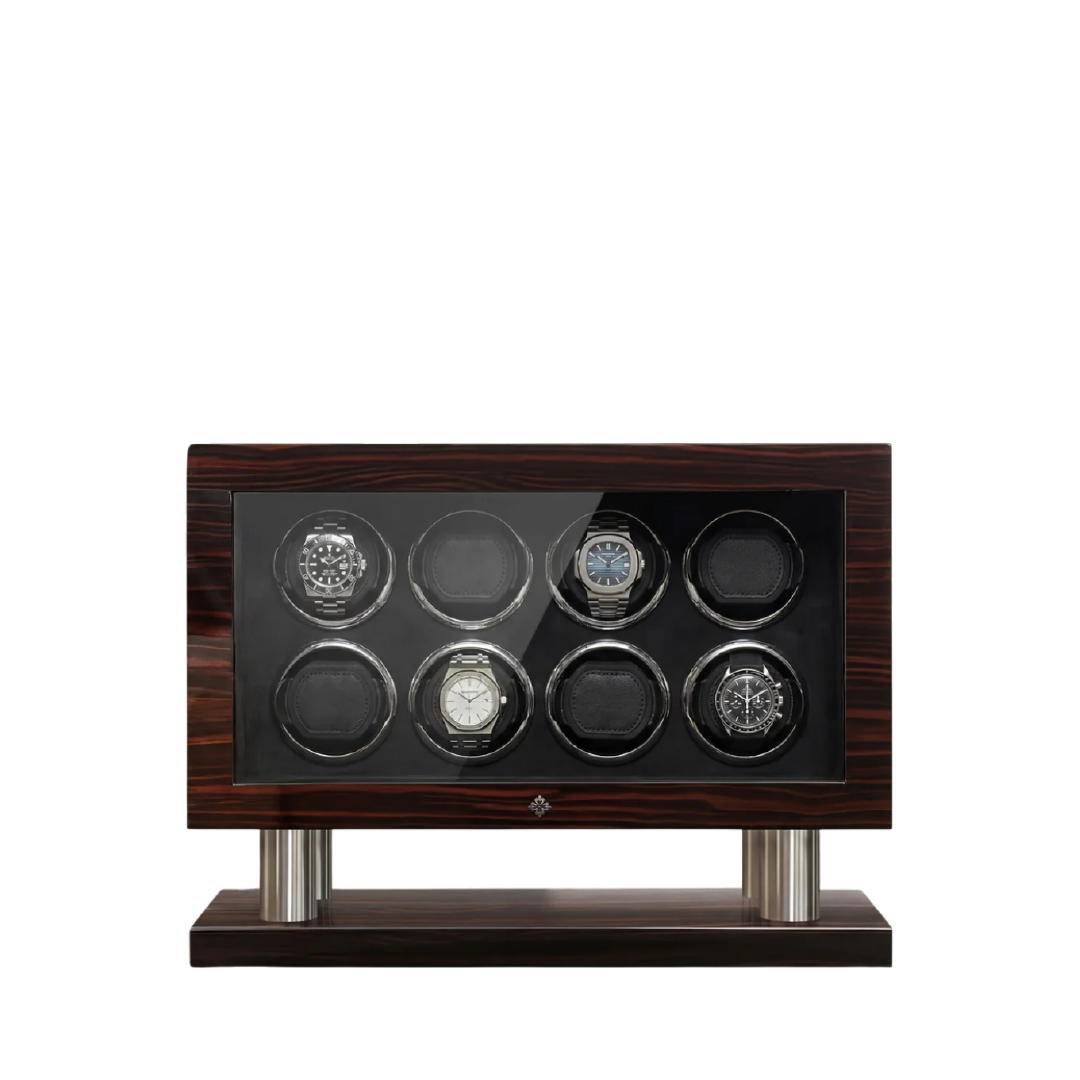
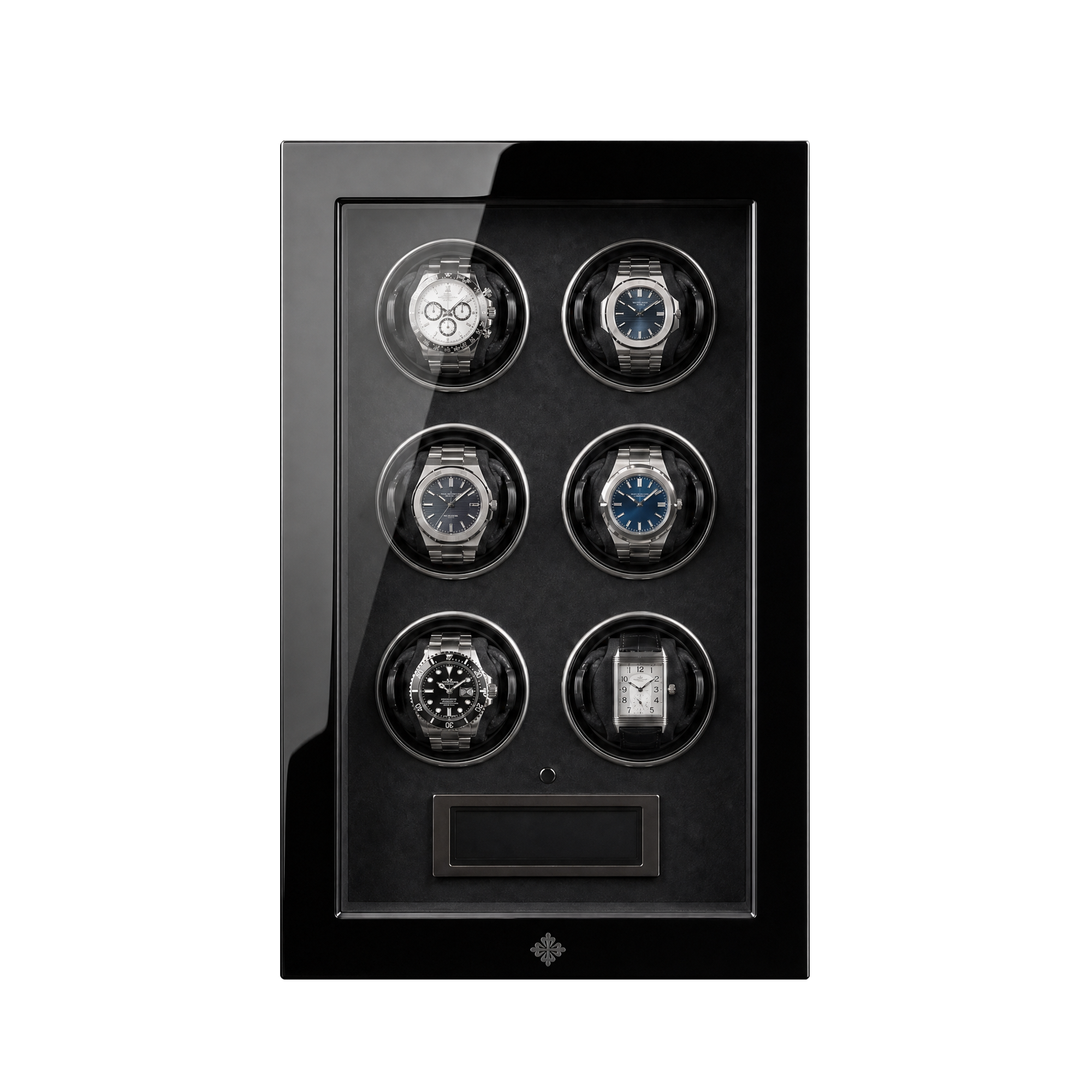
The Impresario Series 6 runs six independently programmable motors, each configurable for CW, CCW, or bidirectional rotation at TPD settings across the full 100–1,950 TPD range. For a Vacheron Overseas Chronograph sitting alongside a Patrimony and a FiftySix, each movement gets its own programme — no compromise winding shared across the cabinet.
Noise output sits below 35 dB in standard operation. The interior accommodates case diameters up to 57 mm, so even the 42.5 mm Overseas with a thick bracelet seats without force. The cabinet finish is available in options that match the aesthetic register of a Vacheron display environment.
In 2026, this is the unit to buy if you own three or more Vacheron pieces or plan to add to the collection. The per-motor independence is not a luxury feature here — it is the functional requirement.
2. Impresario Series 2 — The Precise Pair
Buy.
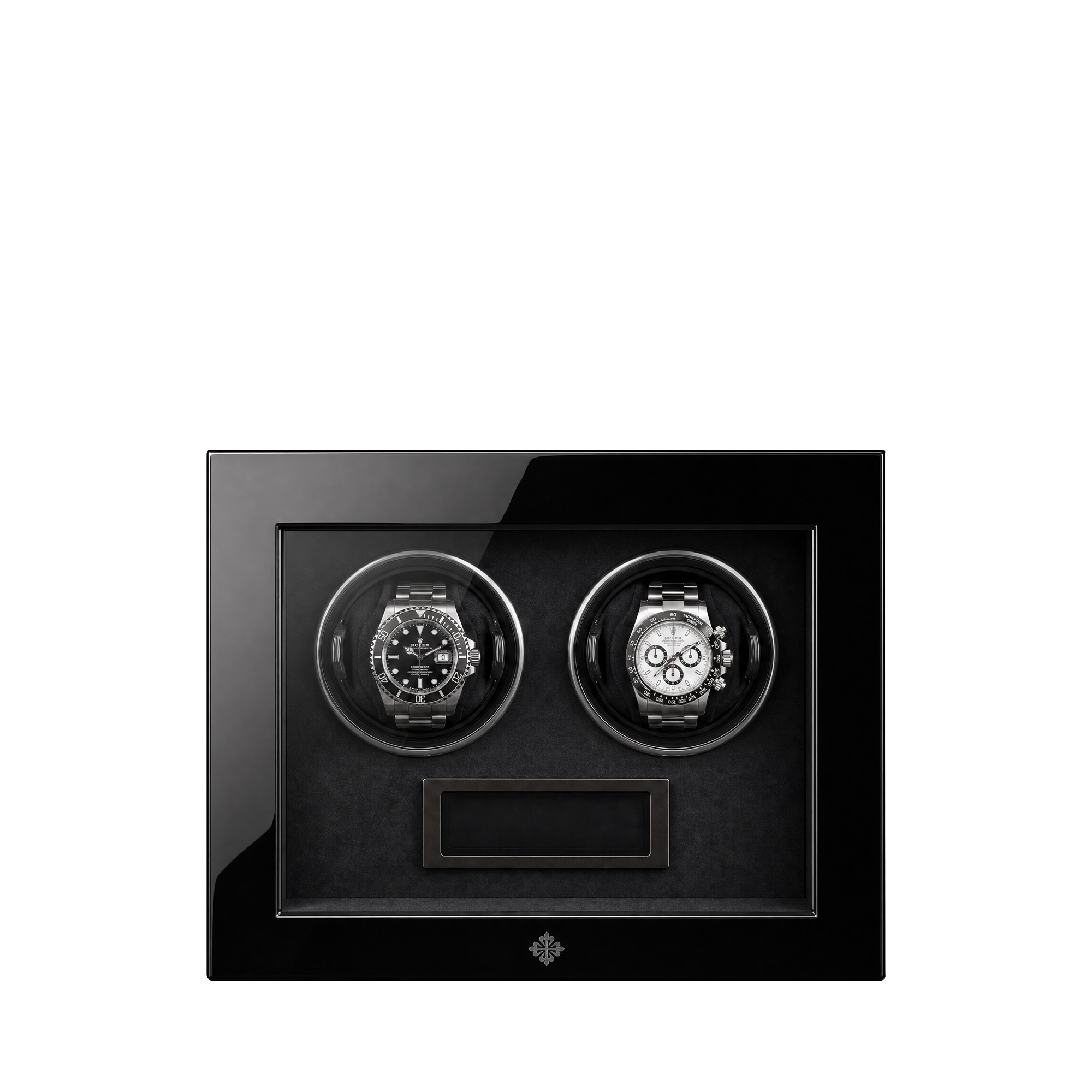
For owners of one or two Vacheron Constantin watches, the Impresario Series 2 delivers the same motor specification as the Series 6 in a smaller footprint. Both motors are independently programmable, bidirectional, and cover the TPD range that Vacheron movements require.
This is the right unit for the collector who keeps a daily-wear Overseas and a special-occasion Patrimony. Two dedicated programmes, zero shared settings. At its size, it fits a desk or a shelf without dominating the room.
Verdict: Buy for the 1–2 Vacheron collector who does not want to pay for unused capacity.
3. Virtuoso Series 6 — The Quiet Alternative
Consider.
The Virtuoso Series 6 prioritises acoustic performance. If the winder sits in a bedroom within two metres of where you sleep, noise matters more than it does in a study or safe room. The Virtuoso motors are engineered to run quieter than the Impresario line while still hitting bidirectional rotation and the required TPD window.
The trade-off is a slightly more restrained feature set — the Virtuoso Series 6 is the right choice when silence is the primary constraint, not when maximum programmability is. For Vacheron movements that run standard TPD requirements (Calibre 2460, 3200 family), it performs identically to the Impresario in practice.
Verdict: Consider if bedroom placement and noise are the deciding factor.
4. Impresario Series 12 — The Full Collection Unit
Hold.
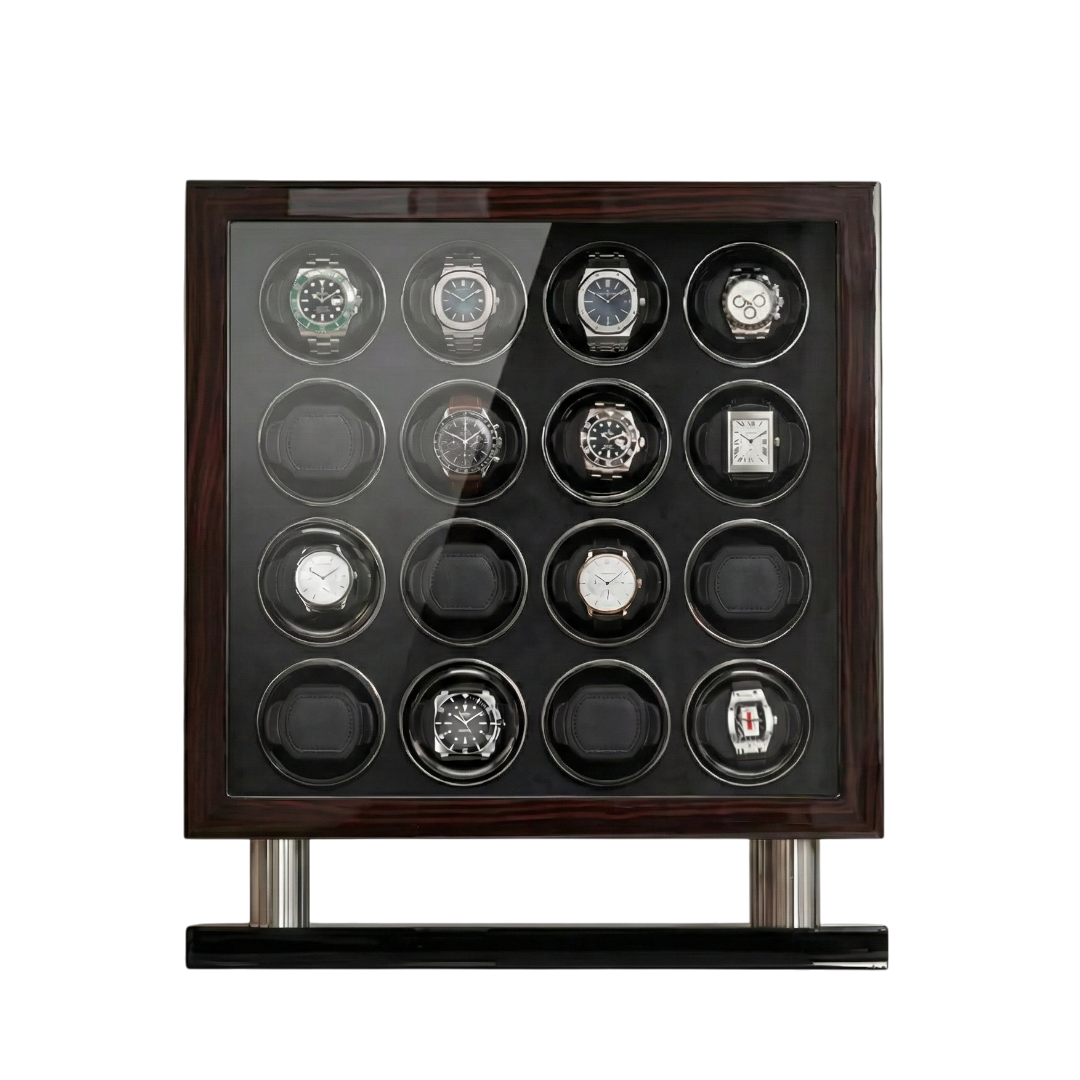
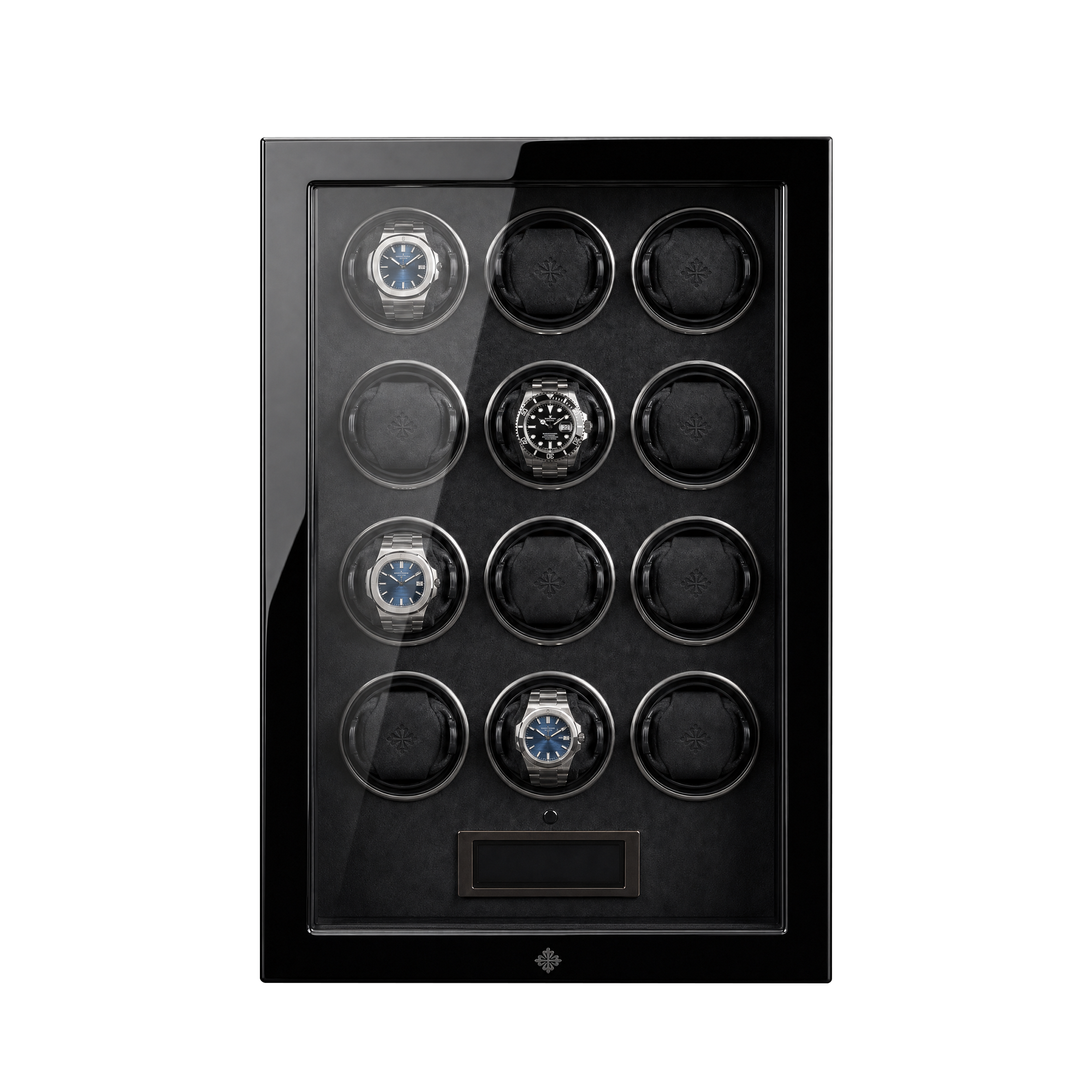
The Impresario Series 12 runs 12 independent motors with the same per-slot programmability as the Series 6. If you own six or more automatic watches — Vacheron pieces alongside Patek, AP, or Rolex — this is the logical single-cabinet solution. Every motor runs its own direction and TPD profile.
For a collector whose entire collection is Vacheron, 12 slots is likely excess in 2026. Hold unless the collection already numbers six-plus pieces or you are actively expanding.
5. Virtuoso Series 12 — The Quiet Large Cabinet
Hold.
The Virtuoso Series 12 mirrors the Impresario Series 12 in capacity but applies the Virtuoso acoustic profile. Same reasoning applies: right for large mixed collections in noise-sensitive rooms, excess capacity for most Vacheron-focused buyers in 2026.
Verdict: Hold unless capacity justifies the step up.
Comparison Table
| Winder | Slots | Bidirectional | TPD Range | Best For | Verdict |
|---|---|---|---|---|---|
| Impresario Series 6 | 6 | Yes, per slot | 100–1,950 | 3–6 VC pieces | Buy |
| Impresario Series 2 | 2 | Yes, per slot | 100–1,950 | 1–2 VC pieces | Buy |
| Virtuoso Series 6 | 6 | Yes, per slot | Full range | Bedroom placement | Consider |
| Impresario Series 12 | 12 | Yes, per slot | 100–1,950 | 6+ piece collections | Hold |
| Virtuoso Series 12 | 12 | Yes, per slot | Full range | Large, quiet rooms | Hold |
What to Avoid
Clockwise-only winders. Any winder without a bidirectional mode is incompatible with Vacheron’s automatic calibres. This eliminates the majority of sub-$100 units and many mid-range ones. Check the spec sheet before buying — if “bidirectional” does not appear, skip it.
Single-programme cabinets. Multi-slot winders that share one programme across all motors force you to pick a single TPD and direction for every watch. A Vacheron Overseas and a Vacheron Tourbillon have different service needs. A shared programme serves neither correctly.
Winders with interior diameters under 50 mm. The Vacheron Overseas family runs to 42.5 mm case diameter with a substantial integrated bracelet. Tight winding cups scratch the case, stress the crown, or simply don’t close properly. Always confirm the cup diameter before purchasing.
Where to Buy
- Direct from Enigwatch: Full model range, current 2026 stock, with shipping insurance available at checkout. White glove delivery is offered for cabinet-size units.
- Verify the seller’s return policy: Winders for $15,000+ watches should come with a minimum 30-day return window. If a seller won’t accept a return on an unwound unit, that is a signal.
- Avoid marketplace listings without manufacturer warranty documentation. Motor failures on a cheap third-party unit inside a closed cabinet can go unnoticed for weeks — long enough for a Vacheron movement to run dry.
FAQ
What TPD does a Vacheron Constantin watch need in a winder?
Most Vacheron automatic calibres wind correctly at 650–900 TPD. The Calibre 2460 and the Overseas movement family both fall within this range. Setting above 1,000 TPD is unnecessary and adds no benefit.
Does a Vacheron Constantin need bidirectional winding?
Yes. Virtually all current Vacheron automatic movements wind in both directions. A clockwise-only winder will partially wind the movement but will not complete a full cycle, resulting in gradual timekeeping degradation.
Is the Impresario Series 6 good for Vacheron Constantin?
Yes. Its per-motor programmability, bidirectional capability, and TPD range that covers 100–1,950 make it the strongest multi-watch match for Vacheron’s current calibre lineup in 2026.
Can I use the same winder for Vacheron and Rolex?
Yes, provided each motor is independently programmable. A Rolex Submariner requires 650–800 TPD clockwise-only, while Vacheron needs bidirectional. A shared-programme winder cannot serve both correctly. The Impresario Series 6 handles both with separate motor settings.
How quiet should a watch winder be for a Vacheron Constantin?
Below 40 dB is the practical ceiling for bedroom placement. The Enigwatch Virtuoso series is designed specifically for sub-35 dB operation. The watch winder noise guide covers this in more detail.
What happens if I use the wrong TPD setting on a Vacheron?
Too few TPD and the mainspring runs short, affecting accuracy. Too many TPD adds unnecessary wear to the rotor and winding mechanism over time. Neither is catastrophic short-term, but both matter on a watch this valuable over months of continuous winding.
Can I wind a Vacheron Overseas Chronograph in a standard winder?
Yes, as long as the winding cup clears a 42.5 mm case with bracelet attached. Confirm interior cup diameter before buying. The Impresario and Virtuoso series accommodate this size.
Do I need a winder safe for a Vacheron Constantin collection?
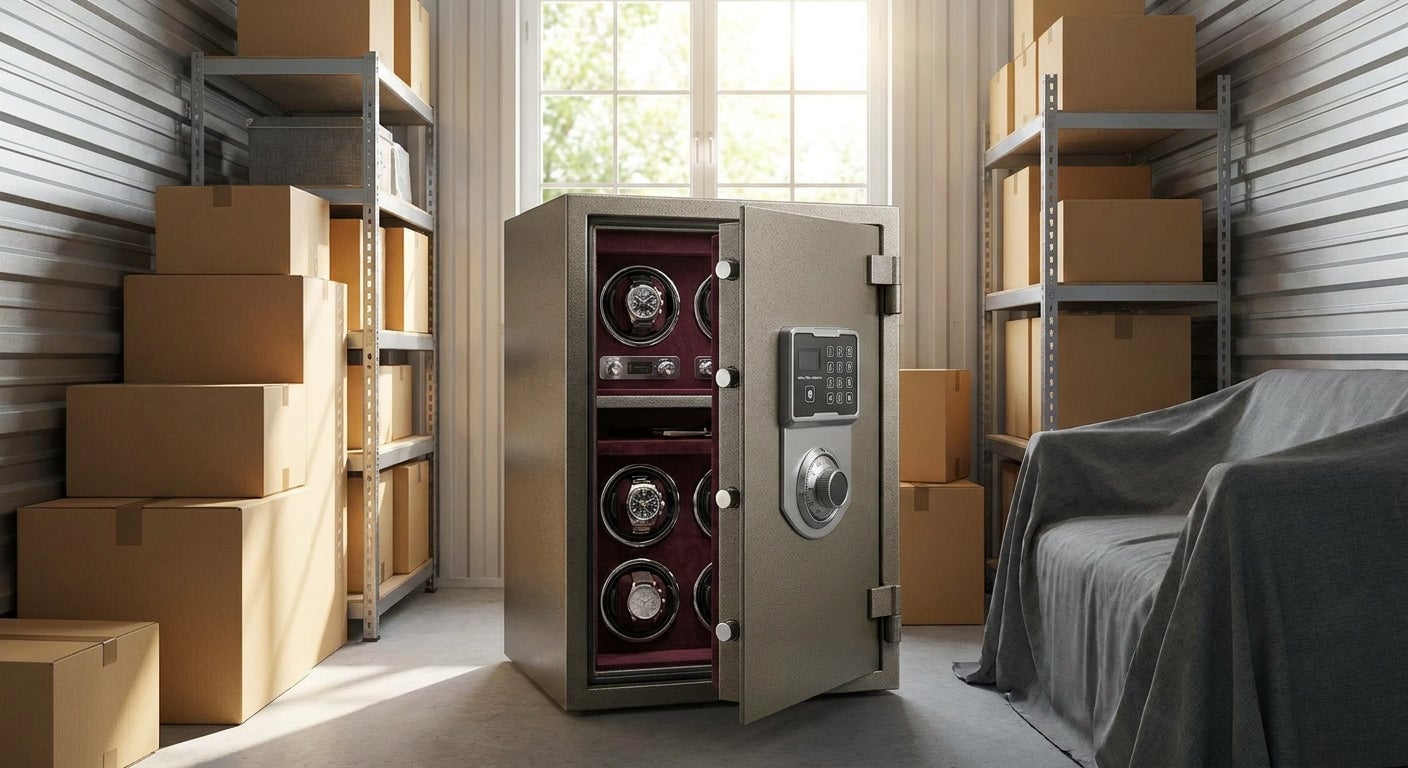
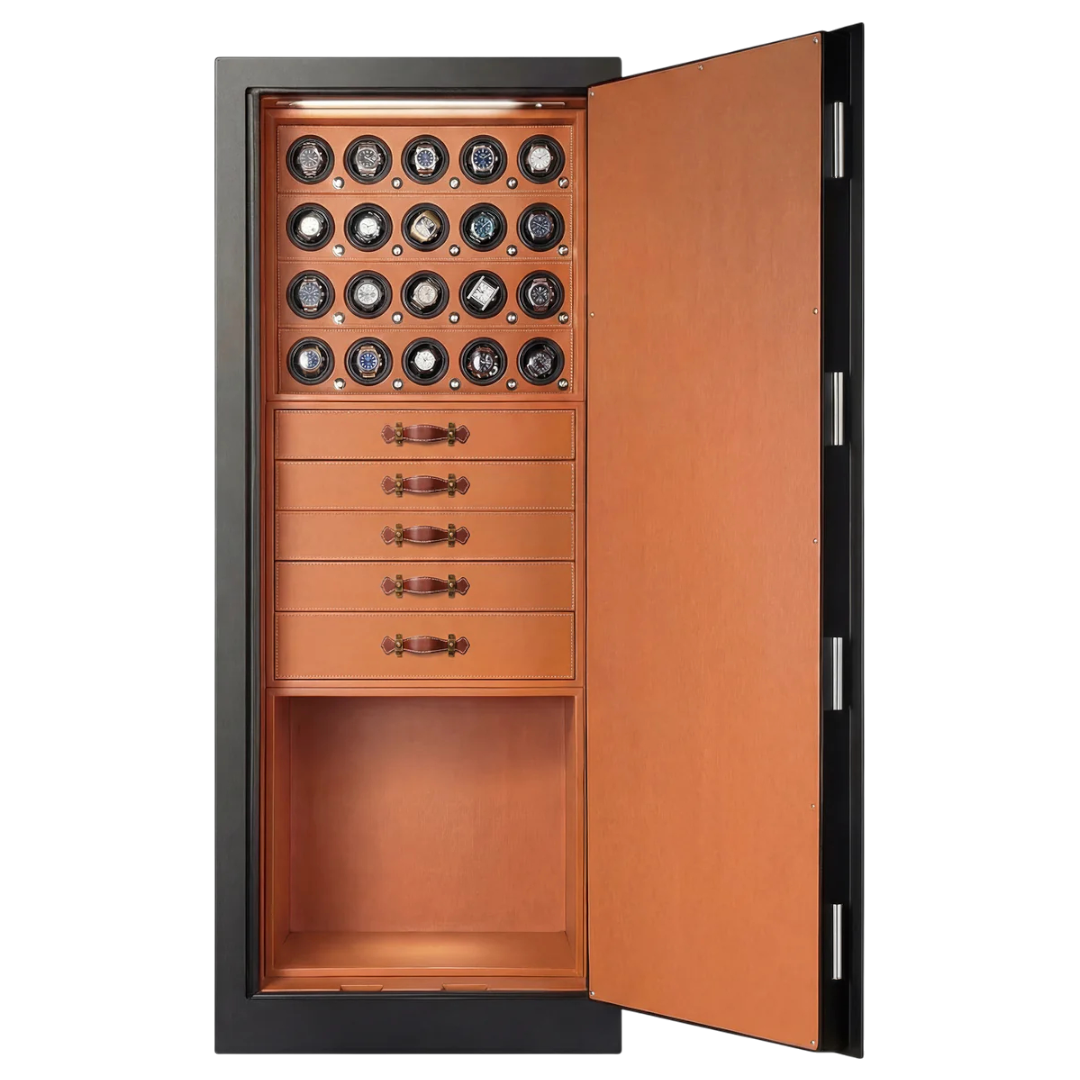
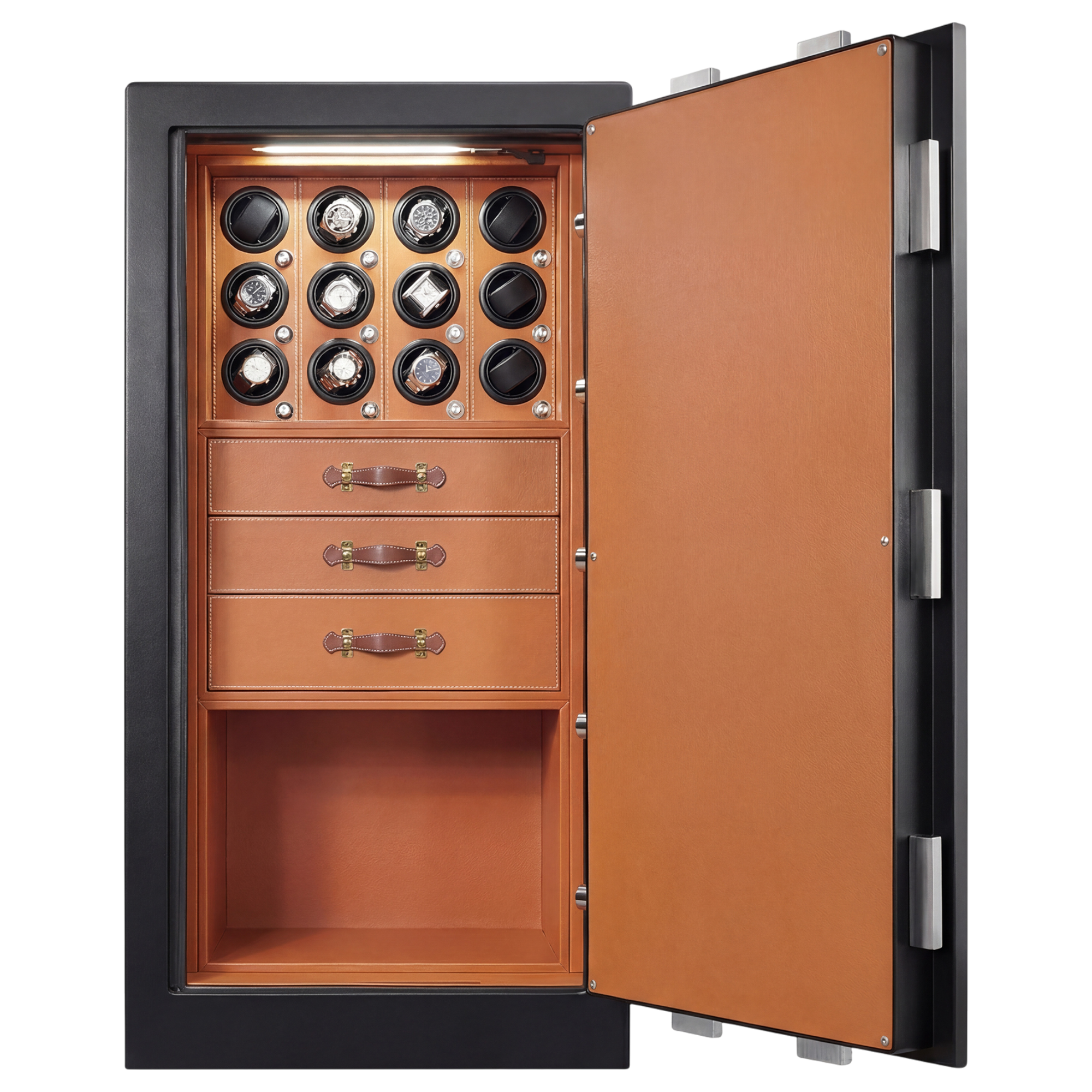
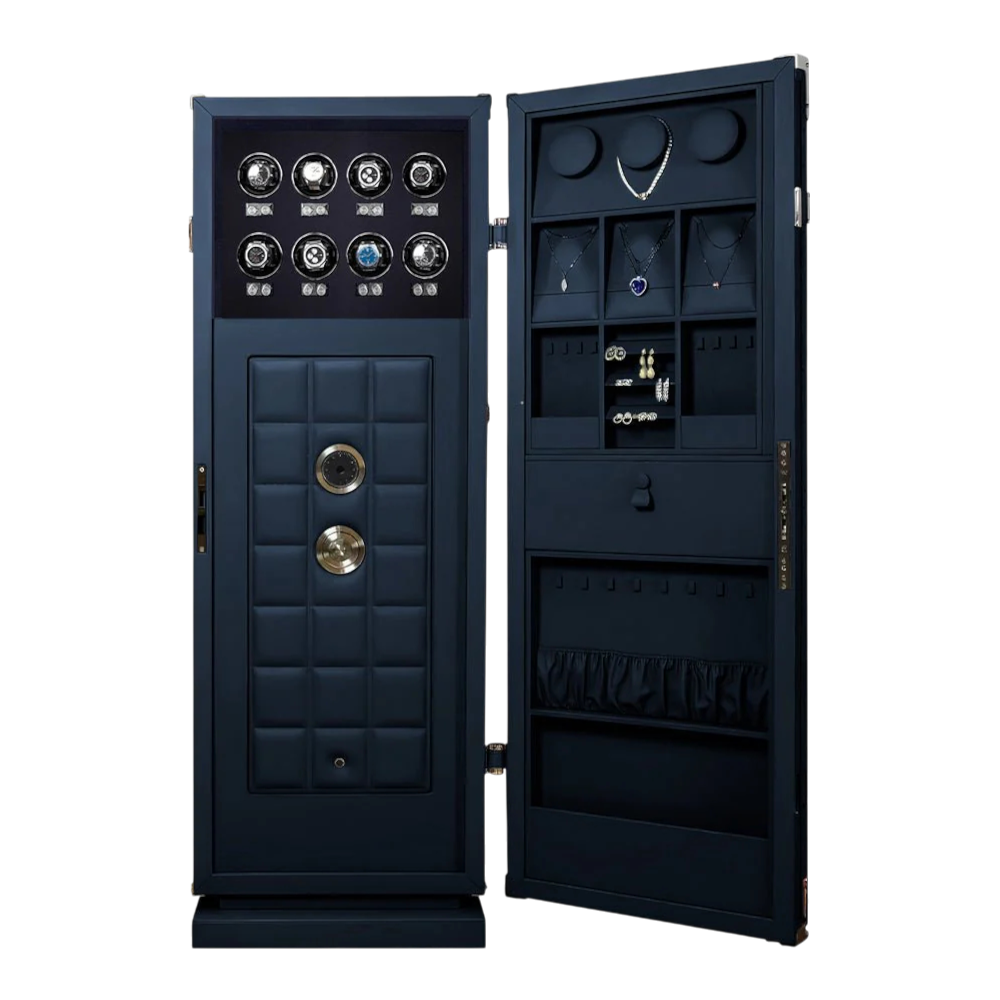
A winder keeps the movement running; a safe keeps the watch secure. For a collection valued above $30,000, housing winders inside a locked safe — or buying a combined winder-safe unit — is the more complete solution in 2026.
One Last Thing
Vacheron Constantin uses a Geneva Seal (Poinçon de Genève) on many of its movements, a certification that requires every individual component to meet strict finishing standards. The winding mechanism is part of that certified assembly. Subjecting it to a winder that runs the wrong direction or excessive TPD does not void a warranty overnight — but it accelerates micro-wear on certified components that Vacheron’s service intervals already account for. Match the winder to the specification and those service intervals stay on schedule. Get it wrong and the first sign is usually a service bill that arrives earlier than expected.
Related Guides
Protect Your Watch Collection
Designed for collectors who demand the best. Explore our premium watch winders and luxury safes.