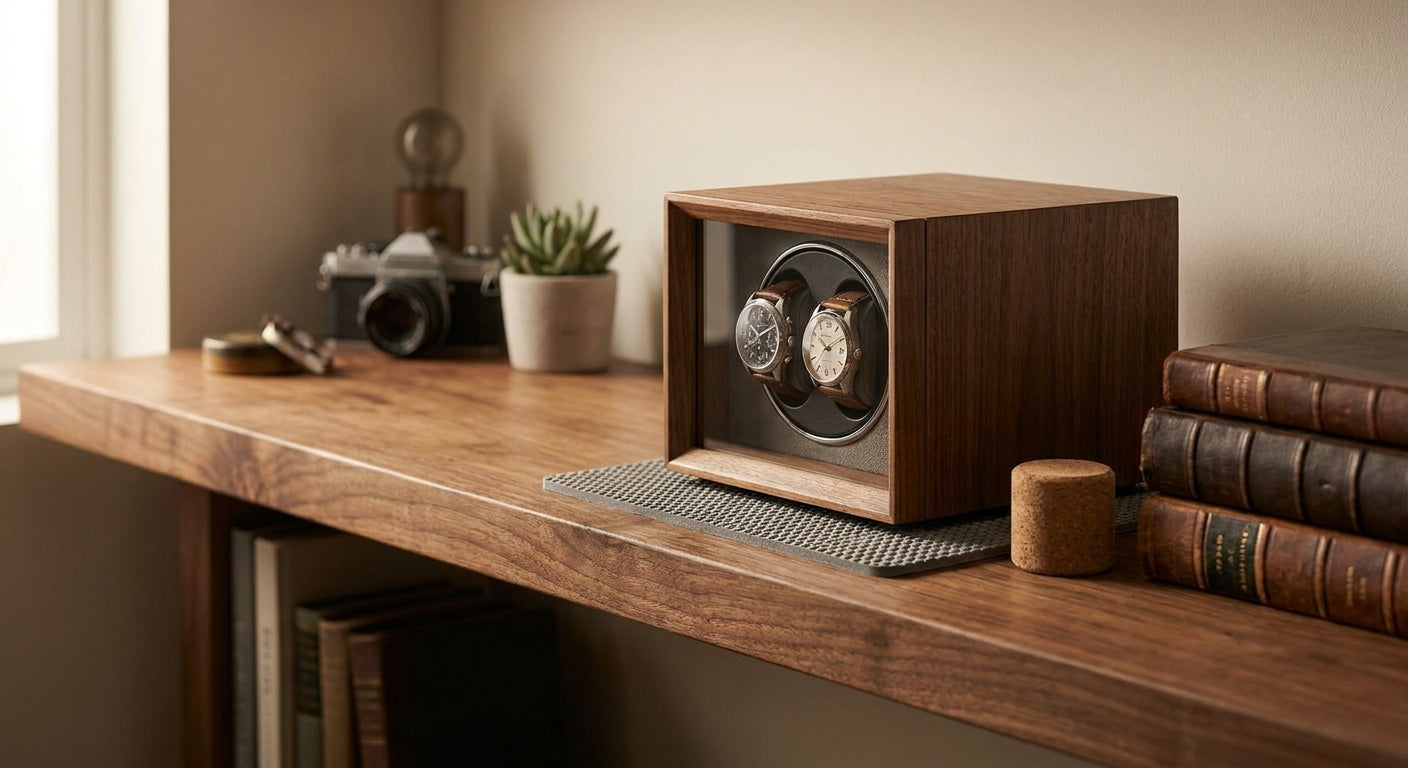
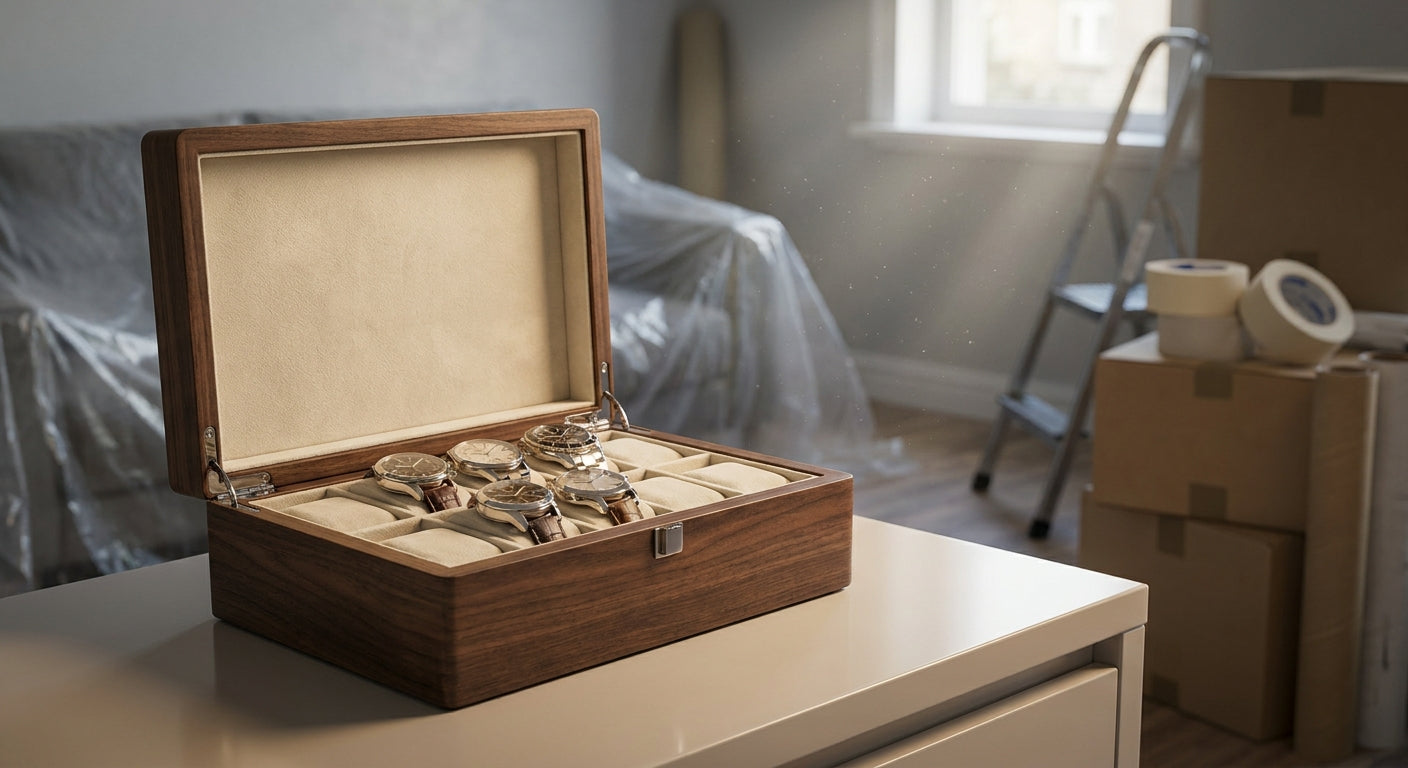
Pairing a watch winder with a display case turns a mechanical necessity into a piece of furniture worth walking past every day — here's how to get the fit, wiring, and layout right on the first attempt.
A watch winder and display case combo isn't just two boxes pushed next to each other. It's a single system where motor placement, glass sightlines, humidity, and cable routing all have to agree with each other, or you end up with a cabinet that hums, fogs, or simply doesn't show off the watches you bought it to show off. Get the pairing wrong and you're opening drawers to check on pieces that were supposed to be visible. Get it right and the case becomes the first thing guests notice in the room.
TL;DR
A proper watch winder and display case combo needs matched interior depth, a shared power source, and glass that doesn't trap heat from the motors. The Enclave Watch Winder Cabinet is the strongest 2026 pick for anyone combining winding and display in one footprint, because its glass-front bays separate motor housing from the display shelf. Skip stacking a standalone winder inside a jewelry box meant for static storage — the motor vibration transfers through thin partitions and the humidity balance goes off within weeks.
Why this matters
Automatic watches lose power reserve the moment they stop moving, and a display case with no winding function just becomes a stopped-watch museum. Collectors solve this by pairing a case — glass, lighting, shelving — with a winder module built into or alongside it. The problem shows up in the details: mismatched depth means the door won't close, mismatched voltage means one unit trips a breaker, and mismatched humidity control means dial condensation inside six months. None of that is dramatic until the watch you paid five figures for starts showing moisture under the crystal in 2026.
What you'll need
- A watch winder rated for the number of pieces you're rotating — check the Enclave Watch Winder Cabinet if you want winding and display built into one frame
- A tape measure for interior cabinet depth (most winder modules need 4 to 6 inches of clearance behind the rotor)
- A grounded outlet or surge-protected power strip rated for continuous low-draw use
- A hygrometer, even a basic digital one, to track humidity inside the case
- 30 to 45 minutes for the initial setup and TPD (turns per day) configuration
- A soft cloth and non-abrasive glass cleaner for the display panel
Step 1: Measure the case before you order the winder
Interior depth decides everything. Most single and double winder modules need at least 4 inches behind the mounting plate for the motor housing, and combination units like the Eterna Watch Winder Cabinet are built to that spec already. Measure your existing display case first if you have one, then match the winder to the space rather than forcing a retrofit. Common mistake: buying the winder before confirming case depth, then discovering the door won't close over the rotor housing.
Step 2: Separate power runs from display lighting
Winder motors and LED display lighting should not share the same circuit if you can help it. A shared circuit means every time the winder motor engages, you'll see a flicker in the display lights — subtle, but visible in a dark room. Run the winder off a dedicated outlet or a surge-protected strip, and keep display lighting on its own line. Expect this to take under 15 minutes if the case is already positioned near an outlet.
Step 3: Set turns per day (TPD) before loading watches
Every movement has a manufacturer-recommended TPD range, typically between 650 and 1,200 depending on the caliber. Set the winder to the correct TPD and rotation direction before you load a single watch — not after. Common mistake: loading watches first, then fumbling with settings while a $15,000 piece sits exposed on an open cushion.
Step 4: Load heaviest watches on the lowest shelf
Gravity and vibration both favor a bottom-heavy layout. Put your heaviest cases — dive watches, chronographs with thick calibers — on the lowest winder position, and lighter dress watches higher up near eye level where the display glass actually shows them off. This also reduces strain on cushion mounts over time.
Step 5: Check humidity after the first 48 hours
Sealed display cases trap moisture differently than open shelving. Run the hygrometer for two full days after setup and confirm the reading sits between 40% and 55% relative humidity — outside that range, dial and leather strap degradation accelerates. If humidity climbs, the case seal or the motor heat output is the likely cause, not the room itself.
Step 6: Test the glass for heat buildup
Run the winder for a full day, then touch the interior glass near the motor housing. Warm is fine; hot to the touch means the motor compartment isn't ventilated enough for the case size, and you should relocate the unit or add passive venting before committing watches to it long-term.
Step 7: Confirm rotation direction matches your movements
Bidirectional winders cover most modern automatics, but some vintage calibers only wind correctly in one direction. Check the movement spec before finalizing settings — running the wrong direction for weeks does nothing catastrophic, but it wastes the point of having a winder at all.
Troubleshooting
Winder is audibly louder than expected. Check that the unit is sitting level — an unlevel base is the most common cause of motor noise in an otherwise quiet cabinet.
Glass fogs on the inside within the first week. Humidity is too high for the sealed volume. Add a small silica pack or improve ventilation around the motor housing.
Display lights flicker when the winder engages. They're sharing a circuit. Move the winder to a separate outlet or power strip.
Watch stops between winding cycles. TPD is set too low for that caliber. Most Swiss and Japanese automatics need at least 650 TPD; some chronographs need closer to 1,200.
Case door won't close flush. Interior depth was underestimated before ordering. This is a measurement problem, not a hardware defect — remeasure and compare to the winder's spec sheet.
Watches shift position during rotation cycles. Cushions are too loose for the wrist size. Swap to a tighter-fit cushion or a case with adjustable mounts.
Tools and resources
- A cabinet-style unit that handles both functions in one footprint, like the Enclave Watch Winder Cabinet
- A jewelry-and-watch combination piece for collectors who want static display alongside winding, such as the Millenary Jewelry Box
- A digital hygrometer for ongoing humidity checks
- A soft microfiber cloth for glass and Alcantara-lined interiors
What to do next
Once the combo is set up and stable for a week, revisit your TPD settings against the specific calibers in your rotation — generic settings work as a starting point, but brand-specific guidance tightens accuracy considerably. For a deeper look at case options built around visibility, Enigwatch's guide to winder display cases for collectors breaks down which layouts suit small versus large rotations.
FAQ
What's the best watch winder and display case combo for 2026? A cabinet-style unit with separated motor housing and glass-front shelving, like the Enclave Watch Winder Cabinet, is the strongest current option because it keeps winding function and display sightlines from interfering with each other.
Is a combo unit better than buying a winder and case separately? A combo unit saves floor space and guarantees the depth and power specs already match, while separate pieces give more flexibility on layout — the combo wins for most collectors with fewer than 12 pieces.
How much clearance does a winder need inside a display case? Most single and double winder modules need 4 to 6 inches of depth behind the mounting plate; check the exact spec sheet before ordering a case.
Does a sealed display case affect humidity around the watches? Yes — sealed cases trap moisture differently than open shelving, so checking humidity in the first 48 hours after setup matters more than in open storage.
Can I run winder and lighting off the same power strip? Technically yes, but it causes visible flicker when the motor engages; a dedicated outlet for the winder avoids the issue entirely.
What TPD should I set for a mixed collection? Start between 650 and 800 TPD for most modern automatics, then adjust per caliber once you confirm which pieces need higher rotation counts.
How long before I know if the humidity balance is wrong? Two days is usually enough — check the hygrometer reading at the 48-hour mark before loading additional watches.
Do vintage automatics need different winder settings than modern ones? Some vintage calibers only wind correctly in one direction, so confirm rotation direction before finalizing settings rather than assuming bidirectional works universally.
One last thing
The detail collectors miss most often isn't the winder or the glass — it's the shelf material underneath. A dense wood veneer shelf absorbs motor vibration far better than a thin composite one, which is why cabinet-style combos built with solid interior panels run quieter over years of daily use than lighter retrofit units. If you're comparing two cases with identical winder specs, the one with denser shelving will outlast the other in day-to-day silence.
Related guides
Protect Your Watch Collection
Designed for collectors who demand the best. Explore our premium watch winders and luxury safes.