Renovation dust, movers, and open windows are the fastest way to turn a watch collection into a repair bill. Here's the exact sequence for boxing up automatic watches and safes before contractors arrive, and how to keep everything running until the drywall dust settles.
TL;DR
Renovation season in 2026 puts three things at risk for a watch collection: dust infiltration, magnetism from power tools, and theft during an unlocked job site. The fix is a Centennial Bulletproof Watch Safe Box or equivalent locked enclosure moved to a finished room, plus a winder like a Veron 20 kept running in a sealed space so automatics don't need re-regulation after the project. Skip storing pieces in open dressers or cardboard boxes near the work zone — that's how movements pick up debris and demagnetize incorrectly. Verdict: relocate, seal, and keep winding rather than let a collection sit idle in a construction zone.
Why this matters
Drywall dust is abrasive and fine enough to work past a standard watch box lid. Once it's in the case, it scores the crystal and works into the movement through the crown tube.
Power tools — reciprocating saws, drills, angle grinders — throw off magnetic fields strong enough to affect a hairspring at close range. A watch sitting on a workbench 3 feet from a running tool for a full renovation cycle is a real magnetism risk, not a theoretical one.
Then there's access. Contractors, subcontractors, and delivery crews move through a house during a renovation in ways they don't during normal life. A collection worth five or six figures sitting in an unlocked drawer is an unnecessary exposure for the length of the project, which can run anywhere from a few weeks to several months in 2026's contractor scheduling backlogs.
What you'll need
- A locked, weighted safe rated for the collection size — 6, 12, or 20 pieces depending on what you own
- A watch winder if any automatics will sit unworn for more than four to six weeks
- Microfiber or Alcantara-lined watch pillows for pieces going into a non-winding safe
- A sealed storage room or closet away from the active construction zone
- Painter's plastic sheeting to seal off vents and door gaps in that room
- A moisture pack or small dehumidifier if the safe will sit in a garage or basement during the project
- 30-45 minutes for the initial move, plus a few minutes each week to check winder rotation
The steps
1. Audit the collection before anything gets touched
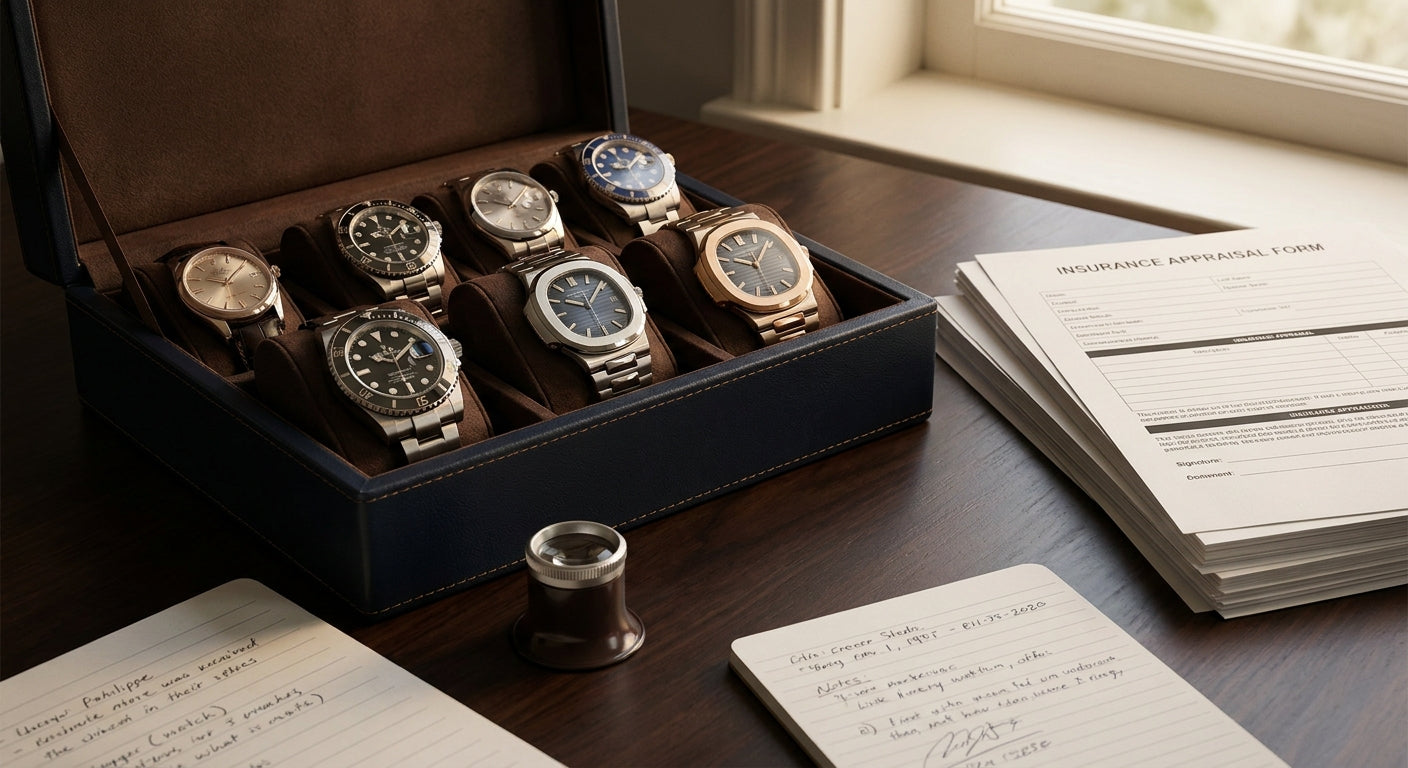
List every piece, note which are automatic and which are quartz or manual. This accomplishes two things: it gives you an insurance record if anything goes missing during the chaos, and it tells you how many winder slots you actually need versus how many pieces can sit static in a cushioned safe.
Automatics that run daily need a winder or they'll stop and need re-setting, sometimes re-regulation, once the project ends. Quartz and manual-wind pieces don't have that problem — they just need protection from dust and impact.
Common mistake: skipping the audit and packing everything into one drawer. When the safe or winder gets moved twice during a multi-phase renovation, an unlisted collection is how a piece goes missing without anyone noticing for weeks.
2. Move the safe to a finished, lockable room first
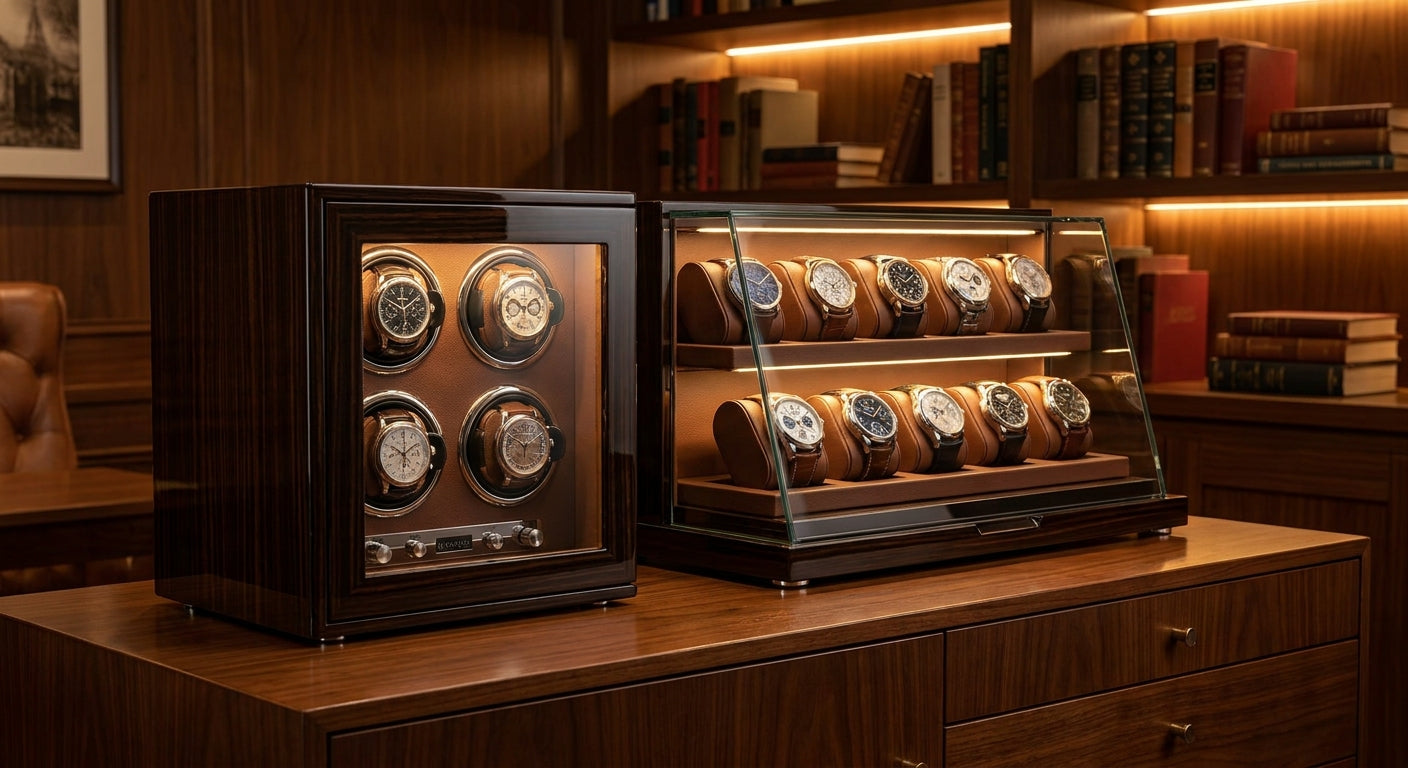
Relocate the safe or winder cabinet before demo starts, not after. A Veron 20 Watch Safe Box or similar unit should go into a room that isn't part of the renovation scope — a home office, a finished basement, a bedroom on the opposite side of the house.
Bolt it down again once it's in the new spot if it was originally anchored; an unsecured safe in a construction zone with a rotating cast of workers defeats the purpose of having one. If wall-mounting isn't practical during the move, keep it in a locked closet with the door itself secured.
Expected outcome: the collection is now physically separated from dust, debris, and unsupervised foot traffic before a single wall comes down.
3. Seal the storage room against dust migration
Drywall dust travels through HVAC returns and door gaps, not just open doorways. Tape painter's plastic over any vent in the storage room that connects to the work zone, and use a draft stopper or towel at the base of the door.
This matters more than most collectors expect — a sealed safe interior still has micro-gaps around hinges, and dust that settles on the exterior finds its way in over a multi-week project. A sealed room cuts that exposure to nearly zero.
Common mistake: relying on the safe alone and leaving the room's HVAC vent open. Fine dust settles on everything in that room within days once ductwork starts moving debris.
4. Keep automatics on a winder, not sitting still
Any automatic movement that normally runs daily should stay on a winder through the renovation. A Watch Winders Pillow insert works inside most winder or safe combinations to keep multiple case sizes centered and secure during transport and while the winder cycles.
Set turns-per-day (TPD) and rotation direction according to the movement's factory spec — most Swiss automatics run well on 650-950 TPD with bidirectional rotation, but check the specific caliber before setting it and walking away for six weeks. Getting this wrong for a multi-month renovation means a spring that's either under-wound or getting stressed from excess rotation.
Expected outcome: every automatic in the collection is still keeping accurate time and full power reserve when the renovation wraps in 2026, with zero re-regulation needed.
5. Store static pieces cushioned, not loose
Pieces that aren't going on a winder — quartz, manual-wind, or anything you're not worried about running dry — still need cushioned, individual compartments. Loose pieces rattling in a drawer or a single box scratch bracelets and crystals against each other during the vibration of a renovation (foundations shift, floors get walked on by heavy equipment, doors slam).
A safe with individual cushioned slots handles this without extra packing. If pieces are going into temporary storage outside the safe — say, a bank box during a full gut renovation — wrap each one separately and never let metal touch metal.
6. Check in weekly, not just at the end
A renovation that runs past four weeks needs a check-in cadence. Confirm the winder is still cycling, the safe's charge or battery backup (if it has an electronic lock) hasn't drained, and the sealed room hasn't had a vent reopened by a confused contractor.
Common mistake: assuming "set it and forget it" applies for a project that stretches from a planned six weeks to twelve, which is common with 2026 supply and labor delays. A dead lock battery discovered on move-out day is an avoidable problem.
7. Re-inventory before demobilizing the safe
When the project wraps, do the reverse audit: check every piece against your original list before moving the safe back to its permanent spot. This is the point where a missing piece is easiest to trace, since the timeline of who had site access is still fresh.
Troubleshooting
- Winder stopped mid-project — check the power source first; a tripped breaker from construction work is the most common cause, not a mechanical failure in the winder itself.
- Dust visible on the safe exterior despite sealing — the room seal has a gap somewhere, usually at the door threshold; add a second draft stopper rather than re-sealing the vent again.
- A piece feels lighter on the wrist after storage — power reserve dropped because it sat off the winder longer than expected; give it 24-48 hours on the winder before assuming a service issue.
- Safe lock acting sluggish — biometric and electronic locks can be affected by dust in the reader itself; wipe the sensor with a dry microfiber cloth, don't spray cleaner directly on it.
- Bracelet links loosening from vibration — this happens when pieces sit unwound in a non-cushioned space; a cushioned slot or winder pillow stops the metal-on-metal contact that causes it.
- Can't tell which pieces need a winder — if a movement's power reserve is under 48 hours and it's automatic, it needs one for any storage period longer than two days.
Tools and resources
- Watch Winders Pillow for cushioned, size-adjustable slots during the move
- Veron 20 Watch Safe Box for a locked, weighted enclosure sized for larger collections
- Watch safe for a vacation home: remote security options for guidance on securing a collection at a temporary or secondary location during the project
- Enigwatch for the full range of winders, safes, and cabinets by collection size
FAQ
What's the best way to store a watch collection during renovation? Move the safe or winder to a finished, sealed room away from the work zone, keep automatics running on a winder set to the correct TPD, and store static pieces in cushioned individual slots rather than a loose drawer.
Do automatic watches need a winder during a renovation? Yes, if the project runs longer than a few weeks and the movement isn't being worn — a winder keeps power reserve and lubrication distribution consistent so the piece doesn't need re-regulation once the project ends.
Can drywall dust actually damage a watch? Yes — fine dust works past standard case seals and box lids over a multi-week exposure, scoring crystals and settling in movement components accessible through the crown tube.
Should I move my watch safe to storage during a renovation? Only if the storage location is equally secure and climate-stable; otherwise keep it in a finished, lockable room in the same house away from the active work zone.
How long can automatic watches sit without winding during a project? Most automatics have a 38-70 hour power reserve; anything beyond a few days without wear or a winder means the watch stops and needs resetting, though it typically won't need service just from sitting.
Is a safe or a winder cabinet better for renovation storage? A safe protects against dust and unauthorized access; a winder cabinet keeps automatics running. Larger collections often need both — a locked winder safe covers each function in one unit.
Do power tools near a watch collection cause magnetism damage? Running power tools generate magnetic fields strong enough to affect a hairspring at close range over repeated exposure, which is why relocating the collection away from the active work zone matters as much as dust control.
What size safe do I need for a mid-size collection during a move? A 12 to 20-slot safe covers most serious collectors; measure the collection against slot count rather than guessing, since undersized safes lead to stacking pieces which causes scratching.
One last thing
The detail collectors miss most often: contractors need access to breaker panels, and a winder that trips off with the power for two days during a panel upgrade isn't a malfunction, it's just downtime. Check the breaker before assuming the motor failed — it's the single most common false alarm during a renovation in 2026.
Related guides
Protect Your Watch Collection
Designed for collectors who demand the best. Explore our premium watch winders and luxury safes.