A watch safe fire rating tells you how long the interior stays below a specific temperature during a structural fire — not whether your watches survive intact, and the difference between those two things is where most buyers get misled.
TL;DR
A UL 72 Class 350 1-Hour rating means the interior stayed under 350°F (177°C) for 60 minutes during a live burn test — that's the baseline worth paying for in 2026, and anything without a third-party test number behind it is marketing language, not protection. Watch safe fire rating claims from manufacturers who skip UL or ETL certification should be treated as unverified. Verdict: buy UL-tested, skip anything that only says "fireproof" with no lab or class number attached.
Why this matters
A fire-rated label sells safes. A tested one protects a collection. UL 72 burn tests run a real fire around a real safe and measure interior temperature every few minutes — that's the only way to know a number means anything.
The gap matters more for watch collectors than for document safes. Paper chars around 450°F (232°C). Leather, lubricants inside movements, and lume compounds start degrading well before that. A safe rated to keep contents under 350°F for an hour was built and tested with paper as the reference material, not a Nappa leather winder tray or a Mabuchi motor. Read the best fireproof watch safe for luxury timepieces breakdown for how that plays out across current models.
What you'll need
- The manufacturer's spec sheet or product page — look for a UL or ETL file number, not just the word "fireproof"
- A tape measure and your safe's planned location (closet floor, under stairs, garage) to check clearance
- Knowledge of your home's construction — wood-frame vs. concrete changes how fast a structure fire reaches a given room
- A humidity meter if the safe will double as long-term storage, since fire-rated steel bodies trap moisture differently than ventilated cabinets
The steps
1. Confirm the safe has a third-party fire test, not a manufacturer claim
Many safes sold as "fireproof" in 2026 carry no UL, ETL, or Intertek file number anywhere on the spec sheet. Only third-party burn testing confirms a rating holds up. Search the exact UL file number on ul.com's certification database before trusting a listing.
2. Match the temperature threshold to watch components, not paper
A UL 72 Class 350 rating protects contents up to 350°F. Movement lubricants and leather straps can suffer damage below that ceiling during a prolonged burn, even inside a passing safe. If the safe stores mechanical pieces long-term, a lower published threshold (Class 150, protecting to 150°F/66°C) is worth the premium over Class 350.
3. Check the time rating against a realistic fire window
Ratings come in 30, 60, and 120-minute increments. Average US fire department response time runs roughly 7 to 10 minutes from dispatch, but a residential structure fire can burn 20 to 40 minutes before full suppression. A 30-minute rating is thinner protection than it sounds — a 60-minute Class 350 rating covers more of that window.
4. Separate fire rating from burglary rating
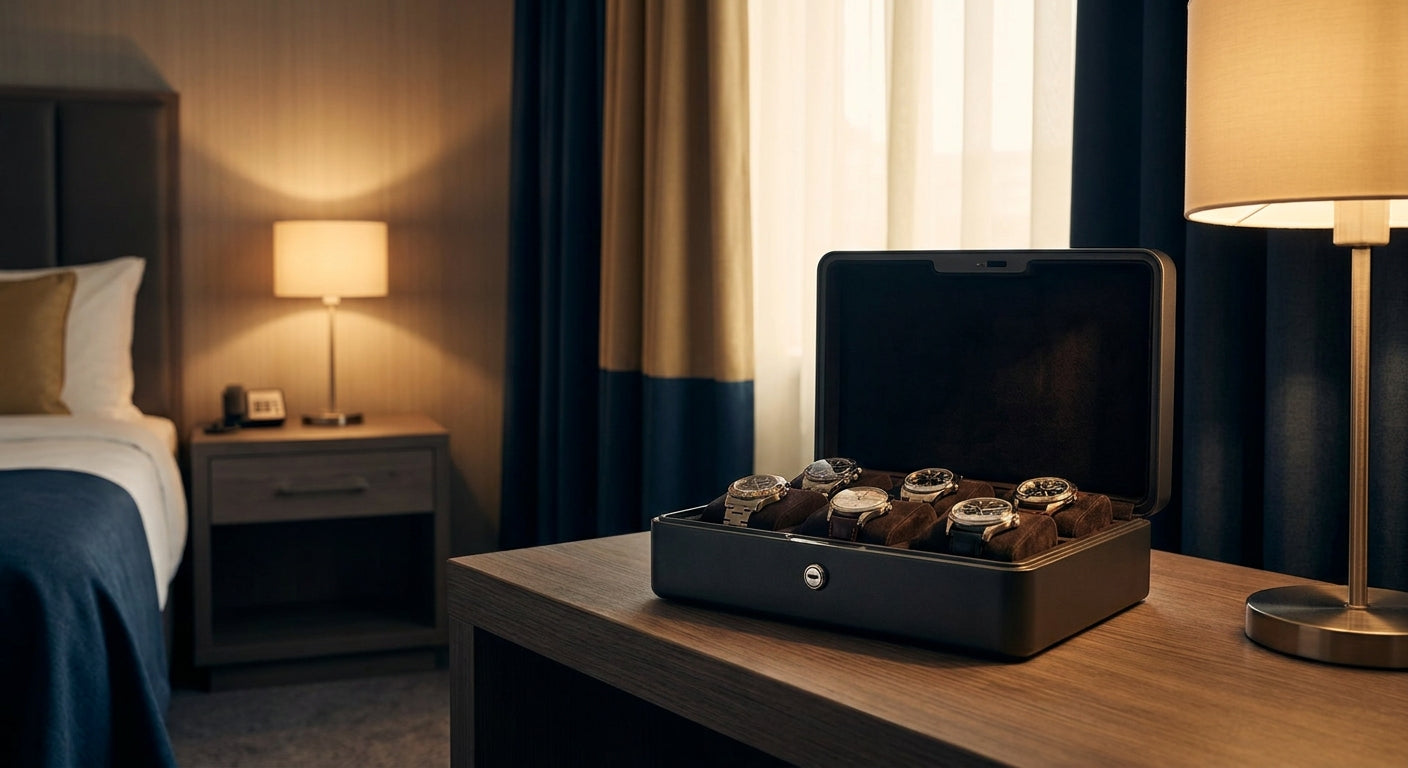
These are two different certifications tested two different ways. A safe can carry a strong UL 72 fire rating and a weak burglary rating, or the reverse. The Centennial Bulletproof Watch Safe Box and Titan Sanctum 20 Watch Safe Box both build around steel body construction — confirm which certification applies to which threat before assuming one covers both.
5. Account for interior humidity after a fire-rated seal
Fire-rated steel bodies seal tighter than ventilated wood cabinets, which changes moisture behavior. A safe that passes its burn test can still trap enough ambient humidity to affect movements over months of storage. Cross-check against the target range collectors use — see watch safe humidity levels for the numbers that matter.
6. Factor in electronics if the safe includes a built-in winder
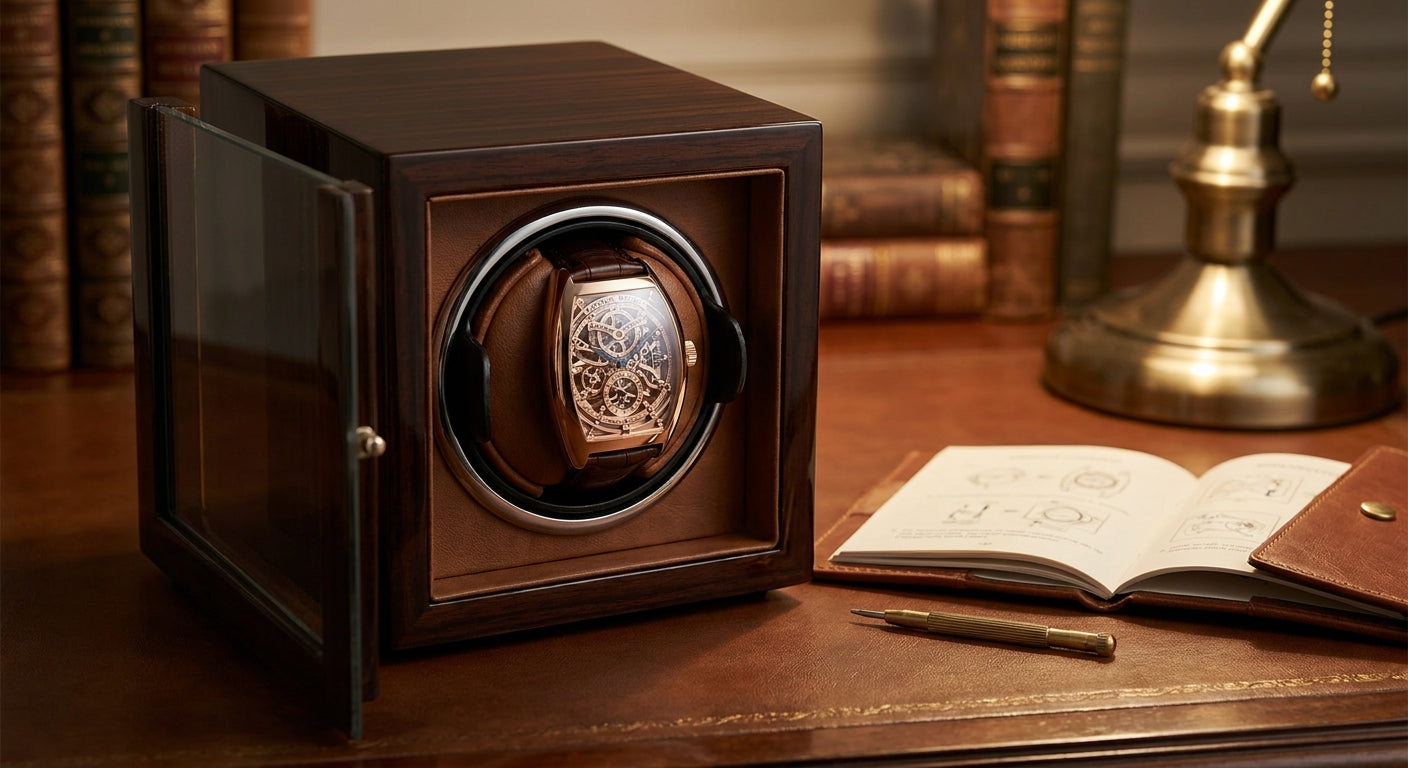
A fire rating tested with paper contents says nothing about a motorized winder tray, battery backup, or biometric lock module mounted inside the same body. Electronics have their own heat tolerance, usually far below 350°F, and a fire-rated shell doesn't extend protection to them automatically.
7. Bolt or anchor the safe regardless of its rating
A fire-rated safe that tips or falls through a collapsing floor loses whatever protection its rating promised. Anchoring keeps the unit upright and in position during structural failure, which matters as much as the temperature number itself. The how to bolt down a watch safe at home guide covers mounting into subfloor or concrete.
Troubleshooting
- "Fireproof" on the listing, no certification number anywhere — treat it as unrated until you find a UL or ETL file number; contact the seller directly and ask for it.
- Rating shown as a temperature only, no time duration — a number without a duration (e.g., "protects to 350°F") is incomplete; ask whether it's 30, 60, or 120 minutes.
- Safe passed fire test but interior smelled of moisture afterward — this is common with tightly sealed steel bodies; add desiccant packs and monitor with a hygrometer.
- Built-in winder stopped working after a heat event — expected; the winder motor and fire-rated body are rated separately, and electronics fail at much lower temperatures than the shell's threshold.
- Confusing a burglary-rated "TL-15" or "TL-30" label for a fire rating — those designations measure tool-resistance time against forced entry, not heat exposure; check for a separate UL 72 or ETL fire mark.
- Safe rated Class 350 but stores documents alongside watches — paper and leather have different failure points; if both matter, size toward the lower published temperature class.
Tools and resources
- UL's public certification lookup, to verify any file number a manufacturer lists
- A hygrometer for ongoing interior humidity checks once the safe is installed
- Watch safe with steel body for luxury timepieces — reference this alongside the Centennial and Titan Sanctum listings when comparing body construction
- The manufacturer's printed spec sheet, kept on file for insurance documentation in case of a claim
What to do next
Once the fire rating is confirmed and the safe is anchored, humidity control is the next variable that actually affects your watches day to day — read watch safe humidity levels before finalizing placement.
FAQ
What is a good fire rating for a watch safe? A UL 72 Class 350, 1-hour rating is the practical floor for 2026 — it keeps interior temperature under 350°F for 60 minutes during a certified burn test. Anything lower in duration offers a thinner safety margin against a real structure fire.
Is UL 72 the only fire testing standard for safes? UL 72 is the most recognized US standard, but ETL and Intertek also perform comparable burn testing. What matters is a verifiable file number from any of the three, not the standard's name alone.
Does a fireproof safe protect a built-in watch winder's motor? No. Fire ratings are tested with paper contents, not electronics, and motors, batteries, and biometric locks fail at temperatures well below a 350°F threshold. Treat winder components as unprotected regardless of the safe's rating.
How is a fire rating different from a burglary rating? A fire rating measures heat and time survival (e.g., 350°F for 60 minutes); a burglary rating like TL-15 measures resistance to tools for a set duration. Safes can carry one, both, or neither — check the spec sheet for both marks separately.
Does a higher fire rating mean better humidity control? Not necessarily. Tightly sealed fire-rated bodies can trap ambient moisture more than ventilated storage, so a strong fire rating sometimes means added humidity monitoring is required, not less.
How long does a fire rating actually protect against a house fire? A 60-minute rating covers roughly the window between typical fire department response (7 to 10 minutes) and full structure fire duration (20 to 40 minutes), which is why 60-minute ratings outperform 30-minute ones in practice.
Do all luxury watch safes come fire rated by default? No. Many collector-grade safes prioritize biometric access and interior finish over fire certification, so a fire rating has to be confirmed per model rather than assumed from price point alone.
Is a fire-rated safe also waterproof? Not automatically. Fire and water resistance are tested separately, and a safe passing a burn test can still fail against sprinkler discharge or flooding unless the manufacturer lists a separate water-resistance rating.
One last thing
UL 72 burn tests use paper as the reference contents inside the chamber — not leather, not lubricated movements, not lithium batteries. A safe can pass its certified test with the interior fully intact on paper while a Nappa leather tray or a winder motor sealed inside would already have failed. Read the rating as a floor for the steel body, not a guarantee for everything you put inside it.
Related guides
Protect Your Watch Collection
Designed for collectors who demand the best. Explore our premium watch winders and luxury safes.