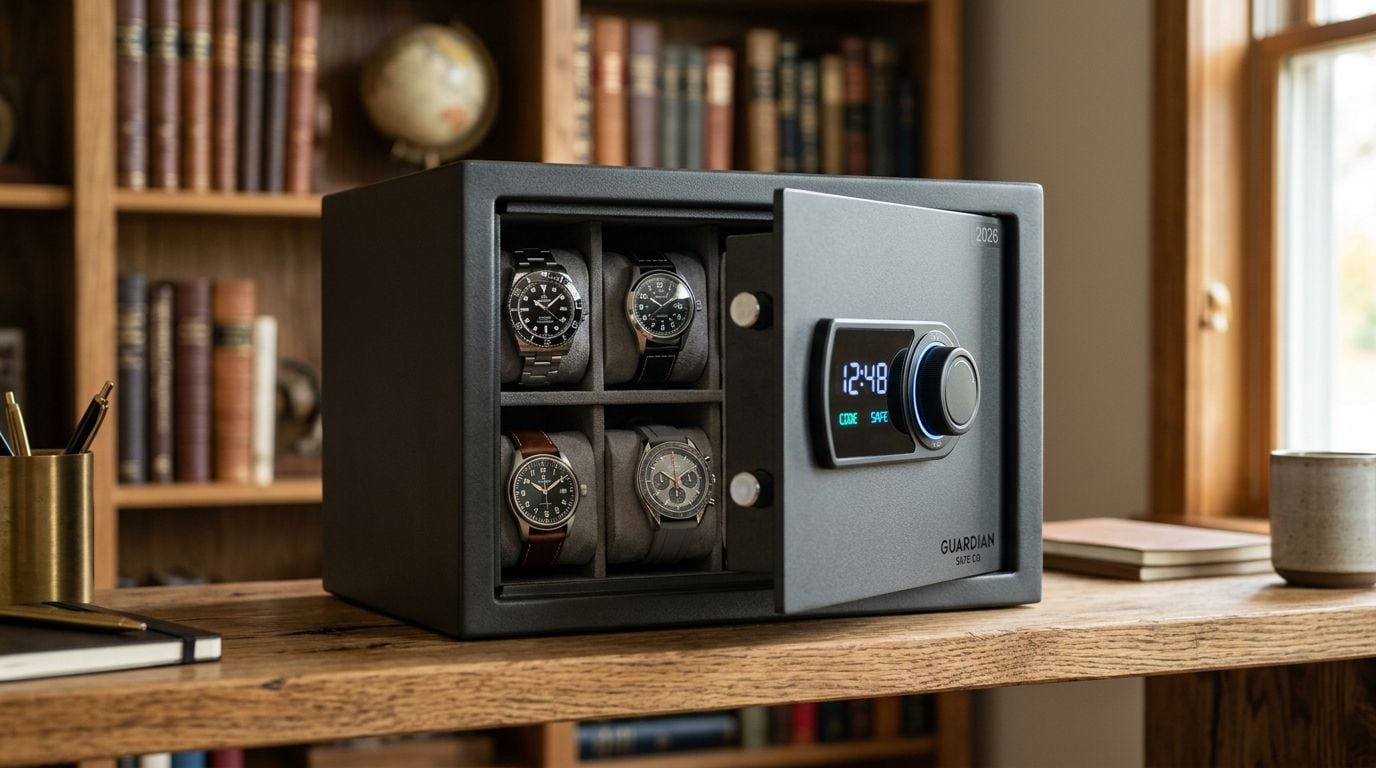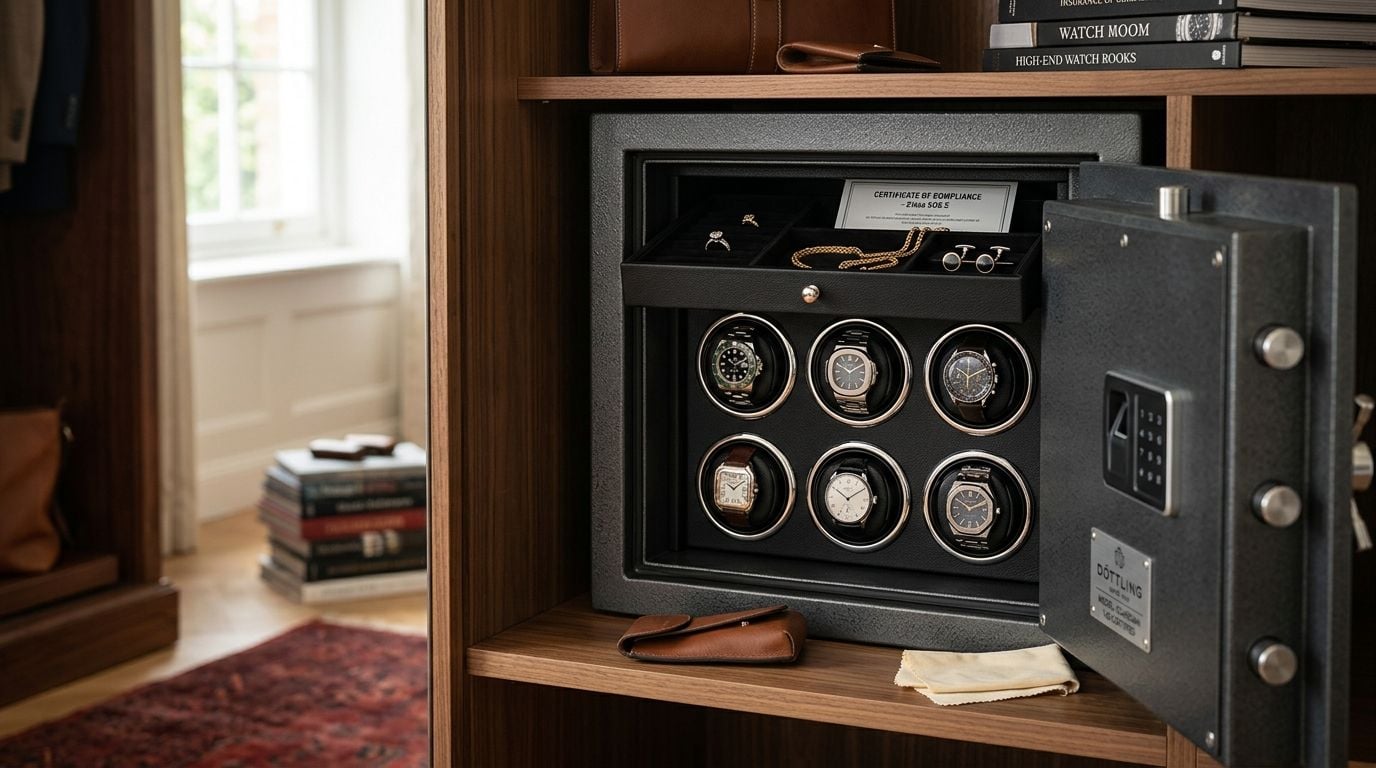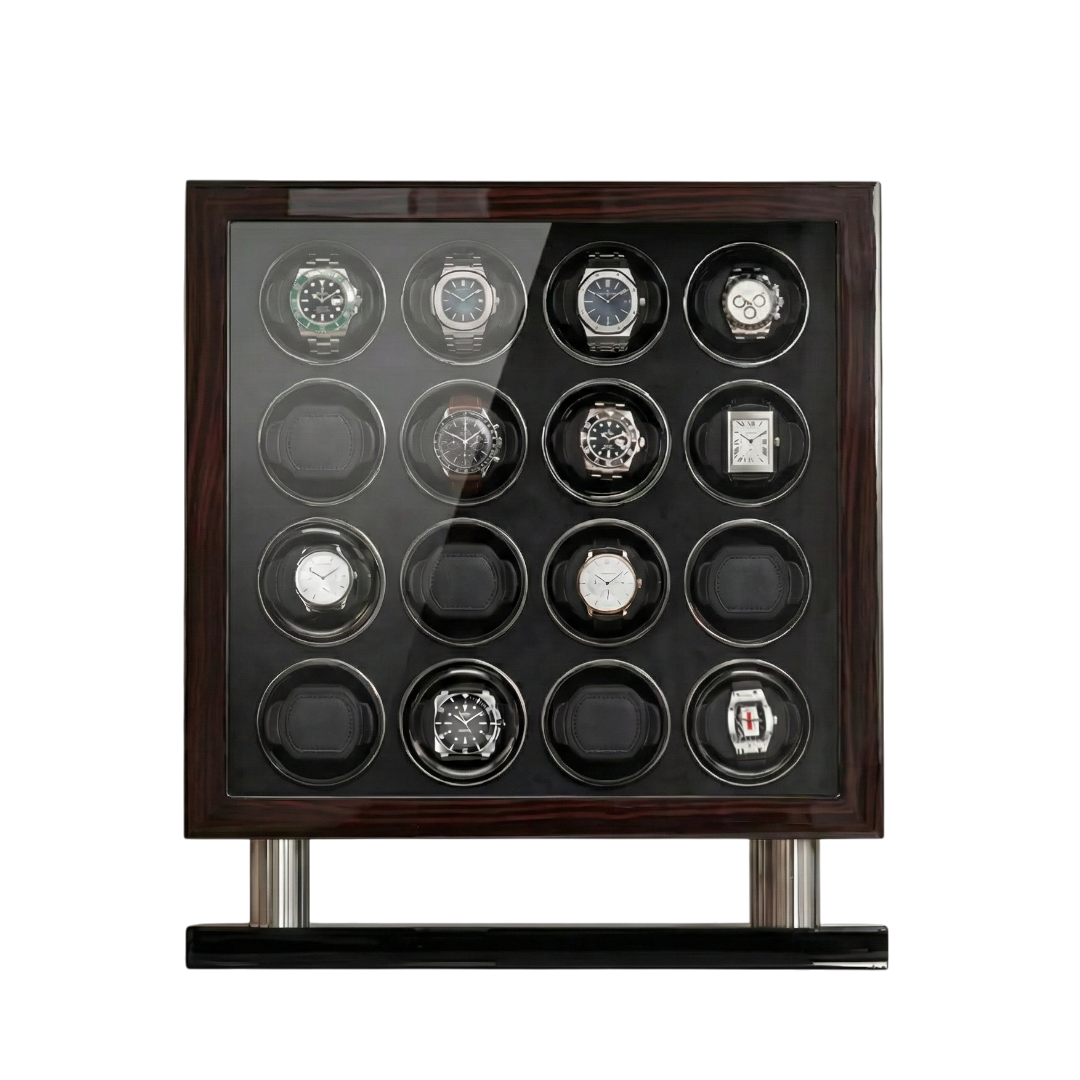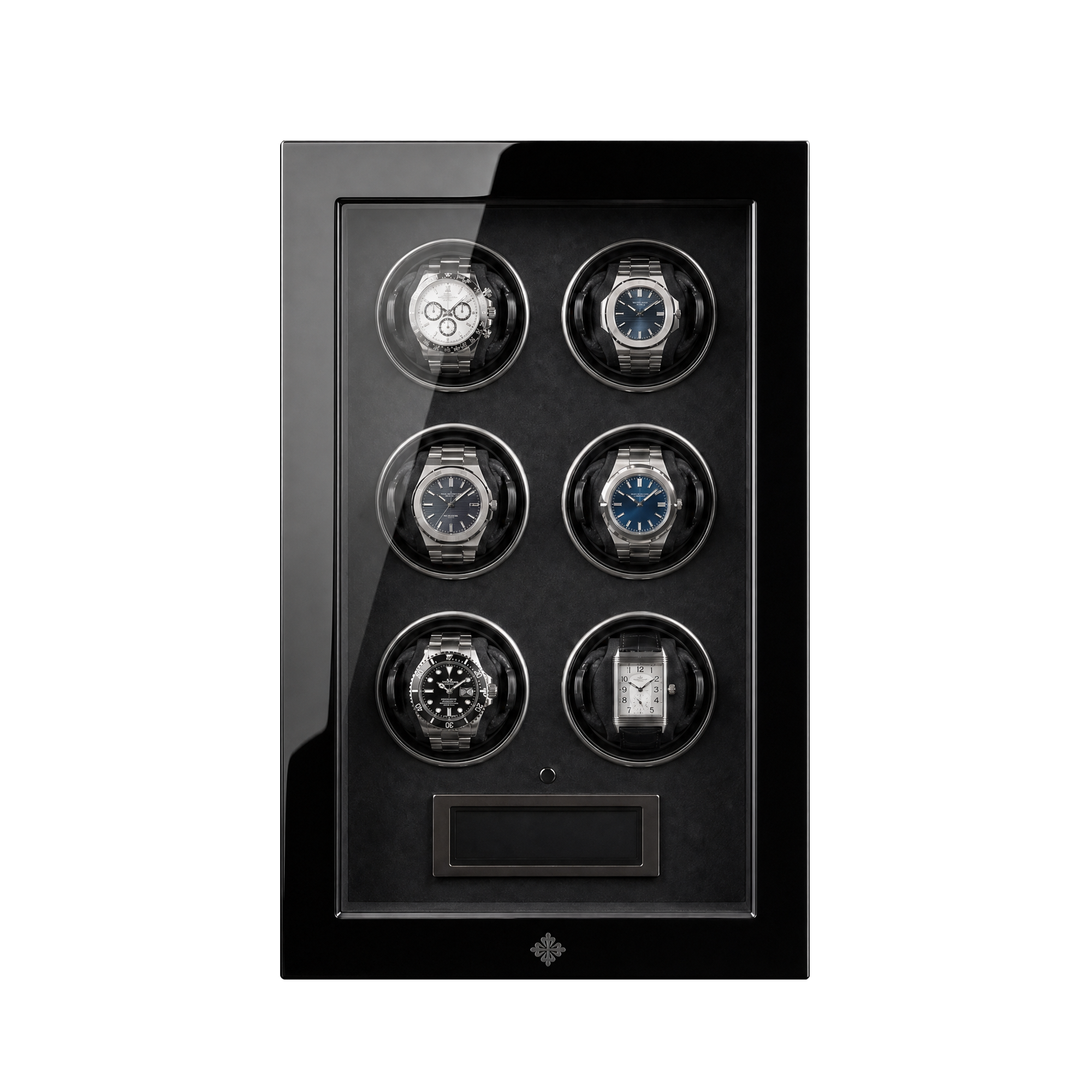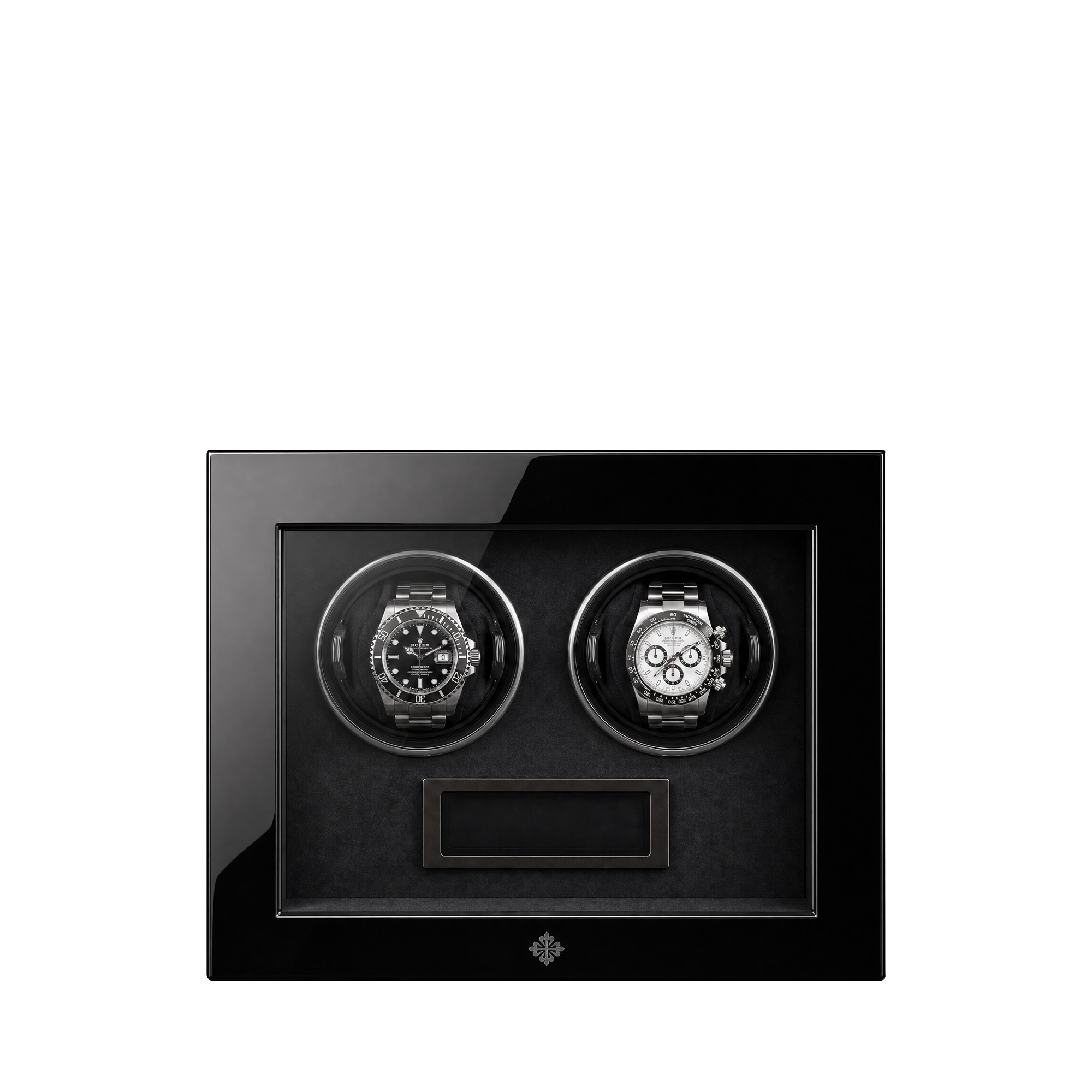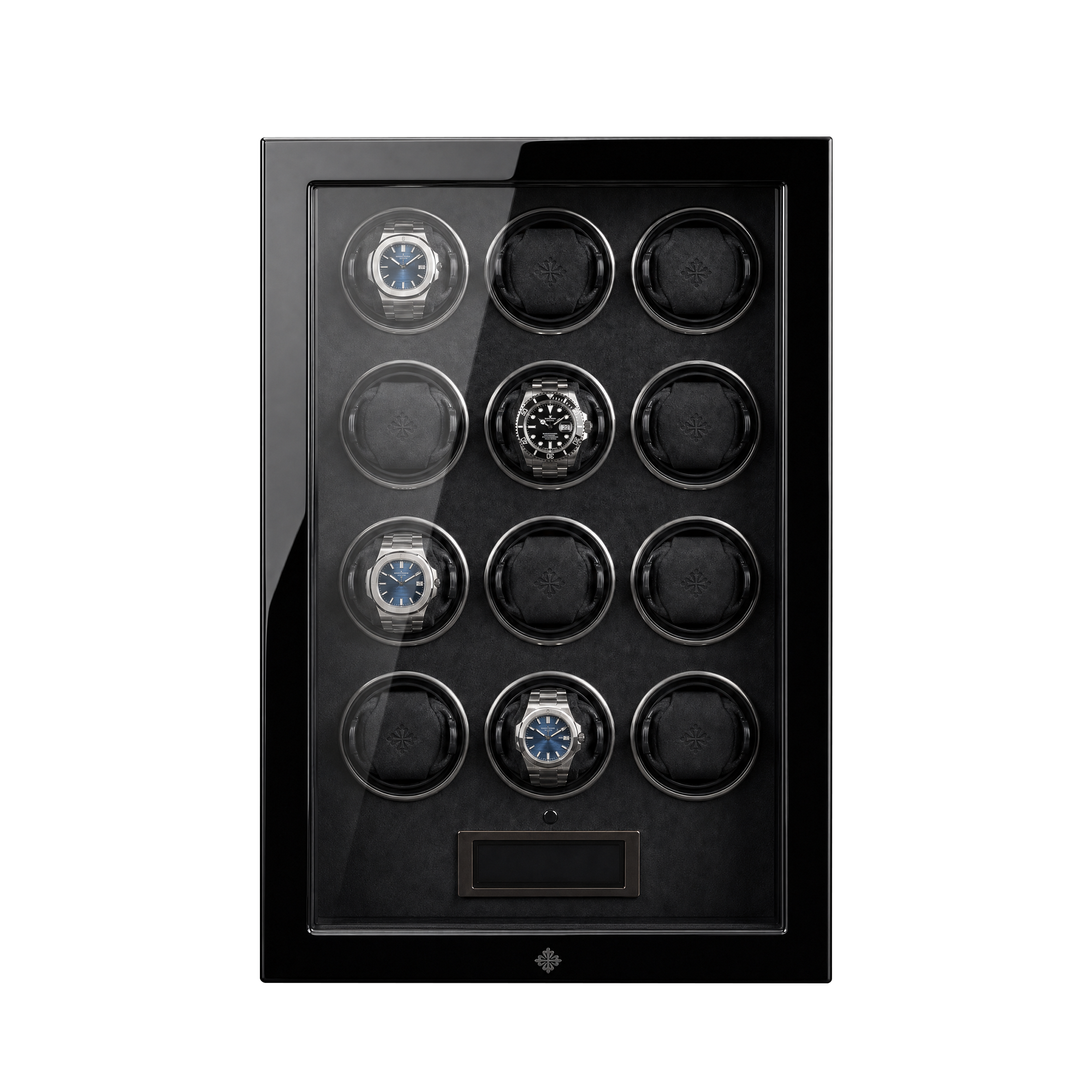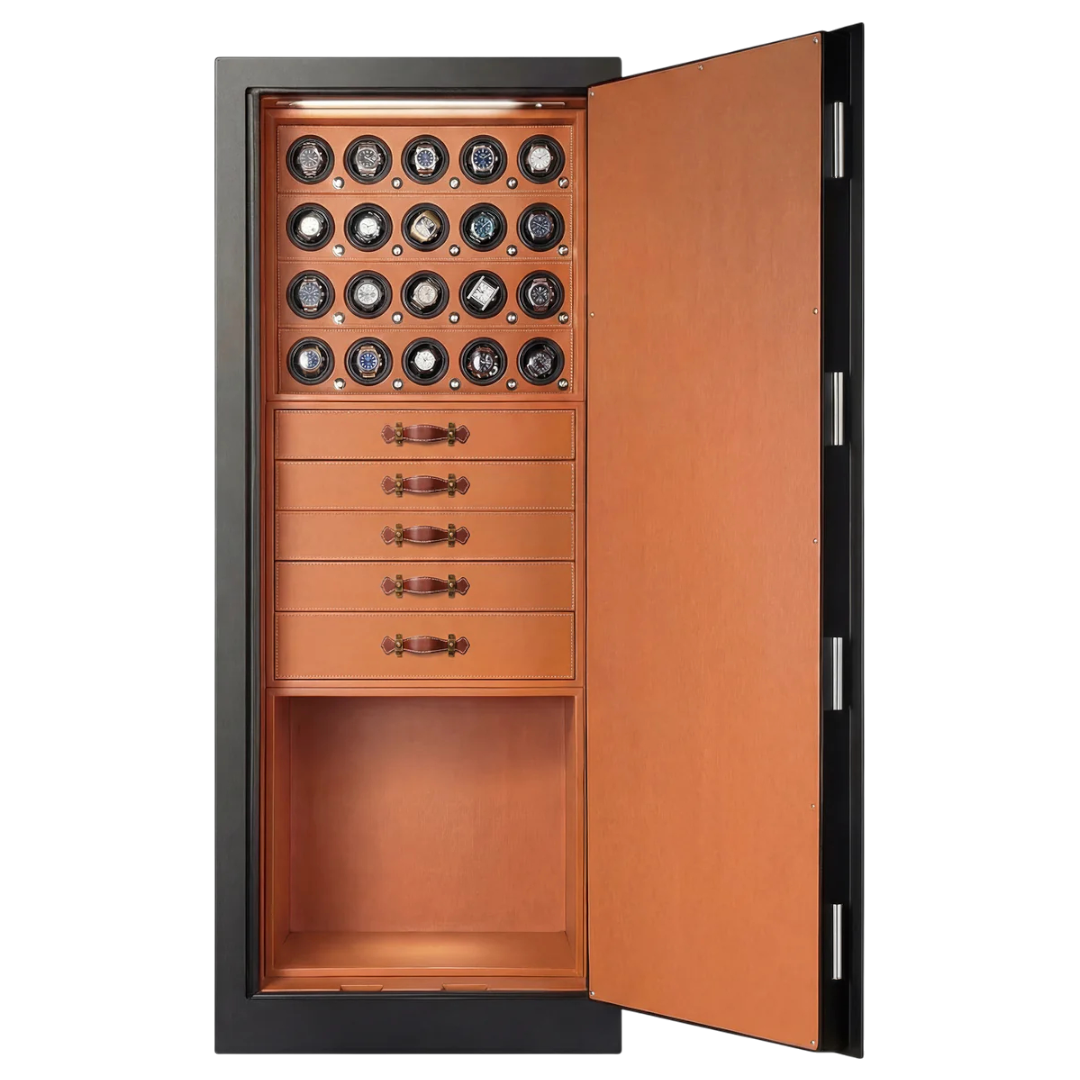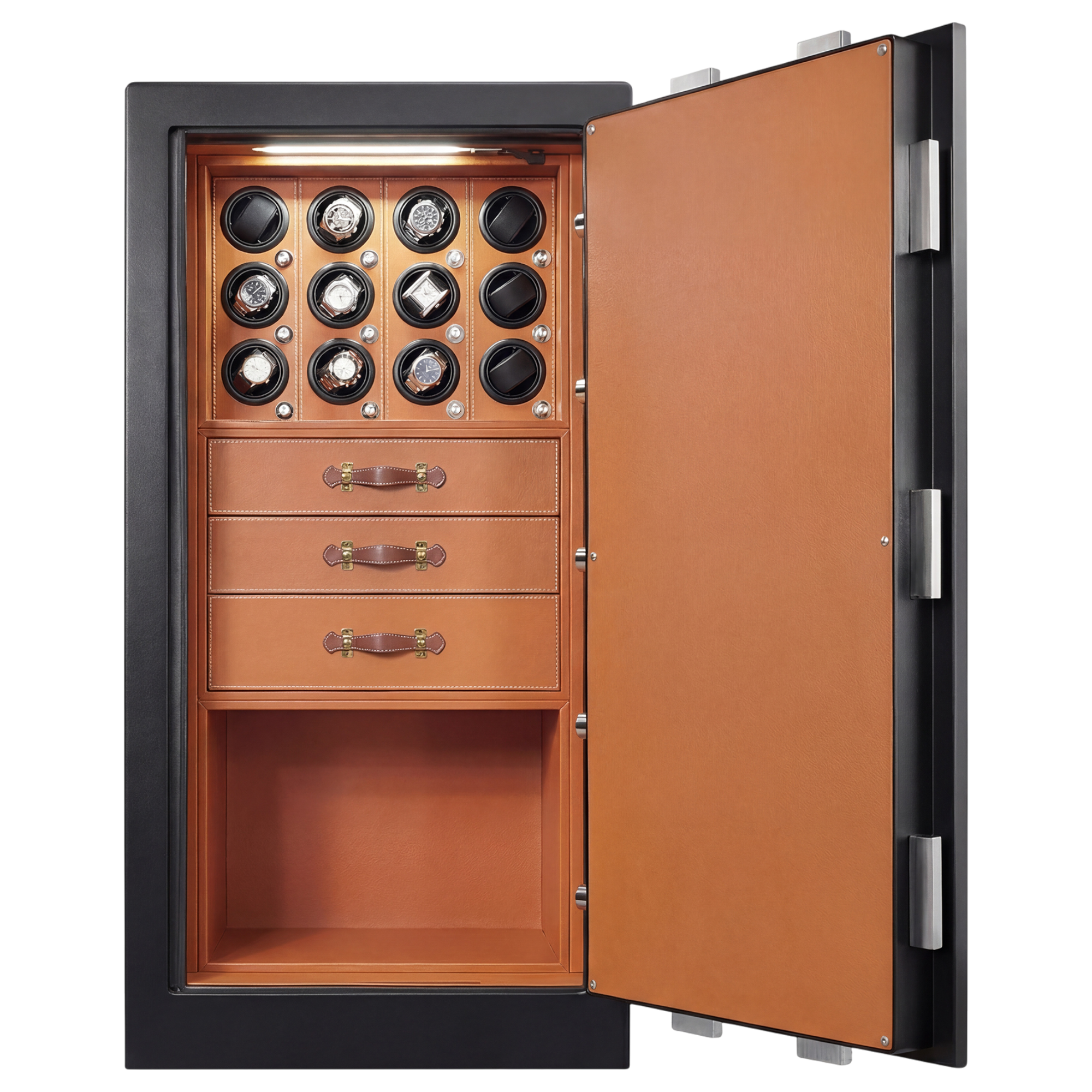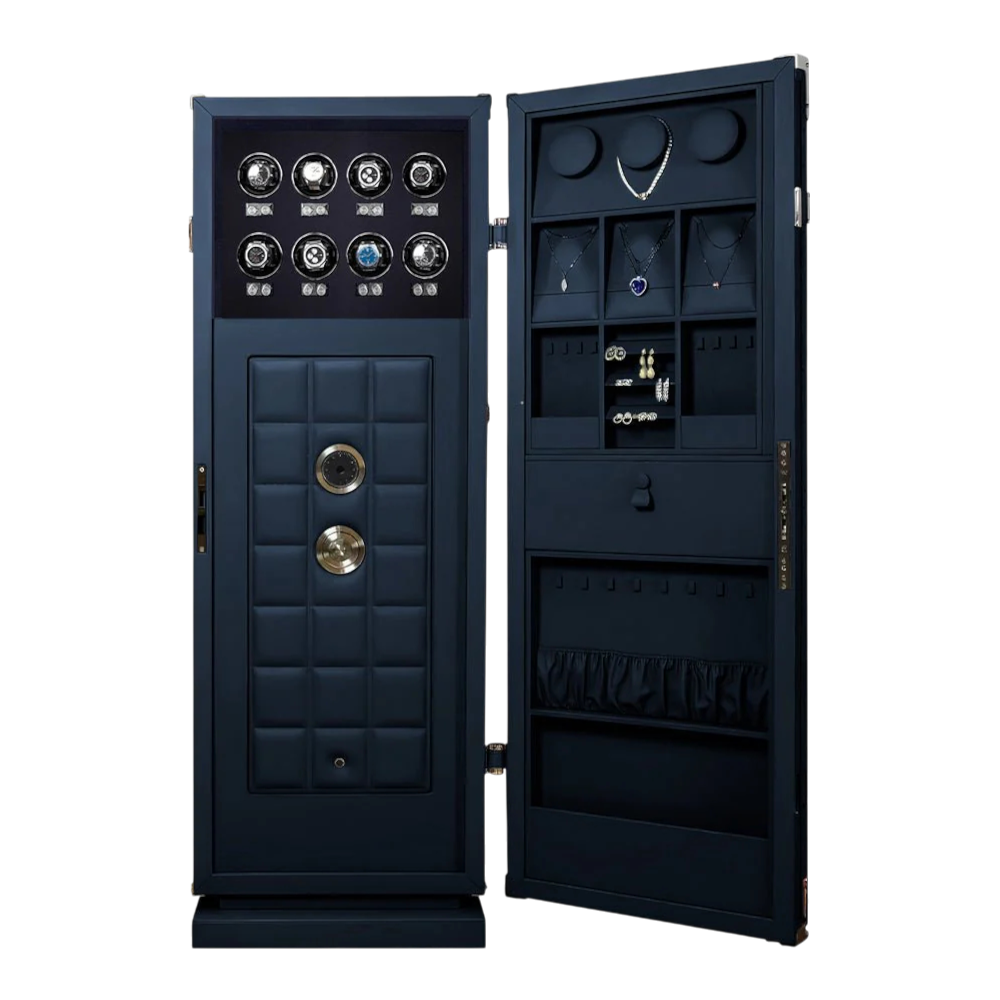

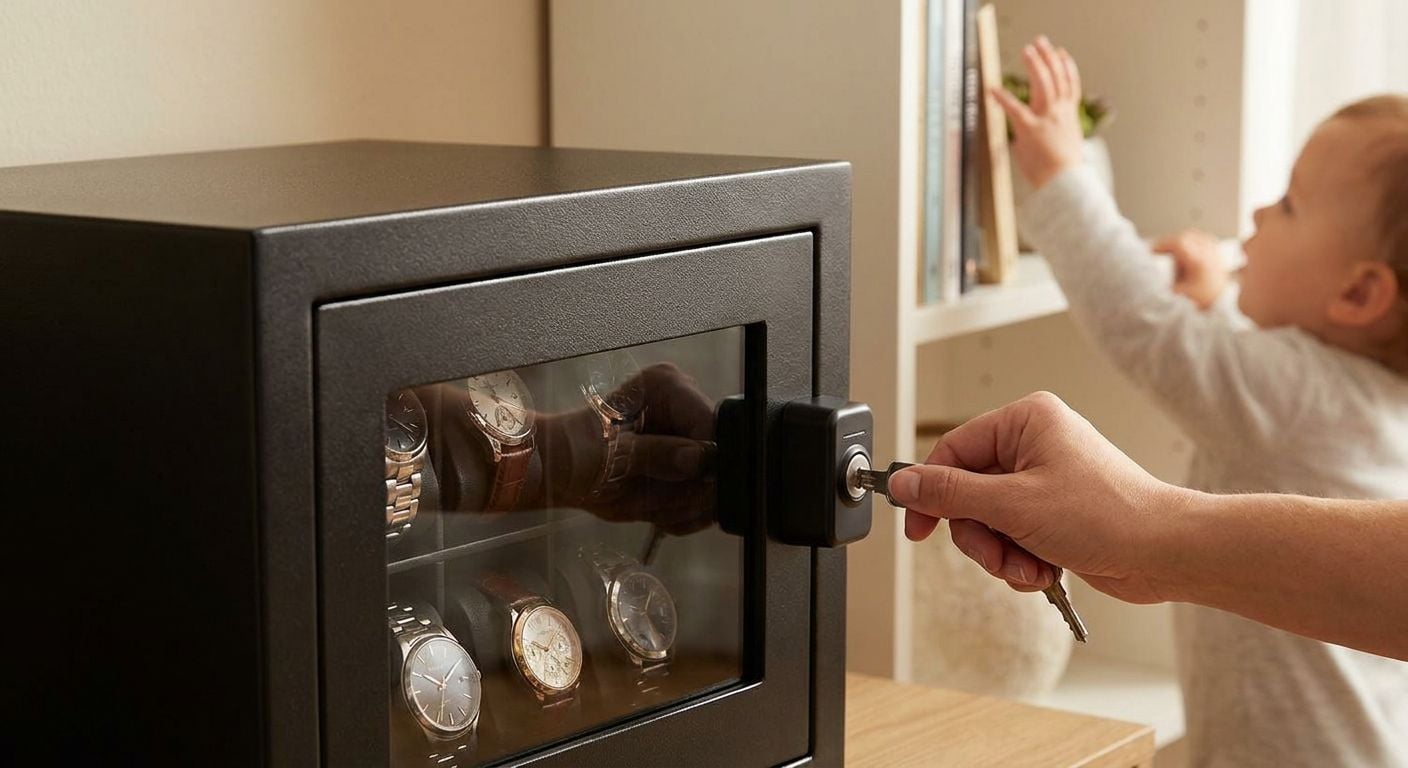
A watch safe stops a break-in, but it does nothing to stop a five-year-old with a step stool and eleven unsupervised minutes in a closet. Childproofing a watch safe closes three gaps at once: the lock, the mount, and the habits of everyone who lives in the house.
- A childproof watch safe pairs an adult-only biometric or PIN lock with a bolted mount — skip freestanding units in a house with kids.
- Bolting a safe to a wall stud or closet slab stops tip-over risk; a heavier door alone does not.
- Enigwatch safes ship with biometric access and professional installation, both of which matter more once children are in the house.
- Test a lock’s response and lockout behavior before you buy — a worn keypad tells a curious child exactly which four digits matter.
Why This Matters
Most watch safe marketing talks about burglars. The more common risk in a house with kids is simpler: a child finds an unlocked door, an unattended key, or a PIN typed in front of them enough times to memorize it. A biometric lock built for adult-only enrollment closes that gap in a way a shared four-digit code never will.
Childproofing works differently from theft deterrence. You're not defending against forced entry — you're removing opportunity and cutting the odds a curious child ever gets an unsupervised try. That distinction changes where you put the safe, which lock you choose, and how you talk about it at home in 2026.
What You'll Need
- A safe with an adult-only lock — biometric access beats a shared PIN in a household with children
- A stud finder and lag bolts rated for the safe's mounted weight
- A closet or room outside daily kid traffic, not a shared playroom or a bedroom hallway
- A drill and mounting hardware, or a professional installer (Enigwatch includes installation with each safe)
- A weekend afternoon, longer if you're anchoring into a slab instead of a stud wall
The Steps
1. Pick a lock built for restricted access
This is the single change that does the most work. A watch safe with lock types built for shared households — biometric, PIN with a shuffled keypad, or a mechanical key kept off-site — narrows who can open the door to people you've explicitly enrolled.
Enroll only adult fingerprints. If the safe uses a keypad, favor a model with a scrambled digit layout so wear patterns on the buttons don't give away the code. Expected outcome: only enrolled adults open the safe on a first try. Common mistake: enrolling one spouse's print, then leaving a physical backup key in a drawer a housekeeper or child can find.
2. Choose a location a child can't reach or observe
A safe hidden from foot traffic is harder to tamper with than one that's simply locked. Put it above the eye level of a six-year-old and out of sightline from any spot a child regularly sits — a bed, a play corner, a reading chair.
Expected outcome: no line of sight to the keypad or biometric pad from common play areas. Common mistake: mounting at adult waist height inside a walk-in closet kids already use for hide-and-seek.
3. Anchor the safe to a stud or slab
Tip-over is a bigger risk with children than most owners plan for — a climbing or leaning child applies lateral force a freestanding safe was never designed to absorb. Bolting a watch safe to studs or a concrete slab removes that risk entirely.
Locate two studs, typically 16 inches on center, and run lag bolts through the safe's rear anchor points into solid framing. Expected outcome: the safe doesn't shift under sustained lateral pressure. Common mistake: anchoring into drywall with plastic anchors instead of studs — they pull free under repeated weight.
4. Separate the winding compartment from casual view
If the safe includes a winder or a display drawer, keep it closed between uses rather than left ajar for convenience. A visible rotor spinning behind glass is exactly the kind of movement that draws a toddler's attention.
Expected outcome: nothing moving or glinting inside the safe when the door isn't actively in use. Common mistake: leaving the display case open after winding a watch because the door was "just going back in an hour."
5. Confirm the lockout and re-lock delay is active
Most digital and biometric locks include a cooldown period after repeated failed attempts. This setting stops a child from guessing a code through trial and error, but it's sometimes disabled by default or during initial setup.
Expected outcome: the keypad or sensor locks out for a set interval after several failed tries. Common mistake: assuming the lockout is on without checking the settings menu after installation.
6. Set house rules and supervise the first few weeks
Physical controls only go so far. Tell children directly that the safe is off-limits, and avoid entering a PIN or presenting a fingerprint in front of them more often than necessary.
Expected outcome: the safe becomes background furniture, not a curiosity. Common mistake: demonstrating how the safe opens as a way to show it off to visiting kids.
See an Enigwatch Safe In Person
Every safe ships with professional installation included.
Troubleshooting
- A child watches you enter a PIN repeatedly and starts imitating it. Switch to biometric enrollment or relocate entry out of any sightline from common rooms.
- The safe rocks or shifts when leaned on. Check that anchor bolts landed in studs or slab, not drywall alone — this is the most common install error in 2026 service calls reported by owners.
- The lockout doesn't engage after failed attempts. Recheck the lock's settings menu; some units ship with the feature off until manually enabled.
- A spare key is stored somewhere a child can reach. Relocate it off-site or hand it to a trusted adult who doesn't live in the house.
- The biometric sensor lags or misreads in a cold or humid room. Keep the safe in a climate-controlled space — temperature swings affect sensor response more than most owners expect.
Tools and Resources
- Stud finder and a level
- Lag bolts rated for the safe's mounted weight
- Drill/driver
- The safe's spec sheet for anchor weight rating
- A professional installer if stud placement or slab anchoring is unclear
What To Do Next
If more than one adult in the house needs access — a spouse, an adult child, a household staff member — the lock strategy changes again. The guide on a watch safe for a shared household with multi-user access covers how to enroll multiple credentials without weakening the childproofing you just set up.
FAQ
What’s the best lock type to childproof a watch safe?
A biometric lock with adult-only fingerprint enrollment is the strongest option for households with kids in 2026. A shuffled-digit PIN keypad is the next-best choice if biometric isn’t available.
Is a biometric lock safer than a PIN keypad for keeping kids out?
Yes, because it removes the risk of a memorized or observed code. A child can watch a PIN get entered a dozen times, but a fingerprint can’t be copied by watching.
How much does a childproof watch safe cost in 2026?
Luxury safes with biometric locks and professional installation, like those from Enigwatch, run roughly $5,000 to over $21,000 depending on size and interior finish. The lock type doesn’t change the price tier as much as slot count and materials do.
Do watch safes need to be bolted to the floor or wall?
Yes, if children are in the house. Bolting to a stud or slab stops tip-over risk from a climbing or leaning child, which a heavier door alone doesn’t address.
Can a child open a fingerprint-locked safe by accident?
No. Biometric locks only recognize enrolled prints, and a child’s fingerprint isn’t in the system unless an adult deliberately added it. This is a core advantage over shared PIN codes.
How do I stop a child from watching me enter the code?
Move the safe out of any sightline from beds, play areas, or hallways, and avoid entering the code in front of children more than necessary. Relocation solves this faster than any lock upgrade.
Is a combination lock or digital keypad better for households with kids?
A digital keypad with a lockout after failed attempts is generally easier to keep secure than a mechanical combination dial, which can be memorized visually over repeated use.
One Last Thing
A safe's motor matters more than most owners realize once kids are in the house. A loud winding rotor draws exactly the kind of curiosity you're trying to avoid — a silent motor keeps the safe from becoming a noise a child associates with something worth investigating. Pair that with a bolted mount and an adult-only lock, and the physical side of childproofing a watch safe is largely solved by 2026 standards; the rest comes down to habits.
Related Guides
Protect Your Watch Collection
Designed for collectors who demand the best. Explore our premium watch winders and luxury safes.