
Testing a watch safe lock before you buy takes about fifteen minutes and catches the failures that showroom lighting hides. A biometric sensor that reads perfectly under a salesperson’s dry, clean thumb can misread a damp finger three months later — and a combination lock with no retry lockout is a compliance gap, not a premium feature.
- Testing a watch safe lock before you buy means checking biometric response, key override, and bolt throw in person.
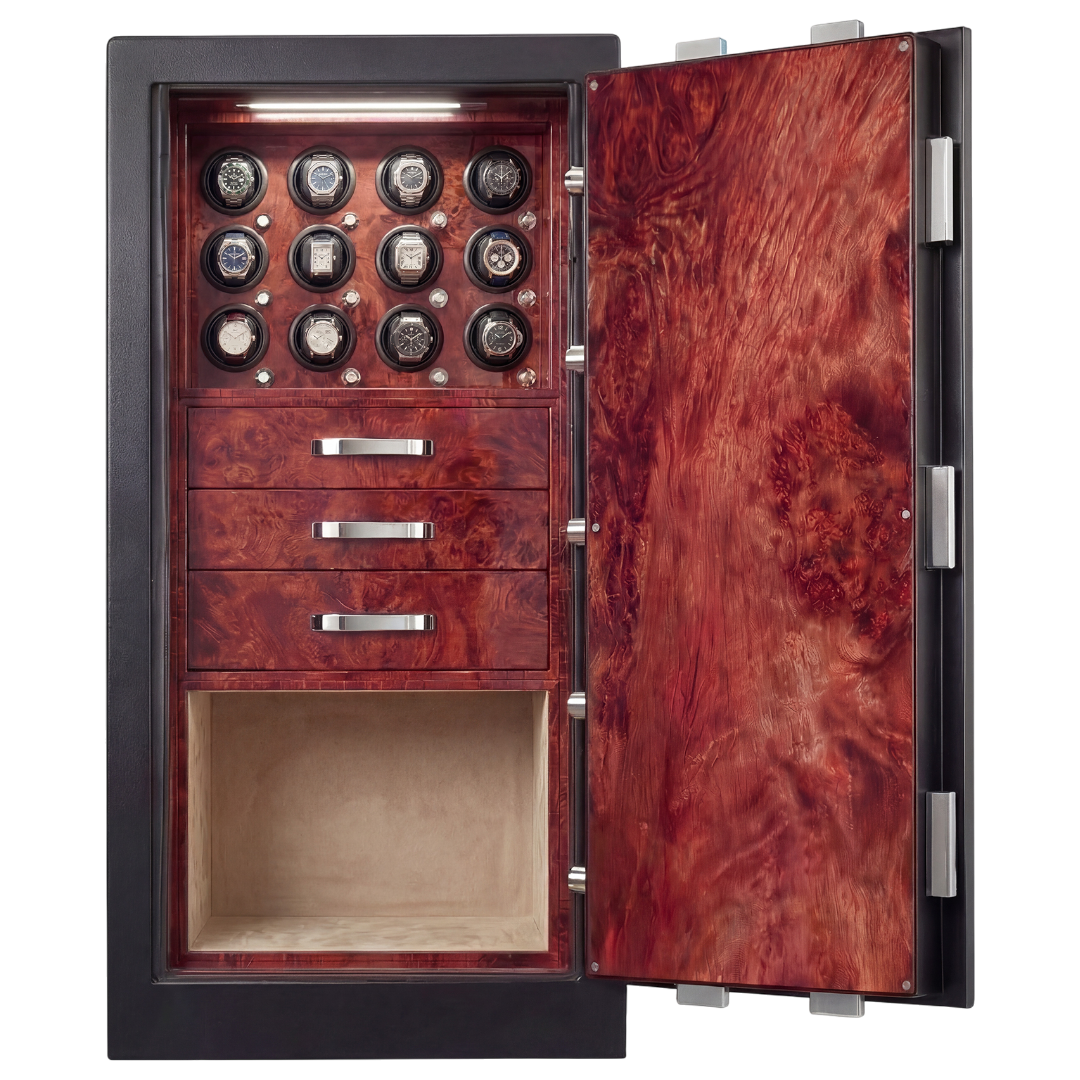
- The Veron Elite 12 ships with a UL TL-30 Grade III lock body — confirm the bolt fully engages before you pay. Buy.
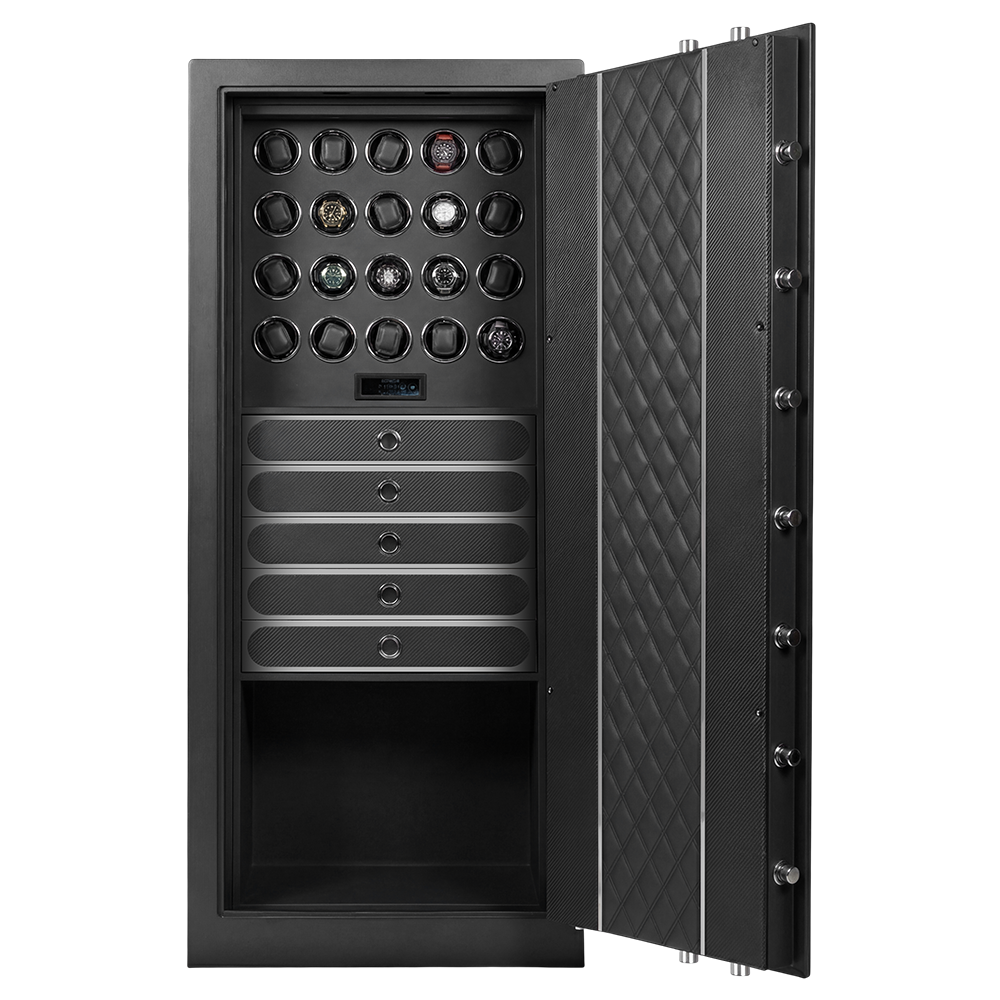
- The Titan Sanctum 20 pairs biometric access with AR500 ballistic steel — test the sensor with a wet thumb, not just a dry one.
- Walk away from any combination lock that doesn’t lock out after repeated wrong entries — that’s a 2026 baseline, not an upgrade.
Why this matters
A watch safe lock is the only part of the safe that touches your hand every single day. The steel body, the fire rating, the Nappa lining inside — none of it matters if the lock hesitates, misreads, or fails outright when you’re standing there with a Rolex in one hand.
Collectors who search how to test a watch safe lock usually learn the hard way: after delivery, when the return window is closing and the sensor that read fine in the showroom is now rejecting a damp thumb. Humidity, grip pressure, even hand lotion residue change how a sensor performs, a detail rarely covered in lock comparisons written for showroom conditions.
Testing before you buy, or in the first week after delivery, separates a safe built for daily access from one built for a photo shoot. In 2026 that gap is wider than the price difference between models suggests, especially once you’re comparing a $9,999 unit against a $17,999 one on spec sheets alone.
What you’ll need
- A dry cloth and a damp cloth, to simulate two grip conditions on the biometric sensor
- The physical backup key, if the model ships with one
- A stopwatch or your phone’s timer
- The dealer’s written lock specification, including the UL rating and retry-lockout behavior
- In-person access, or a live video call with the dealer if you’re buying remotely
The steps
1. Test the biometric sensor dry, then damp
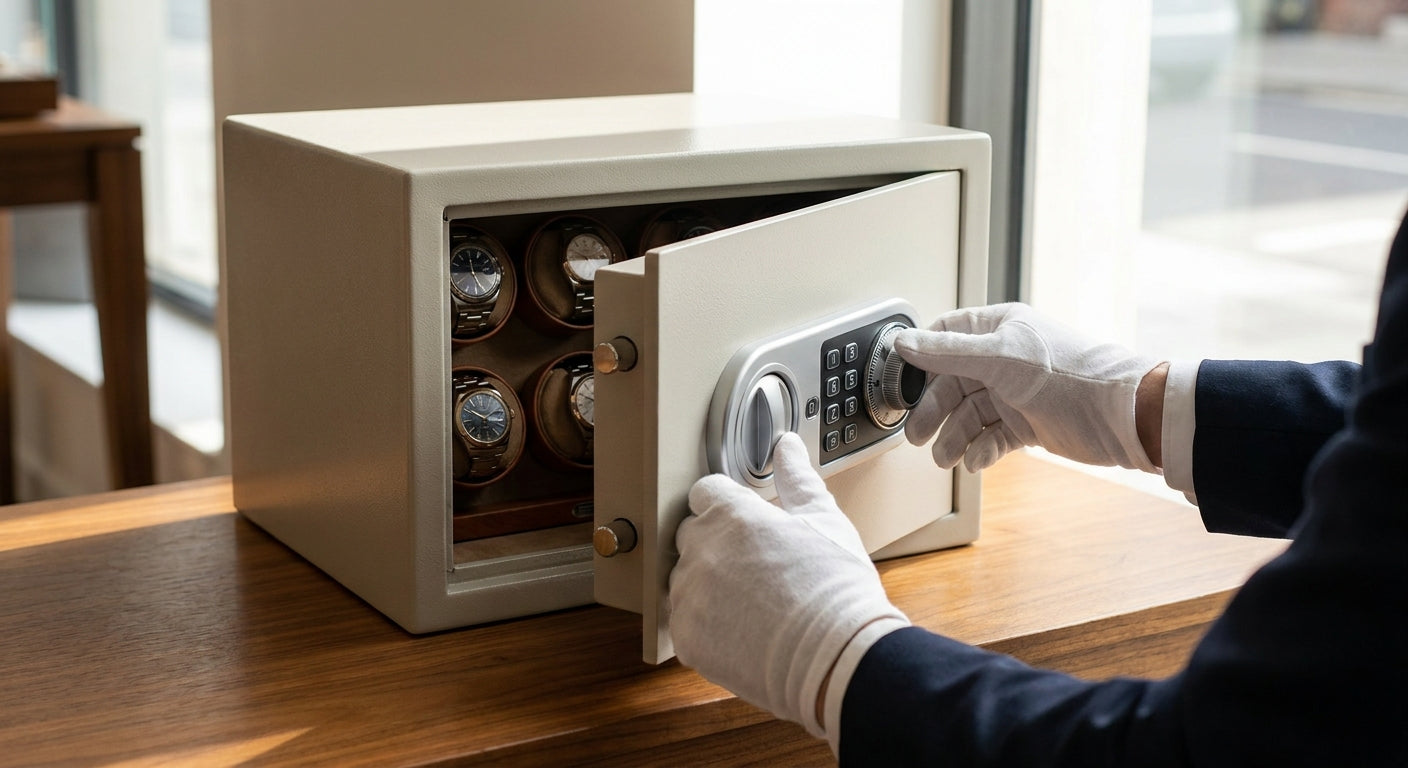
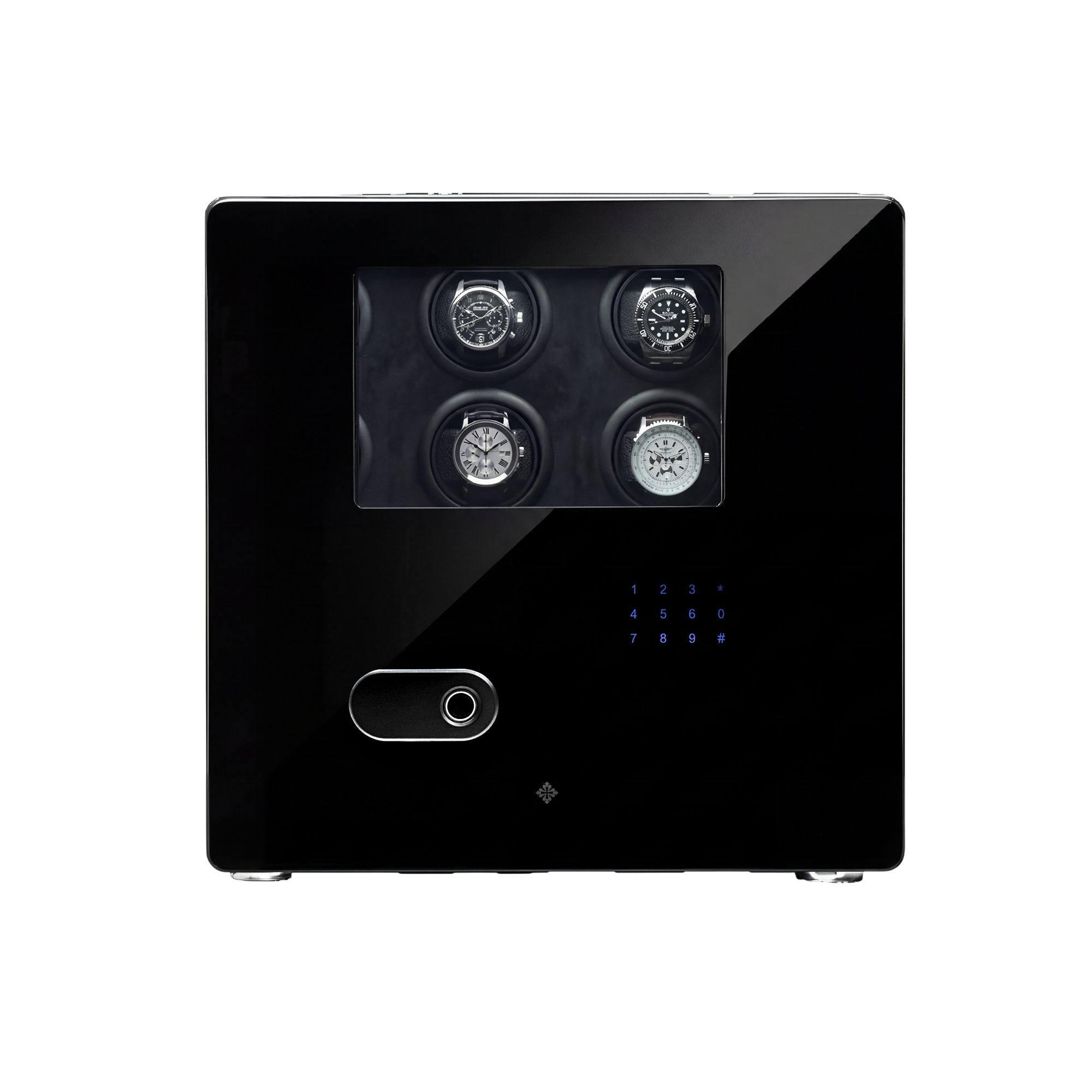
A fingerprint sensor that only works on a clean, dry thumb is a sensor that will fail you on a humid morning or right after a shower. Press a dry thumb first and time the unlock, then run the same thumb under water without drying it and try again. A reliable unit unlocks in under two seconds both times. Enrolling a second finger and testing that one too catches sensors with inconsistent read quality across enrollments. The common mistake here is letting the salesperson demonstrate the unlock with the exact finger and grip they enrolled — test it yourself, cold.
2. Force the physical key override independently
Most high-security models, including the Veron Elite 12, build in a mechanical key override so the safe still opens if the electronics fail. With the door already open, insert the key and turn it without engaging the biometric or code pad — the bolt should respond to the key alone. If it doesn’t move independently, the override is decorative, not functional, and that’s a real problem in a power outage.
3. Trigger the combination lockout on purpose
Enter three wrong codes in a row and watch what happens. A properly built lock locks out for a fixed period after repeated failed attempts — if the pad lets you try indefinitely with no penalty, that’s a lock built for convenience, not security. This is the single fastest way to separate a UL-listed lock from a bargain-bin one.
4. Listen and feel for full bolt engagement
Open and close the door with the lock engaged and pay attention to the sound. A solid mechanical throw sounds like one clean movement, not a series of scrapes. Push gently against the closed door — it shouldn’t flex or spring. On models like the Titan Sanctum 20, the bolt work is part of what justifies the AR500 ballistic rating; a bolt that doesn’t seat fully undermines the whole security case.
5. Simulate a power interruption
For any electronic or biometric lock, ask the dealer to unplug the unit or pull the battery, then try the backup key or manual code path. A well-designed safe has a documented fallback that doesn’t depend on grid power. If the dealer can’t answer what happens during an outage, that’s a specification gap you’re entitled to before you wire money.
6. Match the lock body to the stated UL rating
Ask to see the lock certification in writing, not just quoted in marketing copy. The Veron Elite 12 carries a UL TL-30 Grade III rating; confirm the physical lock in front of you matches the paperwork, since some resellers substitute lock hardware between production runs. Expected outcome: the serial number on the lock matches the certificate. Common mistake: taking the listing’s rating at face value without asking for documentation.
“If the lock doesn’t fail once during testing, it isn’t being tested hard enough.”
Troubleshooting
The fingerprint sensor rejects a damp thumb every time. Ask about adjustable sensitivity or confirm there’s a key or code fallback — a sensor with no backup path is a liability, not a feature.
The combination lock never locks out after wrong entries. That’s a compliance gap. Ask for documentation of the UL listing, or walk away from that specific unit.
The key override doesn’t move the bolt independently. Get written confirmation of mechanical redundancy before purchase, or treat the safe as electronics-only.
The bolt drags or doesn’t fully retract. Request a factory inspection before delivery, or reject the unit at the door — a bolt that binds now will bind worse in a year.
The biometric sensor takes more than three seconds to read consistently. Ask which sensor generation the model ships with in 2026; earlier production runs on some safes lag noticeably compared to current units.
The dealer can’t explain the power-outage fallback. That’s a question they should answer without hesitation. If they can’t, ask in writing before you commit.
Tools and resources
- A stopwatch or phone timer for biometric read speed
- The dealer’s written UL rating and lock certification
- A damp cloth for the humidity test
- Enigwatch’s comparison of key, combination, and biometric mechanisms for background before you shop
- The manufacturer’s stated backup path for power loss, in writing
What to do next
Once the lock passes, look past the mechanism to the rating behind it. The number stamped on the certificate tells you more about real-world security than any marketing description does, and what the UL numbers on a watch safe actually mean is worth fifteen more minutes before you sign.
FAQ
What’s the best way to test a watch safe lock before buying?
Test the biometric sensor dry and damp, force the key override independently, and trigger the combination lockout on purpose. A lock that fails any of these in 2026 isn’t ready for daily use, no matter how it photographs in a showroom.
Is a biometric lock better than a key lock for a watch safe?
Biometric locks are faster for daily access but need a mechanical or coded backup for power outages. The best watch safes pair a fingerprint sensor with a physical key override, so neither point of failure leaves you locked out.
How long should a fingerprint sensor take to unlock a watch safe?
A reliable sensor unlocks in under two seconds on both a dry and a damp finger. Anything consistently slower than three seconds points to an older sensor generation or a unit that needs recalibration.
What does UL TL-30 mean on a watch safe?
UL TL-30 means the safe’s lock and door resisted a tool-based break-in attempt for 30 minutes under standardized testing. The Veron Elite 12 carries a UL TL-30 Grade III rating, and the grade number after TL-30 indicates the resistance tier.
Can a watch safe lock be tested without buying the unit first?
Yes, most dealers allow in-person testing before purchase, and a live video call works for remote buyers who ask the dealer to run the same checks on camera. Insist on seeing the key override and lockout behavior, not just the biometric demo.
How much does a high-end watch safe with a tested lock cost in 2026?
Tested, UL-rated watch safes with biometric access run from roughly $5,299 for compact models like the Centennial Bulletproof up to $17,999 and beyond for larger units like the Titan Sanctum 20. Price generally tracks lock certification and steel grade, not just watch capacity.
What happens to a watch safe lock during a power outage?
A properly designed electronic or biometric lock includes a mechanical key or battery backup that bypasses the grid dependency entirely. If a dealer can’t describe this fallback in specific terms, that’s a gap worth asking about before you buy.
Is a combination lock more reliable than a digital lock long term?
Mechanical combination locks have fewer electronic parts to fail over a decade of daily use, but digital and biometric locks offer faster access and audit logging. Reliability comes down to build quality and certification, not the lock type alone.
One last thing
Most buyers test the lock once, in the showroom, under ideal conditions, and never touch it again until it fails at home. Run the damp-finger test and the forced lockout again after delivery, once the safe has sat in its actual location for a week — humidity, dust, and even the angle you reach it from all change slightly, and a lock that’s still passing after that is one you can trust through 2026 and beyond.
Related guides
Protect Your Watch Collection
Designed for collectors who demand the best. Explore our premium watch winders and luxury safes.
Protect Your Watch Collection
Designed for collectors who demand the best. Explore our premium watch winders and luxury safes.