
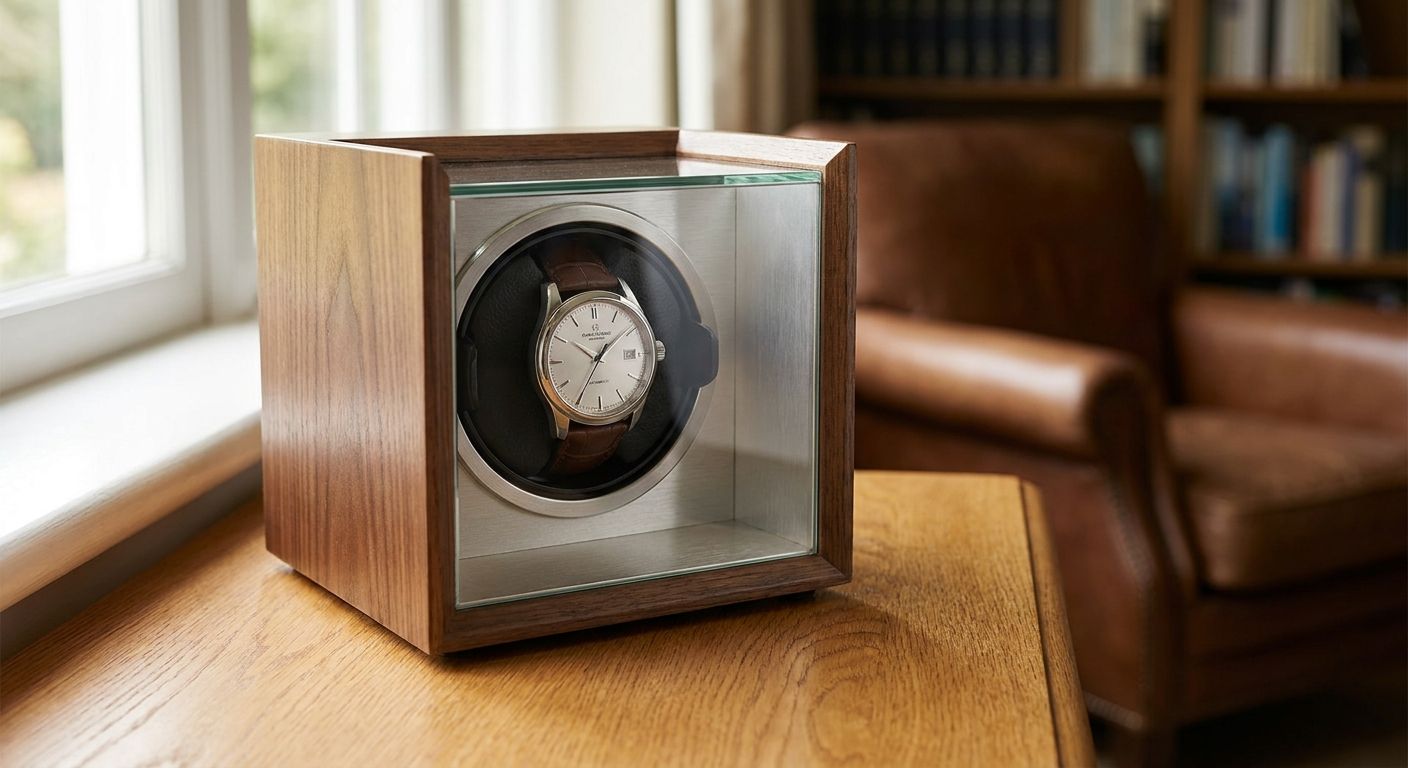
A watch that sits in a drawer for weeks at a time needs a different winding strategy than a daily wearer. Get the turns-per-day and rest cycle wrong and you either stress the mainspring or let the watch stop between wears.
- Match TPD to the movement’s actual spec, not a generic 650-setting default, when choosing a watch winder for a watch you rarely wear.
- A single winder with a rest-day program beats a 24/7 spinner for pieces worn less than twice a month.
- Store the watch at 40-50% humidity whether or not it is winding.
- Buy a winder with adjustable TPD and direction control if the watch sees under 8 hours of wrist time a week.
Why this matters
An automatic movement only stays accurate and lubricated when its gear train keeps moving. Leave it still for 40-plus hours and the mainspring unwinds, the date wheel can jump at midnight, and some complications like moonphase or perpetual calendar need a full manual reset that takes real time to get right.
A watch you rarely wear is the exact scenario a watch winder exists to solve, because you are not around to hand-wind it every few days. The catch is that most winders ship with one-size-fits-all settings, and those settings assume daily wear, not a watch that comes out of storage twice a month.
What you'll need
- The manufacturer's turns-per-day (TPD) spec for your specific caliber, not just the brand average
- A single or double watch winder with adjustable TPD, direction, and a rest-cycle program
- A stable spot away from direct sunlight and heating vents
- 10-15 minutes to set the program correctly the first time
- A soft cloth for the case if the watch has sat unworn long enough to collect dust
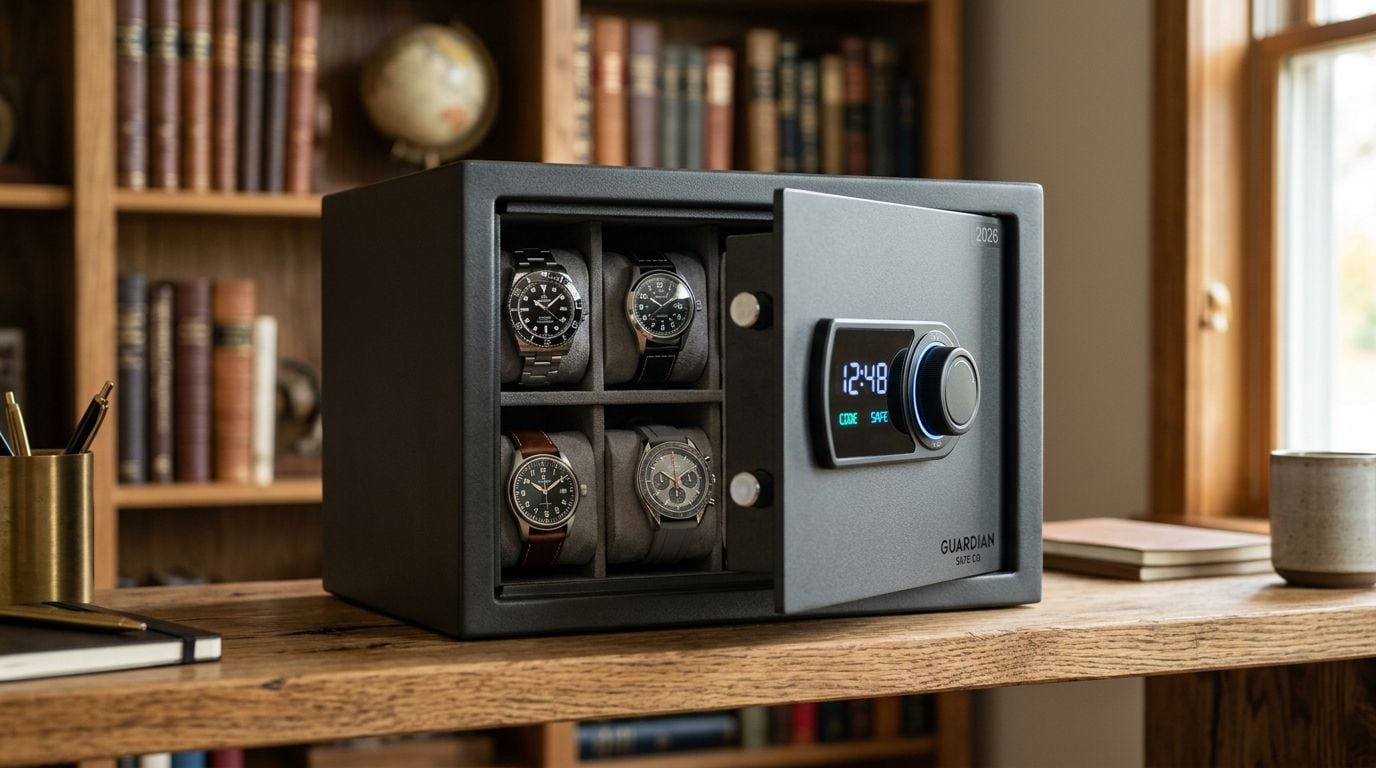
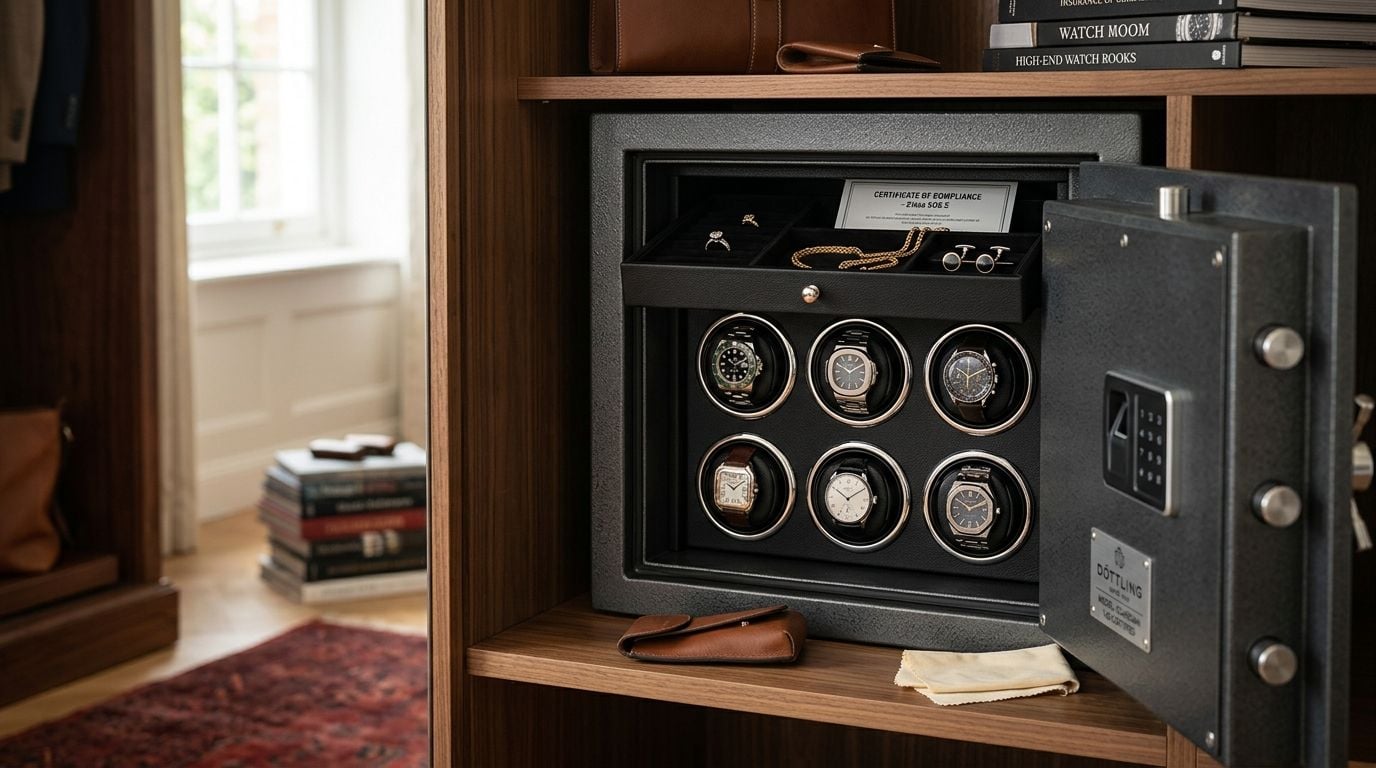
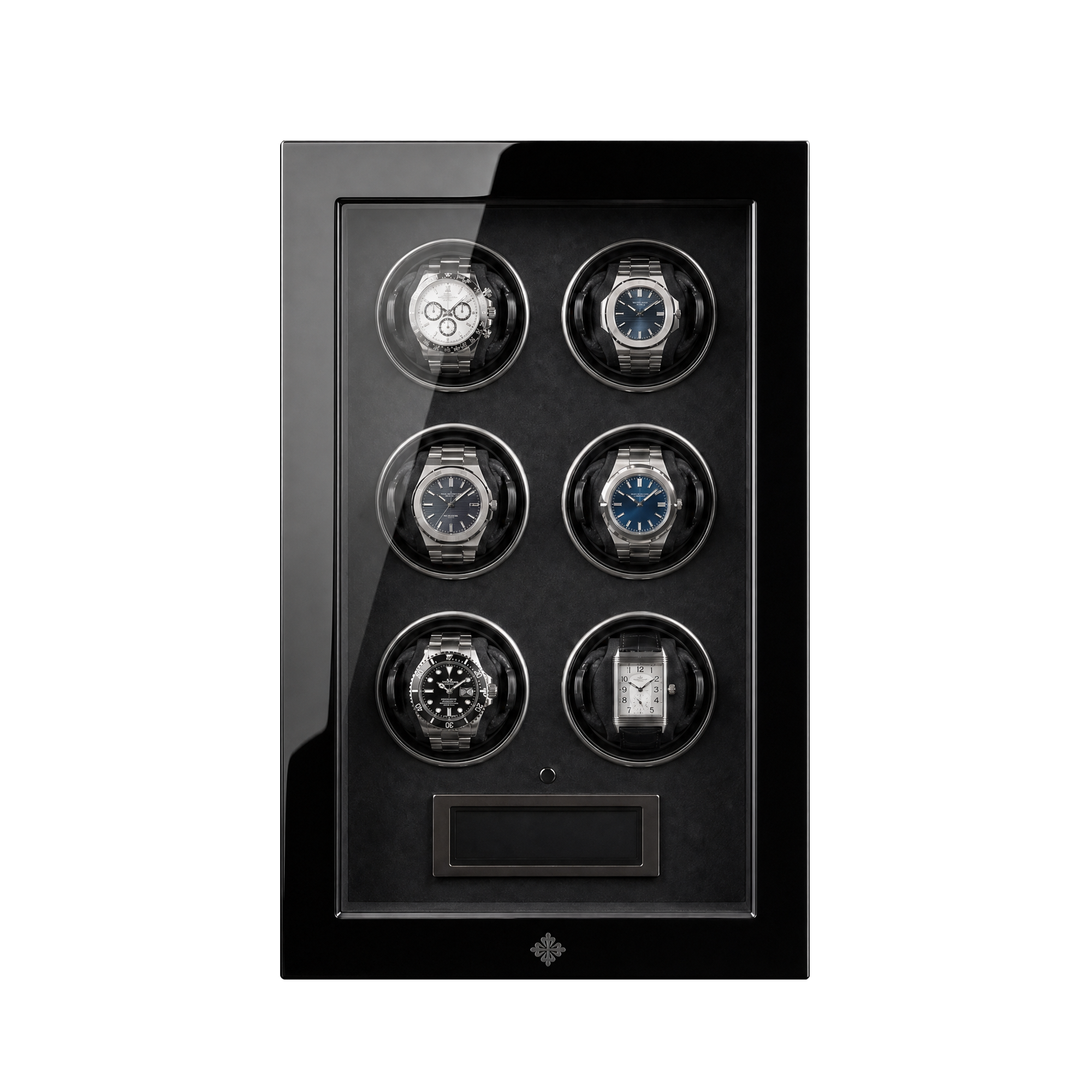
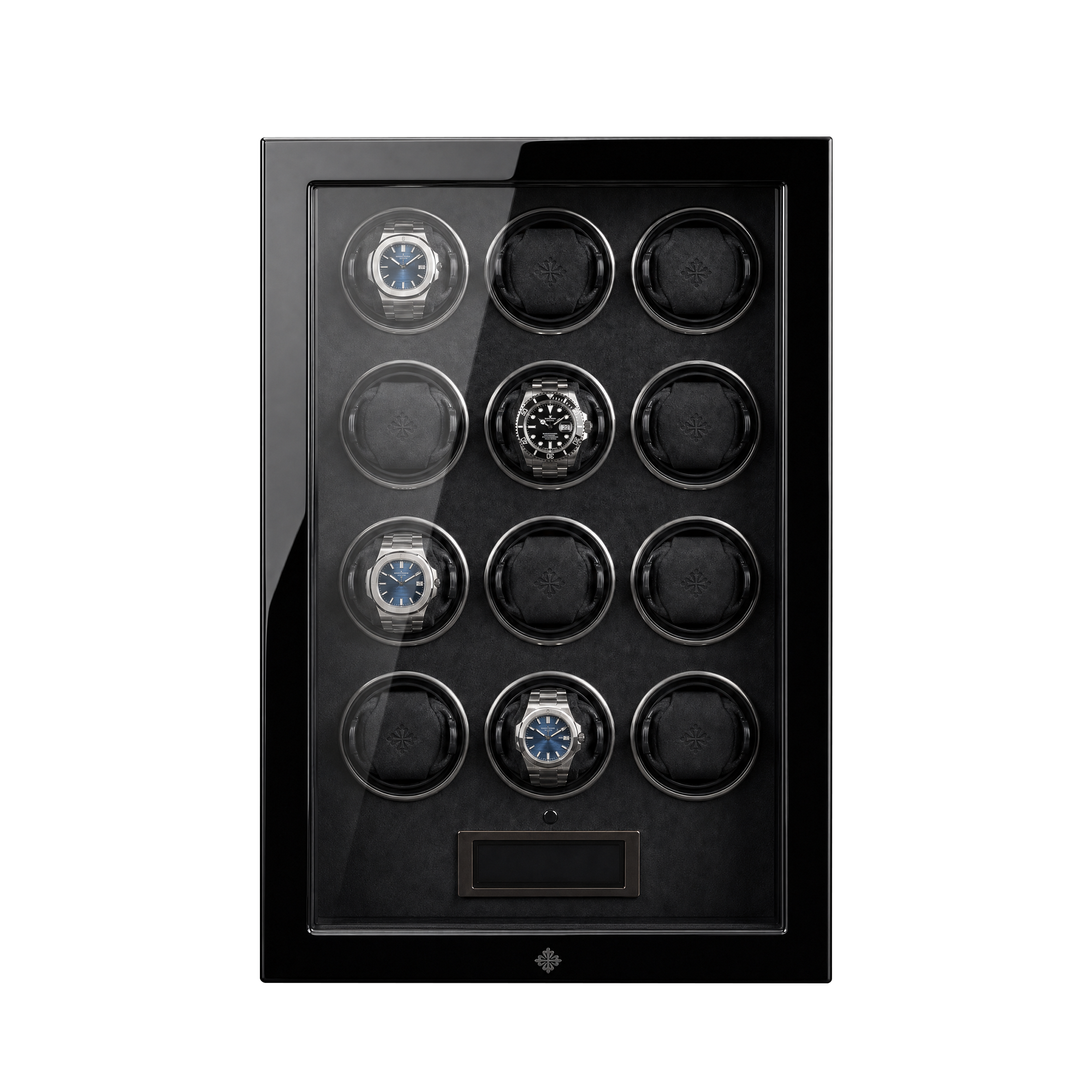
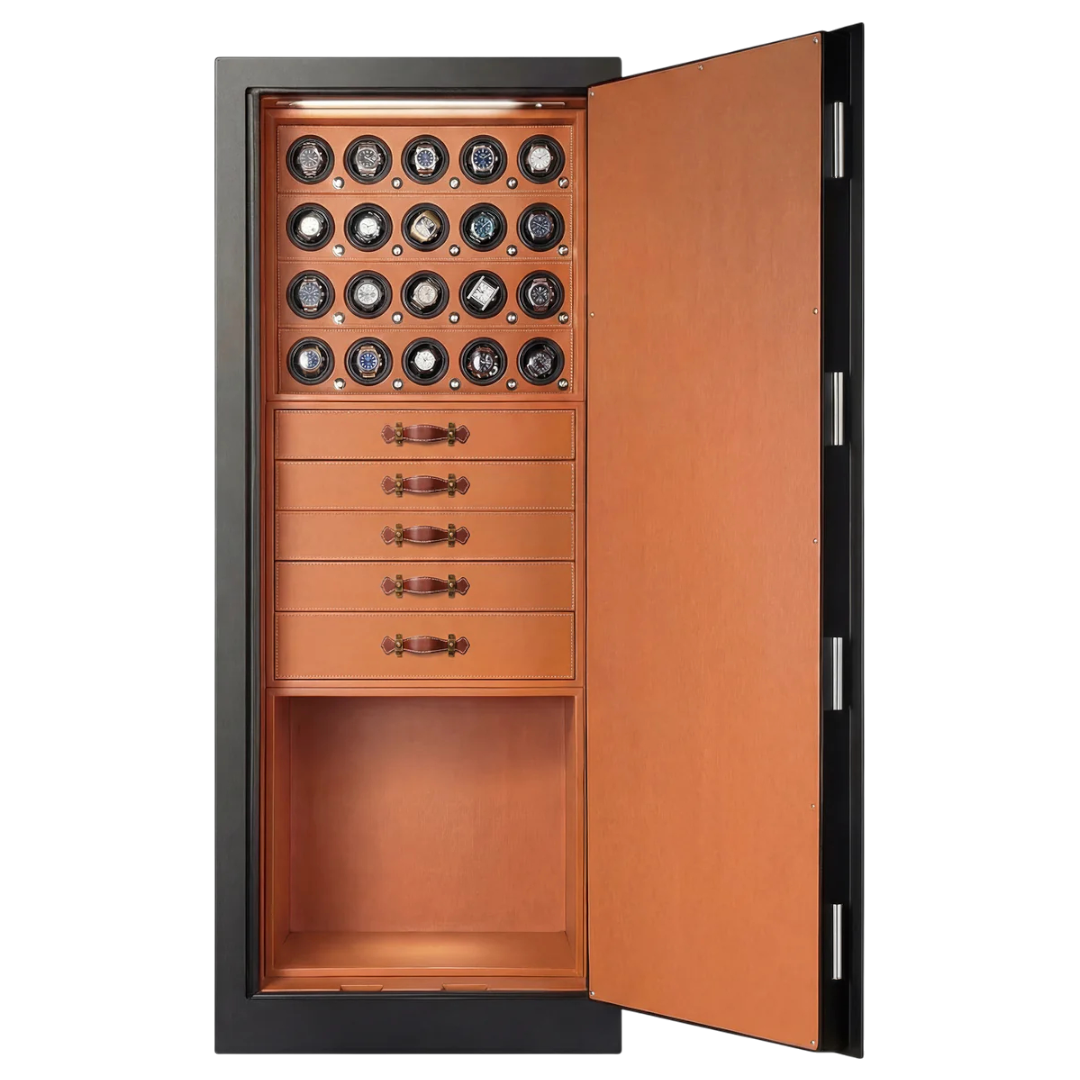
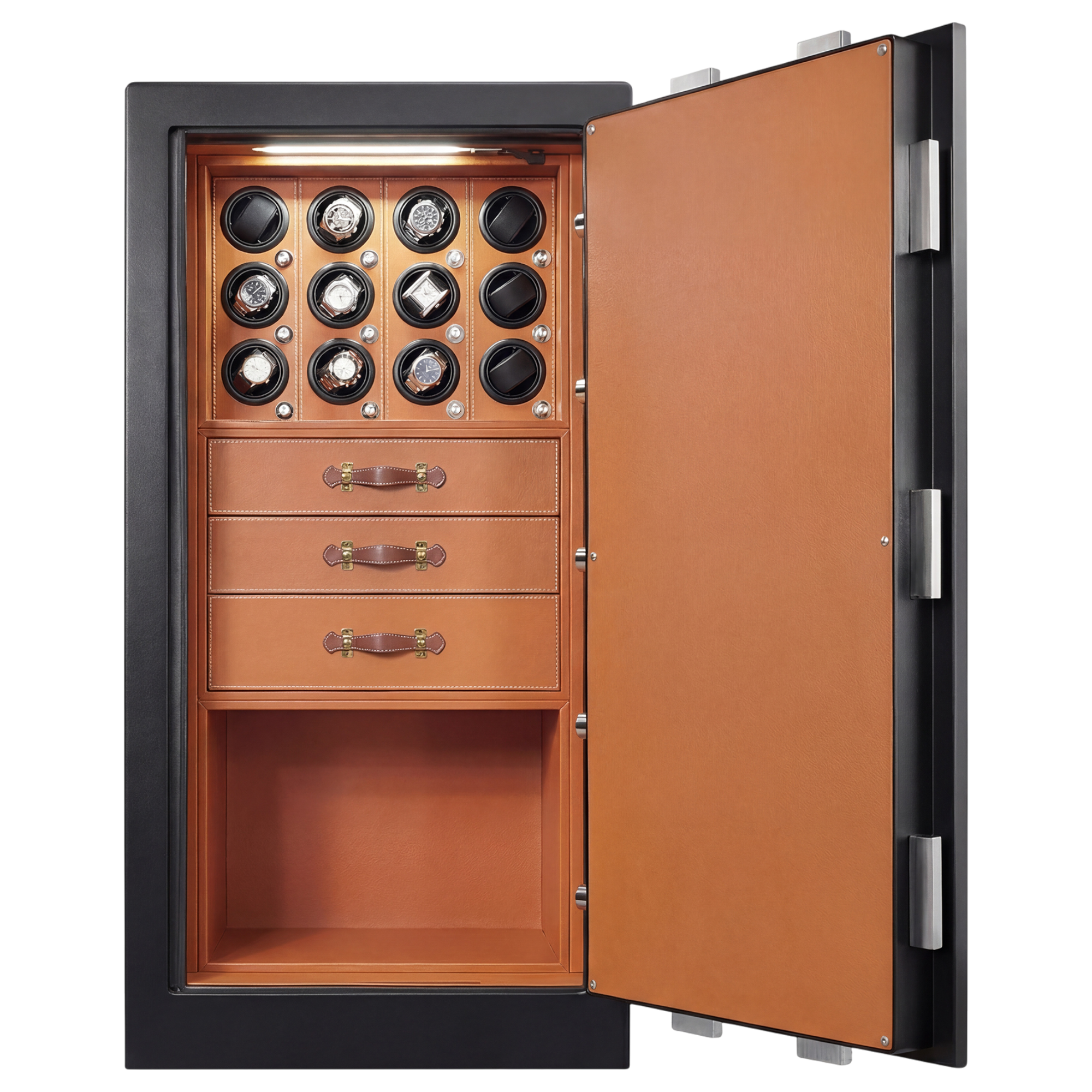
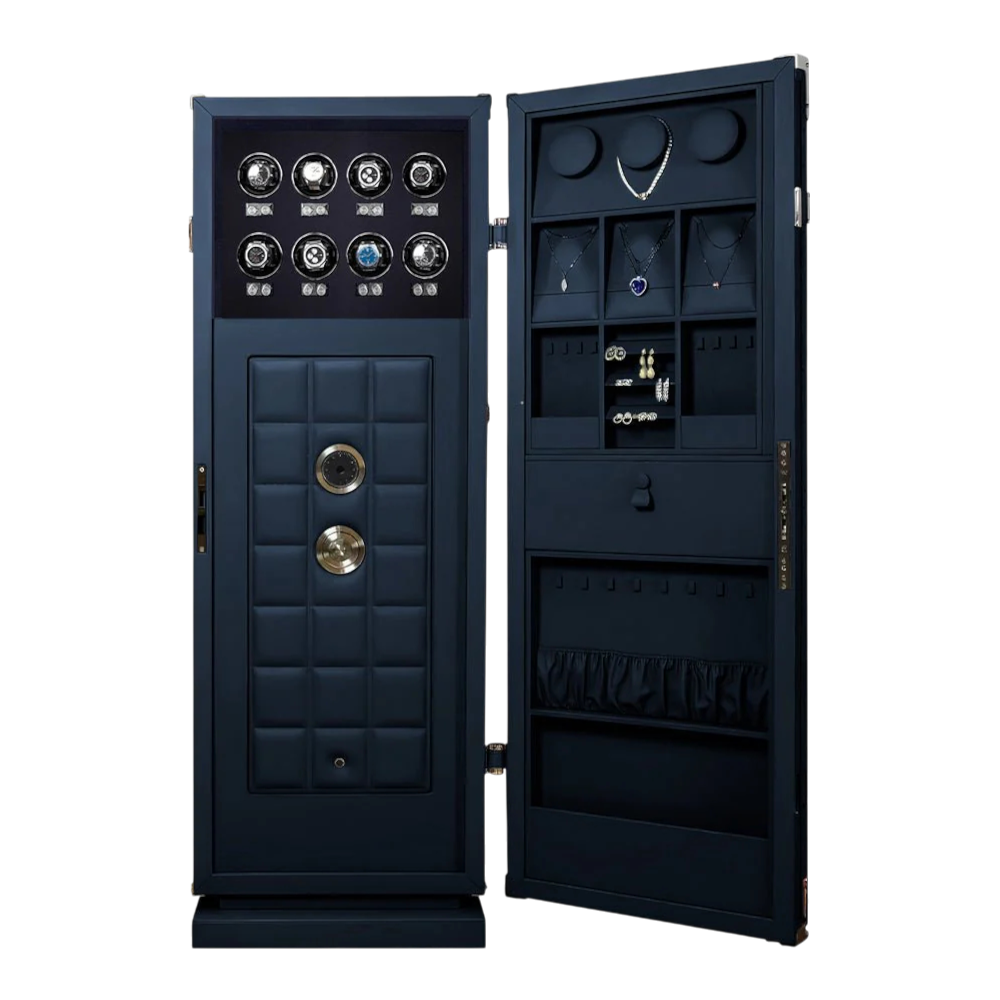
If the watch also carries meaningful resale or insurance value, pair the winder question with how it is stored when it is not spinning. A watch safe with winder built in solves both in one enclosure, which matters more for a rarely-worn piece than for a daily one, because it spends most of its life sitting rather than on a wrist.
The steps
1. Confirm the exact TPD for your movement
Every automatic caliber has a published turns-per-day range, and it varies more than people assume. A Rolex 3235 needs roughly 650 TPD, while some chronograph calibers want 800 or more. Setting a winder to the wrong TPD either underwinds the mainspring or overworks the rotor bearing over years of use. Check the reference for your specific model rather than trusting a universal 650 default baked into a cheap winder.
Common mistake: assuming all automatics share one TPD number because the box came pre-set to 650.
2. Set the rotation direction
Movements wind clockwise, counterclockwise, or bidirectionally depending on the rotor design. A bidirectional winder covers most modern calibers safely, but some older or in-house movements only wind in one direction, and running the wrong direction just adds unnecessary motor cycles. If you are unsure, the case back or the manufacturer's spec sheet will confirm.
Common mistake: leaving a one-direction watch on a bidirectional-only cheap winder that cannot be switched.
3. Choose a rest-cycle program, not continuous winding
For a watch worn once or twice a month, continuous 24/7 rotation adds wear to the rotor bushing for zero benefit, because the watch reaches full wind long before the winder shuts off. Look for a program that runs a set number of hours per day, then rests, which mimics the winding a watch gets from casual wrist time. This is the single biggest setting difference between a winder built for daily wearers and one suited to occasional pieces.
Common mistake: buying any winder and leaving it on the factory default without checking whether a rest program exists.
4. Position the watch correctly in the pillow
A loose or misaligned watch in the winder cushion will not wind evenly, and a strap that is too tight can stress spring bars over months of continuous rotation. Center the case on the pillow, secure the strap at a comfortable notch rather than the tightest one, and check after the first cycle that it is still seated correctly.
Common mistake: cranking the strap tight enough to prevent any wobble, which adds tension to the lugs over weeks of unattended spinning.
5. Log the first week and check accuracy
Run the watch on its new winder setting for seven days, then compare the time against a reference clock. A properly wound automatic should hold accuracy within its stated spec, typically a few seconds a day for a modern chronometer-grade movement. Drift beyond that suggests the TPD or rest cycle needs adjusting, not that the watch is faulty.
Common mistake: assuming any drift means the movement needs service, when it is often just a mismatched winder program.
6. Reassess seasonally
Humidity and temperature swings affect lubricant viscosity, and a watch that runs fine on a summer setting can lag slightly once heating season starts. Revisit the TPD and direction settings twice a year rather than setting once in 2026 and never touching them again.
Common mistake: treating the initial setup as permanent instead of a starting point you refine.
Troubleshooting
- Watch stops between wears despite the winder running: TPD is likely set too low for the caliber. Check the spec sheet and increase incrementally.
- Date jumps or skips at midnight: the winder cycle is not running long enough per day to fully wind the mainspring. Switch from a rest program back to a longer daily cycle temporarily.
- Winder makes audible noise at night: motor bearings on lower-grade Japanese versus Swiss winder motors run quieter than off-brand alternatives. Noise usually means the unit needs servicing or replacing.
- Watch runs fast after a long rest period: this is normal for the first day back on the wrist after weeks off the winder, and it typically self-corrects within 24-48 hours.
- Strap or bracelet shows scuff marks: the pillow diameter does not match the case size. A mismatched winder pillow is the usual cause, not the winder motor itself.
- Uncertain if the watch even needs winding at all: some collectors skip winders for pieces worn under twice a month and hand-wind before wearing, worth comparing against how to store automatic watches without a winder before committing to a unit.
Find the right winder for a rarely-worn watch
Browse Enigwatch winders with adjustable TPD and rest-cycle programs.
Tools and resources
- Rotation programs and what each mode does for setting rest cycles correctly
- Automatic watch care and whether you need a winder at all as the baseline decision before buying
- A humidity gauge for the storage location, checked against the 40-50% range mentioned above
What to do next
Once the winder settings are dialed in, the next decision is where the watch lives when it is not on the wrist. For a piece you wear rarely, storage conditions matter as much as the winding schedule. See the complete watch winder buying checklist for the full decision tree, including safe pairing and climate control.
FAQ
Does a watch winder damage a watch that’s rarely worn?
No, a correctly configured watch winder does not damage a rarely-worn automatic. The risk comes from wrong TPD or direction settings, not from winding itself. Match the settings to the caliber’s published spec and the mainspring runs as designed.
How many hours a day should a watch winder run for an occasional watch?
Most occasional watches do well on a rest-cycle program running 8-12 hours a day rather than continuous rotation. Continuous winding adds motor wear with no benefit once the mainspring reaches full charge.
Is a single watch winder better than a double for a rarely-worn piece?
A single winder is usually enough for one occasional watch and costs less to run long-term. A double or multi-slot unit only makes sense once you’re rotating between two or more rarely-worn pieces.
What TPD should I set for a Rolex I only wear monthly?
Rolex calibers like the 3235 need roughly 650 turns per day regardless of how often you wear the watch. The TPD spec is tied to the movement, not to your wearing frequency, so only the rest-cycle length should change.
Can I just hand-wind a rarely-worn watch instead of using a winder?
Yes, hand-winding before each wear works fine for watches worn less than once a month, and some collectors prefer it. A winder becomes more useful once complications like perpetual calendars are involved, since resetting them after a full stop takes real time.
Do watch winders affect resale value?
A properly maintained winder schedule generally has no negative effect on resale value, since the movement’s condition matters far more than winder use. Overwinding fears from decades ago don’t apply to modern automatic movements with slipping mainspring clutches.
How much electricity does a watch winder use running part-time?
A rest-cycle program running 8-12 hours daily uses a small fraction of a full-time unit’s electricity, since quality winder motors draw minimal current even when active. Cost is rarely the deciding factor in winder selection.
Should a rarely-worn watch be stored in a safe as well as a winder?
If the watch has meaningful value, pairing a winder with humidity-controlled storage protects it better than a winder alone during the weeks it isn’t running. A combined safe-and-winder unit solves both needs in one enclosure.
One last thing
The overwind myth persists because it used to be true on manual movements without a slipping clutch. Modern automatic mainsprings, including everything built since the 1970s, cannot actually be overwound by a properly set winder. The real risk with a rarely-worn watch is not too much winding. It is the wrong rest cycle leaving it half-charged between the times you actually reach for it.
Related guides
- Do you need a watch winder for automatic watch care
- How to store automatic watches without a winder
- Watch winder rotation programs explained
- Complete watch winder buying checklist for 2026
Protect Your Watch Collection
Designed for collectors who demand the best. Explore our premium watch winders and luxury safes.