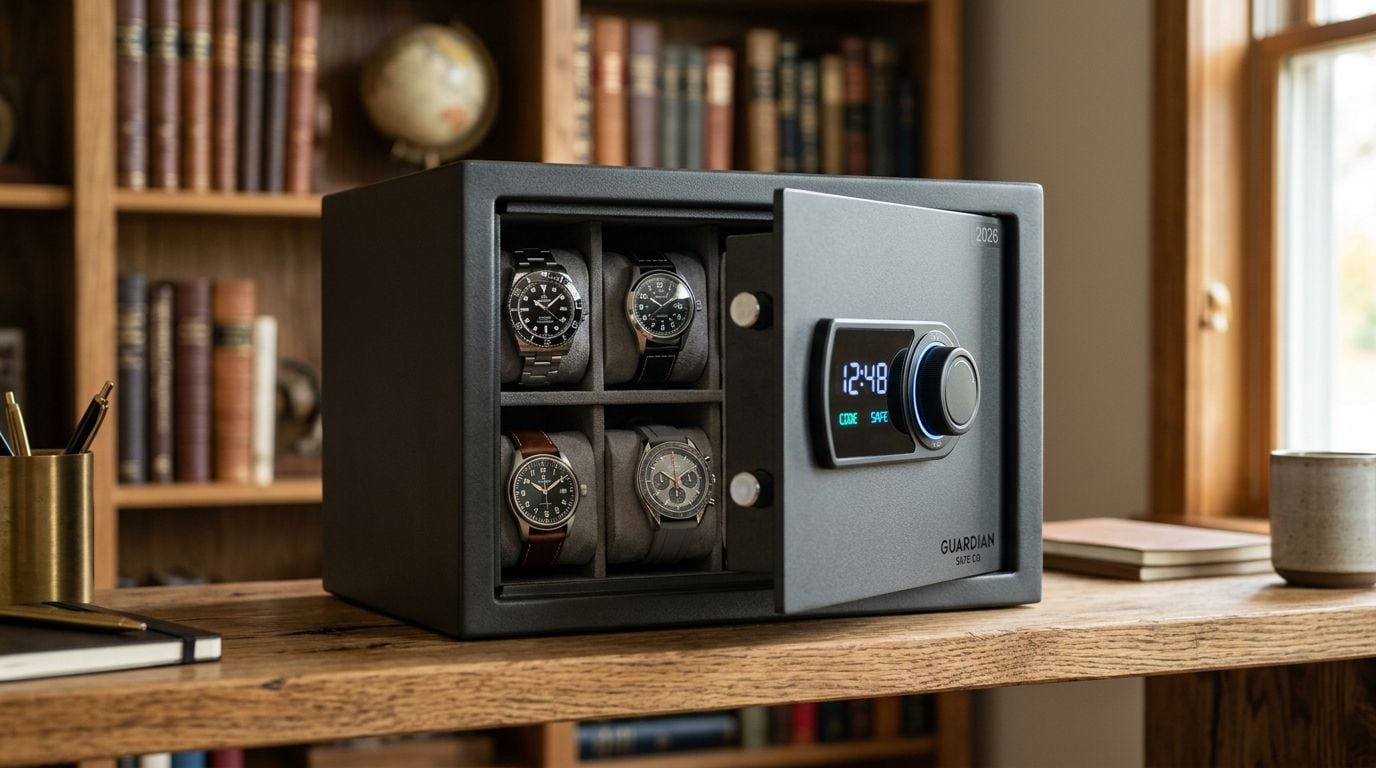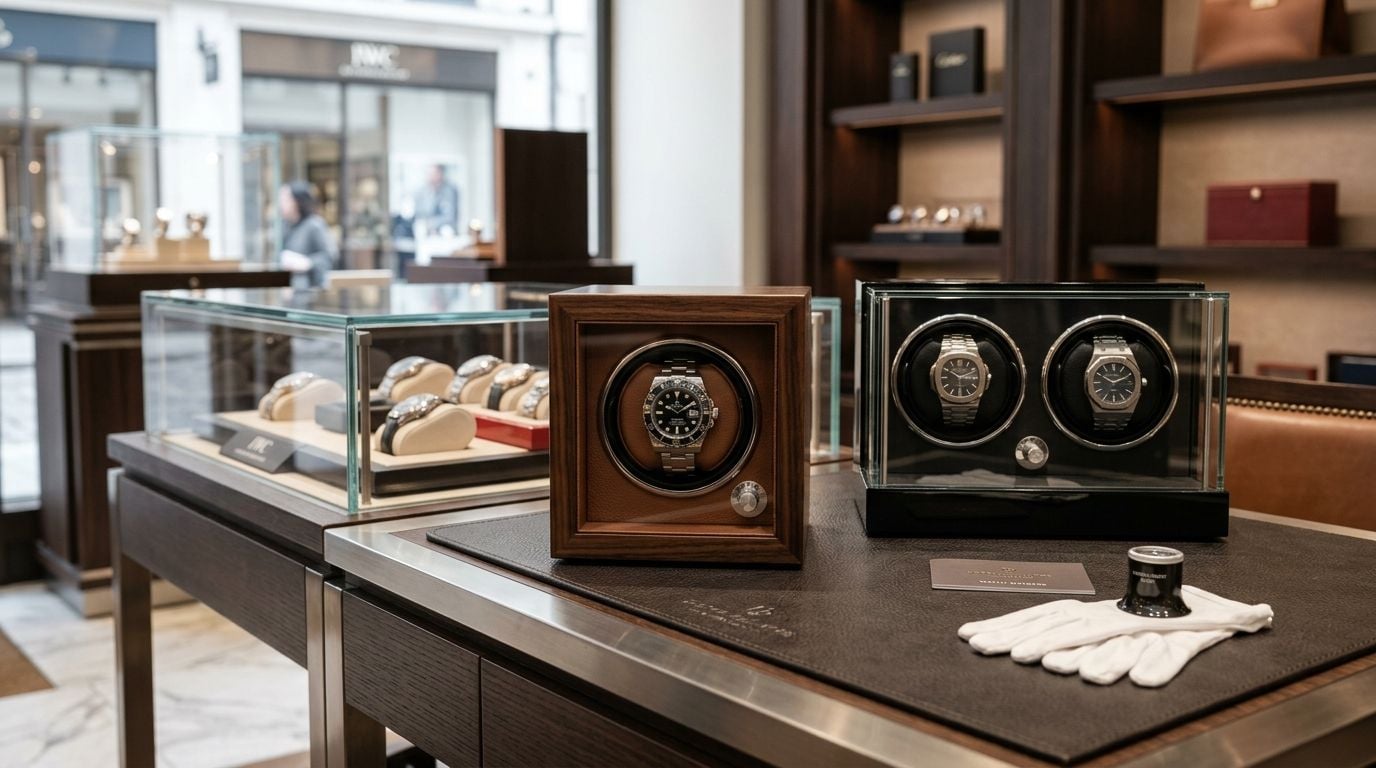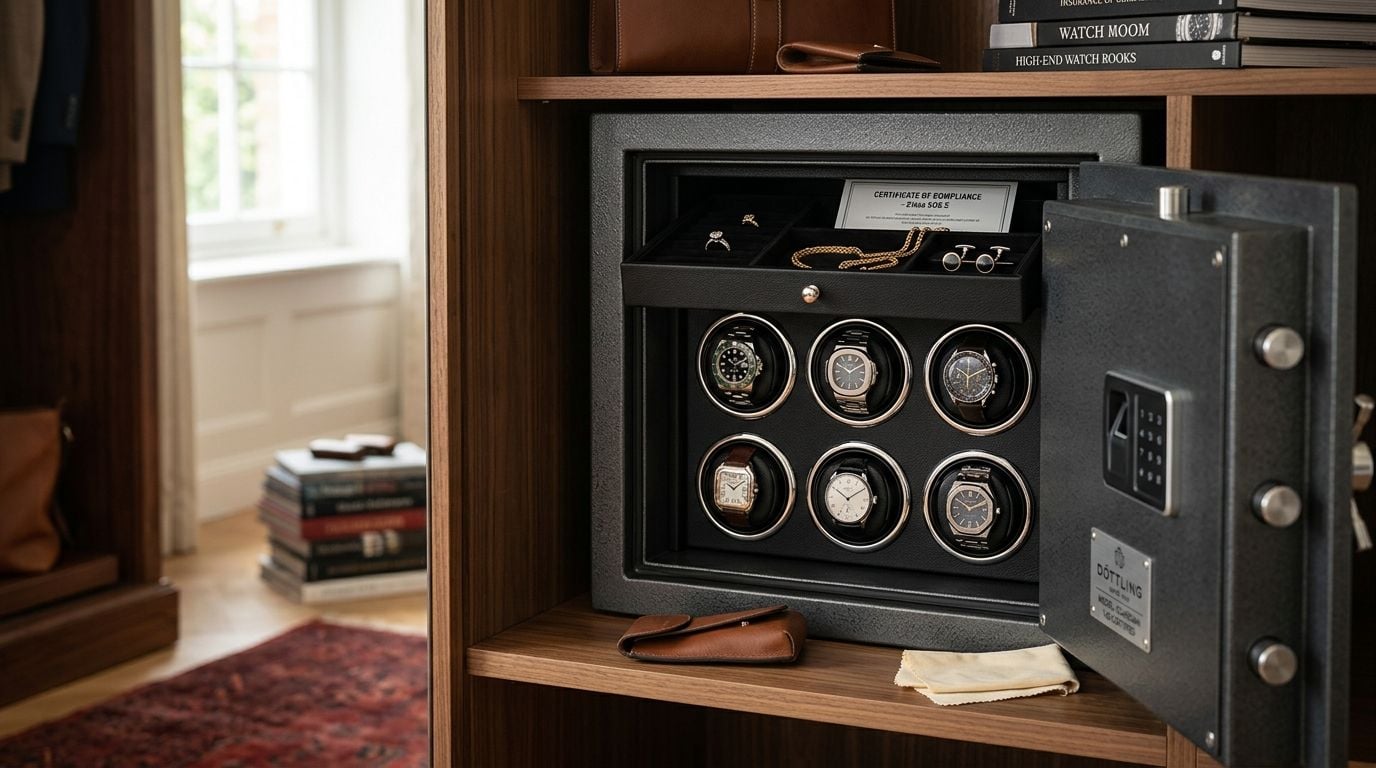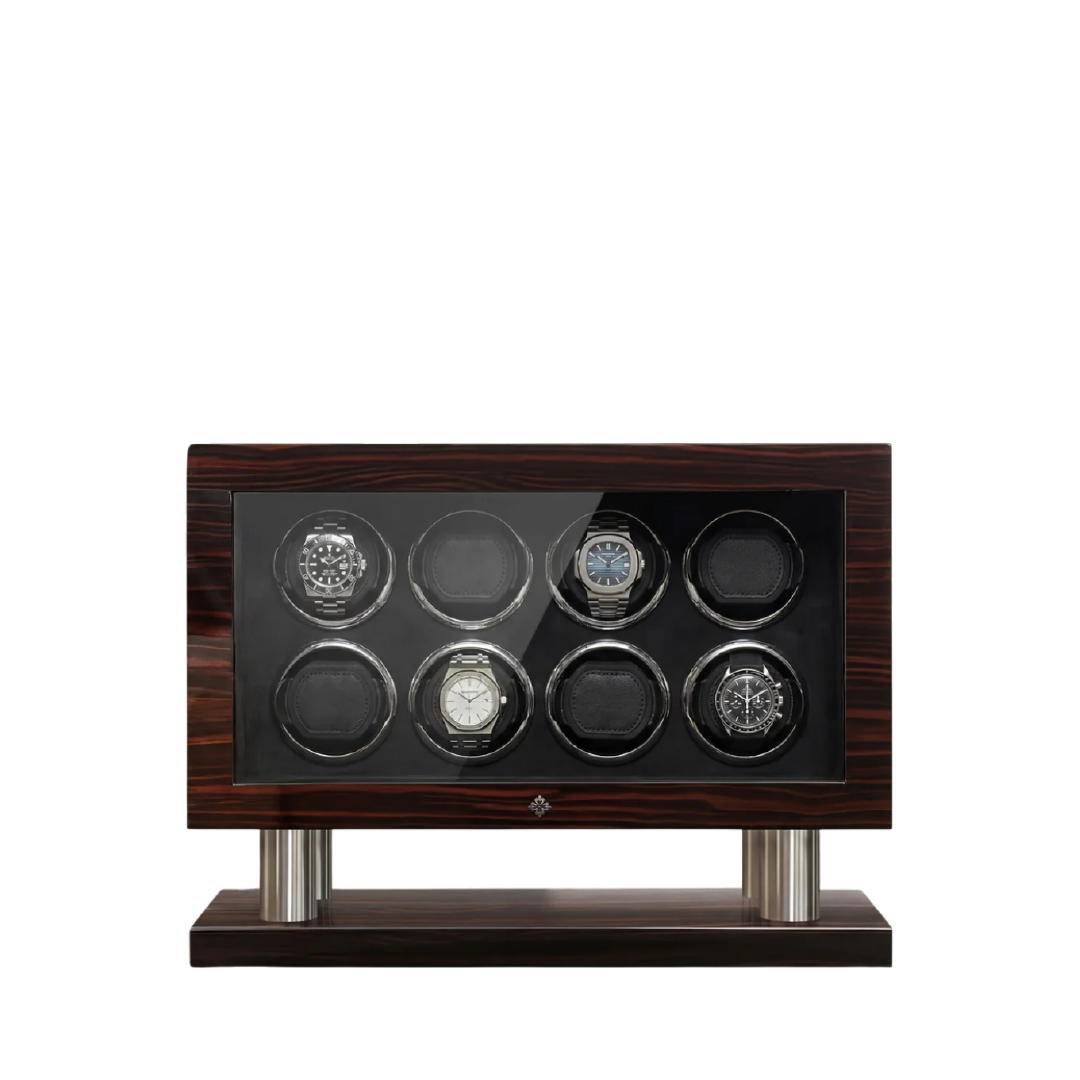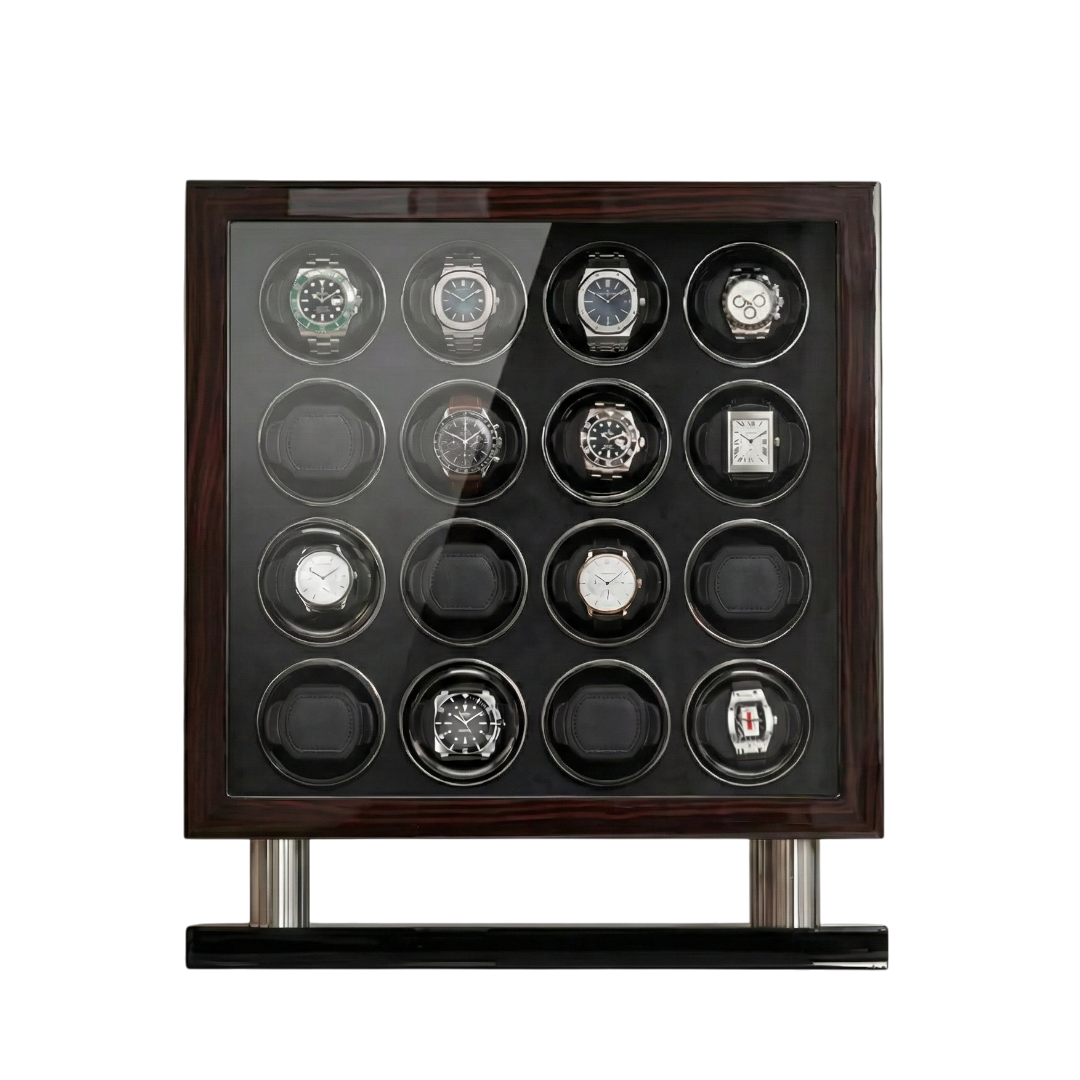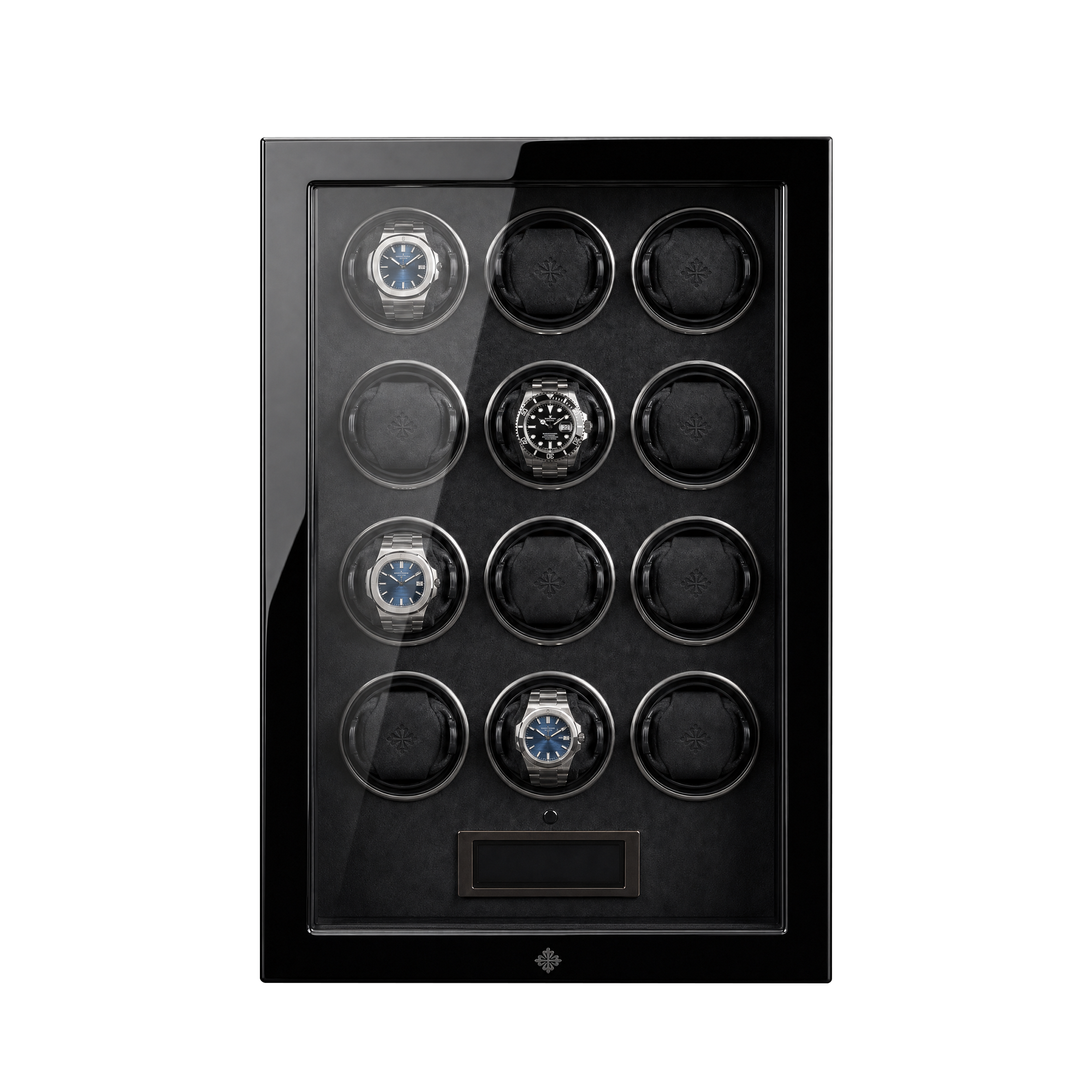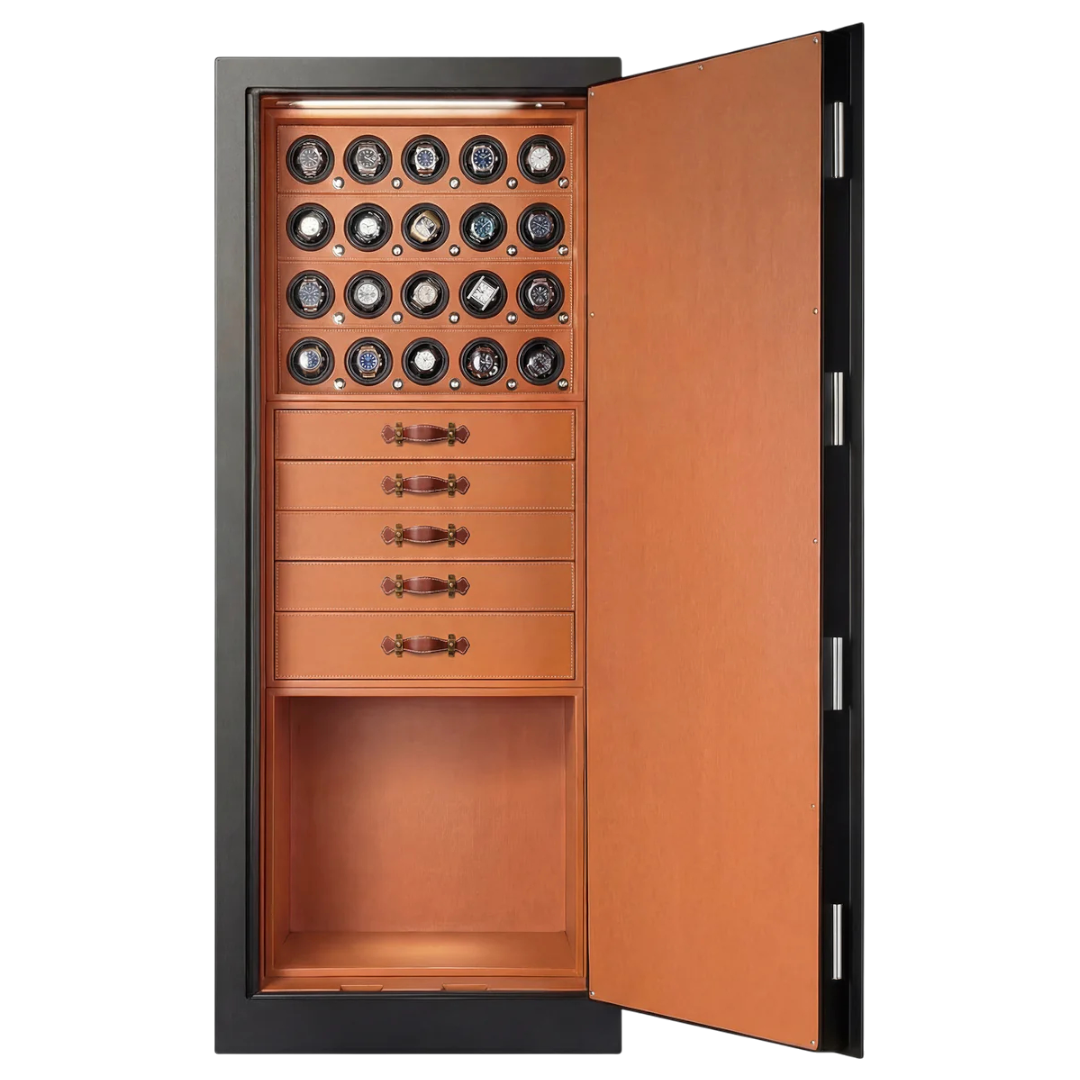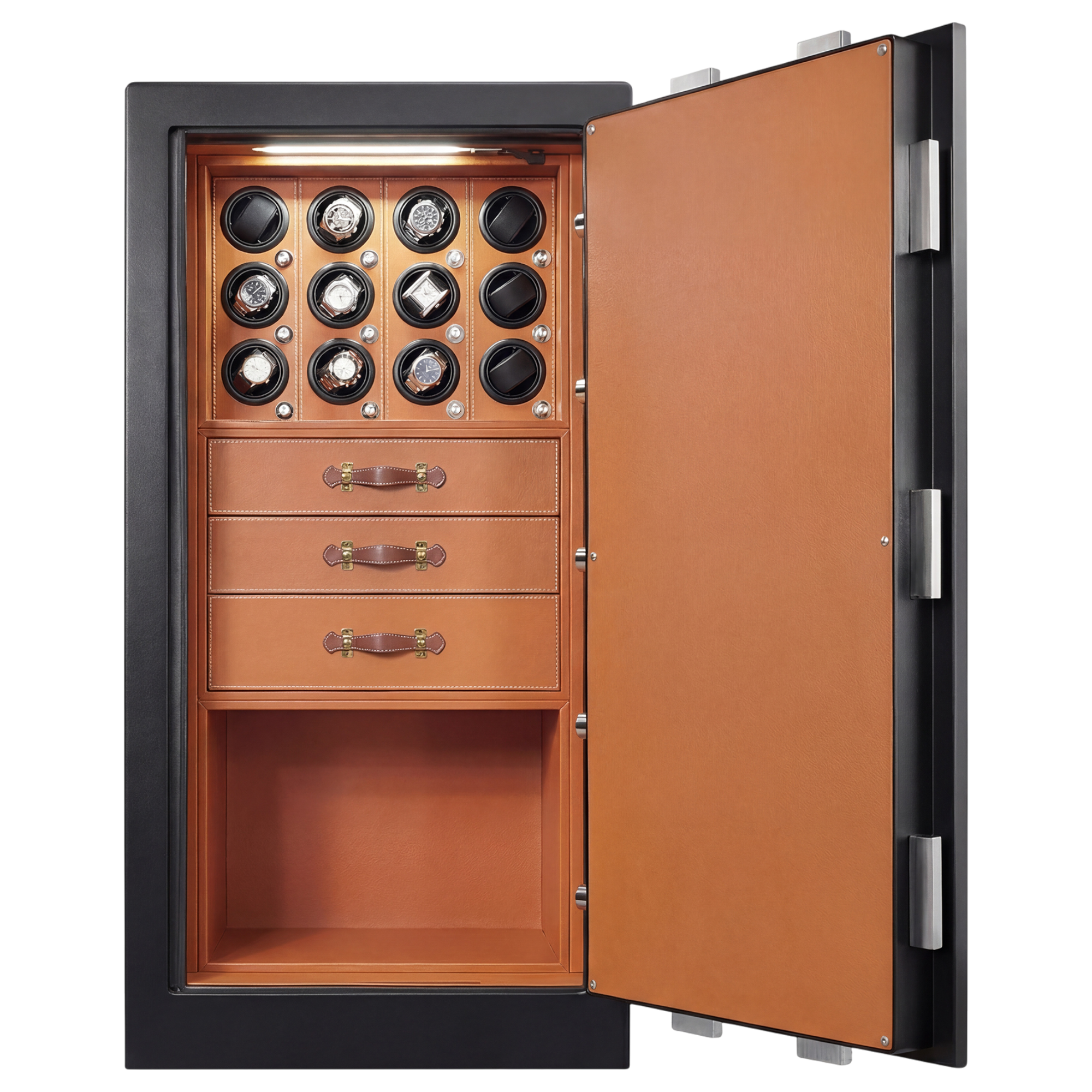

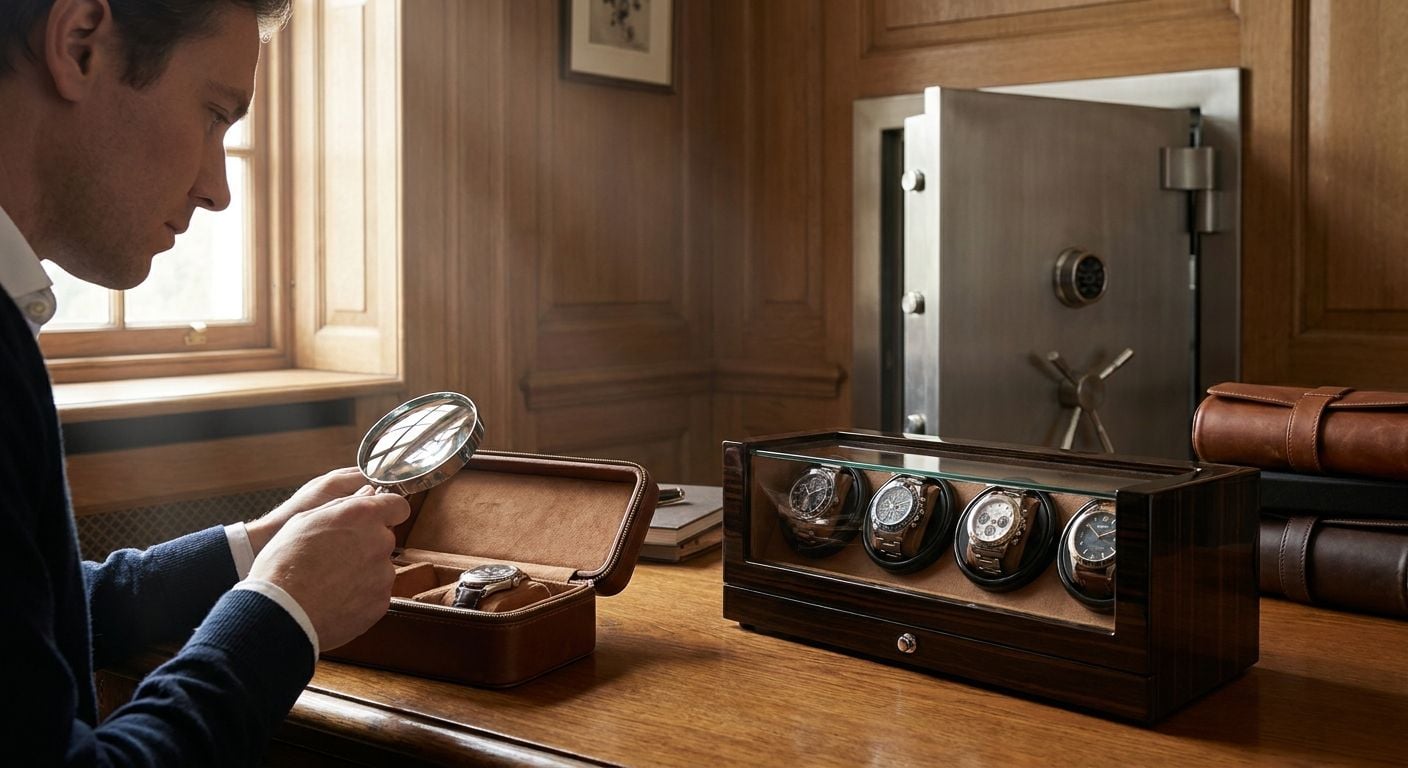
A bank-vault collection changes the winder math entirely: the watches sit locked away for weeks between visits, and the question isn't cosmetic, it's mechanical — do the movements need to keep running when nobody's opening the door for 30 days straight.
- A watch winder for a bank vault collection only earns its keep if visits are infrequent and the movements have complications that punish resetting.
- Perpetual calendars and moonphase watches justify a winder inside a vault; three-hand automatics usually don’t.
- Power reserve on most automatic movements runs 38 to 70 hours, so a monthly vault visit alone can let a simple watch stop and restart with no real cost.
- Vault humidity and vibration matter more than motor count — check those specs before buying a winder for cold storage.
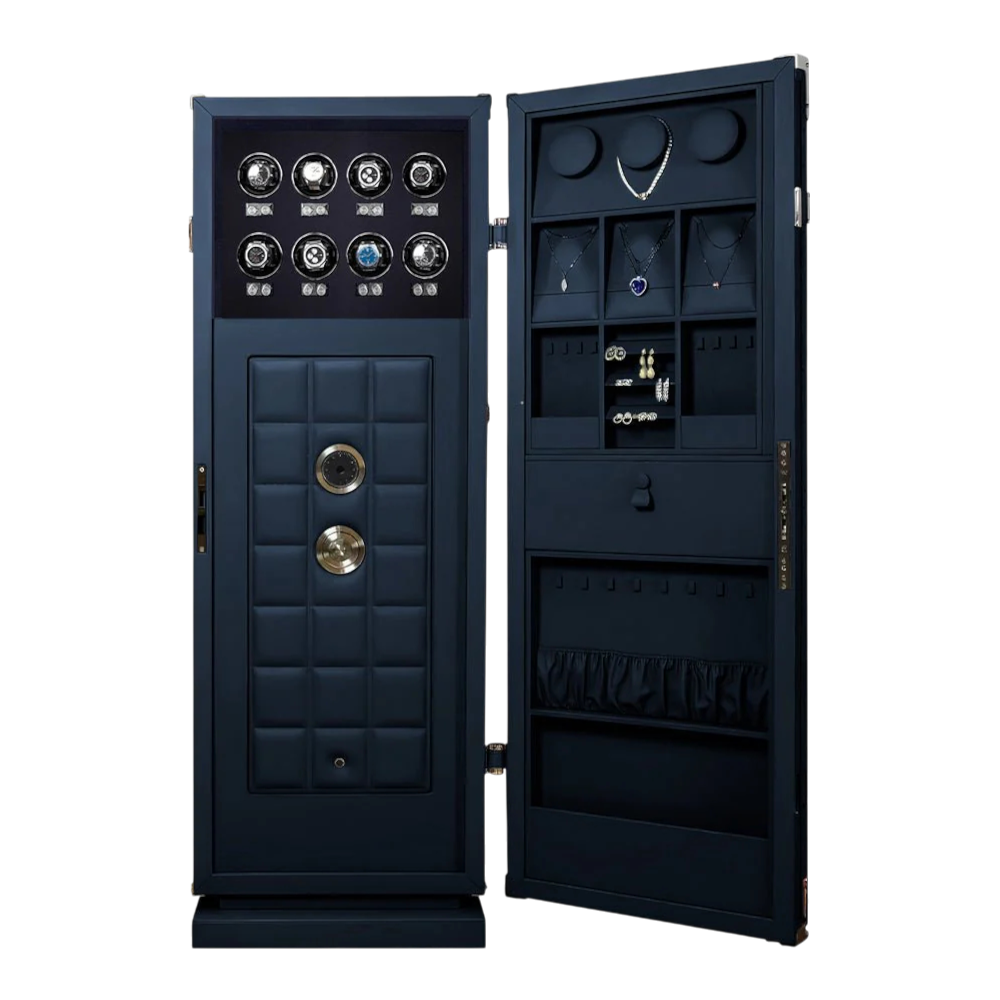
- Enigwatch’s safe-with-winder builds solve this for collectors who want rotation and security in one enclosure.
Why this matters
Most winder advice assumes daily access — you open a home safe, glance at your watches, close it again. A bank-vault collection doesn't work that way. Visits might happen once a month, once a quarter, or only when an appraiser or insurer requires it.
That access pattern flips the calculation on whether a watch winder for bank vault collection storage setup is worth the cost, the power draw, and the added mechanical wear from constant rotation. Some watches genuinely need it. Most don't.
What you'll need
- A list of every automatic watch in the vault, with movement type noted (three-hand, chronograph, perpetual calendar, moonphase, GMT)
- Power reserve figures for each movement — check the manufacturer spec sheet or the original box papers
- Your actual vault visit frequency for 2026, logged honestly, not aspirationally
- Humidity and temperature readings from the vault space, if the bank or facility provides them
- A decision on whether the winder lives inside the vault box itself or in a separate safe you control
The steps
1. Map your visit frequency against power reserve
Most automatic movements hold a power reserve between 38 and 70 hours before the mainspring runs dry. If you visit the vault every 30 days, a simple three-hand automatic stops within the first two or three days and sits still for the rest of the month regardless of what you do.
That's not damage — it's normal. A stopped mainspring causes zero mechanical harm. The only cost is resetting time and date on the next visit, which takes under a minute on most calibers.
Common mistake: assuming a stopped watch is a problem. It isn't, unless the next step applies.
2. Flag complications that punish a full stop
Perpetual calendars are the real exception. A Patek Philippe perpetual calendar or a Vacheron Constantin with a full calendar module can require a service center reset — sometimes a paid one — if the date mechanism is allowed to fully unwind and the date wheels fall out of sync with the actual date.
Moonphase complications carry a similar but smaller penalty: resetting a moonphase display accurately from a dead stop can take patience and the right tool. If your vault holds one or more of these, that's your strongest argument for a winder.
3. Check the vault's environmental conditions
Before buying anything, find out the vault's humidity range and whether it experiences temperature swings. Bank vaults are usually stable — that's their entire purpose — but private vault rooms and home installations vary widely.
A winder running inside a poorly ventilated, humid enclosure can do more harm than a stopped watch ever would. If humidity control is a question mark, read through how vault-room installations handle temperature and moisture before committing to a motorized setup in that space.
4. Decide who controls power and access
Bank-owned vault boxes typically don't have accessible power outlets, and banks are not going to run an extension cord into a safe deposit box for you. If you want a winder, it usually has to live in a private vault or a home safe you own and control — not inside the bank's box itself.
This is the single biggest practical filter most collectors hit. If your watches sit in a true bank safe deposit box, a winder for bank vault collection storage may simply be physically impossible, and the real decision is whether to move high-complication pieces to a private, powered vault instead.
5. Weigh the wear cost of constant rotation
A winder running 24 hours a day, seven days a week, puts more total rotations on a movement's automatic rotor bearings than normal wrist wear does over the same period. That's not a defect — Japanese Mabuchi motors and similar drive systems are built for continuous cycling — but it's a real trade-off worth naming.
For a watch that only needs to survive between quarterly visits, running a winder nonstop for three months adds mechanical cycles the watch would never see if it just sat still. Most programmable winders let you set a schedule — a few hours per day rather than constant rotation — which cuts that wear down substantially.
6. Price out the insurance and documentation angle
If the collection is insured, ask the appraiser whether continuous operational status affects valuation or claim documentation — some insurers want proof a watch is running and accurate at time of appraisal, not stopped. That single requirement can settle the winder question on its own, independent of mechanical need.
Getting the paperwork right matters here: what appraisers actually need before they'll sign off on a valuation is worth reading before the next renewal, whichever way the winder decision goes.
7. Match the enclosure rating to the risk, not just the winder
If you're moving pieces out of a bank box into a private vault to accommodate a winder, the enclosure itself needs to carry real ratings — fire and burglary — not just a lockable cabinet with a motor inside. Fire ratings are measured in minutes at a specified interior temperature ceiling; burglary ratings follow UL categories like TL-15 and TL-30, denoting resistance time against tools.
Don't let the winder feature distract from the enclosure spec. Review how fire ratings are actually measured before choosing between a standalone winder and a combined safe-with-winder unit.
See vault-ready safe and winder builds
Combined safes with built-in winders for infrequent-access storage.
Troubleshooting
- Watch shows the wrong date after a stop. Reset it manually using the crown, following the movement's correction sequence. Most three-hand automatics take under a minute; perpetual calendars may need a service center.
- Winder is running but the watch still stops between visits. Check the turns-per-day setting against the movement's actual requirement — mismatched TPD is the most common cause of an underwound rotor.
- Vault space has no accessible outlet. A battery-powered or low-voltage winder unit may be the only option; confirm voltage compatibility for 2026-era 110V and 220V systems before purchase.
- Humidity readings are inconsistent between visits. Log readings on every visit for at least two months before deciding — a single bad reading isn't a pattern.
- Insurer requires "running condition" documentation you can't easily provide. Ask specifically what proof format they accept; a dated photo of the watch face is sometimes sufficient without a full winder setup.
Tools and resources
- A logged record of vault visit dates for 2026
- Manufacturer power reserve specs for each automatic movement in the collection
- UL burglary rating reference for private vault or home safe upgrades
- Appraiser documentation checklist is listed above — reference the linked step
What to do next
Once the movement list and visit frequency are logged, the decision usually resolves itself in one of two directions: either nothing in the collection needs a winder and the conversation ends there, or one or two perpetual-calendar pieces justify moving to a private, powered vault. Read through the walk-in vault room installation guide linked above if the second path applies — it covers what collectors actually install once they move off bank storage.
FAQ
Does a watch winder for a bank vault collection make sense if I visit monthly?
Usually not for standard three-hand automatics, since most movements only hold 38 to 70 hours of power reserve anyway and stopping causes no mechanical harm. It matters more for perpetual calendars, where a full stop can require a costly reset.
Can I put a watch winder inside a bank safe deposit box?
No — bank-owned safe deposit boxes don’t provide power access, so a winder has to live in a private vault or home safe you control instead.
Is it bad to leave an automatic watch stopped for weeks in a vault?
No, a stopped mainspring causes zero mechanical damage. The only cost is resetting the date and time on your next visit, which takes under a minute for most calibers.
Which watches actually need a winder in long-term vault storage?
Perpetual calendars and moonphase complications benefit most, since a full stop can misalign the date mechanism in ways that require a service center visit to correct.
How much does running a winder continuously wear down a movement?
Continuous rotation adds more total cycles to the rotor bearings than the watch would see sitting still, though Japanese Mabuchi-style motors are built for that duty. Scheduling a few hours a day instead of 24/7 rotation reduces the extra wear.
Do insurers require watches to be running for valuation?
Some do — ask your appraiser directly what documentation format they accept, since that single requirement can settle the winder question independent of mechanical need.
What safe rating should I look for if I move watches out of a bank box?
Look for a documented fire rating in minutes at a stated interior temperature, plus a UL burglary category like TL-15 or TL-30, rather than relying on the enclosure’s lock alone.
Is a safe with a built-in winder better than a separate safe and winder for vault use?
A combined unit simplifies power and space planning in a private vault room, since you’re not routing an outlet to a second cabinet, but the security rating of the enclosure still matters more than the winder feature.
One last thing
The question collectors actually ask backwards is do I need a winder, when the real filter is does anything in this collection have a complication that punishes a full stop. Run that filter first in 2026 before spending on motors, and most bank-vault collections will find they need better vault security, not better rotation.
Related guides
- How turns-per-day settings work across brands
- Watch safe humidity levels collectors should know
- How to store a watch collection long-term in a safe
- Watch safe vs. wall safe for collectors
Protect Your Watch Collection
Designed for collectors who demand the best. Explore our premium watch winders and luxury safes.