
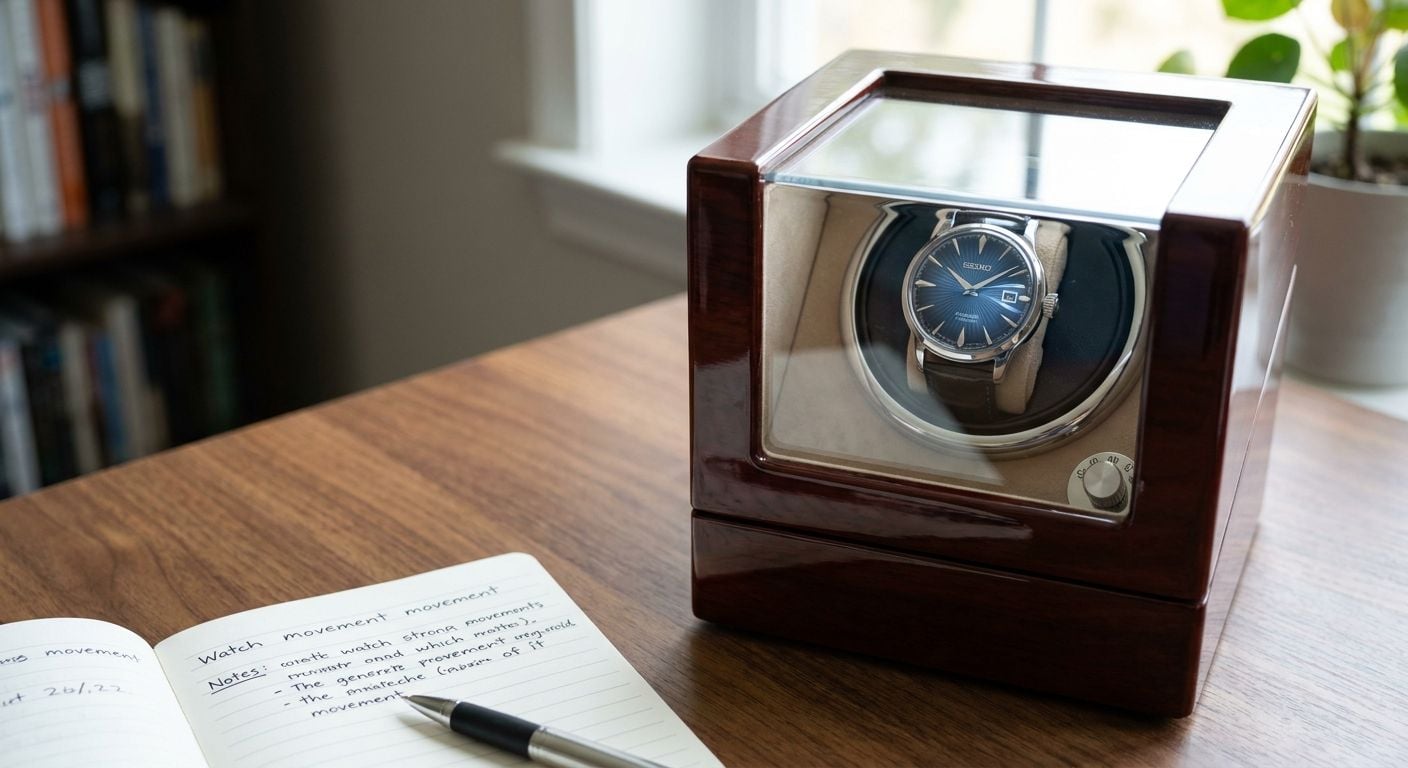
A Seiko 4R35 needs a watch winder only when the watch sits unworn longer than its power reserve and you'd rather not reset the day and date by hand every time you pick it back up. This guide breaks down the exact signs to check, the settings a winder should run, and when hand-winding is still the smarter call in 2026.
- A Seiko 4R35 needs a watch winder only when it sits idle past its 41-hour power reserve.
- Daily wearers can skip a winder entirely — the 4R35 hand-winds fully in under a minute.
- Set 650-800 TPD in bidirectional mode; the 4R35’s Magic Lever rotor winds both ways.
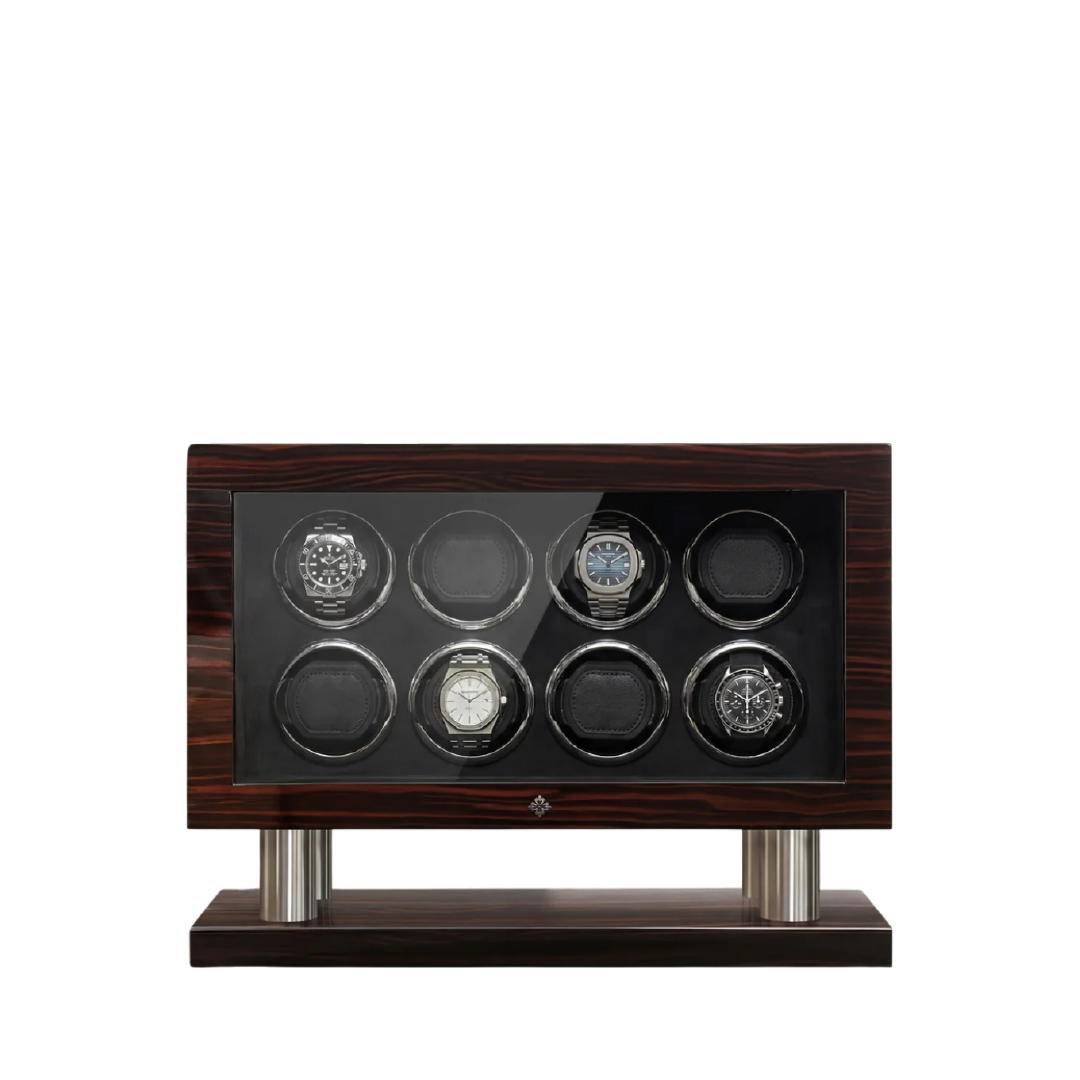
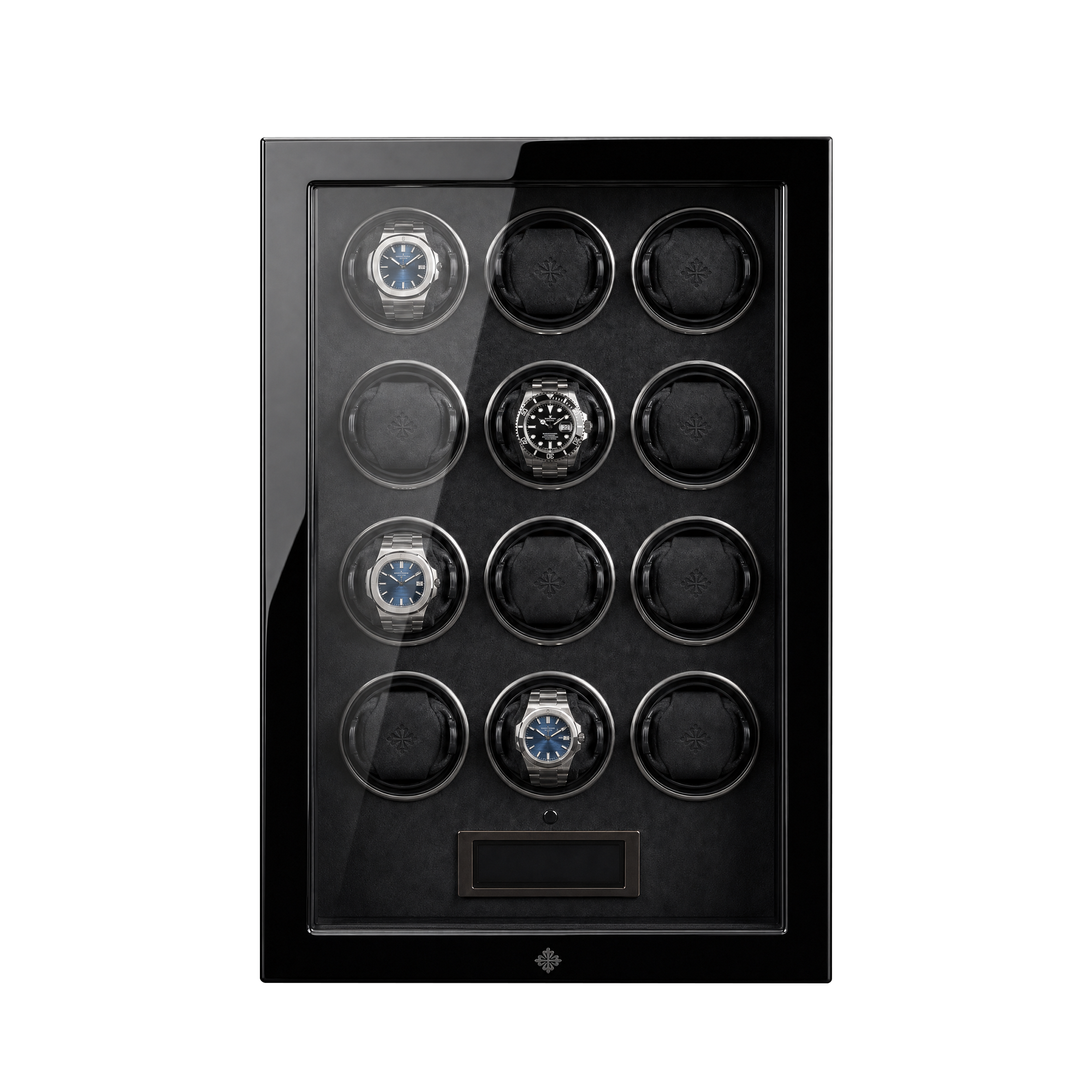
- Enigwatch’s Virtuoso Series 2 Watch Winder runs independent programs for a 4R35 and a second automatic.
Why this matters
The Seiko 4R35 is one of the most common automatic calibers in circulation. It powers a large share of the Seiko 5 Sports and Presage lineup, and most owners of those watches don't wear the same one every single day. That's the real question behind "seiko 4r35 watch winder" — does a reliable, inexpensive movement like this actually need help staying wound, or is a winder solving a problem that doesn't exist for a casual wearer in 2026.
The answer comes down to one number and one annoyance. The number is 41 hours, the 4R35's published power reserve from a full wind. The annoyance is the day wheel: once the movement stops, there's no independent quickset for the day, only the date, so getting the day display right again means cycling the hands through midnight repeatedly. A watch winder for Seiko automatic watches removes both problems by keeping the rotor turning on a schedule instead of letting the mainspring run down.
How to tell if a Seiko 4R35 needs a watch winder
Run through this checklist against your actual wear pattern. Two or more "yes" answers and a winder earns its spot on the dresser.
- The watch stops before you pick it up again. Past 41 hours idle, the mainspring fully unwinds and the movement stops cold.
- You reset the date more than once a week. Frequent date-setting through the crown is the clearest sign the watch isn't running enough on its own.
- You own two or more automatics in rotation. Split time between watches and none of them logs enough wrist-time to stay charged.
- You want it ready the instant you reach for it. A watch that's been sitting for days needs re-setting before it's wearable; a winder skips that step.
- Hand-winding feels like a chore, not a ritual. Winding a 4R35 by hand takes roughly 30 seconds and about 30 turns of the crown — if that's genuinely annoying daily, a winder solves it permanently.
| Wear pattern | Needs a watch winder? |
|---|---|
| Worn every day | No — a 30-second hand wind keeps it charged |
| Off-wrist 1-2 days at a time | Borderline — depends on your tolerance for date resets |
| Off-wrist 3+ days at a time | Yes — past the 41-hour reserve |
| Rotated with 2+ automatics | Yes — keeps every watch ready without manual winding each one |
| Worn only on weekends | Yes — avoids resetting day and date every time |
Verdict: if the 4R35 sits three or more days between wears, buy a winder. Wear it daily, skip it.
Why the 41-hour reserve drives the decision
- Seiko's published spec caps the 4R35 at roughly 41 hours of running time from a full wind — cross that line and the watch stops completely, not just slows down.
- The caliber uses a Magic Lever winding system that stops charging the mainspring once it's full, so a correctly set winder doesn't overwind it.
- The day wheel has no independent quickset. Once the watch stops, fixing the day means advancing the hands through midnight for every day lost, which is the real hidden cost of letting it die.
- Manual winding through the crown works fine and takes under a minute, but it's easy to lose count of turns and slightly underwind or over-torque.
- Collectors rotating multiple automatics need one winder slot per watch in rotation, since each caliber carries its own TPD requirement — a 4R35 isn't the same as a Rolex 3235 or an ETA 2824.
Seiko 4R35 winder settings: TPD and direction
Set a winder to 650-800 TPD in bidirectional mode for a Seiko 4R35. The Magic Lever rotor charges the mainspring in both directions, so a winder that only turns one way still winds it, just less efficiently. The clockwise vs counterclockwise winding breakdown covers why bidirectional models are the safer default for calibers built this way.
The wider Seiko automatic TPD settings guide runs through the range for the full lineup, since the 5 Sports, Presage, and Prospex lines share related in-house calibers with similar reserve windows.


Related questions
How many hours does the Seiko 4R35 power reserve last?
The Seiko 4R35 power reserve lasts about 41 hours from a full wind, per the caliber's published specification. A watch fully wound Friday night and left on a dresser will typically stop sometime Sunday afternoon.
Is a watch winder worth it for a Seiko 4R35?
A watch winder is worth it for a Seiko 4R35 if you wear it fewer than four or five days a week, or rotate it with other automatics. Daily wearers rarely see the 41-hour reserve run out, so the winder adds convenience rather than necessity.
What TPD setting works best for a Seiko 4R35?
650 to 800 TPD in bidirectional mode works best for a Seiko 4R35, matching how its Magic Lever rotor charges the mainspring in both directions. Running it outside that range either leaves the reserve topped off inconsistently or spins the motor more than the caliber needs.
FAQ
What’s the best watch winder for a Seiko 4R35?
The best watch winder for a Seiko 4R35 is any single or dual-slot model with bidirectional rotation and adjustable TPD between 650 and 800. Extra slots only matter if you’re rotating more than one automatic.
Is a Seiko 4R35 automatic or does it need a battery?
The Seiko 4R35 is fully automatic and needs no battery. It self-winds from wrist motion through a Magic Lever rotor system.
Does a watch winder damage a Seiko 4R35 movement?
No, a properly calibrated winder does not damage a Seiko 4R35 movement. Overwinding isn’t possible because the mainspring’s slipping clutch disengages once the reserve is full.
Can I hand-wind a Seiko 4R35 instead of using a winder?
Yes, hand-winding a Seiko 4R35 works fine — turn the crown roughly 30 times to bring it to a full charge in under a minute. A winder just removes that step from your routine.
Does the Seiko 4R35 wind clockwise or counterclockwise?
The Seiko 4R35 winds in both directions through its Magic Lever rotor, so direction settings on a winder matter less than getting the TPD right.
How long can a Seiko 4R35 sit before it stops?
A Seiko 4R35 can sit about 41 hours before it stops, based on its full-wind power reserve. Past that point the mainspring has fully unwound.
Does the Seiko 4R35 have a quickset day feature?
No, the Seiko 4R35 only has a quickset date, not a quickset day. Correcting the day after the watch stops means advancing the hands through midnight for each day lost.
One last thing
The detail that surprises most 4R35 owners isn't the power reserve — it's the day wheel. There's no independent quickset for the day on this caliber, only the date, so a watch that's fully stopped needs its hands cycled through midnight once for every day it lost before the day display reads correctly again. That five-minute annoyance, repeated every time the watch dies mid-week, is the real argument for a winder in 2026, more than the 41-hour number by itself.
For a single 4R35 in steady rotation, the Virtuoso Series 2 Watch Winder runs two independent programs, so a second automatic can share the case without sharing settings.
Related guides
Protect Your Watch Collection
Designed for collectors who demand the best. Explore our premium watch winders and luxury safes.