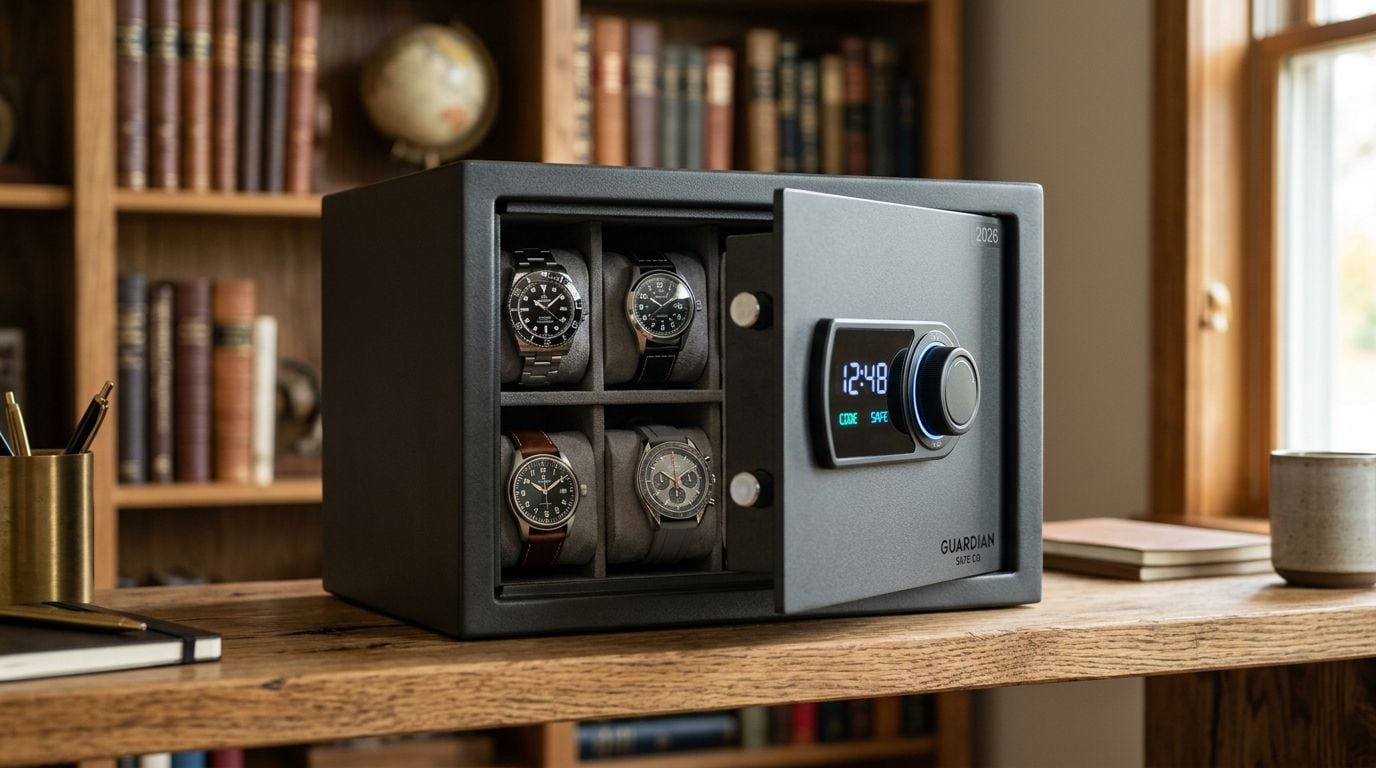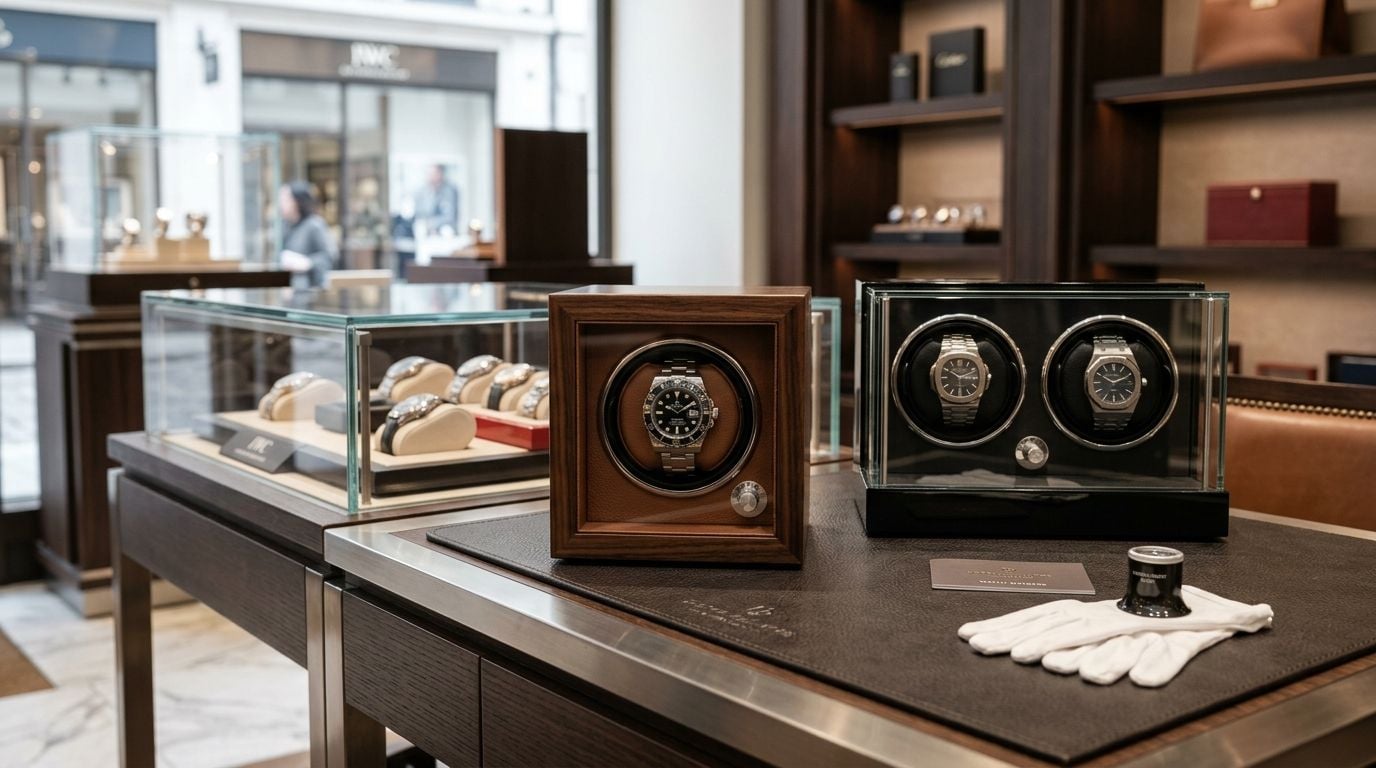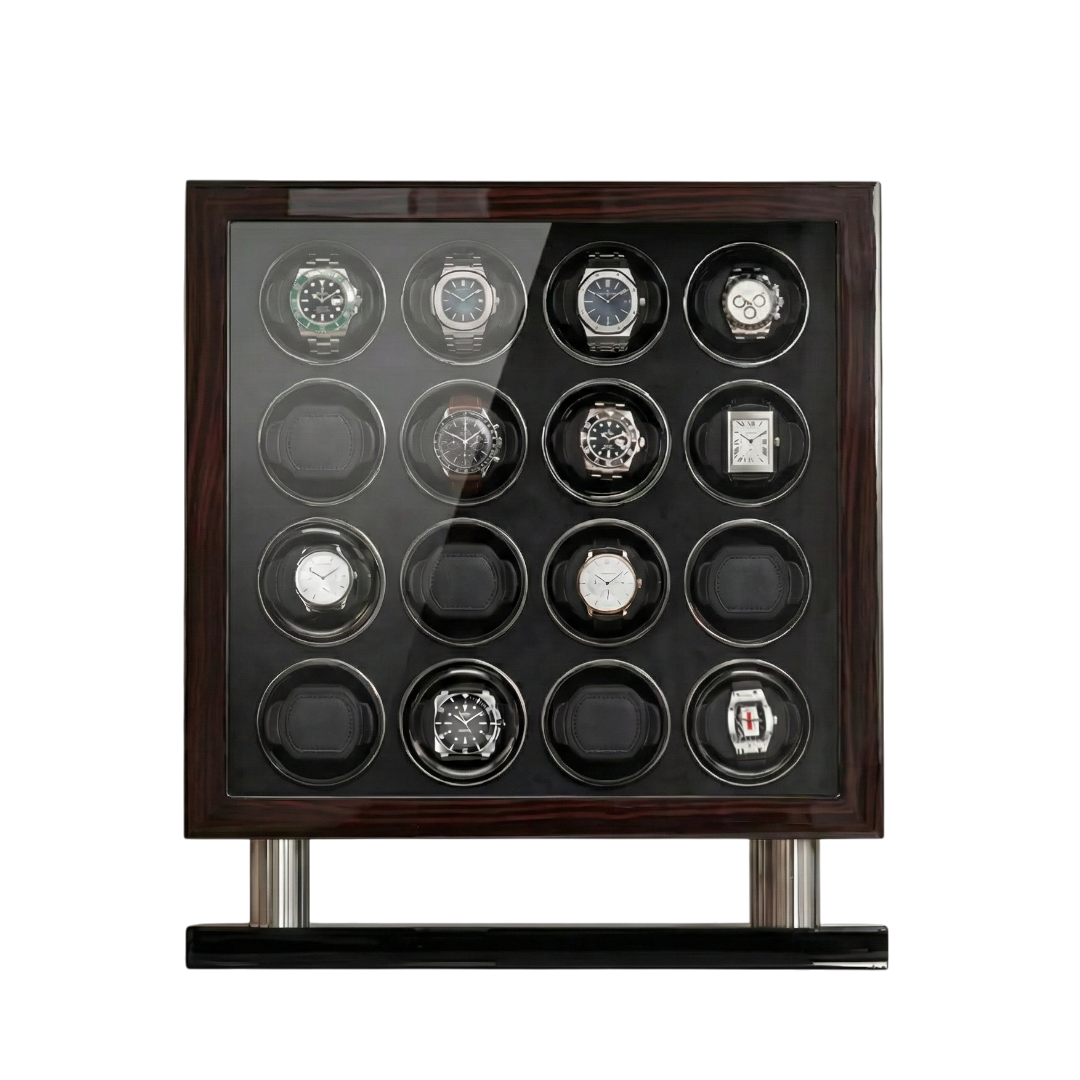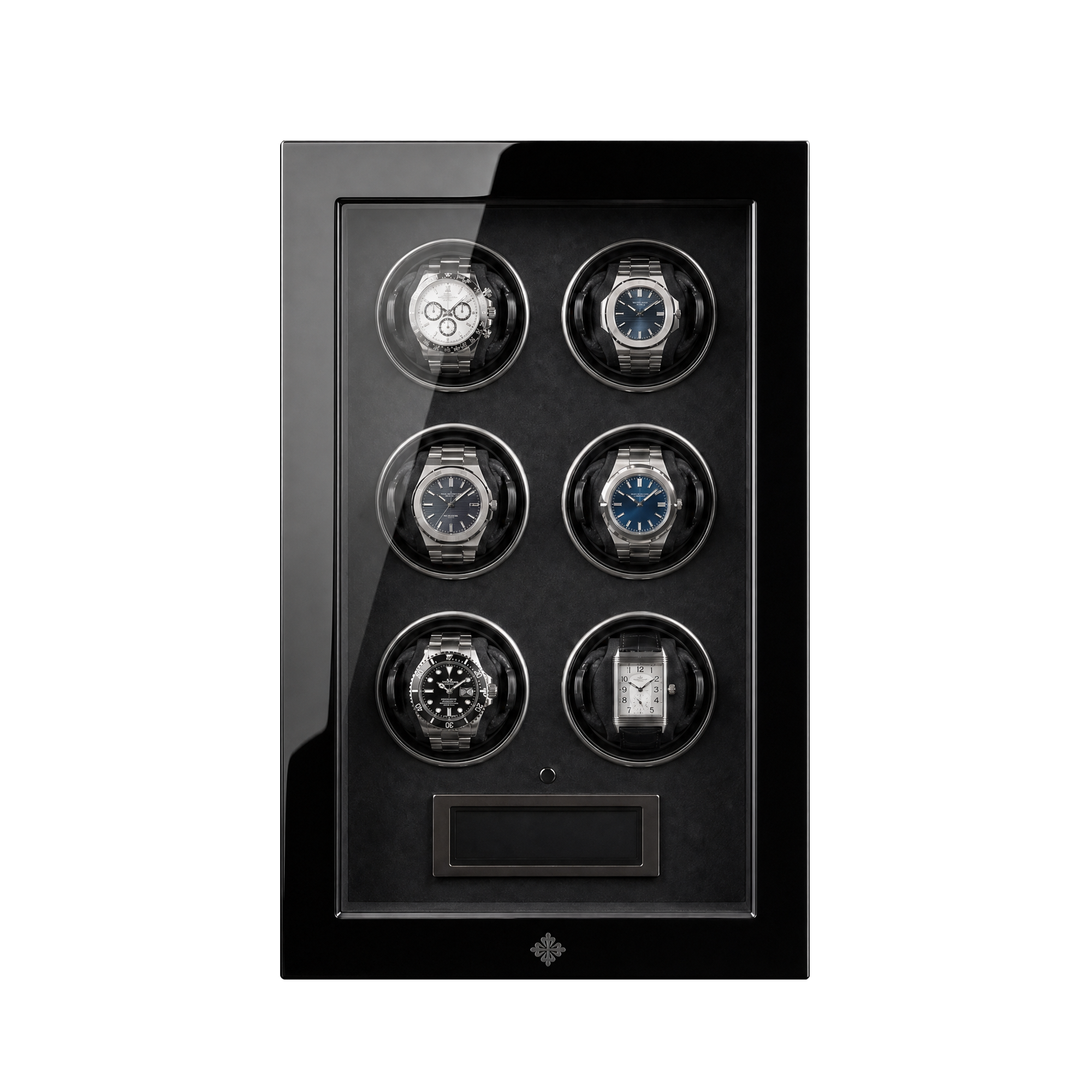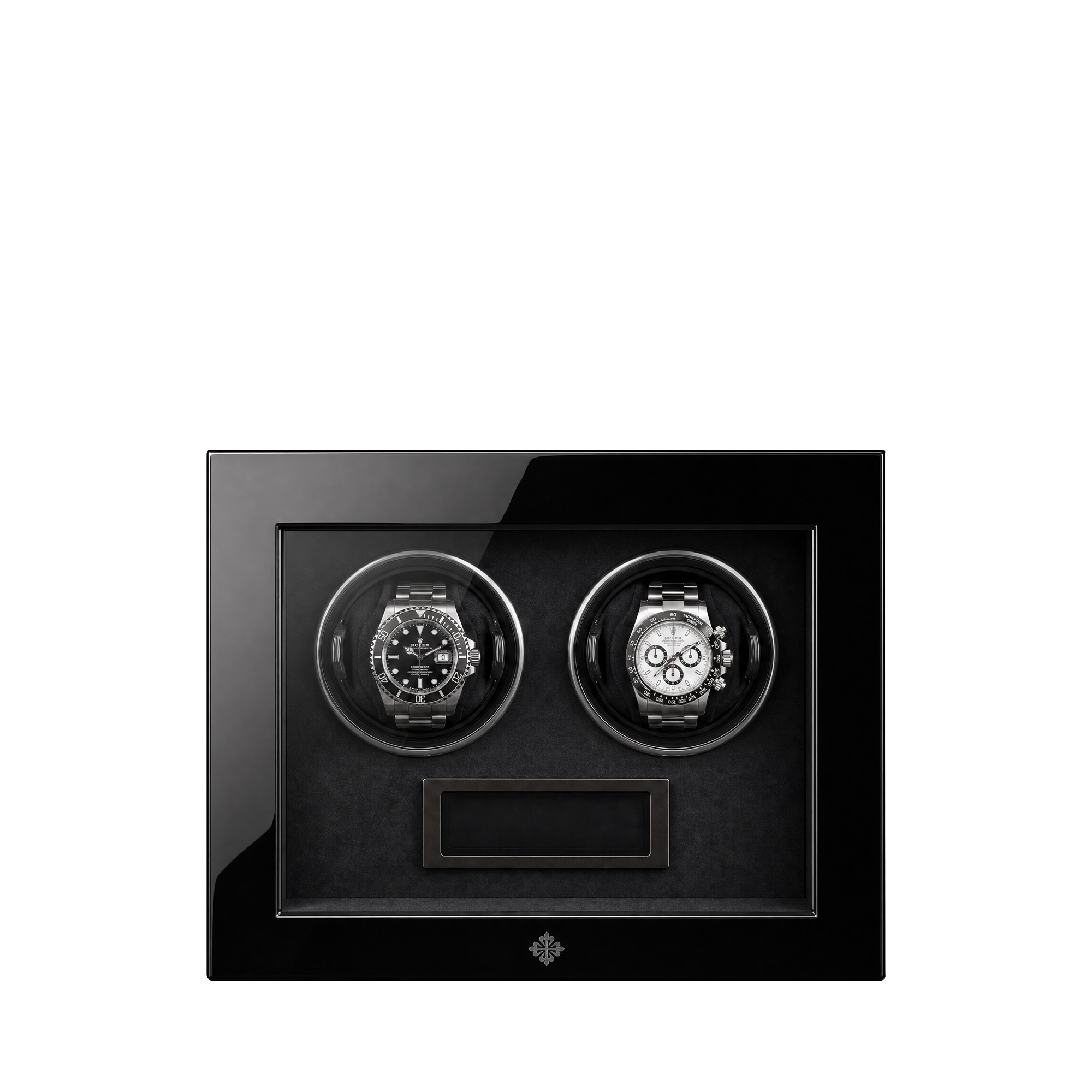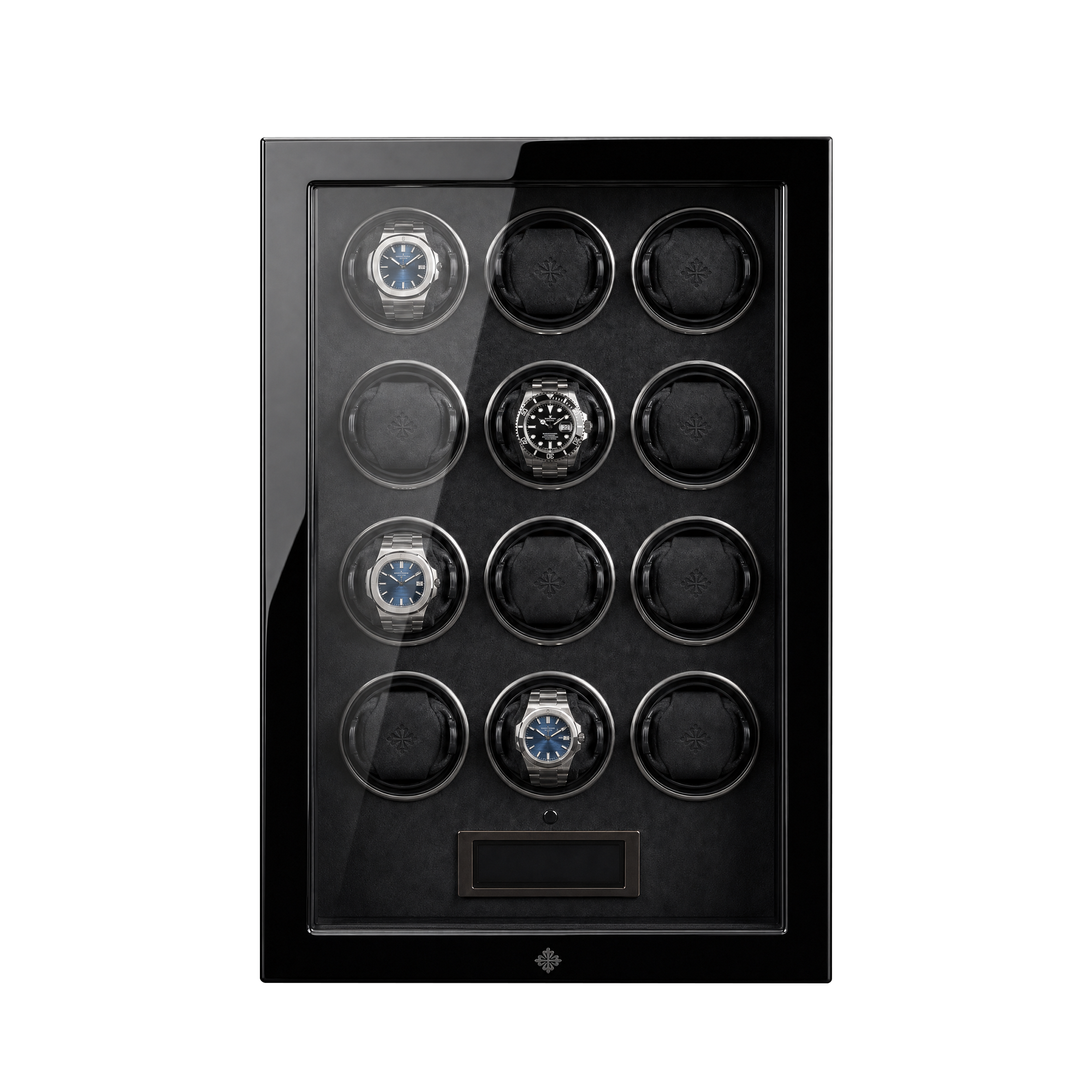

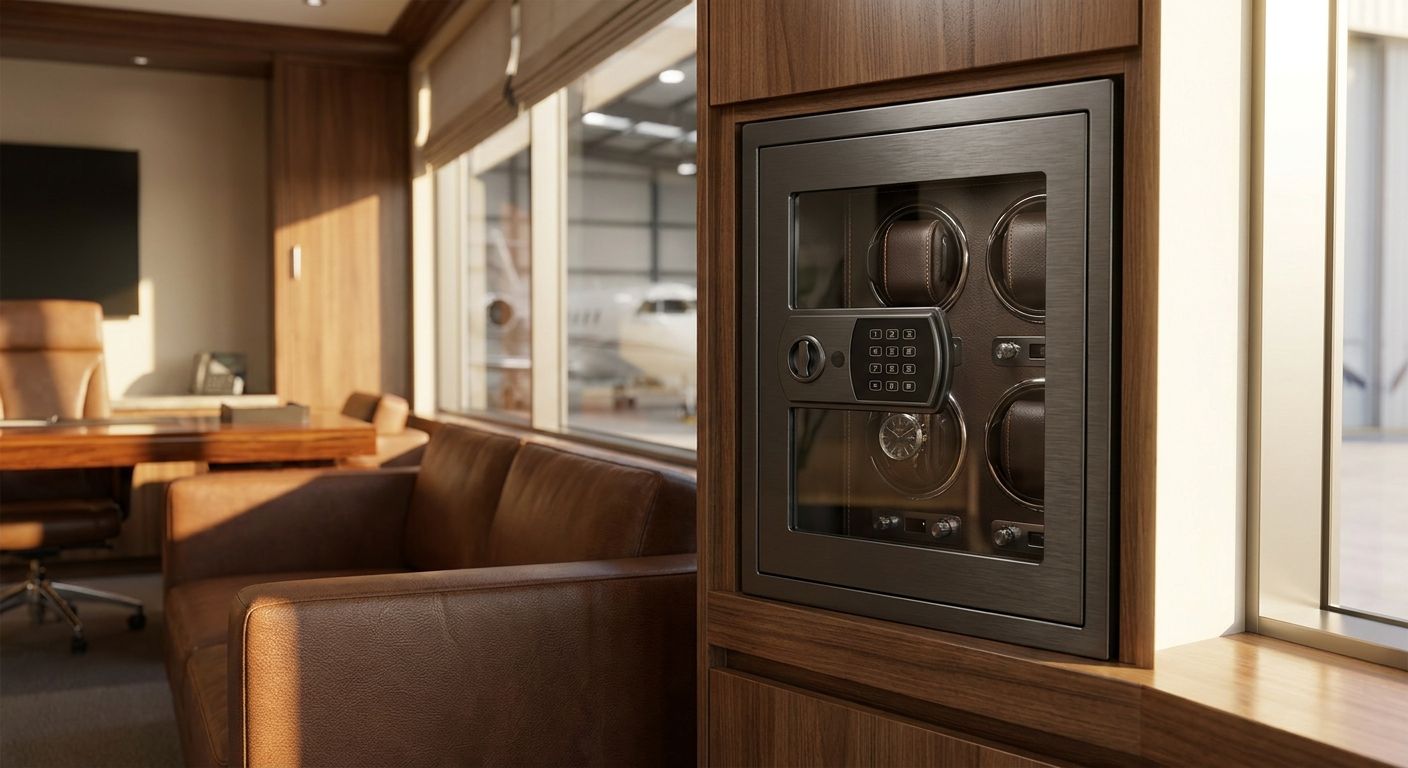
A private aviation office watch safe is a vault-grade unit built into a flight department's workspace to secure timepieces between preflight checks, client meetings, and crew changeovers. Unlike a home office or bedroom install, an aviation office sees rotating staff, escorted client visits, and irregular hours tied to flight schedules — the safe has to serve several authorized people without turning into a shared combination everyone knows.
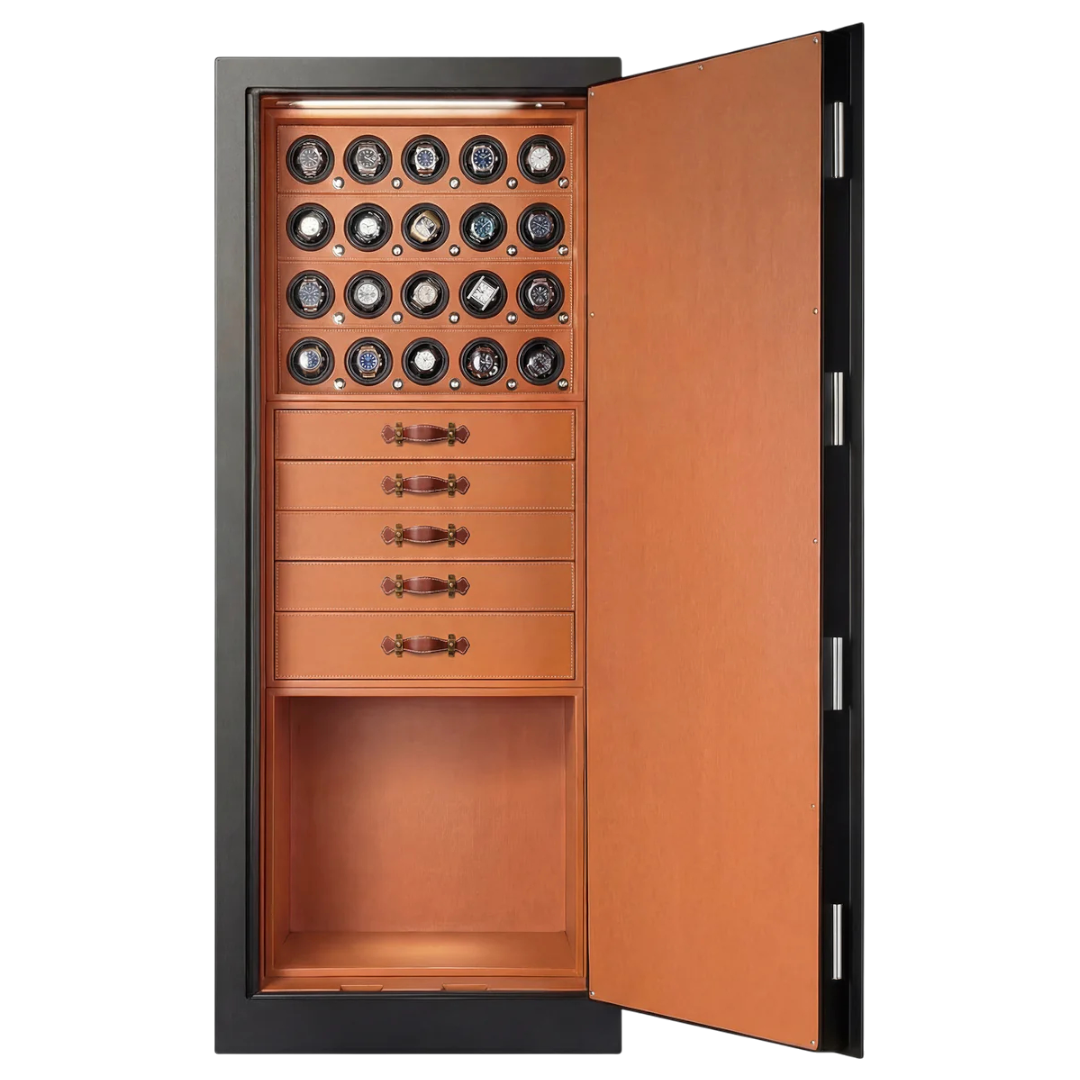
- Titan Sanctum 20 Watch Safe suits a flight department building a shared executive collection, not a single pilot’s desk.
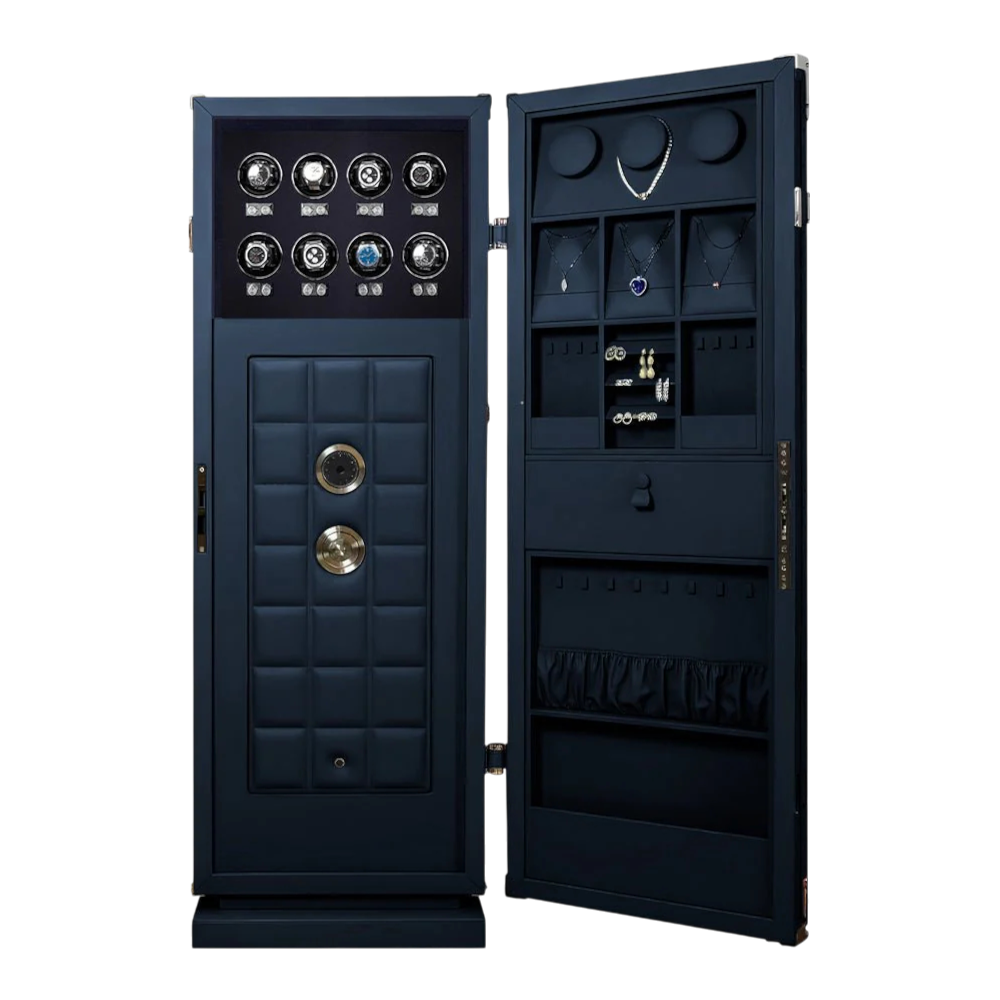
- Centennial Bulletproof Watch Safe fits a two-person office needing discreet, compact storage in 2026.
- Biometric access beats a shared combination for any aviation office with rotating crew and after-hours staff.
- A watch safe for a private aviation office needs bolt-down anchoring — office walls rarely have vault-grade backing.
Why a watch safe matters for a private aviation office
A flight department's office isn't a private bedroom. Clients walk through on the way to the ramp, ops staff rotate shifts, and cleaning crews get after-hours access — all of it around watches that were often given as career milestones or held as part of a corporate collection. A corporate office watch safe has to hold up to that traffic without looking like a bank vault bolted to the wall.
In 2026, the honest answer for most flight departments is a mid-size vault with individual biometric enrollment, not a desk drawer with a padlock. A watch safe for a private aviation office earns its keep the day a former employee's access needs to disappear instantly — no rekeying, no new combination to distribute.
Measure the install footprint before you order
A safe that looks right in a showroom photo can jam a hallway or crack a raised floor in an FBO suite. Do this before anything ships in 2026:
- Check clearance against the narrowest hallway or doorway between the loading dock and the final install spot.
- Confirm floor load rating, especially over raised access flooring common in avionics-adjacent offices.
- Measure ceiling height if the unit sits on a low credenza or cabinet base.
- Coordinate delivery timing with ramp and hangar traffic — freight elevators in FBO buildings run on their own schedule.
Anchor to structure, not drywall
A heavy safe that isn't anchored is still a safe someone can wheel out on a dolly. The manual, no-cost fix comes first:
- Locate wall studs or concrete backing before drilling any anchor points.
- Use lag bolts rated for the safe's weight class, not the hardware-store default.
- Get anchoring pre-approved by the landlord if the office sits in leased FBO space — most leases restrict structural penetration.
- Bring in a locksmith or installer for anchor-plate work on anything over roughly 200 lbs.
Choose biometric access over a shared combination
A combination code written on a sticky note defeats the entire point of vault-grade construction. Set this up properly:
- Enroll each authorized pilot, ops manager, or executive individually rather than sharing one code.
- Revoke a single person's fingerprint the day they leave, without resetting access for everyone else.
- Keep a printed access log at the desk for after-hours entries if the model doesn't track digitally.
- Review the mechanics before buying — the biometric lock watch safe guide breaks down how fingerprint readers hold up against key and combination locks.
Match the fire rating to the building's actual risk
Hangars and FBOs carry fuel and electrical risk that a typical home office doesn't. Before choosing a unit:
- Check the stated fire rating in minutes at a specific temperature, not just a marketing claim of "fireproof."
- Factor in proximity to fuel storage, APU maintenance bays, or electrical rooms.
- Confirm the rating applies to the interior contents, not just the exterior shell.
- Ask whether the rating was independently tested — most credible safes cite a lab standard by name.
Separate winding from vault storage
A safe alone doesn't keep an automatic movement running — it just keeps it locked up and stopped. Decide up front whether the office needs integrated winding or a stand-alone unit:
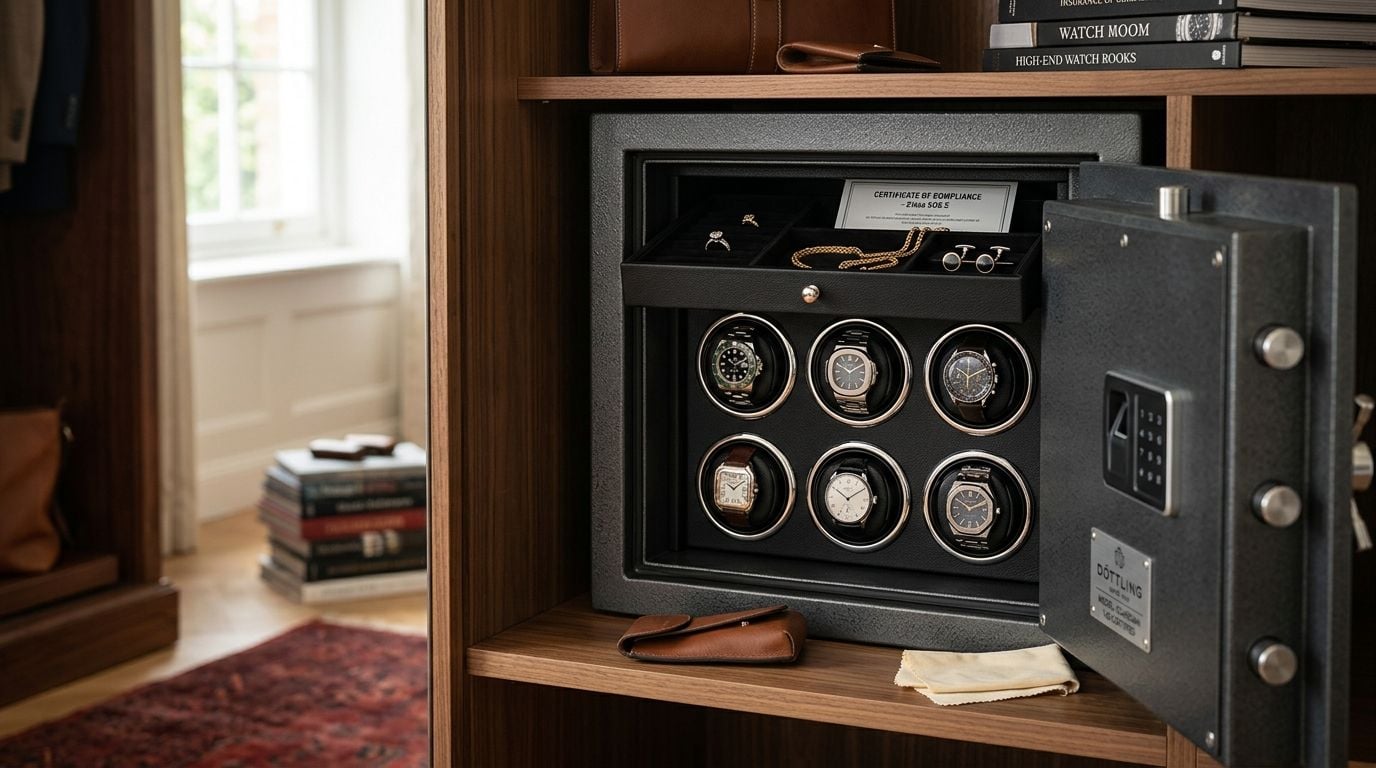
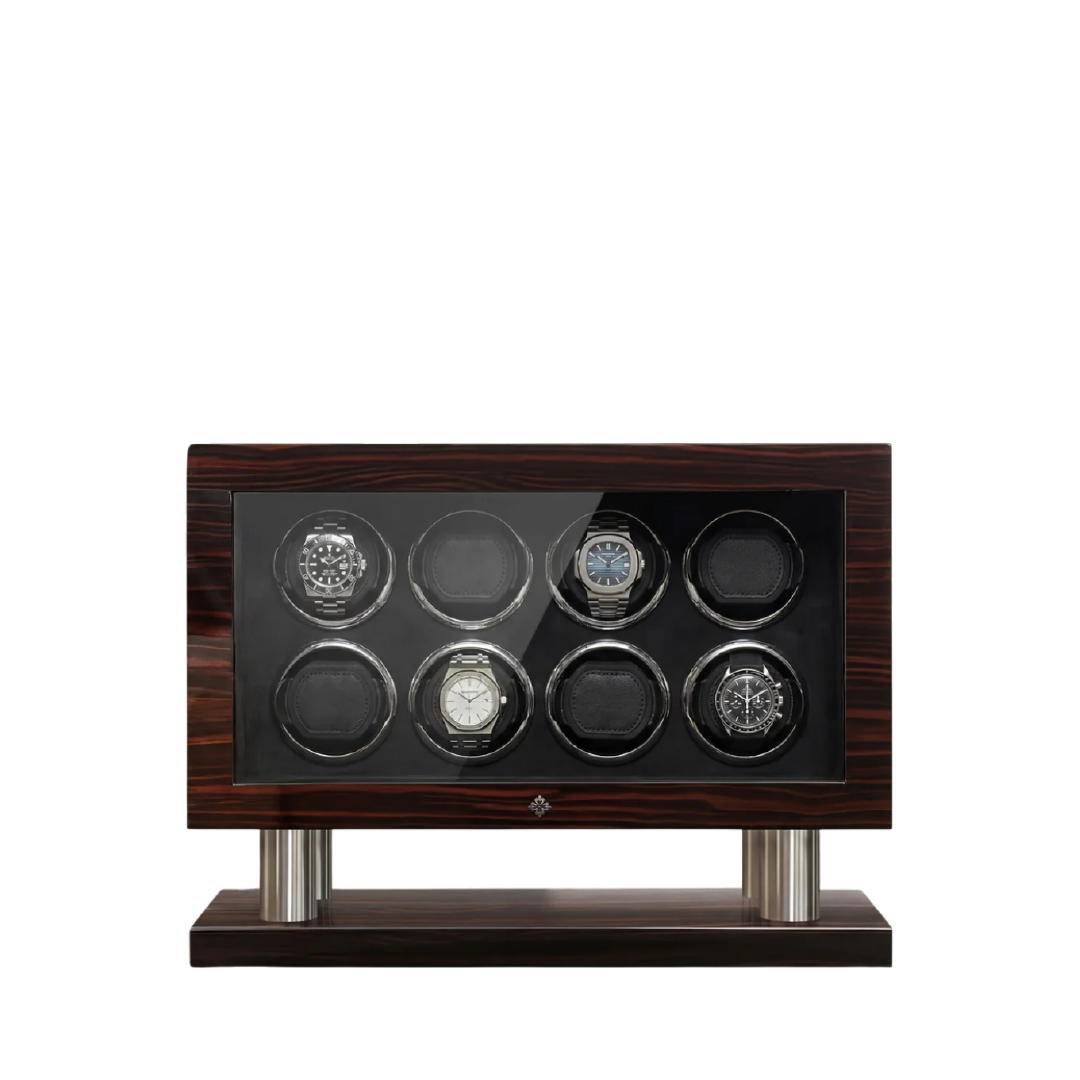
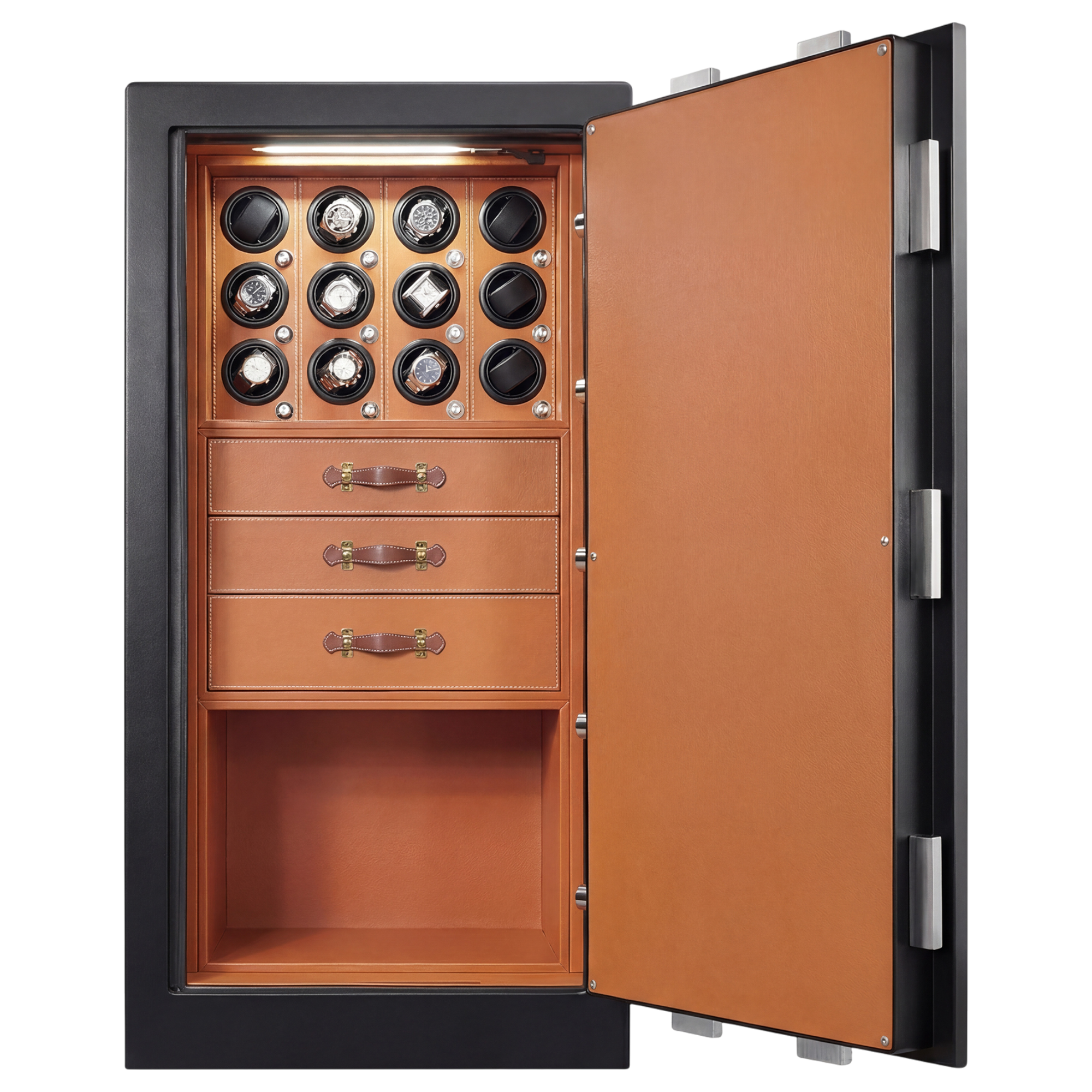
- A safe with built-in rotors, like the Apollo 12 Watch Safe, keeps automatics wound without a separate device on the desk.
- A static vault works fine if the watches inside are quartz, manual-wind, or simply not worn between trips.
- Mixed collections — some automatic, some not — do better in a safe with at least a few winding slots rather than none.
- Confirm slot count against the actual collection size before ordering; outgrowing a safe in year one is a common and avoidable cost.
Set access hours around flight schedules
Crew changeovers don't run on a nine-to-five clock. Build the access plan around that:
- Assign one accountable keyholder for red-eye or early-departure operations.
- Program access windows if the model supports scheduled lockouts.
- Keep after-hours access limited to staff who actually need it, not the full office roster.
- Review the access list quarterly — flight departments turn over staff faster than a typical corporate office.


Comparing options for an aviation office
| Option | Best for | Access type | Key limitation |
|---|---|---|---|
| Centennial Bulletproof Watch Safe | A two-person desk needing discreet backup storage | Biometric | Two-watch capacity, outgrown fast by a growing collection |
| Apollo 12 Watch Safe | A shared office vault with integrated winding | Biometric | 12 slots doesn't cover a full flight department's gifted timepieces |
| Titan Sanctum 20 Watch Safe | A corporate collection or client-facing executive suite display | Biometric | Weight and footprint need reinforced flooring or wall backing |
| Generic fireproof document safe | Paperwork and small electronics, not movement-sensitive watches | Key or dial combination | No rotor or humidity control — watches still need separate winding |
The Titan Sanctum 20 Watch Safe is the pick for a flight department building a shared executive collection, not a single pilot's desk. A generic document safe is fine for contracts and passports, but it does nothing for an automatic movement that needs regular winding — that's a skip for anything beyond paper storage.
Insure the contents separately from the building policy
A standard commercial office policy usually caps or excludes high-value personal items like watches. Handle this before, not after, a loss:
- Get individual appraisals for any watch valued as a corporate asset or executive gift.
- Document serial numbers and photograph each piece for the insurer's file.
- Confirm whether the safe's UL rating qualifies for a premium discount — insurers ask for the rating by name, not a marketing description.
- Update the appraisal every few years; values on collector pieces move faster than office equipment depreciation schedules.
Common mistakes aviation offices make
- Buying a generic "home office" safe that has no multi-user biometric support, then sharing one combination among the entire crew.
- Skipping the anchor step because a 300-lb safe feels secure on its own weight — it isn't, without bolts into structure.
- Storing a gifted watch in a desk drawer "until the safe arrives" and defeating the entire point of the purchase for weeks or months.
- Ignoring humidity swings near hangar HVAC systems, which cycle differently than a climate-controlled home office.
- Treating the safe as document storage and forgetting that automatic movements inside it still need winding to stay accurate.
FAQ
What’s the best watch safe for a private aviation office?
The Titan Sanctum 20 Watch Safe suits a flight department building a shared executive collection, while the Centennial Bulletproof Watch Safe fits a smaller two-person desk. Match slot count to the actual number of watches the office holds, not a projected future collection.
Should a flight department buy a safe with a built-in winder or keep winding separate?
A safe with integrated winding, like the Apollo 12 Watch Safe, keeps automatic movements running without a second device on the desk. A static vault works fine only if the stored watches are quartz or rarely worn between trips.
How many watches should an aviation office safe hold?
Size the safe to the current collection plus modest headroom, not a five-year projection. Outgrowing a 12-slot unit in the first year is a common and avoidable cost that a slightly larger model would have solved upfront.
Does a watch safe need to be bolted down in a leased FBO space?
Yes — an unanchored safe, no matter how heavy, can still be moved on a dolly. Get anchoring pre-approved by the landlord before drilling, since most FBO leases restrict structural penetration.
Is biometric access better than a combination lock for a shared office?
Biometric access is better for any office with rotating staff, because a single person’s access can be revoked without resetting the code for everyone else. A shared combination has to be changed and redistributed every time someone leaves.
How much fire protection does an aviation office actually need?
Check the fire rating in minutes at a stated temperature rather than a general "fireproof" claim. The Centennial Bulletproof Watch Safe carries a two-hour rating at 695°C, which matters more near fuel storage or maintenance bays than in a typical home office.
Can office insurance cover watches stored in a private aviation office?
Standard commercial office policies often cap or exclude high-value personal items, so watches usually need a separate rider or appraisal-backed policy. Get individual appraisals and document serial numbers before a loss, not after.
Does a watch safe replace a watch winder in an aviation office?
Only if it has integrated rotors — a static safe just locks the watch in place without winding it. Mixed collections with both automatic and manual-wind pieces usually do better with a safe that has at least a few winding slots.
One last thing
The Centennial Bulletproof Watch Safe carries a two-hour fire rating at 695°C — hotter than most electrical or hangar-adjacent fires reach, which matters more than most buyers realize when the office sits near a maintenance bay. Most flight departments size the safe for today's collection and forget that a corporate gift program in 2026 can add three or four watches a year without warning — buy one size up if gifting is part of the culture.
Related guides
- How to insure a watch collection: what appraisers need
- Watch safe fire rating: what the numbers actually mean
Protect Your Watch Collection
Designed for collectors who demand the best. Explore our premium watch winders and luxury safes.