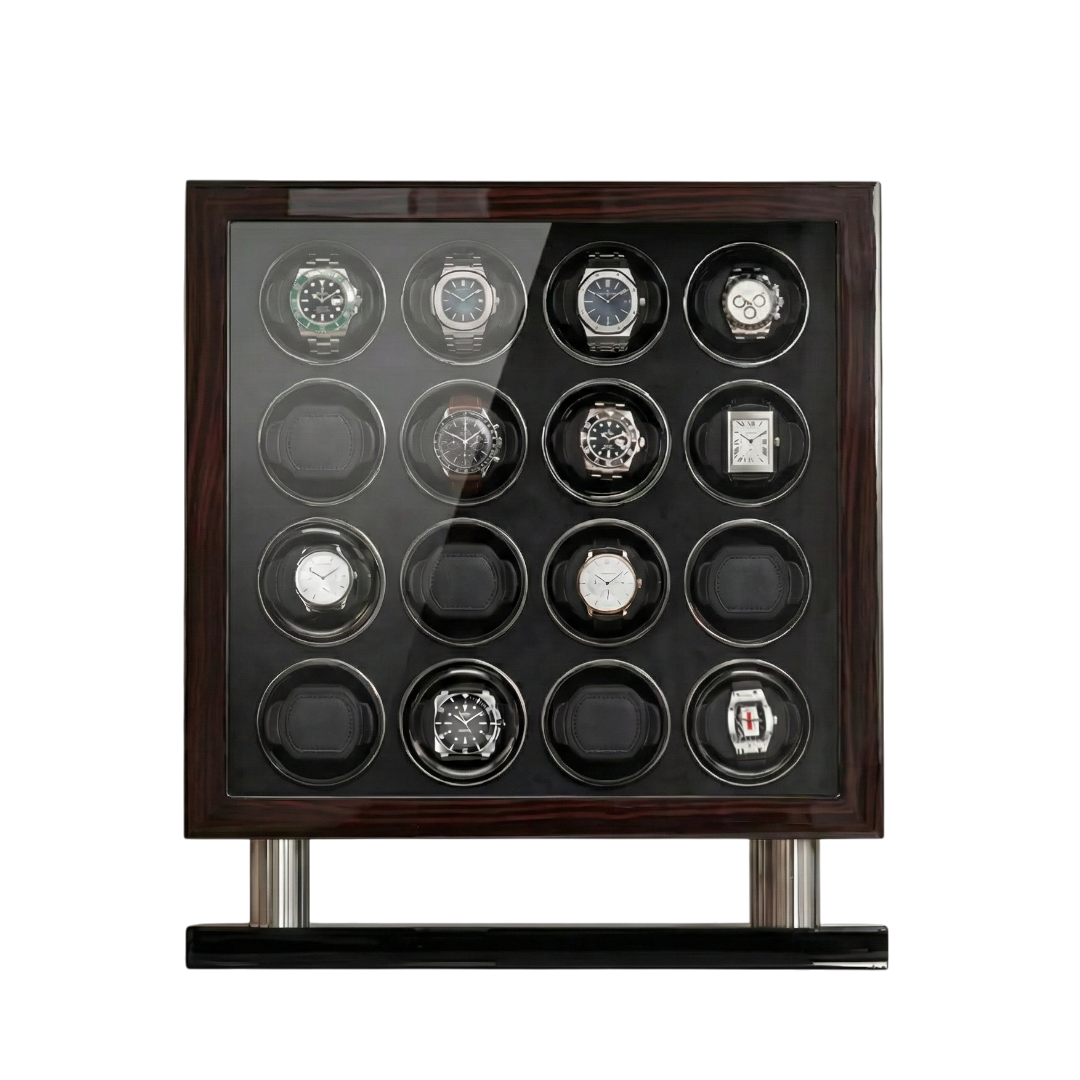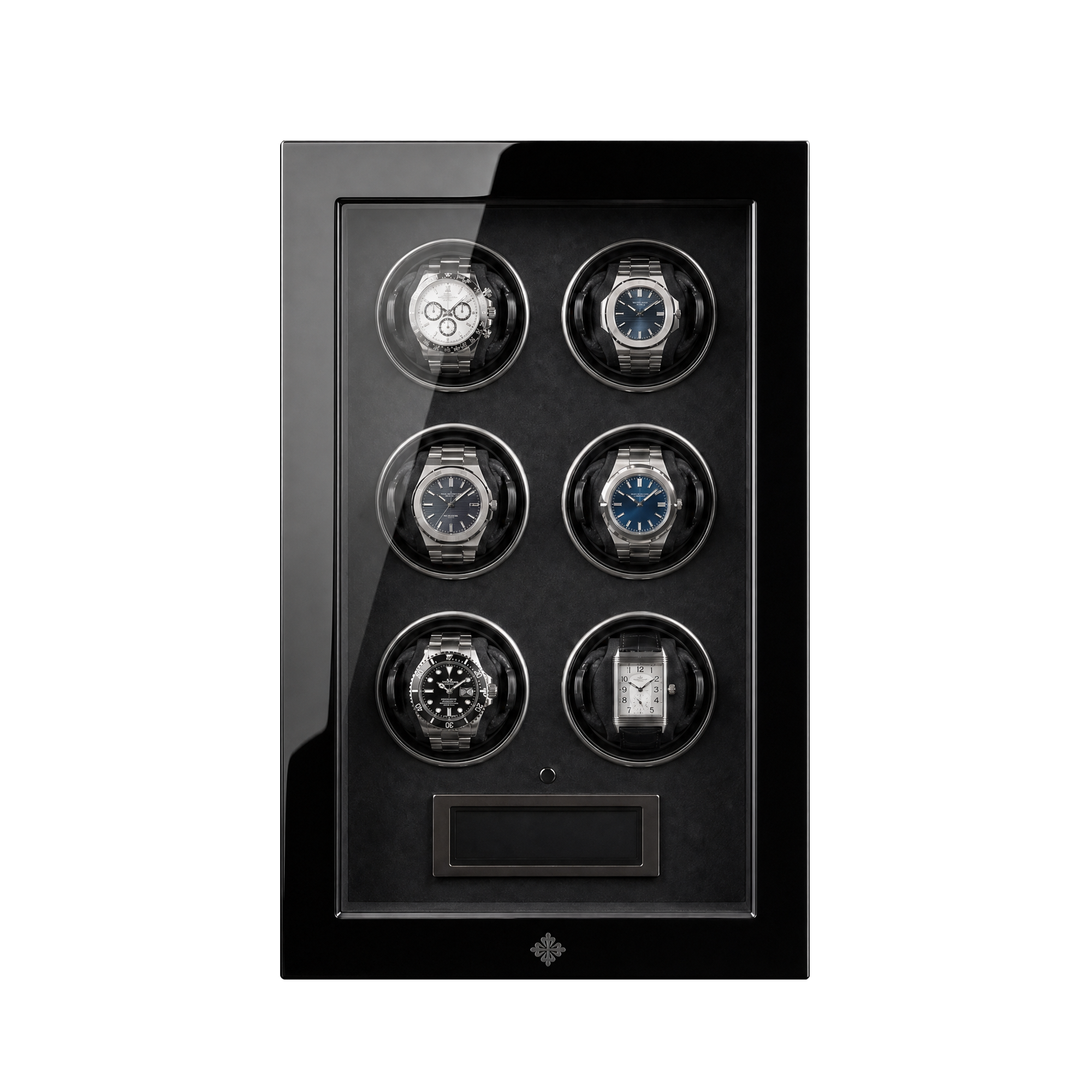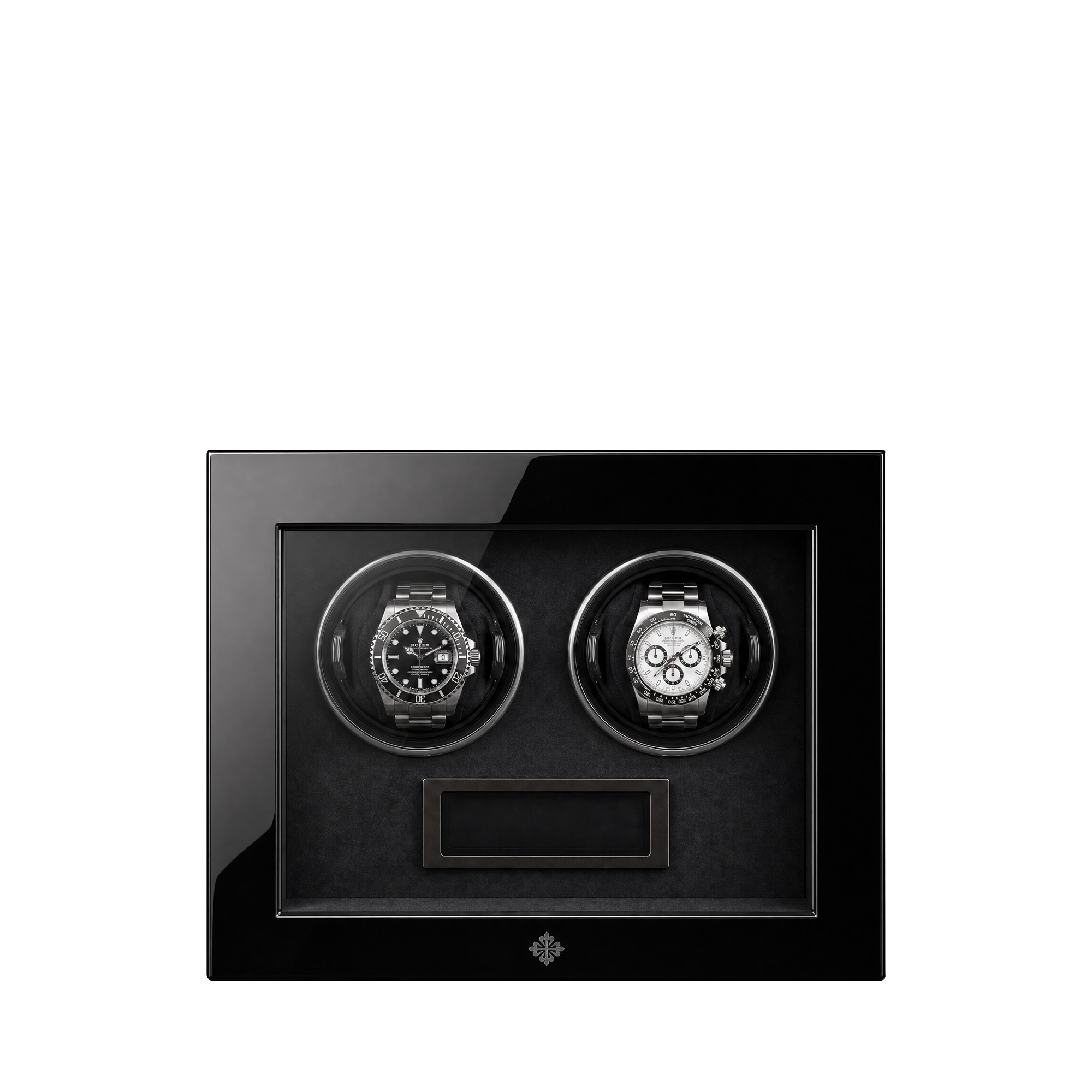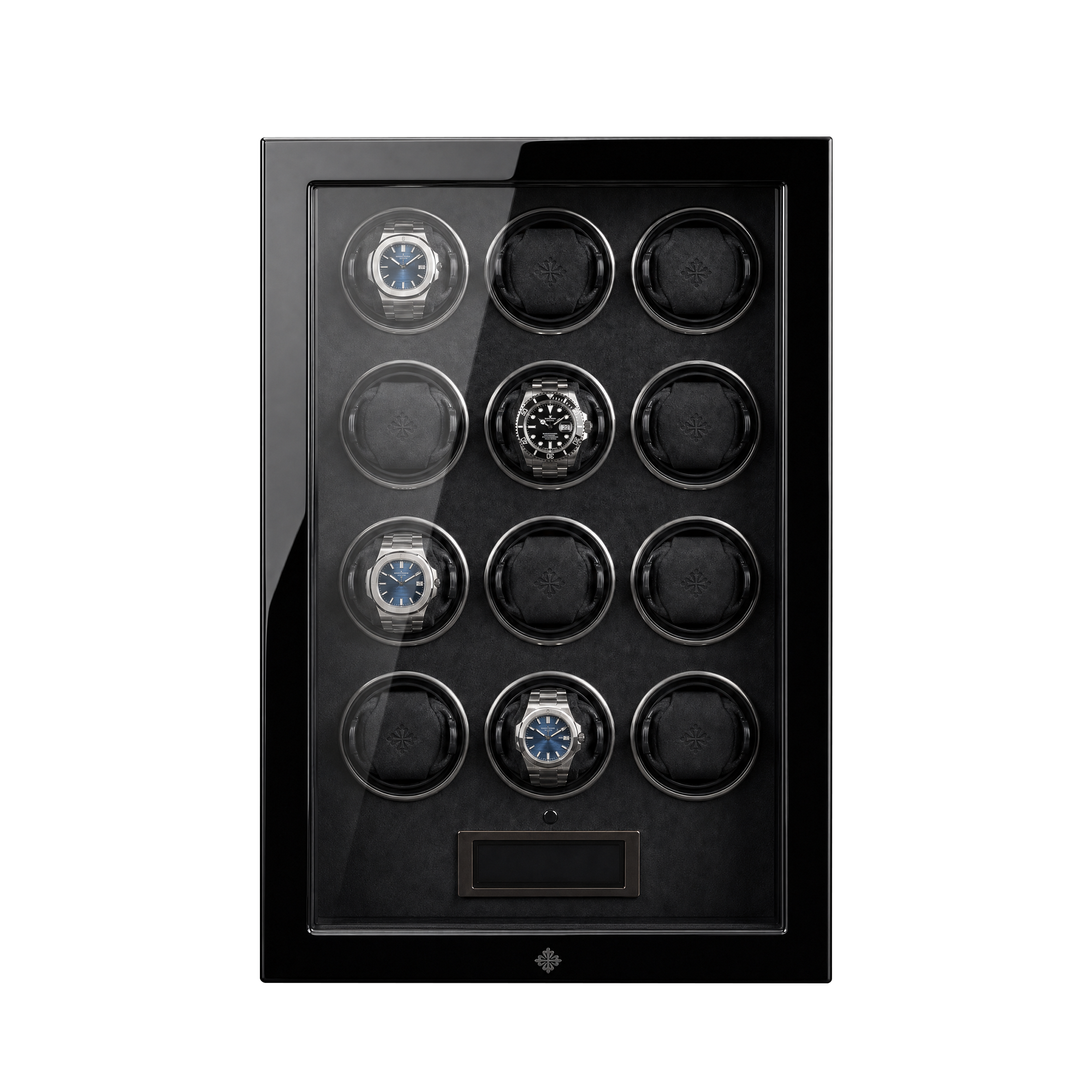

A watch winder cabinet for a home bar or lounge is a lockable, furniture-grade case that displays and rotates automatic watches in a room built for guests, not just the collector. The demands are different from a bedroom or closet install: security matters more because people who don't live in the house stand next to the piece, and the finish has to match bar cabinetry instead of disappearing into a closet corner.
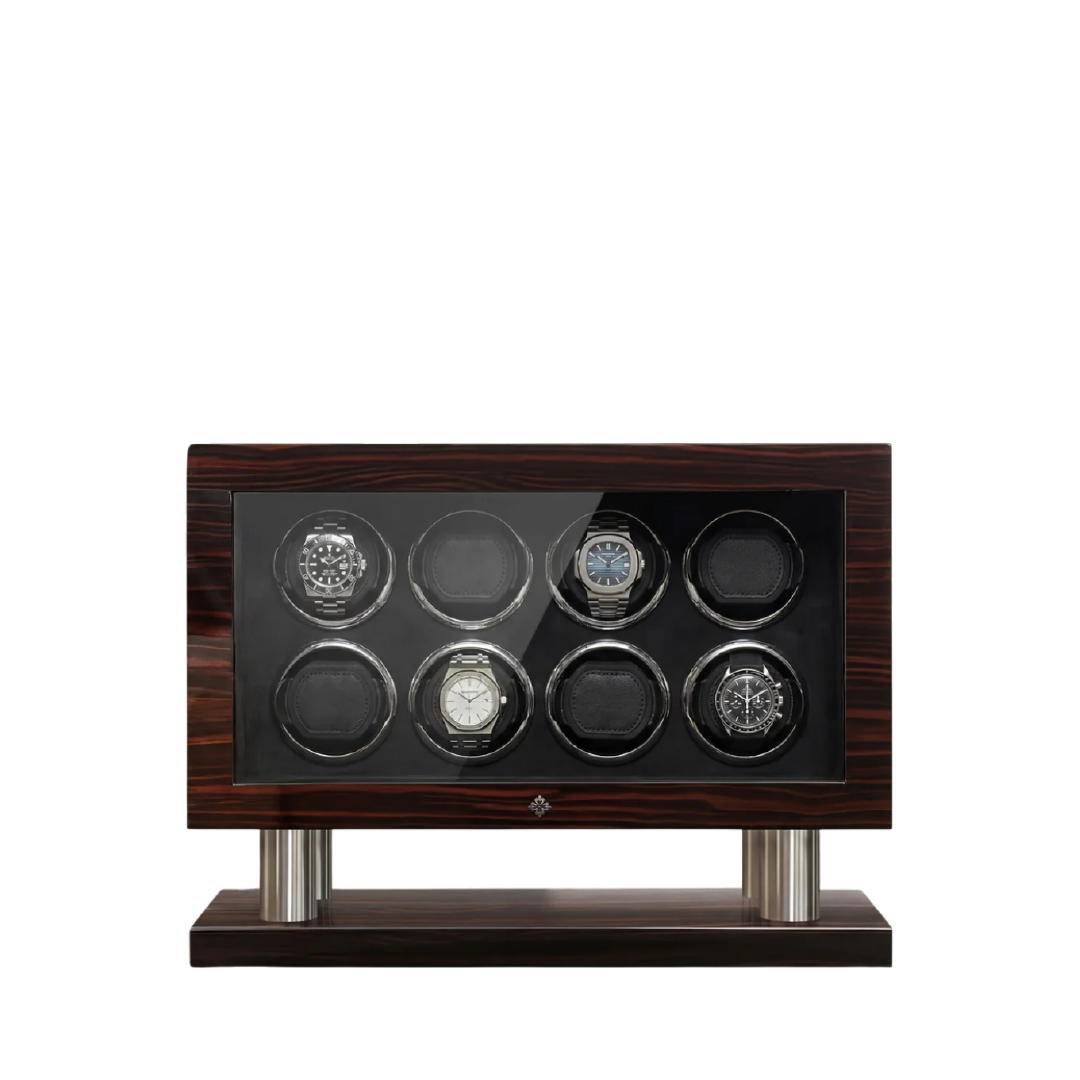
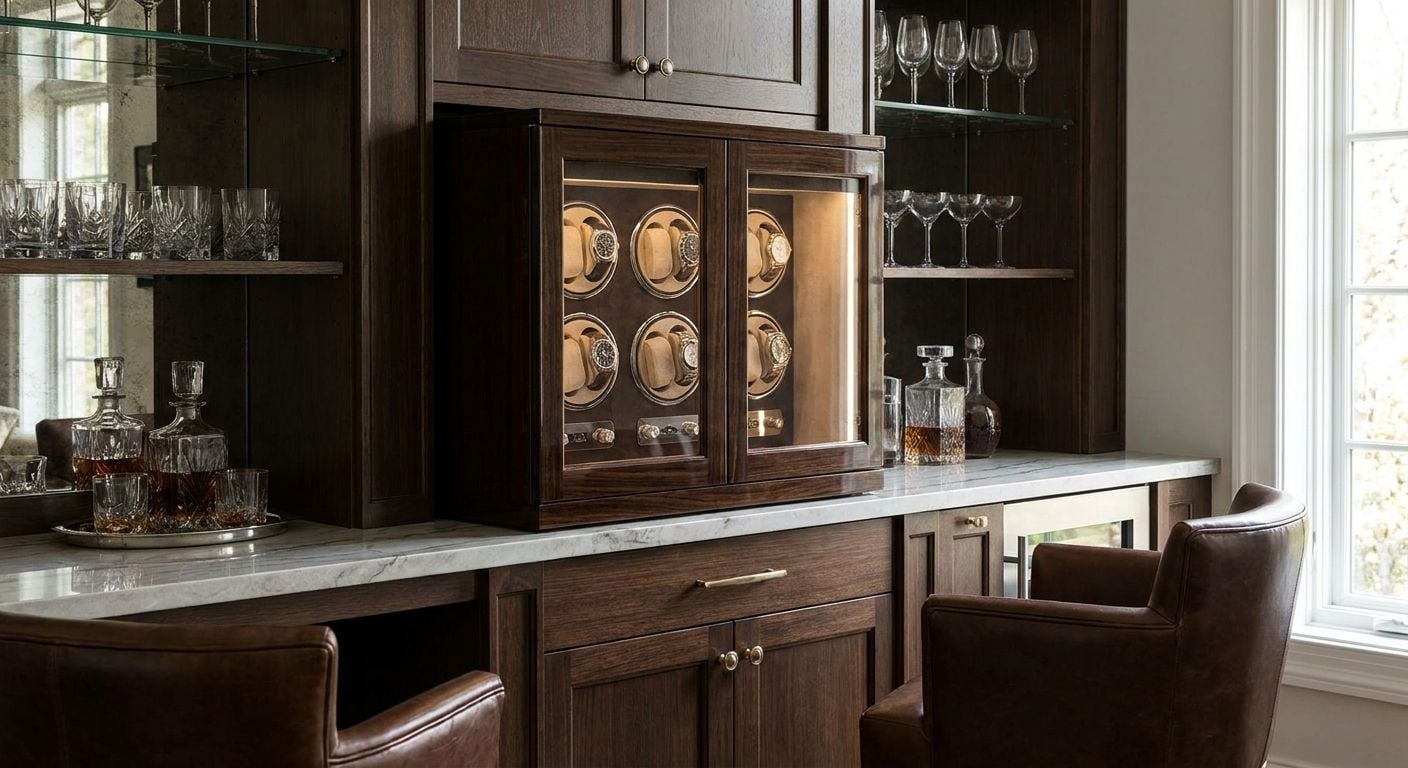
- Yachtline Series 8 Watch Winder lays flat along a bar counter or credenza for eye-level display in 2026.
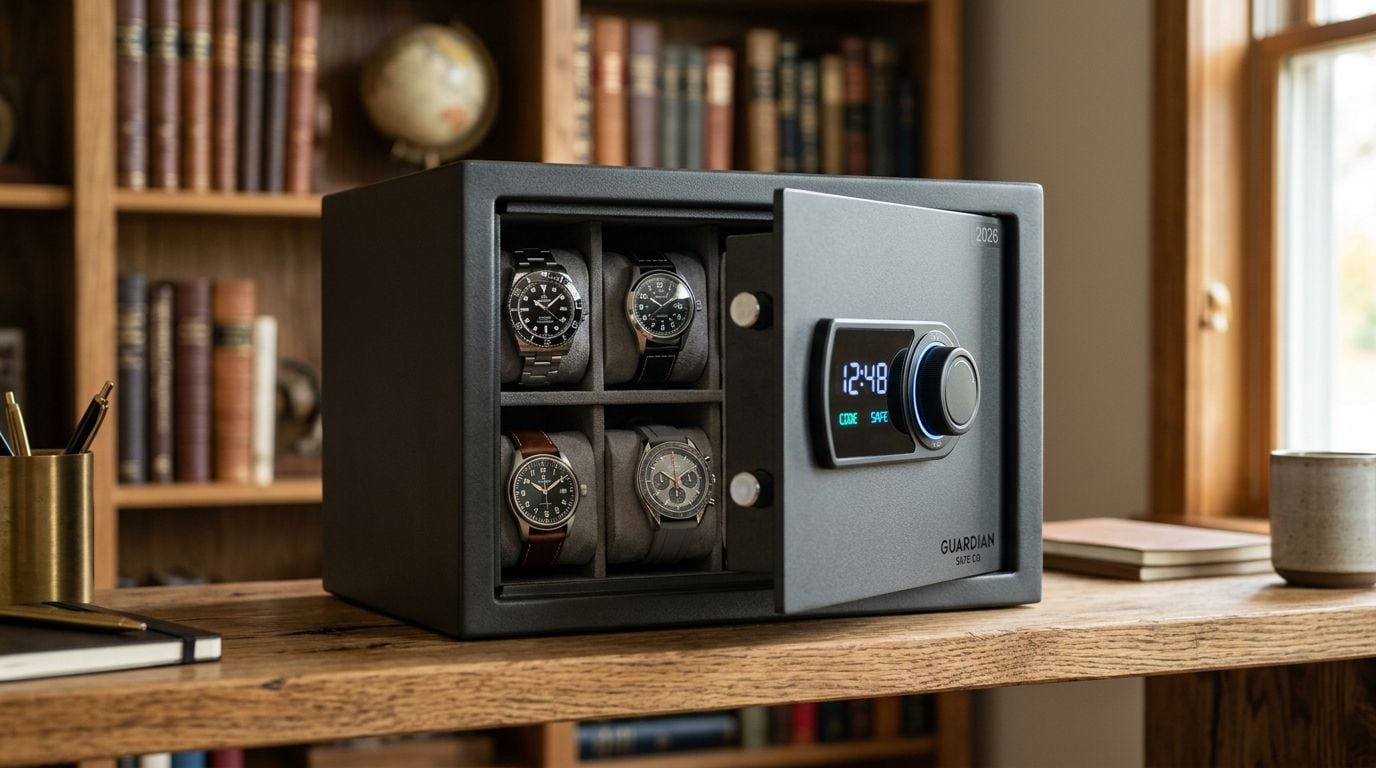
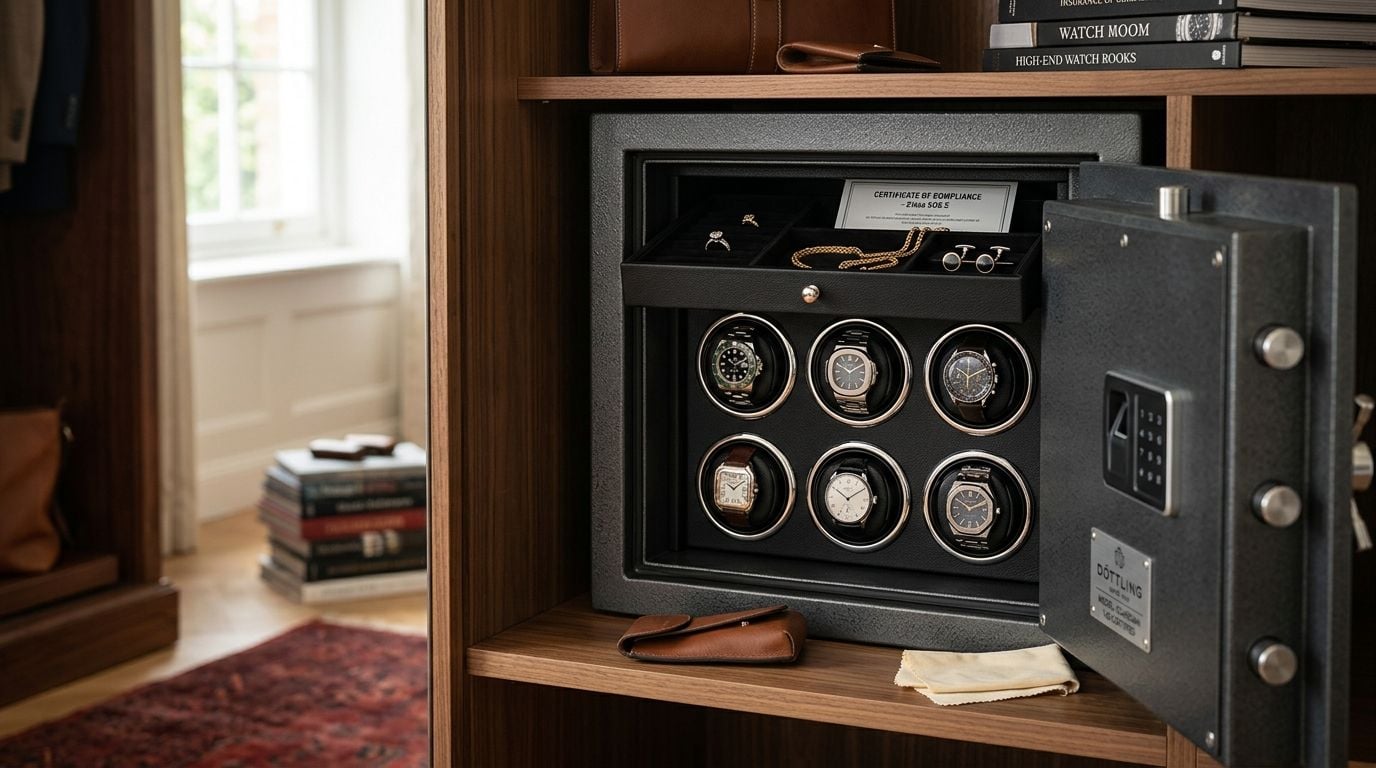
- Lock the cabinet if guests circulate; the Impresario Series 6 solves shared-space access with a fingerprint reader.
- Horizontal winders beat vertical stands on a bar top because guests view the collection at counter height.
- Skip open-stand winders near drink service — spilled liquid near an unprotected movement is avoidable damage.
Why this matters for a home bar or lounge
A watch collection kept in a bedroom closet answers to one person. A watch collection sitting on a bar top answers to everyone in the room, which puts it closer to the demands of a man cave setup than a private closet install, and usually busier than either.
Foot traffic near the piece is constant during any gathering, so a lock stops being optional the moment guests who aren't household members are standing nearby. Noise matters too — a winder that hums under a hard bar top competes with conversation, where the same motor in a closet goes unnoticed. Humidity and temperature swing more in a lounge than in a climate-controlled bedroom, thanks to ice, open bottles, and doors opening for guests all evening.
None of this changes the mechanics of winding. A Rolex still needs its rotor turning at the same TPD whether it sits in a bedroom or behind a bar. What changes is placement, security, and finish, and getting those wrong in a shared room costs more than it would in a private one.
Build the setup step by step
Here's the sequence that works for a bar or lounge installation in 2026, in the order it should happen.
Measure your bar or lounge footprint before you shop
Get exact dimensions before ordering anything. A cabinet that looks right in a showroom photo can crowd a narrow bar run or block a doorway on delivery day.
- Counter depth and clearance behind the bar for the unit itself
- Doorway width for delivery — a standard 36-inch interior door is the usual constraint on larger cabinets
- Viewing height so watches sit at eye level for someone standing at the bar, not below the counter edge
- Outlet proximity, since a winder needs continuous power
- Load rating of the counter or shelf if the piece sits on existing millwork
Choose a lockable case, not an open stand
An open winder stand works in a private study. It does not work fifteen feet from where guests are refilling drinks.
- Biometric fingerprint access for a room with regular guest traffic
- A standard key lock as a simpler, still guest-proof option
- Glass door construction so the collection stays visible without an open opening
- Combination access if more than one household member needs entry
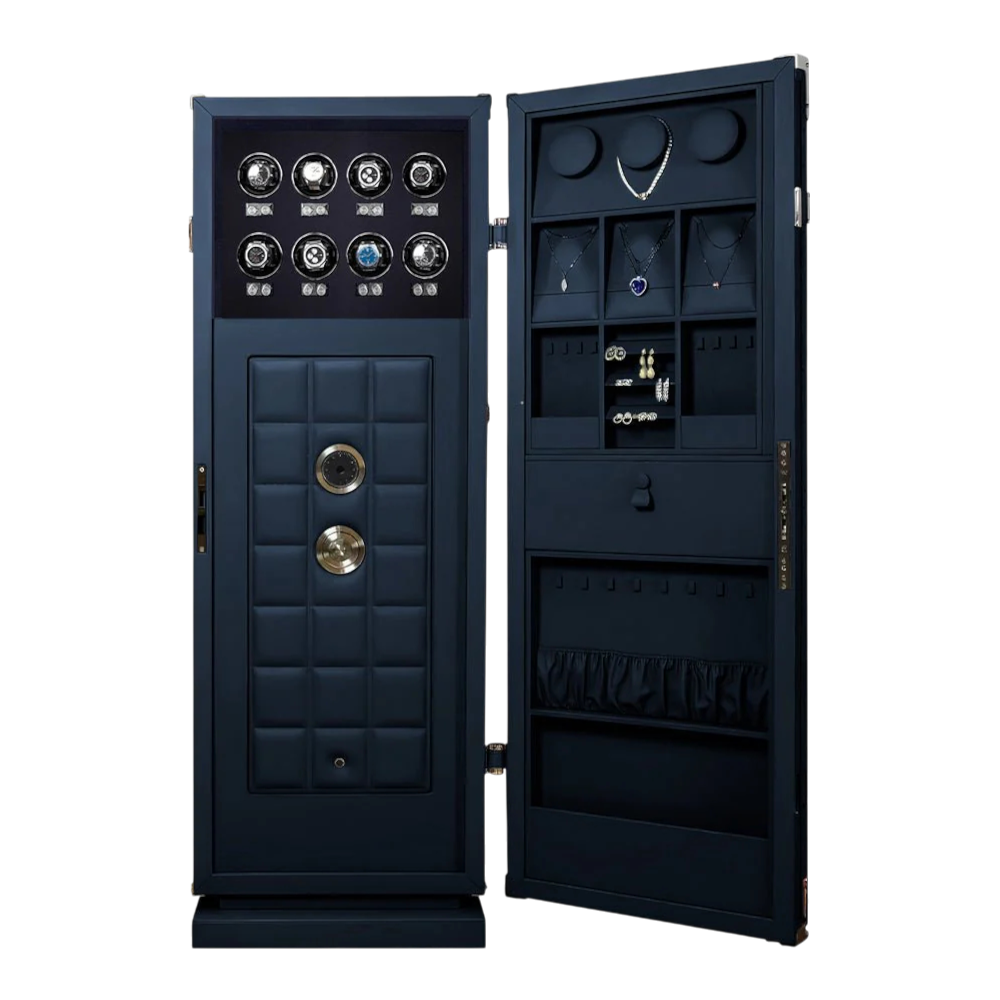
- A model like the Impresario Series 6 Watch Winder, built around fingerprint access for exactly this kind of shared room
Match the finish to your existing bar cabinetry
The cabinet is furniture in this room, not equipment tucked into a closet. It should read as part of the bar, not next to it.
- Wood veneer, such as Macassar Ebony, to echo existing millwork
- Alcantara or Nappa leather trim matched to stools or booth seating
- Glass front for a display effect versus a solid door for a more private cabinet
- Hardware finish, matte black or brushed steel, matched to existing bar fixtures
Set rotation programs for a mixed collection
Watches from different manufacturers rarely need the same turns-per-day setting, and a bar cabinet often holds a mixed collection by design — that's part of what makes it a conversation piece.
- Independent TPD per rotor rather than one shared program for the whole case
- Bidirectional rotation for calibers that call for it, clockwise-only for others
- Scheduled or intermittent modes for pieces worn only on weekends
- A quick reference for each watch's manufacturer-recommended TPD before programming anything
Plan for noise before you commit to placement
Sound behaves differently in a bar than in a bedroom. A motor that's silent on carpet can hum audibly through stone or glass.
- Test placement at low volume during a normal evening before finalizing the spot
- Keep the unit off a stone or tile bar top if it amplifies vibration
- Favor an interior wall or a padded shelf over an open counter run
- Confirm the motor type before buying — Japanese Mabuchi motors run quieter than lower-grade alternatives
Anchor and secure the cabinet
A freestanding cabinet full of watches on a bar top is a security gap and, in most homeowner policies, a liability question at the same time.
- Bolt heavier units to a wall stud or a floor plate
- Confirm counter or shelf load capacity before installation, not after
- Add the cabinet's contents to a homeowner's or dedicated collection policy the same way you would a wall safe
- Keep the cabinet's specs on file for insurance documentation
Decide horizontal or vertical presentation
This is largely a room-layout call, but it changes how the piece reads to guests as much as how it functions.
- Horizontal winders, like the Yachtline Series 8 Watch Winder, lay flat along a credenza or bar run and put watches at standing eye level
- Vertical cabinets fit more capacity into a smaller footprint but ask guests to look up or down rather than across
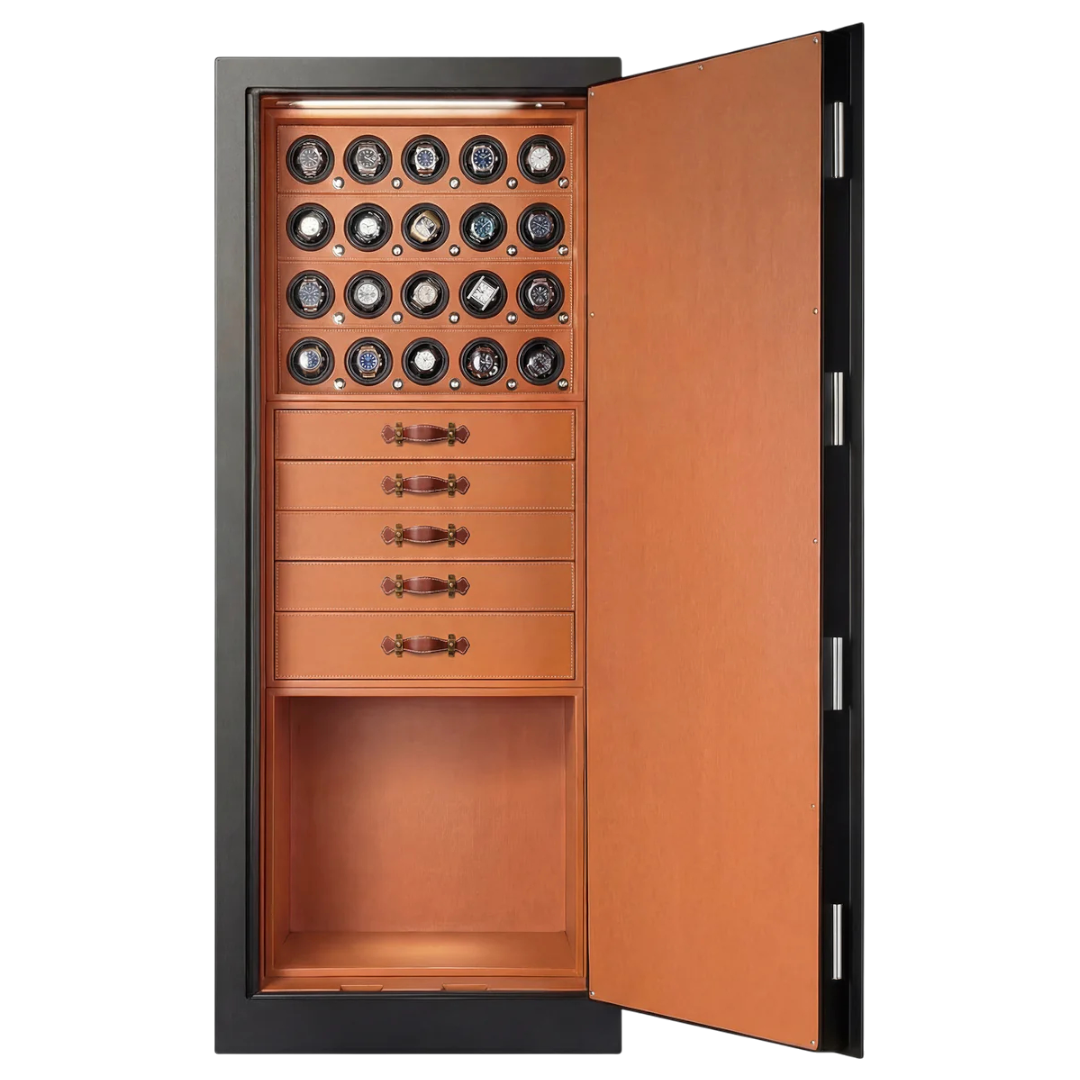
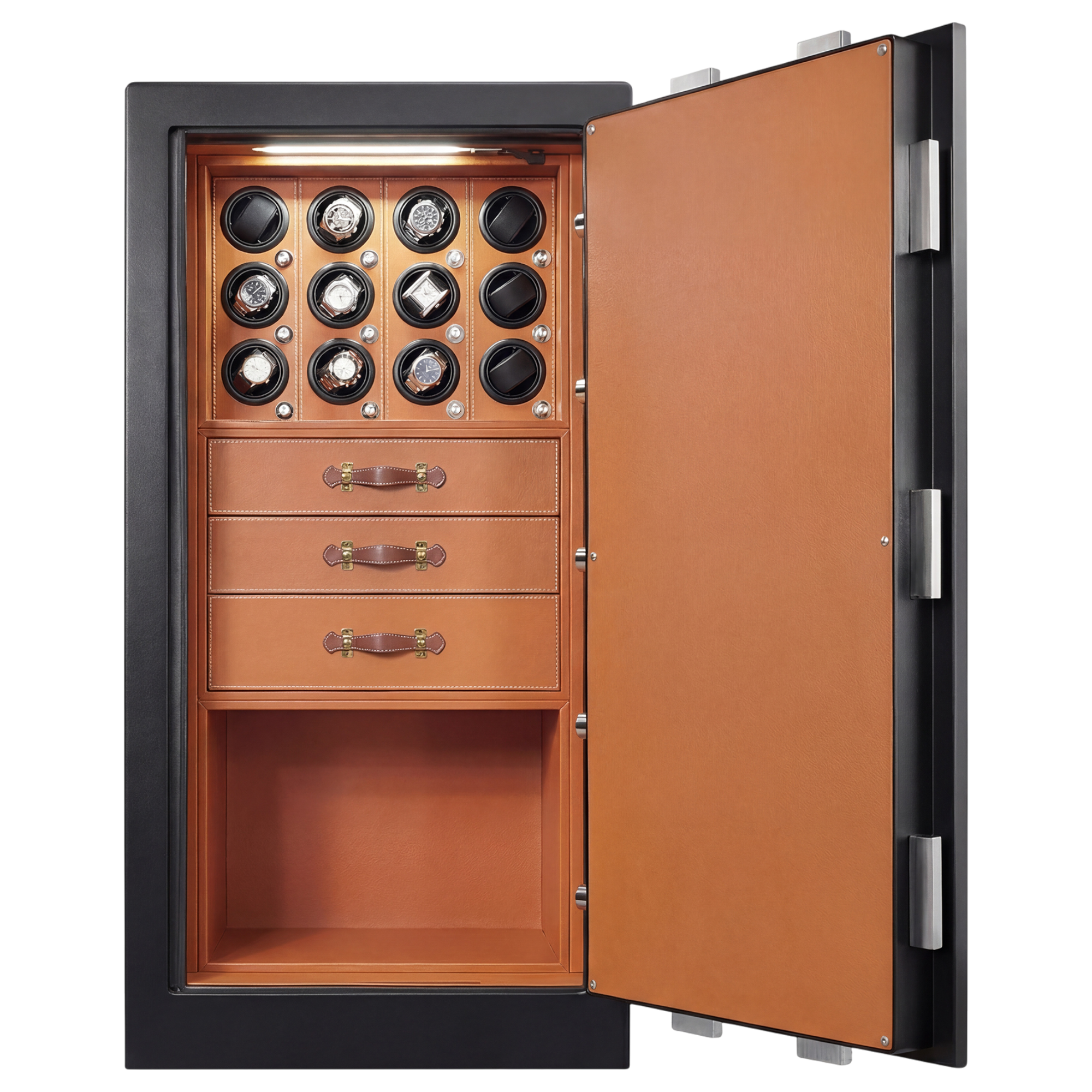
- Larger built-in pieces, such as the Enclave 64 Watch Winder Cabinet, function as a room fixture rather than an accessory, which suits a bar built around the collection itself
Watch winder cabinet options for a home bar
| Option | Best for | Key limitation |
|---|---|---|
| Yachtline Series 8 Watch Winder | Horizontal display along a bar counter or credenza | Fixed eight-watch footprint, no vertical stacking |
| Virtuoso Series 6 Watch Winder | Mixed-caliber collections needing independent TPD per rotor | Six-watch capacity, no biometric lock |
| Impresario Series 6 Watch Winder | Shared lounges where guest access needs a lock | Fingerprint mechanism adds bulk versus open-stand winders |
| Enclave 64 Watch Winder Cabinet | A home bar built around the collection as the room's centerpiece | Cabinet-scale footprint, not a countertop fit |
The Yachtline Series 8 Watch Winder is the strongest pick for a standard home bar in 2026 — it displays at counter height and runs eight independent rotor programs, which covers most mixed collections without demanding a room-scale installation. Buy it for a bar counter or credenza; skip it if the room needs more than eight active watches, and look at the Enclave 64 instead.


Common mistakes home bar owners make
- Placing the cabinet in direct sunlight near bar windows. UV exposure and temperature swings stress both finishes and movements over years of daily light.
- Skipping the lock because "it's just friends." A home bar sees more non-household foot traffic than almost any other room, and that's exactly the room where an open stand is the wrong call.
- Running one TPD setting for the whole cabinet. A Rolex and a chronograph rarely share a winding requirement, and one blanket setting shortchanges half the collection.
- Leaving the cabinet unanchored. A freestanding case full of high-value watches on a bar top is a security and insurance problem the moment a policy adjuster asks about it.
- Choosing an open-stand winder for a room with drink service. Spilled liquid near an exposed movement is the most avoidable failure mode in any lounge setup.
“A watch winder cabinet in a bar answers to everyone in the room, not just the collector who bought it.”
FAQ
What’s the best watch winder cabinet for a home bar in 2026?
The Yachtline Series 8 Watch Winder is the strongest fit for most home bars in 2026 because it displays at counter height instead of stacking vertically. It runs eight independent rotor programs, which covers mixed collections common in shared lounge spaces.
Is a locked cabinet necessary for a home bar setup?
Yes, if the room sees any guest traffic. An open winder stand works in a private study but not in a room where people who don’t live in the house are standing nearby with drinks in hand.
How loud is a watch winder in a lounge setting?
Winders built on Japanese Mabuchi motors run quiet enough to disappear into background conversation. The exception is placement directly on a hard surface like stone or glass, which can amplify vibration into an audible hum.
Can a watch winder cabinet double as a display case?
Yes, models with a glass front let the collection stay visible while locked. A solid door works better if the owner wants the collection out of sight between gatherings.
How many watches should a home bar winder cabinet hold?
Six to eight watches covers most rotating collections without requiring a room-scale piece. Larger cabinets exist for collectors who want the bar built around a bigger collection specifically.
Does humidity from a bar area affect automatic watches?
Ice, open bottles, and condensation raise local humidity more than a closet or bedroom would. Keeping the cabinet away from ice wells and sinks reduces the exposure.
Should the watch winder sit on the bar counter or a separate shelf?
A separate shelf or interior wall placement reduces vibration transfer compared to a hard bar counter. Stone and glass surfaces in particular carry motor vibration further than wood.
What’s the difference between a watch winder and a watch safe for a home bar?
A winder rotates watches to keep automatic movements running; a safe secures them with a lock and no rotation. Some cabinets combine both functions in one case.
One last thing
Most buyers spend their attention on capacity and finish and treat placement as an afterthought. In a home bar, placement is the decision that determines whether the cabinet becomes a feature guests ask about or a source of complaints about motor hum during conversation. A horizontal winder set at counter height, away from stone or glass surfaces, turns the collection into something guests view like a display case rather than glance down into like a drawer — that's the difference between a cabinet that works for the room in 2026 and one that just sits in it.
Related guides
- Watch winder cabinet finish: wood, leather, or glass
- Watch winder cabinet with lock for home security
- Watch winder cabinet weight and what floors can support it
Protect Your Watch Collection
Designed for collectors who demand the best. Explore our premium watch winders and luxury safes.