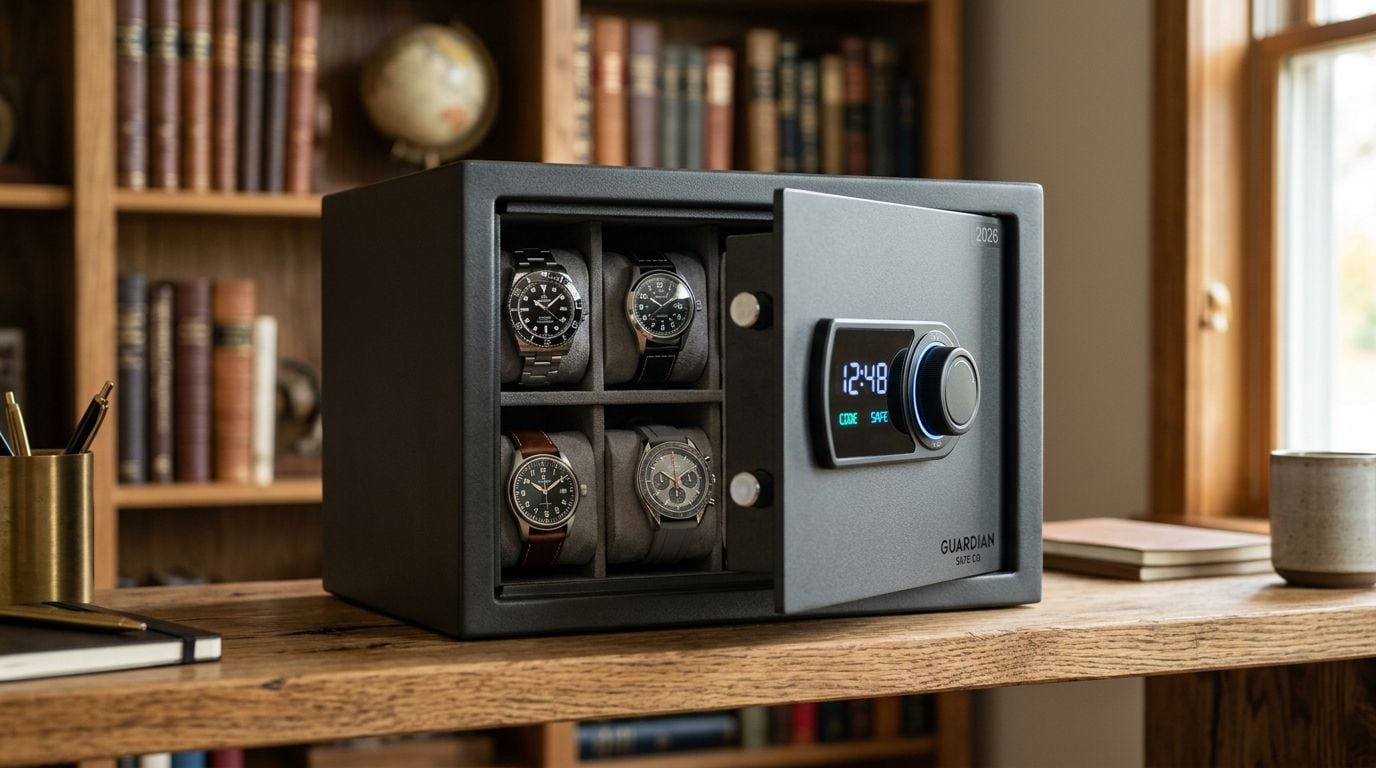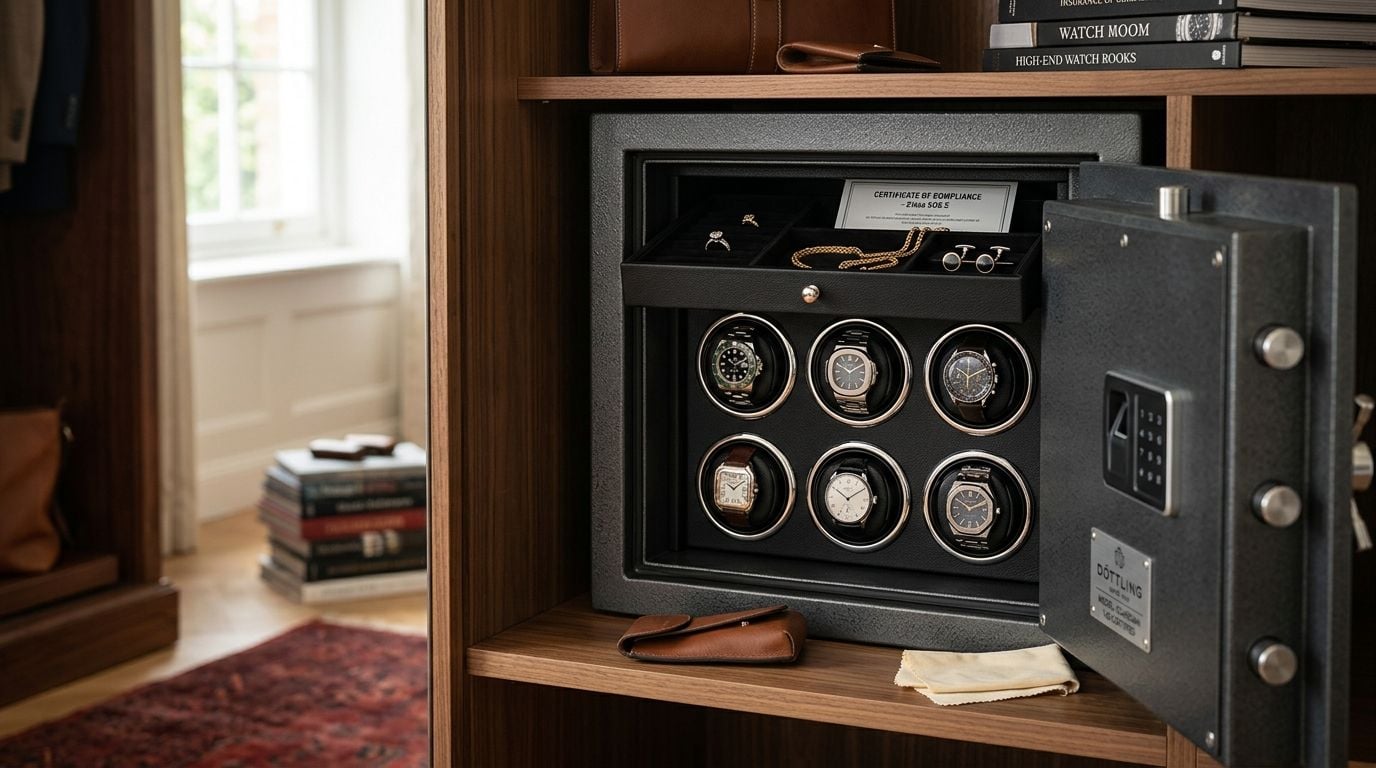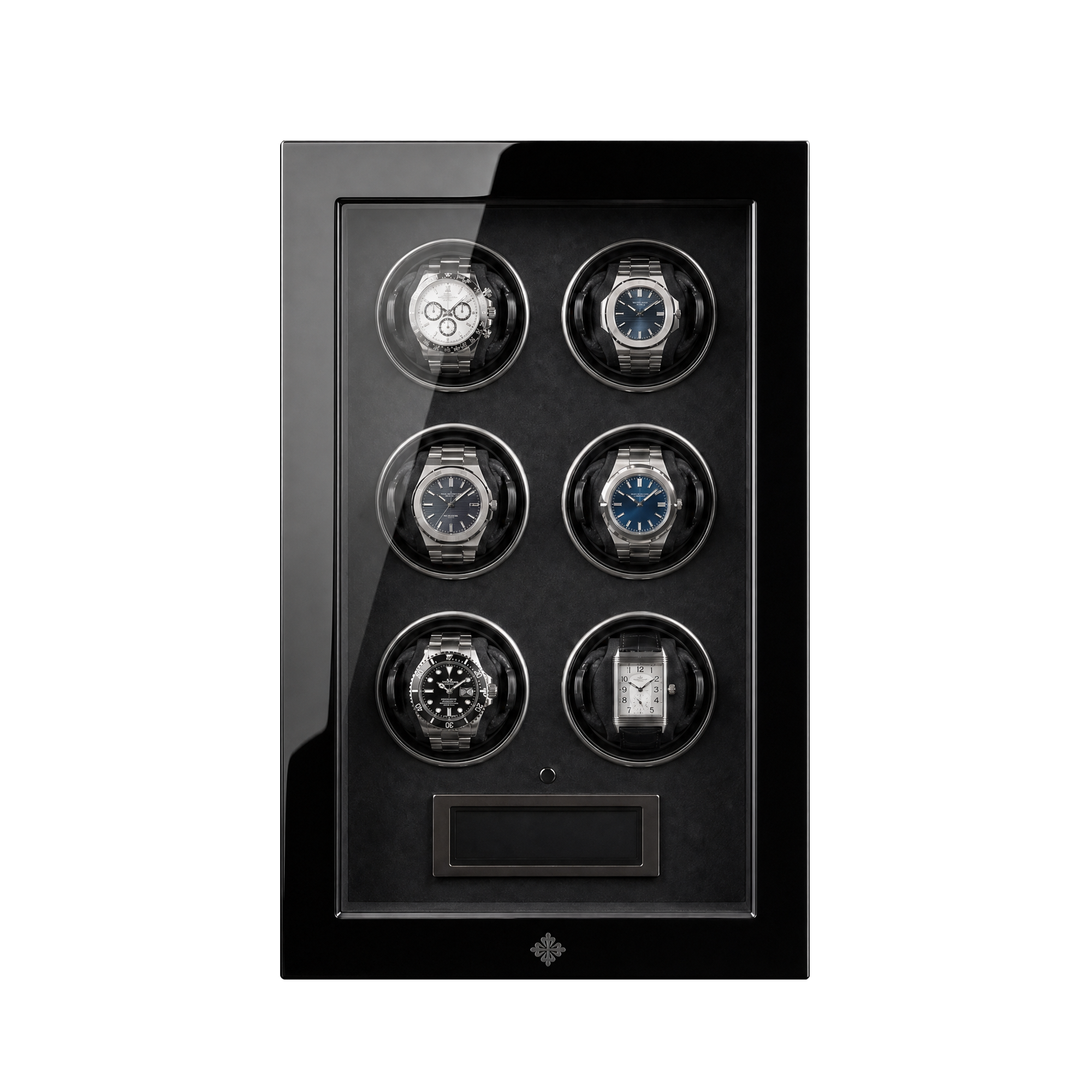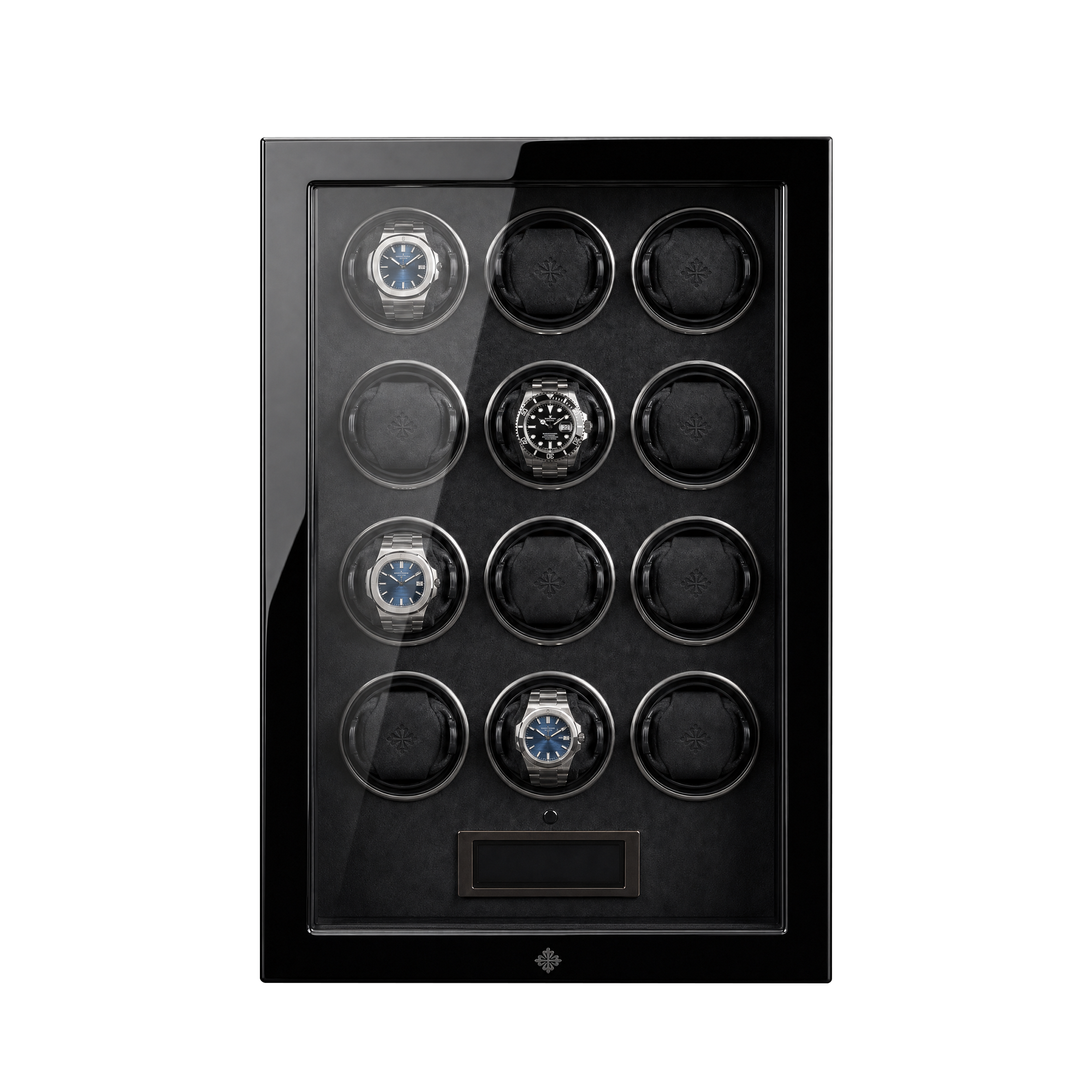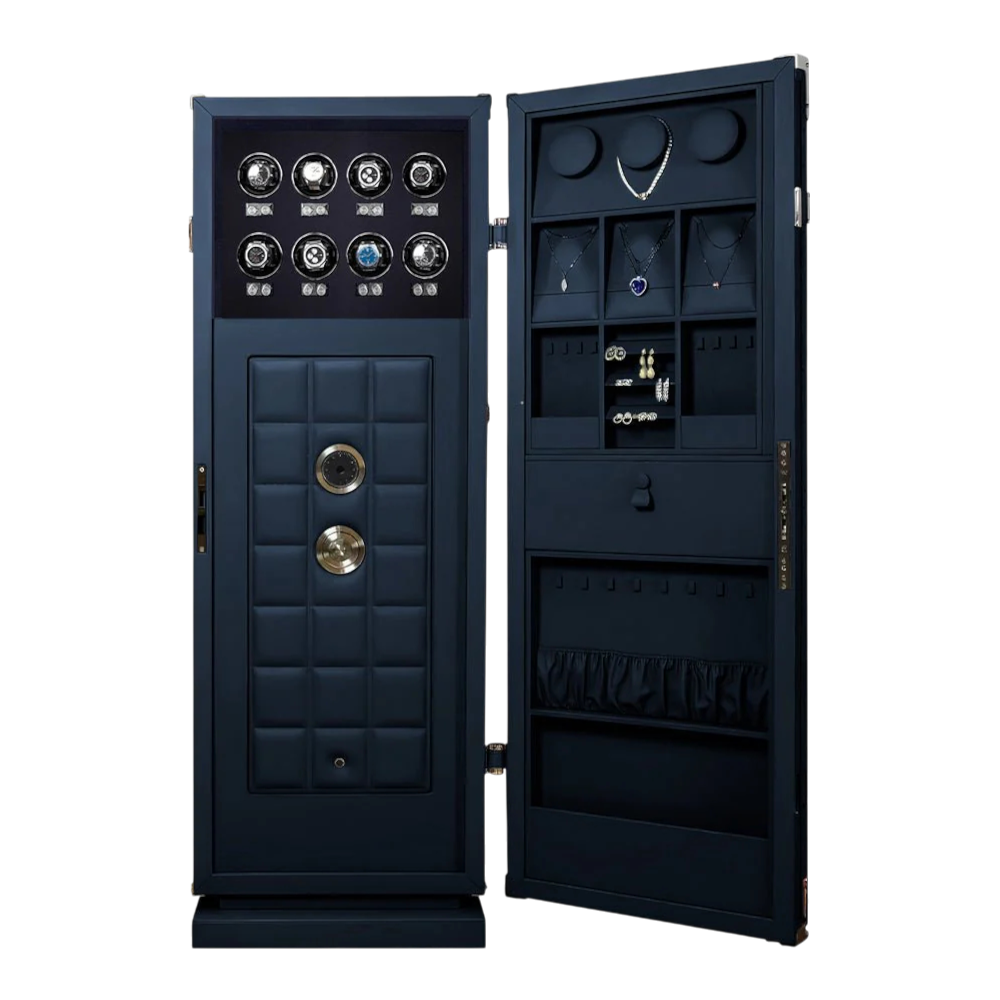

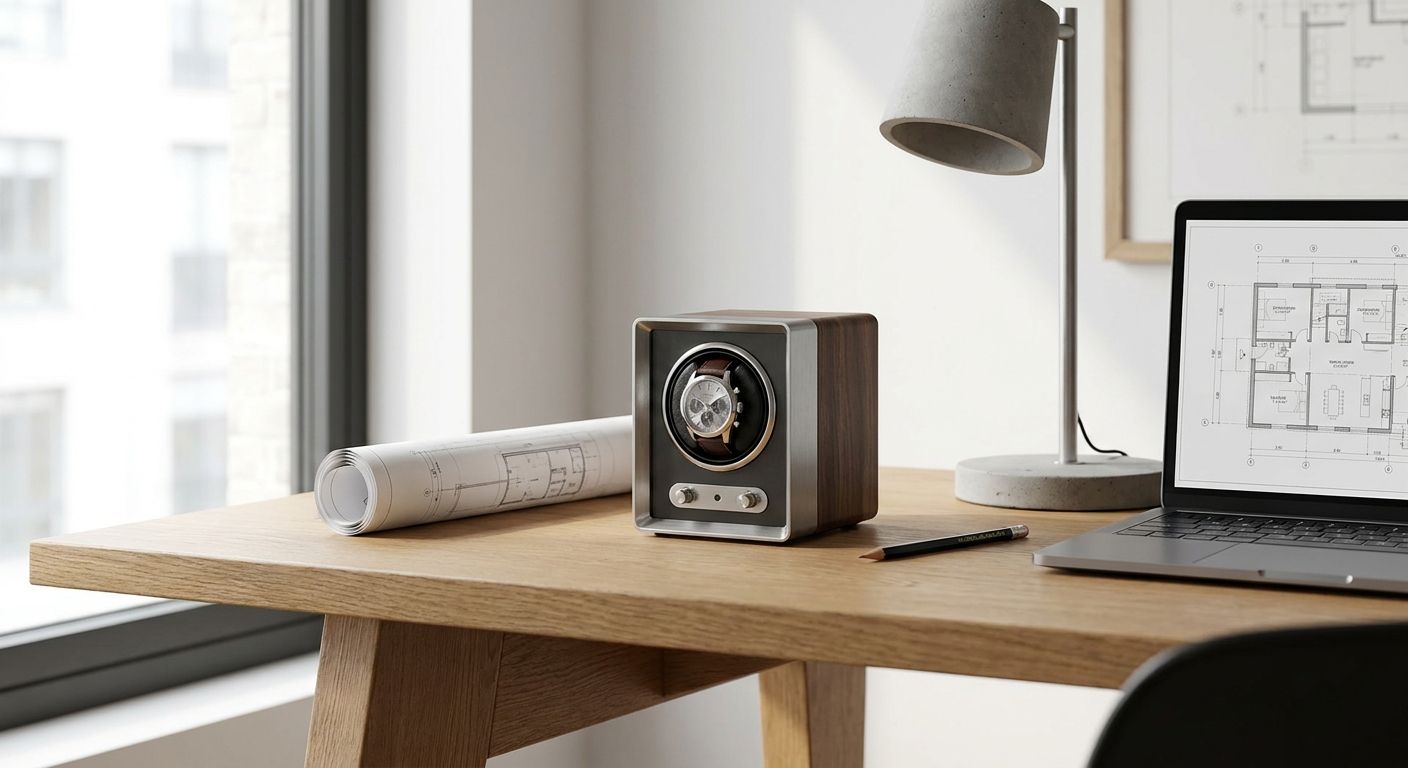
A watch winder for an architect is a single- or double-slot automatic winder sized and finished to sit on a minimalist desk or credenza without breaking the room's material logic, keeping two or three actively worn watches wound between site visits and client meetings. Architects don't shop for the biggest cabinet on the market — they shop for the smallest footprint that solves the actual rotation problem without adding visual noise to a considered workspace.
- A watch winder for an architect works best as a single or double-slot unit, not a furniture-scale cabinet.
- Enigwatch’s Virtuoso Series 2 and Impresario Series 2 fit a narrow desk footprint without visual clutter.
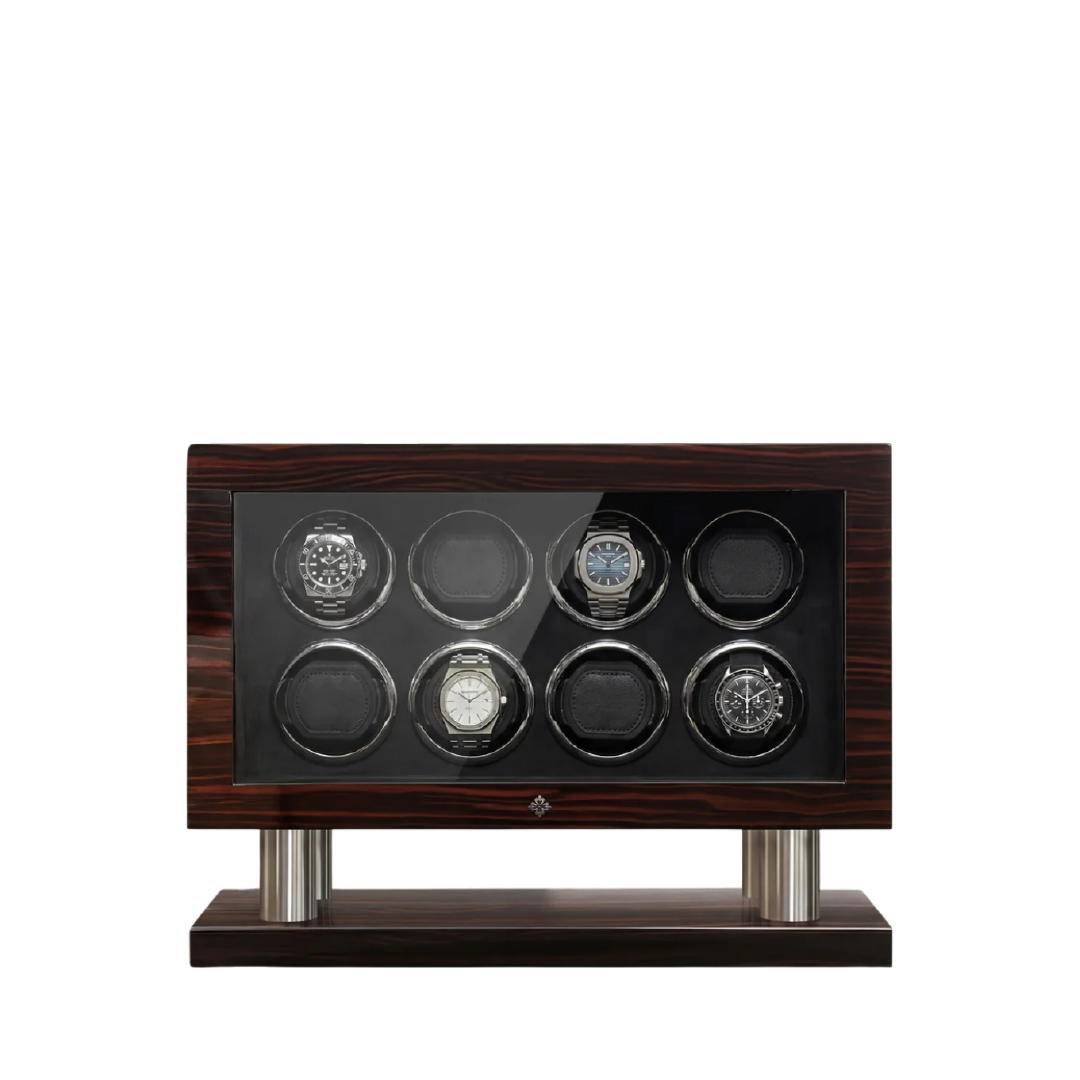
- Horizontal winders like the Yachtline Series 8 suit a credenza; vertical units suit a shelf or bookcase gap.
- Match wood veneer or Alcantara trim to your studio’s material palette before you match a brand name.
- In 2026, a quiet motor on a hard desk surface matters more than raw slot count.
Why this matters for architects
Architects tend to run a mixed automatic rotation: a dress watch for client presentations, a field or dive watch for site walks, maybe a third piece that sits in a drawer for weeks. Each of those calibers has its own turns-per-day requirement, and a watch left still for four or five days between wears will stop and need resetting — a minor annoyance when it's a date-only piece, a real one when it's a perpetual calendar.
Desk space in a studio is functional first. Drafting tables, model materials, and reference books already compete for surface area, so a winder that looks like a jewelry display case reads wrong next to a T-square or a stack of drawings. The same discipline that governs a floor plan — proportion, material honesty, no decorative excess — applies to what sits on the desk itself.
Measure your desk or shelf footprint first
Before comparing any watch winder for an architect, get real dimensions instead of relying on a product photo's sense of scale.
- Measure the exact clear surface you're willing to give up, not the whole desk
- Note ceiling clearance if the unit sits under a shelf or cabinet lip
- Decide whether the winder needs to face a client's side of the desk or only yours
- Check the outlet location relative to where the winder will sit
- Account for cord routing if the desk has a cable channel or grommet
Decide how many watches actually rotate through your week
Most architects overestimate how many automatics need active winding at once.
- Count the automatics you actually wear in a given week, not your full collection
- Separate watches you wear daily from pieces that sit in a safe most of the year
- If you travel for site visits often, factor in how long a watch sits idle between trips
- Check each caliber's published power reserve before assuming it needs daily winding
- Confirm whether any piece has a perpetual calendar — those are the ones a stopped watch actually costs you time to reset
Once you know the real number, sizing gets simple: one or two watches in daily rotation call for a single- or double-slot winder, not a cabinet.
Pick a single or double-slot winder for a minimalist footprint
This is where the Enigwatch lineup gets useful once you've done the counting above. A two-watch rotation is the single most common architect use case, and it maps cleanly onto a compact winder rather than anything furniture-scale.
- A single-slot unit covers one watch worn most days, with the smallest possible desk footprint
- A two-slot unit like the Virtuoso Series 2 runs both watches on independent programs, useful when the two calibers need different turns-per-day settings
- The Impresario Series 2 adds a fingerprint lock, worth it only if the desk is in a shared studio space rather than a private office
- Telescopic pillows matter more than slot count if your watches range from a 36mm dress case to a 44mm field watch
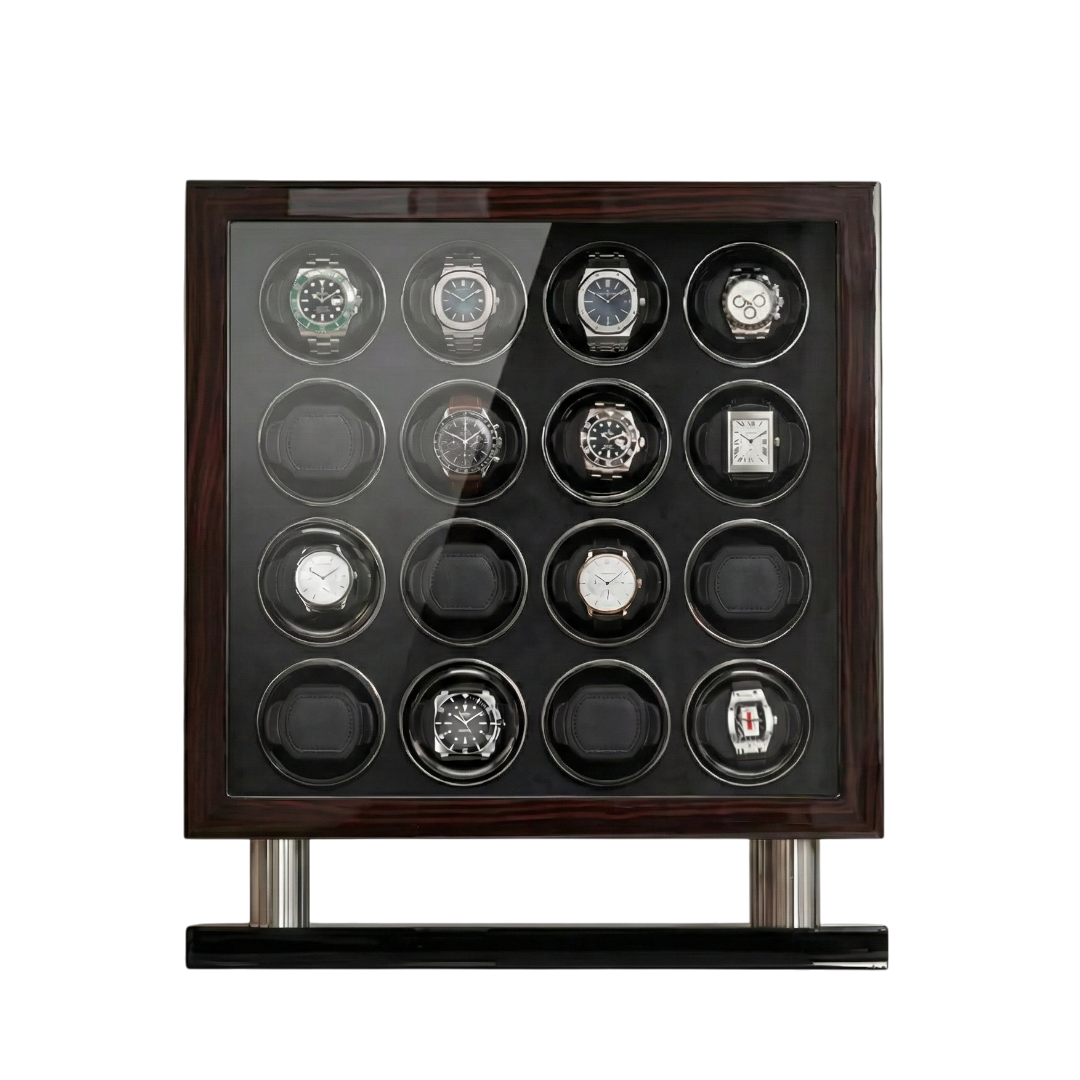
- Skip anything advertised primarily on slot count — a 12-slot winder on a two-watch desk is the architectural equivalent of a stair three times wider than it needs to be
Match materials to your studio's palette
A winder that clashes with your desk's wood tone or metal hardware will bother you daily, even if it works perfectly.
- Walnut or Macassar Ebony veneers read closer to a drafting table than gloss lacquer or chrome
- Alcantara or Nappa leather interiors matter less for visible aesthetics than for how the watch case sits against the pillow
- Glass-top winders show fingerprints fast on a desk that gets handled daily — matte finishes hide wear better
- If your studio furniture runs matte black or brushed steel, look for a winder finish in the same family rather than a warm wood tone
Enigwatch's guide to winder cabinet finishes breaks down wood veneer, leather, and glass options side by side if the desk's material language isn't settled yet.
Set rotation programs correctly for your watches
A winder is only useful if the turns-per-day and rotation direction match what each caliber actually needs.
- Check the movement manufacturer's published TPD spec rather than guessing
- Set clockwise, counterclockwise, or bidirectional based on the rotor design, not a default setting
- Independent-program winders let you run two different watches correctly at once — a shared-program unit forces a compromise
- Re-check settings any time you swap which watch sits in which slot
Reduce noise and vibration on a hard desk surface
A winder motor that's quiet on a carpeted credenza can hum audibly on a bare wood or glass desk, and an open studio makes that worse.
- A felt or cork pad under the unit cuts vibration transfer into a hard tabletop
- Glass desks amplify motor noise more than wood or laminate surfaces
- Placement away from a shared wall matters if the desk sits in a home office
- Confirm the motor type before buying — a lower-quality motor is the most common source of audible clicking during rotation
Enigwatch's breakdown of watch winder noise covers what quiet actually sounds like versus what a spec sheet claims.
A winder that needs an extension cord defeats the point of a minimalist desk.
Plan cable management before the winder arrives
Cord clutter undoes a clean desk faster than the winder's physical size ever will.
- Route the power cord through an existing desk grommet if one exists
- Position the outlet strip behind the desk, not visible from the seated position
- Confirm voltage compatibility if the desk is in a studio outside the US
- Choose a winder with a shorter integrated cord over one that ships with excess slack


Comparing options for an architect's desk
| Option | Best for | Key limitation |
|---|---|---|
| Virtuoso Series 2 Watch Winder | A two-watch daily rotation on a narrow desk | Only two rotors, no biometric lock |
| Impresario Series 2 Watch Winder | A shared studio desk where privacy matters | Same two-slot capacity as the Virtuoso, at a higher entry point |
| Yachtline Series 8 Watch Winder | A credenza or console with more surface width | Wide horizontal footprint, not suited to a narrow desk |
| Watch Winders Pillow | Static, non-motorized storage between wears | Doesn't wind the watch at all — it's a cushion, not a winder |
The Virtuoso Series 2 is the correct default for most architects in 2026: it covers the standard two-watch rotation without the desk footprint or price step-up of anything bigger.
Common mistakes architects make
- Choosing a finish before checking dimensions against the actual desk drawing, then discovering the unit doesn't clear a shelf lip
- Buying a cabinet-scale winder for a shared studio desk when a single- or double-slot unit solves the real rotation
- Setting one TPD for a mixed collection instead of checking each caliber's own spec
- Ignoring cord routing during the furniture layout, then living with a visible cable across a clean desk
- Assuming a glass-top desk won't transmit motor vibration — it usually amplifies it
FAQ
What’s the best watch winder for an architect’s desk?
A single- or double-slot unit like the Virtuoso Series 2 fits most architects’ desks because it covers a two-watch daily rotation without the footprint of a cabinet. Slot count should match how many automatics you actually wear in a week, not your full collection.
How many slots do I need for a small rotation?
Most architects need one or two active slots, not more. Count the watches you wear in a typical week before buying anything larger.
Does a watch winder need to match my desk’s wood tone?
It doesn’t need to, but a mismatched finish will bother you daily on a desk you look at constantly. Walnut and Macassar Ebony veneers read closer to drafting furniture than gloss or chrome finishes.
How loud is a good desk watch winder?
Motor quality is the main factor — a lower-quality motor produces an audible click during rotation, especially on a hard desk surface. Glass desks amplify motor noise more than wood or laminate.
Should I choose a single or double watch winder for a minimalist setup?
A double-slot unit covers most architects’ needs since a dress watch and a field or site watch is the common two-piece rotation. A single-slot winder only makes sense if you wear one automatic almost exclusively.
What TPD should I set for a mixed automatic collection?
Check each caliber’s published turns-per-day spec individually rather than using one default setting. An independent-program winder lets two different watches run correctly at once; a shared-program unit forces a compromise.
Can a watch winder sit on a glass desk without vibration issues?
It can, but glass transmits motor vibration more than wood or laminate. A felt or cork pad under the unit reduces the transfer noticeably.
Is a fingerprint lock necessary for a shared studio desk?
Only if other people have regular access to the desk. In a private office, a fingerprint-locked model like the Impresario Series 2 adds cost without solving a problem you actually have.
One last thing
Horizontal layout beats vertical for most desk setups, and it's not about looks. A winder like the Yachtline Series 8 lays its rotors flat rather than stacked, which keeps the whole unit lower than a vertical case of the same slot count — easier to tuck under an overhead shelf, and less likely to catch a sleeve when you're reaching across a drafting table in 2026.
Related guides
- Watch winder cabinet finish: wood, leather, or glass
- Watch winder noise: how quiet should it be
- Watch winder display case for collectors
Protect Your Watch Collection
Designed for collectors who demand the best. Explore our premium watch winders and luxury safes.