

If you own a Rolex and an Omega — say, a Submariner and a Seamaster — you need a double watch winder that handles both without compromise. This guide covers exactly what to look for in a double watch winder for Rolex and Omega in 2026, which Enigwatch options fit the bill, and what to skip.
TL;DR: A double watch winder for Rolex and Omega needs independent motors with programmable TPD (turns per day) settings, bidirectional rotation, and a quiet motor rated under 10 dB. Rolex movements typically need 650–950 TPD clockwise; Omega cal. 8500/8900 needs 650–950 TPD bidirectional. The automatic watch winder collection from Enigwatch covers both requirements. Don’t buy a shared-motor unit — it can’t serve two different caliber needs simultaneously. Best pick for most buyers in 2026: a dual-slot winder with independent programmable motors and a lockable housing.
Why This Matters in 2026
Rolex and Omega are the two most common luxury watches in dual-ownership scenarios. But their movements are not identical. A Rolex Perpetual rotor is unidirectional (clockwise), while the Omega Co-Axial cal. 8500 winds bidirectionally and has a power reserve of 60 hours. Leave either unwound for more than 40–60 hours and you’re resetting date, GMT hands, or a moon phase complication. A double winder eliminates that reset cycle entirely — and in 2026, the price gap between a decent dual-slot winder and a single-slot unit is under $80 in most cases.
Who This Is For
This guide is written for collectors who rotate between two watches daily — one Rolex, one Omega — and want both kept wound, positioned correctly, and stored securely on a nightstand or in a safe. You’re not managing a 20-piece collection. You want a compact, reliable unit that won’t over-wind delicate movements or buzz on the dresser at 2 a.m.
What to Look for in a Double Watch Winder for Rolex and Omega
Independent Motors per Slot
This is the non-negotiable. A shared motor means both watches run on the same rotation program — which is wrong for at least one of them. Rolex needs clockwise-only rotation; Omega needs bidirectional. With independent motors, slot one runs clockwise at 850 TPD and slot two runs alternating at 750 TPD simultaneously. No compromise.
Programmable TPD (Turns Per Day)
Rolex Perpetual movements perform best between 650 and 950 TPD. Omega cal. 8500 and 8900 need 650–950 TPD bidirectional. A fixed-TPD winder set at 1,200 TPD will spin the rotor more than necessary and add wear to the winding mechanism over time. Look for a unit with at least three programmable TPD settings per slot — 650, 850, and 1,000 covers both brands cleanly.
Bidirectional Rotation Control
Setting rotation direction per slot is what separates a proper dual winder from a toy. Rolex: clockwise only. Omega cal. 8500/8900: clockwise or counterclockwise (the movement winds on both strokes). A winder without per-slot direction control forces you to pick one setting for both, which means one watch is always on a suboptimal program.
Motor Noise Under 10 dB
Anything above a whisper is unacceptable for a bedroom unit. Quality Japanese Mabuchi motors or equivalent run at 5–9 dB. Cheap gear-driven motors hit 15–20 dB, which is audible across a quiet room. Ask for a noise spec or check user reviews specifically mentioning sound. A silent winder in 2026 is table stakes, not a premium feature.
Pillow Size and Watch Head Fit
Omega Seamasters and Rolex Submariners both run 40–44 mm case diameters with thick rubber or metal bracelets. The winder pillow must expand to at least 50 mm to seat the watch correctly. Undersized pillows cause the watch to wobble, creating an inconsistent winding arc. Confirm pillow compatibility before buying — most quality units list min/max wrist size or case diameter.
Build and Security
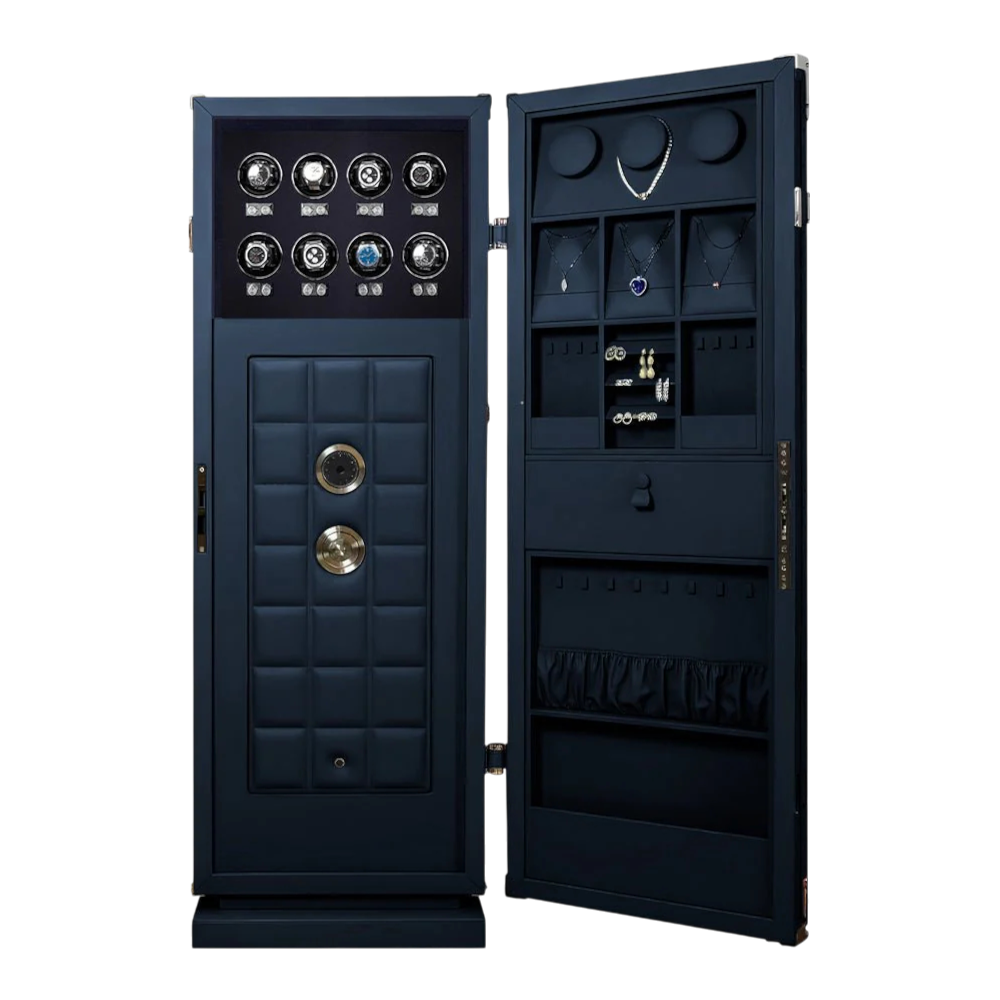
For two watches worth a combined $15,000–$30,000+, a flimsy acrylic shell is the wrong housing. A wood-veneer or carbon-fiber exterior with a lock — even a simple key lock — is the minimum standard. If you want the winder inside a secure enclosure, Enigwatch’s watch winder safe box collection includes units with biometric and key-lock options that house winding mechanisms inside fireproof safes.
Top Picks for Rolex and Omega Owners in 2026
The Safe Pick — Yachtline Series 16 Watch Winder
Hook: More capacity than you need right now, engineered correctly for both brands.
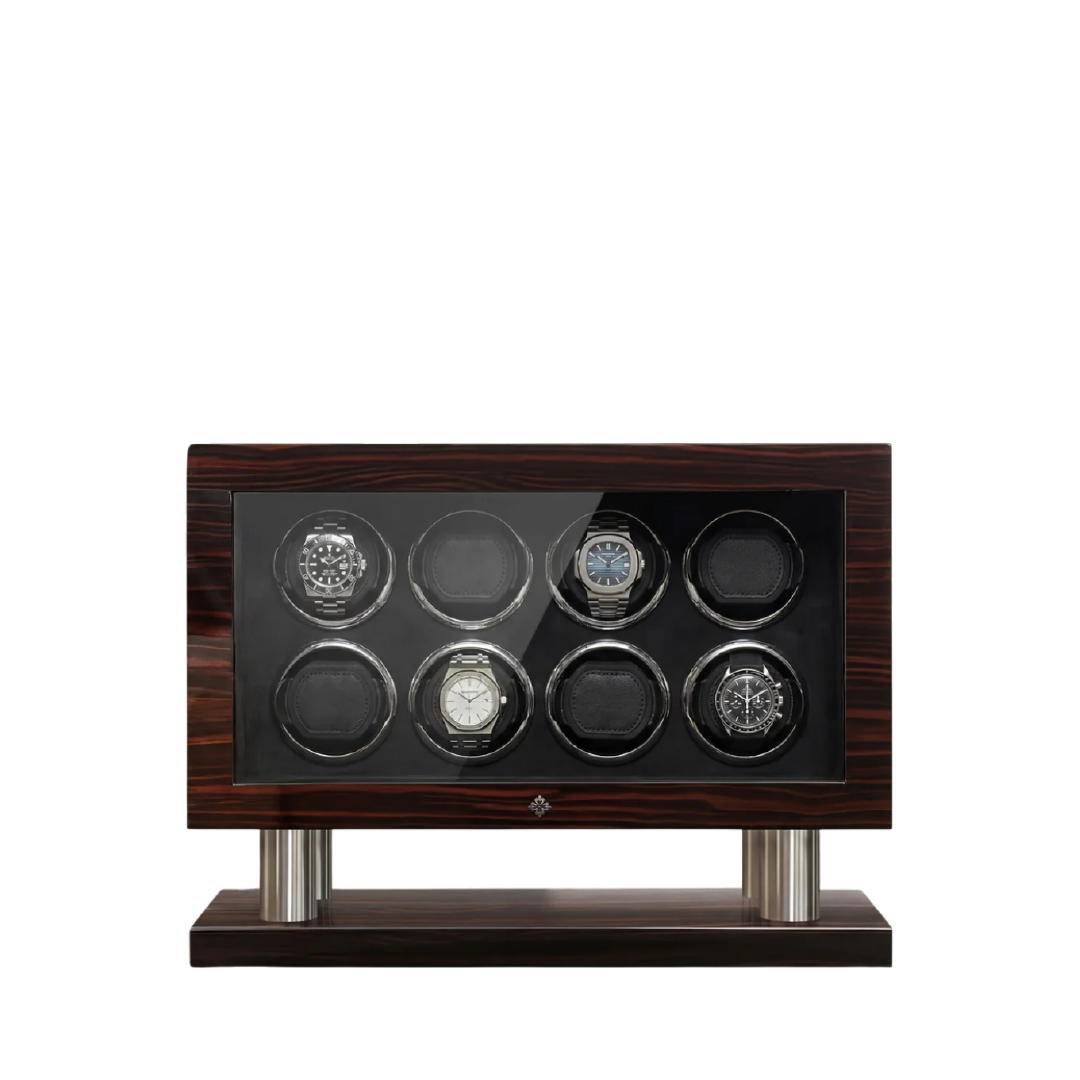
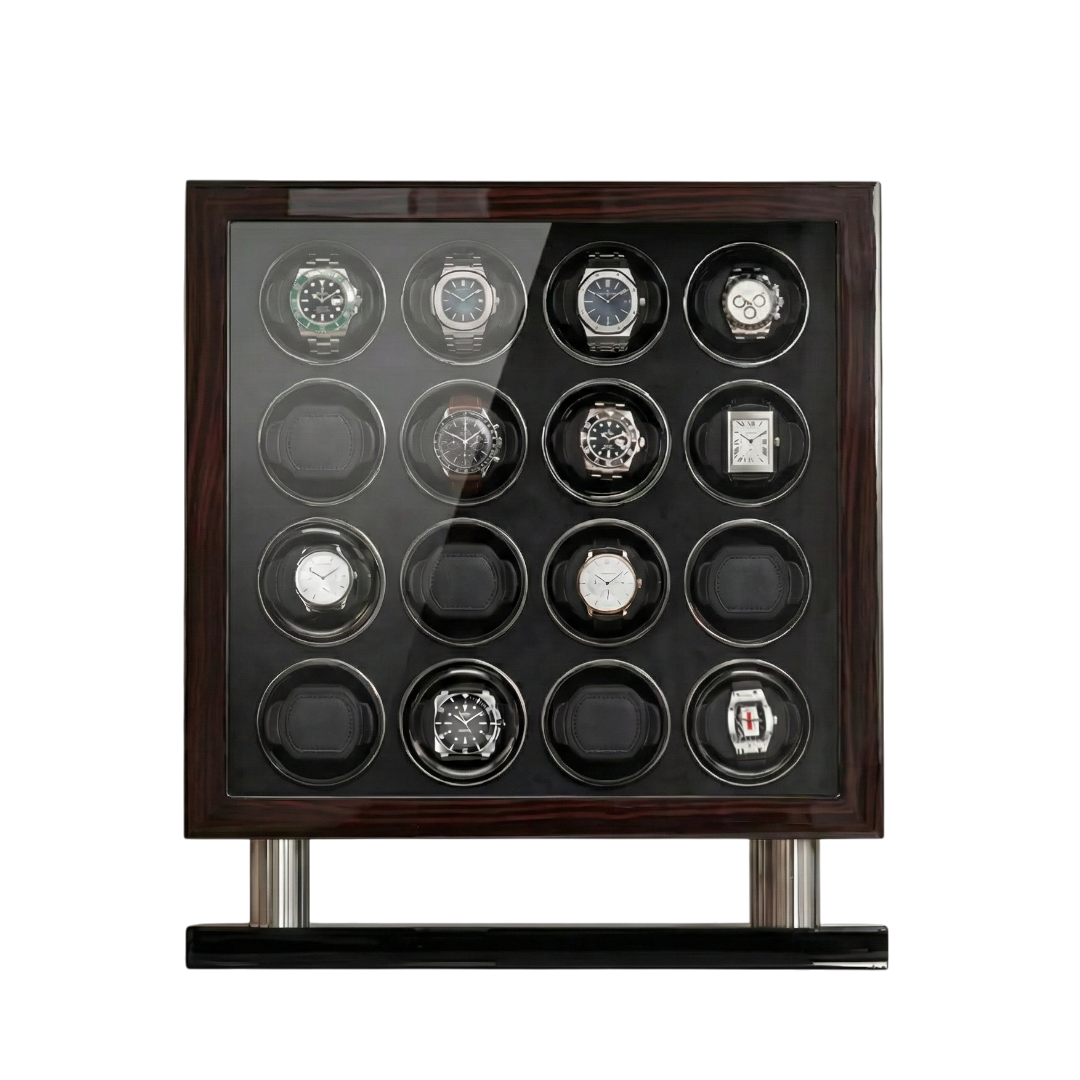
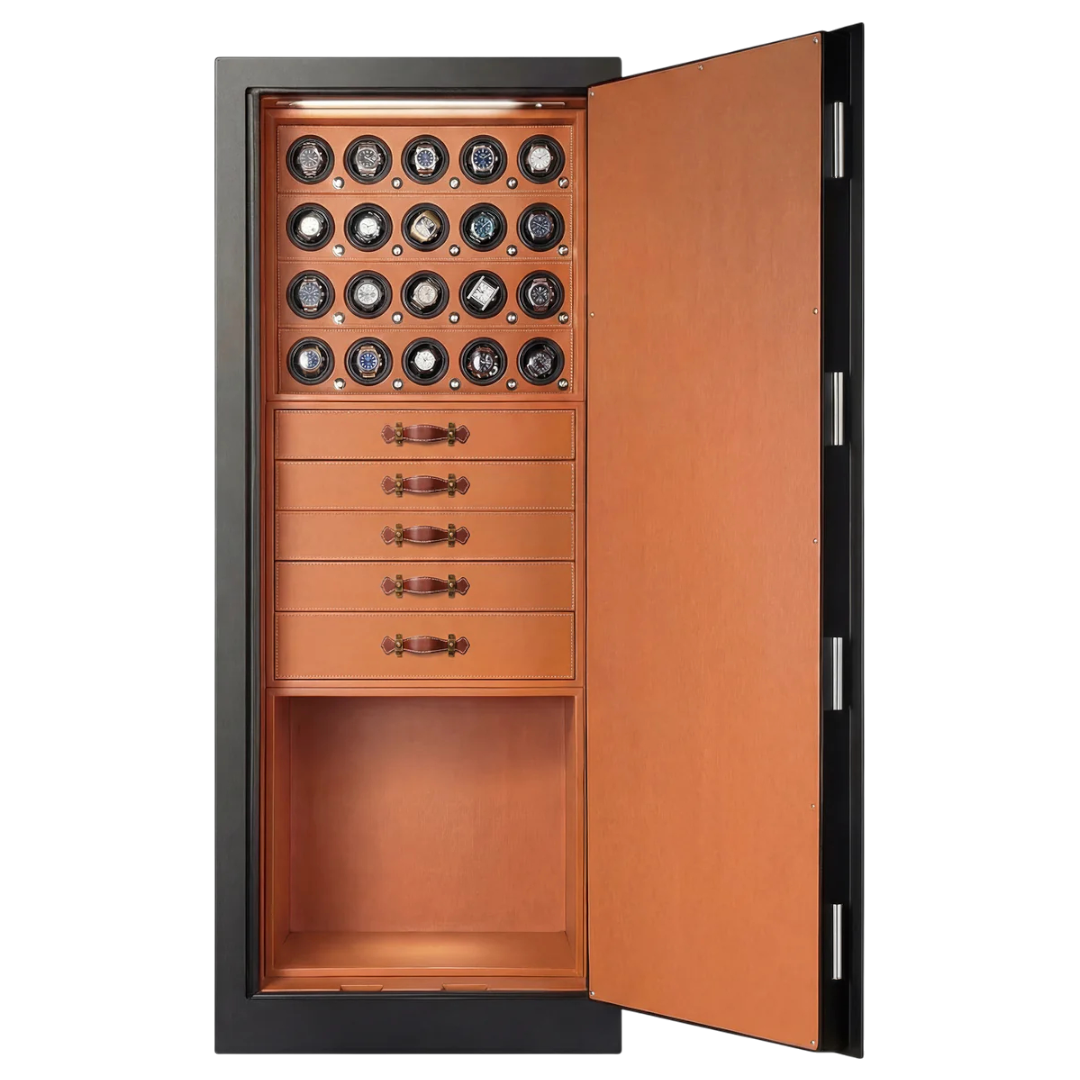
The Yachtline Series 16 watch winder runs 16 slots with individually programmable motors — each slot sets direction and TPD independently. For a two-watch owner, that means slots one and two are dialed in for your Rolex and Omega while the remaining slots sit empty until the collection grows. The marine-grade exterior is built to resist humidity, relevant if the unit lives in a closet or near a bathroom.
Spec that matters: Individual motor control per slot across all 16 positions.
Verdict: Buy — if you expect your collection to grow beyond two watches in the next 18 months. Overpaying for 14 empty slots is worth it when the underlying motor quality is this consistent.
The Compact Option — Enigwatch Double-Slot Units
Hook: Right-sized for a two-watch rotation without the footprint of a 16-slot cabinet.
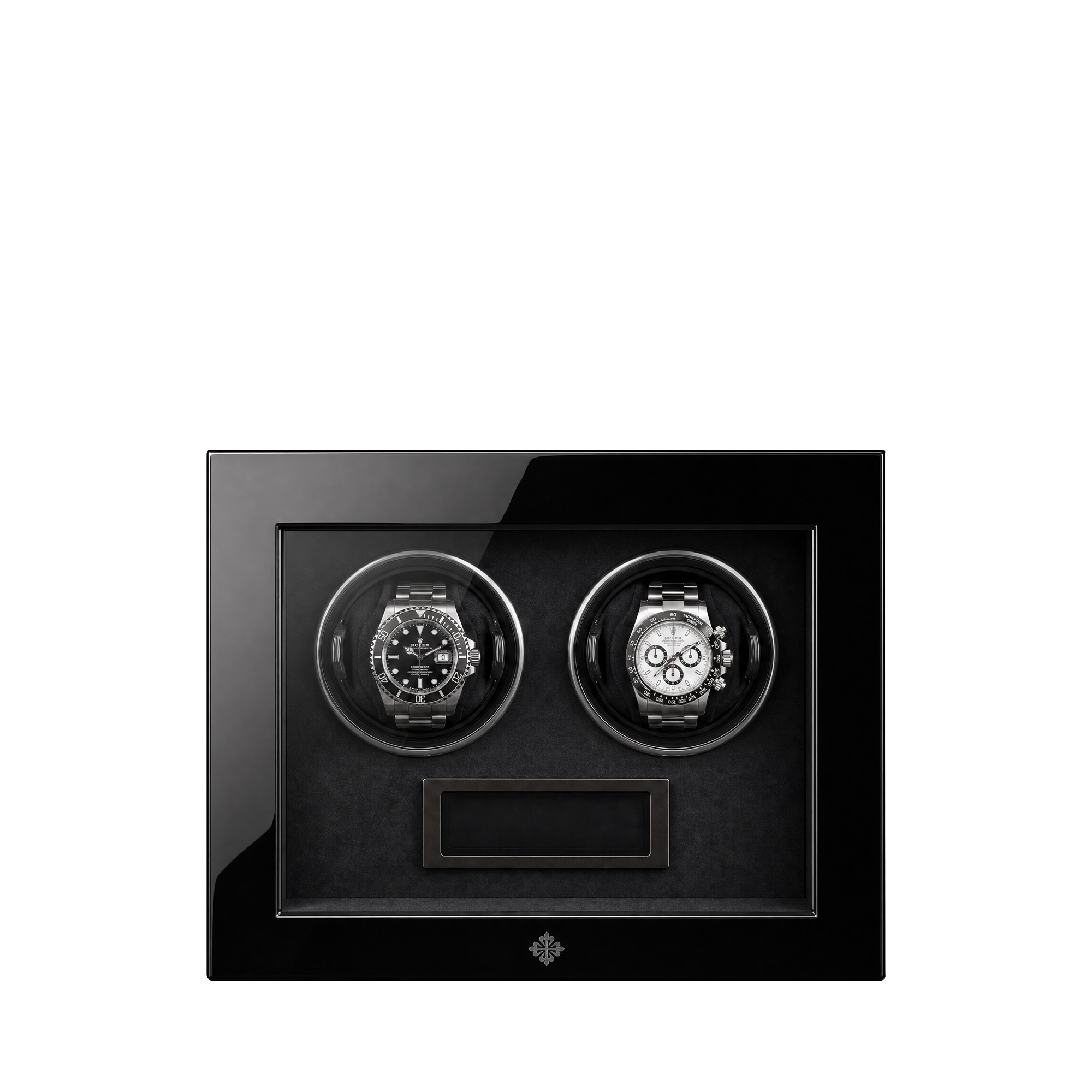
For the collector who genuinely owns only a Rolex and an Omega and wants a nightstand unit, a purpose-built dual-slot winder from Enigwatch’s automatic watch winder range delivers independent motors, bidirectional per-slot control, and a whisper-quiet motor in a form factor that fits on a bedside table. No wasted space, no wasted budget.
Spec that matters: Per-slot direction control in a sub-6-inch footprint.
Verdict: Buy — the correct choice for a stable two-watch collection in 2026 with no expansion plans.
The Upgrade Path — Titan Sanctum 20 Watch Safe Box
Hook: Winder and safe combined, for collectors who want both protection and winding in one unit.
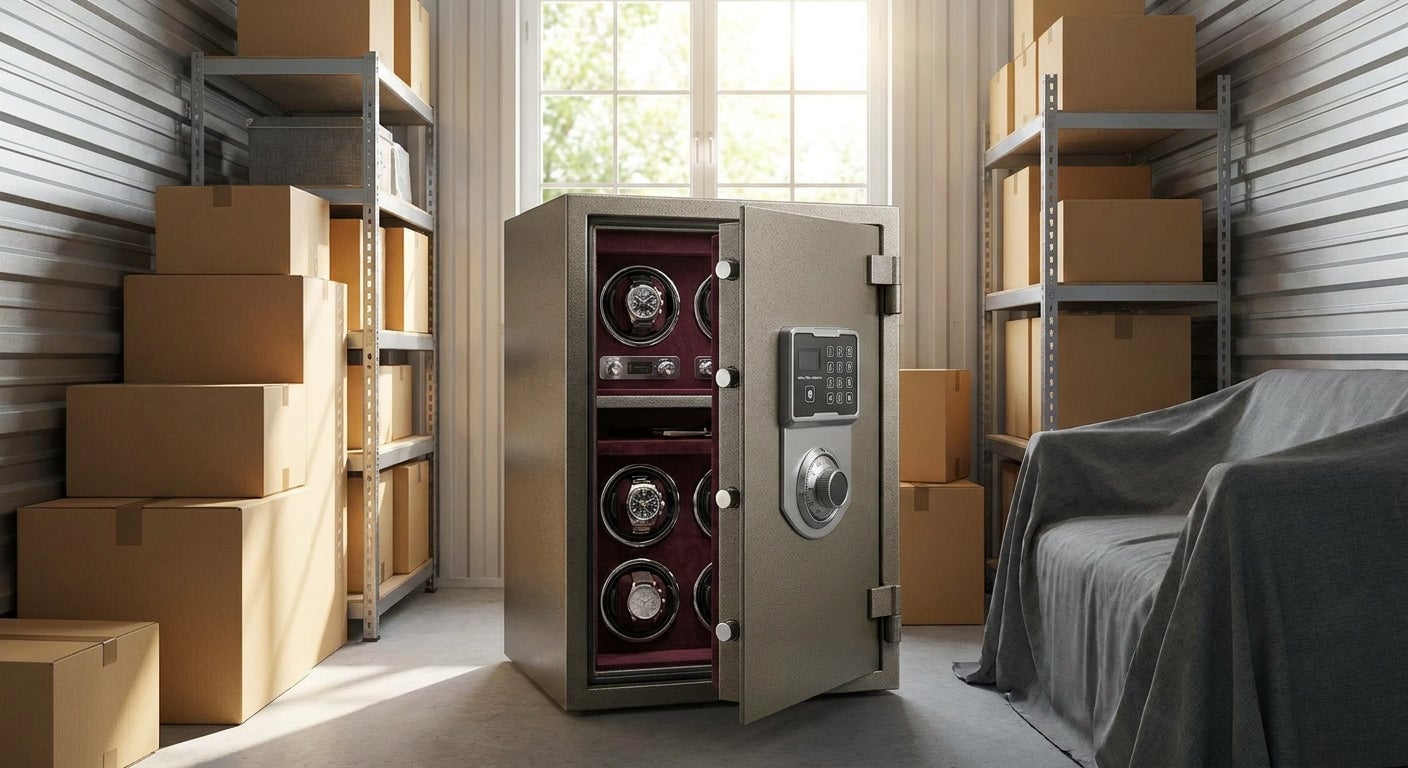
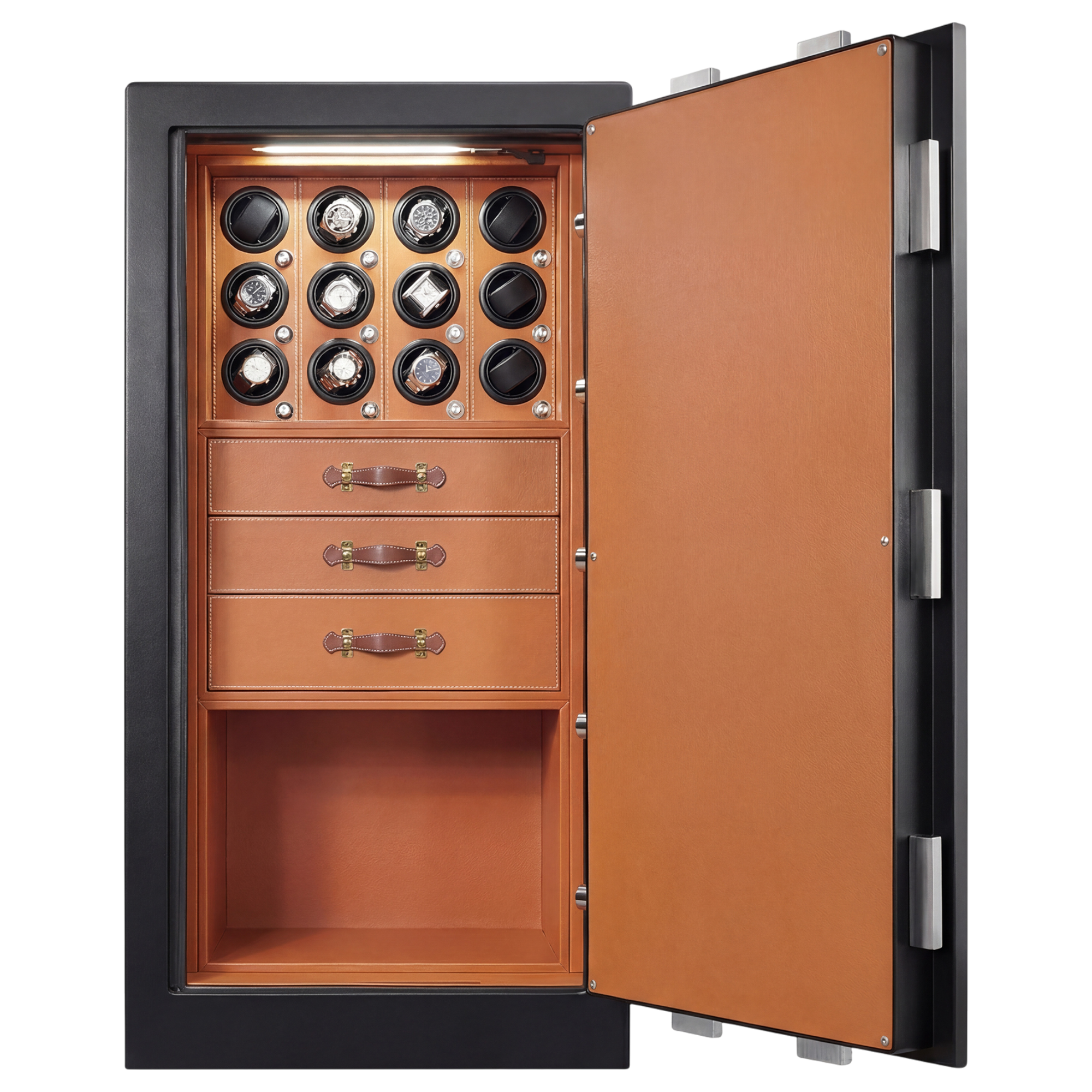
The Titan Sanctum 20 watch safe box integrates winding and secure storage. Your Rolex Submariner and Omega Seamaster stay wound inside a locked enclosure — no separate safe required. The 20-watch capacity future-proofs the investment. This is the pick when the combined watch value crosses $20,000 and insurance or peace-of-mind becomes part of the calculation.
Spec that matters: Combined winding and security in one lockable unit rated for up to 20 timepieces.
Verdict: Buy — justified when security matters as much as winding performance.
What to Avoid
- Single-motor dual-slot winders. They look like double winders but run both slots on the same program. Your Rolex gets bidirectional rotation it doesn’t need, or your Omega gets clockwise-only when it can do better. These units are priced under $60 for a reason.
- Fixed-TPD winders above 1,000 TPD. Marketed as “high-power” or “continuous rotation,” they keep the rotor spinning past the point of any real winding benefit and add unnecessary wear to the bridle spring over years of use.
- Acrylic or thin-plastic housings without a lock. Fine for a watch worth $200. Wrong for a Rolex or Omega. The housing should resist casual access and protect the crystal from dust and accidental impact.
Verdict Comparison Table
| Criteria | Yachtline Series 16 | Compact Dual-Slot | Titan Sanctum 20 |
|---|---|---|---|
| Independent motors | Yes | Yes | Yes |
| Per-slot direction control | Yes | Yes | Yes |
| Programmable TPD | Yes | Yes | Yes |
| Motor noise | <10 dB | <10 dB | <10 dB |
| Built-in security/lock | No | No | Yes |
| Best for | Growing collection | Two-watch rotation | High-value pairs |
| 2026 verdict | Buy | Buy | Buy |
FAQ
What TPD setting should I use for a Rolex on a double winder?
Set 650–950 TPD, clockwise only. Most Rolex Perpetual movements hit full wind well within 800 TPD; going above 1,000 adds no benefit.
Can an Omega and a Rolex share the same winder slot rotation program?
No. Rolex requires clockwise-only rotation; Omega cal. 8500 winds bidirectionally. A shared program means one movement is always on a suboptimal setting. Independent motors per slot are required.
How loud should a quality double watch winder be?
Under 10 dB at arm’s length. A unit running at 15 dB or above is audible in a quiet bedroom. Japanese Mabuchi motors or equivalent hit 5–8 dB reliably.
Is a double watch winder safe for a Rolex Submariner?
Yes, when TPD is set correctly (650–950) and rotation is clockwise only. Over-winding is not possible with a modern Rolex — the bridle spring slips — but unnecessary high-TPD settings add long-term wear.
What’s the difference between a watch winder and a watch winder safe?
A watch winder keeps the movement wound. A watch winder safe does that inside a locked, often fireproof enclosure. For watches valued above $10,000 combined, the safe version is the right investment. See how to choose a high-end watch safe for a full breakdown.
Do I need a double winder if I only wear one watch per day?
Yes, if you alternate between the two. A Rolex left unworn loses power reserve after 44–48 hours; an Omega cal. 8500 after 60 hours. Missing a wind cycle means resetting date, time, or complications — a 90-second annoyance that compounds over years.
How much does a quality double watch winder cost in 2026?
Expect $150–$400 for a standalone dual-slot unit with independent programmable motors. Combination winder-safes with biometric locks run $600–$1,500 depending on capacity and fire rating.
Can I use a 16-slot winder for just two watches?
Yes. Run the two slots you need and leave the rest empty. The advantage is future-proofing — when the collection grows, the winder grows with it at no additional cost.
One Last Thing
The Omega cal. 8500 has a 60-hour power reserve — nearly twice the 44-hour reserve of a standard Rolex Perpetual. That means if you’re only going away for a weekend without your Omega, it will still be running Monday morning without a winder. Your Rolex won’t be. Knowing your specific power reserves lets you make smarter decisions about when the winder is actually doing work versus running idle.
Related Guides
Protect Your Watch Collection
Designed for collectors who demand the best. Explore our premium watch winders and luxury safes.