
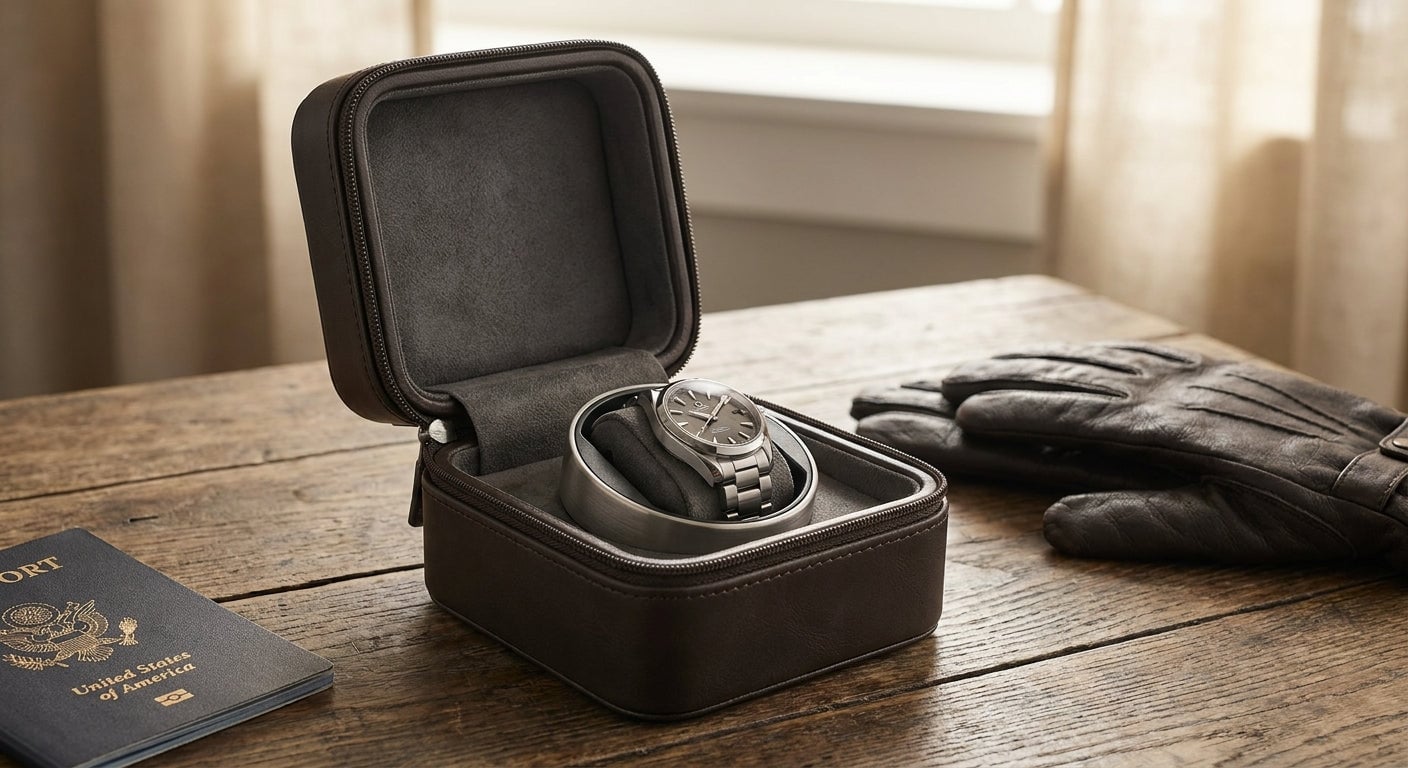
A portable watch winder for travel sounds like the obvious upgrade for a road-warrior watch collection, but the category carries more compromises than the marketing admits. This guide ranks the real options — battery pouches, USB units, watch rolls, and the case for leaving the winder at home entirely — against what actually keeps an automatic movement running through a trip in 2026.
TL;DR
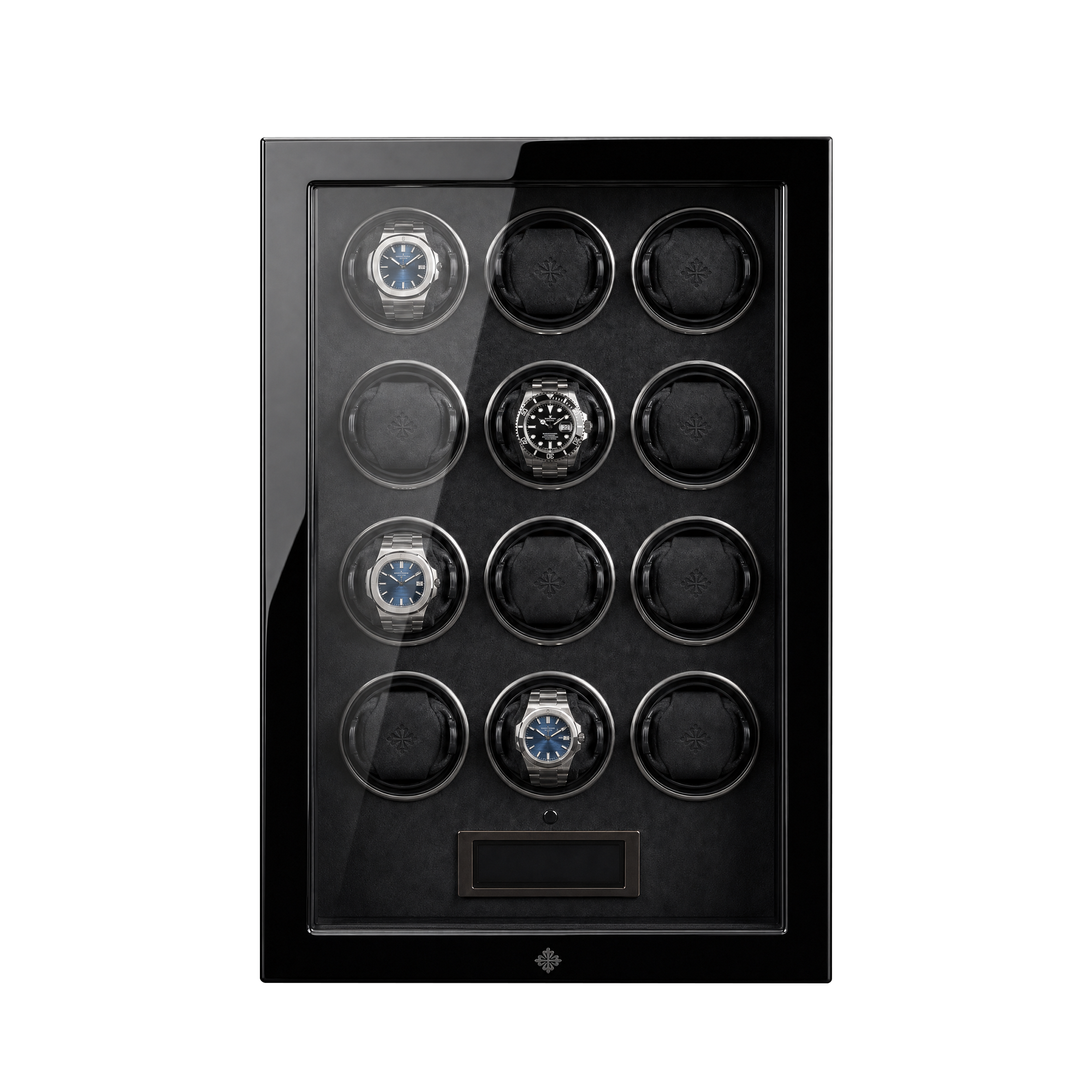
Skip the battery-powered travel winder and pack a watch roll instead. A 2-to-3-slot leather roll weighs under a pound, clears airport security without a second look, and protects the case as well as any motorized unit twice its size. Most portable watch winder for travel searches lead to single units running on 2 AA batteries — fine for a long weekend, thin for a 10-day trip. Verdict: watch roll — Buy. Battery travel winder — Hold. The Enigwatch Virtuoso Series 2 stays plugged in at home, where it belongs.
Why this matters
An automatic movement with a 40-to-70-hour power reserve doesn’t need continuous motion to survive a trip — it needs to not stop mid-flight and not get re-set every time you land. That distinction is why the watch winder vs watch roll question matters more than which portable winder has the quietest motor.
Most travel winders on the market run on 2 AA batteries and lack the rotation programs (TPD settings) that a full-size unit offers. That’s a real limitation for a GMT or a perpetual calendar that needs a specific direction and turns-per-day count to stay accurate. For a simple three-hand automatic, it barely matters. Know which watch you’re packing before you buy hardware for it.
How we ranked
Each option below is scored against four things a traveler actually cares about in 2026: TSA and carry-on compatibility, protection against knocks and moisture, whether it keeps a complicated movement (GMT, moonphase, perpetual calendar) accurate without resetting, and cost relative to what it solves. Battery-powered devices lose points automatically if they can’t clear airport security without a bag check — that happens more often than sellers admit. Watch rolls and cases are scored on cushioning density and how well they isolate multiple pieces from each other in a bag.
The ranked list
1. Battery-powered single travel winder — the suitcase workhorse
This is what most people picture when they search for a portable watch winder for travel: a hard case roughly the size of a paperback, running on 2 AA batteries, holding one watch upright on a rotating cradle. It keeps a single automatic wound through a 3-to-5-day trip without hand-winding.
The tradeoff is bulk and unreliability at security checkpoints — motorized devices with batteries get flagged for inspection more often than a plain case. It’s also useless for a two-watch trip unless you buy two units. Verdict: Hold — fine for a single simple automatic on a short trip, not worth the hassle for anything longer or more complicated.
2. USB-rechargeable compact winder — the frequent flyer’s pick
Same concept as the battery version, swapped to a rechargeable cell and a USB-C port. It charges off a laptop or a power bank, which solves the battery-swap problem on multi-week trips. Weight typically runs 8 to 12 ounces, light enough for a carry-on.
It still only handles one watch per unit, and the internal motor quality varies wildly across unbranded sellers — a cheap coreless motor can introduce vibration that a Japanese Mabuchi-grade motor in a home winder never would. Verdict: Hold for a single-watch business trip, Skip if you’re buying an unbranded model off a marketplace listing with no return policy.
3. Watch roll — no motor, the minimalist’s answer
A 2-to-4-slot roll in leather or a padded synthetic holds watches upright in individual cushioned sleeves, no motor, no batteries, no TSA questions. It’s the lightest option on this list and the one every serious collector already owns for exactly this reason. Full packing logistics are covered in the travel packing guide for watch winders, which applies equally to roll storage.
The watch stops running during transit, so you hand-wind and reset on arrival — a 30-second task for most automatics. Verdict: Buy. It’s the only option on this list that works for every case size, every complication, and every airport in 2026.
4. Multi-watch soft travel case with winding pouches
A hybrid: individual cushioned compartments, sometimes with a small motorized insert for one slot, built for someone traveling with 2 to 4 pieces. Interior padding matters more than the motor here — look for foam density that stops watches from knocking against each other in transit.
Price and quality vary enormously, and the motorized insert (when included) shares the same battery limitations as option 1. Verdict: Consider if you’re moving a small collection for an extended trip and want one case instead of loose rolls; Skip the motorized insert specifically.
5. Hand-winding before departure — the zero-hardware option
No product, no battery, no case beyond whatever you’re already carrying. Wind the crown 20 to 30 turns before you leave, track the power reserve against your itinerary, and re-wind on arrival if needed.
This works for any automatic with a stated power reserve of 40 hours or more and fails only if your trip outlasts the movement’s reserve without a chance to re-wind. Verdict: Buy for short trips under 48 hours; pair it with a roll for anything longer.
6. Bringing a hand-winder-only or quartz piece instead
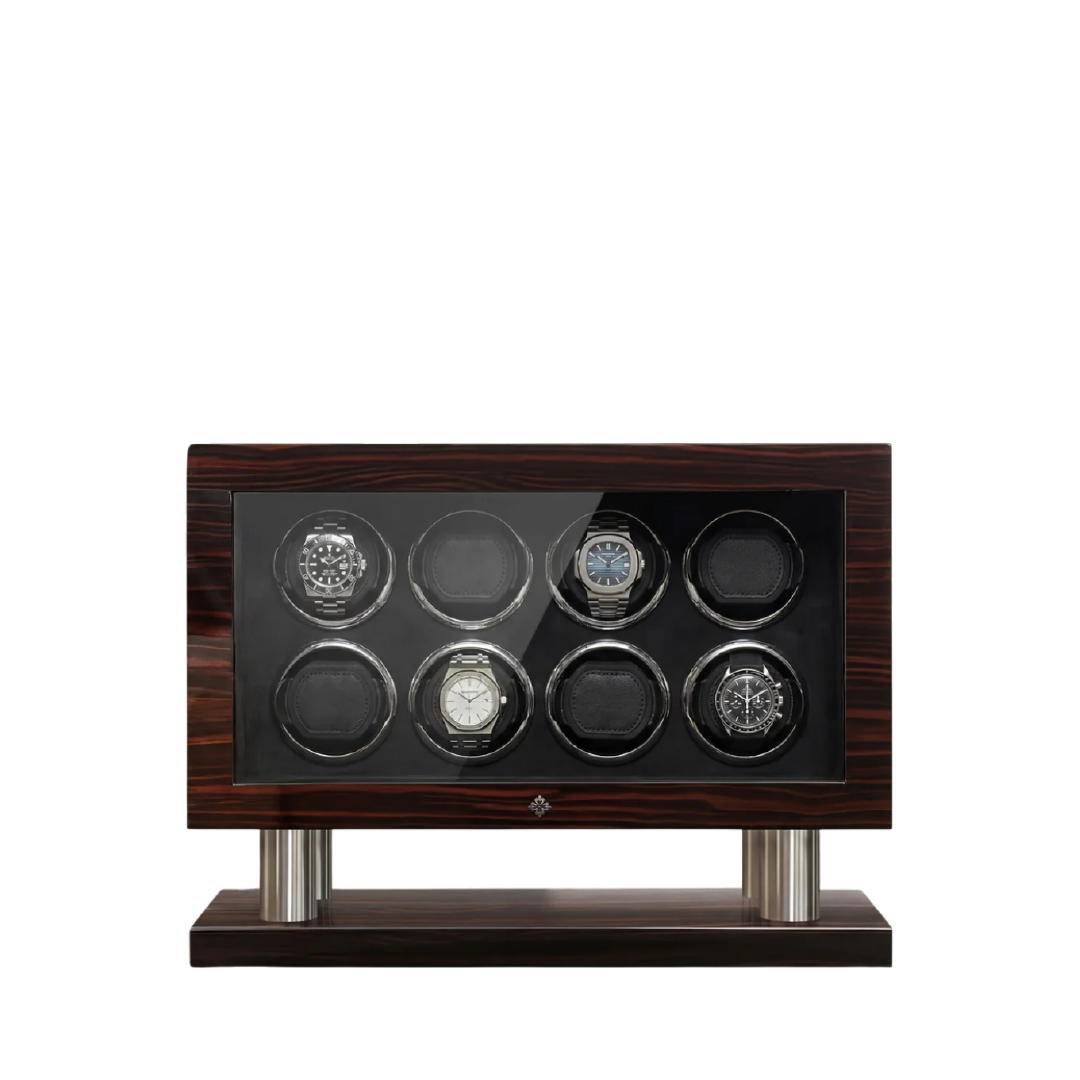
The collector’s workaround: leave the automatic on its winder at home — a Virtuoso Series 2 watch winder or similar keeps it running and accurate in your absence — and travel with a quartz or manual-wind piece that doesn’t care about motion at all.
It sidesteps every portable-winder compromise entirely, at the cost of not wearing your automatic on the trip. Verdict: Buy for anyone who already owns a home winder setup and values zero travel risk over wearing the flagship piece.
Comparison table
| Option | Power source | Best for | Verdict |
|---|---|---|---|
| Battery travel winder | 2x AA | Single simple automatic, 3-5 days | Hold |
| USB rechargeable winder | Rechargeable cell | Single watch, multi-week trip | Hold |
| Watch roll | None | Any watch, any trip length | Buy |
| Soft travel case w/ pouch | Mixed | 2-4 watch collections | Consider |
| Hand-winding | None | Trips under 48 hours | Buy |
| Leave it home, wear a backup | Home winder | Zero-risk travelers | Buy |
Where to buy
- Buy motorized travel units from a seller with a stated return window — unbranded marketplace winders with no return policy are the most common source of dead motors within 90 days.
- Check the battery type and rated cycle count before buying; a unit that needs proprietary batteries becomes dead weight on a two-week trip.
- For the home side of the equation — the winder your watch returns to — buy from a maker that names its motor supplier and warranty terms rather than a generic listing with no specs at all.
FAQ
What’s the best portable watch winder for travel in 2026?
For most travelers, it isn’t a powered winder at all — a watch roll protects the case and clears security faster than any motorized unit, and you hand-wind on arrival.
Is a watch roll better than a travel watch winder?
For trips longer than a few days, yes. A roll has no battery to fail, no TSA scrutiny, and works for complications a small travel winder can’t program correctly.
How much does a portable watch winder cost?
Battery and USB travel winders generally run well under what a home unit costs, but quality varies enormously by motor and materials — cheap units are common and unreliable.
Can I bring a battery watch winder on a plane?
Most battery-powered travel winders fly fine in carry-on, but motorized devices with batteries get flagged for secondary inspection more often than a plain watch roll.
Do automatic watches need winding every day while traveling?
No — most modern automatics carry a 40-to-70-hour power reserve, enough to survive a weekend without any winding at all.
Should I travel with my most expensive watch?
Many collectors don’t — leaving the flagship piece on a home winder and traveling with a secondary or quartz piece removes travel risk entirely.
What’s the difference between a watch roll and a watch case for travel?
A roll is soft and collapsible, built for packing efficiency; a hard case adds impact protection at the cost of bulk — pick based on how the watch travels, checked or carry-on.
Will a portable winder damage my watch?
A low-quality motor with poor rotation timing can introduce more wear risk than simply hand-winding, which is one reason serious collectors default to rolls for travel.
One last thing
The biggest risk to an automatic watch on a trip in 2026 isn’t a stopped movement — it’s a cheap coreless motor in an unbranded travel winder vibrating against a hairspring for days at a stretch. A watch roll and 30 seconds of hand-winding on arrival protects the movement more reliably than most of what’s marketed as a “portable watch winder for travel.”
Related guides
Protect Your Watch Collection
Designed for collectors who demand the best. Explore our premium watch winders and luxury safes.
Protect Your Watch Collection
Designed for collectors who demand the best. Explore our premium watch winders and luxury safes.