
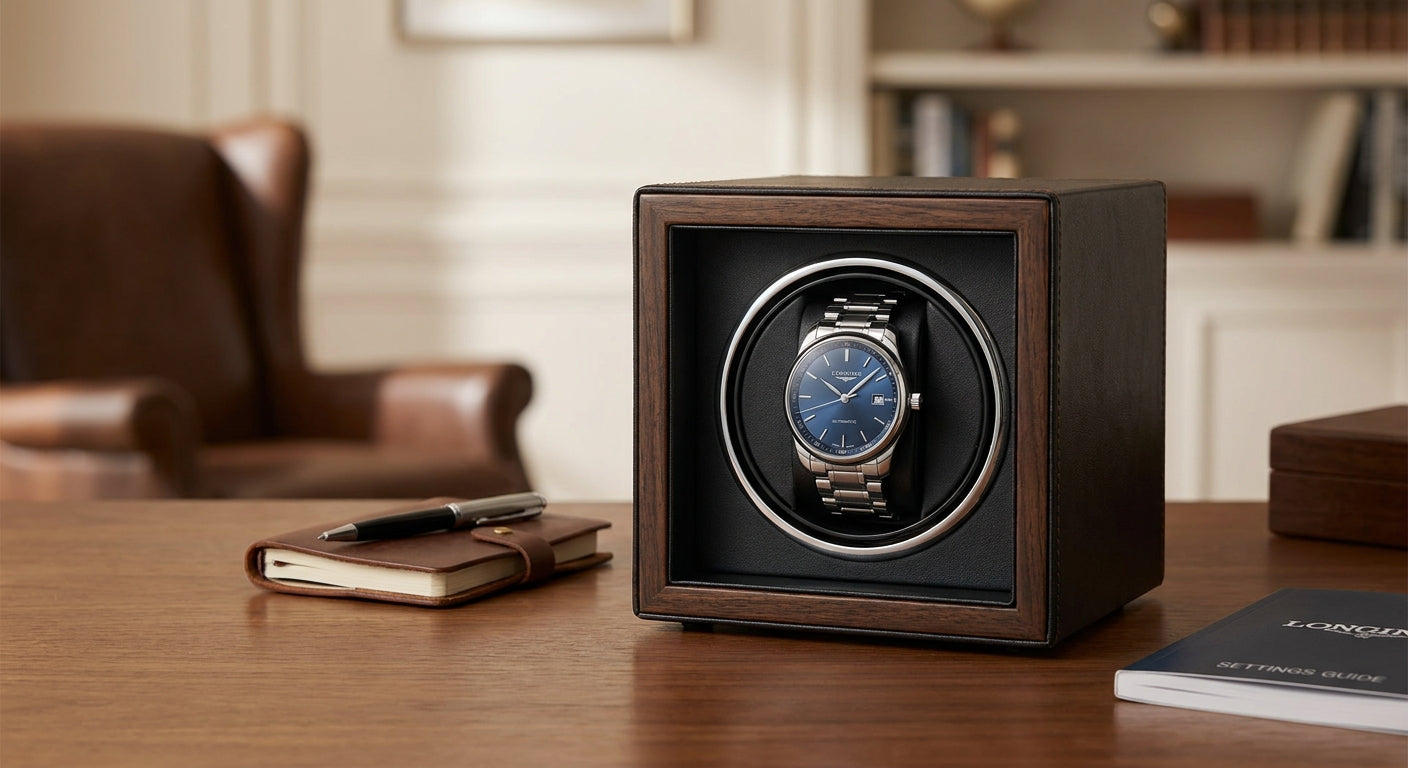
A watch winder for Longines automatic calibers is not a one-size-fits-all accessory—get the turns-per-day (TPD) or rotation direction wrong and you are either under-powering a high-complication movement or spinning a simpler caliber far past what it needs. This guide gives you the exact settings Longines movements require in 2026, the criteria that separate a good winder from a waste of money, and specific picks from Enigwatch that fit the brief.
TL;DR: Longines automatic movements generally need 650–800 TPD in clockwise or bidirectional rotation. Most ETA/Sellita-based Longines calibers (L619, L633, L888, L897) run best at 650–750 TPD bidirectional. The Master Collection’s L888.4 and the Spirit’s L888.5 are comfortable at 750 TPD clockwise or bidirectional. For a watch winder for Longines automatic watches in 2026, set rotation to bidirectional, TPD between 650 and 800, and rest cycles of at least 8 hours. The Enigwatch Impresario Series and Virtuoso Series hit every one of those specs.
Why Longines Winder Settings Actually Matter in 2026
Longines produces over 20 active calibers, but the vast majority in circulation are either ETA-derived movements (L619, L633) or the brand’s proprietary L888 family. Each has a slip-clutch mechanism that stops the mainspring from overwinding, but that does not mean you should run 1,500 TPD “just to be safe.” Excess rotation adds unnecessary wear to the rotor bearings and winding pawls over time. The L888 series in particular has a 64-hour power reserve—if you set TPD too low, say 400, the watch can still stop on rest days. Nail the window of 650–800 TPD and the movement stays wound without mechanical stress.
Who This Guide Is For
You own one or more Longines automatics—a Longines Master Collection, HydroConquest, Conquest Classic, or Spirit—and they sit unworn for 48 hours or more at a stretch. You want a winder that keeps them running without constant manual resetting, and you do not want to guess at dial settings. This guide is also useful if you are buying a winder as a gift for someone with a Longines collection in 2026 and need to know whether a given unit’s programmability is adequate.
What to Look for in a Watch Winder for Longines Automatic
TPD Range That Covers 650–800
Any winder you consider must be programmable to at least 650 TPD on the low end and 800 TPD on the high end. Winders with fixed programs at 1,000 TPD or higher are not wrong for every brand, but they overshoot what Longines movements need. Confirm the unit lists exact TPD values in its spec sheet, not vague labels like “medium” or “fast.”
Bidirectional Rotation Mode
Longines calibers wind in both directions. A clockwise-only winder works in a pinch, but bidirectional mode reduces rotor stress because the movement winds naturally on both strokes. Every winder in the Enigwatch lineup supports clockwise, counterclockwise, and bidirectional modes—this is the setting to use for any L888-family watch.
Programmable Rest Cycles
The L888.4 and L888.5 have 64-hour power reserves. A winder that runs 24 hours a day without pause is not replicating natural wrist motion. Look for a unit with programmable rest intervals—8 hours on, 8 hours off is a reasonable baseline. Rest cycles also reduce heat buildup in the winder motor, which matters for long-term mechanical reliability.
Motor Noise Under 30 dB
If the winder sits in a bedroom or home office, noise is a real quality-of-life issue. Japanese Mabuchi motors used in quality winders typically operate at 20–28 dB. Avoid any unit that does not publish a noise spec or that reviews consistently flag as audible at 3 feet.
Cushion Fit for Longines Case Sizes
Longines case diameters run from 38 mm (Master Collection small seconds) to 43 mm (HydroConquest). The winder’s watch cushion must accommodate both ends without the watch rattling or sitting too tight. Adjustable cushions with 36–50 mm compatibility cover every Longines model currently in production as of 2026.
Build Quality That Matches the Watch’s Value
A Longines Master Collection retails between $1,500 and $4,500 in 2026. Storing it in a $40 winder with a plastic housing and no EMI shielding is a mismatch in risk management. Carbon fiber, leather, or lacquered wood exteriors with EMI-shielded motor compartments are the minimum bar at this price tier.
Top Picks for a Longines Automatic Winder
The Safe Choice — Impresario Series 6
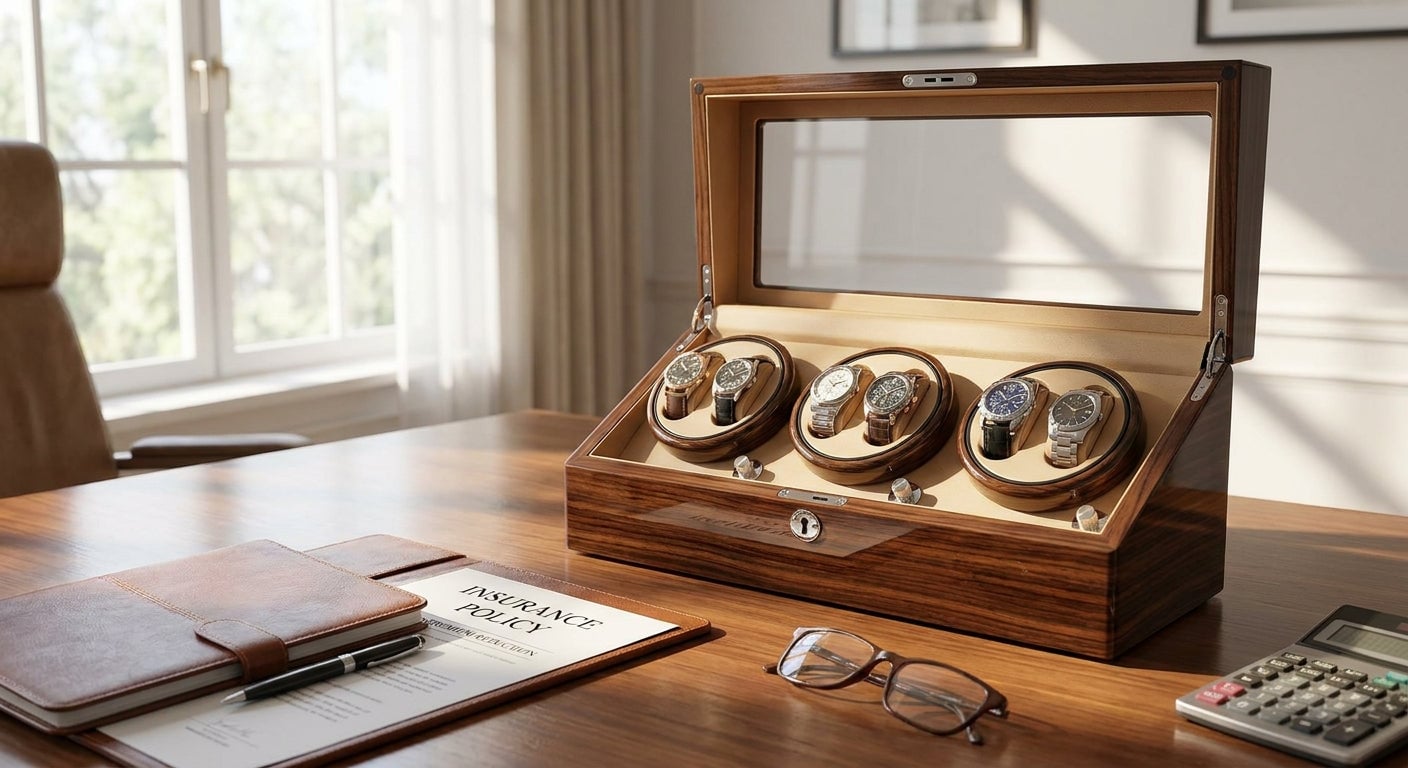
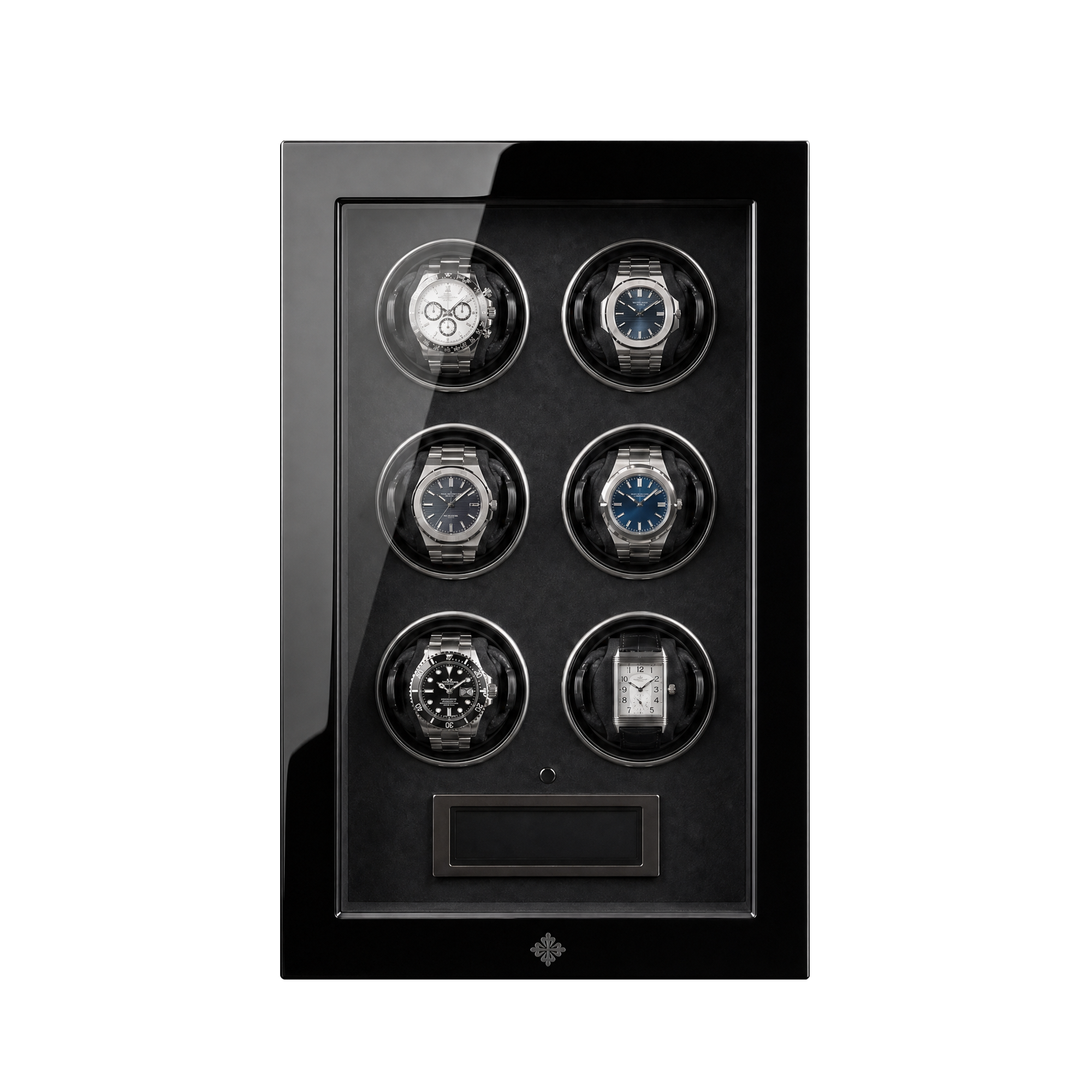
Six individually programmable slots, each with independent TPD control from 100 to 1,950 TPD, bidirectional or single-direction rotation, and rest cycle programming. If you own a mix of Longines models alongside other brands—Omega, Tudor, Seiko—each slot can run a different profile. The housing is lacquered with a scratch-resistant finish and the motors publish a sub-30 dB noise rating. Verdict: Buy for any Longines owner with 2–6 watches. View the Impresario Series 6.
The Compact Option — Impresario Series 2
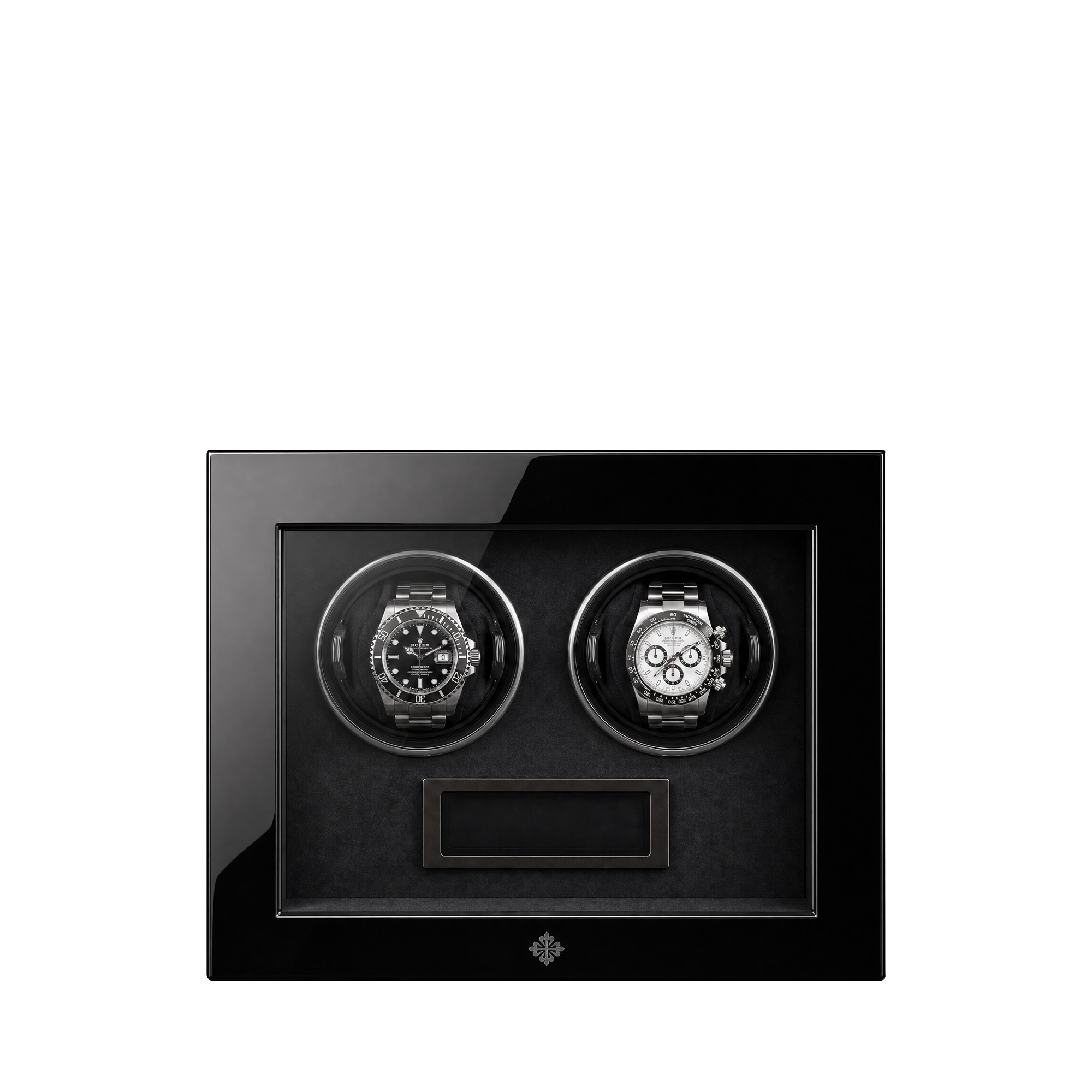
Two slots, same motor and TPD programmability as the Series 6. If you own a Longines HydroConquest and a Master Collection and nothing else, this is the correct unit—you are not paying for capacity you will not use. Set both slots to 700 TPD bidirectional with an 8-hour rest cycle and leave it. Verdict: Buy for single-brand, two-watch Longines collectors.
The Wildcard — Virtuoso Series 6
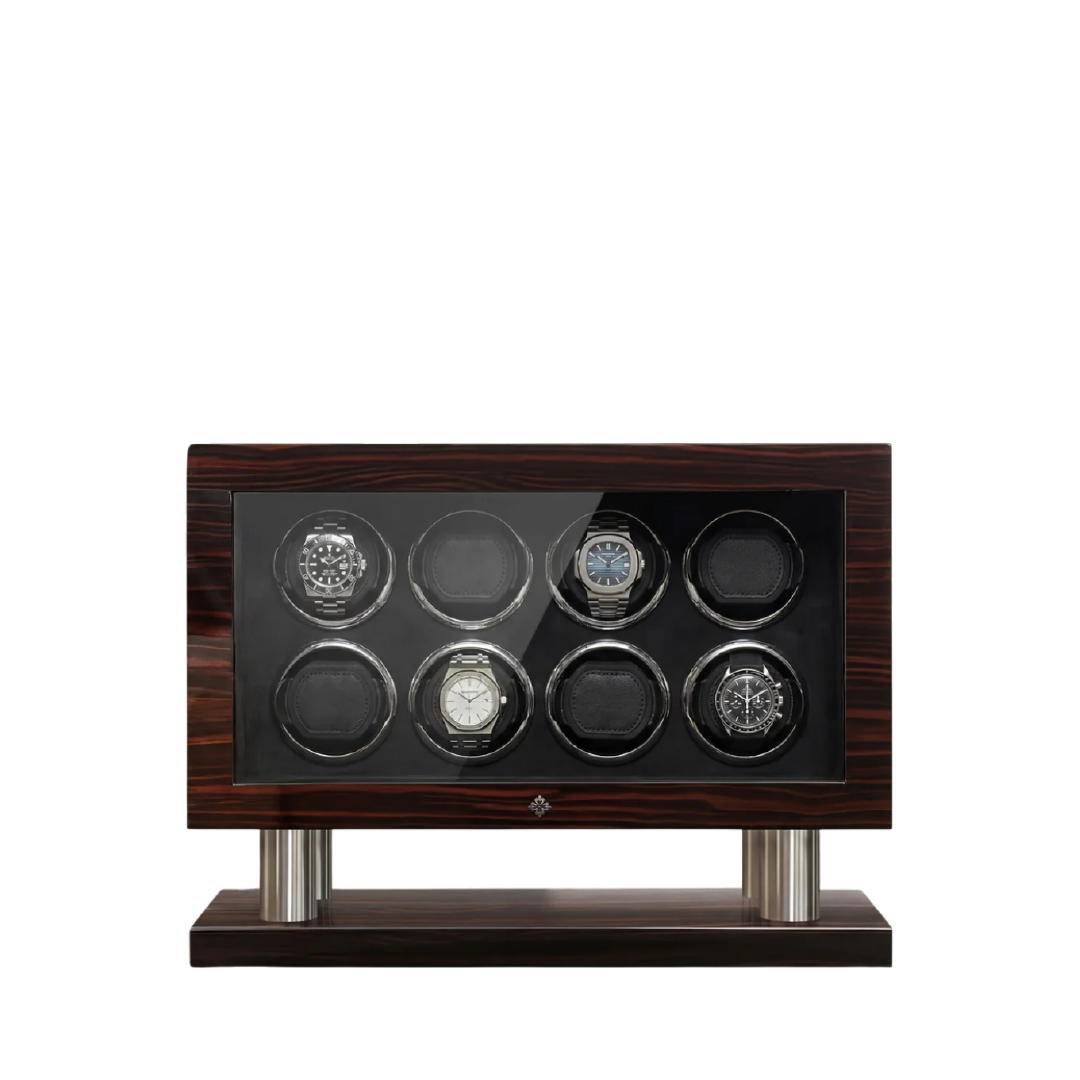
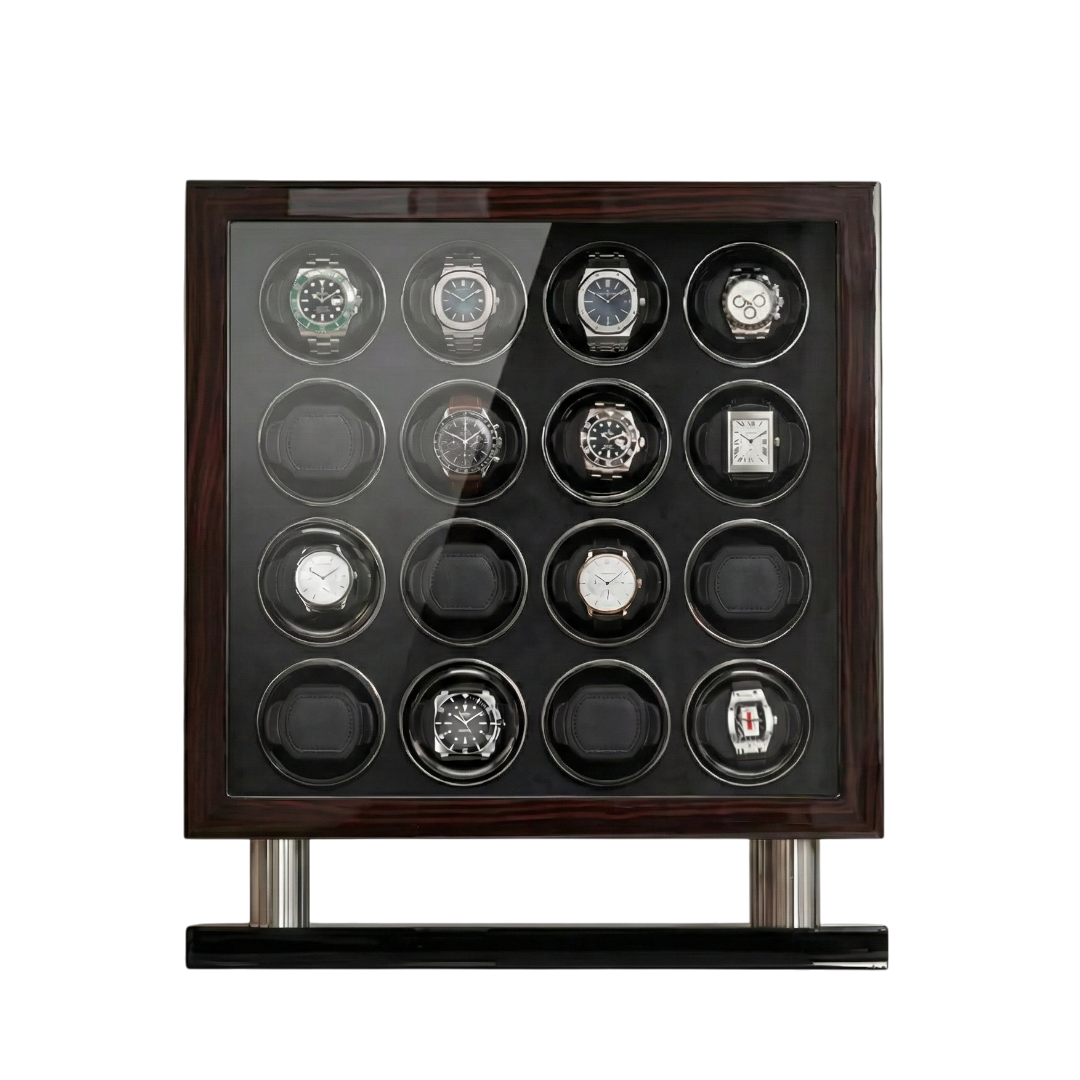
Six slots in a design-forward housing with a glass front panel and LED interior lighting. Functionally equivalent TPD range and rotation options to the Impresario Series 6. The differentiator is display: if the winder sits on a dresser or shelf where the watches are meant to be seen, the Virtuoso Series 6 makes that case. Performance is identical to the Impresario; the premium is purely aesthetic. Verdict: Consider if display matters; otherwise the Impresario Series 6 is the cleaner buy. View the Virtuoso Series 6.
Exact Settings by Longines Caliber (2026 Reference)
| Caliber | Found In | TPD | Direction | Rest Cycle |
|---|---|---|---|---|
| L619 | Conquest Classic | 650 | Bidirectional | 8 hr on / 8 hr off |
| L633 | HydroConquest | 700 | Bidirectional | 8 hr on / 8 hr off |
| L888.4 | Master Collection | 750 | Bidirectional | 8 hr on / 8 hr off |
| L888.5 | Spirit, Longines Spirit Zulu | 750 | Clockwise or Bidirectional | 8 hr on / 8 hr off |
| L897 | Conquest (entry) | 650 | Bidirectional | 6 hr on / 8 hr off |
If you do not know which caliber your Longines runs, check the caseback engraving or the Longines online caliber database. The L888 family is the most common in watches sold after 2015.
What to Avoid
- Fixed-program winders with no TPD readout. If the dial says “Low / Medium / High” with no numbers attached, you cannot verify what the movement is actually receiving. Skip them.
- Single-direction clockwise-only motors. These work but they require the rotor to freewheel on the return stroke, adding friction cycles the L888’s bidirectional design does not need.
- Winders without rest modes. Continuous rotation at 700 TPD for 24 hours means the mainspring hits full tension frequently and the slip-clutch engages repeatedly. That is acceptable in short bursts—it is not ideal as a permanent daily operating mode.
Comparison Table
| Model | Slots | TPD Range | Direction | Rest Cycle | Noise | Best For |
|---|---|---|---|---|---|---|
| Impresario Series 2 | 2 | 100–1,950 | CW / CCW / Bi | Yes | <30 dB | 1–2 Longines watches |
| Impresario Series 6 | 6 | 100–1,950 | CW / CCW / Bi | Yes | <30 dB | Mixed Longines collection |
| Virtuoso Series 6 | 6 | 100–1,950 | CW / CCW / Bi | Yes | <30 dB | Display-first collectors |
FAQ
What TPD does a Longines automatic need in a watch winder?
Most Longines automatic calibers run correctly at 650–800 TPD. The L888 family (Master Collection, Spirit) is comfortable at 750 TPD; older ETA-based calibers like the L619 do fine at 650 TPD.
Should a Longines watch winder be set to clockwise or bidirectional?
Bidirectional is the correct setting for any Longines automatic. The movement winds efficiently on both stroke directions, and bidirectional mode reduces net rotor stress compared to single-direction winding.
Can a watch winder damage a Longines automatic?
A winder set to appropriate TPD and direction will not damage the movement. Longines calibers include slip-clutch mechanisms that prevent mainspring overwinding. The risk comes from running excessive TPD continuously without rest cycles, which adds unnecessary wear to rotor bearings over years—not months.
What is the power reserve on a Longines Master Collection?
The L888.4 caliber in the Master Collection has a 64-hour power reserve. That means it can sit in a winder without running and still stay wound through a standard weekend, but a winder eliminates that uncertainty entirely.
Do I need a separate winder slot for each Longines watch?
Yes. Each slot should be programmed independently because different Longines calibers have slightly different optimal TPD. Running an L633 and an L888.4 on the same slot-wide setting is fine if you split the difference at 700 TPD bidirectional, but per-slot control gives you the cleanest result.
Is a cheap single-slot winder good enough for a Longines?
It depends entirely on programmability, not price. A budget unit with verified TPD settings and bidirectional mode is better than an expensive unit with fixed 1,200 TPD programs. Check the spec sheet before buying—if TPD is not disclosed, treat it as a disqualifier.
How loud should a watch winder for a Longines be?
Anything under 30 dB is inaudible at normal room distances. Most quality Japanese motor-driven winders operate at 20–28 dB. If noise specs are not published, ask before buying.
Does the Longines HydroConquest need a different winder setting than the Master Collection?
The HydroConquest uses the L633 caliber and winds well at 700 TPD bidirectional. The Master Collection’s L888.4 runs at 750 TPD. The difference is small—700 TPD bidirectional covers both adequately if you are running a single shared setting.
One Last Thing
Longines published the L888 caliber in 2012 with a stated 64-hour power reserve—longer than most Swiss mass-production movements of that era. The irony is that this generous reserve is the reason some owners skip the winder entirely. Do not let a good power reserve become an excuse for poor storage habits. A wound movement that runs continuously is a movement whose lubricants stay distributed, whose complications stay calibrated, and whose service intervals stay predictable. The winder pays for itself the first time you avoid a $400 service triggered by a movement that sat stopped and dry for three months.
Related Guides
Protect Your Watch Collection
Designed for collectors who demand the best. Explore our premium watch winders and luxury safes.