

A watch winder for Richard Mille is not a one-size-fits-all purchase — RM movements are among the most mechanically complex and physically demanding calibers in the world, and the wrong winder can do measurable damage.
TL;DR: Richard Mille watches need a winder with a low turns-per-day (TPD) ceiling, bidirectional rotation, a zero-vibration motor, and a cushion wide enough for the RM case tonneau shape. In 2026, the best picks for RM owners combine programmable TPD (600–900 range), ultra-quiet motors under 10 dB, and anti-magnetic shielding. Enigwatch’s automatic watch winder catalog covers these specs. Skip any winder that tops out at 1,800+ TPD with no lower setting — it will overwind a rolex-style movement, let alone an RM.
Why This Matters for Richard Mille Owners
Richard Mille calibers — including the RM 011, RM 035, and RM 67-02 — use skeleton movements with dramatically reduced component mass. That means less rotational inertia than a traditional Swiss lever escapement. A winder set too high doesn’t just risk overwinding; it stresses the mainspring barrel and the ultra-thin bridges that are signature RM engineering. In 2026, a used RM 011 starts at roughly $150,000 at auction. The winder protecting it should cost less than 0.5% of that value — but its specs should be taken just as seriously.
Who This Guide Is For
This guide is written for the RM owner who already knows what they paid and now wants the winder decision sorted without wading through generic “best winder” lists. Whether you own one Richard Mille or five, and whether you store them at home or in a safe, the criteria below apply directly to the movement architecture Richard Mille uses across its lineup.
What to Look For in a Watch Winder for Richard Mille
TPD Range — and a Real Lower Limit
Richard Mille specifies winding requirements that vary by reference, but most RM automatic calibers wind fully between 500 and 800 TPD. A winder must have a programmable lower bound at or below 600 TPD — not just a ceiling of 1,800 that you dial down. If the winder’s lowest setting is 900 TPD, it will continuously over-rotate the rotor on an RM 011 or RM 055. Look for units with at least 4 programmable TPD levels, with the lowest at or under 650.
Bidirectional Rotation
RM movements wind in both directions. A unidirectional winder forces all rotor torque in one direction, creating asymmetric wear on the click spring and reversing wheel over time. In 2026, any winder targeting the $200+ price tier should offer clockwise, counterclockwise, and alternating modes. The alternating mode — sometimes labeled CW/CCW — is the correct setting for most RM references.
Motor Vibration and Noise
RM cases are built from titanium, carbon TPT, or NTPT — materials that conduct vibration efficiently. A motor generating more than 15 dB at the cushion transfers micro-shock to the movement. Quality winders at this tier use Japanese Mabuchi motors or equivalent, rated under 10 dB at 1 meter. This is not a cosmetic spec — it is the primary mechanical risk for tourbillon-equipped RMs like the RM 008.
Cushion Diameter and Case Compatibility
RM watches are built in a tonneau, oval, or skeletonized rectangular shape — none of them round in the traditional sense. The RM 67-02 measures 38.7 mm × 47.5 mm. A round cushion with a fixed 44 mm diameter will not grip an RM case securely. Look for winders with adjustable or memory-foam cushions that accommodate irregular case shapes without adding rotational pressure to the crown or pushers.
Anti-Magnetic Shielding
RM titanium cases provide minimal inherent magnetic protection — unlike steel Rolex Oyster cases, which offer moderate shielding by default. The winder motor and any nearby speakers, HVAC units, or charging pads can induce magnetic fields. A winder with a mu-metal or ferrite liner between the motor cavity and the watch compartment reduces this risk to near zero.
Build Quality and Display
An RM sits in the winder for hours or days between wears. The interior should be suede, Alcantara, or anti-static velvet — no synthetic nylon that generates static charge. Display glass should be UV-filtered to prevent discoloration of the rubber straps, which RM uses across most sport references and which degrade under sustained UV exposure.
Top Picks for Richard Mille Owners in 2026
The multi-collection anchor — Yachtline Series 16
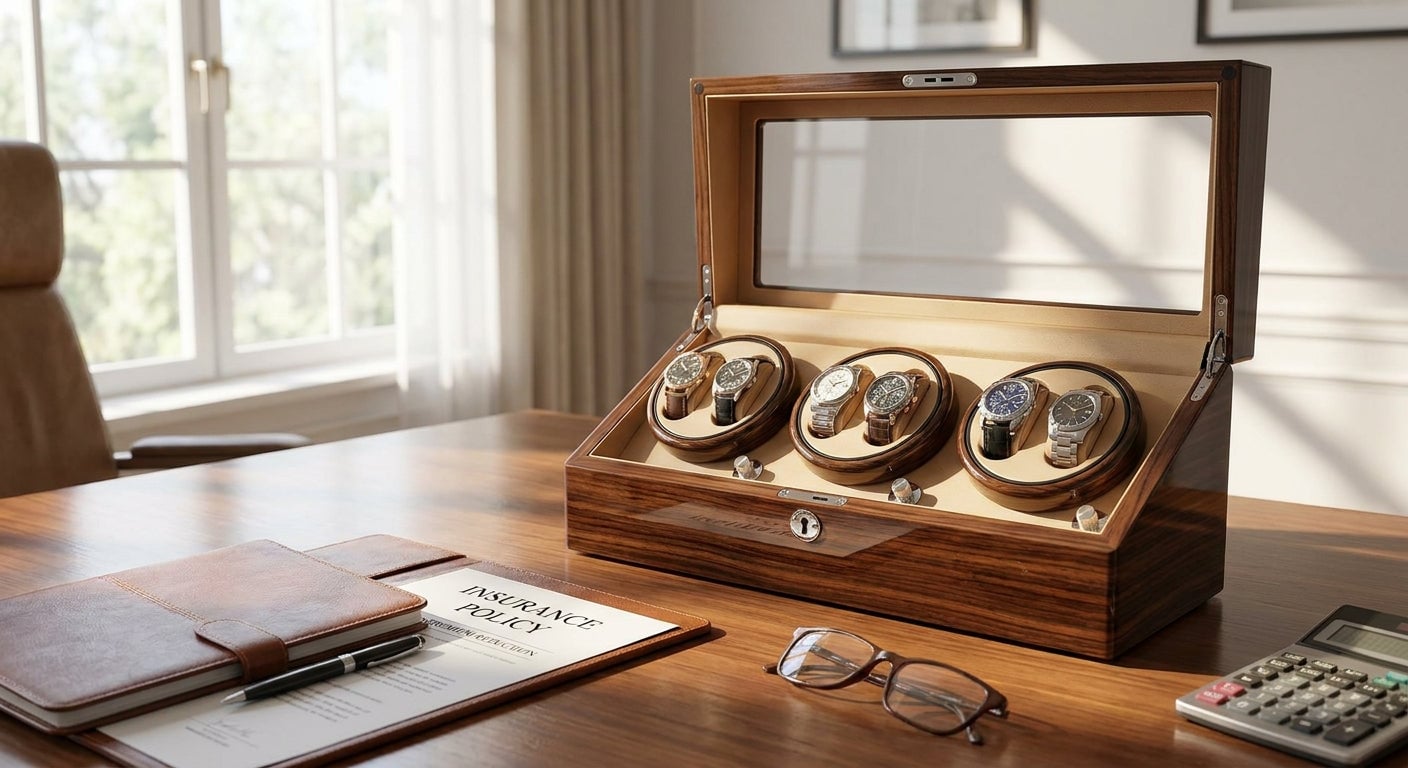
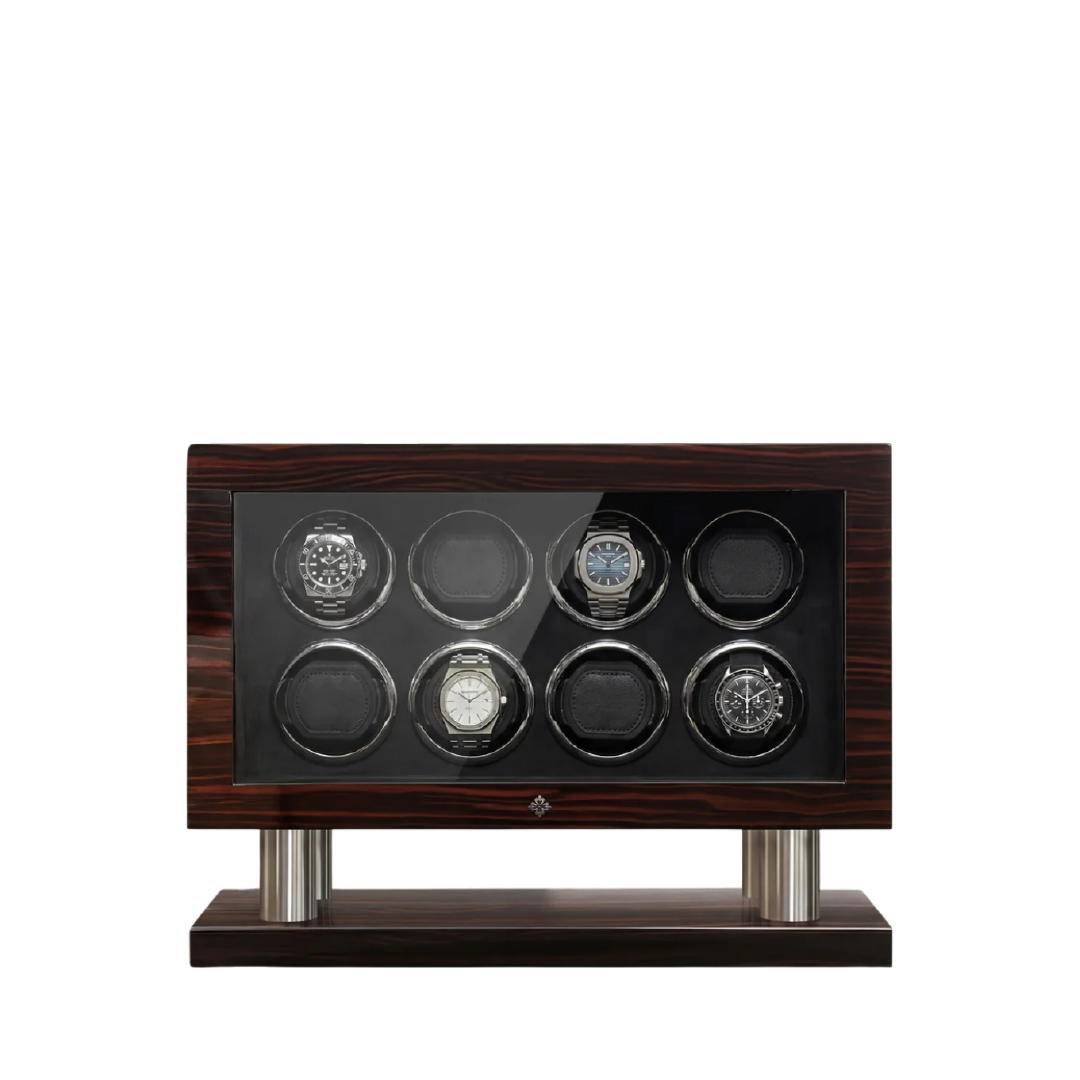
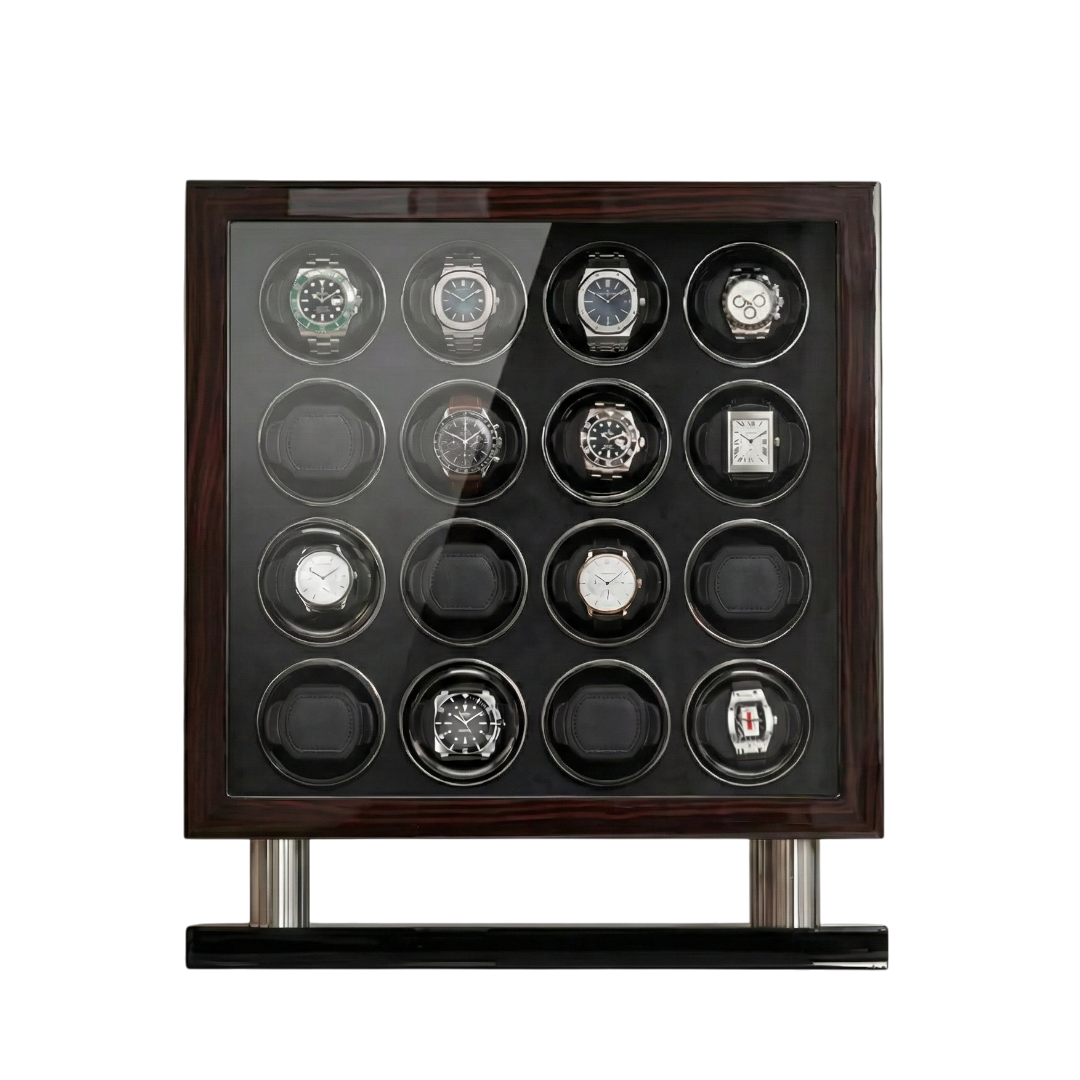
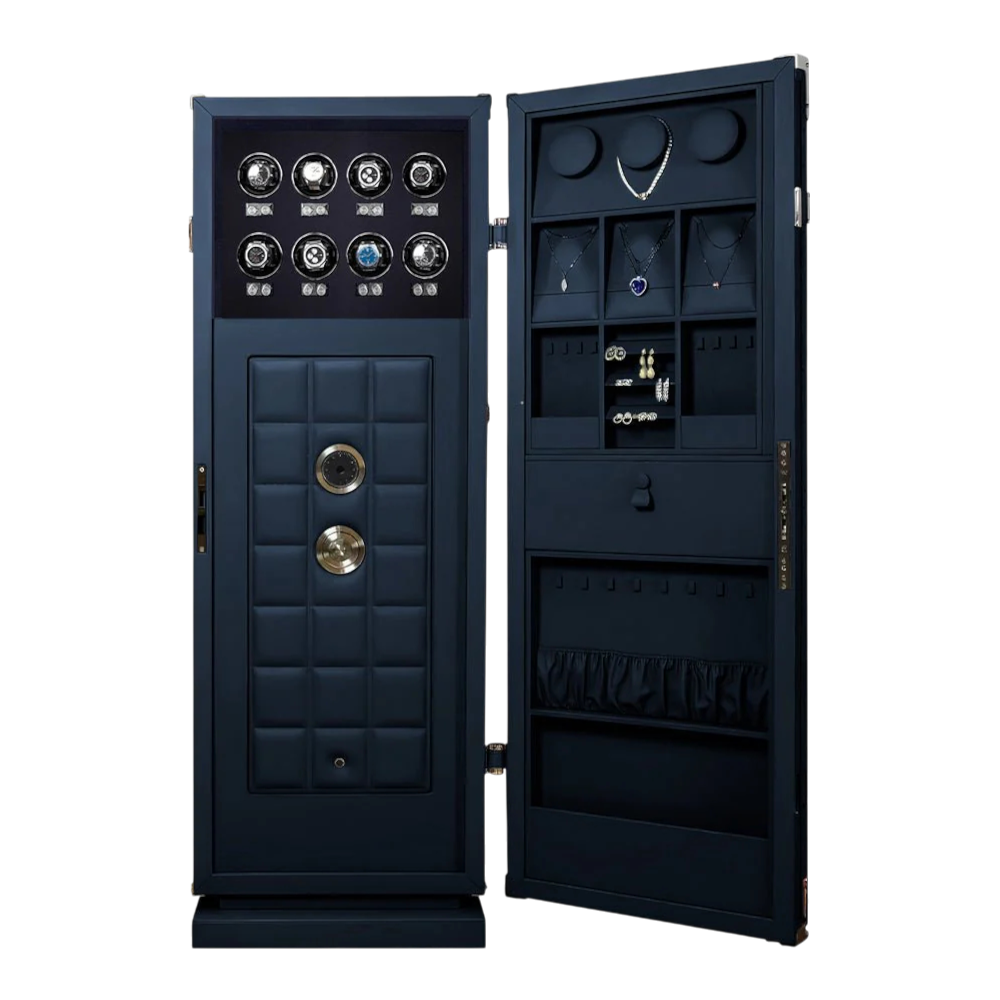
For owners with more than one RM or a mixed collection, a 16-slot unit that delivers per-slot TPD programming is the right architecture. The Yachtline Series 16 watch winder supports independent motor control per slot, bidirectional rotation, and uses low-vibration motors suited to high-complication movements. If you store an RM alongside a Patek or AP, you need slot-level programmability — a single-program winder forces every watch into the same rotation cycle, which is wrong for at least one of them.
Verdict: Buy for multi-watch RM owners.
The safe-first buyer — Titan Sanctum 20
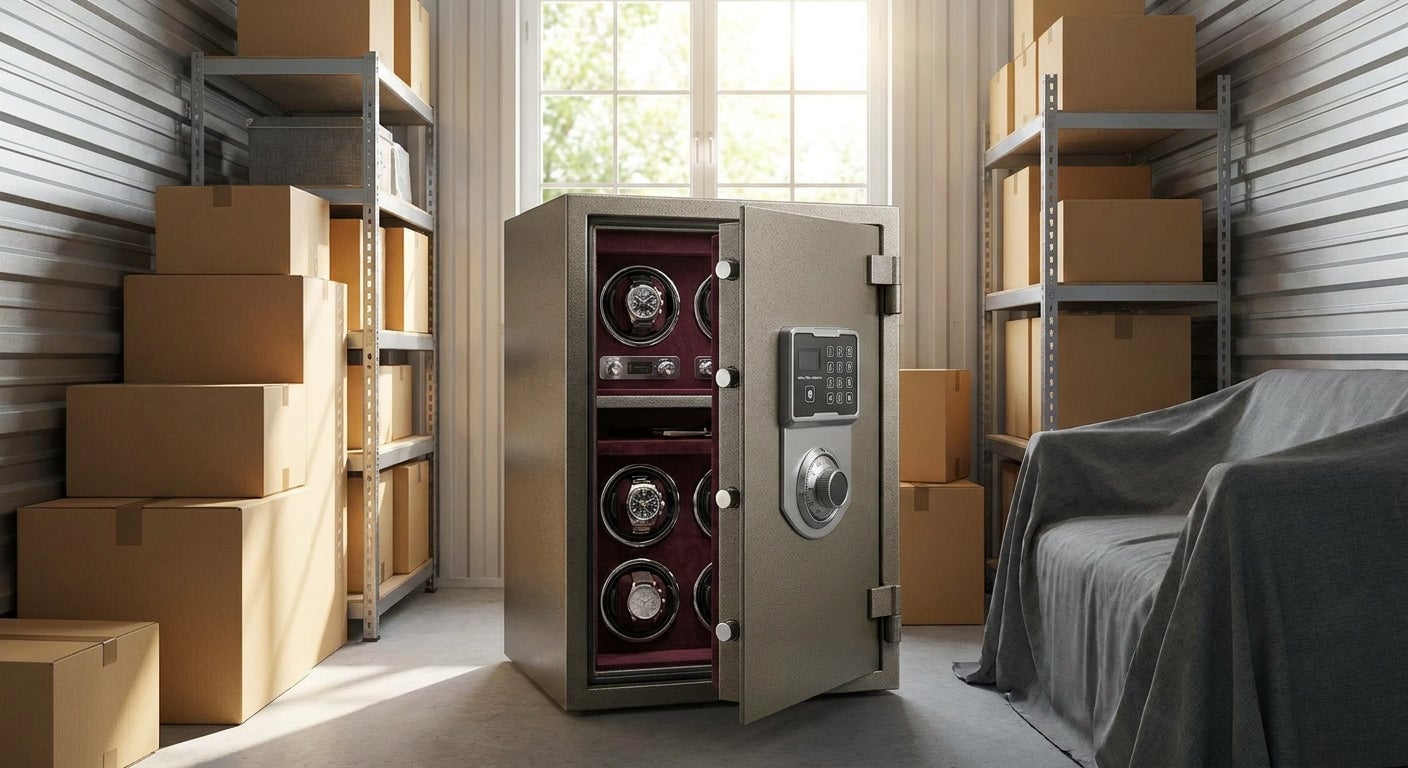
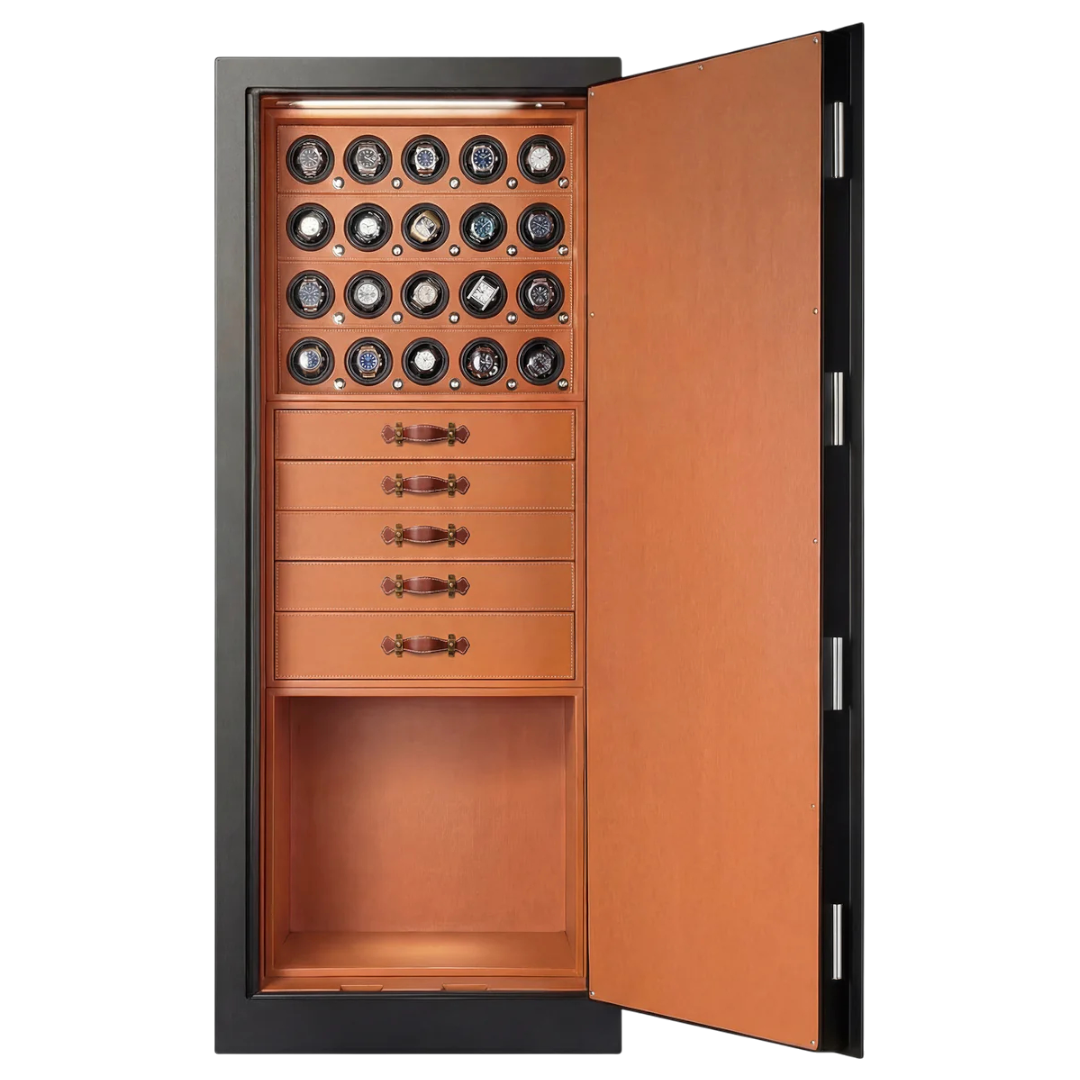
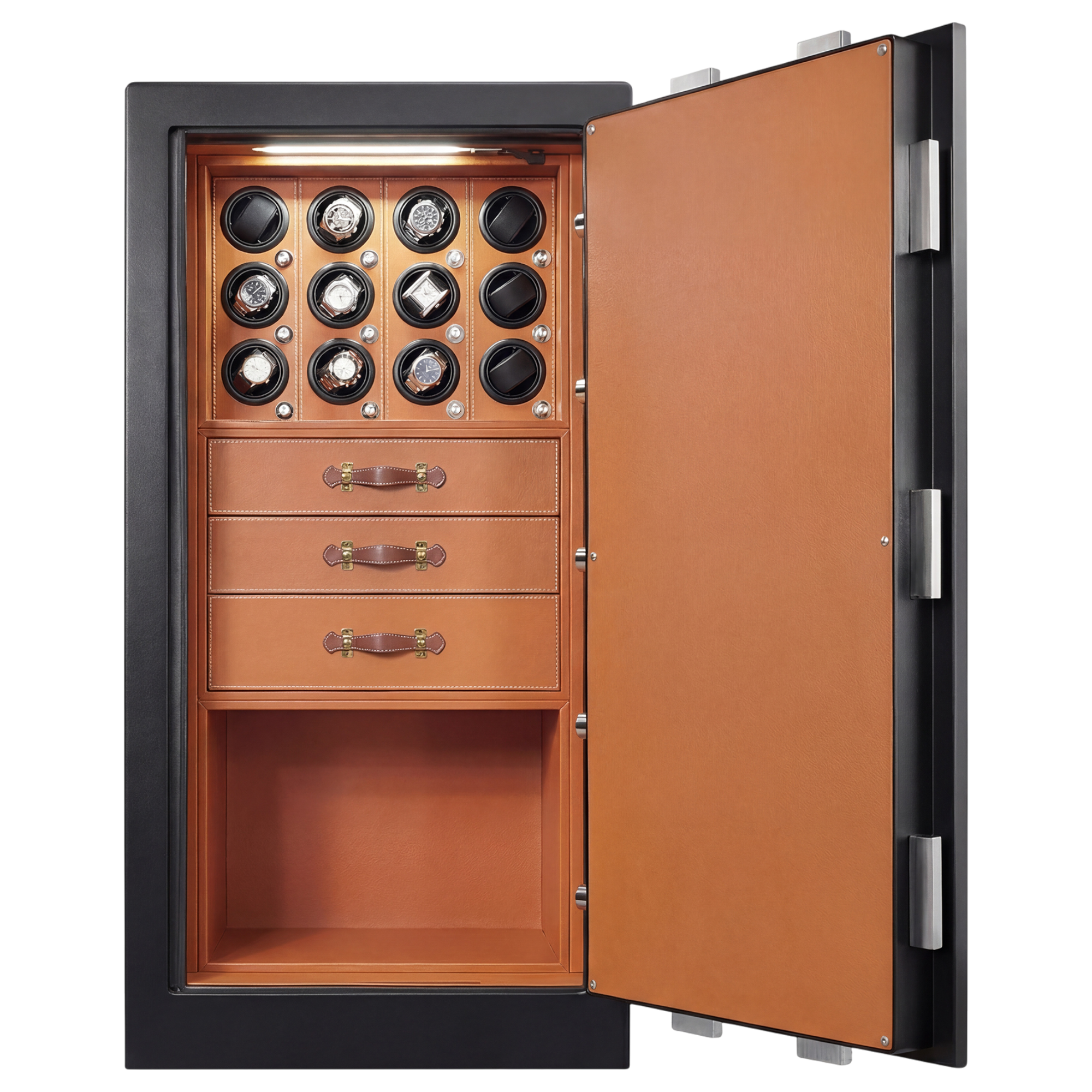
If you need winding and physical security in one unit, the Titan Sanctum 20 watch safe box addresses both. A 20-watch capacity with integrated winder modules means the RM never leaves a protected environment for a separate winder tray. Relevant for collectors who travel or share a home.
Verdict: Buy when security is the primary requirement.
The vault upgrade — Centennial Bulletproof
The Centennial bulletproof watch safe box is the correct answer when the watch collection’s replacement value justifies ballistic-rated storage. At this tier, the winder specs inside the safe need to match the exterior protection. Confirm TPD range before purchase.
Verdict: Consider if collection value exceeds $500,000 insured.
The storage-only safe — Veron 20
The Veron 20 watch safe box covers static storage for RMs that are worn daily and don’t need continuous winding. If your RM 67-02 is on your wrist six days a week, a winder wastes energy and accumulates unnecessary motor-on hours. Use the Veron for secure storage; reach for a dedicated winder only when travel extends past 48 hours.
Verdict: Consider for daily-wear RM owners.
What to Avoid
- Fixed TPD winders: Any unit without a programmable TPD setting is built for Rolex and ETA-movement watches with higher winding thresholds. Richard Mille calibers need the flexibility to go below 800 TPD.
- Single-direction-only motors: Unidirectional winders from no-name manufacturers dominate the sub-$80 market. They will not harm an RM in two weeks, but sustained use over months creates uneven click-spring wear visible on service inspection.
- Foam inserts with fixed diameters: Rigid cylindrical foam sleeves designed for 40 mm round cases will apply point pressure to the lugs or crown tube of an RM case. The tonneau shape requires a conforming cushion.
Comparison: Key Specs Across Picks
| Pick | Slots | Per-slot TPD | Bidirectional | Security Rating | Best For |
|---|---|---|---|---|---|
| Yachtline Series 16 | 16 | Yes | Yes | Standard | Multi-watch RM collections |
| Titan Sanctum 20 | 20 | Check specs | Yes | High | Winding + security combo |
| Centennial Bulletproof | 20 | Check specs | Yes | Ballistic | High-value vault storage |
| Veron 20 | 20 | N/A (storage) | N/A | Standard safe | Daily-wear RM owners |
FAQ
What TPD setting should I use for a Richard Mille watch?
Most RM automatic calibers wind fully between 500 and 800 TPD. Set your winder to the lowest bidirectional program at or under 800 TPD and confirm the specific reference in your RM documentation.
Is bidirectional rotation necessary for Richard Mille?
Yes. RM movements wind in both directions. Running a unidirectional winder long-term creates asymmetric wear on the reversing mechanism.
Can I use a cheap winder for a Richard Mille?
Not without risk. Sub-$60 winders lack TPD programmability and often use motors that exceed 20 dB of vibration — both problematic for the ultra-thin RM caliber architecture.
How often should a Richard Mille be in the winder?
If unworn for 48 hours or more, run the winder at the correct TPD program. If worn daily, static storage in a quality safe is sufficient and reduces unnecessary motor exposure.
What’s the best watch winder for a Richard Mille RM 011?
The RM 011 uses a flyback chronograph movement with a power reserve indicator. A bidirectional winder set to 650–800 TPD is the correct pairing. The Yachtline Series 16 covers this with per-slot programming.
Does the case shape of a Richard Mille matter for winder selection?
Yes. RM’s tonneau and oval cases don’t seat securely in cylindrical foam sleeves. Confirm the winder offers adjustable or conforming cushions before buying.
Should I store my Richard Mille in a winder or a safe?
If the watch is worn fewer than 4 days per week, keep it in the winder at correct TPD. If worn more frequently, a high-security static safe is the better daily solution — the winder is for periods of non-wear.
How much should I spend on a watch winder for a Richard Mille?
For a watch in the $100,000–$500,000 range, a winder in the $300–$800 range with full TPD programmability and a quality motor is reasonable. Spending less means compromising on at least one of the critical specs.
One Last Thing
Richard Mille lists water resistance as low as 50 meters on some sport references — specifically to keep the case as thin and light as possible. That same engineering philosophy means the movement has fewer protective margins than a Rolex Submariner. The winder is not an accessory; it is part of the maintenance chain. In 2026, RM service intervals run to roughly every 3–5 years at authorized centers, with costs starting near $3,000. A correctly specified winder reduces the likelihood of finding a dry or over-stressed mainspring at the next service appointment.
Related Guides
Protect Your Watch Collection
Designed for collectors who demand the best. Explore our premium watch winders and luxury safes.